Spring hive inspection checklist: what to look for and when
TL;DR
- Open hives for your first spring inspection when daytime temps hit 55-60°F consistently.
- Check for a laying queen, adequate food stores, a healthy brood pattern, and a varroa mite load under 2%.
- Record everything.
- A complete checklist runs eight core categories and takes 15-20 minutes per colony.
When should you do your first spring hive inspection?
Wait until daytime temperatures sit reliably above 55°F (13°C) before you open hives in spring. Below that, breaking the cluster risks chilling the brood and stressing the colony at the worst possible moment. Across most of the northern U.S., that window opens somewhere between late February and mid-April depending on latitude [1].
"Reliably above 55°F" does not mean one warm afternoon in February. You want a run of days where the temperature stays up, the bees fly actively, and you can take your time without racing the thermometer. A cold snap right after an early inspection won't kill a strong colony. It will kill a weak one you just disturbed.
If you absolutely must peek earlier, do a quick entrance check. Are bees flying? Is there cleansing flight activity (those first flights after winter confinement)? A small cluster of dead bees on the bottom board is normal. A pile three inches deep is not, and waiting won't fix it. Use your judgment.
Top bar hive timing follows the same rule, but the technique differs. You can't lift frames out in one direction. Work from the entrance end, remove blank bars, and expose the cluster slowly. The checklist section below covers the specifics.
What does a complete spring hive inspection checklist look like?
Here are the eight categories to work through, in order. Bring a notepad or a hive inspection app. Memory falls apart across 10 hives.
1. Entrance and exterior
Before you light the smoker, look at the entrance. Active foraging? Pollen coming in? Pollen in early spring is the single best sign that a laying queen is inside. Dead bees at the entrance are normal. Dead bees with shriveled wings may point to deformed wing virus, a direct marker of varroa damage [2].
2. Overall colony strength
Once the cover is off, estimate the frames covered with bees. A colony that wintered well in a 10-frame Langstroth should cover at least 4-6 frames of bees in early spring. Under 3 frames is a weak colony that needs a plan: combining, feeding hard, or adding a frame of emerging brood from a strong hive.
3. Food stores
Spring starvation is real and it moves fast. A full deep Langstroth frame of honey weighs roughly 6-8 lbs [3]. You want at least 3-4 such frames of capped honey or honey-heavy comb around the brood nest. If stores look thin, feed 1:1 sugar syrup now. Don't wait. A colony can starve in days during a March cold snap when nothing's blooming.
4. Queen status
You don't have to find the queen herself. You need evidence she's there: fresh eggs (tiny grains of rice standing upright in cells), young open larvae, and capped brood. Eggs are the best evidence because they tell you the queen was present within the last three days [4]. If you see only capped brood and no eggs or larvae, the colony may be queenless. Give it a week and check again before you panic.
5. Brood pattern
A healthy brood pattern is dense and fairly uniform. Scattered capped brood with empty cells punched through the middle is a "shotgun" pattern, and it usually means disease, a failing queen, or both. Capped brood should look slightly convex and tan to light brown. Sunken, darkened, or perforated caps are warning signs for American foulbrood [5]. If you see what looks like melted caramel inside a cell, that's an emergency. Stop inspecting, close the hive, and call your state apiarist before you do anything else.
6. Varroa mite load
Spring is when varroa populations hit their annual low, but low does not mean safe. The Honey Bee Health Coalition's Varroa management guide recommends treating when mite loads reach 2% (2 mites per 100 bees) at any time of year, and many researchers argue 1% is the real threshold in spring when colonies raise the season's first bees [6]. A 24-hour natural mite drop count is a rough estimate only. An alcohol wash or sugar roll on 300 nurse bees is the accurate method. No spring inspection is complete without a mite count.
7. Signs of disease and pests
Beyond foulbrood, look for sacbrood (dead larvae that look like a small bag of water), chalkbrood (white or gray mummified larvae, sometimes at the entrance), and the physical evidence of small hive beetles or wax moths. A light small hive beetle presence is tolerable in a strong colony. A weak colony with wax moths already moving in needs action today.
8. Hive body condition
Check the equipment. Rotted bottom boards, cracked boxes, and failing frames all need repair or replacement before the season starts. Spring is the time to swap out old dark comb, especially comb more than 3-4 years old. Old comb holds onto pesticide residues and pathogens [7].
For a top bar hive inspection checklist, the eight categories are identical. The physical process is not. You work bar by bar, never tilt bars more than about 30 degrees from vertical, and you read comb attachment instead of frame condition. Brood nest location, queen evidence, and mite counts all apply the same way.
How do you check for varroa mites during a spring inspection?
An alcohol wash is the gold standard. Take a half-cup (about 300) of nurse bees from a brood frame, drop them into 70% isopropyl alcohol in a jar with a mesh lid, shake for 60 seconds, and count the mites that fall through. Divide the mite count by 300 and multiply by 100 for a percentage [6].
A 2% result means roughly 6 mites in a 300-bee sample. That's your spring treatment threshold. At 1% (3 mites in 300), many beekeepers treat anyway, because varroa populations double roughly every 25-30 days during active brood rearing [6].
Sugar rolls are a non-lethal alternative. Research in the Journal of Economic Entomology found that alcohol washes recover significantly more mites than sugar rolls from the same sample, meaning sugar rolls undercount [8]. If you use sugar rolls, assume your real mite load runs 20-30% higher than the number you get.
Natural mite drop boards (sticky boards under a screen bottom board) tell you mite fall rate, not infestation percentage. They're useful for tracking trends week over week, but they won't give you a reliable treat-or-don't answer. Never make a drop board count your only spring assessment.
The varroa mite life cycle matters here too. In early spring with limited capped brood, more mites are phoretic (riding on adult bees) than hidden in cells. That makes spring a good window to treat with formic acid or oxalic acid, both of which hit phoretic mites hardest [9].
What food stores does a colony need to survive spring?
Short answer: more than you think. The danger period isn't winter. It's March and April, when the colony has ramped up brood rearing (which burns warmth and food) but nothing may be blooming yet. This is the spring dearth, and it kills colonies that looked fine in February.
A rough minimum for a full-size colony coming out of winter is 20-30 lbs of honey or honey-equivalent stores [3]. That's roughly 3-5 full deep Langstroth frames. Heft the hive before you open it. A light back end is your first warning.
If stores are thin, feed 1:1 sugar syrup (one pound sugar to one pound water by weight) to trigger both feeding and brood production [11]. Some beekeepers run 2:1 syrup in early spring to mimic nectar more closely, but 1:1 is easier to make and the bees take it fine. You can also feed dry sugar or candy boards as emergency stores when it's still too cold for liquid (below 50°F, bees can't process syrup well).
Pollen is the other half of the equation. Bees need protein to raise brood. If natural pollen isn't coming in yet, a pollen substitute patty on the top bars can bridge the gap. There's debate about how commercial substitutes stack up against real pollen, but the peer-reviewed evidence says they do support brood rearing during dearth [10]. More on the role of beehive pollen in colony nutrition is worth a read.
Don't confuse winter stores (mostly honey) with spring stores. A colony that burned most of its winter honey is running on fumes even if the frames don't look empty.
How do you assess queen health and brood pattern in spring?
Start with eggs. Find eggs and you know the queen was present within 72 hours. Hold a flashlight at an angle to see them clearly in the bottom of cells. New beekeepers struggle with this at first. It gets easier.
After eggs, read the pattern of capped brood. Pull a brood frame and hold it up to the light. A good spring pattern is 80% or more cells filled in a contiguous patch. The Honey Bee Health Coalition notes that a solid brood pattern is one of the key signs of a healthy, productive queen [4].
A spotty pattern can mean several things. High varroa levels produce patchy brood because workers uncap and pull out damaged pupae. A failing queen lays unfertilized eggs or skips cells. American foulbrood kills larvae after capping, leaving those sunken, darkened caps mentioned earlier. Sacbrood kills larvae before capping, and you'll find twisted yellow-brown larvae if you uncap a suspect cell.
Can't find eggs or young larvae but you do see older capped brood? Give the colony 7-10 more days before you call it queenless. Sometimes you just miss the queen's work on a given frame. If a second inspection still shows no eggs, that colony needs a new queen or a frame of eggs and young larvae from another hive to raise its own.
Spring is also when colonies that survived winter sometimes supersede their queens on their own. You might see 1-2 supersedure cells on a frame in a colony that's otherwise fine. That's often the bees handling it themselves. Don't destroy supersedure cells unless you have a specific reason.
What equipment and supplies do you need for a spring inspection?
Bare minimum: a hive tool, a smoker with fuel, and a veil. That's it. Everything else helps but isn't required.
A smoker with good fuel matters more than most beginners realize. Cool, white smoke calms bees. Hot, thin smoke does the opposite. Pine needles, wood chips, burlap, or commercial smoker fuel all work. Get it burning well before you approach the hive. A smoker that dies mid-inspection is a genuine problem.
Bring a notepad or your phone with a hive tracking app. You will not remember the details of 8 hives at the end of a morning. Record the date, weather, colony strength in frames of bees, presence of eggs, varroa wash result, disease signs, and any action taken.
For spring specifically, have your mite-testing gear ready: a jar, some 70% isopropyl alcohol, and a mesh lid. Don't skip the wash because it feels like extra work. It's the only way to know.
Building out equipment this season? The beekeeping supplies overview covers what's worth the money and what isn't. Short version: don't cheap out on the smoker or the hive tool. Cheap out on protective gear if you have to, since a budget veil still covers your face.
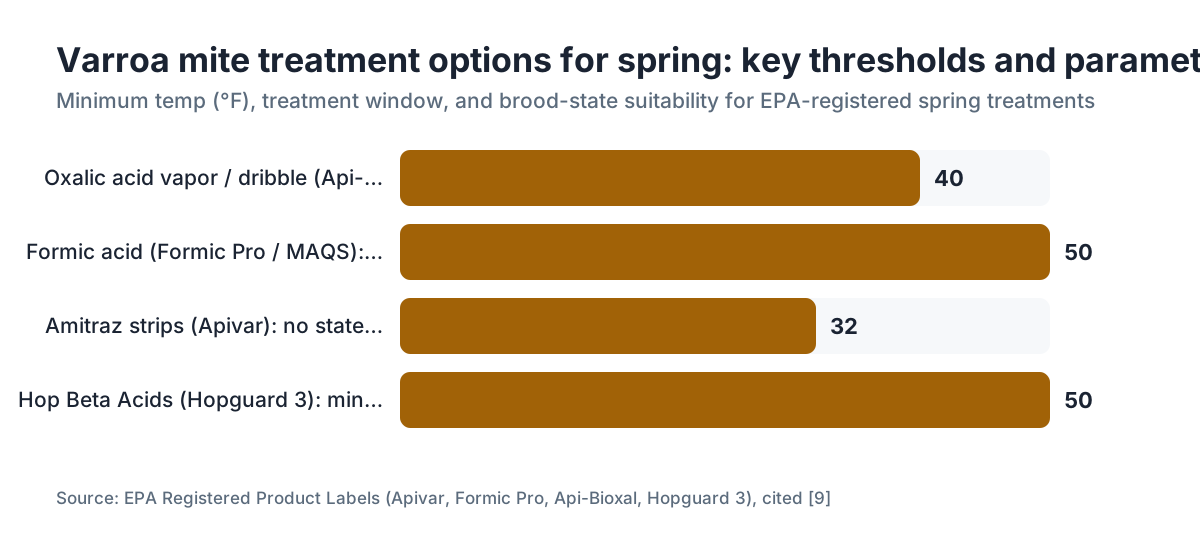
For treatments a high spring mite count might trigger, see the comparison table below.
What varroa treatments are appropriate in spring?
Spring treatment timing matters because most approved products carry temperature restrictions and brood-state requirements.
Oxalic acid (OA) vaporization or dribble works best when brood is absent or minimal, because OA doesn't reach into capped cells [9]. Early spring, before the brood nest has fully expanded, is one of the best OA windows you'll get all year. The EPA-registered Apivar label (amitraz strips) allows use with brood present and has no temperature floor, which makes it flexible but slow, needing 6-8 weeks of strip contact [9].
Formic acid products (Mite Away Quick Strips, or MAQS, and Formic Pro) do penetrate capped brood and can kill mites inside cells, but they need temperatures between 50-85°F and can cause some brood mortality at the top of that range. At moderate early-spring temperatures, they're a strong pick.
Hop Beta Acids (Hopguard 3) run a low temperature floor and work with brood present. The efficacy data is weaker than OA or formic acid against heavy infestations, but for a colony sitting at a borderline mite level it's worth a look.
The Honey Bee Health Coalition's Varroa Management Guide carries a detailed treatment comparison and efficacy data. The guide is blunt about the core point: "monitoring is the only way to know whether treatment is needed and whether it worked" [6]. Always run a post-treatment mite wash 3-4 weeks out to confirm it worked.
VarroaVault's free protocol tools help you build a spring-through-fall treatment calendar keyed to your location and the colony's mite trajectory. Worth using if you're running more than 3 or 4 hives.
For sourcing treatments and equipment, beekeeping supply companies lists reputable suppliers with notes on availability.
How does spring inspection differ for a top bar hive?
The checklist categories are the same. The physical process is genuinely different, and treating a top bar like a Langstroth will get you into trouble.
In a top bar hive, comb hangs from individual bars with no frames to support it. It's fragile, especially when new or cold. The bees attach comb to the sides of the box and sometimes across bars, creating the "cross comb" that's one of the main headaches of this style.
Start at the entrance end. Remove one or two empty bars near the entrance first to give yourself working room. Then work toward the brood nest slowly. Never tilt bars more than about 30 degrees from vertical or the comb tears under its own weight. Keep bars oriented so the comb hangs straight down.
The same eight categories apply: entrance check, colony strength, food stores (you read the weight and fullness of individual combs instead of frames), queen signs, brood pattern, varroa mite wash (identical process), disease signs, and equipment condition. The equipment check here includes comb attachment. If comb has pulled away from a bar, cut it free or reattach it before it drops.
For mite washes in a top bar hive, knock nurse bees from a brood comb straight into your sample jar. Everything else is the same.
Top bar inspections take a bit longer than Langstroth inspections because of the careful bar-by-bar work, but the information you gather is identical.
What are the most common problems found during spring inspections?
In rough order of how often you'll hit them:
Starvation. Light hives in March top the list. Preventable with a winter-end heft check and prompt feeding [11].
Queenlessness. Colonies that lost their queen over winter show no eggs and only old, aging bees. You'll know it by the lack of young brood and sometimes a panicked, roaring sound when you open the hive. A queenless colony needs a new queen or a frame of eggs from a healthy colony, fast.
High varroa mite loads. A colony that wasn't treated well the previous fall can come out of winter already above 2%, and it will crash once brood rearing ramps up. This is why a spring mite wash is non-negotiable.
Chalkbrood. Common in cool, damp springs. You'll see white or gray mummified larvae in cells or scattered at the entrance. Chalkbrood comes from the fungus Ascosphaera apis and usually clears on its own as temperatures rise and colony strength grows [5]. A persistent heavy case points to poor ventilation or a colony too weak to clean itself up.
American foulbrood. Rare but catastrophic. Sunken, darkened cappings, a foul odor, and a toothpick that pulls a ropy brown string out of a suspect cell all mean AFB. Call your state apiarist immediately [12]. AFB is a regulated disease in most states and can't be cured with antibiotics once established; the only reliable fix is burning the infected equipment. Don't try to manage this one alone.
Small hive beetles. More common in southern states but pushing north. A few beetles in a strong colony is manageable. Beetles overrunning a weak colony demand action: strengthen the colony or combine it with a stronger one.
If you're in the Southwest or Southeast and your bees run more defensive than expected, know that africanized honey bees have established range in those regions, and identification changes how you manage colony behavior.
How do you record spring inspection results effectively?
A record system you'll actually use beats a perfect system you won't. That's the whole rule.
Record these fields for each colony after every inspection: date, weather (temperature, sunny or cloudy), colony strength in frames of bees, presence of eggs (yes/no), varroa mite wash result (mites per 100 bees), disease signs observed, and the action you took. That's six fields. A paper notebook covers it.
Using a phone app? Many beekeepers run ApiaryBook, HiveTracks, or plain spreadsheets. The brand doesn't matter. Consistency does.
Year-over-year records are where this pays off. If you can see that hive 4 exits winter weak every year, or that your varroa loads spike in late July, you can plan treatments ahead of the problem instead of chasing it.
Mark your queens. A dot of paint on the thorax (a queen marking pen or a Posca marker works) means you'll instantly know if the colony superseded or swarmed, because the new queen won't carry the mark. The international color code rotates by year: 2024 is green, 2025 is blue, 2026 is white [4]. Note the year in your records too, so you always know the queen's age.
Treat your first spring inspection records as baseline data, not a one-time checklist. Every later inspection that season compares back to what you found on that first visit.
What should you do after the spring inspection is done?
Act on what you found. An inspection without follow-through is just a disturbance.
Food low? Feed now. Mite load above 2%? Pick a treatment and apply it this week, not next. No eggs? Come back in 7 days before you do anything. AFB signs? Stop, close the hive, call your state apiarist.
Healthy colonies that just need room: add a super or a second brood box once the colony is filling 7-8 frames with bees. Spring buildup runs fast, and a crowded hive is a swarming hive. Swarming isn't a disease, but it cuts your honey production roughly in half and leaves the parent colony weaker going into summer.
Schedule the follow-up. A spring inspection isn't once and done. Plan to be back in 2-3 weeks to see how the colony responded to any feeding or treatment, and to run the post-treatment mite wash. Write the date on your calendar before you put the gear away.
Building your inspection and treatment tracking from scratch? VarroaVault's free varroa management tools include a protocol template that walks through spring, summer, and fall thresholds together, so your spring data feeds straight into your summer treatment decisions.
For broader support and supplies, beekeeping supply companies and free shipping honey bee supply companies are worth bookmarking for treatment restocking after your spring assessment.
Frequently asked questions
How many frames of bees should a healthy colony have in early spring?
A colony that wintered well in a 10-frame Langstroth should cover at least 4-6 frames of bees by your first spring inspection. Under 3 frames is a weak colony that needs intervention: aggressive feeding, combining with another weak colony, or adding a frame of emerging brood from a strong hive. Fewer than 2 frames of bees rarely recovers without serious help.
What temperature is too cold to open a hive for inspection?
Below 55°F (13°C) air temperature is too cold for a thorough spring inspection. Opening the hive lower than that risks chilling the brood cluster and stressing bees that can't hold temperature with the box open. If you need a quick peek, keep it under two minutes. A full inspection with mite wash should wait for a reliable run of days above 55°F.
How do I know if my colony survived winter without opening the hive?
Stand at the entrance on a day above 50°F. If bees are flying and returning with pollen, the colony almost certainly has a laying queen and is alive. A total absence of flight on a warm day is a bad sign. You can also knock on the hive: a live cluster buzzes back. Silence plus no flight on a warm day usually means the colony is dead or nearly gone.
What does a varroa mite wash result of 2% mean in spring?
A 2% mite wash result means 2 mites per 100 bees in your sample, the treatment threshold the Honey Bee Health Coalition recommends at any time of year. In spring, with brood rearing accelerating, some researchers argue 1% is the real action threshold because mite populations can double every 25-30 days. At 2% in spring, treat promptly.
Can I combine two weak spring colonies into one?
Yes, and it's often the right call. Two frames of bees in each of two colonies combine into a four-frame colony that can actually survive and build. Use the newspaper method: set a sheet of newspaper between the boxes with a few small slits in it. The bees chew through slowly, mixing their scents without fighting. Keep the better queen if you know which colony has one.
Do I need to inspect every hive on the same day?
Ideally, yes. Doing all your spring inspections in one good-weather window gives you consistent baseline data across every colony. But don't rush to finish in a day if that means skipping the mite wash on hives 7 and 8. A complete inspection on a colony matters more than uniform timing. Spread the work across two consecutive good days if you need to.
How do I spot American foulbrood during a spring inspection?
Look for sunken, darkened, sometimes perforated cappings on capped brood. Smell the frame: AFB has a distinctive sour, rotting odor. The ropiness test is definitive. Insert a twig or toothpick into a suspect cell. If the contents pull out in a thin, ropy string that stretches more than an inch before breaking, that's AFB. Stop the inspection, close the hive, and contact your state apiarist immediately.
Should I add a honey super during the spring inspection?
Only if the colony already covers 7-8 frames of bees and the brood nest is expanding fast. Most colonies coming out of winter need to build strength before they can use a super well. Adding space too early in cold climates can actually slow them down by forcing them to heat a bigger space. Check back in 2-3 weeks; if they've built up quickly, then add the super.
What's the difference between chalkbrood and American foulbrood?
Chalkbrood comes from a fungus (Ascosphaera apis) and produces white or gray mummified larvae, often scattered at the hive entrance. It usually clears as weather warms. American foulbrood is a bacterial disease (Paenibacillus larvae) producing brown, sunken cappings and a ropy, foul-smelling larval goo. AFB is a regulated disease requiring state apiarist notification and often equipment destruction. Chalkbrood is neither.
How do I do a spring inspection on a top bar hive?
Work from the entrance end, removing blank bars first to make room. Move bar by bar toward the brood nest, keeping each comb vertical to prevent tearing. Check the same eight categories as a Langstroth: entrance activity, colony strength, food stores (comb fullness and weight), queen signs (eggs and young brood), brood pattern, a varroa mite wash, disease signs, and comb attachment to bars. It takes a little longer, but the checklist is identical.
When should I do a post-treatment mite wash after a spring treatment?
Three to four weeks after applying oxalic acid or formic acid products, run another 300-bee alcohol wash. For Apivar (amitraz strips), wait the full 6-8 week treatment period before your efficacy wash, since the treatment acts slowly. A post-treatment mite level above 1% means the treatment may have fallen short, the exposure was too brief, or you're facing a resistance issue worth investigating.
How long does a spring hive inspection take?
A thorough spring inspection including a varroa mite wash takes 15-20 minutes per colony for an experienced beekeeper, and 25-30 minutes for someone newer to it. Rushing to save time is a common mistake that leads to missed disease signs and unreliable mite data. If you have 10 hives, budget a full morning. Good inspections take the time they take.
What should I do if I find no queen and no eggs in spring?
Don't panic yet. Give the colony 7-10 more days and inspect again. Sometimes you miss eggs on a cold or overcast day, or the queen was briefly off-lay from winter stress. If a second inspection still shows no eggs or young larvae, the colony is queenless. Order a mated queen from a reputable breeder, or add a frame of eggs and very young larvae from a healthy colony so the bees can raise their own.
Sources
- Penn State Extension, Apiculture Program: Spring hive inspections should be conducted when temperatures are reliably above 55°F; timing varies from late February to mid-April depending on latitude in the U.S.
- Honey Bee Health Coalition, Tools for Varroa Management Guide (v8, 2020): Deformed wing virus manifesting as shriveled wings on adult bees at the entrance is a direct indicator of varroa damage.
- University of Minnesota Extension, Beekeeping: A full deep Langstroth frame of capped honey weighs approximately 6-8 pounds; colonies need 20-30 lbs of stores to survive through spring dearth.
- Honey Bee Health Coalition, Tools for Varroa Management Guide (v8, 2020): A solid brood pattern with high cell occupancy is a key indicator of a healthy, productive queen; the guide recommends monitoring as the only way to know whether treatment is needed and whether it worked.
- USDA Agricultural Research Service, Bee Research Laboratory: American foulbrood is caused by Paenibacillus larvae; the ropy string test and sunken darkened cappings are the primary field diagnostic signs. Chalkbrood is caused by Ascosphaera apis and typically resolves as temperatures rise.
- Honey Bee Health Coalition, Tools for Varroa Management Guide (v8, 2020): The 2% mite threshold (2 mites per 100 bees by alcohol wash) is the recommended treatment trigger at any time of year; varroa populations can double roughly every 25-30 days during active brood rearing.
- Cornell University Department of Entomology, Dyce Lab for Honey Bee Studies: Old comb (3-4 years or older) accumulates pesticide residues and pathogens and should be rotated out as part of spring hive management.
- Journal of Economic Entomology, Berry et al. (2013) -- comparison of varroa monitoring methods: Alcohol washes recover significantly more mites than sugar rolls from the same sample of bees, meaning sugar roll counts tend to underestimate true infestation levels by approximately 20-30%.
- EPA, Registered Pesticide Product Labels (Apivar, Formic Pro, Api-Bioxal): Oxalic acid dribble and vaporization works best when brood is absent or minimal; Apivar (amitraz) requires 6-8 weeks of strip contact; formic acid products require temperatures between 50-85°F per EPA-registered label directions.
- USDA Agricultural Research Service, Bee Research Laboratory: Peer-reviewed feeding studies indicate commercial pollen substitute patties support brood rearing during pollen dearth, though they are generally less effective than natural pollen.
- Ohio State University Extension, Beekeeping in Ohio: Spring starvation is a leading cause of colony loss; feeding 1:1 sugar syrup at first inspection is recommended when stores are below the minimum threshold.
- Maryland Department of Agriculture, Apiary Inspection Program: American foulbrood is a regulated disease in most U.S. states; beekeepers who suspect AFB must contact their state apiarist before taking any action.
Last updated 2026-07-09