Hive inspection checklist pdf: what to record every visit
TL;DR
- A hive inspection checklist pdf is a one-page form you fill out at every colony visit, capturing queen status, brood pattern, varroa mite load, food stores, and pest observations.
- Consistent records give you a baseline to compare against, which is how you catch a failing queen or a mite spike before it kills the colony.
- This guide explains what to include, when to inspect, and how to build a form you actually use.
What should a hive inspection checklist include?
A good inspection form captures the three things that predict whether a hive survives to next season: is it healthy, is it queenright, and is the mite load manageable. Everything else on the sheet is supporting evidence.
At minimum, your bee hive inspection checklist form pdf needs these fields:
- Date, time, and weather (below about 55°F or high wind means defensive bees and chilled brood; conditions change what you see)
- Hive ID or location
- Queen sighted: yes/no
- Eggs present: yes/no (eggs mean a laying queen was present within the last 3 days)
- Brood pattern score (solid, spotty, or absent; note sealed vs. open brood ratio)
- Varroa mite load (alcohol wash count, sticky board count, or sugar roll result, with the method noted)
- Population estimate (frames of bees, frames of brood)
- Honey stores (frames of capped honey)
- Pollen stores (frames or patches; beehive pollen is easy to overlook but matters most in early spring)
- Signs of disease (chalkbrood mummies, sunken or perforated cappings, foulbrood smell)
- Small hive beetle count
- Wax moth evidence
- Temper rating (1-5 scale; note if bees followed you)
- Actions taken (treatment applied, frames added or removed, queen marked)
- Next inspection date
That list looks long. It reads fast. A practiced inspector fills it in under two minutes per hive while still suited up, then moves to the next box. The trick is pre-printed checkboxes and short fields, never blank lines where you end up writing an essay you cannot decode in October.
How often should you inspect your hives?
More often than most hobbyists actually do. The exact interval depends on the season and what you found last time, but the floor is one mite check per brood cycle.
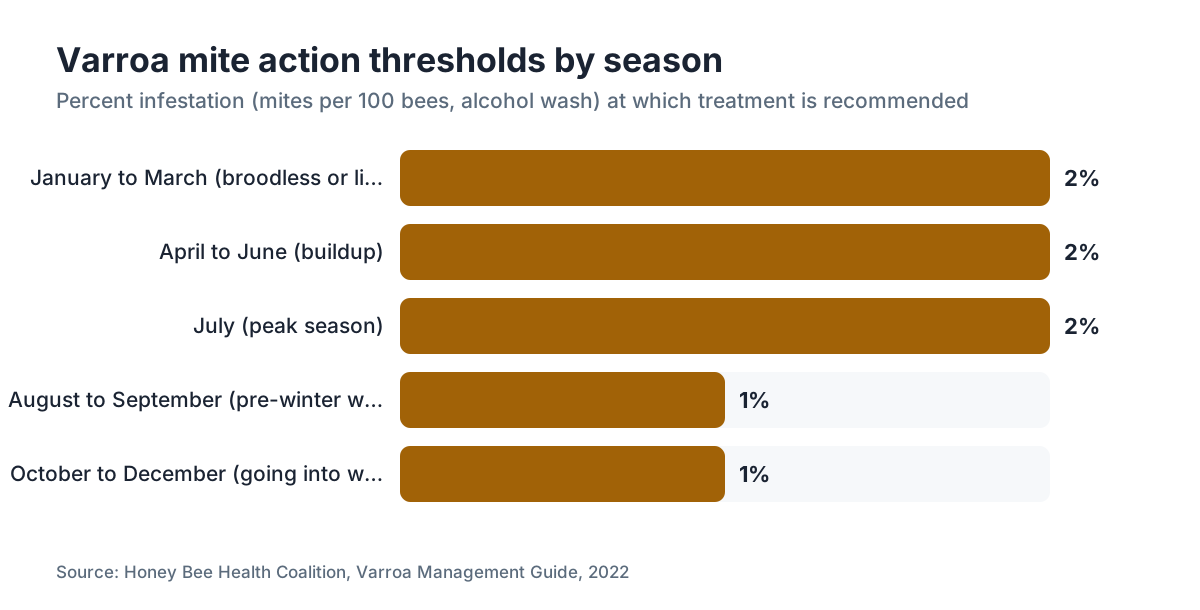
The Honey Bee Health Coalition's Varroa Management Guide recommends monitoring mite levels at least every 30 days during the brood-rearing season and making treatment decisions against a 2% infestation threshold in most contexts [1]. That 30-day window is roughly one brood cycle, which is the coarsest resolution that still catches a mite population busy doubling on you.
Practically speaking:
- Early spring (first brood visible): every 2-3 weeks. The colony is small and problems are fixable fast.
- Buildup through summer: every 3-4 weeks if mite counts were low last visit. Every 1-2 weeks if you saw anything concerning.
- Pre-winter treatment window (roughly 6-8 weeks before your last frost): at least one thorough inspection plus a mite wash. Missing this window is the single most common reason colonies die over winter [1].
- Mid-winter: a quick external check only. Lifting frames in cold weather kills brood.
New beekeepers skip inspections because they are nervous about disturbing the colony. That nervousness is reasonable. But a colony with a failing queen or a mite load above 3% will not fix itself while you wait. Inspect, record, act.
How do you measure varroa mite load during an inspection?
Mite load is the number on your checklist that drives every treatment decision, so it earns its own row and its own method note. There are three common ways to get it, and the Honey Bee Health Coalition's Varroa Management Guide recommends the alcohol wash as the most accurate for live-hive counts [1].
| Method | Accuracy | Kills bees? | Time (per hive) | Best for |
|---|---|---|---|---|
| Alcohol wash | High (~97% mite release) | Yes (about 300 bees) | 5-7 min | Routine monitoring |
| Sugar roll | Moderate (~60-70% mite release) | No | 5-7 min | Beekeepers avoiding bee death |
| Sticky board (24-hr) | Low (relative only) | No | 24 hr wait | Trend tracking over time |
For an alcohol wash, collect roughly 300 bees (about half a cup) from a brood frame, never the honey super. Add 70% isopropyl alcohol, shake for 60 seconds, pour through a mesh strainer, and count the mites in the liquid. Divide mites by bees, multiply by 100, and that is your percentage [12]. The USDA references a 2% infestation threshold as a general action trigger in national honey bee health monitoring, though some extension programs use 3% outside the pre-winter window [2].
Add a dedicated block on your checklist for method used, mites counted, bees sampled, and calculated percentage. That last column is what you compare month to month. A rising trend across three visits tells you more than any single number ever will.
For the biology of the organism you're counting, varroa mite covers the life cycle.
What does a good brood pattern tell you?
Brood pattern is your fastest proxy for queen health and disease pressure. A healthy capped brood frame is mostly solid, dome-capped, and tan to light brown. Empty cells scattered through sealed brood are the first thing to flag on your form.
A spotty pattern points in several directions: a failing or recently replaced queen, American or European foulbrood, chalkbrood, varroa-damaged brood where pupae died before capping, or pesticide exposure. Your checklist should capture the pattern (solid, spotty, absent), the color and condition of cappings (normal, sunken, perforated), and any odor. American foulbrood has a ropy, sour smell; European foulbrood smells sour but not ropy. These are different diseases with different legal treatment requirements [3].
Record frames of capped brood separately from frames of open brood. A well-laying queen in peak season covers 5-8 frames of brood in a standard Langstroth deep. Fewer than that in late spring or summer is worth noting, and worth comparing to next visit's count.
How do you score queen status on your inspection form?
Queen status is the most anxiety-producing part of any inspection and the easiest to misread. You do not need to see the queen to confirm she is there. Eggs are the real proof.
On your form, record these in order:
- Queen sighted (yes/no, and if yes, whether she is marked)
- Eggs present (yes/no)
- Young larvae (tiny c-shaped larvae floating in royal jelly: yes/no)
- Capped worker brood present
- Any queen cells (note location: swarm cells on the bottom edges of frames vs. supersedure cells on the face)
See eggs, and a laying worker or laying queen was present within 72 hours. See queen cells plus a good egg pattern, and the colony may be prepping to swarm. See queen cells and no eggs, and the colony is likely queenless and already building a replacement. Three scenarios, three different responses, and your form is how you tell them apart across visits.
One honest caveat: eggs are hard to see without good light and decent eyesight. Most inspectors angle a phone flashlight down the cell. If you genuinely cannot find eggs or the queen, write that on the form and come back in four days before you draw any conclusions.
What other pests and diseases belong on your checklist?
Varroa gets the most attention, and rightly so, since it is the dominant driver of colony loss in North America [1]. But your form should catch everything else too, because a colony worn down by varroa is also wide open to secondary infections.
Small hive beetles (SHB): Note how many you see (a rough count is fine: 0, 1-5, 5-20, 20+). A strong colony manages a modest SHB population. A weak one cannot. In the southeastern U.S., SHB pressure runs high enough to earn its own line on your form rather than a footnote.
Wax moths: Greater wax moth damage shows up as silken tunnels through comb, cocoons on the wooden surfaces, and webbing across brood. Record any evidence. Wax moths rarely kill a healthy colony, but they destroy stored comb fast.
Nosema: You cannot diagnose Nosema by eye during an inspection. Do record dysentery-like staining on the front of the hive or on the frames. Heavy staining plus a falling population is worth a sample sent to a state diagnostic lab.
Pesticide events: Any sudden pile of dead bees at the entrance during or after a bloom belongs on the form with the date. Several state departments of agriculture run incident reporting programs, and your inspection record is the documentation they will ask for [4].
If you meet a colony that seems unusually aggressive and you are in the southern U.S. or Southwest, the africanized honey bee article covers identification and management.
What should your food stores record look like?
Starvation kills colonies in late winter and early spring, often within days once reserves run dry. Your inspection form should capture food stores at every visit, even in summer, because a summer dearth can crash honey reserves faster than most hobbyists expect.
Record:
- Frames of capped honey (full frames, half-frames)
- Frames of uncapped nectar (available but not yet shelf-stable)
- Frames or patches of pollen or beebread
A colony needs roughly 60-90 lbs of honey to overwinter in most of the northern U.S. [5]. A standard deep Langstroth frame holds about 5-6 lbs of capped honey. Do the math and the minimum lands around 10-15 full frames going into winter, usually spread across two boxes. Count fewer than that in September or October in a cold climate, and your form should trigger a feeding decision.
Note whether you fed and what you used (2:1 syrup, candy board, fondant, pollen substitute). Those entries earn their keep when you sit down later to explain a slow spring buildup or a dead-out.
How do you build a printable inspection form you'll actually use?
The best form is the one you carry into the apiary every single time. Obvious, and still the reason so many elaborate forms end up designed for hours and then left on the kitchen desk.
A few design rules from beekeepers who really do run paper in the field:
Keep it to one row per visit in a table, or one page per hive per season. Two formats work. A table with one row per inspection date suits sidelines with a handful of hives where you want the whole season at a glance. A single-visit form you stack in a folder suits beekeepers with many colonies who want room to write.
Use checkboxes and numbers, not blank lines. "Queen seen: Y/N" takes two seconds. A blank line invites "queen seen, flying around, seemed okay," which is useless in October when you are trying to reconstruct June.
Laminate one master copy. Write on it with a dry-erase marker in the field, then transfer to your log that evening. Rain, propolis, and sweat destroy paper records mid-season otherwise.
Print on bright yellow or orange paper. You will not accidentally leave it sitting on a hive.
For anyone running more than a handful of colonies, a printable form paired with a digital record saves real time. The free varroa management tools at VarroaVault include a downloadable inspection form template and a mite-load tracker built around the HBHC thresholds [1].
You also want the right gear for inspections. Our beekeeping supplies guide covers hive tools, smokers, and protective gear by price tier.
Should you keep inspection records digitally or on paper?
Both work, and the trade-off is honest. Paper is faster to fill out in a veil with gloves on, tougher when a frame of bees is six inches from your hands, and needs no battery. Digital records are easier to search, back up, and graph over the years.
Most experienced sideliners land on a hybrid. Write on a printed form in the apiary. Transfer the numbers to a spreadsheet or app that evening. The University of Florida IFAS apiculture program publishes a free hive record-keeping template that programs across the country point to [6].
Go digital-only and you had better confirm the app or spreadsheet works offline. Cell signal in rural apiaries is often nonexistent, and stopping to reconnect mid-inspection breaks your focus at the worst possible moment.
Whatever system you pick, keep at least three years of records. Loss investigations, breeding decisions, and treatment timing all sharpen the longer your data runs.
When is the most important hive inspection of the year?
No hedging here. The late-summer inspection before your overwintering treatment is the most consequential visit of the year. Get it wrong and you lose the colony.
The timing is roughly 6-8 weeks before your local expected first hard frost, which lands in late July or early August across much of the northern U.S. and mid-September in the South. At this inspection you need four numbers:
- Mite load (alcohol wash, not sticky board)
- Whether a mated queen is laying
- Food stores trajectory
- Population size relative to the winter cluster you want
If mite load sits at or above threshold here, treatment is urgent. The bees being raised right now are the winter bees that carry the cluster through six months. Varroa feeding on their fat bodies during pupal development produces bees with shortened lifespans and weakened immune systems [1]. Treating now, while brood is still present, also gives oxalic acid vapor or another approved product its best shot at reaching mites in the cells over successive applications.
The Honey Bee Health Coalition's Varroa Management Guide puts it plainly: "The most important time to treat is late summer, before the winter bees are reared" [1]. That is a direct quote from the guidance document most state extension programs build on.
What are the approved treatments to note on your inspection form?
Your inspection record should include any treatment applied, the product name, the dose or strip count, the method, the start date, and the removal date for strip or pad products. This is not paperwork for its own sake. It is how you avoid re-treating too soon, document label compliance, and confirm at the follow-up visit that the treatment actually knocked down your mite count.
EPA-registered varroa treatments fall into a few categories [7]:
| Treatment | Active ingredient | Requires broodless period? | Temperature limits |
|---|---|---|---|
| Apivar strips | Amitraz | No | Above 50°F |
| Apistan strips | Fluvalinate | No | 50-85°F |
| Mite Away Quick Strips (MAQS) | Formic acid | No (works on sealed brood) | 50-85°F |
| Api-Bioxal (dribble) | Oxalic acid | Broodless preferred | Above 40°F |
| Api-Bioxal (vaporization) | Oxalic acid | Broodless for single treatment | Above 40°F |
| HopGuard 3 | Hop beta acids | No | No strict limit |
Every one of these requires following the EPA-approved label exactly. "The label is the law" is not a slogan; under FIFRA, using a pesticide in a manner inconsistent with its labeling is a federal violation [8]. Note the lot number and expiration date on your form too. Expired strips lose efficacy, and you want a paper trail if a treatment fails.
For sourcing treatments and supplies, the beekeeping supply companies guide covers where to buy and what to watch on pricing.
How do university extension programs recommend tracking hive inspections?
Extension apiculture programs across the U.S. line up on a few consistent points, even where the specific forms differ by state.
Penn State Extension recommends recording varroa counts with the method specified, more than a raw number, because method changes how you read the result [9]. A sugar roll and an alcohol wash of the same colony return different figures. Without knowing which you ran, the historical record gets muddy.
NC State's Apiculture program emphasizes recording frames of bees and frames of brood as separate figures rather than one combined estimate, because the ratio between them tells you about population momentum that neither number captures alone [10].
The University of Minnesota Bee Lab, which has done heavy research on varroa-resistant stock, recommends noting queen source and lineage on your inspection form when you are selecting for hygienic behavior [11]. That matters more for breeders than casual hobbyists. But if you requeen regularly, knowing which stock performs in your local conditions is data you cannot buy.
All of these programs land on one point: the form matters less than the consistency. A simple form used every visit beats a detailed form used twice a year.
Frequently asked questions
Is there a free printable hive inspection checklist pdf I can download right now?
Yes. The University of Florida IFAS Extension and the Honey Bee Health Coalition both publish free hive record-keeping templates. VarroaVault also offers a free downloadable inspection form and mite-load tracker at varroavault.com. Any of these prints as-is or opens in a PDF editor for tweaks. The best form is whichever one you will actually bring to the apiary every visit.
How many boxes or frames should I inspect during each hive visit?
In a single-brood-box setup, inspect every frame at least once a month during the active season. In a two-deep setup, focus each visit on the brood nest frames in the lower box and check the upper box for food stores and queen cells. You do not need to pull every frame every time, but skipping the brood nest entirely is how spotty patterns and mite spikes hide for a full month.
What is the 2% varroa threshold and where does it come from?
The 2% threshold means 2 mites per 100 bees sampled, measured by alcohol wash or sugar roll. The Honey Bee Health Coalition's Varroa Management Guide recommends it as a general action trigger during the brood-rearing season, with a 1% threshold in late summer (6-8 weeks before first frost) because mite load climbs fast as the bee population declines. The figure comes from field research correlating mite loads with winter survival [1].
Can I do a hive inspection in winter?
In cold-winter climates, avoid opening the hive below about 50°F. Breaking the cluster's heat envelope in January can kill bees outright. A winter check means pressing your ear to the box and tapping gently (a healthy cluster buzzes back), hefting the hive to estimate food weight, and watching the entrance for dead bees or dysentery. Save the full frame inspection for the first genuinely warm day of late winter or early spring.
What should I do if I find American foulbrood during an inspection?
Stop the inspection, do not move frames to other hives, and contact your state apiarist. American foulbrood (AFB) is a regulated disease in most states, and reporting requirements vary by jurisdiction. Many states require destruction of infected equipment by burning. Oxytetracycline (Terramycin) can suppress clinical signs but does not kill the spores. Your record of the date, symptoms, and hive location is the documentation your state apiarist will need [3].
How do I record a hive inspection if I manage more than 10 hives?
A table-format sheet with one row per hive and columns for each metric works well at this scale. You inspect down the row for one hive, then move to the next. Many sideliners use a clipboard with a laminated master sheet and a dry-erase marker, then photograph it after each apiary visit. Apps like Hive Tracks or ApiaryBook offer mobile entry, though both need cell signal or a pre-loaded form for offline use.
What is the difference between a swarm cell and a supersedure cell, and how do I record it?
Swarm cells form on the bottom edges and lower faces of frames, often in clusters. Supersedure cells appear on the face of the comb, usually one or two at a time, often in the middle third of a frame. Your form should record both count and location. Bottom-edge cells mean swarm preparation is likely underway. Midface cells usually mean the colony is replacing a failing queen on its own timeline without planning to swarm.
Do I need to record anything if I don't open the hive, just do an entrance observation?
Yes, and those quick external notes are underrated. Record the date, entrance traffic level (light, moderate, heavy), whether pollen is coming in, any dead bees at the entrance, and the sound level. A sudden drop in forager traffic between two visits with no weather explanation is worth flagging. An entrance observation takes 90 seconds and adds a data point between full inspections without disturbing the colony at all.
Should my inspection form include notes on the local forage and bloom calendar?
It helps more than most beginners expect. A one-line field for current bloom ("white clover in full flow" or "dearth, nothing visible") gives you context for food store changes and population swings that otherwise look random. Over two or three seasons your records start to show when your local dearth hits, when the fall goldenrod flow starts, and how much your colonies need to bridge each gap. That is local knowledge no book gives you.
What is the best time of day to do a hive inspection?
Mid-morning to early afternoon on a warm, calm day above about 60°F, ideally with active foraging underway. Many field bees are out, which thins congestion on the frames, makes the queen easier to spot, and keeps the bees calmer. Avoid late afternoon in early fall, when colonies can be robbing and defensive. Avoid inspecting just as a nectar flow ends, when tempers often spike.
How long should a hive inspection take?
For an experienced beekeeper, 10-15 minutes per colony including suit-up, smoke, inspection, recording, and reassembly is realistic. Beginners take longer because every frame is new information. There is no virtue in rushing, but there is real cost to going so slowly that you chill brood or overheat the colony on a hot day. If an inspection routinely runs past 30 minutes per hive, look at what decisions you are trying to make and whether your form is speeding them up.
What temperature is too cold for a hive inspection?
Most experienced beekeepers draw the line around 55-60°F for a full inspection. Below that, brood chills fast when frames hit outside air, bees cluster on the frames instead of moving around, and the queen is harder to find because the bees are not behaving normally. In marginal weather, limit yourself to a quick look at two or three brood frames rather than pulling the full box.
What gear do I need to bring to every inspection?
At minimum: veil, gloves, smoker with fuel, hive tool, and your inspection form with a pen or pencil that works in the heat. A jar of 70% isopropyl alcohol and a measuring cup or dedicated wash kit lets you run a mite count on the same visit instead of a separate trip. A phone with the flashlight on makes eggs easier to see. Some beekeepers carry a small hand counter to tally mites from an alcohol wash.
Sources
- Honey Bee Health Coalition, Varroa Management Guide (2022 edition): Recommends 2% action threshold for varroa during brood-rearing season, 1% pre-winter; recommends alcohol wash as most accurate live-hive monitoring method; states the most important treatment time is late summer before winter bees are reared.
- USDA AMS National Honey Bee Survey, Varroa monitoring recommendations: USDA AMS references 2% infestation threshold as a general action trigger in national honey bee health monitoring programs.
- USDA ARS, American Foulbrood and honey bee disease research: American foulbrood is a regulated bacterial brood disease with a ropy signature; European foulbrood differs in symptoms; treatment and reporting requirements are set at the state level.
- EPA, Pollinator Protection: State departments of agriculture have pesticide incident reporting programs; beekeepers should document dead bee events with dates and locations.
- Penn State Extension, Wintering Honey Bee Colonies: A colony in the northern U.S. needs roughly 60-90 lbs of honey to overwinter successfully.
- University of Florida IFAS Extension, Honey Bee Record Keeping: UF IFAS publishes a free hive record-keeping template referenced by multiple state extension programs.
- EPA, Pesticide Product Labels for Registered Varroa Treatments (Apivar, MAQS, Api-Bioxal, HopGuard): EPA-registered varroa treatments include amitraz strips, formic acid pads, oxalic acid, hop beta acids, and fluvalinate strips with specified temperature and application requirements.
- Federal Insecticide Fungicide and Rodenticide Act (FIFRA), 7 U.S.C. 136: Under FIFRA, using a pesticide in a manner inconsistent with its labeling is a federal violation; the label is the legal standard.
- Penn State Extension Apiculture, Hive Inspection and Record Keeping: Penn State Extension recommends recording varroa counts with the specific method noted (alcohol wash vs. sugar roll) because results differ between methods.
- NC State Extension Apiculture Program, Colony Assessment Guidelines: NC State apiculture program recommends recording frames of bees and frames of brood as separate figures to track population momentum.
- University of Minnesota Bee Lab, Honey Bee Research and Breeding: University of Minnesota Bee Lab recommends noting queen source and lineage in inspection records when selecting for hygienic behavior traits.
- Honey Bee Health Coalition, Tools for Varroa Management (field guide): HBHC field guide details alcohol wash procedure: approximately 300 bees collected from brood frame, 60-second shake in 70% isopropyl, mite percentage calculated from count divided by bee count times 100.
Last updated 2026-07-09