Varroa as a vector for deformed wing virus: how it works
TL;DR
- Varroa destructor feeds on honey bee fat bodies during pupal development and injects deformed wing virus (DWV) directly into the bee's hemolymph.
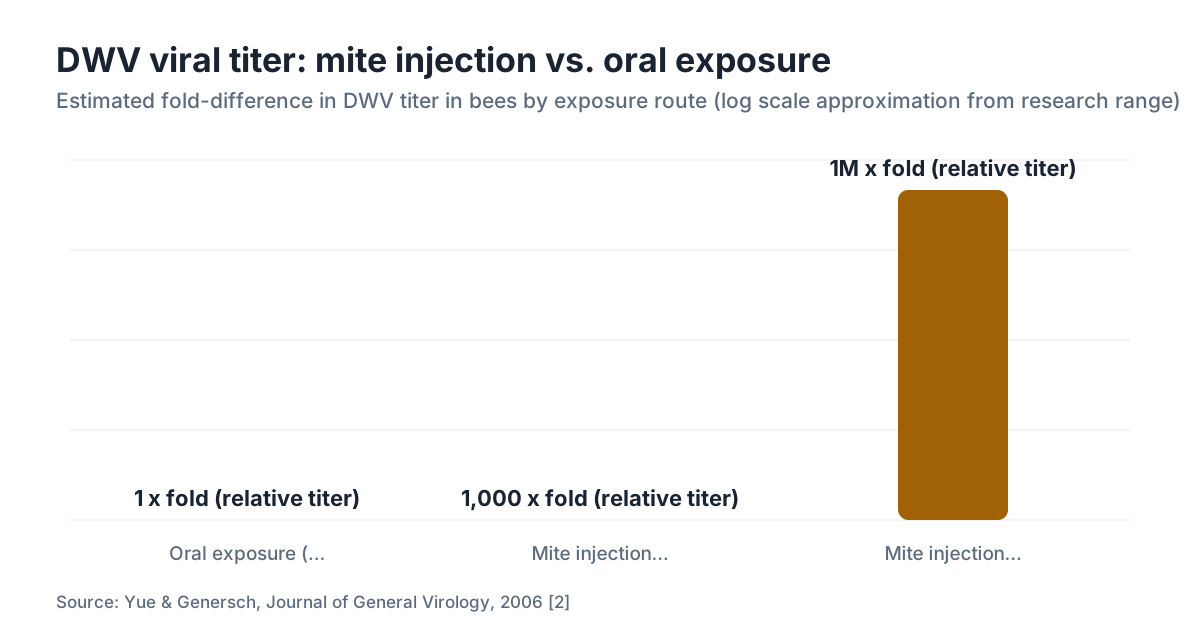
- This bypasses the bee's gut defenses and amplifies viral loads by up to a millionfold compared to oral exposure.
- Controlling mites is the only practical way to control DWV; there is no direct antiviral treatment for colonies.
What is deformed wing virus and why does it matter?
Deformed wing virus (DWV) is a positive-sense single-stranded RNA virus in the family Iflaviridae. It is one of the most widespread honey bee pathogens on the planet, found in managed and feral colonies across every continent where Apis mellifera lives [1]. In colonies with low varroa loads, DWV often circulates at low, largely harmless levels. The trouble starts when mites arrive.
Bees that pick up DWV through normal oral routes, say from contaminated food or bee-to-bee contact, often show few or no symptoms. The gut provides some barrier, and the viral dose stays relatively low. Bees that get DWV injected by a feeding varroa mite are a different story. Viral titers in those bees can be 1,000 to 1,000,000 times higher than in bees exposed only orally, according to a 2006 study by Yue and Genersch published in the Journal of General Virology [2]. That difference is not trivial. It is the difference between a subclinical infection and a bee that cannot fly.
The classic symptom is the one that gives the disease its name: bees emerge from capped brood with shriveled, crumpled wings, distended abdomens, and shortened bodies. They cannot fly. They are evicted or die within days. But visible wing deformity is actually the severe end of the spectrum. Many mite-parasitized bees emerge looking normal yet carry viral loads high enough to shorten their lifespan, impair learning, and reduce their ability to navigate, thermoregulate, and perform waggle dances [3].
How does varroa transmit DWV to bee pupae?
Varroa destructor reproduces exclusively inside capped brood cells. A foundress mite enters a cell about 20 hours before capping, hides under the larval food, and begins feeding once the cell is sealed and the larva is immobile [4]. She feeds by puncturing the bee's cuticle and drawing on the fat body, a metabolically rich tissue that is now understood to replace much of what we used to call the hypopharyngeal gland in terms of immune and nutritional function [5].
DWV enters the developing bee through that feeding wound. The virus is more than sitting passively in the mite's gut. Research published in PLOS Pathogens in 2016 found that varroa actively replicates DWV internally, making the mite a true biological vector rather than a simple mechanical carrier [6]. A mechanical carrier would just smear virus from one surface to another. A biological vector amplifies the pathogen. That distinction matters enormously because it means even a single mite carrying a small initial viral load can deliver a massive dose to a pupa.
The timing is the worst possible scenario for the bee. DWV injection happens during the pupal stage, when the bee's immune system is partially suppressed to allow the radical tissue reorganization of metamorphosis. The bee cannot mount a normal immune response. The virus spreads through the hemolymph unchecked, reaching the developing wing tissue, the brain, and the flight muscles before the bee ever uncaps.
Nurse bees and adult foragers can also carry DWV, and mites feeding on adult bees in the phoretic phase can pick up virus and carry it into the next brood cell. So the transmission cycle runs in both directions: mite to pupa, and adult bee to mite to pupa.
What makes varroa such an effective viral amplifier compared to other routes?
Three things make mite-vectored DWV transmission so much more damaging than any other route.
First, the injection bypasses the gut entirely. Oral DWV has to survive digestive enzymes and cross the midgut epithelium. Injected DWV goes straight into the hemolymph with no barrier. Second, injection happens during a developmental window when the bee is immunologically vulnerable. Third, and probably most important, varroa actively replicates DWV, so the mite is more than a syringe, it is a viral production facility.
A 2019 study in Scientific Reports found that DWV-B (also called Varroa destructor virus 1, or VDV-1), a variant that recombines readily with the original DWV-A strain, has become dominant in varroa-infested populations across Europe and North America [7]. DWV-B appears to replicate more efficiently in both mites and bees, which may explain why colony collapse events correlate so strongly with high mite loads. The Honey Bee Health Coalition's Tools for Varroa Management Guide notes that DWV is detected in nearly all collapsing colonies with uncontrolled mite infestations [1].
For context on scale: a colony that tolerates a 3% mite infestation level entering winter is not dealing with a minor viral burden. At that threshold, a significant fraction of the winter cluster bees were parasitized as pupae and carry elevated DWV titers. Those are the bees that need to survive five or six months to raise the first spring brood. When they die early, the colony goes into a death spiral that looks like starvation or queen failure but is actually viral.
Does varroa transmit other viruses besides DWV?
Yes, though DWV is by far the most studied and most damaging. Varroa has been confirmed or strongly implicated as a vector for several other honey bee viruses [1][8].
| Virus | Acronym | Varroa vector confirmed? | Primary impact |
|---|---|---|---|
| Deformed wing virus type A | DWV-A | Yes | Wing deformity, shortened lifespan, neurological effects |
| Deformed wing virus type B (VDV-1) | DWV-B | Yes | Same as DWV-A, possibly more virulent |
| Sacbrood virus | SBV | Suspected, weaker evidence | Larval death, reduced brood viability |
| Black queen cell virus | BQCV | Suspected | Queen larva mortality |
| Acute bee paralysis virus | ABPV | Yes | Rapid adult bee paralysis and death |
| Israel acute paralysis virus | IAPV | Probable | Adult bee die-off |
| Chronic bee paralysis virus | CBPV | Uncertain | Trembling, hairless bees, dysentery |
Acute bee paralysis virus (ABPV) is worth a specific mention. Like DWV, it causes no visible disease when bees are exposed orally at low doses. When injected by a mite, it is rapidly lethal. ABPV was associated with colony collapse in parts of Europe before DWV became dominant, and it still shows up in diagnostic screens of struggling colonies [8].
The fact that varroa vectors multiple viruses simultaneously is part of why mite control is so non-negotiable. You cannot treat for DWV or ABPV directly in a live colony. The only lever you have is the mite.
At what mite infestation level does DWV become a colony-level problem?
This is where beekeepers often get confused, because the relationship between mite levels and DWV damage is not strictly linear. DWV can amplify quickly once mite populations cross certain thresholds, and the timing relative to the colony's annual cycle matters as much as the absolute count.
The Honey Bee Health Coalition recommends treatment action thresholds of 2% mite infestation (2 mites per 100 bees on an alcohol wash) during the summer brood-rearing season, and some extension programs suggest dropping that threshold to 1% or even 0.5% in the six to eight weeks before winter bees are being raised [1]. The University of Minnesota Extension echoes this, noting that mites reproducing in late-summer brood cells parasitize the very bees that must survive winter [9].
Why does the pre-winter window matter so much for DWV specifically? Winter bees (diutinus bees) are physiologically different from summer bees. They have enlarged fat bodies and higher vitellogenin levels, both of which support their long lifespan. A pupa that gets mite-injected DWV during this developmental period may emerge looking normal but with a compromised fat body and lower vitellogenin. Those bees have shortened lifespans and cannot adequately nurse spring brood. The colony enters spring weak, and beekeepers often blame the winter or the queen when the real damage was done in August.
If you're planning your treatment calendar and want help translating mite counts into action timing, the free protocol tools at VarroaVault can walk you through the math for your specific region and colony count.
Can bees develop resistance to DWV or to varroa vectoring?
Some. This is an active research area with genuinely encouraging early findings, though nobody should bet their colonies on it yet.
Certain honey bee populations with long-term varroa exposure and no treatment show reduced DWV virulence even with mite infestation. A 2022 study of the Gotland bee population in Sweden, isolated and untreated since 1999, found that surviving colonies had significantly lower DWV titers per mite than commercially managed populations, suggesting either viral attenuation, enhanced bee immune response, or both [10]. The researchers were careful not to overclaim. Selection pressure over 20-plus years in an isolated population may not translate to managed apiary conditions.
On the bee behavior side, hygienic behavior traits, specifically Varroa-Sensitive Hygiene (VSH) and general hygienic behavior, can reduce mite reproductive success in brood cells, which indirectly limits DWV transmission by limiting the number of successful mite reproductive events. Bees with strong VSH detect and uncap mite-infested cells, removing mites before they complete reproduction and reducing the total mite population even without chemical treatment [9].
But here is the honest state of things: no commercially available bee stock is resistant enough to DWV transmission that you can skip mite monitoring and treatment. VSH and hygienic traits reduce mite growth rates; they rarely hold mite populations at zero. Monitoring is still mandatory.
What does DWV infection look like in a hive inspection?
The most obvious sign is bees with shrunken, crumpled wings on the landing board or crawling in front of the hive. These are newly emerged bees that cannot fly and are being evicted by healthy bees. If you see more than a handful over a short inspection, your mite load is almost certainly above treatment threshold.
But visible wing deformity is a late sign. By the time you see crawlers, the colony may already have a mite infestation rate well above 3%. Do not use the presence or absence of crawlers as your monitoring method. An alcohol wash or sugar roll on a 300-bee sample is the only reliable way to know where you are [1].
During brood inspection, a patchy or "shotgun" brood pattern can indicate pupae dying from DWV or associated infections, but it can also mean chalkbrood, sacbrood, EFB, or a failing queen. Patchy brood is a reason to do a mite wash, not a diagnosis on its own.
One thing worth watching for: a colony that seemed strong in July and then crashed by September without obvious explanation often has DWV as the underlying driver. The foragers that were your workforce were fine. The late-summer bees that should be replacing them were parasitized as pupae, emerged with high viral loads, and died young. The colony hollowed out from the inside while looking decent from the outside.
How does treating for varroa reduce DWV levels in a colony?
Effective acaricide treatment drops mite populations fast, which does two things for DWV simultaneously: it reduces the rate of new injection events in developing pupae, and it removes a major replication reservoir for the virus itself.
Research has shown that DWV prevalence and titer in a colony fall significantly after successful varroa treatment, though the speed of recovery depends on how much brood turnover has happened. A 2020 study in Viruses found that colonies treated with oxalic acid (brood-free application) showed reduced DWV loads within a single brood cycle after treatment, roughly three weeks [11]. Colonies treated during brood-rearing phases took longer because capped cells still contained both mites and infected pupae.
This is one reason oxalic acid vaporization during a broodless period (late fall, or after an artificial broodless period from queen removal or caging) is so effective at resetting viral loads going into winter. You kill mites that would otherwise parasitize winter bees, and you eliminate the varroa that were replicating and shedding DWV throughout the colony.
Oxalic acid dribble and vaporization are both EPA-registered for use in the United States [12]. The registered products include Api-Bioxal (oxalic acid dihydrate). Formic acid treatments (Mite-Away Quick Strips, Formic Pro) also reduce mite loads effectively and can be used during capped brood stages, though their efficacy against mites in capped cells is lower than against phoretic mites [1]. Synthetic acaricides like Apivar (amitraz) and Apistan/CheckMite+ (fluvalinate and coumaphos, respectively) work over longer contact periods and can achieve high kill rates in brood-rearing seasons.
For managing your treatment rotation and keeping your colony's DWV risk in check, VarroaVault's free protocol tools let you map treatment windows against your local seasonal calendar.
Does DWV spread between colonies, and what role do varroa play in that?
Yes, and varroa are the primary mechanism for inter-colony spread at the landscape level.
Robbing behavior is a major route. When a collapsing, high-mite colony is robbed by neighboring bees, the robbers can pick up both mites and DWV-infected bees and food, bringing both back to their home colony. Drifting drones are another route. Drones move freely between colonies and can carry phoretic mites with them. A 2014 study estimated that drone drift moves varroa between hives within apiaries at a rate that can significantly affect infestation dynamics [4].
At the landscape scale, feral colonies (or poorly managed hobbyist colonies) with high mite loads act as source populations for both mites and virulent DWV strains. This is not a hypothetical concern. In densely managed beekeeping regions, the mite and DWV management choices of one beekeeper affect the mite loads of neighboring colonies through robbing and drift.
The practical implication: even if you run a tight treatment program, you cannot completely insulate your colonies from external mite and virus pressure. Monitoring frequency matters precisely because external introduction can push your counts up faster than normal mite reproduction alone. Monthly alcohol washes during the active season, and a pre-winter wash in late August or September, are the minimum monitoring cadence most extension programs recommend [9].
Learn more about the biology of the mite itself at our varroa mite overview.
What is the current scientific consensus on DWV as the primary driver of colony collapse linked to varroa?
The scientific consensus has converged substantially over the past decade. Varroa-vectored DWV is now considered the single most important cause of winter colony loss in managed honey bee populations in North America and Europe [1][3].
The Honey Bee Health Coalition's Tools for Varroa Management Guide (5th edition) states: "Varroa mites are the single most destructive pest of honey bee colonies worldwide," and specifically identifies DWV transmission as the mechanism linking high mite loads to colony death [1]. A widely cited 2012 paper in PLOS Pathogens by Nazzi et al. provided strong mechanistic evidence that varroa-mediated DWV suppresses the bee's immune system through a complex interaction with the mite's own salivary compounds, creating a more permissive environment for viral replication [3].
What the research has not fully resolved: the exact relative contributions of nutritional damage from mite feeding versus direct viral injection in explaining bee mortality. The two effects are entangled because the same feeding event that injects virus also depletes fat body reserves. Nobody has a clean experimental design that fully separates them in a live colony context. Most researchers treat them as additive, and practically speaking, the result is the same: you need the mites gone.
One area of active debate is the role of DWV-B versus DWV-A in driving the most severe colony losses. DWV-B has shown higher in vitro replication rates in some studies, and its geographic spread since the 2000s correlates with increased winter loss rates in some regions, but causation is still being worked out [7].
What can beekeepers actually do to reduce DWV damage in their colonies?
The short answer: keep mites below threshold, treat at the right times, and monitor before and after every treatment to confirm it worked.
The most useful single action most hobbyists can take is treating before the late-summer window when winter bees are raised. In most of the northern United States and Canada, that means having mites below 1-2% by early August at the absolute latest, which means treating in July if your June or July alcohol wash shows anything above threshold [9]. A treatment that starts in late August is protecting fewer and fewer of the bees that matter for winter survival.
Beyond timing, here are the practical priorities:
First, monitor with alcohol washes, not sticky boards. Sticky boards give you a relative trend but not an accurate infestation rate. An alcohol wash (or equivalent) on 300 bees is the standard [1].
Second, choose treatments based on conditions, not habit. Oxalic acid vaporization is excellent for broodless colonies (or can be repeated over multiple weeks to catch emerging mites). Formic acid works with brood present but has temperature windows. Amitraz strips work year-round but require a full seven-week deployment and should be rotated to avoid resistance. The EPA registration documents for each product list exact application conditions you must follow [12].
Third, re-test three to five weeks after treatment to confirm efficacy. A treatment that only achieved 60% kill because of applicator error or resistance does not look like 60% efficacy from the outside. Your bees will tell you in September.
Fourth, requeen with stock that has documented hygienic behavior or VSH traits when you can. It will not replace treatment, but it buys you margin.
For supplies and equipment to support your monitoring and treatment program, see our guide to beekeeping supply companies.
Frequently asked questions
Can a colony recover from deformed wing virus without treatment?
Rarely, and not reliably. If DWV is circulating at high levels because of uncontrolled mite infestation, the only way to reduce viral loads in the colony is to reduce mites. Once mite populations drop through effective treatment, DWV titers typically fall within one to two brood cycles. Colonies with very low mite loads sometimes suppress DWV on their own, but waiting to see if that happens is a gamble most beekeepers lose.
Is DWV the same as sacbrood virus?
No. Deformed wing virus and sacbrood virus (SBV) are different viruses in different families. SBV causes dead larvae that look like a sac of fluid and is less directly tied to varroa vectoring than DWV. Both can circulate in the same colony. DWV is by far the more damaging and varroa-dependent of the two. Sacbrood often clears on its own in otherwise healthy colonies.
Do sugar rolls work as well as alcohol washes for detecting mites in colonies at risk for DWV?
Sugar rolls are gentler on bees but generally detect 30-60% of the mites an alcohol wash detects on the same sample, according to comparisons summarized by several extension programs. For threshold decisions where accuracy matters, alcohol wash is the standard. If you are squeamish about killing 300 bees per test, a well-done sugar roll is still far better than no monitoring, just be aware the actual infestation rate may be higher than your result suggests.
How long after a successful varroa treatment does DWV start declining in the colony?
Studies using brood-free oxalic acid treatments show measurable DWV titer reductions within one brood cycle, roughly 21 days, after treatment. Treatments applied during brood-rearing phases take longer because newly emerging bees were already parasitized before the mites died. Full recovery of the adult bee population to low-DWV status can take six to eight weeks under ideal treatment conditions.
Can DWV spread through honey or pollen in the hive?
Yes, at low levels. DWV has been detected in honey, pollen, and royal jelly. Oral transmission through these routes is real but produces much lower viral titers than mite injection, and bees exposed orally rarely show clinical symptoms. The gut provides a partial barrier. This route matters most for spreading the virus at a low level through the colony; the damage is done almost exclusively by the mite-injection route.
Why do some heavily mite-infested colonies show no deformed wing bees?
A few explanations exist. DWV strain variation matters: some strains are less virulent even at high titers. Colony genetics matter: some bee populations have immune responses that partially suppress clinical symptoms even with high viral loads. And the timing of infestation matters: a colony with a sudden mite spike that was previously well-controlled may not yet have produced enough parasitized pupae to show visible crawlers. Absence of wing deformity is not a clean bill of health.
Does varroa transmit DWV to bumblebees or other bee species?
Varroa destructor cannot reproduce on bumblebees and does not infest them under normal conditions. However, DWV itself has been found in bumblebees, apparently through shared foraging on contaminated flowers near heavily infested honey bee colonies. This is an environmental spillover concern, not a direct varroa-vectoring event for other species. The varroa-DWV problem, as it affects colony survival, is specific to Apis mellifera.
At what mite percentage should a beekeeper consider a colony at serious DWV risk?
The Honey Bee Health Coalition sets the treatment threshold at 2% during the brood-rearing season (2 mites per 100 bees on an alcohol wash). For the pre-winter window when winter bees are being raised, some extension programs recommend acting at 1% or even lower. Any count above 3% going into fall represents serious DWV risk to winter survival, based on the correlation between mite loads and winter loss rates in field studies.
Can you test a colony for DWV directly, without counting mites?
Commercial diagnostic services and some university labs can run PCR tests to detect and quantify DWV in bee samples. The USDA-ARS Bee Research Laboratory and several private labs offer this kind of screening. For practical colony management decisions, though, a DWV PCR test is not necessary. Mite load is the direct proxy: if your mite count is above threshold, assume DWV is circulating at damaging levels and treat. Direct viral testing is more useful for research than for routine beekeeping.
Does oxalic acid kill DWV directly?
No. Oxalic acid is an acaricide that kills varroa mites. It has no direct antiviral activity on DWV in bees. The reduction in DWV after oxalic acid treatment is entirely indirect: fewer mites means fewer injection events, which means lower viral amplification. This is why timing matters so much. Oxalic acid applied in a broodless period removes all phoretic mites, eliminating the vector. Applied during brood-rearing, it kills phoretic mites but leaves infested capped cells untouched.
What is the difference between DWV-A and DWV-B?
DWV-A is the original deformed wing virus strain. DWV-B (also called Varroa destructor virus 1, or VDV-1) is a closely related variant that emerged from recombination with DWV-A and has become the dominant strain in varroa-infested populations across North America and much of Europe. DWV-B appears to replicate more efficiently in varroa mites, which may contribute to higher viral loads per mite. Both strains cause the same clinical symptoms in bees.
Is there a vaccine or probiotic that can protect bees from DWV?
As of 2025, there is no commercially available vaccine or probiotic proven to protect honey bee colonies from DWV at a colony level. Dalan Animal Health received USDA conditional approval in 2023 for a vaccine targeting American Foulbrood, the first honey bee vaccine approval, but nothing comparable exists for DWV. Research into RNA interference (RNAi) as a potential antiviral approach for bee viruses is ongoing but not yet available to beekeepers.
How do I know if my colony collapsed from DWV versus other causes?
A collapse driven by varroa-DWV typically shows a rapid population decline in fall or early winter, a small remaining cluster or empty hive with food stores still present, a pattern of bees that simply did not live long enough to maintain cluster size, and no obvious signs of disease in adult bees. Confirmed diagnosis requires a mite count history and ideally a PCR test, but in practice, a November collapse in a hive where August mite counts were above threshold is almost always varroa-DWV.
Sources
- Honey Bee Health Coalition, Tools for Varroa Management Guide (5th edition): Varroa mites are the single most destructive pest of honey bee colonies worldwide; DWV detected in nearly all collapsing colonies with uncontrolled mite infestations; 2% treatment threshold recommended during brood-rearing season
- Yue C and Genersch E, Journal of General Virology, 2006: Viral titers in mite-parasitized bees can be 1,000 to 1,000,000 times higher than in bees exposed only orally
- Nazzi F et al., PLOS Pathogens, 2012: Varroa-mediated DWV suppresses the bee immune system through interaction with mite salivary compounds; varroa-vectored DWV is primary driver of winter colony loss
- Fries I and Camazine S, Bee World, 2001; supplemented by drone drift mite transfer estimates: Drone drift moves varroa between hives within apiaries at rates that significantly affect infestation dynamics; varroa foundress enters cells ~20 hours before capping
- Ramsey SD et al., PNAS, 2019, varroa feeds on fat body, not hemolymph: Varroa destructor feeds on the bee's fat body rather than hemolymph, as previously believed; fat body is the primary metabolic and immune tissue affected
- Ryabov EV et al., PLOS Pathogens, 2016: Varroa actively replicates deformed wing virus internally, making it a biological vector rather than a mechanical carrier
- Kevill JL et al., Scientific Reports, 2019: DWV-B (VDV-1) has become the dominant DWV strain in varroa-infested populations across Europe and North America and replicates more efficiently in mites
- de Miranda JR and Genersch E, Journal of Invertebrate Pathology, 2010, comprehensive DWV review: Varroa confirmed or implicated as vector for DWV-A, DWV-B, ABPV, and IAPV; ABPV rapidly lethal when injected by mite
- University of Minnesota Extension, Varroa Mite Management for Honey Bees: Mites reproducing in late-summer brood cells parasitize winter bees; monthly alcohol washes and a pre-winter wash in late August or September recommended; VSH reduces mite reproductive success
- Locke B et al., PLOS ONE / Molecular Ecology, Gotland bee population study, 2022 (research series): Surviving untreated Gotland bee colonies had significantly lower DWV titers per mite than commercially managed populations after 20+ years of selection
- Boncristiani H et al., Viruses, 2020: Colonies treated with oxalic acid in brood-free conditions showed reduced DWV loads within one brood cycle (~21 days) post-treatment
- U.S. EPA, Pesticide Registration, Api-Bioxal (oxalic acid dihydrate) product label and registration: Oxalic acid dribble and vaporization are EPA-registered for use in the United States; Api-Bioxal is the registered oxalic acid dihydrate product
Last updated 2026-07-09