Varrox vaporizer vs ProVap 110: which oxalic acid wand should you buy?
TL;DR
- The Varrox is the proven workhorse: slower to heat (3-4 min), lower throughput, rock-solid reliability, and a sub-$200 price.
- The ProVap 110 heats in about 30 seconds, handles higher OA doses faster, and suits sideliners treating dozens of hives, but costs $350-$450.
- For a hobbyist under 20 hives, the Varrox usually wins on value.
What are the Varrox and ProVap 110, and how do they work?
Both the Varrox and ProVap 110 are oxalic acid vaporizers registered with the EPA for use against Varroa destructor in honey bee colonies [1]. You load a measured dose of oxalic acid dihydrate crystals into a heated pan, slide the wand into a hive entrance, and the crystals sublimate into a vapor that coats the bees and the comb surfaces, killing phoretic varroa on contact.
The chemistry is identical either way. Oxalic acid vapor works because mites cannot detoxify it the way bees largely can. The Honey Bee Health Coalition's Varroa management guide notes that vaporization works best on broodless colonies, because the phoretic mites riding on adult bees are the ones exposed, while mites sealed under capped brood stay protected [2].
What separates these two tools is electrical design, heating element, dose pan geometry, and the speed and safety consequences that flow from those choices. The Varrox uses a 12-volt DC system powered by a car battery or equivalent. The ProVap 110 runs on 110-volt AC, plugging straight into a standard outlet or a heavy-duty extension cord. That single difference shapes almost every comparison below.
For background on the pest you're fighting, see our varroa mite overview.
How do the Varrox and ProVap 110 compare on specs?
Here is the side-by-side. Prices reflect typical US retail as of mid-2025 and can shift by $20-40 depending on supplier.
| Feature | Varrox (EU model) | ProVap 110 |
|---|---|---|
| Power source | 12V DC (car battery) | 110V AC (outlet) |
| Typical retail price | $160-$200 | $350-$450 |
| Heat-up time | ~3-4 minutes | ~25-35 seconds |
| Dose capacity | ~1 g OA per treatment | 1-2 g OA per treatment |
| Treatment time per hive | ~2.5 min total | ~1.5 min total |
| Cord / extension needed | Battery cables (~4 ft) | Heavy-duty 12-14 AWG ext. cord |
| Weight of wand | ~300 g | ~600 g |
| Approximate lifespan (reported) | 5-10+ years | 5-8 years (element replacement typical) |
| EPA registered for US use | Yes [1] | Yes [1] |
A few caveats. The heat-up times above come from manufacturer specs and beekeeper field reports, not a controlled head-to-head study, so your battery condition, ambient temperature, and extension cord gauge will move the ProVap numbers in the real world. Nobody has published a peer-reviewed speed comparison of these two specific units.
For a broader look at where to source these tools, our beekeeping supplies page covers major suppliers, and our beekeeping supply companies article lists vendors with the best stock consistency.
Which vaporizer is faster, and does speed actually matter?
The ProVap 110 is meaningfully faster per hive once it reaches operating temperature, and that gap matters more than it sounds when you're treating 30 or 40 colonies in cold November air.
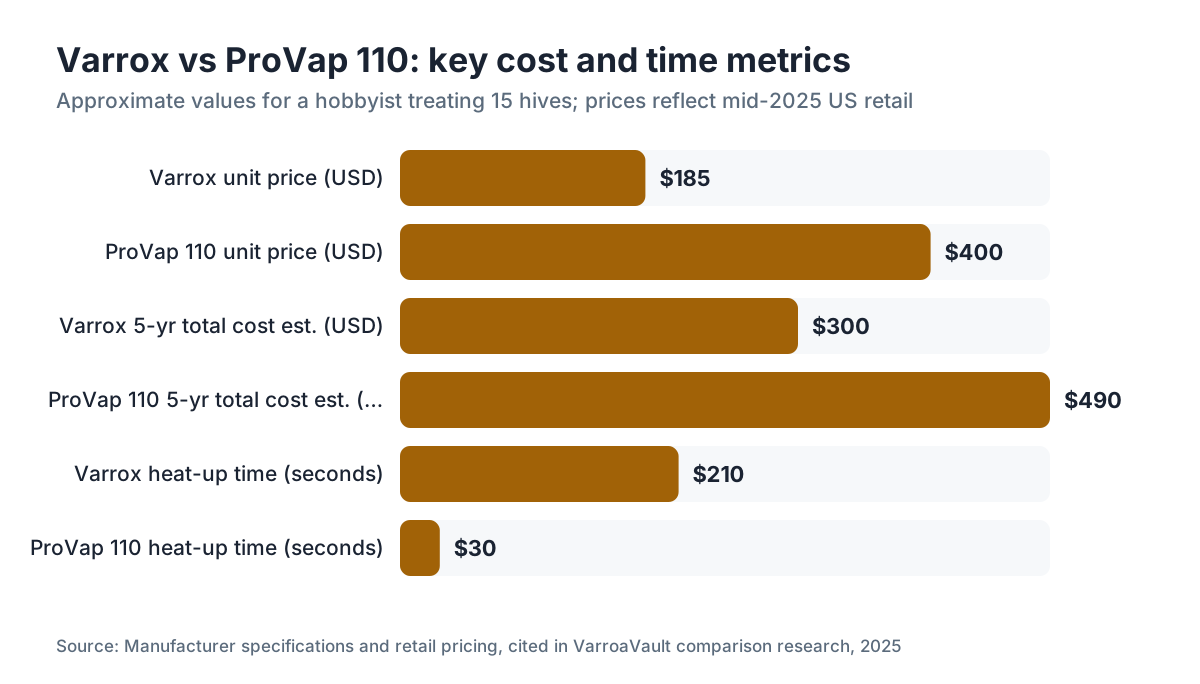
Heat-up time is where the difference is loudest. The ProVap hits working temperature in roughly 30 seconds after you flip the switch [3]. The Varrox, running off 12V, takes 3 to 4 minutes to sublimate the OA charge fully. Treating 5 hives, that difference is maybe 15 extra minutes. Treating 50, you're standing in a cold apiary for an extra two hours.
That said, at 10-20 hives the Varrox's pace is rarely the bottleneck. The real bottleneck is sealing entrances, waiting out the full 2.5-minute exposure window, walking between hives, and peeling gloves on and off. The Varrox heat-up overlaps naturally with those tasks if you load it at one hive while the timer runs on the last one.
Speed earns its keep when you're doing multiple oxalic acid treatments in the broodless window, which in many climates lasts only a few weeks. The Honey Bee Health Coalition recommends treating when colonies are broodless or near-broodless for best efficacy [2]. Getting every hive treated in that window with the Varrox is doable for a sideliner at 20-30 hives but starts to feel rushed beyond that.
Is the ProVap 110 safer to use than the Varrox?
Neither tool is inherently safer. Oxalic acid vapor is a respiratory and eye hazard no matter what device makes it. The EPA label for approved oxalic acid vaporization products requires a NIOSH-approved respirator with an OV/P100 combination cartridge, chemical-splash goggles, chemical-resistant gloves, and a long-sleeved shirt [1]. Those requirements apply to both vaporizers equally.
The practical safety difference is electrical. The Varrox runs at 12V DC, so if the wand shorts or you touch the heating element, the shock risk is low. The ProVap runs at 110V AC. That matters if you're working in wet grass, rain, or with a worn cord. Never run the ProVap off a cheap 16-gauge household extension cord, because voltage drop under load can overheat it, and any water intrusion in an AC circuit is more dangerous than in a 12V system.
Battery setups carry their own risks. Car batteries hold sulfuric acid, and connecting cables backward can arc or damage the battery. Sealed AGM (absorbed glass mat) batteries are the cleaner choice for Varrox use in the field.
Let both devices cool fully before you handle the dose pan or move the wand. The OA residue left in the pan is still chemically active. Rinse it with water before storage.
What do the EPA label and registration say about using these vaporizers?
Oxalic acid for honey bee colonies is registered under EPA Registration Number 87243-1, which covers oxalic acid dihydrate products like Api-Bioxal used with approved vaporizers [1]. The label sets the approved application method (vaporization, dribble, or spray), the maximum dose per application, and the required personal protective equipment.
For vaporization, the Api-Bioxal label allows one gram of oxalic acid dihydrate per brood box with approved equipment. It also says you should not treat more than once per year by vaporization when brood is present, but there's no limit on the number of broodless-period treatments. That's why the fall and winter broodless window is the main application season for most US beekeepers [1].
The Varrox and ProVap 110 are both used as compatible equipment under the EPA-registered label. Using unapproved oxalic acid products, or applying above label rates, is illegal under FIFRA (the Federal Insecticide, Fungicide, and Rodenticide Act) regardless of which device you own [4]. The statute makes it unlawful "to use any registered pesticide in a manner inconsistent with its labeling."
Read the current Api-Bioxal label before you treat. Dosing guidance has changed since the original registration, and state rules can stack on top of the federal label.
How does cost of ownership compare over 5 years?
Purchase price is only part of the picture. Here's how the math shakes out over five years for a hobbyist treating 15 hives.
The Varrox costs roughly $170-$200 upfront. You'll need a 12V battery if you don't already own one. A sealed AGM deep-cycle battery runs $50-$100 and typically lasts 3-5 years with decent care. Total Varrox startup for someone building from scratch: $220-$300.
The ProVap 110 costs $350-$450. Add a heavy-duty extension cord (14 AWG or better, 50 feet) for $25-$40. Total startup: $375-$490.
Both tools use the same Api-Bioxal oxalic acid, so consumables are equal. Heating element replacement on the ProVap is a known maintenance item. Replacement elements cost around $30-$50 and are field-replaceable, but some users report needing one every 3-5 years. The Varrox is simpler electrically and has fewer reports of element failure, though the 12V battery replacement every few years is its own recurring cost.
Over five years, the Varrox typically runs $50-$100 cheaper in total cost of ownership for a small operation. That gap narrows as hive count climbs, because the time saved with the ProVap turns into real productivity value, especially if your time has any price on it.
If you're figuring out where to buy, our free shipping honey bee supply companies article can shave another $15-$30 off the purchase.
Which vaporizer works better for a hobbyist with fewer than 20 hives?
The Varrox. Full stop, with honest caveats.
Under 20 hives, heat-up time isn't a bottleneck. The Varrox's slower cycle matches the natural rhythm of moving between hives, which you're doing anyway. The lower price leaves money for Api-Bioxal, protective gear, and mite monitoring supplies, all of which matter more to your mite outcomes than which vaporizer you own.
The Varrox has been in commercial use in Europe since the early 2000s and has a long track record in hobby apiaries. Parts are available, and the mechanics are simple enough that most problems are diagnosable at home without shipping the unit off.
There's one scenario where I'd point a hobbyist at the ProVap anyway: a home apiary with a 110V outlet right there, and a real hatred of batteries. Some beekeepers find the battery setup a genuine annoyance, especially in winter when battery performance drops and you might treat several apiaries in a day. If that's you, the ProVap's plug-in convenience is worth the premium.
Which vaporizer is better for a sideliner treating 30 to 100 hives?
At 30-plus hives, the ProVap 110 starts earning its price. The speed difference per hive is roughly 1-1.5 minutes once you spread heat-up time across treatments, which adds up to 30-75 minutes saved across a 50-hive session. In a tight November broodless window, that time can decide whether you finish in one day or split into two.
The ProVap's AC power also kills the battery variable. Cold batteries underperform, and running a Varrox off a battery that's partly discharged from earlier treatments means longer heat-up and inconsistent sublimation. The ProVap on AC from a generator or site outlet stays more consistent.
For remote apiaries with no AC power, the Varrox wins by default. You can't run the ProVap off a standard automotive battery or a small inverter reliably. A 110V inverter big enough for the ProVap's heating element draws heavy current and adds its own cost and failure points.
The honest recommendation for a sideliner: if every apiary has reliable AC access, buy the ProVap. If any yard is remote, own both, or run the Varrox everywhere and eat the time cost. Mixing vaporizer types across a multi-yard operation is common.
Can you use the Varrox or ProVap 110 with brood present?
Yes, technically, with important caveats from the label and from efficacy research.
The Api-Bioxal label allows vaporization when brood is present, but the restriction is that you should not apply by vaporization more than once per year while brood is present. There's no such annual limit on treatments applied to broodless colonies [1].
Efficacy is what really limits brood-present treatments. A 2016 study in PLOS ONE found that a single oxalic acid vaporization treatment cut phoretic mite loads by over 90%, but repeated treatments were needed to manage mite populations when brood was present, because mites sealed in brood cells are shielded from the vapor [5]. Repeated treatments every 4-5 days across the capped brood cycle (roughly 12 days for worker brood) can clear an infestation, but that means multiple entries and multiple OA doses, and the label limits complicate it.
Most US beekeepers use OA vaporization in the broodless window (typically late November through January, varying by region). Using it as the sole summer treatment while brood is present takes a carefully designed multi-treatment protocol and doesn't replace a thorough monitoring program.
The Honey Bee Health Coalition's Varroa management guide has a detailed brood-cycle treatment table worth printing before you design a summer protocol [2].
What PPE do you actually need when using either vaporizer?
The EPA label is explicit: a NIOSH-approved respirator rated for organic vapors and particulates (OV/P100 combination cartridge), chemical-splash goggles (more than safety glasses), chemical-resistant gloves (nitrile or neoprene, not thin latex exam gloves), and a long-sleeved shirt [1].
The respirator is the piece most beekeepers skip or underspec, and it's the most important one. Oxalic acid vapor is a respiratory irritant. A single short exposure probably won't hospitalize you, but cumulative exposure across a treating season is a real concern. The OSHA permissible exposure limit for oxalic acid dust and vapor is 1 mg/m3 as an 8-hour time-weighted average [6]. You can blow past that limit standing next to an actively vaporizing wand without respiratory protection.
Half-face respirators with P100 and organic vapor cartridges cost $30-$60. A 3M 6500 series or equivalent is fine. Replace cartridges on the manufacturer's schedule, not by smell, because OA vapor breakthrough may not carry a strong warning odor.
Goggles matter more than many beekeepers think. OA vapor can irritate the eyes and, at high concentration, damage corneal tissue. Your vented beekeeper veil is not a substitute for chemical-splash goggles.
Where can you buy the Varrox and ProVap 110, and what should you look for in a supplier?
Both vaporizers sell through major US beekeeping supply companies. Mann Lake, Dadant, and a handful of specialty suppliers stock one or both. Availability swings, especially for the ProVap 110, which has hit periodic supply gaps tied to manufacturing and import timing.
When you buy, confirm the unit is EPA compliant for US use. Some Varrox versions sold in Europe differ slightly from the US-market model, and while the chemistry is the same, using an uncertified device with Api-Bioxal can create label compliance headaches.
Buying direct from a US distributor rather than a third-party marketplace usually gives you cleaner warranty support. Both tools are durable, but if a heating element fails, you want a supplier who can ship a replacement element instead of demanding you return the whole unit.
VarroaVault's free varroa management tools include a treatment timing calculator and a mite wash tracker that pair well with whichever vaporizer you choose. They tie your OA treatment dates to actual mite counts rather than a fixed calendar.
For broader sourcing options, our beekeeping supply companies article covers what to look for in a supplier when you're buying tools you'll use for years.
What are the most common mistakes beekeepers make with OA vaporizers?
The biggest mistake is treating without monitoring first. Vaporization is only as useful as the mite problem you're solving. If you treat in October without an alcohol wash or sticky board count from September, you're flying blind. The Honey Bee Health Coalition recommends treating when mite loads pass 2 mites per 100 bees (2%) during the brood-rearing season, based on alcohol wash results [2].
Second most common: not sealing the entrance long enough. Both vaporizers need the entrance blocked for about 2.5 minutes after the OA has fully sublimated. Pull the seal early and you cut vapor exposure time and kill fewer mites. Use a timer, not your gut.
Third: worn or cheap PPE. Swapping the organic vapor cartridge once a season instead of on the manufacturer's schedule, or using vented safety glasses instead of goggles, puts you at real risk.
Fourth: wrong product or wrong dose. Api-Bioxal is the only oxalic acid product currently labeled for use in hives with bees present in the US [1]. Hardware-store or woodworking oxalic acid is not legal for this and may carry impurities.
Fifth: ignoring battery condition on the Varrox. A weak battery causes incomplete sublimation. Dose that doesn't fully vaporize sits in the pan, may drip, and leaves you with a residue problem and a weaker mite kill.
Frequently asked questions
Is the ProVap 110 worth the extra $150-$250 over the Varrox for a hobbyist?
For most hobbyists under 20 hives, no. The ProVap's speed advantage is real but rarely the bottleneck at that scale, and the Varrox's simpler 12V design is reliable and easy to troubleshoot. If you have AC power at your apiary and hate managing batteries, the ProVap's convenience may justify the premium. Otherwise, save the money for monitoring supplies and Api-Bioxal.
Can I run the ProVap 110 from a generator in a remote apiary?
Yes, as long as the generator produces stable 110V AC and you use an adequately rated heavy-duty extension cord (14 AWG or better). A small 1000-2000W inverter generator handles the ProVap's load. Check that your generator's output voltage stays stable under load, because fluctuations can stress the ProVap's heating element over time.
How long does an oxalic acid treatment actually take with each vaporizer?
With the Varrox, allow 3-4 minutes for heat-up plus 2.5 minutes with the wand in the hive, so roughly 6-7 minutes per colony from loading to removing the seal. The ProVap heats in about 30 seconds, dropping total time to 3-4 minutes per colony. Over 20 hives, the ProVap saves roughly 40-60 minutes of treatment time.
Do I need a prescription or permit to buy oxalic acid vaporizers or Api-Bioxal?
In the US, Api-Bioxal is over the counter, no prescription needed. The vaporizers are equipment, not pesticides, so no permit is required to purchase them. But using a vaporizer to apply oxalic acid in a colony means following the EPA-registered Api-Bioxal label, including its PPE requirements and dose restrictions.
How many times can I treat with oxalic acid vaporization in one year?
The Api-Bioxal label limits vaporization to once per year when brood is present. When colonies are broodless, there's no stated annual limit on the number of vaporization treatments. Most beekeepers apply 2-3 treatments spaced 4-7 days apart during the broodless window to clear mite populations that were under capped brood during the first treatment.
Will oxalic acid vaporization harm the queen or brood?
At label-rate doses, OA vaporization has a low impact on adult bees and queens. Brood in capped cells is physically shielded from vapor. Open brood (eggs and young larvae) can show some sensitivity to high vapor concentrations, which is one reason the broodless window is preferred. Studies have not shown significant queen loss from correctly dosed OA vaporization.
What is the correct dose of oxalic acid to use per hive with a vaporizer?
The Api-Bioxal label specifies one gram of oxalic acid dihydrate per brood box per application. For a double-deep colony, that means 1 gram per box, applied from a single entry point if the colony is connected, or separately if the boxes are isolated. Always follow the current label; dose guidance has been revised since the original registration.
How do I know if my OA vaporization treatment actually worked?
The only reliable check is mite monitoring before and after. Do an alcohol wash before treating to set your baseline. Repeat the wash 5-7 days after your final treatment in the broodless window. If mite levels drop below 1-2 per 100 bees (1-2%), the treatment worked. A sticky board count during treatment shows mite drop but won't give you a percentage.
Can I use cheap oxalic acid from a hardware store instead of Api-Bioxal?
No, not legally in the US. Api-Bioxal is the only EPA-registered oxalic acid product approved for use in honey bee colonies with bees present. Hardware-store oxalic acid (sold for wood stripping) is not purified to the same standard and may contain metal contaminants. Using it in hives violates FIFRA and could harm bees beyond the mite-control intent.
Does the Varrox or ProVap heat the oxalic acid more evenly?
Both vaporizers use a resistive heating element that brings the dose pan to sublimation temperature. The ProVap's design is generally reported to produce more consistent vapor because the 110V element heats faster and holds temperature more steadily than a 12V element on a partly discharged battery. Battery condition is the main variable that affects Varrox consistency in the field.
How should I store my vaporizer between treatment seasons?
Let the pan cool completely after the final treatment, then rinse it with clean water to remove OA residue and dry it thoroughly before storage. Store the vaporizer in a dry spot out of direct sunlight. For the Varrox, disconnect it from the battery and keep the battery on a maintainer or trickle charger so it holds charge for the next season.
Are there any other OA vaporizers worth comparing to these two?
Yes. The Heilyser Tech-1200 (Canada-based, 12V) and the SubliMate (also 12V) are alternatives to the Varrox in the same price tier. The Varomorus and GiantBeetle vaporizers are budget options under $100. None have the track record of the Varrox or the throughput of the ProVap 110, but they're worth knowing about when supply is short.
What respirator cartridge do I actually need for OA vaporization?
You need a combination OV/P100 cartridge: the P100 filters particulates and the OV (organic vapor) component handles the acid vapor phase. A half-face respirator like the 3M 6500 series with 60926 or 60923 combination cartridges is widely used. Replace cartridges on the manufacturer's schedule, not when you notice a smell, because the OA vapor detection threshold may sit above the safe exposure level.
Sources
- EPA, Api-Bioxal oxalic acid product label (Registration No. 87243-1): Api-Bioxal is the EPA-registered oxalic acid product for honey bee varroa control; label specifies 1 g per brood box by vaporization, required PPE, and once-per-year limit when brood is present
- Honey Bee Health Coalition, Varroa Management Guide (2022 edition): OA vaporization is most effective in broodless colonies; treatment threshold is 2 mites per 100 bees during brood-rearing season based on alcohol wash
- EPA, Federal Insecticide, Fungicide, and Rodenticide Act (FIFRA) overview: FIFRA makes it unlawful to use any registered pesticide in a manner inconsistent with its labeling, or to use unregistered products
- Gregorc A. et al., PLOS ONE (2016), Oxalic acid vaporization efficacy study: A single OA vaporization treatment reduced phoretic mite loads by over 90%; repeated treatments needed when brood present because sealed brood protects mites
- OSHA, Occupational Chemical Database: Oxalic acid: OSHA permissible exposure limit for oxalic acid dust and vapor is 1 mg/m3 as an 8-hour time-weighted average
- Penn State Extension, Varroa Mite Management in Honey Bee Colonies: OA vaporization during the broodless period (late fall through winter) is a primary varroa control strategy for US beekeepers
- USDA Agricultural Research Service, Honey Bee Health Research: Varroa destructor is the primary pest of managed honey bee colonies in the United States
- National Pesticide Information Center, Oxalic Acid Fact Sheet: Oxalic acid vapor is a respiratory and eye irritant; chemical-splash goggles and OV/P100 respirator required for safe use
- MSU Extension, Varroa Mite Management for Michigan Beekeepers: Broodless window in northern US climates is typically late November through January, the optimal period for OA vaporization
Last updated 2026-07-09