Battery powered vaporizer for remote apiaries: the full guide
TL;DR
- A 12V battery-powered oxalic acid vaporizer treats remote hives for varroa with no generator and no grid power.
- Most units heat a measured OA dose in 2-3 minutes per hive, run 30 to 60 treatments per charge, and cost $150 to $400.
- Pair one with a deep-cycle or lithium battery and you have a self-contained varroa kit for off-grid yards.
Why does power source matter so much for remote apiary treatments?
Varroa don't care that your apiary sits two miles down a logging road. The mites keep breeding on a 10-to-12-day cycle, and if you skip a treatment window because hauling a generator felt like too much hassle, you pay for it in dead colonies by February. That's the problem a battery-powered vaporizer solves.
Grid-tied vaporizers (110V or 220V units) are excellent at a home yard. At a remote site they're dead weight unless you already run a generator for some other reason, and even then the generator adds noise, fuel cost, fumes, and one more machine that can quit on you. A 12V DC vaporizer wired to a battery you charge at home flips the whole thing around. You treat on the mites' schedule, not the generator's.
Run 20 to 150 colonies across multiple yards and the difference compounds. Driving a full treatment circuit in a day with a battery kit, instead of scheduling separate generator hauls, can cut treatment labor by half. Nobody has published a controlled study on that specific time savings, so treat it as a consistent field report from sideliners who made the switch, not a hard number.
Oxalic acid vaporization is the dominant method for remote battery treatment, and that's what most of this article covers. Oxalic acid is registered by the EPA as an active ingredient in products like Api-Bioxal [1], and the vaporization (sublimation) method is approved under the Api-Bioxal label for hives with or without brood, with defined treatment intervals [2].
How does a battery-powered oxalic acid vaporizer actually work?
The mechanism is simple. You load a measured amount of oxalic acid dihydrate crystals (1 to 2 grams per brood box, per the Api-Bioxal label) into a metal pan at the end of a heated wand. The wand climbs to roughly 315 to 375 degrees F (157 to 190 C), hot enough to sublimate the crystals into vapor without scorching them. That vapor rises through the hive, settles as fine crystals on bees and comb, and kills varroa on contact.
The power side is a pair of alligator clips or ring terminals running to a 12V source. Most vaporizers pull 8 to 18 amps during the heating cycle, which lasts 2 to 3 minutes. After heating you wait 10 minutes with the hive sealed (or at minimum sealed at the bottom board) before you move on. So a single-brood-box colony takes about 12 to 15 minutes start to finish. A yard of 20 hives takes 4 to 6 hours solo, once you count walking between hives and reloading OA.
Some units have a digital timer and auto-shutoff. Others are manual and need a separate timer. Auto-shutoff matters because overheated OA throws off nitrogen dioxide and other byproducts you don't want to breathe. Read your specific product's directions for use before the first treatment, not while you're kneeling in the grass with a live wand.
A word on the chemistry. Oxalic acid is acutely toxic to people. The vapor harms lungs and irritates eyes and skin. Proper PPE means a half-face respirator with P100/OV cartridges (an N95 alone is not adequate for this vapor), nitrile gloves, and eye protection [2]. This is non-negotiable, and it gets more serious when you're alone at a remote site with no one to call.
What battery do you need for a remote apiary vaporizer setup?
A 35Ah sealed lead-acid (SLA) battery handles 30 to 40 full treatments in moderate weather, and that's what I'd start with for most remote yards. Most 12V OA vaporizers list a 7 to 12 amp-hour minimum, but that's the floor, not the target. Cold weather, long wires, or a tired battery all stretch heat-up time and cut your cycle count.
Here's the math. A vaporizer pulling 10 amps for 2.5 minutes per treatment uses about 0.42 amp-hours per hive. Fifty hives need roughly 21Ah, ignoring inefficiency. Add a 20% efficiency loss for lead-acid chemistry at higher discharge rates and you want at least a 26Ah battery for 50 hives, with margin for a second pass or a slow-charging day. A 35Ah SLA weighs about 22 to 25 lbs. Fine in a truck or on an ATV.
Lithium iron phosphate (LiFePO4) batteries weigh far less for the same capacity (a 30Ah LiFePO4 runs 8 to 10 lbs against 22-plus for SLA) and hold capacity better in the cold, which counts if you're treating in October. They cost 2 to 4 times more up front. For a sideliner running 100-plus hives across remote yards, the weight and cold-weather reliability likely earn the price. For a hobbyist with 10 hives in one yard, a good SLA is plenty.
| Battery Type | Typical Ah | Approx Weight | Relative Cold Performance | Approx Cost |
|---|---|---|---|---|
| Sealed Lead-Acid (SLA) | 35 Ah | 22-25 lbs | Fair (drops 20-30% at freezing) | $50-$90 |
| AGM | 35 Ah | 21-24 lbs | Good (slightly better than SLA) | $70-$120 |
| LiFePO4 | 30 Ah | 8-10 lbs | Excellent | $150-$280 |
Solar trickle charging pays off for yards you visit rarely. A 20 to 40W panel with a basic charge controller keeps a 35Ah SLA topped off between trips. The panel lives at the site; the vaporizer and battery ride with you. Some beekeepers leave a battery on-site under a solar float charge and swap it for a fresh one each visit. Both work.
Which battery-powered vaporizers are worth buying?
The market splits into a few serious players and a long tail of cheap import units. The cheap ones aren't always junk, but their heating elements run less consistent, and a handful have started fires when the auto-shutoff failed. At a remote yard, working alone in dry grass, reliability beats saving $50 every time.
The Varomor (Andermatt BioVet) and Mann Lake's oxalic acid vaporizer are two US-market units with reasonable track records. The ProVap 110 has a built-in timer and a wider pan that some beekeepers like for throughput. Sublimox, a Swiss-made unit with an aluminum head, holds heat well and shows up in a lot of commercial operations; it sits at the top of the price band ($350 to $400).
What to look for in any unit:
- Consistent heat-up time (should hit operating temperature in 60 to 90 seconds)
- Auto-shutoff or timer included (not optional for remote solo work)
- Cable length of at least 5 to 6 feet (short cables force awkward battery placement)
- A pan that holds 1 to 2g of OA crystals without spilling as you load
- Parts availability (what's the lead time on a replacement heating element?)
A quality unit runs $150 to $400. Anything under $100 I'd research hard before I trusted it at a remote site.
When you're building the full kit, our roundup of beekeeping supply companies tracks current availability and pricing on the major units, since stock swings by season.
VarroaVault's free varroa management protocol tool schedules treatment windows around brood breaks and seasonal timing, which helps when every remote yard visit is a planned half-day trip.
Is oxalic acid vaporization legal and effective in all US states?
Yes, with a couple of caveats. Api-Bioxal, the EPA-registered oxalic acid product cleared for vaporization in the US, carries federal registration [1]. State registration varies. Most states accept the federal registration, but a few have historically lagged. USDA's Agricultural Marketing Service confirms OA's allowed use in organic operations under the National Organic Program, which is one reason beekeepers pushed hard for federal registration [3].
The Api-Bioxal label caps you at 3 treatments per year when brood is present, no closer than 7 days apart. During a broodless period (winter cluster or an induced broodless state), a single treatment reaches 90-plus percent efficacy against varroa [4]. The Honey Bee Health Coalition's Tools for Varroa Management guide states that oxalic acid "has high efficacy against phoretic mites" and recommends it during broodless periods as part of an integrated approach [5].
Remote yards and the broodless window fit together well. One trip, treat every hive, get very high knockdown. If you can't induce a broodless state through queen caging, treating during natural winter cluster in late November or December across most US climates catches a naturally low-brood window.
Check your current state department of agriculture for any state-specific registration rules. California, for one, has had stretches where state re-registration ran behind federal approval.
One more thing. OA vaporization is not approved everywhere. Canadian beekeepers operate under PMRA registration, not EPA, and the approvals differ. If you're in Canada, check Health Canada's Pest Management Regulatory Agency listings instead of leaning on US label information.
What PPE and safety gear do you need in the field?
Working alone at a remote site raises the stakes on PPE. No one is nearby if you inhale OA vapor or catch a spit of crystals in your eye. Treat it that way.
The Api-Bioxal label requires [2]:
- A NIOSH-approved half-face respirator with organic vapor (OV) plus P100 particulate cartridges. An N95 alone is not enough for OA vapor.
- Chemical-resistant gloves (nitrile works; latex does not)
- Protective eyewear (safety glasses at minimum; goggles preferred)
- Long sleeves and closed-toe shoes
Beyond the label, a few habits: never put your face in the airstream above the hive entrance or top. Wind shifts fast. Stand upwind. Keep your respirator on until you're at least 15 to 20 feet from the treated hive with the entrance sealed.
Carry a sealed bottle of water for an eye rinse. OA crystals can spit during loading, especially if the pan hasn't fully cooled from the last hive. Let the pan cool 2 to 3 minutes between treatments, or carry a second pan and rotate.
Store oxalic acid in a sealed, labeled container in a cool dry place, out of your vehicle cab. A locked plastic bin in the truck bed is fine. Keep it away from food and water. OA corrodes metals over time, so keep it clear of your vaporizer's circuit connections.
Tell someone where you're going before every remote trip. That's not bee advice, it's field-work basics. A chemical exposure or a fall while carrying gear at an isolated site with no cell signal is a real emergency.
How long does a battery charge last across multiple hives?
A 35Ah AGM battery running a 10-amp vaporizer at moderate temperatures (55 to 75 F) handles 40 to 50 full treatment cycles before voltage sags enough to drag out heat-up times. That's the benchmark most beekeepers care about. The real answer depends on three things: battery capacity, vaporizer draw in amps, and ambient temperature. Each cycle counts as 2.5 minutes of heating plus auto-shutoff. Most manufacturers publish a per-treatment Ah draw; check it.
Cold is the wildcard. Lead-acid batteries lose 20 to 30% of rated capacity at 32 F (0 C), and more below that [6]. Doing fall treatments in a cold northern climate? Start fully charged and plan for a 25 to 30% cut in cycle count. A neoprene battery wrap or a small insulated box helps.
For yards over about 30 hives, carry two charged batteries instead of betting one goes the distance. The extra weight is cheap insurance. You can also trickle-charge the depleted battery off your truck's alternator while driving between yards, using a proper battery-to-battery charger (not jumper cables).
A field tell: when heat-up creeps from 90 seconds toward 2-plus minutes, your battery is running low. Don't push past 2.5 times normal heat-up time. Past that you aren't sublimating OA properly, and you're burning through crystals and daylight.
What does a full remote apiary treatment kit look like?
Here's what I pack for a solo trip to treat 20 to 30 hives at a remote yard:
- Battery-powered OA vaporizer with cable and charging clips
- 35Ah AGM (or 30Ah LiFePO4) battery, fully charged
- Api-Bioxal (or another EPA-registered OA product) in a sealed labeled container
- 1g measuring spoon (many kits include one; verify before the trip)
- Half-face respirator with fresh OV/P100 cartridges (cartridges age once opened; check them)
- Nitrile gloves, safety goggles
- Foam or rubber entrance reducers or tape to seal hives during treatment
- Timer (phones work, but signal is spotty at remote sites, so a dedicated timer is smarter)
- Sealed water bottle for an eye rinse
- Hive record sheet or a phone app for logging treatment dates
Consumables and equipment (leaving out the battery, which you probably already own or can buy for other uses) run roughly $250 to $500 for a quality setup. One-time cost, and it pays back in efficacy and saved time across a season.
For sourcing individual pieces, our guide to beekeeping supplies covers what to look for in each category. Reading up on the varroa mite lifecycle before you design your schedule is genuinely useful, because the timing of broodless periods and reinfestation risk from neighboring colonies drives when your remote trips need to land.
How do you treat correctly to avoid killing bees or damaging the queen?
OA vaporization at the label rate is well tolerated by adult bees and queens when you do it right. Trouble comes from three things: overdosing, treating too often, or treating with the hive open or poorly sealed.
The Api-Bioxal label specifies 1 gram of OA dihydrate per brood box [2]. A two-deep colony gets 2 grams total, one application, hive sealed. Do not double-dose on the theory that more is better. OA is toxic to bees at high concentrations. One study found no measurable harm to queens or worker longevity at label rates, with queen mortality rising only at 2 to 3 times the label dose [7].
Sealing the hive is the other half. The vapor needs to stay inside long enough to reach every bee in the cluster. Entrance blocked (reducer to the smallest opening or a foam plug), top ventilation closed during treatment, 10-minute contact time minimum. After 10 minutes, open the entrance. Some beekeepers push to 15 minutes in very large colonies.
Don't vaporize hives sitting in full sun on a hot day. Heat stress stacked on OA vapor can trigger absconding. Treat early morning or late afternoon in summer, or any time of day in fall and winter.
Frequency limit, straight from the label: no more than 3 treatments when brood is present, at least 7 days apart. During a fully broodless period there's no capped brood shielding mites, so one treatment does the job, and extra rounds just add stress with no real payoff.
How do battery vaporizers compare to other remote varroa treatment options?
Look at the full menu of no-grid options and you can see exactly what you're choosing against.
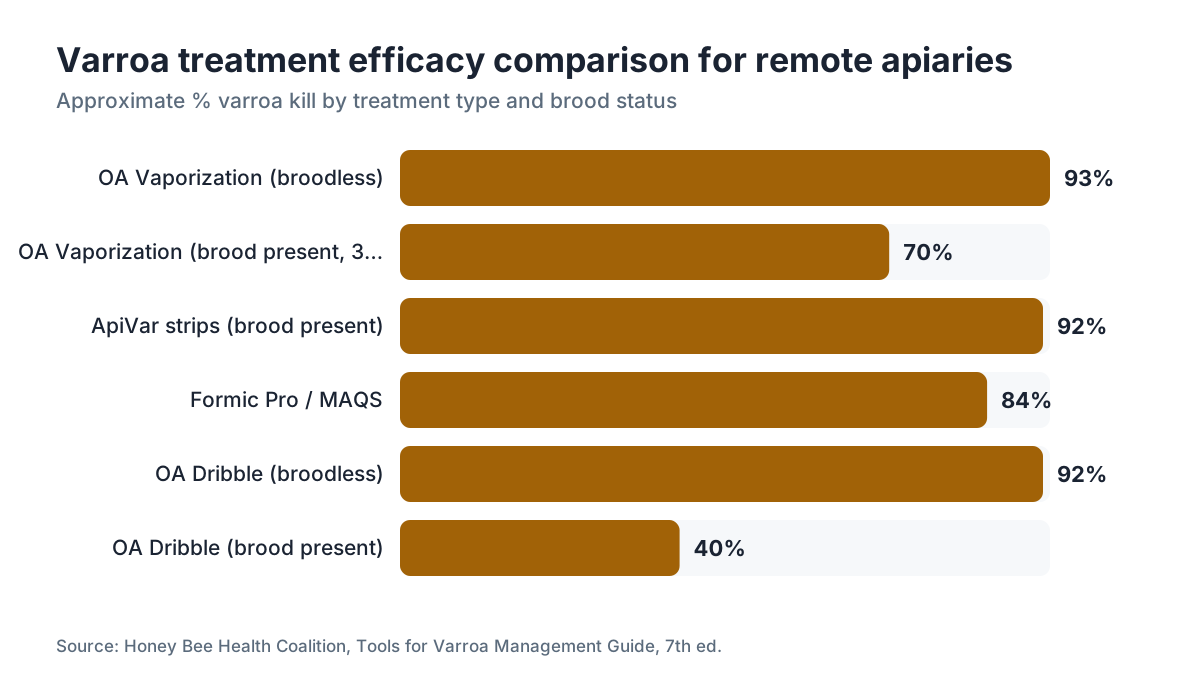
| Treatment | Power Required | Efficacy (Broodless) | Efficacy (Brood Present) | Labor per Hive | Cost to Start |
|---|---|---|---|---|---|
| OA Vaporization (battery) | 12V DC | 90-97% [4] | 60-80% (with repeat treatments) | Low | $150-$400 (vaporizer) |
| OA Dribble (no power) | None | 90-95% [4] | 30-50% | Medium | Under $30 |
| ApiVar (amitraz strips) | None | ~90% [8] | ~93% [8] | Low | ~$3-5/strip |
| Formic Pro (formic acid) | None | ~79-90% [9] | ~79-90% [9] | Low | ~$3-5/colony |
| Mite-Away Quick Strips | None | ~79-90% [9] | ~79-90% [9] | Low | ~$3-5/colony |
| Generator + 110V vaporizer | 110V AC | 90-97% | 60-80% | Low | $300-600 (generator + vaporizer) |
The OA dribble (trickle) method needs no equipment and works well in a broodless cluster, but it's harder on bees than vaporization and isn't allowed in brood-right colonies under the Api-Bioxal label [2]. ApiVar strips (amitraz, not oxalic acid) are genuinely effective and need zero power, but they take 6 to 8 weeks of contact time and you can't reuse them. Formic acid works across a brood cycle and needs no power, but it's temperature-restricted (Formic Pro shouldn't go on below 50 F or above 85 F for the full-strip dose) [9].
For a remote yard where you want one trip in, high knockdown, and low equipment-failure risk, the battery vaporizer during a broodless or near-broodless window is the best mix of efficacy and practicality. If you can't hit a broodless window, ApiVar strips are my honest second pick for remote hives, because once they're in the hive does the work for 6 to 8 weeks.
What are common mistakes beekeepers make with battery vaporizers at remote sites?
The list is short. The consequences aren't.
Showing up with a low battery is the most common. A battery that sat in your truck for two weeks may read 12.4V (looks fine) while carrying reduced capacity from sulfation. Charge and load-test the day before every trip.
Using non-label OA is the second big one. Bulk oxalic acid from a woodworking supplier is not labeled for beehives. Api-Bioxal is the EPA-registered product with specific formulation and purity requirements for honey bee colonies [1]. Using unlabeled OA breaks federal pesticide law (FIFRA), no matter how similar the chemistry looks [12].
Poor sealing wastes the whole effort. A vaporizer throwing a perfect cloud of OA is useless if the entrance is wide open and the vapor clears in 30 seconds. In remote yards you may find hive setups you don't know well. Walk the yard first and flag any hive with an unusual ventilation setup.
Working without PPE because the respirator feels hot. OA vapor is invisible, and you won't smell it at dangerous levels until it's too late. Put the respirator on before you open the OA container and keep it on until you're done treating.
Skipping treatment records. With remote yards you may treat four or five sites on different days. The 7-day minimum between treatments when brood is present is a label requirement. A field notebook or a phone app with offline support keeps you legal and keeps your season's data readable. VarroaVault's free protocol tracking handles this if you set it up before you leave cell coverage.
How do you track varroa levels and know when treatment at a remote yard is urgent?
Treat at 3 mites per 100 bees. The Honey Bee Health Coalition sets an action threshold of 3% using an alcohol wash or sugar roll through the active season, and above that number you treat, below it you keep monitoring [5]. Some older guidance used a 2% summer threshold, so if your references disagree, the Coalition's current 3% figure is the one to follow.
Monitoring cadence is the hard part for remote yards. Most sideliners run a wash sample on every visit, which for a remote yard might be once every 3 to 4 weeks. Fine as a rhythm, but a colony can cross threshold and sit there for weeks before your next trip. The practical fix is to treat the whole yard on a schedule tied to your treatment window (broodless period or end of honey flow) instead of waiting on individual colonies to spike.
Want a read without a full trip? Some beekeepers place sticky boards for 24-hour natural mite fall counts. The link between natural fall and infestation percentage is loose, but a drop of more than 10 mites per day in summer is a fair flag that a yard needs attention soon [5].
The varroa mite reproductive cycle sits under all of this. Varroa breed inside capped brood, which is why broodless-window treatments hit so hard, and why treating once in July and then ignoring a colony through September grows the kind of colony that dies in January.
Frequently asked questions
Can I use any 12V battery with a battery-powered OA vaporizer?
Technically yes, but capacity matters. A small motorcycle battery (7 to 9Ah) might only manage 15 to 20 treatments before voltage drops too low. For a remote yard, a 35Ah sealed lead-acid or AGM battery is the practical minimum for 30-plus hives. Check your vaporizer's listed amp draw and multiply by treatment time to estimate Ah per cycle before you buy.
How long does oxalic acid vaporization take per hive?
Heat-up takes 60 to 90 seconds on a good battery. Then you wait 2 to 3 minutes for full sublimation, followed by 10 minutes of sealed contact time before moving on. Total per hive is about 12 to 15 minutes. At a 20-hive yard, plan for 4 to 5 hours including setup, travel between hives, and PPE transitions.
Is it legal to use bulk oxalic acid (not Api-Bioxal) in a vaporizer?
No. Under FIFRA, you must use a pesticide as its label directs. Api-Bioxal is the legal EPA-registered product for OA vaporization in US hives. Bulk oxalic acid sold for wood stripping or jewelry making is not registered for use on honey bee colonies. Using it violates federal pesticide law, regardless of how similar the chemistry looks.
Does OA vaporization work when brood is present?
Partially. OA kills phoretic mites (those riding on bees) with high efficacy, but it can't penetrate capped brood cells to reach mites reproducing inside. The Api-Bioxal label allows up to 3 treatments, 7 days apart, when brood is present. That repeated schedule can reach meaningful knockdown, but efficacy runs well below a single broodless-period treatment.
What temperature range is safe for OA vaporization?
OA vaporization works across a wider range than formic acid. The main concern is cluster cohesion: treat when bees are clustered or calm (below about 50 to 55 F in winter, or early morning in fall). Very cold temps below 20 F may thin vapor distribution through a tight cluster. Battery performance also drops hard below freezing, so account for that in your cycle count.
How many treatments per year does the Api-Bioxal label allow?
The label allows up to 3 treatments when brood is present, at 7-day intervals minimum. During a broodless period, one treatment is enough, and extra treatments in the same broodless window add no real benefit while adding bee stress. Year-round total isn't capped by the label, but most integrated protocols call for 1 to 2 treatment events per season.
Can I leave a battery at the remote apiary on a solar charger?
Yes, and it works well. A 20 to 40W solar panel with a basic PWM or MPPT charge controller keeps a 35Ah SLA float-charged between visits. Mount the panel on a post or fence at the site and bring the vaporizer with you each trip. Some beekeepers leave the battery on-site permanently and swap it for a fresh spare each visit, which removes any doubt about solar reliability.
What's the minimum PPE required for OA vaporization?
The Api-Bioxal label requires a NIOSH-approved half-face respirator with organic vapor and P100 particulate cartridges, chemical-resistant gloves, and eye protection. An N95 mask alone is not sufficient. At a remote site with no one nearby, over-protect: goggles rather than glasses, fresh cartridges rather than months-old ones.
How do I know my vaporizer is sublimating OA correctly and not burning it?
Correct sublimation makes a white vapor that disperses visibly from the hive. A scorching smell, yellowing crystals instead of even sublimation, or brown discoloration in the pan all point to overheating. Most quality vaporizers with auto-shutoff prevent it. If you run a manual unit, follow the manufacturer's time-to-full-sublimation spec exactly.
How do I monitor varroa levels at a remote apiary without visiting constantly?
Sticky boards under screened bottom boards give a 24-hour natural mite fall count with no bee sample. A fall rate above 10 mites per day in summer is a rough flag for elevated infestation, though the tie to actual percentage is loose. Alcohol wash or sugar roll sampling (a 3% threshold triggers treatment per Honey Bee Health Coalition guidance) is more accurate but needs a hive visit.
Can I treat with a battery vaporizer in the rain?
Avoid it. Water can short the electrical connections at the battery and vaporizer terminals. Wet bees clustering at the entrance also change vapor flow. More practically, OA crystals exposed to moisture clump and won't load cleanly into the pan. Schedule for dry days. If weather turns mid-treatment, seal the hive, disconnect the vaporizer, and finish when it clears.
Is oxalic acid safe for honey supers left on during treatment?
No. The Api-Bioxal label prohibits vaporization when honey supers meant for human consumption are on the hive. Remove supers before treating. OA deposits on comb and can contaminate honey. This is a hard label restriction, not a suggestion. It's one more reason to time remote yard treatments to natural broodless or pre-super windows.
What happens to OA residue in the hive after vaporization?
Oxalic acid occurs naturally in honey at background levels (roughly 20 to 500 mg/kg depending on floral source). Treatment residues dissipate over time, and studies have not found significant increases in honey OA levels from properly timed vaporization. Even so, treating with supers on stays prohibited by label. The EPA registered OA for this use partly because it already occurs naturally in bee products.
Sources
- EPA, Pesticide Registration (Api-Bioxal oxalic acid product): Api-Bioxal is the EPA-registered oxalic acid product for use in honey bee colonies via vaporization.
- Api-Bioxal product label (EPA-registered, Veto-pharma): Label specifies 1g OA dihydrate per brood box, no more than 3 treatments 7 days apart when brood is present, and required PPE including a half-face respirator with OV/P100 cartridges.
- USDA Agricultural Marketing Service, National Organic Program: Oxalic acid is permitted for use in organic bee operations under the National Organic Program.
- Honey Bee Health Coalition, Tools for Varroa Management Guide, 7th ed.: OA vaporization reaches 90-plus percent efficacy against phoretic varroa during broodless periods; efficacy falls to roughly 60-80% when brood is present with repeat treatments.
- Honey Bee Health Coalition, Tools for Varroa Management Guide, 7th ed.: Recommended action threshold of 3 mites per 100 bees (3%) by alcohol wash; natural mite fall above 10 per day is a field flag for elevated infestation.
- Battery University (Cadex Electronics), BU-502: Discharging at High and Low Temperatures: Lead-acid batteries lose 20-30% of rated capacity at 0 C (32 F), with further loss below that temperature.
- Gregorc, A. & Smodis Skerl, M.I. (2007). Toxicological and physiological study of oxalic acid in honey bees. Apidologie 38(4): 354-362.: OA at label rates shows no measurable harm to queens or worker longevity; queen mortality increases at 2 to 3 times label rates.
- Honey Bee Health Coalition, Tools for Varroa Management Guide, 7th ed., ApiVar section: ApiVar (amitraz strips) reaches roughly 90-93% varroa efficacy in brood-present conditions over a 6 to 8 week treatment period.
- Honey Bee Health Coalition, Tools for Varroa Management Guide, 7th ed., Formic Acid section: Formic Pro and MAQS reach roughly 79-90% efficacy across a brood cycle; Formic Pro application is temperature-restricted to 50-85 F.
- University of Minnesota Extension, Bees and Beekeeping: University extension guidance on OA treatment timing, broodless-window use, and integrated varroa management for hobbyist and sideliner beekeepers.
- Pennsylvania State University Extension, Beekeeping and Varroa Mite Management: OA vaporization is documented as an effective varroa management tool within an integrated pest management framework.
- EPA, Federal Insecticide, Fungicide, and Rodenticide Act (FIFRA): Using a pesticide inconsistent with its label, including unregistered bulk OA in hives, violates FIFRA.
Last updated 2026-07-09