How to use a 12 volt battery for an oxalic acid vaporizer
TL;DR
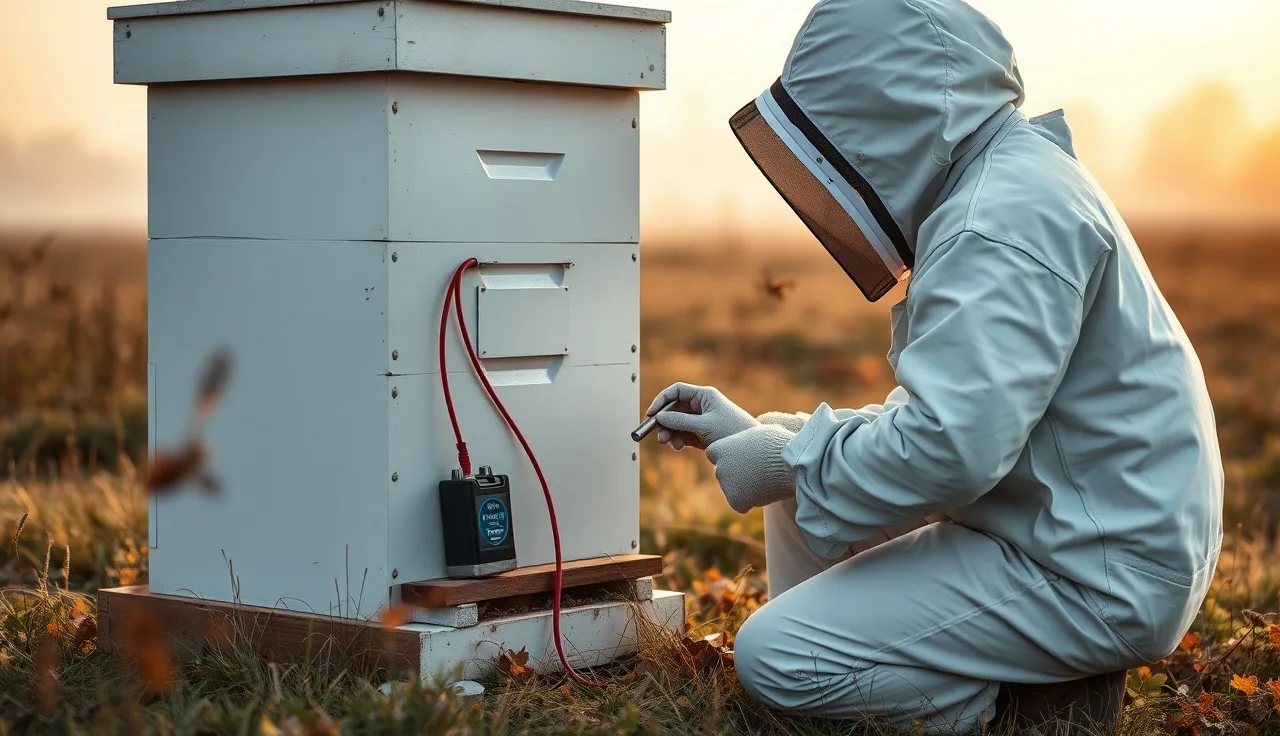
- A fully charged 12V battery (a 7Ah sealed lead-acid pack or a car battery) powers most oxalic acid vaporizers for 10 to 40 treatments per charge.
- Connect red to positive, black to negative, wear nitrile gloves and a half-face respirator with OV/P100 cartridges, and never leave the vaporizer plugged in between hives.
- Most vaporizers pull 15 to 25 amps and need at least 10-gauge wire.
What kind of 12V battery actually works with an oxalic acid vaporizer?
Two battery types cover almost every beekeeper: sealed lead-acid (SLA, also sold as AGM or VRLA) and a standard automotive lead-acid battery. Both work. The choice is about weight and how many hives you treat in a session.
A 7Ah to 18Ah sealed lead-acid battery is the field favorite. It's small enough to carry in a backpack, it won't spill acid on your car seat, and it holds enough charge for a day of treatments if you're under 20 hives. A 12Ah SLA gets most people through a 15-hive session with no midday recharge [1].
A car or truck battery holds far more, often 40Ah to 70Ah, enough to power a whole operation before it needs a charge. The catch is weight. A full-size car battery runs 30 to 45 pounds. On a tailgate with a long cord, that weight means nothing. Hiking hive to hive, it's a real problem.
Lithium iron phosphate (LiFePO4) packs rated at 12V are the third option. Lighter than SLA, steadier voltage, but they cost two to four times as much. Some cheaper vaporizers pull current in a way that trips the battery management system on budget LiFePO4 packs, shutting the battery off mid-treatment. If you go lithium, buy one rated for at least 20A continuous discharge.
One number beats all the others. Cold cranking amps for car batteries and amp-hours for SLA tell you the battery's capacity, but what a vaporizer needs is a battery that holds 15 to 25 amps steady for the 2.5 to 3 minutes a treatment takes. Any fully charged 12V battery above 7Ah does that without breaking a sweat.
How do you connect a 12V battery to an oxalic acid vaporizer safely?
The connection is simple. The margin for error is not. Oxalic acid sublimates around 157°C (315°F), and a short circuit or reversed polarity can wreck the heating element or start a fire. Run the same sequence every single time.
Read the manual first for the required wire gauge and fuse. Most commercial vaporizers specify 10-gauge or 8-gauge wire. Thin wire fights the current, heats up, and melts its own insulation. Don't grab whatever jumper cables are in the trunk unless they're at least 10 gauge for runs under 6 feet [2].
Connect in order: red (positive) lead to the positive terminal first, then black (negative) to the negative terminal. To disconnect, reverse it. Negative off first, then positive. This is basic electrical practice and it keeps sparks away from the battery.
If your vaporizer didn't ship with an inline fuse, add a 30-amp fuse on the positive lead within 18 inches of the battery terminal. The fuse protects the battery and the wiring. It does nothing for the heating element, and it isn't supposed to.
Check your connections before each use. Corroded terminals or loose alligator clips drop voltage, which means slow heat-up, weak vaporization, and a half-treated hive. See white or green corrosion? Clean it off with a wire brush.
Treat the cord like an IV line. Keep it off your feet, away from other gear, and keep the hot wand touching nothing except the hive entry port. The tip burns through a nitrile glove instantly.
What wire gauge and fuse rating do you need?
Wire gauge is the failure point nobody thinks about until something melts. Undersized wire builds resistance, resistance builds heat and voltage drop, and a starved vaporizer never fully sublimates the acid. What's left is liquid oxalic acid pooling in the wand and mites that never got the dose.
Here's the working table:
| Wire run length | Minimum wire gauge | Max continuous amps |
|---|---|---|
| Up to 3 feet | 12 AWG | 20A |
| 3 to 6 feet | 10 AWG | 30A |
| 6 to 10 feet | 8 AWG | 40A |
| Over 10 feet | 6 AWG | 55A |
Most vaporizers pull 15 to 25 amps at peak heat-up. At that draw, a 5-foot run of 10-gauge is fine. Reaching hives across a wide yard? Step up to 8 gauge. Never use 14 or 16 gauge, even for a short run.
For fusing, a 30A blade or ANL fuse on the positive lead is the standard call. A higher-draw vaporizer might want 40A. Put the fuse as close to the battery as you can. It's there to protect the wire, not the element.
Ring terminals beat alligator clips. Crimp ring terminals to the wire and bolt them to the battery posts, and you get a connection that won't slip, spark, or build resistance over a season. Clips do all three eventually. If you treat more than once or twice a year, make up a proper set of leads. Fifteen minutes and under five dollars.
How long does a 12V battery last when running an oxalic acid vaporizer?
Runtime comes down to three things: the vaporizer's wattage, the battery's amp-hour rating, and how tight your workflow is. Here's how to estimate it before you're standing over hive 12 with a dead battery.
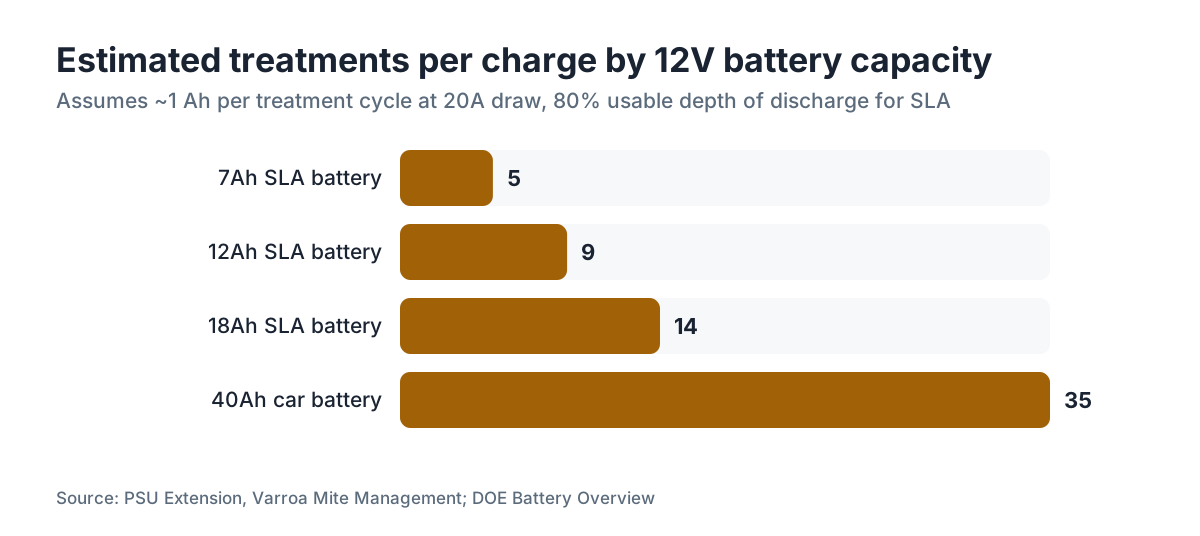
A typical vaporizer draws 200 to 300 watts, which at 12 volts is roughly 17 to 25 amps. Each cycle runs 2.5 to 3 minutes (about 150 to 180 seconds of active heat). At 20 amps for 3 minutes, you burn about 1 amp-hour per treatment.
A 7Ah SLA, held to the 80% usable depth of discharge that keeps lead-acid healthy, gives you about 5.6 usable Ah, so 5 to 6 treatments. A 12Ah SLA gets you 9 to 10. An 18Ah SLA does 14 to 15. A 40Ah car battery clears 30 to 40 without complaint [1].
Those numbers assume you don't leave the vaporizer energized between hives. Leave it hot and connected and you're spending power for nothing while draining the pack. Disconnect (or flip the switch, if yours has one) while you walk to the next hive, then reconnect. Ten seconds. It's the difference between finishing your yard and quitting early.
Cold cuts capacity hard. At 32°F (0°C), a lead-acid battery delivers roughly 60 to 65% of its rated capacity [3]. Treating in January? Bring the battery inside the night before and start with a warm, full charge.
What PPE do you absolutely need when vaporizing oxalic acid?
This part is not optional. Oxalic acid vapor damages lung tissue, and the EPA product label for the registered oxalic acid dihydrate spells out the required protective equipment [4].
The Api-Bioxal label, the most widely used oxalic acid product for US beekeepers, states: "Do not breathe vapors or dust. Wear protective eyewear (goggles or face shield), chemical resistant gloves, and a NIOSH-approved respirator with combination organic vapor and particulate filter (OV/P100)." That's the label text.
Minimum setup in practice:
- Half-face respirator (not a dust mask, not a cloth mask) with combination OV/P100 cartridges. A P100-only cartridge does nothing for organic vapor. Buy the combination.
- Safety goggles or a face shield. The vapor condenses on wet tissue and is corrosive.
- Nitrile gloves, at least 8-mil. Household latex is too thin.
- Long sleeves and closed-toe shoes. Vapor settles on skin.
Treating outdoors on a calm day with a sealed entry (foam plug in front, board under the screened bottom) lowers your exposure. Wind helps. Stand upwind. Wear the respirator anyway, every time. One unprotected hit doesn't mean you got away clean. Sensitization builds, and oxalic acid is tied to respiratory irritation and potential fibrosis with chronic exposure [4].
Store cartridges in a sealed zip-lock between uses. Activated carbon soaks up vapor passively even off your face. Most makers rate OV cartridges at 6 months from opening, so date them with a marker the day you break the seal.
What is the correct oxalic acid dose and vaporization protocol per hive?
The dose is fixed by the registration. Api-Bioxal is registered in the US under EPA Reg. No. 69117-3, and the label sets 1 gram of oxalic acid dihydrate per brood box occupied by bees [4]. Most vaporizers include a spoon or cup calibrated for that gram. Don't exceed the rate. More acid doesn't kill more mites. It hurts bees.
The treatment sequence:
- Reduce the entrance to about a 1-inch gap, or close it with a foam plug.
- If you run a screened bottom board, slide the monitoring board in underneath to trap the vapor.
- Insert the wand into the entrance or a dedicated port.
- Apply power and let the cycle finish (most units sublimate the dose in 2 to 2.5 minutes).
- Keep the hive sealed at least 10 minutes so vapor reaches bees and mites across the cluster.
- Open the entrance and pull the monitoring board.
The Honey Bee Health Coalition's Varroa Management Guide says to treat when mite loads hit or pass 2% (2 mites per 100 bees) during honey production, and notes that oxalic acid vaporization works best in broodless or low-brood windows when phoretic mites aren't hiding in capped cells [5]. In a broodless stretch, one treatment can crash the mite count. During full brood, you need repeated treatments (every 5 days for 3 to 4 cycles) to catch mites as they emerge.
For background on the pest and why timing decides everything, see the varroa mite overview.
Box count matters. One gram per occupied brood box means a two-deep hive gets two grams. Some beekeepers dose each box; others treat from the bottom and let convection carry the vapor up. The label allows both, and treating from the bottom of a stacked hive is standard.
How do you set up the battery and vaporizer in the field without making a mess?
Field setup is where the theory meets mud, cold hands, and a lot of hives. Here's what holds up.
Put the battery in a small plastic tote or a battery bag. It stays off wet ground, the terminals can't short if a hive tool falls in, and it's easy to carry. A 12Ah SLA fits a shoebox-size tote. Running a car battery? Most people leave it on the tailgate or in a wagon and run a lead long enough to reach each hive.
Pre-measure your doses before you start. Use the vaporizer's cup, or pre-weigh 1g doses into small labeled cups at home. Handling powdered acid in the field with gloves on is clumsy, and spills are a pain. Pre-measured doses keep you away from an open powder container next to an open hive.
Load the vaporizer before you connect the battery. Never load acid into a hot wand. The cup holds the measured dose, you slide it into the hive, then you connect power. Connecting first and inserting after works fine too, as long as the element is still cold. Load a hot vaporizer and the acid splashes or flashes off in the open air, right into your breathing zone.
Keep a log. Treating 15 hives and forgetting which ones are done is easier than it sounds on a cold morning. A tally sheet or a phone note stops you from double-dosing one hive and skipping another. VarroaVault's free protocol tools let you track mite loads and treatment records alongside your battery routine without extra paperwork.
After the last hive, disconnect the battery (negative first, then positive), cap the terminals, and store everything out of the sun. Bag the contaminated wand tip. Keep the residue off bare skin during cleanup.
How do you recharge a 12V battery after treating?
SLA batteries want a constant-voltage smart charger, not the dumb trickle chargers of ten years ago. A 2A to 10A smart charger (often sold as a battery maintainer) fully recharges a 12Ah SLA overnight and won't overcharge it, which is what kills lead-acid life fast.
For car batteries, any standard automotive charger works. Match amps to the job: a 10A charger refills a 40Ah battery in 4 to 5 hours from a 50% draw-down. A 2A charger takes 20 hours. Neither hurts the battery as long as it's automatic with a float mode.
Don't leave an SLA battery sitting discharged. A lead-acid battery held at low charge sulfates, meaning lead sulfate crystals build on the plates and permanently cut capacity. Put the battery on charge the same day you treat if you can. A battery that sat in the barn all winter at partial charge has already lost capacity you'll never recover [3].
Life expectancy with decent care: a quality SLA cycled properly lasts 3 to 5 years of seasonal use. Abuse it (deep discharge, sitting flat, overcharging with a dumb charger) and you get 1 to 2 years. A replacement 12Ah SLA runs roughly $25 to $40 as of 2024, so choosing the right charger pays for itself quickly.
Building a setup from scratch? A 12Ah AGM SLA plus a 4A smart charger is a good start. Total is usually $60 to $90 and covers a sideliner running 10 to 25 hives per session. For sourcing gear, comparing beekeeping supply companies helps you check prices and brands.
What are the most common mistakes beekeepers make with 12V vaporizer setups?
The mistakes fall into patterns. Learn them before your first session and you skip the whole learning curve.
Using a discharged battery. A partly drained 12V might read 11.8 volts at rest and sag to 11.2 under a 20-amp load. At that voltage the element underperforms, the acid doesn't fully sublimate, liquid pools in the wand, and mite kill drops. Test or charge before every session.
Wrong wire gauge. It bears repeating: 14-gauge wire runs warm to the touch at 20 amps. That's a fire hazard and a treatment failure in one.
Not sealing the hive. Vaporized acid is a gas that disperses fast. An open entrance lets it escape before it touches all the bees. A foam plug or reduced entrance plus a closed bottom board keeps the concentration up for the 10-minute dwell. Skip this and results wander.
Treating during a strong flow without checking mites first. Vaporization works, but efficacy drops in heavy brood because mites hide in capped cells the vapor can't reach. Treating blind wastes your time and your exposure for little return. The varroa mite page breaks down monitoring, including alcohol wash and sugar roll.
Skipping PPE because it's a hassle. Nobody enjoys the respirator. Wear it anyway. The vapor is invisible and odorless at low levels. You won't know you're breathing it until your throat tells you.
Walking away from an energized vaporizer. Some people connect it and go prep the next hive. Don't. Stay with it, watch the cycle, and disconnect before you move. A live vaporizer left alone can tip, overheat, or short if something lands on the leads.
Is oxalic acid vaporization legal and what does registration mean for you?
In the US, oxalic acid vaporization for varroa is legal, but only with an EPA-registered product used according to the label. The label is the law. You cannot legally buy bulk oxalic acid from a wood-cleaning supplier and vaporize it in your hives, even though the chemical is identical to Api-Bioxal [4].
Api-Bioxal (EPA Reg. No. 69117-3) is the main registered oxalic acid product in the US, and it lists vaporization (sublimation) as an allowed application method, which is what makes vaporizers legal to use. Some states add their own registration rules on top of the federal label, so check your state department of agriculture's pesticide regulations.
Commercial operations above a certain hive count (the threshold varies by state) may need a pesticide applicator license to apply any registered miticide, Api-Bioxal included. Most hobbyists and sideliners fall below that line, but verify with your state. The National Pesticide Information Center is a solid starting point for state-specific questions [6].
Canada, the UK, and the EU each run their own frameworks. In Canada, Api-Bioxal is registered under Health Canada's Pest Management Regulatory Agency. UK beekeepers use it under the Veterinary Medicines Directorate authorization. Outside the US, confirm local registration before you buy a vaporizer or plan treatments.
For US hobbyists and sideliners the whole thing reduces to this: buy Api-Bioxal from a reputable supplier, follow the label rate (1g per occupied box for vaporization), wear your PPE, and log your treatments. That's full legal compliance and good beekeeping at once.
How does oxalic acid vaporization compare to other varroa treatment methods?
Vaporization is one tool, not a full strategy. Where it fits depends on the season and your mite load.
| Treatment | Active ingredient | Requires broodless period? | Residues in wax/honey | Cost per treatment (est.) |
|---|---|---|---|---|
| OA vaporization (Api-Bioxal) | Oxalic acid | No (repeated tx needed with brood) | None detected | $0.50 to $1.50 |
| OA dribble | Oxalic acid | Yes (most effective) | None detected | $0.25 to $0.75 |
| Formic acid (MAQS/Formic Pro) | Formic acid | No | Minimal | $3 to $6 |
| Amitraz strips (Apivar) | Amitraz | No | Low, detectable | $3 to $8 |
| Thymol (Apiguard, ApiLifeVar) | Thymol | No | Minimal | $3 to $7 |
| Hard chemical strips (Apistan/CheckMite) | Synthetic pyrethroids/coumaphos | No | Accumulate in wax | $2 to $5 |
Cost estimates use retail hobbyist pricing as of 2024 and are approximate. Regional variation is real [7].
The Honey Bee Health Coalition recommends rotating treatment classes (organic acids, thymol, amitraz) to slow resistance [5]. Vaporization fits as a late-fall or winter treatment during the broodless window, a spring cleanup before the main flow, and one leg of a multi-cycle summer knockdown when mites spike. It won't replace formic acid or amitraz when you carry a heavy mite load into a full brood period.
To see how vaporization slots into a full-season plan, the free tools at VarroaVault map treatment windows against your local colony cycle.
How do you store oxalic acid and vaporizer equipment safely between treatments?
Oxalic acid dihydrate is stable when it's dry and cool. Moisture is the enemy. Keep Api-Bioxal in its original sealed container in a cool, dry spot away from children and animals. The label sets storage below 120°F (49°C) and away from food and feed. A locked cabinet in a garage or shed does the job.
Don't store the acid near ammonia-based products. Oxalic acid reacts with some alkaline materials, and separating it from other pesticides is good practice and often required by the label.
For the vaporizer and battery: after each season, wipe the wand with a damp cloth to clear residue. Oxalic acid is mildly corrosive to metal over time. Rinse the wand cup with clean water and let it dry fully before storage. Keep the vaporizer somewhere dry. Check the wiring for cracked insulation before the next season.
Store the battery fully charged. Put it on a float charger or smart maintainer if it's sitting more than 4 to 6 weeks. An SLA left at partial charge over winter bleeds capacity. Check voltage in spring before the first session: a healthy 12V SLA reads 12.6 to 12.8 volts at rest when full. Below 12.0 volts at rest, it may not hold up under load.
Label everything. A zip-lock of pre-measured doses, a marker-dated cartridge, and a charging log sound fussy, but they head off the most common field failure of all: showing up to treat 15 hives with a dead battery and expired cartridges.
Frequently asked questions
Can I use a car battery jump starter pack instead of a full 12V battery?
Yes. Most modern lithium jump starters put out 12V at enough amperage (usually 20A to 40A continuous) to run an oxalic acid vaporizer. Check the continuous discharge rating on the spec sheet, not the peak or cranking number. A jump starter rated at 20A continuous powers a standard vaporizer through 6 to 10 treatments per charge and is one of the most portable setups going.
How many hives can I treat with one 12Ah battery charge?
A 12Ah sealed lead-acid battery, held to 80% of capacity to protect its health, gives you about 9 to 10 usable amp-hours. A standard cycle draws roughly 1 amp-hour. Expect 9 to 10 single-box treatments, or about 5 on two-deep hives. Cold weather cuts this 30 to 40%, so carry a spare or size up for winter sessions.
What respirator filter do I need for oxalic acid vapor?
You need a NIOSH-approved half-face or full-face respirator with combination organic vapor and P100 particulate cartridges, marked OV/P100 or P100/OV on the package. A P100 particulate filter alone won't stop the vapor. A dust mask gives you nothing. The Api-Bioxal EPA label names this combination filter as required PPE.
Does the vaporizer need to be a specific brand to work with a standard 12V battery?
No. Any vaporizer built for 12V DC input runs on a standard 12V battery. Common ones include the Provap 110, the Varrox, and various imported units under different names. All take 12V DC through alligator clips or ring terminals. Check the wattage on your unit, divide by 12 for amps, and size the wire and fuse from there.
How do I know if the vaporizer is working correctly?
A working vaporizer puts out a thin, steady white vapor at the hive entrance within about 90 seconds of power. See nothing? Check battery voltage (should stay above 12.0V under load), your wire connections, and whether the acid spilled out of the cup before it heated. A properly loaded wand on a charged battery finishes in 2 to 2.5 minutes.
Can I treat hives with honey supers on using an oxalic acid vaporizer?
No. The Api-Bioxal label prohibits vaporization when honey supers meant for human consumption are on the hive. Pull the supers first. Oxalic acid leaves no detectable residue in honey or wax at label doses, but the registration still restricts super placement during treatment. It's a label compliance rule more than a contamination worry, based on current published residue studies.
How long do I need to wait after treating before I can open the hive?
Keep the hive sealed at least 10 minutes after the cycle ends so vapor reaches bees across the cluster. Then pull the entrance plug and monitoring board. You can open for inspection after another 10 to 15 minutes, though most beekeepers wait until the next day to avoid disturbing the colony during the treatment window.
Is one treatment of OA vaporization enough, or do I need multiple?
In a broodless period, one to two treatments spaced 5 to 7 days apart can hit 90 to 95% mite reduction. During active brood rearing, a single treatment leaves the mites in capped cells untouched. The Honey Bee Health Coalition recommends 3 to 4 treatments every 5 days through brood periods to catch mites as they emerge. Confirm with an alcohol wash 3 to 7 days after the final treatment.
What voltage should the battery show before I start treating?
A fully charged 12V lead-acid or AGM battery reads 12.6 to 12.8 volts at rest. Under the 15 to 25 amp load of a vaporizer it sags a little, usually to 12.0 to 12.4 volts. If resting voltage is below 12.2 volts before you start, the battery is partly discharged and you risk weak performance mid-session. Charge to full before any treatment day.
Can I make my own oxalic acid solution and put it in a vaporizer?
No. US law requires an EPA-registered product (Api-Bioxal) at the label rate. Using bulk oxalic acid sold for woodworking or pool care in a hive vaporizer is illegal under FIFRA (Federal Insecticide, Fungicide, and Rodenticide Act), even though the chemical is identical. The label is the law. Buy Api-Bioxal from a licensed bee supply source.
Does cold weather affect how well OA vaporization works on mites?
Cold hits battery performance more than mite kill. Oxalic acid vapor is lethal to varroa at label doses across temperatures. The real cold-weather issue is that bees cluster tight, which can limit vapor distribution through the cluster. Treating above 40°F (4°C), when bees can move some, gives better coverage, though broodless winter treatments stay highly effective.
How do I dispose of leftover oxalic acid and vaporizer residue?
Keep unused Api-Bioxal in its original container and never pour it down a drain. The label directs users to dispose of empty containers in the trash, wrapped, and to follow local pesticide disposal rules for any unused product. Most county household hazardous waste programs take small quantities of registered pesticides. Residue in the wand rinses off with water, and that rinse water can go on soil away from waterways.
Will oxalic acid vaporization harm my bees if I use the correct dose?
At the label rate of 1 gram per occupied box, vaporization has low bee toxicity. Some published studies show a minor short-term dip in forager activity for 1 to 3 days after treatment, but no meaningful colony-level harm at proper doses. Overtreating (too many repeated cycles in a short window or higher doses) stresses bees. Stick to the label rate and frequency.
What's the difference between OA vaporization and OA dribble, and which one is better?
Dribble pours an oxalic acid syrup directly over the cluster and works best in broodless periods. Vaporization fills the hive with gas, reaching bees across the cluster and allowing repeated treatments during brood. Neither wins outright. Vaporization is more practical for multiple hives and repeat cycles. Dribble needs simpler gear but is limited to one application per broodless period on the Api-Bioxal label.
Sources
- Pennsylvania State University Extension, Varroa Mite Management: SLA battery capacity and treatment counts per charge for typical oxalic acid vaporizer use; 12Ah SLA suitable for 10-15 hive sessions
- National Electrical Code (NEC), NFPA 70, Table 310.12, Conductor Ampacity: Wire gauge ampacity ratings: 10 AWG rated to 30A, 8 AWG to 40A for DC applications
- U.S. Department of Energy, Battery Technology Overview: Lead-acid battery capacity reduction at low temperatures: approximately 60-65% of rated capacity at 0°C; batteries should not be stored discharged
- EPA, Api-Bioxal Oxalic Acid Dihydrate Label, EPA Reg. No. 69117-3: Registered dose (1g per occupied brood box for vaporization), PPE requirements including OV/P100 respirator, prohibition on honey supers during vaporization, and legal requirement to use registered product
- Honey Bee Health Coalition, Varroa Management Guide (latest edition): Treatment threshold of 2% mite load; OA vaporization efficacy during broodless vs. brood periods; recommendation to repeat treatment every 5 days for 3-4 cycles during brood; recommendation to rotate treatment classes to prevent resistance
- National Pesticide Information Center (NPIC), Oregon State University / EPA: State pesticide applicator licensing requirements and state-specific regulatory guidance for registered miticide application
- University of California Agriculture and Natural Resources, Integrated Pest Management for Honey Bees: Comparative cost estimates for varroa treatments including OA vaporization, formic acid, amitraz, and thymol-based products at hobbyist quantities
- USDA Agricultural Research Service, Honey Bee Research: Oxalic acid leaves no detectable residues in honey or beeswax at label-approved doses; minor short-term forager activity reduction post-treatment at label rates
- Cornell University, Dyce Lab for Honey Bee Studies: OA vaporization efficacy during broodless periods: 90-95% mite reduction with 1-2 treatments; reduced efficacy with sealed brood present
- Clemson University Cooperative Extension, Varroa Mite Control in Honey Bee Colonies: Correct field protocol for OA vaporization including entrance sealing, 10-minute dwell time, and post-treatment monitoring recommendations
- Virginia Cooperative Extension, Beekeeping in Virginia: Practical field setup for OA vaporization with 12V battery systems; pre-measured dosing recommendation; battery storage and maintenance guidance
- Federal Insecticide, Fungicide, and Rodenticide Act (FIFRA), 7 U.S.C. § 136: Legal requirement to use only EPA-registered pesticide products according to label; bulk OA use in hives is not legal under FIFRA
Last updated 2026-07-09