Commercial oxalic acid vaporizer comparison: which one is worth buying
TL;DR
- The main commercial oxalic acid vaporizers are the Varrox, Varomorus, ProVap 110, Mann Lake VaporBee, and BeeVap.
- They run about $80 to $350.
- The real differences are power source (corded or 12V battery), heat-up time (roughly 1.5 to 3 minutes), pan capacity, and how steadily they hold temperature across a long session.
- For most sideliners with 10 to 50 hives, a mid-priced corded unit is the practical pick.
What is oxalic acid vaporization and why does it work on varroa?
Oxalic acid vaporization is the most effective brood-free varroa treatment a hobbyist or sideliner can run in the US right now. Heat oxalic acid dihydrate crystals to about 315°F (157°C) and they sublimate into a fine aerosol that settles across the bees and hive surfaces. Mites take the hit on contact. The acid crystals damage their soft tissue and the spiracles they breathe through. [1]
The efficacy numbers are genuinely good. USDA Beltsville Bee Lab work and university trials have reported 90% or higher mite kill in brood-free colonies from a single treatment. [2] The catch lives in that phrase "brood-free." Vapor doesn't reach mites hiding under capped cells, so anything sheltered under brood caps walks away alive. That's why timing matters so much: a winter cluster or an induced brood break, plus repeated treatments when brood is present.
The EPA registered oxalic acid for vaporization under the label Api-Bioxal, made by Chemicals Laif SpA. The registered label allows vaporization in hives with or without supers, unlike the dribble method, which you cannot use with honey supers on. [3] That single difference is the biggest practical edge vaporization has over dribbling.
Want the biology of the mite before you spend money on gear? Start with our varroa mite overview.
What are the main commercial oxalic acid vaporizers on the market?
Four vaporizers show up again and again in US beekeeping circles, plus a fifth that runs stronger in Europe. Here's an honest read on each.
Varrox (Andermatt BioVet): The Swiss original. A simple aluminum pan on a rod with a heating element, powered by a 12V battery (you clip it to a car battery or a dedicated 12V lead-acid). Heat-up runs about 2.5 to 3 minutes. The pan holds one standard 2-gram dose of oxalic acid dihydrate. Build quality is excellent, it's been in production for years, and most university research has used this unit. US street price runs about $160 to $185. [4]
Varomorus (various resellers): A Chinese-made unit that looks a lot like the Varrox. It's 12V battery-powered, heats in about 2 to 3 minutes, and costs a lot less, usually $80 to $120. It works. The honest caveat: build consistency varies batch to batch, and the pan coating has drawn complaints in some years. If budget drives the decision, plenty of beekeepers run one without trouble. Just don't expect Varrox longevity.
ProVap 110 (Betterbee): This one runs on 110V AC, and that's the main thing that sets it apart. It heats faster than any battery unit, usually under 2 minutes, and it holds temperature steadily across a long session because it never cares about battery charge. Treating 20-plus hives in one sitting near an outlet or generator? This is the most sensible option ergonomically. Price sits around $220 to $250. [5]
Mann Lake VaporBee: Mann Lake's own-branded unit, 12V battery-powered, with a pan design close to the Varrox. It's been around since roughly 2015. Price usually runs $175 to $210. Performance matches the Varrox for most users, and Mann Lake's supply chain keeps replacement pans and parts easy to get stateside. [6]
BeeVap (Heilyser Technology): A corded 120V unit with a digital temperature controller and a bigger pan that holds 3 grams. It's heavier and pricier, around $280 to $350. The digital controller helps if you want precise repeatability, but for most hobbyists the extra complexity over a plain pan-style unit isn't worth it. You see this one more in commercial yards running hundreds of hives.
For where to source any of these, the beekeeping supply companies guide covers the major US retailers and their typical stock.
How do these vaporizers compare side by side?
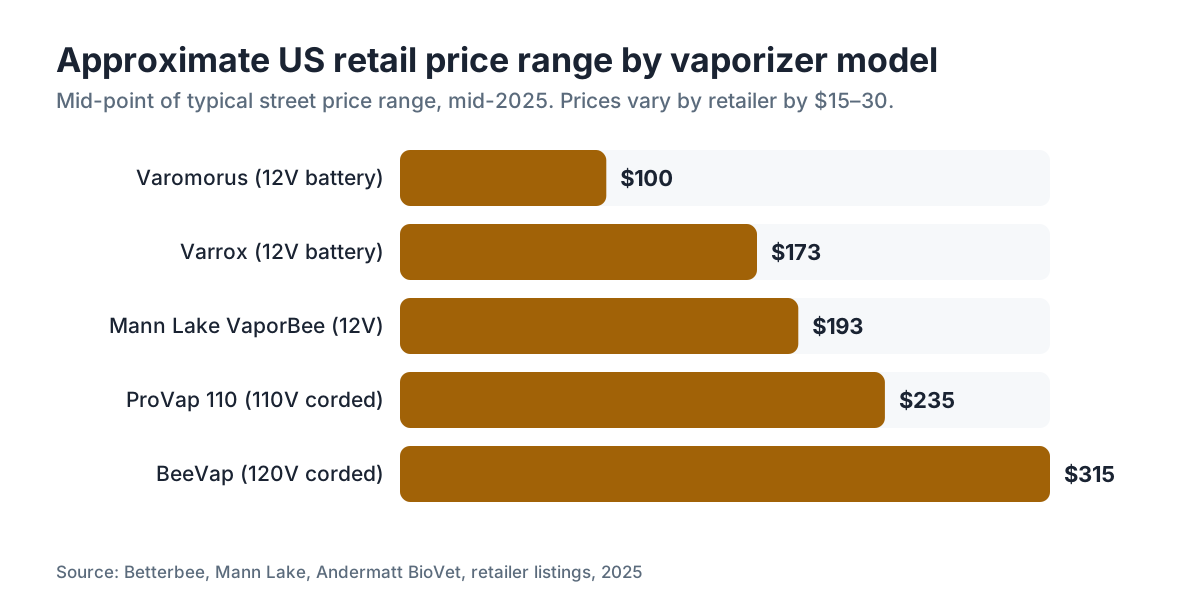
The table below pulls the specs that actually change your day. Prices are approximate US retail as of mid-2025 and can shift by $15 to $30 depending on the seller.
| Vaporizer | Power | Heat-up time | Pan capacity | Price range (USD) | Best for |
|---|---|---|---|---|---|
| Varrox | 12V battery | ~2.5 to 3 min | 2 g | $160 to $185 | Hobbyists, portability |
| Varomorus | 12V battery | ~2 to 3 min | 2 g | $80 to $120 | Budget, small apiaries |
| ProVap 110 | 110V AC | ~1.5 to 2 min | 2 g | $220 to $250 | Sidelines, power access |
| Mann Lake VaporBee | 12V battery | ~2.5 to 3 min | 2 g | $175 to $210 | US-sourced parts |
| BeeVap | 120V AC | ~1.5 to 2 min | 3 g | $280 to $350 | Commercial volume |
A few things the table can't tell you. The Varrox pan heats very evenly, which matters because uneven heat leaves residual crystals that never fully sublimate. That's wasted acid and possibly lower mite kill. The ProVap 110 holds a consistent heat-up time no matter how long the session runs, while a battery unit that's already done 15 hives on a cold morning may crawl on hive 16. Not a dealbreaker. It just means you keep your 12V battery charged and, ideally, warm. [4]
Battery-powered vs. corded vaporizers: which is better for your situation?
This is the decision that matters most, and it's purely practical. Battery gives you range. Corded gives you consistency.
Battery-powered units (Varrox, Varomorus, VaporBee) go anywhere. No extension cords, no generator, no outlet hunt. For beekeepers with yards spread across sites that have no power, battery is often the only realistic choice. A good 12V sealed lead-acid battery (7 to 12 Ah) handles 30 to 50 treatments per charge in moderate temperatures. Cold weather drops that number hard, so budget for a fresh battery or keep one warm in the truck cab while you work.
Corded units (ProVap 110, BeeVap) delete the battery variable entirely. You get the same performance from hive one to hive fifty, as long as your power holds. A small 1000W inverter generator works fine and costs around $100 to $200. That adds to your setup total, but it buys steadiness. For a sideliner treating 30 or more hives on a schedule, that steadiness is worth real money in time and calm.
My honest take: under 15 hives and moving between sites, start with a Varrox or a quality 12V unit. At 25 or more hives in one or two fixed spots, the ProVap 110 with a small generator is the smarter rig. The time you save on faster heat-up and zero battery babysitting pays off the generator fast.
What do you need to use any oxalic acid vaporizer legally in the US?
Read this part twice. Using oxalic acid for varroa in the US is regulated by the EPA and by most state departments of agriculture. You must use Api-Bioxal, the only EPA-registered oxalic acid product for honey bee use in the country. [3] Running raw oxalic acid crystals from a hardware or woodworking supplier is illegal under the Federal Insecticide, Fungicide, and Rodenticide Act (FIFRA) because it's an unregistered pesticide application on a food-producing animal. [9] The label is the law.
The Api-Bioxal label sets the vaporization dose at 1 gram of oxalic acid dihydrate per hive body (super or brood box), with a maximum of 5 grams per hive per application. [3] It also tells you to close the hive entrance during treatment and for at least 10 minutes after.
Personal protective equipment on the label includes an organic vapor respirator with a particulate prefilter, chemical-resistant gloves, and eye protection. [3] None of that is optional. Oxalic acid vapor irritates the airways, eyes, and mucous membranes. The Honey Bee Health Coalition's Varroa Management Guide says it plainly: treat in still air, never in wind, never in an enclosed space. [1]
Some states require a pesticide applicator license to run any vaporizer, even on your own bees. Check with your state department of agriculture before you buy anything. California, for one, has specific registration requirements for Api-Bioxal. [7]
One more thing. Confirm any vaporizer you buy can actually deliver the labeled dose. Some DIY builds and the cheapest imports have pans that don't heat evenly enough to sublimate a full 2-gram load, which leaves you wasting product or treating unevenly.
How effective is oxalic acid vaporization compared to other varroa treatments?
In brood-free conditions, oxalic acid vaporization matches or beats most other chemical treatments. The Honey Bee Health Coalition's Varroa Management Guide, one of the best synthesis documents in US beekeeping, puts oxalic acid in the top tier alongside formic acid and amitraz for efficacy, with the hard caveat that results hinge on timing relative to capped brood. [1]
Here's a number worth quoting straight: a single oxalic acid vaporization in a brood-free colony achieves 90% or higher mite knockdown. [2] That rivals a full Apivar (amitraz) strip run over 6 to 8 weeks, but you deliver it in a single 10-minute visit per hive. The tradeoff is that Apivar keeps working with brood present because the bees spread the acaricide through the colony over time.
With brood present, repeated vaporization (usually 3 treatments spaced 5 to 7 days apart) can reach meaningful control by catching mites as they emerge from capped cells. [10] Total knockdown is lower and more variable than in brood-free colonies. [1] Treating in high summer with a full brood nest? Repeated vaporization works, but it's labor-heavy next to a strip treatment.
The comparison table in the Coalition guide is the most trustworthy public resource for lining treatments up side by side. The University of Minnesota Bee Lab also keeps solid extension material on treatment thresholds and timing. [8]
Two direct quotes worth pinning to the wall. The Honey Bee Health Coalition guide states: "Oxalic acid is most effective when used in brood-free colonies, as it does not penetrate capped brood." [1] And the Api-Bioxal EPA label states: "Apply when outside temperature is above 32°F (0°C) and bees are present in the hive." [3]
How long does an oxalic acid vaporizer treatment actually take per hive?
Once you're set up, the per-hive time is short. Heat-up takes 1.5 to 3 minutes depending on the unit and the air temperature. You slide the wand through the entrance or a bottom-board gap, apply the dose, leave the wand in place about 2.5 minutes for full sublimation, pull it, then keep the entrance closed for 10 minutes. [3] Active time per hive lands around 5 to 7 minutes, before you count walking between hives.
For a hobbyist with 5 to 10 hives, a full session runs under an hour. For a sideliner with 40 hives, plan on 3 to 4 hours including setup, travel, and wait time. The main time gap between units is heat-up speed, and that's where corded units earn their keep across a long day.
One trick beekeepers pick up fast: bring two units once you pass 15 hives. One heats while you treat with the other. That cuts session time close to half, and it pays off most on cold days when heat-up drags. More equipment sourcing notes live at beekeeping supplies.
For mapping treatment timing across the year, VarroaVault's free protocol OS helps you line up brood breaks and treatment windows against your local mite counts.
What are the real safety risks of oxalic acid vaporization?
Oxalic acid vapor is genuinely hazardous if you breathe it or get it in your eyes, and this is one spot where the hobbyist crowd gets dangerously casual.
Oxalic acid is a dicarboxylic acid. Inhaling the vapor or fine crystals irritates the respiratory tract, eyes, and mucous membranes. Repeated exposure has been tied to kidney damage in industrial settings (that reference is occupational exposure, not beekeeping). The Api-Bioxal EPA label calls for a NIOSH-approved respirator with an organic vapor cartridge and a particulate prefilter. [3] A dust mask or a plain N95 does nothing against the vapor.
Full-face respirators beat half-face respirators with goggles stacked on top, because they seal better and cover your eyes in one piece. If you're treating repeatedly across a season, spend $60 to $120 on a quality half or full-face respirator with OV/P100 cartridges. Don't treat inside a vehicle, a closed barn, or any space where vapor can build up.
Bees come through fine at labeled doses. Multiple studies found no meaningful queen loss, brood death, or bee mortality at the 1-gram-per-box dose applied correctly. [2] The bee risk is mostly about over-dosing, which happens when a vaporizer doesn't fully sublimate the crystals and leaves hot residual acid in the pan releasing after you've pulled the wand.
The Honey Bee Health Coalition guide has a tight safety checklist worth printing for anyone new in your operation. [1]
How do you choose between the Varrox, ProVap 110, and the other units?
Here's the framework I'd actually use, broken down by situation.
Under 10 hives, multiple locations, tight budget: the Varomorus at $80 to $120 is probably the right call. It works, it's portable, and if it dies after two seasons you're not out much. Keep a spare 12V battery charged.
Under 10 hives, willing to spend more, want reliability: the Varrox at $160 to $185 earns the extra money. Better build, steadier pan temperature, and it's been the default research-grade tool for years. [4]
Sideliner with 15 to 50 hives, power on hand: the ProVap 110 at $220 to $250 is the best value in this tier. Consistent heat-up across a long session, no battery to manage, faster overall. Budget for a small generator ($100 to $200) if you treat away from the barn. [5]
Sideliner or small commercial at 50-plus hives: look at the BeeVap or run two ProVap 110 units in parallel. The BeeVap's digital controller and 3-gram pan help at that scale. [4]
US parts availability matters more than most buyers expect. Drop the unit or heat it dry and the pan can crack. When it does, you want a replacement without a 3-week international wait. Mann Lake and Betterbee both stock replacement pans for their own units and for the Varrox. For general sourcing, free shipping honey bee supply companies breaks down who ships what and at what threshold.
VarroaVault's free protocol planning tools help you estimate how many treatments you'll need per season based on your monitoring data. That number feeds straight into how hard you'll run the vaporizer and whether a durable corded unit makes sense at your scale.
What are common mistakes beekeepers make with oxalic acid vaporizers?
A handful of mistakes repeat, and they're worth naming flat out.
Treating with heavy brood present and expecting a brood-free result. The vapor never reaches mites under capped cells. A December treatment across most of North America, when the colony has little or no brood, beats a July treatment with a full brood nest. Have to treat mid-season? Plan at least 3 applications spaced 5 to 7 days apart. [10]
Skipping the PPE because "it's just a quick treatment." There's no safe level of repeated unprotected oxalic acid vapor exposure. Respirator on, every single time.
Using too much oxalic acid. The label says 1 gram per hive body, 5 grams max per hive. More isn't better. Higher doses have shown temporary bee mortality and stress responses in some trials without improving mite kill. [2]
Leaving the entrance open. The vapor needs time to spread through the hive. Open entrance, and concentration drops fast and efficacy suffers. Use a foam plug or a folded shop rag. Ten minutes minimum. [3]
Running a battery unit in cold weather without warming the battery first. A cold 12V battery pushes fewer amps, which means slower, patchier heating. Keep the battery warm until you're ready, especially below 40°F.
Not monitoring mite loads before and after. You can't know if a treatment worked without an alcohol wash or sugar roll count. The Honey Bee Health Coalition recommends monitoring at least monthly during the active season, and again within a few weeks after any treatment. [1] Treating without monitoring is guesswork with a respirator on.
How do you maintain and extend the life of an oxalic acid vaporizer?
Vaporizer maintenance is simple and constantly skipped.
After every session, let the pan cool fully, then brush out any leftover oxalic acid crystals. Don't let crystals sit in a hot pan between hives, because that pits the pan surface over time. Many beekeepers tap the pan lightly on a hard surface to knock the residue loose.
Check the heating element connection points every few sessions. Corrosion on the connectors adds resistance, which means slower and patchier heating. Clean them with fine-grit sandpaper or a small wire brush. On battery units, check the alligator clips too.
Store the vaporizer dry, in a sealed bag, between seasons. Oxalic acid residue is hygroscopic (it pulls moisture from the air), and wet residue speeds up corrosion on metal parts.
Pan replacement: pans on quality units last two to four seasons with decent care. Pitting, uneven heating, or a flaking surface means it's time. A damaged pan risks incomplete sublimation. Replacement Varrox pans cost about $20 to $30; for the ProVap 110, check with Betterbee directly.
On battery units, a dedicated 12V sealed lead-acid battery kept on a trickle charger between seasons outlasts one left to self-discharge. A 12V 9Ah sealed battery costs about $20 to $30 and lasts three to five years with reasonable care.
Frequently asked questions
Can I use any oxalic acid crystals in a vaporizer, or does it have to be Api-Bioxal?
In the US, it must be Api-Bioxal. It's the only EPA-registered oxalic acid product for honey bee varroa treatment. Using raw or "technical grade" oxalic acid from woodworking or cleaning suppliers is an unregistered pesticide application under FIFRA, and that's illegal even though the chemical is identical. Other countries have their own registered products, so check your national regulator.
How many hives can I treat on one 12V battery charge?
A fully charged 12V 9 to 12 Ah sealed lead-acid battery typically handles 30 to 50 treatments in moderate temperatures (50 to 70°F). Below 40°F, expect 20 to 35 treatments before voltage sags enough to slow heat-up. Keep the battery warm in your vehicle cab between uses and you'll hold consistent results through a session.
Is oxalic acid vaporization safe to use with honey supers on?
Yes. The Api-Bioxal label specifically permits vaporization with honey supers present. That's one of the main advantages over the oxalic acid dribble method, which the label restricts to brood-box-only applications. Studies have found oxalic acid residue in honey isn't elevated above background levels with vaporization at the labeled dose, but always confirm with your state apiarist.
What respirator do I actually need for oxalic acid vaporization?
A half-face or full-face respirator with an OV/P100 combination cartridge (organic vapor plus particulate). A standard dust mask, surgical mask, or plain N95 does not protect against the vapor. Full-face respirators also cover your eyes, which is worth the extra cost. The Api-Bioxal EPA label specifies a NIOSH-approved respirator. That's a minimum legal requirement, not a suggestion.
How many times should I treat a hive with oxalic acid vaporization per season?
For a brood-free winter treatment, one to three applications over a two-week window are common, depending on your starting mite load. For mid-season treatment with brood present, the standard is three applications spaced 5 to 7 days apart to catch mites emerging from capped cells. The Honey Bee Health Coalition recommends mite monitoring before and after any treatment series to confirm it worked.
Does oxalic acid vaporization harm the queen?
At the label dose (1 gram per hive body, 5 grams max), oxalic acid vaporization doesn't cause significant queen loss in properly run trials. Over-dosing or treating a very small cluster, where vapor concentration per bee runs higher, carries more risk. The Varrox-based studies at the core of the efficacy database found no elevated queen loss against untreated controls at the registered dose.
Can I treat a hive in winter when it's very cold?
Yes, as long as it's above 32°F (0°C), the Api-Bioxal label minimum. A brood-free winter cluster is actually the ideal timing for vaporization because there are no capped mites hiding. The main operational issue is that 12V batteries perform poorly in cold, so warm yours before the session and watch your heat-up time.
What's the difference between oxalic acid vaporization and the dribble method?
Vaporization uses heat to sublimate oxalic acid crystals into vapor that coats the hive interior and the bees. The dribble method applies an oxalic acid syrup directly onto bees between frames. Both kill phoretic mites. The dribble method can't be used with honey supers on, is limited to one treatment per year on the US label, and needs a colder cluster accessible between frames.
Is the Varomorus vaporizer as effective as the Varrox?
The chemistry is identical, since both heat the same oxalic acid dihydrate crystals to sublimation temperature. If the Varomorus heats evenly and reaches full temperature, mite kill should match. The practical concerns are build consistency and pan quality. Most people who run one report acceptable results, but longevity and pan life vary more than with the Varrox.
Do I need a license to use an oxalic acid vaporizer in my state?
It depends on your state. Some require a pesticide applicator license or registration to use any vaporizer device, even on your own bees. Others exempt hobbyist beekeepers treating their own hives. Check with your state department of agriculture before you buy a unit. California, for example, has specific registration requirements for Api-Bioxal use.
How do I know if my oxalic acid treatment actually worked?
Mite monitoring is the only way. Do an alcohol wash or sugar roll (mites per 100 bees) before treatment, then again two to three weeks after the final treatment in your series. A successful brood-free treatment should drop your mite load by 90% or more. If counts stay above 2 mites per 100 bees, look at your timing, your dosing, and whether brood was present.
What is the shelf life of Api-Bioxal once opened?
Api-Bioxal has a labeled shelf life of three years from the manufacturing date when stored cool, dry, and out of direct sunlight. Once opened, keep it tightly sealed. Oxalic acid dihydrate is hygroscopic and pulls moisture from the air, which can cause clumping but doesn't meaningfully change the chemistry. Break up clumped crystals; discard anything that has turned yellow or shows contamination.
Can one vaporizer wand fit all hive types including Langstroth and Warré?
Most commercial wands are built for standard Langstroth entrance heights and fit well in 3/4-inch bottom-board entrances. Warré and top-bar hives may need an alternative entry point, like a small drilled port through the bottom or a modified entrance board. Some beekeepers drill a second hole just for the wand to skip resealing hassles.
How much does a full oxalic acid vaporization setup cost to get started?
Budget roughly $250 to $400 for a full beginner setup: $160 to $250 for a quality vaporizer, $20 to $30 for a 12V battery (or included in some kits), $60 to $100 for a proper OV/P100 respirator, and about $30 to $50 for an initial supply of Api-Bioxal. Need a generator for a corded unit? Add $100 to $200 for a small 1000W inverter model.
Sources
- Honey Bee Health Coalition, Varroa Management Guide (current edition): Oxalic acid is most effective in brood-free colonies; safety protocols and treatment comparisons for vaporization vs. other methods
- USDA Agricultural Research Service, Beltsville Bee Lab publications on oxalic acid efficacy: 90% or higher mite knockdown in brood-free conditions with oxalic acid vaporization; no significant queen loss at label dose
- EPA, Api-Bioxal Pesticide Product Label (Reg. No. 86203-1): Registered dose of 1 gram oxalic acid dihydrate per hive body, max 5 grams per hive; PPE requirements; permitted use with honey supers; temperature minimum above 32°F
- Andermatt BioVet, Varrox oxalic acid vaporizer product information: Varrox is a 12V battery-powered vaporizer with roughly 2.5 to 3 minute heat-up and a 2-gram pan, priced around $160 to $185 in the US
- Betterbee, ProVap 110 Oxalic Acid Vaporizer product page: ProVap 110 is a 110V AC corded vaporizer with approximately 1.5 to 2 minute heat-up, priced around $220 to $250
- Mann Lake Bee & Agriculture Supply, VaporBee product information: Mann Lake VaporBee is a 12V battery-powered unit priced approximately $175 to $210 with US parts availability
- California Department of Pesticide Regulation, pesticide registration and use requirements: California has specific registration and applicator requirements for Api-Bioxal and oxalic acid vaporization use
- University of Minnesota Extension, Bee Lab varroa management resources: University-level guidance on varroa treatment thresholds, timing, and efficacy comparisons
- EPA, Federal Insecticide, Fungicide, and Rodenticide Act (FIFRA) overview: Using unregistered pesticide products on food-producing animals is illegal under FIFRA; only EPA-registered products may be used
- Pennsylvania State University Extension, Honey Bee Integrated Pest Management: Protocol guidance for repeated oxalic acid vaporization treatments with brood present: 3 applications spaced 5 to 7 days apart
- Journal of Economic Entomology, oxalic acid residue in honey after vaporization treatments: Oxalic acid residue in honey not significantly elevated above background levels following vaporization at labeled dose
- North Carolina State University Apiculture Extension, varroa mite management: State-level guidance on varroa monitoring methods and treatment thresholds including alcohol wash protocols
Last updated 2026-07-09