Walk away split timing for varroa management: what actually works
TL;DR
- A walk-away split splits one colony in two and lets the queenless half raise its own queen.
- That queen-rearing gap starves reproducing varroa of capped brood for three to five weeks.
- Do it before mite levels hit 2-3% (2-3 mites per 100 bees on a wash) and the queenless half's mite population can fall 30-50% before the new queen ever lays.
What is a walk-away split and why does it affect varroa?
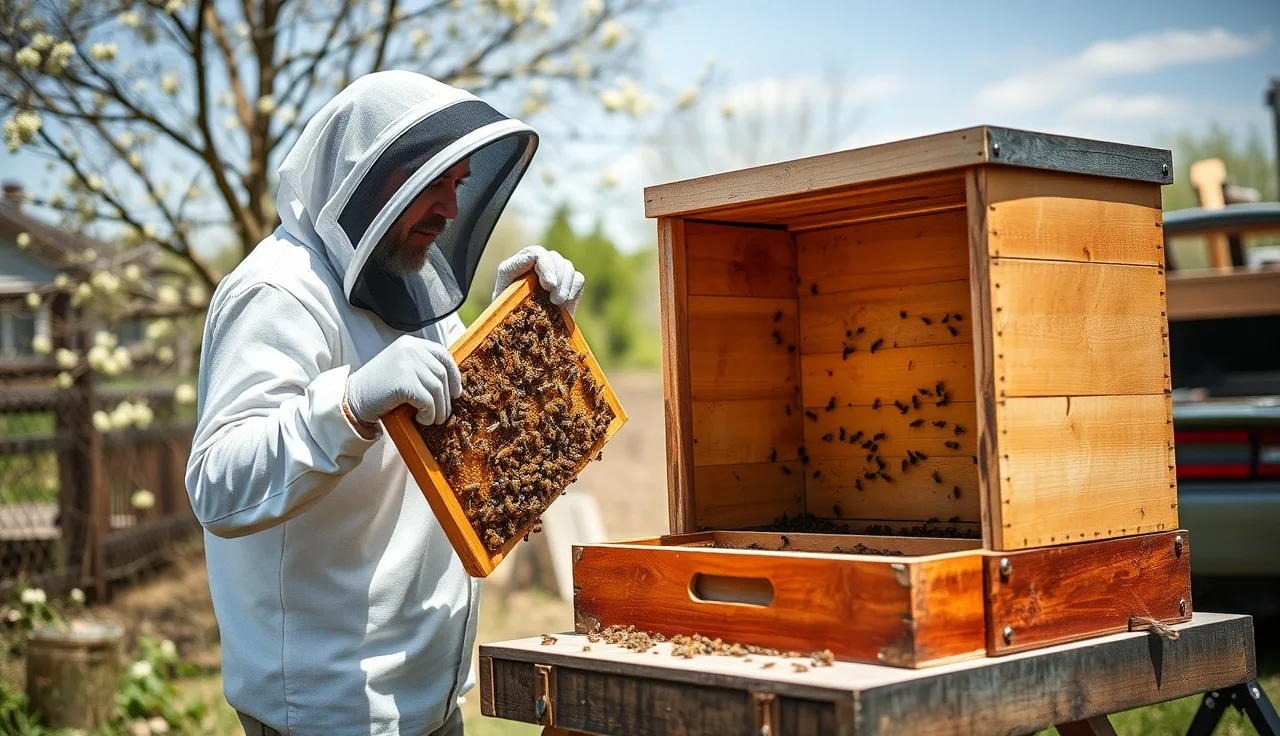
A walk-away split is about as low-tech as beekeeping gets. You divide one colony into two, make sure at least one half has eggs or young larvae so the bees can raise their own queen, and then you walk away. No grafting. No purchased queen. The bees sort it out themselves.
The varroa angle is why this technique gets so much attention beyond simple colony expansion. Varroa destructor reproduces almost entirely inside capped brood cells, with foundress mites strongly preferring capped worker cells and especially drone cells [1]. Split a colony, and the queenless half spends weeks raising a new queen with no new worker brood getting capped. The mites that were reproducing inside sealed cells run out of road. Phoretic mites riding on adult bees can't reproduce, and the ones already inside cells emerge with their offspring but find no fresh capped brood to re-enter. Reproductive output in that half drops hard.
The Honey Bee Health Coalition's Varroa management guide calls this brood break one of the most effective non-chemical tools available, and notes that even a natural swarm, which does the same thing, can crash mite populations in the parent colony [2]. A walk-away split copies that crash deliberately and on your schedule.
The queenright half, the piece that keeps the original queen, gets no such break. Mites there keep reproducing at full speed. That half still needs monitoring and treatment as usual. The split is a targeted tool for the queenless portion, not a whole-yard fix.
When is the right time of year to do a walk-away split for mite control?
Get the timing wrong and you waste the whole opportunity. The queenless half has to raise a new queen, get her mated, and build back to full size before your region's late-summer mite pressure or the fall population ramp-down.
In most of the northern United States that window is roughly late April through early July, with May as the sweet spot in most states [3]. In the deep South and Pacific Coast states, it stretches earlier and longer, sometimes from March into August.
For mite management specifically, split before loads climb too high. Once a colony is above 3% (3 mites per 100 adult bees on an alcohol wash), a brood break alone may not catch things fast enough, especially since the queenright half keeps pumping out infested brood. University of Minnesota Extension recommends treating any colony above 2 mites per 100 bees during brood-rearing season and using splits alongside treatment, not instead of it, when levels are already up [4].
A split done at low mite loads (1-2%) in late spring works as a standalone tool in the queenless half. That half's mite population can drop an estimated 30-50% over the brood break because reproductive mites lose access to new cells. Nobody has run a large randomized controlled trial on walk-away splits versus controls in hobbyist apiaries. The closest data comes from studies on the brood break effect in general, some showing reductions in the 40-60% range when the break lasts at least 21 days [5].
A late split, say August in zone 5 or 6, is risky. Not because the mite control fails, but because the new colony may not build enough winter stores or bees to survive. Late splits for mite control make more sense in warmer climates where buildup runs into October.
How long does the brood break actually last after a walk-away split?
People underestimate this number badly. The brood break in the queenless half is long.
Bees start emergency queen cells from young larvae within 24 hours of the split. Queen cells cap around day 8 after the egg was laid. The new queen emerges roughly 16 days after that egg (about 8 days after capping). She needs another 5-7 days to reach sexual maturity, then 1-3 mating flights spread over 3-7 days depending on weather. She usually starts laying 2-5 days after her last flight [6].
Add it up and the timeline from split to first new capped worker brood looks like this:
| Event | Days after split (approximate) |
|---|---|
| Queen cells started | Day 1-2 |
| Queen cells capped | Day 8-10 |
| Virgin queen emerges | Day 14-17 |
| Queen sexually mature | Day 19-23 |
| Mating flights complete | Day 22-29 |
| First eggs laid | Day 25-33 |
| First new capped worker brood | Day 34-42 |
That's up to six weeks with no new capped worker brood, weather delays included. Six weeks is a brutal stretch for a mite population. Phoretic mites live only about 5-11 days on adult bees during brood-rearing season [1], so mites that can't find brood to enter die without reproducing. Total mite load in that half falls.
Here's the twist. Bad weather that delays mating flights stretches the window further, which is rough on the bees but great for mite suppression. A fast-mating queen that starts laying at day 24 shortens the break and trims the mite-control benefit.
How do you actually perform a walk-away split correctly?
Find the queen first. This one step separates a clean split from an accidental mess. Locate her, note her frame, and put her and that frame into one box. That's your queenright half.
The queenless half needs frames with eggs and very young larvae (under 3 days old, the tiny curved grubs sitting in the bottom of the cell). Bees can only raise a queen from larvae up to about 3 days old [6], so fresh eggs give you the most room to work. Give this half at least 2-3 frames of open brood, 2-3 frames of capped brood, 2-3 frames of honey and pollen, and enough bees to cover every frame. Shake in extra nurse bees from other frames if the queenless side looks thin.
Both halves need a full hive body, an entrance, and a top. The queenright half can go back to the original spot and pick up returning foragers. The queenless half should go to a new location at least a few feet away, ideally facing a different direction, though plenty of beekeepers just set the split in the same yard without trouble.
Don't open the queenless half for at least 10-14 days. Cracking it early disrupts queen cell construction and can make the bees tear down cells in progress. At day 14, check for capped queen cells and emerging queens. At day 28, look for eggs. No eggs and no sign of a queen at 28 days means you've got a problem, and you'll need to combine the split back with another colony or introduce a purchased queen.
On equipment: you'll need an extra hive body, bottom board, cover, and frames. Good sources are covered at beekeeping supply companies, and if shipping cost matters, check free shipping honey bee supply companies before you order.
Should you treat the split for varroa during the brood break?
Yes, and this one extra step is what makes the walk-away split genuinely powerful.
Because the queenless half spends weeks with little or no capped brood, every surviving mite eventually ends up on an adult bee in its phoretic phase. Oxalic acid hits phoretic mites and skips right past capped cells, so it works far better during a brood break because there's nowhere for mites to hide [7]. An oxalic acid dribble or vaporization applied once during the queenless period (roughly 3-4 weeks after the split, when you're confident little to no capped brood remains from before the split) can reach 90-95% mite kill in colonies with no capped brood, versus roughly 50-60% in colonies with normal brood [7].
The EPA-registered label for Api-Bioxal (the only oxalic acid product approved in the US for varroa control as of 2025) states that dribble application is for use when no brood is present, while the extended-release vaporization method carries different brood-present instructions [8]. Read the actual label for your product before treating. The Honey Bee Health Coalition's treatment guide is the clearest plain-language summary of application methods and timing [2].
If you're tracking mite loads across a whole apiary, the free monitoring and treatment calculators at VarroaVault can help you decide whether a split-plus-treatment plan fits a given hive's mite count and the calendar.
The queenright half, remember, gets no brood break. Treat it on its own wash results. If it was the stronger, older colony going in, it may carry higher mite loads and may need treatment before you ever make the split.
How much does a walk-away split actually reduce mite levels?
The honest answer: it depends entirely on what you do with the brood break.
A brood break alone, no treatment, can cut mite loads in the queenless half by roughly 30-50% over four to six weeks. That estimate comes from studies on natural brood breaks and swarm events, not from controlled walk-away split trials, so treat it as a ballpark [5]. The Honey Bee Health Coalition describes brood interruption as a real mechanical control but rarely enough on its own to pull a high-mite colony back into the safe zone for the long haul.
A brood break followed by oxalic acid during the broodless window is a different animal. Studies on oxalic acid efficacy in broodless colonies land at 90%+ mite kill consistently [7]. Start with a colony at 2% mite load (2 mites per 100 bees), and that treatment can realistically drop the queenless half under 0.2%, well below any threshold that would hurt the colony heading into next season.
For the queenright half, nothing changes except you've pulled off some of the bees. Monitor and treat that half separately.
Here's the part people confuse. The mite reduction for the whole original colony (both halves combined, before any treatment) is zero from the split itself. Splitting doesn't kill mites. It separates them and hands you an opportunity: the brood break, and the chance to treat at high efficacy. Don't mistake the mechanism.
What mite count threshold should trigger a split instead of a chemical treatment?
A walk-away split for mite control is a preventive tool, not a rescue tool.
The most widely cited action threshold in North America is 2% during brood-rearing season (2 mites per 100 bees on an alcohol wash) [2][4]. At 1-2%, a well-timed spring split followed by oxalic acid during the brood break is a reasonable first move in the queenless half. You get mite suppression, a new colony, and minimal chemical use in one shot.
Above 3%, the queenright half needs treatment right away, whatever you do with the queenless portion. Waiting out a six-week queen-rearing cycle while the parent colony's mite load compounds is a bad trade. Treat the queenright half with an appropriate miticide (amitraz-based Apivar, formic acid-based Mite-Away Quick Strips, or thymol-based ApiLife VAR depending on temperature and colony condition), then run the queenless half through its brood break separately.
Above 5%, both halves need treatment. A split still helps with colony expansion and you'll still get the brood-break benefit in the queenless half, but at 5% there's no scenario where you can let either half coast through a six-week cycle untreated without risking collapse.
Track mite loads for varroa mite management by actual alcohol wash or sugar roll, never by visual inspection. Visual inspection catches only the most heavily infested colonies, by which point you're already in trouble.
What can go wrong with a walk-away split, and how do you fix it?
Failed queen raising is the most common problem. If the queenless half had no eggs young enough to raise a queen (older than 3 days at the time of split), or if every queen cell got damaged, you'll have a laying worker situation within 3-4 weeks. Laying workers are hard to fix. Your options are combining the queenless half back into another colony with the newspaper method, or introducing a mated queen from a reputable breeder.
Open the queenless half at day 14 to confirm queen cells exist and look viable. Capped queen cells but no eggs yet? That's fine, close up and wait. Multiple virgin queens? Let them fight it out or remove all but one. Nothing at all? Open again at day 7 next time and look harder.
Losing the queen during the split is the other big one. If you can't find her and you split by frames, you might drop her into the queenless half by accident. Then neither half raises a queen: the one with the old queen thinks it's fine, and the one without her has no young eggs to work with. Find the queen before you split.
The queenless half can also fail to build up fast, especially if it started as the weaker portion. If it looks thin on bees two weeks out, shake in a frame of nurse bees from a different colony.
Then there's robbing. A freshly split colony with a smaller population is an easy target. Keep the entrance small, especially during a dearth.
How does a walk-away split compare to other varroa management techniques?
No single technique works alone, and a walk-away split isn't competing with chemical treatments. It fills a different slot.
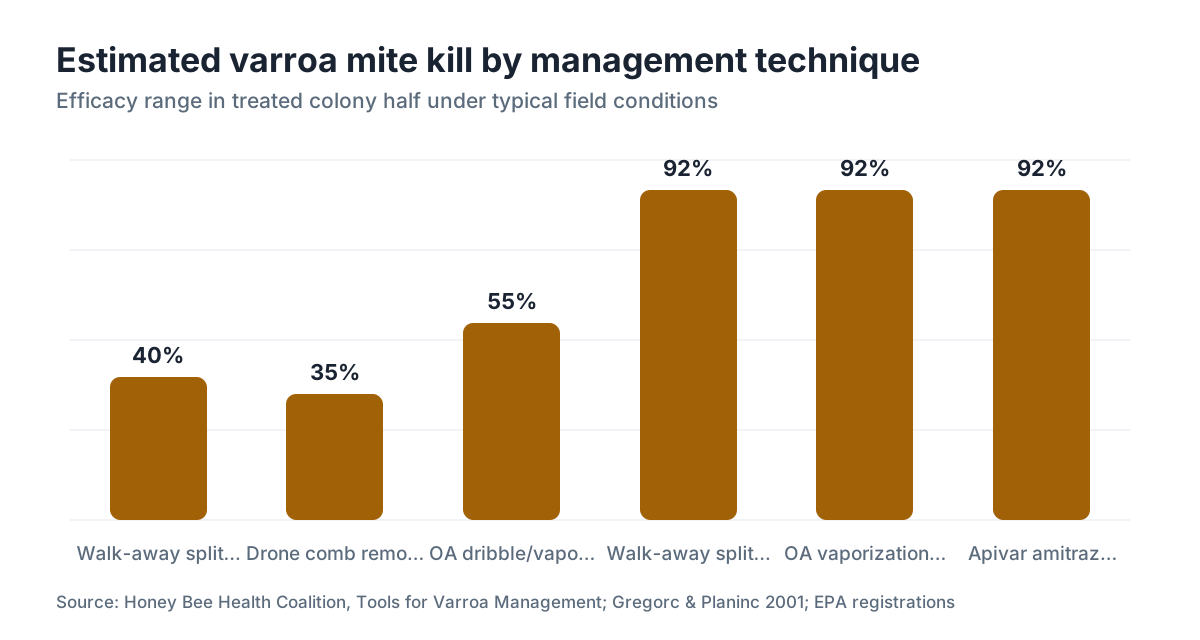
| Technique | Mite kill efficacy | Requires chemical | Cost | Creates brood break |
|---|---|---|---|---|
| Oxalic acid (broodless) | 90-95% [7] | Yes (low-risk) | Low | No (needs one) |
| Oxalic acid (brood present) | 50-60% [7] | Yes | Low | No |
| Apivar (amitraz strips) | 90%+ [9] | Yes (synthetic) | Moderate | No |
| Walk-away split alone | 30-50% in queenless half | No | Equipment cost only | Yes |
| Walk-away split + OA treatment | 85-95% in queenless half | Yes (low-risk) | Low | Yes |
| Drone comb removal | 30-40% reduction [2] | No | Zero | No |
The combination of walk-away split plus oxalic acid during the broodless window competes with synthetic miticides in the queenless half, and you get an extra colony out of the deal. That's a real upside. Apivar is easier, needs less planning, and works well, but it exposes the colony to amitraz and requires a 10-week strip placement. Both are valid. The split takes more timing discipline.
For a hobbyist running 5-20 colonies, timing 2-3 splits in late spring and treating the queenless halves with oxalic acid three weeks later is a realistic integrated pest management plan. It cuts total chemical load across the apiary while growing your colony count. The Honey Bee Health Coalition explicitly recommends pairing cultural methods like splits with chemical treatments as part of an integrated approach [2].
Does the walk-away split work for winter mite management too?
Mostly no, and don't try it for that in cold climates.
A winter split in a cold-climate apiary (zones 4-6, roughly the northern two-thirds of the US) almost certainly kills the queenless half. No time to raise a new queen, no drones to mate with, and too few bees to hold cluster heat. Even in warmer zones, a December or January split is a bad bet.
The mite goal for winter is different anyway. You want low mite loads going into winter (below 1-2% on your pre-winter wash in August or September) so the long-lived winter bees carrying the colony through to spring aren't loaded with virus. Those bees are the colony's survival mechanism, and mite-transmitted viruses, deformed wing virus above all, kill winter bees faster than the cold does [10].
If your August wash shows elevated levels, treat then with an appropriate product. Oxalic acid vaporization works well in late fall and early winter when colonies go naturally broodless or near-broodless in colder climates. The walk-away split for mite control belongs to spring and early summer. Once you're past your region's late-summer buildup window, chemical treatment is the right tool.
In the deep South and Hawaii, where colonies rarely go fully broodless, timing is more flexible and some beekeepers split year-round. Even there, the brood-break-plus-OA strategy needs a true broodless period to hit 90%+ efficacy.
How do you monitor mite levels before and after a split?
Alcohol wash is the gold standard. Collect about 300 adult bees (roughly half a cup) from a brood frame (avoid the queen), drop them into a jar with 70% isopropyl alcohol, shake for 60 seconds, pour through a mesh screen into a white bowl, and count the mites in the liquid [2][4][11]. Divide mites counted by bees counted, multiply by 100, and there's your percentage.
Run a wash on the colony before the split for your baseline. Run a wash on both halves 4-5 weeks after. The queenless half should show a clear drop if the brood break worked and you treated during it. No drop means you need a full-efficacy miticide.
Sugar rolls are a gentler option that doesn't kill bees, but most university extensions note they run slightly less accurate than alcohol washes and may undercount mites by 10-30% [4]. For management calls, the alcohol wash gives you the more reliable number.
One wrinkle for the queenless half: sampling bees 3-4 weeks after the split, before the new queen lays, means you're sampling a population with a slightly different age spread than normal. Most remaining mites at that point are phoretic and show up on a wash, which is exactly why the wash at this stage tells you so much.
VarroaVault's free monitoring tools track wash results over time and calculate treatment timing across multiple hives, which earns its keep fast once you're past a few colonies.
What equipment do you need to make a walk-away split work?
The list is short, which is one reason hobbyists love this technique.
You need a complete second hive setup: bottom board, at least one hive body (a deep Langstroth is standard, but medium boxes work fine if that's your system), inner cover, and outer cover. You need frames with drawn comb if you have it, or foundation at minimum. Drawn comb speeds queen-cell construction and cuts bee stress. A queen-rearing operation this is not, but bees do better in drawn comb.
Beyond the second hive, bring your standard inspection gear: smoker, hive tool, gloves, veil. A queen-marking pen makes the most important step (finding and marking the queen before the split) far easier. If you plan the oxalic acid treatment during the brood break, you need either an oxalic acid vaporizer or the Api-Bioxal dribble kit, and you should have the product on hand before the split, because you'll want it 3-4 weeks later.
Alcohol wash supplies cost almost nothing and are essential for knowing whether the technique worked: a jar, rubbing alcohol, a fine mesh strainer, and a white container.
More detail on hive gear is in our beekeeping supplies resource. If you want to explore different hive types or management philosophies, beekeeping species covers the bee side of the equation.
Frequently asked questions
Can a walk-away split completely replace varroa treatments?
Rarely. A split alone cuts mite loads in the queenless half by roughly 30-50% through the brood break, meaningful but usually not enough to hold a colony below the 2% action threshold long-term. Pairing the split with an oxalic acid treatment during the broodless window can reach 85-95% efficacy in that half. The queenright half needs standard monitoring and treatment on its own schedule regardless.
How many times per season can I split a colony for mite control?
Practically, one strong spring split is the norm for most hobbyists in northern climates. A second split in mid-summer is possible if the queenless half builds up well, but you risk heading into fall with two undersized colonies instead of one strong one. In warmer climates with longer seasons, two splits from a strong colony may work. Let mite wash results drive the decision, not a fixed schedule.
What if I can't find the queen before splitting?
This is the most common reason splits fail. If you genuinely can't find her after two careful inspections, divide the hive evenly by frames into separate boxes. Check both at day 14. The one with the queen has no queen cells (or torn-down ones). The one without her has capped queen cells. If neither has cells at day 14, look harder for the queen; she's probably in the half you didn't expect.
When should I apply oxalic acid to the queenless split for best results?
Wait until no capped brood remains from before the split, which usually means 3-4 weeks after the split date. By then all surviving mites are phoretic on adult bees, and oxalic acid dribble or vaporization reaches 90-95% kill in broodless colonies. Applying too early, while capped brood from the original colony is still present, drops efficacy sharply. One treatment during the true broodless window is usually enough.
Does a walk-away split help with varroa in the queenright half too?
Not directly. The queenright half keeps the original queen and she keeps laying, so mites keep reproducing there without interruption. The split does pull down the bee and brood population in the queenright half, meaning slightly fewer cells for mites to enter, but that effect is small. Monitor and treat the queenright half on its own mite wash results, just like any colony.
What is the best time of day to make a walk-away split?
Late morning to early afternoon, while foragers are out and the hive population is lower, makes it easier to find the queen and work calmly. If you want the queenright half (staying at the original location) to keep the field bees, split in the afternoon as foragers return. For a more even bee split, do it in the morning. Either works; the queen's location matters far more than time of day.
How do I know if the new queen has mated successfully?
Check for eggs 28-35 days after the split. Fresh eggs, tiny white grains standing upright at the bottom of cells, confirm she laid within the last three days. A solid laying pattern across most cells on a frame (few scattered empties) confirms good mating. A shotgun pattern with multiple eggs per cell points to laying workers or a poorly-mated queen, both of which need intervention.
Can I do a walk-away split to manage varroa in a small 2-box colony?
Yes, but the queenless half has to be populous enough to hold brood temperature and defend against robbing. A minimum of 3-4 frames of bees covering 5-6 frames of comb is the practical floor. Below that, a split gives you two struggling colonies instead of one strong one. If your colony is borderline, wait until after the spring nectar flow when populations peak, or build it up with a frame of brood from another hive first.
How does a walk-away split compare to a shook swarm for varroa control?
A shook swarm is more aggressive: you shake all bees onto empty frames or foundation, eliminating all brood (and the mites in it) at once. It produces a longer, more complete brood break and can drop mite loads 80-90% on its own without treatment. The downside is heavy colony stress and setback. A walk-away split is gentler, grows your colony count, and comes close on efficacy when paired with oxalic acid during the resulting brood break.
What drone brood removal tells us about when to split
Drone comb removal cuts varroa reproduction by 30-40% (Honey Bee Health Coalition), since mites prefer drone cells at 8-10x the rate of worker cells. Monitoring drone comb infestation gives an early read on population trajectory. If drone cells are heavily infested (5-10 mites per 100 drone cells) in early spring, that's a strong signal to make your split sooner rather than later and pair it with oxalic acid treatment.
Do Africanized honey bees manage varroa differently through swarming behavior?
Africanized honey bee colonies swarm far more often than European honey bees, and that frequent swarming creates repeated brood breaks that suppress varroa. Research has documented lower mite loads in Africanized populations partly for this reason, alongside grooming and hygienic behavior differences. For beekeepers in Africanized range states, this biology is useful context, though managing Africanized colonies carries its own serious challenges. See our africanized honey bee article for more.
Is it normal for the queenless split to seem weaker for several weeks?
Yes, completely normal. The queenless half loses field bees that drift back to the original site, has no queen laying new bees, and sits in a holding pattern while queen cells develop. Population looks flat or slightly declining for 4-6 weeks. Once the new queen lays and her first workers emerge around week 6-7, the colony visibly strengthens. If it looks extremely weak at week 4 (fewer than 3 frames of coverage), add a frame of emerging brood from another hive.
What mite monitoring method is most accurate before making a split decision?
Alcohol wash on a sample of 300 adult bees from a brood frame, counting mites in the wash liquid, is the most accurate field method for hobbyists. University of Minnesota Extension and the Honey Bee Health Coalition both call it the gold standard. Sugar rolls are gentler but may undercount by 10-30%. Sticky boards show mite drop trends but give no reliable percentage. Base your split decision on an alcohol wash result, not estimates.
Can I do a walk-away split and then recombine the two halves later?
Yes. If the queenless half fails to raise a queen or the new queen is poorly mated, combine it back with the queenright half using the newspaper method. Place a sheet of newspaper with a few small holes between the two boxes, set one on top of the other, and let the bees chew through over 2-3 days. By the time they merge, pheromone differences have equalized and fighting is minimal. You'll still have gotten the brood-break benefit in the queenless half before recombining.
Sources
- Rosenkranz P, Aumeier P, Ziegelmann B. Biology and control of Varroa destructor. Journal of Invertebrate Pathology, 2010.: Varroa destructor reproduces almost exclusively inside capped brood cells and shows strong preference for drone brood; phoretic mites on adult bees cannot reproduce.
- Honey Bee Health Coalition, Tools for Varroa Management Guide (latest edition): Brood interruption through splits or swarm events is described as one of the most effective non-chemical varroa management tools; action threshold of 2% mites during brood-rearing season recommended.
- Penn State Extension, Varroa Mite Management: Late April through early July is the recommended window for colony splits in northern US states, with May as the primary peak opportunity.
- University of Minnesota Extension, Varroa Mite Management for the Hobbyist Beekeeper: Alcohol wash is the recommended monitoring method; action threshold of 2 mites per 100 bees during brood-rearing season; treatment recommended above this level.
- Fries I, Camazine S. Implications of horizontal and vertical pathogen transmission for honey bee epidemiology. Apidologie, 2001.: Brood break events including swarms can cause mite population reductions in the range of 40-60% when the broodless period extends at least 21 days.
- Snodgrass RE. Anatomy of the Honey Bee. Cornell University Press / USDA original publication referenced by extension services.: Queen development from egg to emergence takes approximately 16 days; bees can only raise queens from larvae under 3 days old; queens typically begin laying 25-33 days after the initiating egg was laid.
- Gregorc A, Planinc I. Acaricidal effect of oxalic acid in honeybee (Apis mellifera) colonies. Apiacta, 2001; multiple confirmatory studies cited by EPA registration review.: Oxalic acid dribble or vaporization achieves 90-95% varroa kill efficacy in broodless colonies; efficacy drops to approximately 50-60% in colonies with capped brood present.
- EPA, Api-Bioxal (oxalic acid) Registration, EPA Reg. No. 84449-1: Api-Bioxal label specifies that dribble application is for use when no brood is present; the label is the legal document governing application methods in the United States.
- EPA, Apivar (amitraz) Registration and Label: Apivar amitraz strips achieve 90%+ varroa kill efficacy when used per label directions with a 10-week strip placement period.
- Dainat B, Evans JD, Chen YP, Gauthier L, Neumann P. Predictive markers of honey bee colony collapse. PLOS ONE, 2012.: Deformed wing virus transmitted by varroa mites significantly shortens the lifespan of winter bees and is strongly associated with colony mortality over winter.
- USDA Agricultural Research Service, Honey Bee Lab, Beltsville MD: Alcohol wash methodology for varroa monitoring: 300 bees collected from brood frame, 60-second shake in 70% isopropyl, mites counted in wash liquid.
- NC State Extension Apiculture, Splitting Honey Bee Colonies: Walk-away splits require frames with eggs or larvae under 3 days old in the queenless portion; minimum viable population for a split half is 3-4 frames of bees.
Last updated 2026-07-09