What percentage of varroa mites are in brood at any time?
TL;DR
- During peak brood season, roughly 80-90% of varroa mites in a colony sit inside capped brood cells, invisible and protected from most treatments.
- Only 10-20% ride adult bees where alcohol washes and oxalic acid can touch them.
- That ratio flips in broodless periods.
- Treatment timing is the whole game.
What percentage of varroa mites are actually in capped brood?
During active brood season, studies put 80-90% of a colony's mite population inside capped worker and drone cells. [1] The Honey Bee Health Coalition's Varroa Management Guide, citing foundational work by de Guzman, Rinderer, and others, puts the phoretic (adult-bee-riding) fraction at roughly 10-20% under normal brood conditions. [2]
So when you do an alcohol wash on 300 bees and count 5 mites, you're seeing a fraction of a fraction. The 30-40 mites hiding in brood never make it into that sample.
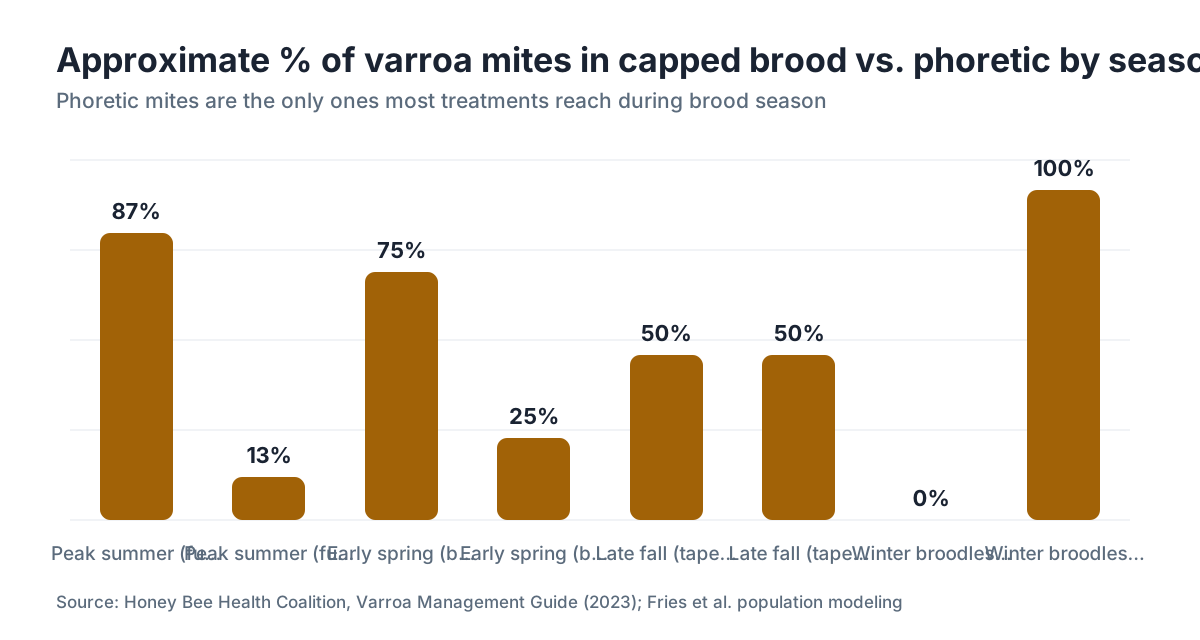
The exact percentage moves with season and colony state. In mid-summer with a full brood nest, you're closer to 85-90% in brood. As the colony winds down in fall and the queen slows her laying, the phoretic fraction climbs. A broodless colony has 100% phoretic mites, which is why a midwinter oxalic acid treatment on a cluster works so well. [3]
Why does the brood-to-phoretic mite ratio matter for treatment?
Almost every approved varroa treatment has a different story for mites in brood versus mites on bees. Oxalic acid dribble or spray hits phoretic mites on adult bees very well (90%+ efficacy in broodless colonies) but does essentially nothing to mites inside capped cells. [3] Amitraz strips (Apivar) and thymol products (Apiguard, ApiLifeVar) reach brood-stage mites through prolonged exposure and volatility, but their efficacy still drops when brood levels are high because the mites are sheltered. [4]
Here's the practical consequence. Say your colony has 1,000 mites total and 85% are in brood. You do an oxalic acid vapor treatment. You might kill 85-90% of the 150 phoretic mites, so around 130. The 850 in brood survive, emerge over the next 12 days, and a large fraction re-enter new cells within hours of emerging. Your alcohol wash the next week might look reassuring and still be lying to you.
This is also why monitoring right after a strip treatment ends can give false confidence. You're catching the population at its most detectable, not at its most dangerous.
Timing treatments to hit low or zero brood is no small tweak. It's often the difference between a treatment working and a colony crashing anyway.
How does the mite distribution change across the season?
The brood percentage is not a fixed number. It's a moving target tied to how much capped brood the colony carries at any moment.
| Season / Colony State | Approx. % Mites in Brood | Approx. % Phoretic |
|---|---|---|
| Peak summer (full brood) | 85-90% | 10-15% |
| Early spring (building up) | 70-80% | 20-30% |
| Late fall (brood tapering) | 40-60% | 40-60% |
| Winter broodless period | 0% | 100% |
| Swarm or brood break | 0-20% | 80-100% |
These ranges come from the modeling work of Fries, Camazine, and Calis, which built life-table models of Varroa destructor population dynamics across the annual colony cycle. [1] Exact numbers vary by climate, queen health, and colony strength, but the pattern holds everywhere.
One practical implication: if you're in a region with warm winters where the queen never fully stops, you never reach the 100% phoretic window. Southern U.S. beekeepers often have to build a brood break by hand, through queen caging or removal, to get that window. [5]
How does the mite reproduction cycle inside brood cells work?
A foundress mite enters a cell roughly 20 hours before capping, hides in the larval food, then begins laying eggs after the cell is capped. [6] In a worker cell (capped for about 12 days), she typically produces one viable male and one viable female. In a drone cell (capped for about 14-15 days), she has more time and can produce two or three viable females. [6]
That's why drone brood is a mite magnet. Studies going back to Fuchs (1990) have shown mites prefer drone cells at a rate several times higher than their occurrence in the colony would predict. [7] A drone brood trap, hung in the colony and removed before capping opens, exploits exactly that preference.
The female offspring mate with the male sibling inside the cell. The mother and mated daughters emerge with the bee. The male dies. Those newly mated females become the next generation of foundresses looking for cells to enter, and the cycle repeats every 10-12 days in worker brood.
That cycle speed is why mite populations can double every 4-6 weeks during summer. You're doing more than counting mites. You're counting compounding interest.
Does a high percentage of mites in brood mean my alcohol wash is wrong?
No. Your alcohol wash result is still real. It's incomplete by design, and knowing that is how you read it correctly.
An alcohol wash (or sugar roll, though alcohol is more accurate) [2] samples the phoretic fraction. If the phoretic fraction is 10-15% of the total population, then your wash gives you a window into that slice. A result of 2 mites per 100 bees (2%) in July likely reflects a total population far higher than 2% of the colony.
The Honey Bee Health Coalition recommends treating when you hit 2% on an alcohol wash during the summer honey flow. [2] That 2% threshold already accounts for the fact that you're seeing only the phoretic fraction, and it was calibrated against colony collapse outcomes, not against the raw mite count. Wait until you see 5% phoretic and the total population is already catastrophic.
Wash at least monthly from March through October. In August and September, go every two weeks. The population can slide from borderline to disaster in the time it takes one brood cycle to complete.
For building your own monitoring schedule, the free protocol tools at VarroaVault can help you map treatment windows to your local bee-year calendar.
Why are broodless periods the best time to treat with oxalic acid?
Oxalic acid (OA) works by direct contact with mites on adult bees. The EPA-registered label for Api-Bioxal allows three treatment methods: dribble, spray, and vaporization. [3] All three depend on the mite being exposed on the bee's body or in the hive atmosphere.
When 100% of mites are phoretic, oxalic acid vaporization has hit 95-99% mite kill in a single treatment in research trials. [3] When a colony carries even moderate brood, that efficacy drops sharply because the mites in capped cells never get touched.
The approved Api-Bioxal label says: "Do not treat colonies with capped brood when using the dribble method." [3] Vaporization can be applied to colonies with brood, but multiple treatments spaced 5-7 days apart are needed to catch mites as they emerge, and even that protocol rarely matches the single-treatment power of a truly broodless colony.
Winter solstice is when most northern hemisphere beekeepers aim their OA treatment, because the queen is most likely fully stopped. In warmer climates, inducing a brood break in October or November by briefly removing or caging the queen buys you that same window. [5]
How do you account for brood-hidden mites when estimating total colony mite load?
There's a simple correction-factor approach, though it rests on assumptions honest beekeepers should own. If you know roughly what percentage of mites are phoretic in your colony's current state, you can estimate total load.
Example: Your alcohol wash shows 3% mites (3 mites per 100 bees sampled). The colony sits in peak summer brood. You estimate 15% of mites are phoretic (mid-range for that season).
Estimated total infestation rate = Phoretic rate / Phoretic fraction = 3% / 0.15 = 20%
That's a rough estimate, not a precise count. The phoretic fraction you assume matters enormously. Fries et al. showed the phoretic fraction itself varies with mite population density, brood area, and time of season, so using a single correction factor across the whole year builds in real error. [1]
Most beekeepers use the uncorrected phoretic percentage as their trigger number, because that's what the treatment thresholds were calibrated against. The HBHC threshold of 2% in summer, or 1% in late fall when brood is present, already bakes in the expected ratio. [2] You don't need to do the algebra at the hive. You need to know the threshold and wash regularly.
For a deeper look at the mite itself and its biology, see the varroa mite overview.
Does the mite percentage in brood differ for worker cells versus drone cells?
Yes, and by a wide margin. Research by Fuchs and others found mite foundresses enter drone cells at a rate several times their expected frequency based on population alone. [7] Drone cells win out because they're larger (more room for the foundress to move and hide before capping) and because the longer capping period (about 14-15 days versus 12 for workers) gives more time for successful reproduction.
A colony actively rearing drone brood can hold a lopsided share of its mite population in those cells. If the colony has 10% of its brood as drone, it might have 40-50% of its reproducing mites in that drone brood. The exact numbers aren't precise across all studies, but the direction of the preference is consistent and well-documented. [7]
This is why drone brood removal is a legitimate mite management tool. Insert a frame with drawn drone comb or a drone foundation strip, let the colony fill it, then pull and freeze the capped drone brood before it opens. That physically removes a meaningful chunk of the reproducing mite population. A single drone comb pull at the right moment can take several hundred mites out of the cycle. [2]
It won't replace chemical treatment in a colony with a serious infestation, but as a suppression tool during the season it has real value.
How fast can mite populations grow from brood-stage reproduction?
Fast. Uncomfortably fast.
Under favorable conditions (warm summer, strong queen, constant brood), Varroa destructor populations can double every 4-6 weeks. [1] A colony that passes your threshold test in July with 2% phoretic mites can sit at 5-8% by late September if no treatment goes in.
The math runs on the brood fraction. Each reproducing female in brood that successfully makes one viable daughter has doubled herself. In worker brood, roughly 70-80% of foundress mites successfully produce at least one reproductive daughter. In drone brood that number can approach 90% or higher thanks to the extra time. [6]
Spring is actually when the fastest relative growth happens. The colony is expanding brood rapidly, giving mites more cells to enter, but the mite population from winter starts small, so beekeepers underestimate the urgency. By the time summer hits and populations are large enough to show up in a wash, the compounding has already done damage.
Washing in April and treating if you're above 1% is not excessive caution. It's cutting off the first compounding cycles before they build momentum.
What treatments actually reach mites inside capped brood?
This is the hard part of varroa management. The treatments that kill brood-stage mites are fewer and fussier than the ones that kill phoretic mites.
Amitraz (Apivar strips) works by releasing amitraz vapor slowly over 6-10 weeks. That vapor penetrates wax to some degree, and the long contact gives it efficacy against mites in cells. USDA Agricultural Research Service work has found Apivar efficacy in the 90-93% range when used for the full labeled period with brood present. [4] But that takes 6-10 weeks in the hive, correct placement (between brood frames), and no resistance issues.
Thymol-based products (Apiguard, ApiLifeVar) work through volatility and penetrate cells to some extent. Their efficacy depends on temperature: they don't work well below about 59°F (15°C) or above 105°F (40°C), and their performance with heavy brood trails Apivar. Penn State Extension guidance puts Apiguard efficacy with brood present at 74-93% depending on conditions. [5]
HopGuard (hop beta acids) is labeled for use with brood present and can penetrate cells, but its efficacy data is more variable (50-80% in some trials), so it's typically a supplement rather than a primary treatment. [4]
Oxalic acid extended-release products and repeated dribble applications try to catch mites as they emerge over several brood cycles. They work, but they demand precise timing and repeated application.
The honest summary: no single treatment kills 100% of brood-stage mites in one application. Long-duration amitraz is the closest thing available under normal brood conditions.
How does a brood break change the math?
A brood break, natural (winter) or induced (queen caging, removal, or splitting), collapses that 80-90% brood fraction toward zero as existing brood emerges and no new brood gets capped. [5]
Worker brood takes about 12 days to go from egg to emerging adult. A queen caged for 24-26 days gives you a clean window: the last brood sealed before the cage finishes its capping cycle in the first 12 days, and by day 24 all of it has emerged. At that point, in theory, you're near 100% phoretic.
Apply oxalic acid vaporization at day 24-26 and you can hit 95%+ of the colony's mite population in one or two treatments. Then release the queen. The colony loses some brood production time, but the mite knockdown can carry colony health through the rest of the season in a way that strip treatments with full brood present can't match.
This is a real technique that serious beekeepers use, and university extension literature recommends it. [5] It's more work than dropping in strips, but if you've had treatment failures with amitraz or you suspect resistance, it's worth understanding.
Nobody has clean population-wide data on how often brood breaks get used versus strip treatments. Anecdotally, beekeepers who pair a summer brood break with OA vaporization tend to report very low reinfestation rates into fall.
What do university and USDA researchers say about using these percentages in practice?
The academic framing of the 80-90% brood figure comes mostly from population modeling. Fries, Camazine, and Calis (1994) built a model showing that mite population dynamics are dominated by the reproductive phase, not the phoretic phase. [1] That work gets cited in nearly every later treatment efficacy study because it explains why treating only phoretic mites falls short during brood season.
The Honey Bee Health Coalition's Varroa Management Guide turns this research into practical thresholds. The HBHC guide states that "an estimated 80-90% of mites in a colony with brood are in capped cells" and frames all monitoring and treatment timing advice around that fact. [2]
USDA ARS research on Apivar efficacy also uses this ratio to explain why strip treatments need the full labeled duration: short applications leave the brood-stage survivors to repopulate. [4]
The EPA's registration of Api-Bioxal limits the dribble application method to colonies without sealed brood for exactly this reason, building the biology into the product's legal use instructions. [3]
So this isn't contested science. The 80-90% figure is foundational to how every major regulatory and research body approaches varroa management. Where uncertainty lives is in the exact percentage at any given moment in a specific hive, which is why ongoing monitoring rather than single-point estimates is the standard of care.
For building out a full-season monitoring and treatment calendar, the free tools at VarroaVault are worth bookmarking.
Frequently asked questions
What percentage of varroa mites are phoretic (on adult bees) versus in brood?
During peak brood season, roughly 10-20% of mites are phoretic on adult bees and 80-90% are in capped brood cells. That ratio shifts with the season: in late fall the phoretic fraction rises to 40-60%, and in a fully broodless winter cluster it reaches 100%. These numbers come from population modeling and are cited by the Honey Bee Health Coalition's Varroa Management Guide.
Why does varroa treatment fail even when my alcohol wash looked okay?
Your alcohol wash samples only the phoretic mites, which are 10-20% of the colony's mite population during brood season. A wash showing 2% infestation could mean total infestation is actually 10-14% once brood-stage mites are counted. If a treatment doesn't reach brood-stage mites (oxalic acid dribble, for example), those mites survive, emerge, and re-infest new cells within days.
Does oxalic acid kill mites in capped brood?
No. Oxalic acid works by contact with mites on adult bees. It does not penetrate capped wax cells. The EPA-registered Api-Bioxal label states the dribble method should not be used on colonies with capped brood. In a broodless colony, a single OA vaporization treatment can achieve 95%+ mite kill. With brood present, efficacy drops sharply and multiple timed applications are needed.
When is the best time of year to treat varroa because of the brood cycle?
The best window is when the colony is broodless or has minimal brood: midwinter in cold climates, or during an induced brood break in fall. A second high-value window is very early spring before the queen ramps back up. During summer, long-duration amitraz strips (Apivar, 6-10 weeks) are the most effective option because they work while brood is present.
How do mites reproduce inside brood cells?
A foundress mite enters a cell about 20 hours before it's capped, hides in larval food, then starts laying eggs after capping. In a worker cell she typically produces one viable male and one viable female. In a drone cell, with its longer capping period of about 14-15 days, she can produce two or three viable daughters. The daughters mate with the male sibling inside the cell, then emerge as mated foundresses ready to re-infest new cells.
Why do mites prefer drone brood cells?
Drone cells are preferred because they're larger, making it easier for the foundress to hide before capping, and they stay capped for about 14-15 days versus 12 for worker cells. That extra time allows more successful reproduction. Studies have found mites enter drone cells at several times the rate their overall population proportion would predict. This is why drone brood trapping is a useful suppression technique.
How accurate is an alcohol wash given that most mites are in brood?
Your alcohol wash is accurate for what it measures: the phoretic fraction. The treatment thresholds (2% in summer, 1% in late fall) were calibrated against colony outcomes while accounting for the expected brood-stage fraction. So you don't need to correct the number yourself. What you do need is to wash consistently and on schedule, because the phoretic fraction can spike fast as mites emerge from brood.
How fast do varroa populations grow during summer brood season?
Under favorable conditions, Varroa destructor populations can double every 4-6 weeks during active brood season. That speed is driven by reproduction in capped brood: roughly 70-80% of foundress mites in worker cells successfully produce at least one viable daughter, and in drone cells that success rate is even higher. A colony at 2% infestation in July can reach 8-10% by late September without treatment.
What is a brood break and how does it help with varroa treatment?
A brood break is a period when no new brood is being capped, either naturally in winter or induced by caging or removing the queen. Once all existing brood has emerged (about 12-24 days after the queen stops laying), the mite population is nearly 100% phoretic and vulnerable to oxalic acid treatments. A single OA vaporization during a brood break can kill 95%+ of mites in the colony.
Does Apivar (amitraz) work on mites inside capped brood?
Yes, partially. Amitraz vapor from Apivar strips slowly penetrates cells over the 6-10 week treatment period, giving it efficacy against brood-stage mites that most other treatments lack. USDA ARS research puts full-treatment Apivar efficacy at 90-93% with brood present. That's lower than OA in a broodless colony but higher than short-duration treatments. Strips must be placed between brood frames and left for the full labeled period.
Can you estimate total mite load from an alcohol wash result?
Roughly, yes, but with real uncertainty. Divide your phoretic percentage by the expected phoretic fraction for your season (about 0.15 in peak summer, 0.40-0.50 in late fall). A 2% wash in July might imply a total load around 13%. The math involves assumptions about the phoretic fraction that vary by colony and season, so treat the estimate as directional, not precise. Treatment thresholds are set for the raw phoretic number, so you don't need to calculate the total to act.
How many times should I treat with oxalic acid if brood is present?
The typical protocol for oxalic acid vaporization with brood present is 3-4 treatments spaced 5-7 days apart, timed to hit mites as they emerge from successive brood cycles. Even this extended protocol does not fully match the efficacy of a single treatment in a broodless colony. Check the Api-Bioxal label for the legal maximum number of applications per season, which the EPA set at 3 treatments per year.
Do mites in brood affect the bees that emerge from those cells?
Yes. Mite feeding and reproduction inside the cell damages developing bees physically, compromising fat bodies, immune function, and wing development. Bees that emerge from heavily infested cells have shorter lifespans, reduced foraging ability, and impaired learning. Even one mite per cell causes measurable damage. This is separate from the viruses mites vector, which compound the harm further.
Is the 80-90% brood figure the same for small versus large colonies?
The percentage is driven by the ratio of capped brood to adult bees, which varies by colony size and season more than by absolute colony size. A large, healthy summer colony at full strength and a medium colony in mid-summer can have similar brood-to-phoretic ratios. Where size matters is that a larger colony has more total cells available, so mite populations can grow larger in absolute terms before the percentage alarm trips.
Sources
- Fries I, Camazine S, Sneyd J. Population dynamics of Varroa jacobsoni: a model and a review. Bee World, 1994. Also Fries et al., Apidologie modeling work on Varroa life tables.: During peak brood season, 80-90% of mites are in capped brood; mite populations can double every 4-6 weeks under favorable conditions.
- Honey Bee Health Coalition, Varroa Management Guide (2023 edition): An estimated 80-90% of mites in a colony with brood are in capped cells; treatment threshold of 2% on alcohol wash during summer honey flow; drone brood trapping as a suppression tool.
- EPA, Api-Bioxal (oxalic acid) Section 3 Registration and Label: Api-Bioxal label states dribble method should not be used on colonies with capped brood; up to 3 vaporization treatments per year approved; 95-99% efficacy in broodless colonies cited in supporting studies.
- USDA Agricultural Research Service, Varroa Management Research: Apivar (amitraz) efficacy of 90-93% with brood present when used for full labeled 6-10 week period; HopGuard efficacy variable at 50-80%; strip placement between brood frames required.
- Penn State Extension, Varroa Mite Management for Honey Bee Colonies: Apiguard efficacy 74-93% with brood present depending on conditions; induced brood break by queen caging recommended for OA vaporization; southern U.S. beekeepers may need artificial brood breaks.
- de Guzman LI, Rinderer TE. Identification and comparison of Varroa species infesting honey bees. Apidologie, 1999. Also Boot WJ et al., reproductive biology of Varroa in worker and drone cells.: Foundress mite enters cell 20 hours before capping; worker cell capped ~12 days, drone cell ~14-15 days; typically one viable male and one viable female produced per worker cell; 70-80% of foundresses in worker cells produce at least one viable daughter.
- Fuchs S. Preference for drone brood cells by Varroa jacobsoni. Apidologie, 1990.: Mite foundresses prefer drone cells at several times the rate their population proportion predicts; drone cells can harbor a disproportionate share of reproducing mites.
- University of Minnesota Extension, Varroa Mite Management: Monitoring at least monthly March through October recommended; treating at 1% infestation in late fall with brood present; brood break via queen removal as an OA vaporization strategy.
- NC State Extension Apiculture, Varroa Mite Biology and Management: Queen caging for 24-26 days creates a brood break window for high-efficacy OA treatment; mite population dynamics and seasonal brood fraction changes.
- Honey Bee Health Coalition, Tools for Varroa Management: A Guide to Effective Varroa Sampling and Control: Alcohol wash accuracy as a measure of phoretic fraction; treatment thresholds calibrated to colony collapse outcomes rather than raw mite count; sugar roll vs. alcohol wash accuracy comparison.
Last updated 2026-07-09