How long does a brood break take to reduce varroa?
TL;DR
- A complete brood break runs 24-28 days: roughly 9 days until existing eggs hatch, then up to 15 more days until the last capped cells emerge.
- With no capped brood, every surviving varroa rides on adult bees, fully exposed to oxalic acid.
- Done right, a single OAV application at day 21-24 drops mite loads 90-97%.
What is a brood break and why does it matter for varroa?
A brood break is any period when a colony has zero capped brood. No cappings, no protected mites. That matters because varroa spend roughly 70-80% of their reproductive lives sealed inside capped cells, shielded from every contact treatment you can apply [1]. Eliminate the capped brood and every mite in the hive becomes phoretic, riding on adult bees, exposed.
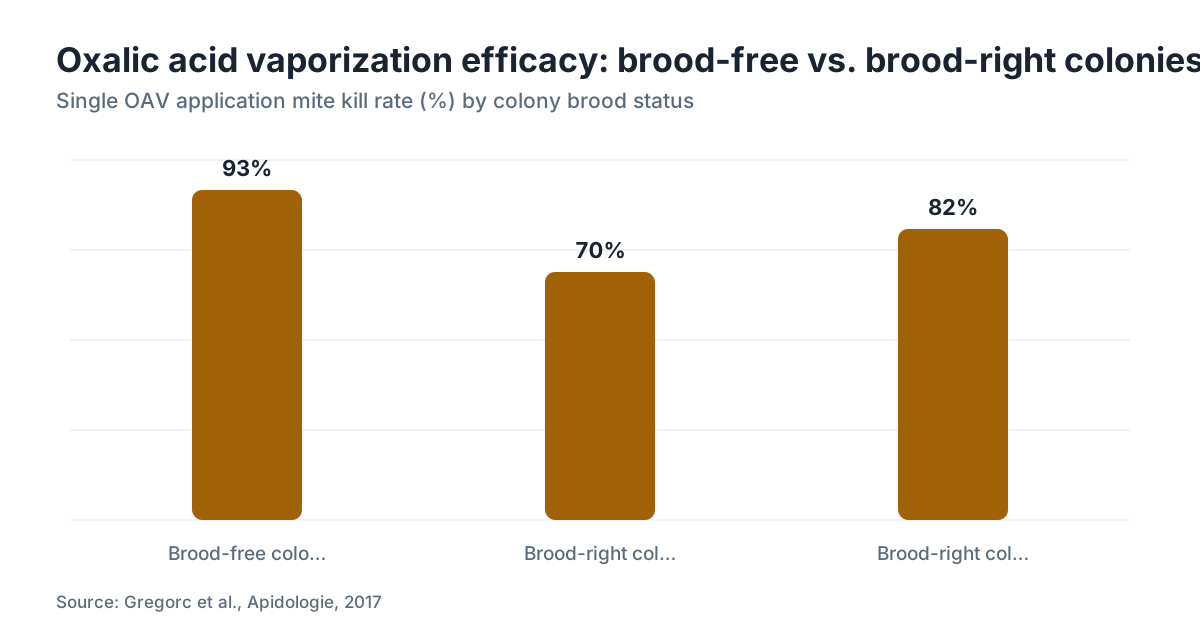
This is the most reliable way to flip the odds. A chemical treatment applied to a colony packed with capped brood usually tops out at 60-80% efficacy, because the mites under the cappings ride out your whole exposure window. Strip away that refuge and the same oxalic acid vaporization jumps to 90-97% in brood-free colonies [2].
Breaks happen naturally (winter in the north, a swarm) or you can engineer one by caging the queen, pulling her temporarily, or splitting the colony. Each path has real trade-offs. Natural winter breaks cost nothing but never show up in warm climates. Queen caging works but stresses the colony and risks the queen if she stays confined too long. Know the exact timeline for each and you can plan your treatment window instead of guessing at it.
How long does a brood break actually take from start to finish?
Bee biology sets the clock, not your calendar. Here is how it runs:
- Day 0: Queen is caged, removed, or naturally stops laying.
- Days 1-3: Any eggs present when the break starts hatch into larvae within about 3 days, so the last eggs laid before caging hatch by roughly day 3-4.
- Days 9-12: Every larva that was open when the break began gets capped. Open brood becomes capped brood across this window.
- Days 21-24: The last worker cells capped at day 9-12 emerge. Worker brood stays capped 12 days (capped day 9, emerges day 21).
- Days 24-28: Drone brood, if present, stays capped up to 15 days. All capped brood is gone by day 28 at the outside.
The honest answer is 21-28 days for a full break, depending on whether drone brood is present and when the break started relative to the queen's laying cycle [3]. Beekeepers say "three weeks" and that's close enough for planning. But treat on day 18 and you may still have sealed cells with live mites inside.
Your safe treatment window opens at day 21 for colonies with no drone comb, or day 28 if you saw drone brood before the break. Check before you treat. One frame of capped cells can hold hundreds of reproducing mites that survive your oxalic application untouched.
What happens to mite levels during the brood break period?
Mite counts move in ways that surprise people, and you want to understand why before you treat.
Before the break, a heavily infested colony in late summer might have 80% or more of its mites hidden under cappings [1]. The phoretic count is a small slice of the total. As capped brood emerges across days 9-21, those protected mites climb back onto adult bees. Your phoretic count actually rises through the early and middle of the break before it drops after treatment. Do an alcohol wash on day 14 and you may see a higher number than before the break started. That is not failure. That is the process working.
By day 21-24, with all brood emerged and no treatment yet applied, essentially 100% of remaining mites are phoretic. Peak vulnerability. Treat now.
A single well-timed oxalic acid vaporization at this window has produced mite drops above 90% in published work [2]. The Honey Bee Health Coalition's Varroa management guide states that "treatments applied to broodless colonies achieve the highest efficacy" and recommends timing oxalic acid to brood-free periods on purpose [4]. That's about as clear a consensus as beekeeping ever gives you.
One more point: varroa reproduce only inside brood. With no brood, the mite population cannot grow during a break. Pair that with the post-treatment knockdown and you can push a colony from a dangerous 3-5% infestation back below 1% with one clean break-and-treat cycle.
What methods create a brood break and how do their timelines compare?
Four main approaches, each with its own effort, reliability, and risk.
| Method | Days to brood-free | Queen risk | Best for |
|---|---|---|---|
| Queen caging (in hive) | 21-28 | Low-moderate | Planned midsummer treatment |
| Queen removal (queenless) | 21-28 + requeening time | High if prolonged | Requeening anyway |
| Walk-away split | 21-28 in parent colony | None in parent | Spring increase + mite reset |
| Natural winter break | Variable (weeks to months) | None | Northern climates, passive management |
| Artificial swarm | 21-28 in original | Low | Experienced beekeepers |
Queen caging is the most controlled method for a deliberate midsummer break [3]. Catch the queen, put her in a hair roller or JZ-BZ cage (or a commercial queen cage), and leave her confined 24-26 days. The colony is stressed but functional. After day 21, treat, then release her. The main risk is a cage slipping open or the queen dying from heat stress in a poorly ventilated setup.
A walk-away split creates a break in the queenless half while you move the old queen and some brood frames to a new box. The original hive raises an emergency queen, which takes about 16 days to emerge and start laying, so the brood-free window in that colony stretches to 30-35 days easily. That extra margin is a gift for treatment timing. The cost is lost production in the original colony.
Search for brood break diagrams and most show the queen cage, because it photographs well. The walk-away split arguably stresses the colony less while doing the same mite-control job.
Natural winter breaks are real and useful in USDA hardiness zones 5 and colder, where colonies go broodless for 8-12 weeks [11]. In zones 7-9 (the American South, California, Pacific Northwest lowlands), colonies may never go truly broodless, one reason varroa pressure runs worse there year-round.
What treatment should you use at the end of a brood break?
Oxalic acid vaporization is the right call for a brood-free colony in most situations. The EPA-registered oxalic acid label (Api-Bioxal is the common registered form in the U.S.) lists brood-free conditions as the best application scenario [5]. One vaporized application in a brood-free hive hits kill rates that take three or more trickle applications to approach in a brood-right hive.
The Api-Bioxal label allows one application per brood-free period, not one per year. That distinction matters. You vaporize once during the break, and that treatment episode is done. The label dose is 1 gram of oxalic acid dihydrate per brood box, run for about 2 minutes per application [5].
Oxalic acid trickle (dribble) is a fallback if you have no vaporizer and the colony is genuinely small, but it works less well per application, wets the bees, and is harder to dose in a big colony. The Honey Bee Health Coalition recommends vaporization over dribble for brood-break applications, on efficacy grounds [4].
Amitraz strips (Apivar) also work after a break, and some beekeepers like them because the 6-10 week exposure gives a longer safety net if timing was off. The trade-off is a 42-56 day minimum treatment period before honey supers go back on, versus oxalic acid's zero-day pre-harvest interval [6].
To build your full mite calendar, the free protocol builder at VarroaVault maps the brood break window to your local colony timing so you skip the day-counting by hand.
One honest caveat: no post-break treatment kills 100% of mites. Even 95% efficacy leaves survivors in a big colony. The goal is to drive infestation below 2 mites per 100 bees on an alcohol wash before nectar flow, not to reach zero.
How do you confirm the colony is actually brood-free before treating?
You inspect. There is no shortcut.
On treatment day (day 21-24 for worker brood, day 28 if drone comb was present), pull every frame in the brood nest and look for capped cells. Watch for the tan wax cappings over sealed brood. Empty, polished cells are fine. Cells with eggs or open larvae barely affect your efficacy, since open brood holds no mites. Capped cells are the problem.
Find a small patch of capped brood and you have two choices: wait another week and reinspect, or treat now knowing efficacy drops for the mites in those cells. A patch of 200 capped cells might hold 40-60 mites that survive treatment. Whether that's acceptable depends on your starting load.
Cage the queen and have her escape (yes, it happens) and you'll see freshly capped worker brood plus eggs on the frames she got onto. That resets your entire timeline by another 21 days. Check the cage at a day-14 inspection to catch this early.
A quick mite wash (alcohol wash or sugar roll) on 100-300 bees from the brood nest on day 21 gives you a snapshot of phoretic load right before treatment. A 5% or higher wash on a brood-free colony confirms you absolutely treat today. A 0.5% wash means the break already helped; treatment is still worthwhile, just less urgent. The varroa mite article covers alcohol wash technique in full.
When is the best time of year to do a brood break?
Late summer, roughly late July through August across most of the continental U.S., is the prime window [10]. Here is the reasoning.
The bees alive in August and September are the ones that carry the colony through winter. Varroa reproduce fastest when brood is abundant, and mite loads peak in late summer [4]. A mite-heavy colony in August is raising winter bees (which need to live 4-6 months) from comb already loaded with mites that spread deformed wing virus and cut bee lifespan short. Knock mites down before those winter bees emerge and you protect the cohort that matters most.
A July queen caging opens a brood-free window by early August. You treat in that window. The queen resumes laying in mid-August. Her August and September brood becomes your healthy winter cluster.
Spring breaks work too. A walk-away split in April or May manages mite load and gives you colony increase at the same time. But spring urgency is lower, because mite populations sit at their annual low after winter. Summer is where the real fight happens.
In Africanized honey bee territory (parts of the Southwest and South), the dynamics shift. Africanized honey bees run shorter brood cycles and swarm more, which creates natural brood interruptions, but their higher annual colony turnover complicates long-term varroa management.
One constraint: don't start a break within 4 weeks of a nectar flow you want to capture. A caged or absent queen means fewer bees on incoming nectar, and you give up honey. Plan around your local bloom calendar.
Does a brood break work for heavily infested colonies, or is it too late?
Depends on what you mean by too late.
A colony at 5-8% infestation in July can realistically drop under 1% within 30 days from a brood break plus oxalic vaporization. That colony recovers. The bees carrying those mite numbers are unhealthy and short-lived, but the queen is usually still fine, and August replacement brood from a treated colony comes in far healthier.
A colony at 10%+ in September with visible deformed wing virus, its winter cluster already forming from damaged bees, is a harder problem. Treatment still helps, but you may be treating a colony whose winter cohort is already past a survival threshold. The honest answer: treat it anyway. A 90% knockdown in October beats no treatment, and some colonies pull through from bad starts.
The clearest data point: the Honey Bee Health Coalition's 2022 varroa guide sets the action threshold at 2 mites per 100 bees for most seasons, dropping to 1 mite per 100 bees in August because of the winter bee risk [4]. That's the number to watch.
Nobody has clean data on exactly what fraction of colonies survive from a given starting infestation post-treatment. Too many confounders: geography, forage, queen age, pathogen co-infections. The closest evidence, OAV efficacy studies in brood-free colonies, consistently shows 90-97% mite mortality in that single application, which is repeatable and well documented [2].
What are the risks of getting the timing wrong?
Two failure modes: treating too early and treating too late.
Treat too early, before all brood has emerged, and you leave a cohort of mites sealed under cappings. Those mites emerge healthy after your oxalic acid dissipates, start reproducing again, and you've burned a treatment for little gain. This is the most common brood-break mistake, and it's fully preventable by waiting the whole 21-28 days and inspecting.
Treat too late and the queen has already resumed laying (she escaped, or more time passed than you planned). You're no longer treating a brood-free colony, so efficacy falls. With OAV you still knock down the phoretic population, so it's not a total loss, but you miss that 90%+ single-application kill.
A third risk: colony stress from a long queenless stretch. Cage the queen past 28-30 days and the colony can drift toward laying workers, especially if it's weak. That's harder to fix than a normal break. Hold to 24-28 days maximum for cage-and-release.
Running multiple colonies makes simultaneous breaks demanding. Stagger them if you need to, but monitor each colony's mite count on its own with alcohol washes before and after treatment. Don't assume they're all on the same trajectory.
How does a brood break compare to continuous chemical treatment protocols?
Fair question, and the answer is they solve different problems. The best operations often run both.
| Approach | Mite kill in brood-right colony | Mite kill brood-free | Resistance risk | Labor | Cost per treatment |
|---|---|---|---|---|---|
| OAV (brood-free) | N/A | 90-97% [2] | Low | Medium | $1-3/colony |
| OAV (brood-right, 3x) | 70-85% [2] | N/A | Low | High | $3-9/colony |
| Apivar (amitraz strips) | 85-95% [6] | 95%+ | Medium (resistance reported) | Low | $10-18/colony |
| Mite Away Quick Strips (formic acid) | 70-90% [7] | 90%+ | Low | Low-medium | $8-15/colony |
| Apistan (fluvalinate) | Variable, resistance widespread | Variable | Very high | Low | $6-12/colony |
Amitraz resistance in varroa has been documented in the U.S., most notably in Texas and Florida commercial apiaries [8]. It isn't universal yet, and Apivar still works well in most hobby apiaries, but rotating treatment modes is sound practice. OAV carries zero resistance concern, because oxalic acid is a simple contact irritant with no known resistance mechanism.
Formic acid (Mite Away Quick Strips) earns its place because it penetrates cappings and kills mites in brood, which neither OAV nor amitraz does well. That makes it useful when you can't run a brood break but still need to treat. Temperature constraints (above 50°F, below 85°F) limit its usable window [7].
For a hobbyist with 1-10 colonies, the brood break plus OAV path is likely the most cost-effective and resistance-safe protocol going. The gear (a vaporizer plus oxalic acid) runs $60-150 upfront and treats dozens of colonies over its life. Good beekeeping supplies vendors sell the Api-Bioxal registered formulation. Use the EPA-registered product, not unregistered bulk oxalic acid, for legal compliance in the U.S. [12].
How do you track mite counts before and after a brood break?
Alcohol wash is the standard for measuring phoretic mite loads, and it's the right method during a break, when mites are almost all phoretic [9].
The method: collect about 300 bees (roughly half a cup) from a frame near the center of the brood nest, avoiding the queen's frame. Drop them into a jar with isopropyl alcohol (70% or higher), shake hard for 60 seconds, pour through a mesh strainer into a white pan, and count the mites. Divide mites by bee count, multiply by 100 for a percentage.
- Below 1%: Low risk, monitor quarterly.
- 1-2%: Moderate risk, plan treatment within 2-4 weeks.
- Above 2%: Action threshold, treat promptly [4].
- Above 3% in August-September: High risk for winter loss, treat immediately.
Run one wash before the break (baseline), one at the end of the break just before treatment (confirms brood-free phoretic load), and one 7-14 days after treatment (confirms knockdown). Three data points. That's your evidence the protocol worked or didn't.
Sticky boards (bottom board inserts) give a relative count of natural mite drop, but they're harder to read precisely, especially during a break when drop patterns shift. Use them for trend-watching between washes, not for treatment decisions.
VarroaVault has a free mite count tracker and threshold calculator in its protocol tools if you want to follow this across colonies and seasons without a separate spreadsheet.
Can a brood break fit into a standard hobbyist management calendar?
Yes, and it should probably anchor your whole year. Here is a practical framework for a northern U.S. hobbyist (shift timing 4-6 weeks earlier south of zone 6).
March-April: Spring inspection. Alcohol wash to set your post-winter mite load. Split any colony above 2% or any you want to expand.
May-June: Monitor monthly. Walk-away splits from this stretch create natural breaks in the original colonies with little intervention.
July 15-August 1: Cage queens or make splits on purpose. This is your planned summer break. Mark your calendar 24 days out for treatment day.
August 1-15: Treat brood-free colonies with OAV. Release caged queens. Let the colony raise August-September winter bees in a low-mite environment.
September: Post-treatment alcohol wash to confirm knockdown. Still above 2%? Consider a second treatment with Apivar before cold sets in.
October-November: Feed if needed, close up for winter. If your climate keeps colonies brood-active, plan a late OAV application when the cluster is tight and brood is minimal.
December-February (northern): Natural break window if temperatures stay below 50°F for several weeks. An OAV application on a tight broodless cluster in December is one of the simplest, highest-efficacy treatments you can run.
This is a framework, not a rigid script. Your nectar flows, climate, and colony behavior vary. But one deliberate brood break in late July gives you a treatment reset at exactly the right moment to protect winter bees.
Frequently asked questions
How many days does a queen need to be caged for a complete brood break?
At minimum 24 days for a worker-brood-only colony, or 28 days if drone comb was present when you started. Worker brood stays capped for 12 days, so the last cells capped after caging emerge at day 21-24. Drone brood can stay capped up to 15 days, pushing the clear date to day 28. Always inspect before treating rather than trusting the day count alone.
Does a brood break kill varroa mites, or just expose them to treatment?
A brood break on its own does not kill mites. It concentrates them in the phoretic phase, riding on adult bees where they're fully exposed to oxalic acid or other contact treatments. Without a follow-up treatment, mites simply wait for new brood and resume reproducing. The break is the setup; the oxalic acid vaporization is the kill step.
Can you use oxalic acid on a colony that isn't completely brood-free?
Yes, but efficacy falls sharply. OAV on a brood-right colony kills only phoretic mites, typically 60-75% total mortality versus 90-97% in a brood-free colony. The EPA-registered Api-Bioxal label permits multiple applications (up to 3) in brood-right colonies, but even repeated applications rarely match a single application in a brood-free hive. A complete brood break is the more efficient path.
What is the mite treatment threshold that should trigger a brood break?
The Honey Bee Health Coalition sets the action threshold at 2 mites per 100 bees (2%) for most of the year, lowering to 1-2% in late summer (August-September) because colonies are raising the bees that must survive winter. At or above these thresholds, plan a treatment. A brood break plus OAV is appropriate at any threshold level, and it's especially worth the effort above 3%.
Does a natural winter brood break provide the same mite control as a deliberate summer break?
It provides the same opportunity (a brood-free window to apply OAV at high efficacy), but it is not automatic mite control on its own. In northern climates with genuine cold winters, a December OAV application on a broodless cluster is one of the most effective treatments available. In warm climates where colonies never fully go broodless, you can't rely on a natural winter break and must create one deliberately.
How does a walk-away split create a brood break for varroa management?
When you split a colony and leave the queenless portion to raise an emergency queen, that half is brood-free within 21-28 days as existing capped brood emerges. You treat it with OAV at that point, then let the new queen start laying. You get colony increase and a mite reset at once. The queen-right split also benefits, because varroa split between both boxes, cutting infestation in each roughly in half from the start.
Is a brood break safe for the queen, or does it stress her?
Queen caging for 24-28 days carries real but manageable risk. Queens can overheat in poorly ventilated cages in summer, and occasionally escape. The colony itself handles the break well in most cases; bees keep foraging and building stores. The biggest practical risk is misplacing the queen or having her die in the cage. Check the cage visually at day 14 without releasing her, to confirm she's alive.
What mite count should you expect after a successful brood break and OAV treatment?
A successful brood break plus single OAV application should drop mite load 90-97%, based on multiple published studies. A colony that tested at 4% before the break should test at 0.1-0.4% on an alcohol wash 7-14 days after treatment. If your post-treatment wash still shows above 2%, either the brood break was incomplete (capped cells remained) or the OAV application had an equipment or dosing problem.
How often can you do a brood break in one season?
One planned brood break per season is standard for most hobbyists. Two are possible (spring and late summer), but each break costs 3-4 weeks of brood production, which means fewer bees and potentially lower honey yields. The summer break (late July through August) matters more for varroa than a spring break because you're protecting the winter bee cohort. Don't run more than two per season; the queen needs sustained laying time to hold colony strength.
Do you need a vaporizer to treat after a brood break, or will oxalic acid dribble work?
Dribble (trickle) oxalic acid works in a true brood-free colony but is less effective and more stressful to the bees than vaporization. Studies comparing the two in brood-free conditions still find vaporization achieves higher and more consistent kill rates, likely because vapor contacts more bee surfaces and reaches bees in the cluster the trickle solution misses. If a vaporizer isn't available, dribble is worth doing. It's not equivalent, but it's not nothing.
Can varroa reinfest a colony after a brood break and treatment?
Yes. Robbing bees and drifting foragers from high-mite neighboring colonies can reintroduce varroa within weeks of treatment. This is called reinfestation and it's real, particularly in late summer when weak colonies get robbed out by stronger ones. An alcohol wash 6-8 weeks after treatment catches a reinfestation rebound early. In high-density beekeeping areas, managing robbing behavior during and after treatment cuts this risk meaningfully.
How do you track whether your brood break and treatment actually worked?
Do an alcohol wash on 300 bees before the break (baseline), on the last day before treatment (confirms brood-free phoretic load), and 7-14 days after treatment (efficacy check). Three washes, three data points. If the post-treatment wash shows less than 1% and your pre-treatment baseline was high, the protocol worked. If post-treatment is still above 2%, investigate why: incomplete brood break, equipment malfunction, or heavy reinfestation from neighbors.
Does the brood break method work in all climates, including warm southern states?
The biology works everywhere: a brood-free colony is always more treatable than a brood-right one. The challenge in warm climates (USDA zones 7-9) is that natural brood breaks almost never happen, so you must create them deliberately every season. Southern beekeepers often face heavier year-round mite pressure for exactly this reason. Deliberate summer queen caging or splitting matters more in warm climates, not less.
Sources
- Honey Bee Health Coalition, Varroa Management Guide (2022): Approximately 70-80% of varroa mites are in capped brood at any given time in an active colony
- Gregorc A. et al., Apidologie (2017), 'Oxalic acid treatment efficacy in brood-free and brood-right colonies': OAV achieves 90-97% mite mortality in brood-free colonies versus 60-80% in brood-right colonies
- University of Minnesota Bee Lab, Varroa Management: Worker brood is capped for approximately 12 days; full brood break takes 21-28 days depending on drone brood presence
- Honey Bee Health Coalition, Varroa Management Guide (2022): Action threshold is 2 mites per 100 bees, dropping to 1-2% in August-September; 'treatments applied to broodless colonies achieve the highest efficacy'
- EPA, Api-Bioxal (oxalic acid) Pesticide Product Label, Reg. No. 84922-1: Api-Bioxal label dose is 1 gram oxalic acid dihydrate per brood box; one application per brood-free period permitted
- EPA, Apivar (amitraz) Pesticide Product Label: Apivar requires 42-56 day minimum treatment period; pre-harvest interval prohibits honey supers during treatment
- EPA, Mite Away Quick Strips (formic acid) Pesticide Product Label: Formic acid usable only between 50°F and 85°F; penetrates cappings to kill mites in brood
- Rinkevich F.D. et al., PLOS ONE (2020), 'Amitraz resistance in Varroa destructor from U.S. honey bee operations': Amitraz resistance in varroa documented most significantly in Texas and Florida commercial apiaries
- USDA Agricultural Research Service, Bee Research Lab, Varroa sampling protocols: Alcohol wash of 300 bees from brood nest is standard for measuring phoretic mite infestation rate
- Penn State Extension, Varroa Mite Management in Honey Bee Colonies: Brood break timing of late July through August recommended to protect winter bee cohort raised in August-September
- North Carolina State University Apiculture Program, Varroa Management: Natural winter brood breaks in northern climates provide 8-12 weeks of brood-free conditions suitable for OAV treatment
- EPA, Pesticide Registration: Oxalic Acid for Varroa Control: Oxalic acid is EPA-registered for varroa control in the United States; unregistered bulk use is non-compliant
Last updated 2026-07-09