Breaking the brood cycle to make oxalic acid more effective
TL;DR
- Oxalic acid kills phoretic varroa (mites riding on adult bees) but can't reach mites sealed inside capped brood.
- A brood break stops the queen from laying, so the capped cells empty out and every mite is exposed.
- One well-timed oxalic acid vaporization during a brood break drops mite loads 95% or more.
- The same treatment with brood present manages 40-70%.
Why does oxalic acid fail when brood is present?
Oxalic acid only kills mites that are riding on adult bees. Those are phoretic mites. Any mite tucked inside a capped brood cell is completely shielded from the vapor or the dribble, no matter how carefully you apply it. That single fact explains most of the disappointing treatment results beekeepers report.
At the peak of brood rearing, roughly 80-85% of the varroa in a colony are sealed inside capped cells at any given moment [1]. So even a flawless oxalic acid application during active brood rearing leaves the majority of the mite population untouched. Your wash count drops for a week or two. Then the next generation of bees emerges, the hidden mites come with them, and the load climbs right back.
The math is blunt. A colony with 1,000 mites, treated while brood is present, might lose 150 to 200 phoretic mites and lose nothing from the 800-plus waiting in cells. The Honey Bee Health Coalition's Varroa Management Guide states plainly that oxalic acid "is not effective against Varroa mites protected within capped brood." That one sentence is the whole story of most oxalic acid failures [2].
This is not a product defect. Oxalic acid does exactly what its EPA-registered label promises. The failure comes from applying it at the wrong biological moment.
What is a brood break and how does it help?
A brood break is any stretch of time when the queen stops laying eggs. No new larvae get sealed in, and within about 12 days (the capping period for worker brood) every capped cell already present has emerged. Once no capped brood remains, 100% of the mites are phoretic and sitting exposed on adult bees. That's the moment oxalic acid hits hardest.
The efficiency gain is large. Trials summarized by University of Minnesota Extension and the Honey Bee Health Coalition both show that a single oxalic acid vaporization during a complete brood break reaches 93-97% mite mortality, against roughly 40-70% during active brood season even with repeat applications [2][3].
There are several ways to engineer a brood break or ride out a natural one, and they differ a lot in how much they disturb the colony. The right pick depends on the season, your comfort finding queens, and what else you want to get done in the yard.
What are the different ways to create a brood break?
Natural winter broodlessness. Most colonies in temperate climates go broodless for some stretch in late fall or early winter, usually once sustained temperatures drop below about 50°F (10°C) [3]. This is the easiest opening you'll get and the least invasive. You wait for the colony to stop rearing brood, confirm it with a quick look through the frames (or trust your local seasonal pattern plus a mite wash), then treat. No queen handling at all. The catch is timing: you have to hit the window before the winter cluster tightens up and makes even vapor distribution hard, and in warmer regions a colony may never go fully broodless.
Caging the queen. You find the queen, tuck her into a cage (a JZ-BZ plastic cage works fine), and hang her back between frames. Workers feed her through the mesh, but she can't lay. Twenty-four days after caging (12 days for the last eggs she laid to hatch, plus 12 for those larvae to be capped and emerge), the colony is broodless [4]. Then treat, then release her. This gives you tight timing control in any season. The risks are real: queens sometimes die in the cage, workers occasionally chew through mesh, and a queen stressed for three-plus weeks can lay poorly afterward.
Removing the queen temporarily. Pull the queen into a nuc with a frame of bees and some honey. The main colony goes queenless. The same 24-day clock runs before it's broodless. Treat, then reintroduce her. This is gentler on the queen than caging, but you're now managing a split, and you'll have to knock down any emergency queen cells the main colony tries to raise if you want to hold the break.
Replacing the queen. Some beekeepers turn the brood break into a requeening. Remove the old queen, let the colony sit queenless and broodless for 24 days, treat, then introduce a new mated queen. You get the mite knockdown and a genetic refresh in one move. Reasonable if you were going to requeen anyway. Not worth the risk if your current queen is laying well and the colony shows good hygienic behavior.
Walk-away split. Split the colony by moving the queen plus several frames of brood and bees into a nuc. The queenless half raises its own queen from emergency cells and stays broodless for roughly 24 days before that new queen mates and starts laying. Treat during that window. The split also thins mite loads in swarm season on its own, since mites ride the brood frames and you can see which half is carrying more.
For most hobbyists, the winter broodless window and the caged-queen method are the two to reach for first. The walk-away split is worth learning once you're running more than a handful of hives.
How long does the brood break need to be before you treat?
Twenty-four days is the number to hold onto. Worker brood stays capped for about 12 days. Cage or pull the queen on Day 0, and the last eggs she laid hatch by Day 3 or 4, those larvae get capped around Day 8 or 9, and that final batch emerges by Day 20 to 24. A careful beekeeper waits the full 24 days to be sure every capped cell has opened.
Inspect around Day 22 to confirm no capped brood remains before you treat. That's the right move. Don't guess. If you spot even a handful of capped cells, give it another three or four days.
Natural winter broodlessness runs on a looser schedule. Across most of the northern US (USDA hardiness zones 4 through 6), colonies are reliably broodless from late November into January, but it shifts with region, genetics, and the particular season [3]. Confirm with a wash or an inspection instead of assuming. Treating with even a little brood present cuts oxalic acid's effectiveness sharply.
How do you apply oxalic acid during a brood break?
Vaporization (sublimation) is the method most beekeepers reach for during a brood break. You load 1 gram of oxalic acid per brood box into the vaporizer, seal the entrances, and heat it until it turns to vapor. The vapor coats every surface, the bees included, and the mites riding them. The EPA-registered label for Api-Bioxal (the only oxalic acid product with full federal registration in the US as of 2024) permits up to 3 vaporizations per treatment event, each spaced at least 5 days apart [5].
During a true brood break, one vaporization often clears 95% or more of the mites, because they have nowhere to hide. The Honey Bee Health Coalition names vaporization the most efficient oxalic acid delivery method for most situations [2].
Oxalic acid dribble (the drizzle-on-bees method) is the alternative, and it shines with winter clusters where vapor can spread unevenly. The label rate for dribble is 5 mL of 3.2% oxalic acid solution per seam of bees, capped at 50 mL per colony. Dribble is less consistent than vaporization, but it works fine on a tight winter cluster when applied correctly.
Follow the current Api-Bioxal label to the letter. Wear goggles and a respirator rated for organic acids whenever you vaporize. The vapor irritates eyes and lungs. That's not caution for its own sake. It's basic chemistry.
How effective is OA with a brood break compared to without one?
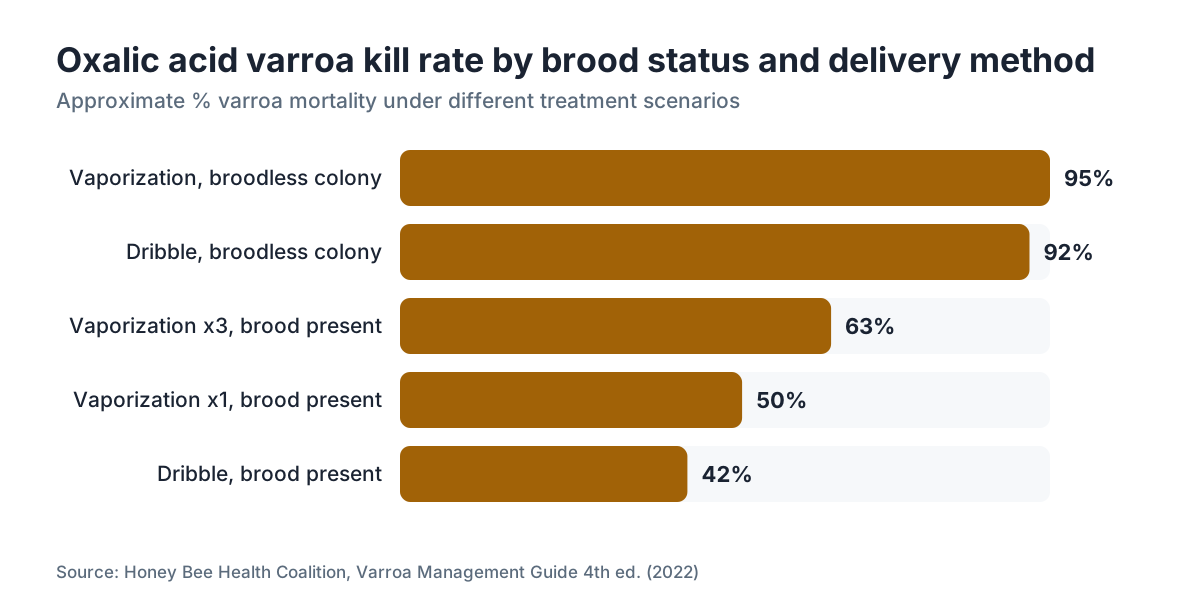
The gap is wide enough to change how you treat every colony you own. Here's how the numbers break down across delivery methods and brood conditions, pulled from published trials and the Honey Bee Health Coalition's Varroa Management Guide.
| Scenario | Approximate Varroa Mortality |
|---|---|
| OA vaporization, broodless colony | 93-97% [2][6] |
| OA vaporization, brood present (single application) | 40-60% [2] |
| OA vaporization, brood present (3 applications, 5 days apart) | 55-70% [2] |
| OA dribble, broodless colony | 90-95% [2] |
| OA dribble, brood present | 30-55% [2] |
Those figures come from studies reviewed in the 4th edition of the Honey Bee Health Coalition's Varroa Management Guide. Results shift with colony size, treatment-day temperature, and how well the hive is sealed during vaporization, but the direction never changes: broodlessness roughly doubles or triples what oxalic acid can do.
Here's the plain version. Three oxalic acid vaporizations during active brood season still lose to one vaporization during a brood break. Skip the brood break and you're spending more money and more time for a worse result.
When is the best time of year to do a brood break for varroa control?
Late summer into early fall is the window that pays off most, and the reason is the winter bees. The bees raised in late August and September are the long-lived, fat-bodied individuals that carry the colony to spring. Varroa that feed on those winter-bee pupae shorten their lives and wreck their immune function, and that's a leading cause of winter colony death [7].
Get mite loads down to near zero in August or early September, before the winter bees are raised, and those bees go into winter healthy. A colony sitting at a 2% or lower wash count in August has a much better shot at reaching March than one at 4 to 5% [8].
The winter broodless window is the second strong opening, usually November through January in temperate northern climates. Treatment here disturbs the colony least, since the bees aren't rearing brood anyway.
Spring is the weakest time for a deliberate brood break. Colonies are building population fast, and a break costs you exactly the momentum you need. Unless mite loads are already dangerous in spring (say, above 3% on an April wash), keep spring treatments to extended-release oxalic acid or thymol products that tolerate some brood.
To track where your mite loads sit across the seasons, VarroaVault's free protocol tools help you plan treatment timing around wash thresholds. The varroa mite guide has the threshold numbers month by month.
Does a brood break harm the colony or the queen?
Done carefully, no for the colony and probably not for the queen. Worker numbers hold steady through a 24-day break because the existing adults don't die off that fast. Summer workers live four to six weeks, so a healthy colony won't collapse over three or four weeks without brood.
The queen is the real worry. Queens caged for three weeks or more sometimes come back laying poorly. Some beekeepers report queens that "slow down" after a long stint in the cage, though that's anecdotal and probably tied to how well the workers tended her through the mesh. Queens reintroduced from a separate nuc tend to restart laying more normally than caged ones, at least in my experience.
The time of year drives the stress. A late-summer break of 24 days costs you about one brood cycle during a period when the colony is winding down anyway, so the population hit is small. A break in June or July, at peak growth, gives up much more.
Colonies with tiny populations (say, four frames of bees or fewer) are poor candidates for a deliberate summer break. The stress on a weak colony outweighs the treatment gain. You're better off combining weak colonies and then treating.
Can you combine a brood break with swarm control?
Yes, and it's one of the most efficient moves in the yard. When a colony swarms, the original queen leaves with roughly half the workers. The remnant colony is queenless and goes broodless once the existing capped brood emerges, all while the new queen mates. That three-to-four-week queenless stretch is a perfect brood-break window for oxalic acid.
If you're doing a preventive split to head off swarming, set it up on purpose: move the queen and some frames into a nuc, knock down any queen cells in the main colony, then treat the queenless main colony after 24 days. The nuc holding the queen benefits too if you cage her in there for the treatment period.
The walk-away split does all of this on its own. You get swarm control, a new queen in the parent colony, and a brood-break treatment window in one operation. For a hobbyist running 2 to 10 hives, pairing swarm splits with brood-break varroa treatment is probably the best use of your May and June [11].
What are the risks and failure modes of the brood break method?
The biggest practical risk is reinfestation from nearby colonies. Oxalic acid plus a brood break can push your colony's mite load to near zero, but varroa move between colonies on robbing and drifting bees. Treat one hive in a yard where the neighbors are loaded with mites, and your clean hive can be reinfested within weeks. This gets ugly in late summer, when robbing runs high.
Better practice: treat every colony in your apiary during the same window, and coordinate with any neighbors inside a half-mile if you can. One clean hive surrounded by untreated mite bombs is a short-term fix at best.
The second failure mode is queen loss during the break. Cage a queen and lose her in the cage, and the colony is queenless with no way to raise a replacement, because there are no larvae in the right age range to become queens. You'd have to introduce a new mated queen or drop in a frame of fresh eggs from another colony. Check caged queens every few days.
Third is an incomplete break. Treat on Day 20 with 50 capped cells still in the hive, and those cells hide maybe 100 to 150 mites that survive. Not a disaster, but it undercuts the whole point. Wait the full 24 days and do the visual check.
Last, oxalic acid does show some effect on bee health at very high doses. Stick to the label rate. More is not better with this stuff.
Is a brood break better than extended-release OA methods?
Extended-release oxalic acid (the glycerin-soaked shop-towel method, where approved) attacks the same problem from another angle. Instead of removing brood, it releases oxalic acid slowly over weeks, so mites keep meeting it as they emerge from cells across the treatment period. No queen handling, and some studies report 70-90% efficacy. Note that Formic Pro is a formic acid product, not oxalic, and it works differently (see the FAQ below).
The tradeoff is genuine. Extended-release is less work but less consistent. Temperature, hive setup, and colony size all sway how well slow-release performs. A clean brood break with vaporization is more predictable.
If finding and caging queens makes you nervous, extended-release oxalic acid or formic acid (Formic Pro, labeled for use with brood present) is a fair choice during the active season. But for fall treatment ahead of winter, the natural broodless window plus oxalic acid vaporization is both the most effective and the simplest option going. You aren't manipulating anything. You're watching for the right biological moment and treating when the timing lines up.
For the wider view of your options, the Honey Bee Health Coalition's Varroa Management Guide (free PDF) is the best single reference on this topic [2]. VarroaVault's protocol planning tools help you map a treatment calendar across the season.
What mite threshold should trigger a brood break treatment?
The Honey Bee Health Coalition recommends treating when mite loads hit 2% on an alcohol wash (about 2 mites per 100 bees) during the brood-rearing season [2]. Some researchers and seasoned beekeepers set a tighter 1% threshold in August and September, precisely because those months produce winter bees.
If you're planning a deliberate brood break, the threshold also raises a timing question: how much runway do I have before this becomes urgent? A 1.5% wash in July leaves room to plan a careful break before the August-September danger window. A 3.5% wash in August means you act in days, not weeks.
Alcohol wash is the accurate mite count. Sugar rolls are easier but undercount by 20 to 40%, so you can think you're under threshold when you're not [10]. A sugar roll beats nothing, but for brood-break decisions, work off alcohol wash data.
Run a wash before you start the break, and run another after the break and treatment to confirm the knockdown. That second number should land under 1%, ideally under 0.5%. If it's still above 1% after a brood-break treatment, something went wrong: the break was incomplete, the application was poor, or mites are pouring back in from neighboring hives.
Frequently asked questions
Can I use oxalic acid without a brood break at all?
Yes, and sometimes you have no choice. During the active season, extended-release oxalic acid or repeat vaporizations beat doing nothing. Just expect 40-60% mite reduction instead of 90-97%. The product still works; you're missing the biological window where it works best. Treat with brood present as a holding measure, then plan a brood break at the next opening.
How do I confirm a colony is truly broodless before treating?
Open the hive and look through every frame in order. You want no capped cells with the domed wax caps of worker pupae. Empty or polished cells are fine. Unsure? Wait another three or four days. An alcohol wash helps too: a count that spikes above previous readings can mean capped brood is emerging and flooding mites onto adult bees, which actually points to good treatment timing.
Does caging the queen hurt her long-term laying performance?
It can. Queens caged for three to four weeks sometimes restart laying slower or with less vigor. The risk climbs in hot weather, when workers feed her less reliably through the mesh. A larger cage (a push-in cage over a patch of comb) lowers the stress. Most queens recover within two weeks of release, but if you're worried, the nuc-removal method is gentler and cuts this risk.
What is the right temperature range for OA vaporization?
The Api-Bioxal label sets no ambient minimum for vaporization, but most extension guidance suggests treating at 40 to 50°F or warmer so bees can move and spread the vapor by contact. In deep cold, bees cluster tight and the vapor reaches them unevenly. In cold climates the winter broodless window often works best on days above 40°F, even if that means waiting for a mild spell.
How many times should I vaporize during a brood break?
If the colony is fully broodless, one vaporization usually reaches 93-97% mite mortality. The Api-Bioxal label allows up to three vaporizations per treatment event, spaced at least 5 days apart, if you want extra assurance. A second application 5 to 7 days after the first is a fair precaution when you're not fully sure the colony was broodless, or when mite loads were very high going in.
Will OA vaporization harm my bees if I accidentally treat when some brood is present?
Oxalic acid at label rates hasn't been shown to meaningfully harm adult bees or open brood. There's some evidence of larval mortality at very high doses, but standard label-rate vaporization (1 gram per brood box) is generally considered safe for the colony. The cost of treating with brood present is weaker mite control, not toxicity to the bees.
Can I do a brood break in summer without losing too much bee population?
Summer workers live four to six weeks, so a 24-day break won't collapse a strong colony. You'll lose some foraging power near the end of the break as older bees die with no young ones replacing them. For a colony on 8 or more frames of bees, that's manageable. Weak colonies (4 frames or fewer) should skip a deliberate summer break; the population loss outweighs the mite control.
Does the brood break method work for Africanized honey bee colonies?
The biology of oxalic acid and capped-brood mites is identical across bee subspecies, so the principle holds. Africanized colonies swarm and rear brood on different patterns, and handling their queens carries added safety concerns. The real hurdle is finding and manipulating the queen, which is harder and riskier with a defensive colony. See the africanized honey bee article for more on working defensive populations.
How soon after a brood break OA treatment can I expect to see lower mite wash counts?
Run a follow-up alcohol wash 7 to 10 days after treatment. That gives surviving mites time to settle back into phoretic spots on adult bees, so you get an accurate read. You should see counts fall below 1% if the treatment worked well. Still above 2%? Check whether the brood break was complete, whether your vaporization technique was sound, or whether neighboring hives are reinfesting you.
Is oxalic acid safe to use when honey supers are on the hive?
The US Api-Bioxal label prohibits vaporization and dribble use when honey supers meant for human consumption are on the hive. Pull the supers before treatment. The extended-release (shop-towel/glycerin) method carries different label language, so check the current label. This is a legal and food-safety requirement, more than a precaution. Read the current label before each treatment season, since EPA registrations change.
What's the difference between a brood break for OA versus for formic acid?
Formic acid (Formic Pro) penetrates capped brood cells and kills the mites inside, which is its main edge over oxalic acid. You don't need a brood break to use formic acid effectively. A brood break is specifically a workaround for oxalic acid's inability to reach capped cells. Formic acid has its own temperature limits (apply between 50 and 85°F) and can harm queens when it's hot, so it's a different set of tradeoffs.
Where can I find a reliable mite wash protocol to use before and after a brood break treatment?
The Honey Bee Health Coalition's Varroa Management Guide includes a detailed alcohol wash protocol with photos. Penn State Extension publishes a step-by-step wash guide too. Aim for a 300-bee sample (about half a cup) taken from a brood frame near the center of the cluster. Run the wash before starting the break and again 7 to 10 days after treatment. Sample from the same spot each time for comparable numbers.
Sources
- Rosenkranz P, Aumeier P, Ziegelmann B (2010). Biology and control of Varroa destructor. Journal of Invertebrate Pathology, 103(Suppl 1): S96-S119.: Approximately 80-85% of varroa mites in a colony are inside capped brood cells during active brood-rearing season.
- Honey Bee Health Coalition, Varroa Management Guide (4th edition, 2022): OA is not effective against varroa mites in capped brood; broodless treatment achieves 93-97% efficacy versus 40-60% with brood present; recommends 2% wash threshold for treatment.
- University of Minnesota Extension, Varroa Mite Management: Colonies in temperate climates are typically broodless from late November through January; single OA vaporization during brood break achieves significantly higher efficacy than applications with brood present.
- Pennsylvania State University Extension, Varroa Mite Treatment Options: Worker brood is capped for approximately 12 days; a 24-day queen exclusion period is sufficient to render a colony broodless.
- EPA, Api-Bioxal Product Label (Registration No. 86203-3): Api-Bioxal label allows up to 3 vaporizations per treatment event, spaced at least 5 days apart; prohibits use when honey supers are present.
- Gregorc A, Planinc I (2001). Acaricidal effect of oxalic acid in honeybee colonies. Apidologie, 32(4): 333-340.: Oxalic acid vaporization in broodless colonies achieved 93-97% varroa mortality in controlled trials.
- USDA Agricultural Research Service, Bee Research: Varroa parasitization of winter bee pupae shortens worker lifespan and impairs immune function, a primary driver of winter colony loss.
- Delaplane KS, Hood WM (1999). Economic threshold for Varroa jacobsoni Oud. in the southeastern USA. Apidologie, 30(5): 383-395.: Colonies with mite infestation rates above 2-3% on wash counts face significantly elevated winter mortality risk.
- vanEngelsdorp D et al. (2013). Idiopathic brood disease syndrome and queen events as precursors of colony mortality. PLOS ONE.: High varroa loads in late summer, coinciding with winter bee production, are associated with elevated rates of colony loss the following spring.
- NC State University Apiculture, Oxalic Acid Treatment Guide: Sugar roll methods consistently undercount mite populations by 20-40% compared to alcohol wash; alcohol wash is recommended for treatment threshold decisions.
- Oregon State University Extension, Managing Varroa Mites in Honey Bee Colonies: Walk-away splits create a natural brood break in the queenless parent colony and can be timed to coincide with OA treatment.
Last updated 2026-07-09