The 12-day brood break: how it works and when to use it
TL;DR
- A 12-day brood break means keeping a colony broodless for at least 12 days, long enough that every varroa mite is forced out of capped cells and onto adult bees.
- With every mite exposed, oxalic acid hits 90 to 99% of the population.
- You can wait for a natural winter break, cage the queen, or split the colony to create one.
What is a brood break and why does 12 days matter?
A brood break is exactly what it sounds like: a stretch of days when a colony has no capped brood. No pupae developing behind wax caps. No mite nurseries. The queen either stops laying on her own (winter, a swarm, stress) or a beekeeper stops her from laying.
The number 12 comes straight from bee biology. Worker brood stays capped for roughly 12 days after the cell seals [1]. Varroa reproduce only inside capped cells, and a female mite needs that sealed cell to lay her eggs and let them mature before the bee emerges. Remove all capped brood, keep the colony broodless for a full 12 days, and every cell from the last round of capping has emerged. Every mite in the colony is now phoretic, riding adult bees instead of hiding in wax.
That changes everything about treatment. Oxalic acid vaporization, the most widely used miticide in hobbyist apiaries, kills phoretic mites with documented efficacy of 90 to 99% when the colony is truly broodless [2]. The same treatment on a colony with capped brood? Efficacy drops to somewhere around 40 to 60%, because the acid cannot reach through wax caps to the mites inside. You treat the easy half of the population and leave the reproductive half untouched.
So when beekeepers say "12-day brood break," they mean the minimum window needed to guarantee the colony is fully broodless. In practice, most experienced beekeepers aim for 14 to 21 days of broodlessness to add a margin, because you can't always pin down exactly when the last cell capped.
How does varroa reproduce inside brood, and what does a brood break disrupt?
To see why a brood break works so well, you need the mite's life cycle in some detail.
A foundress mite slips into a brood cell just before it's capped, hides under the larval food, and waits. Once the cell seals, she starts laying eggs. The first egg is unfertilized and becomes a male. The eggs after that are female. The male mates with his sisters inside the cell, and a fertilized daughter emerges with the adult bee as a new breeding female. The mother foundress survives too and can enter another cell. During the active brood-rearing season, roughly 70 to 80% of the mite population sits inside capped cells at any moment [3]. That hidden reservoir is what makes varroa so hard to control.
A brood break collapses that reservoir completely. No cells to enter means no mite can breed. Every mite rides an adult bee, exposed to contact treatments like oxalic acid. For a short window, the colony becomes a problem you can actually solve in a single pass.
This is also why the varroa mite hurts colonies more than most beekeepers expect in their first few seasons. Because most mites hide in capped cells, your alcohol wash only ever samples the minority riding on bees. Correct for that ratio or your counts will lowball the real infestation every time.
How do you create a 12-day brood break in practice?
There are four ways to do it, and each carries different tradeoffs.
Cage the queen. You catch the queen and put her in a queen cage (a JZ-BZ push-in cage or a hair-roller cage both work) attached to a frame inside the hive. She's present, workers feed her through the mesh, she stays in pheromone contact, but she cannot lay. After 24 to 26 days of total broodlessness (12 days for the last sealed brood to emerge, plus a buffer) you release her. This is the most controllable method, and the colony stays intact. The main risk is that workers sometimes ball the queen on release, so inspect carefully and use a candy-plug cage for the release.
Remove the queen entirely. Pull the queen out, let the colony go queenless for 12+ days, then add a new mated queen or a ripe queen cell. This is the nuclear option. You get a guaranteed brood break and often a colony that eagerly accepts new genetics. The downside is you've spent a queen, and introducing a new one always carries some risk of failure.
Split the colony. Move all the capped brood and the queen into a nucleus. The original hive keeps the flying bees but has no brood and no queen. It stays broodless well past 12 days while you raise a new queen or introduce one. This is my preferred method in late spring and summer. You get a brood break on the parent colony, you can treat the nucleus hard once its brood hatches out, and you've cut the parent's mite load by shipping brood (and the mites locked inside those cells) into a separate unit you can manage.
Wait for a natural break. Winter in colder climates does the work for you. In USDA hardiness zones 5 and below, most colonies in an unheated apiary are broodless for 4 to 8 weeks from late November through January [4]. A single oxalic acid treatment during that window is one of the highest-value treatments you can apply all year. You can't count on this in zones 7 and warmer, where queens may never fully stop.
Whatever method you pick, confirm broodlessness before treating. On treatment day, open the hive and physically check several frames. See any capped brood and you're not ready. Wait, then check again in 3 days.
When is the best time of year to do a 12-day brood break?
Timing drives both colony stress and treatment payoff. The two highest-value windows are late summer (July to August in most of the US) and late fall or early winter (October to November, or whenever your last nectar flow ends).
Late summer matters because the mite population peaks in August and September across most temperate apiaries, and those August mites are the same mites that will infest the winter bees your colony is about to raise [5]. Winter bees live 4 to 6 months. Mites that parasitize them as pupae shorten that lifespan and wreck the colony's overwintering physiology. Knocking mites down hard in late summer is the most direct thing you can do to improve spring survival.
Late fall treats after the last brood cycle, and a natural winter broodless period is the ideal time for oxalic acid because the colony does the setup for you.
A brood break in early spring (March or April) carries a real cost. You're interrupting the population build-up right when the colony needs to grow for pollination or early honey. It's not wrong, but it's the least efficient timing. If spring mite counts justify it, go ahead, but know the tradeoff.
Summer splits that create a brood break often line up with swarm prevention, so you solve two problems at once. That's an efficient use of a disruptive manipulation.
What treatment should you use during a brood break?
Oxalic acid is the obvious answer, and for most hobbyist and sideliner beekeepers it's the right one. The EPA-registered Api-Bioxal label (oxalic acid dihydrate) specifies application when no sealed brood is present for the drizzle and vaporization methods [6]. Api-Bioxal was registered by the EPA in 2015 for US use and is now the standard product.
For a brood break treatment:
- Vaporization (sublimation) at 1 gram of Api-Bioxal per brood box, repeated once 5 to 7 days after the first treatment, gives the highest and most consistent knockdown in practice. Some beekeepers add a third application 5 to 7 days after the second.
- Drizzle (dribble) applies a 3.2% oxalic acid solution directly over bees between frames. It works well on a winter cluster but is less practical on a large active colony in summer.
The Honey Bee Health Coalition's Tools for Varroa Management guide states that "oxalic acid is most effective when applied to colonies with no sealed brood," and reports that a single broodless-period treatment can cut mite populations by 90% or more [7]. That's a real number with real consequences for colony survival.
Apiguard (thymol) also works during a brood break, though thymol needs temperatures above 59°F (15°C) and performs better in the 60 to 105°F range. It acts slower than oxalic acid vaporization but leaves no honey residue concerns. In a warm climate doing a mid-summer brood break, thymol is a fine option.
Mite-Away Quick Strips (formic acid) work with brood present and don't need a brood break, so they're an alternative rather than a companion. If your counts demand action now and you can't take the colony broodless, MAQS is the tool to reach for.
For tracking treatments and timing, the free protocol tools at VarroaVault help you map a brood-break schedule against your local seasonal calendar, which matters because the windows above are region-specific.
How effective is a brood break compared to treating with brood present?
The efficacy gap is big enough to change your decisions.
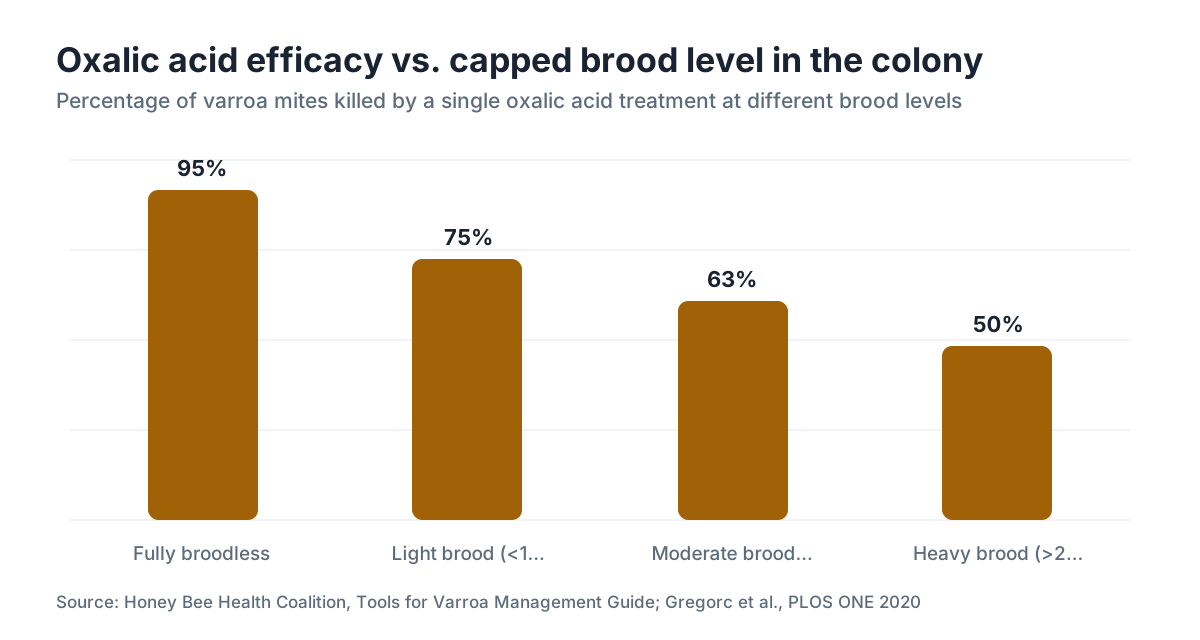
A 2020 study in PLOS ONE compared oxalic acid efficacy under broodless conditions against colonies with varying amounts of capped brood. Efficacy in fully broodless colonies reached 90 to 99%, while treatment in colonies with more than 25% capped brood cells fell below 60% [2]. That's not a rounding error. Treating a colony at 5% infestation with brood present might leave you at 2 to 2.5% after treatment, still above the widely recommended 2% action threshold. The same starting infestation, treated broodless, leaves you at 0.05 to 0.5%.
| Treatment condition | Typical oxalic acid efficacy | Post-treatment infestation (starting at 5%) |
|---|---|---|
| Fully broodless | 90 to 99% | 0.05 to 0.5% |
| Light brood (under 10% capped) | 70 to 80% | 1 to 1.5% |
| Moderate brood (10 to 25% capped) | 55 to 70% | 1.5 to 2.25% |
| Heavy brood (over 25% capped) | 40 to 60% | 2 to 3% |
The table draws on published ranges from the PLOS ONE efficacy study and the Honey Bee Health Coalition guide [2][7]. Your exact numbers will shift with colony size and application method, but the direction holds.
Here's the practical takeaway. Treat during the active season without a brood break and you should plan on a follow-up treatment, then build that into your calendar. Many experienced beekeepers treat twice with MAQS or Apiguard in summer, then hit the colony with oxalic acid after the brood break in fall. That layered approach makes sense. A single mid-summer oxalic treatment with brood present is the least effective thing you can do, and it hands you false reassurance.
Does a brood break harm the colony?
It depends on timing, duration, and how you cause it.
A queen-caging brood break of 3 to 4 weeks during peak season does shrink the colony's population 6 to 8 weeks later, because you've skipped that many weeks of brood development. A strong, well-fed colony in July can absorb that setback and recover by fall. A marginal colony in late August may not. Be honest about your colony's starting strength before you commit to a long break.
Caging the queen is lower-stress than removing her, mostly because her pheromones (particularly QMP, queen mandibular pheromone) keep suppressing worker ovary development and hold the colony together. A colony left queenless for 2+ weeks starts showing behavioral shifts: more fanning, more guarding, sometimes defensive aggression. Worker-laid eggs can appear after 3 to 4 weeks queenless if you don't add a replacement.
A natural winter brood break costs the colony essentially nothing. The bees are already winding down. This is the free lunch of varroa management: the colony does what it would do anyway, and you time your treatment to it.
One underrated benefit is that the caged queen banks up her egg-laying capacity. She often resumes laying very strongly on release, giving you a solid brood nest going into the next phase. Beekeepers who cage queens routinely for swarm prevention and mite management tend to report good recoveries post-release, though nobody has clean controlled data on this specifically.
For colonies you manage with a split, there's essentially no downside. You make the nucleus you wanted anyway, the parent gets a break, and you end summer with two units instead of one.
How do you confirm the brood break is complete before treating?
Don't treat on a calendar assumption. Treat on physical confirmation.
On the day you plan to treat, open the hive and pull frames. Look for capped brood, which is tan-to-dark-brown wax with a slightly convex cap. See any and you don't treat. Come back in 3 days and look again.
If you caged the queen on a known date, you can do the math. Worker brood stays capped for 12 days [1]. If the last eggs went in the day you caged her, and it takes about 9 days from egg to capping, the last cell caps roughly 9 days after caging and emerges roughly 21 days after. To be safe, most beekeepers wait at least 24 days after caging, then verify by eye.
A useful cross-check: no uncapped larvae and no caps means you're broodless. Some open larvae but no caps means the queen may have started laying again (check your cage) or a hidden queen cell hatched. Either way, hold the treatment.
Check for emergency queen cells too. Colonies try to raise a new queen from any young larva when they sense the break. A queen cell started from a very young larva on day 1 or 2 can cap around day 9 and emerge around day 16. If that queen emerges without your knowing, she can start a new brood cycle before your treatment window closes. Inspect for and remove queen cells unless you meant to requeen.
Can a 12-day brood break help break resistance to other miticides?
This comes up more than you'd think, and the honest answer is: partly, and indirectly.
Amitraz (Apivar) and tau-fluvalinate (Apistan) resistance in varroa is a real and growing problem across North American apiaries [8]. Resistance builds through selection pressure. You treat with the same chemical over and over, the rare resistant mites survive, and over generations they take over. A brood break doesn't reset resistance, but it cuts your dependence on synthetic miticides, which slows that selection.
More to the point: oxalic acid, the main brood-break treatment, shows no documented resistance in varroa to date [7]. Its mode of action is physical (it disrupts cell membranes through pH and oxidative damage) rather than neurological, which makes resistance harder to evolve. Leaning on a brood break to let oxalic acid carry the load means you spend less amitraz or tau-fluvalinate per year, which keeps them useful for situations where a brood break isn't practical.
Some beekeepers in areas with confirmed amitraz-resistant strains now build their whole management system around brood breaks, relying on oxalic acid and thymol only. That's a reasonable response to the resistance picture. A solid overview of current treatment options and their resistance profiles is the Honey Bee Health Coalition's Tools for Varroa Management guide, which is free and updated periodically [7].
For beekeepers thinking past seasonal treatments, understanding varroa mite biology in depth is worth the time.
What are the common mistakes beekeepers make with brood breaks?
Several. I've made most of them.
Treating too early. The most common mistake is treating on the right calendar day without confirming the brood is gone. Worker brood cappings can hang on for 12 days after the queen is caged, but drone brood stays capped for 14 to 15 days. If your colony had a lot of drone brood when you caged the queen, wait longer.
Missing a released queen. Cages fail. Workers chew through screens. A queen released 5 days into your planned 21-day break starts laying immediately, and you end up treating into a brood nest 2 weeks later. Check the cage every inspection.
Not doing a mite wash to confirm knockdown. You did everything right, you treated, and you assumed it worked. Do an alcohol wash or sugar roll 48 to 72 hours post-treatment and again at 14 days. If mite levels are still up, something went wrong: the colony wasn't fully broodless, the treatment was under-dosed, or you have reinfestation from a neighboring apiary.
Underestimating reinfestation. A clean colony in a high-density beekeeping area can go from near-zero to 2% within 4 to 6 weeks as mites transfer from drifting or robbing bees [9]. Your treatment can be a genuine success and still leave you with a problem by October if neighboring colonies are collapsing and dumping their mites on your hive.
Doing a brood break too late in fall. In northern states, caging the queen in late September for an October treatment can stop the colony from raising its final cohort of winter bees. Those last winter bees need to be adults by late October to early November in zones 5 and 6 [5]. Cage the queen for your late-summer treatment, not your pre-winter one. Use the natural winter broodless period for the late treatment.
Tracking these timing calls across multiple hives gets complicated fast. Tools that let you log cage dates, inspection notes, and treatment windows per hive cut down on errors. VarroaVault's free hive management tools are built for exactly this kind of seasonal planning.
How does a brood break fit into a full-year varroa management plan?
A brood break isn't a standalone strategy. It's one move in a seasonal protocol.
A workable annual framework for temperate US beekeepers (zones 5 to 7) runs roughly like this:
Spring (April to May): Monitor with an alcohol wash. If counts pass 2 mites per 100 bees, treat with MAQS (formic acid), which works with brood present and doesn't need a break. Your spring priority is build-up, so keep disruption minimal.
Early summer (June): Keep monitoring monthly. If you're making splits for swarm management, treat the parent colony (broodless or light-brood) with oxalic acid before adding a new queen.
Late summer (July to August): Your most important treatment window of the year. Create a brood break by caging the queen or splitting. Wait for full broodlessness (minimum 21 to 24 days after caging). Treat with 2 to 3 rounds of oxalic acid vaporization at 5- to 7-day intervals. Confirm knockdown with a mite wash 2 weeks post-treatment. Target: under 1 mite per 100 bees before August 15 in most northern states [5].
Fall (September to October): Monitor again in early September. If counts are creeping up, run a second oxalic treatment if broodless, or Apiguard/thymol if temperatures allow. Don't cage the queen after September 1 in zones 5 and 6.
Winter (November to February): Single oxalic acid vaporization or dribble when fully broodless. Low-effort, high-payoff. Do it.
The Honey Bee Health Coalition's Varroa management guide [7] lays out a similar seasonal framework with threshold numbers and treatment decision trees. The University of Minnesota Bee Lab also publishes regional timing recommendations tuned to northern US climates [10]. Both are worth bookmarking.
For beekeepers just gathering the supplies and equipment to run a brood-break protocol, the beekeeping supply companies page has a practical overview of what you'll need.
Does a brood break work for all colony types and climates?
Mostly yes, with some caveats worth respecting.
In tropical and subtropical climates (Florida, Hawaii, southern Texas), queens rarely stop laying, natural winter brood breaks don't happen, and induced breaks take more active management. The gap between "too hot for thymol" and "never broodless naturally" is narrow. Beekeepers in these climates lean more on MAQS, Apivar, or repeated oxalic vaporization with brood present (accepting lower per-treatment efficacy), paired with more frequent monitoring.
Cold-climate beekeepers (zones 3 to 5) get the natural winter brood break as a genuine gift. A January oxalic treatment on a fully broodless cluster is the single most cost-effective varroa move most northern beekeepers can make, and plenty of them still skip it.
Highly hygienic strains (VSH, Minnesota Hygienic) carry mite-resistance behaviors that lower the mite reproductive rate, so a brood break in those colonies can push mites toward zero faster and buy a longer mite-free window afterward. Standard Italian or Carniolan colonies rebound faster. That's no reason to skip a brood break with commercial genetics, but it is a reason to keep monitoring monthly even after a clean knockdown.
Colony strength matters too. A small, weak colony going into a break late in the season may not have enough adult bees to hold temperature and cluster cohesion, especially if you're pairing a break with a hive inspection in October. Be thoughtful about timing in marginal colonies.
Frequently asked questions
How long does a brood break need to be to kill all varroa?
At minimum 12 days, because that's how long worker brood stays capped. In practice, most beekeepers aim for 21 to 24 days after caging the queen to account for any drone brood (capped 14 to 15 days) and to avoid treating into residual capped cells. The longer the confirmed broodless period, the more confident you can be that oxalic acid will hit 90 to 99% of the mite population.
Can I use oxalic acid with capped brood present?
Yes, but efficacy drops sharply. The Honey Bee Health Coalition reports oxalic acid efficacy of 90 to 99% in fully broodless colonies. With significant capped brood, that number can fall below 60%, because oxalic acid cannot penetrate wax cappings. If a brood break isn't possible, formic acid (MAQS) or amitraz (Apivar) are better choices since they work in the presence of brood.
What is the simplest way to create a brood break without splitting?
Cage the queen using a hair-roller cage or JZ-BZ push-in cage attached to a frame inside the hive. The colony stays intact, the queen stays present and in pheromone contact, but she can't lay. After 21 to 24 days, the last capped brood has emerged and every mite is phoretic. Confirm broodlessness visually before treating, then release the queen using a candy-plug cage to reduce balling risk.
How do I know when my colony is broodless enough to treat?
Physically inspect the hive on treatment day. Pull frames and look for tan or dark convex wax cappings (capped brood). If you see any, wait 3 more days and look again. Don't rely solely on your calendar. Drone brood stays capped up to 15 days, so colonies with significant drone brood need a longer wait than the 12-day worker-brood minimum. Only treat when your eyes confirm zero capped cells.
Will a brood break harm my queen?
Caging a queen for 3 to 4 weeks is generally safe if the cage lets workers feed her through the mesh. She stays in the hive, gets worker attention, and typically resumes strong laying on release. Some beekeepers report very strong laying immediately post-release. Risks include balling on release (use a candy-plug cage) and cage failure. Removing the queen entirely carries more risk, including failed reintroduction.
How many oxalic acid treatments should I do during a brood break?
Most protocols call for 2 to 3 vaporization treatments spaced 5 to 7 days apart during the broodless window. A single treatment can miss mites that emerge from any residual cells between applications. The Api-Bioxal (oxalic acid dihydrate) label allows multiple applications. Do an alcohol wash 14 days after your final treatment to confirm knockdown. If counts are still above 1 mite per 100 bees, reassess.
Can a brood break help if I have amitraz-resistant varroa?
Yes, indirectly. Oxalic acid, which is most effective during a brood break, shows no documented resistance in varroa as of current research. Its mode of action (oxidative membrane disruption) is fundamentally different from synthetic miticides. Shifting more of your mite control to oxalic acid during brood breaks reduces selective pressure on amitraz and tau-fluvalinate, helping preserve their usefulness for situations where a brood break isn't practical.
What mite count threshold should trigger a brood break treatment?
Most extension programs and the Honey Bee Health Coalition recommend treating when infestation reaches 2 mites per 100 bees during the active season (roughly May to August) and 1 mite per 100 bees in late summer before winter bee rearing begins. A brood break treatment is worth planning proactively in late July even if you're below threshold, because waiting for counts to climb into August cuts your margin before the winter-bee window.
Does a winter brood break count as a 12-day brood break?
Yes, and it's often better. In zones 5 and colder, colonies can be naturally broodless for 4 to 8 weeks or more from late November through January. A single oxalic acid vaporization or dribble treatment on a confirmed broodless winter cluster hits 90 to 99% of the mite population with minimal colony stress. This is one of the highest-value, lowest-cost interventions available to northern beekeepers, and it's underused.
Can I do a brood break with a nucleus colony or small split?
Yes, and small colonies actually make this easier because you have fewer frames to inspect and the mite population is lower to begin with. After pulling a split, the nucleus goes queenless and broodless once the existing capped brood emerges, which takes 12 days from the last capping. Treat the nucleus with oxalic acid at that point, then introduce a mated queen. This is a very clean way to start a new colony with near-zero mite load.
How long after a brood break treatment will mite counts stay low?
It depends heavily on reinfestation pressure from neighboring colonies and how quickly your queen resumes laying. Under low-reinfestation conditions, a successful brood-break treatment can keep counts below 1% for 6 to 8 weeks. In high-density beekeeping areas or near collapsing colonies, mite loads can rebound to 2% within 4 to 6 weeks through drifting and robbing. Monthly monitoring after treatment is not optional.
Is a brood break the same as letting a colony swarm?
A swarm does create a temporary brood break in the parent colony. The original colony goes queenless for 2 to 3 weeks while a new queen develops, mates, and begins laying. During that window, all brood from the old queen hatches out and the colony is briefly broodless. Some beekeepers use a controlled swarm (artificial swarm) to create a managed break. The problem with relying on natural swarms is timing: you don't control when it happens or whether you'll catch the window.
What equipment do I need to execute a queen-caging brood break?
At minimum: a queen cage (hair-roller cage or JZ-BZ push-in cage), a hive tool, and a marked or otherwise findable queen. Oxalic acid vaporization also needs an oxalic acid vaporizer, a respirator rated for organic vapors, and Api-Bioxal (registered oxalic acid dihydrate). To monitor mite levels before and after, you need an alcohol wash kit or sticky board. Total equipment cost for a new beekeeper runs roughly $80 to $150 beyond basic hive gear.
Can I do a brood break in spring before the main honey flow?
You can, but it comes at a real cost. A 3- to 4-week brood break in April or May delays colony population growth right when you want bees building up for the nectar flow. Only do it if your spring mite count is already above 2 per 100 bees and you have no other option. A better timing is late summer, after the main flow, when disrupting build-up doesn't cost you honey and you're directly protecting the winter bee cohort.
Sources
- Penn State Extension, Honey Bee Biology: Worker brood remains capped for approximately 12 days; drone brood for 14 to 15 days.
- Gregorc A. et al., PLOS ONE 2020, Efficacy of oxalic acid against Varroa destructor: Oxalic acid efficacy reaches 90 to 99% in fully broodless colonies and can fall below 60% in colonies with greater than 25% capped brood.
- Rosenkranz P. et al., Journal of Invertebrate Pathology, Varroa destructor biology and control: During active brood rearing, approximately 70 to 80% of the varroa mite population is in capped brood cells at any given time.
- University of Minnesota Extension, Bee Lab, Varroa Management: In colder US climates (USDA zones 5 and below), colonies are typically broodless for 4 to 8 weeks from late November through January.
- University of Minnesota Extension, Bee Lab, Varroa Management Guide: Mites that parasitize winter bees during pupal development shorten adult bee lifespan; target under 1 mite per 100 bees before August 15 in northern US states to protect the winter bee cohort.
- EPA, Api-Bioxal Oxalic Acid Dihydrate Product Registration: The EPA-registered Api-Bioxal label specifies application when no sealed brood is present for the vaporization and dribble methods.
- Honey Bee Health Coalition, Tools for Varroa Management Guide: Oxalic acid is most effective when applied to colonies with no sealed brood, and a single broodless-period treatment can reduce mite populations by 90% or more. The guide also reports no documented resistance to oxalic acid in varroa as of current research.
- Mortensen AN et al., Journal of Economic Entomology, Amitraz resistance in Varroa destructor: Amitraz and tau-fluvalinate resistance in Varroa destructor is documented in North American apiaries and is a growing management concern.
- Frey E. and Rosenkranz P., Journal of Economic Entomology 2014, Autumn invasion rates of Varroa destructor: Varroa mites can reinvade a treated colony from neighboring collapsing hives, potentially doubling infestation levels within 4 to 6 weeks through drifting and robbing bees.
- University of Minnesota Extension, Bee Lab, Integrated Pest Management for Varroa: The University of Minnesota bee lab publishes regional seasonal timing recommendations for varroa treatments tailored to northern US climates.
- USDA Agricultural Research Service, Honey Bee Research: USDA research supports integrated pest management approaches combining brood interruption with miticide treatments to maximize varroa knockdown.
- Cornell University College of Agriculture and Life Sciences, Dyce Lab for Honey Bee Studies: Cornell Extension recommends the 2 mites per 100 bees action threshold during the active brood-rearing season and 1 mite per 100 bees in late summer before winter bee production.
Last updated 2026-07-09