Brood break for varroa mite control: does it actually work?
TL;DR
- A brood break stops the queen from laying for 3 to 5 weeks, forcing every mite out of hiding and onto adult bees where treatments can reach them.
- Done right, it cuts mite levels 50 to 90% and makes an oxalic acid application far more effective.
- Timing, colony strength, and follow-up treatment decide whether it saves your colony.
What is a brood break and why does it matter for varroa?
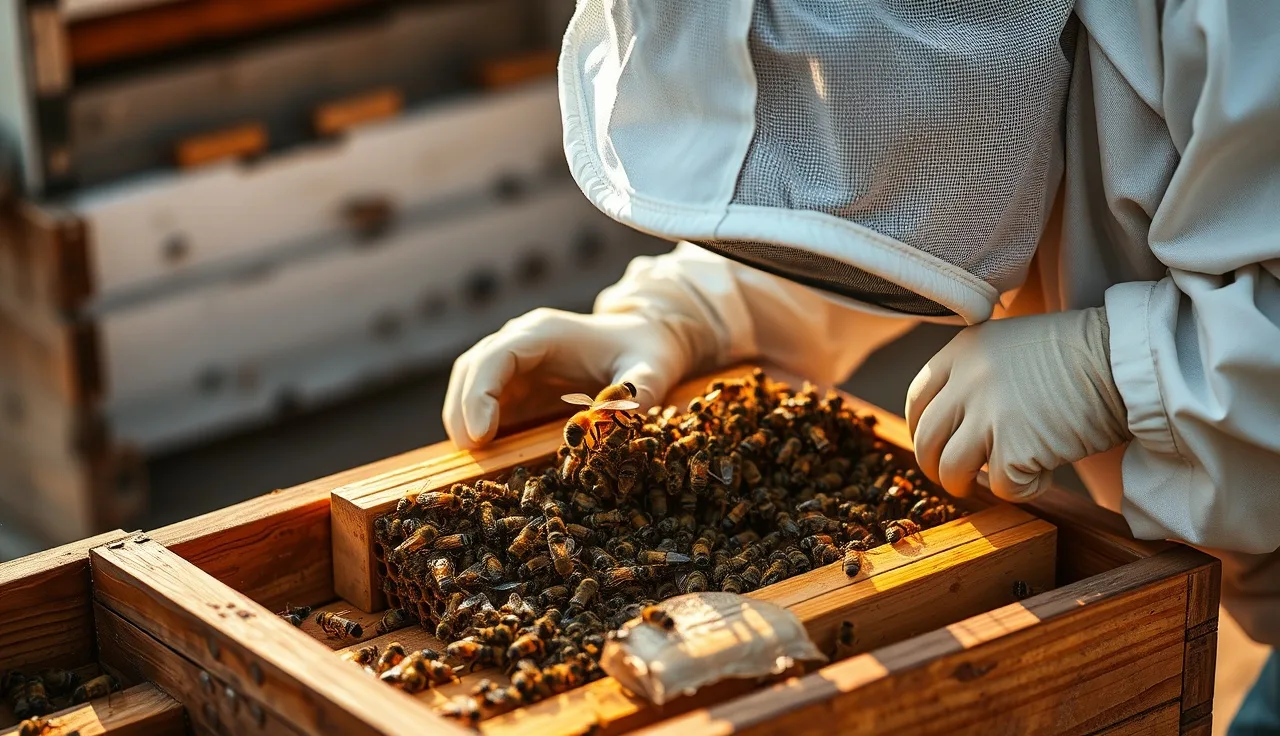
A brood break is a deliberate stop to egg-laying in the colony, so no new capped brood exists for varroa mites to hide inside. The queen quits laying, the existing capped brood emerges over 12 days (the worker pupal period), and for a window of roughly 2 to 3 weeks the entire mite population rides on adult bees instead of sitting sealed away from your treatments.
That matters because varroa spend most of their reproductive life inside capped cells. A phoretic mite, riding on an adult bee between reproductive cycles, is exposed. A mite tucked inside a capped cell is almost completely protected from every approved treatment except vaporized oxalic acid, and even that has reduced penetration through wax cappings. [1]
The Honey Bee Health Coalition's Varroa Management Guide puts it plainly: during a brood break, "100% of mites are in the phoretic phase," which makes this the single condition under which oxalic acid works best. [2] Without a brood break, even a well-timed oxalic acid treatment only reaches the 15 to 30% of mites that happen to be phoretic at that moment.
This isn't a new trick. Beekeepers have ridden natural winter brood breaks for decades, which is why a single oxalic acid dribble in late November drops mite loads so hard in cold climates. The newer insight: you can build that same window on purpose, any time of year, using caging, queen removal, or a split.
How does a brood break actually reduce mite levels?
The math is simple once you follow the mite's life cycle. A varroa mite spends roughly 5 to 6 days phoretic on an adult bee, slips into a cell just before capping, reproduces inside for about 11 to 12 days (worker cells) or 14 to 15 days (drone cells), then emerges with the adult bee. [3] In an actively laying colony, at any moment roughly 70 to 85% of mites are inside capped cells, completely hidden.
Remove or cage the queen, and the last capped brood emerges within 12 days (workers) to 15 days (drones, if any remain). After that, every mite is phoretic. Treat with oxalic acid now and you hit 100% of the population instead of 15 to 30%. That's the gap between a 50 to 70% knockdown and a 95%-plus knockdown from the exact same treatment. [4]
There's a second effect. Mite reproduction stops cold during the brood-free window, so the population can't grow while you wait to treat. In a colony with no brood break, mite numbers double roughly every 4 to 6 weeks through the summer brood season. [5] A three-week brood break exposes the mites and freezes the population clock at the same time.
A clean brood break followed by oxalic acid vaporization is one of the strongest single mite-reduction events a hobbyist has, often dropping a colony from a dangerous 5 to 8% infestation rate below 1% in one pass. Nobody should expect perfection. There's some evidence mites can tuck deeper under the scutum of the bee under stress, but the overall reduction is real and well documented.
What methods can create a brood break?
Five methods work in practice, and they differ a lot in effort, reliability, and side effects.
Queen caging is the most controlled. You catch the queen, put her in a push-in cage or a JZ-BZ-style cage, and hold her for 24 to 28 days. That's 12 days for existing brood to emerge plus a buffer, then you treat. Release her, wait 4 to 5 days, and treat again to catch mites that survived on bees emerging during the tail end of the break. The colony stays intact and queenright, which lowers the risk of emergency queen replacement.
Queen removal is blunter. You pull the queen entirely and use her to start a nuc or sell her. The colony raises a new queen, but that runs 16 days for a queen cell to hatch, another 5 to 7 days for the new queen to mate, and several more days before she lays. You often get 4 to 6 weeks of brood-free or nearly brood-free conditions. The catch: emergency cells sometimes fail, and you can end up with laying workers, which is worse than the mite problem.
Making a split pairs brood break logic with colony multiplication. The queen moves to a new nuc with most of the flying bees. The original queenless colony gets a brood break by default. Treat the original hive during the broodless window. The nuc stays small and is easier to monitor and treat on its own.
Natural brood breaks happen in cold climates when colonies wind down or stop laying through winter. This is why the Honey Bee Health Coalition recommends a single oxalic acid treatment in late fall (when brood is minimal) as the standard winter protocol for most northern beekeepers. [2]
Trap comb (drone comb removal) isn't a true brood break, but it belongs in the list. Drone comb foundation lets mites preferentially infest drone brood (mites reproduce at roughly 8 times the rate in drone cells versus worker cells [3]), then you cut out and freeze the capped drone comb before it emerges. It's labor-heavy and only removes a fraction of mites, but it can slow population growth between breaks.
For most hobbyists with 1 to 10 hives, queen caging wins. You control the timeline, the colony stays coherent, and the queen doesn't get lost or squished.
When is the best time of year to do a brood break?
Timing rides on your climate and your monitoring data, not the calendar alone. The goal is to open the brood-free window before mite levels cross the economic threshold of 2 to 3% infestation (roughly 2 to 3 mites per 100 bees on an alcohol wash). [2]
Two windows do the most work.
Mid-to-late summer, before the winter bee generation starts. Bees raised from August onward become the winter cluster. If mites run high in July or August, those winter bees emerge heavily parasitized, with shortened lifespans and damaged fat bodies, and your overwinter survival tanks. A brood break in July or early August, followed by oxalic acid, is one of the highest-impact moves you can make for survival. University of Minnesota Extension flags July and August as a high-risk window because mite populations peak while bee populations are still large. [5]
Late fall, using the natural brood break. In USDA hardiness zones 5 and colder, queens typically stop laying from roughly November through January. That's your window for a single oxalic acid dribble or vaporization. [4] The tricky part is knowing when the colony is truly brood-free. An alcohol wash showing near-zero mites in late fall doesn't always mean the break is underway; it can mean mites are mostly still in capped cells. Inspect first.
Spring is a poor time. Colonies are expanding fast, mite levels are low (winter knocked them down), and stalling brood production while the colony wants to grow costs you foragers. If a spring inspection turns up a surprise mite spike, though, a brood break beats ignoring it.
If you use temperature-sensitive treatments like Apivar (amitraz) or MAQS (formic acid), a brood break stretches their reach by pushing more mites into the phoretic phase where contact or vapor can hit them. Check the current EPA-registered label for whatever product you run, since application windows and colony conditions vary by product. [6]
How long does the brood break need to be?
The minimum effective window is about 24 days if you want confidence that all worker brood has emerged. Worker brood runs 12 days from egg to emergence once you count from laying (3 days egg, then larva and pupa, capped around day 9). But you also have to cover the queen's last eggs before she was caged, plus a buffer for straggler cells. Twenty-four to 28 days of queen caging is the standard call from most extension sources.
Relying on natural queen absence after removal takes more care. A new virgin queen can start laying as early as 25 to 28 days after the original queen was pulled, which barely reaches the edge of the brood-free window. If she's laying again before you treat, you've lost the advantage. Check before you treat.
Drone brood runs 24 days total, which is why any drone comb present can muddy the timeline. Capped drone brood at the start of a break may still sit there 18 to 20 days later, sheltering mites. Cut out or destroy any capped drone comb at the start to shorten the wait.
Short answer: 24 to 28 days of confirmed egg-free conditions puts you in a true brood-free state. Treat on day 24 to 28, then treat again 5 to 7 days later if you're using oxalic acid vapor, to catch mites that survived on bees emerging during the last days of the break.
What treatment should you use during a brood break?
Oxalic acid is the clear first pick, and the brood break is exactly the condition where it runs at its ceiling. Oxalic acid is EPA-approved as an organic-compliant treatment and registered for US use under several names including Api-Bioxal. [6] The Honey Bee Health Coalition states oxalic acid "is most effective when there is no capped brood present," which is the state a brood break builds. [2]
Two application methods.
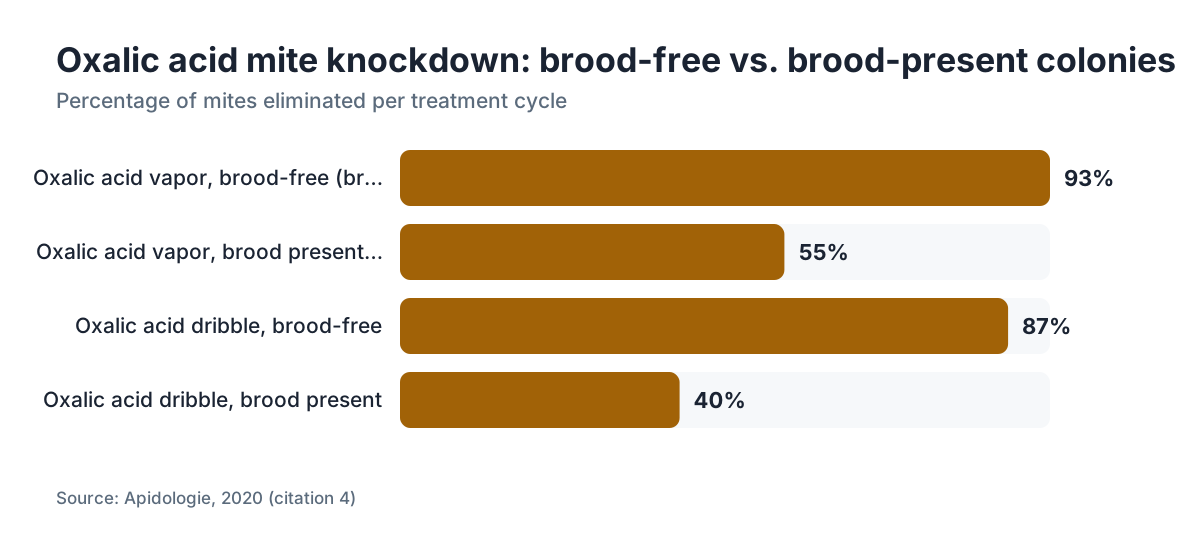
Vaporization (sublimation): heats oxalic acid crystals into a vapor that settles on bees and surfaces. Efficacy against phoretic mites in brood-free colonies hits 90 to 97% in published trials. [4] The EPA-registered Api-Bioxal label allows up to three treatments at 5-day intervals, which fits the end of a brood break because it catches mites on bees that emerged during the last few days of brood.
Dribble method: a 3.2% oxalic acid solution dribbled directly over bees between frames. It works in brood-free conditions but comes in slightly less thorough than vaporization because bees toward the back of frames may not get full coverage. Still a valid, widely used option, especially if you don't own a vaporizer.
Formic acid products (MAQS, Formic Pro) are another route, and their edge is that they penetrate capped brood to some degree, so they work reasonably well even without a full brood break. [7] But they carry temperature limits (don't use above 85 degrees F or below 50 degrees F), need strong colonies, and sometimes cost you the queen. For a deliberate brood break protocol, oxalic acid is simpler and more predictable.
Amitraz strips (Apivar) work best over an extended 6 to 8 week contact period and don't require a brood break, but adding a break early in the Apivar window improves knockdown. [8]
To track your monitoring data and figure out which protocol fits your colony's current mite load, VarroaVault's free varroa management tools help you calculate thresholds and time your break.
What are the risks and downsides of a brood break?
A brood break isn't free. Real costs and failure modes come with it, and you should know them before you start.
Population loss. The colony stops raising new bees for the duration. In peak summer a healthy colony can produce 1,000 to 2,000 new workers a day. A 4-week break can mean 28,000 to 56,000 fewer bees raised in that window. Most colonies shrug this off if the break lands during a nectar flow or when the population is strong, but a weak colony going into a break may come out too small to build up for winter.
Queen loss risk. Every time you handle the queen you risk losing her, crushing her, or having workers reject her on re-introduction. Keep a backup queen cell or a marked, mated backup queen if you're doing this on a colony you care about.
Emergency queens. Remove the queen, have an emergency cell fail or a new queen fail to mate, and now you've got a queenless colony at the exact moment you meant to treat it. This is why caging beats removal: you still hold the original queen.
Laying workers. A colony queenless for more than about 3 to 4 weeks starts throwing laying workers. Their unfertilized eggs become drones, the colony can't raise a queen from those eggs, and recovery gets very hard. If you're removing the queen on purpose, 3 weeks is about the safe maximum before you return her, introduce a new queen, or merge the colony.
Missed mite timing. Treat too early (brood still capped) or too late (queen laying again) and you lose the benefit. Use an alcohol wash to confirm mite levels before and after. The University of Minnesota Bee Lab recommends confirming the brood-free state visually before treating rather than trusting the timeline. [5]
None of these make a brood break a bad idea. They just mean you do it on purpose and check your work.
How do you monitor mite levels before and after a brood break?
Monitoring tells you whether to do a break, when to treat, and whether the treatment worked. Skip it and a brood break is just a guess.
Alcohol wash is the most accurate method. Collect roughly 300 bees (about half a cup) from the brood nest, submerge them in isopropyl alcohol, and shake for 60 seconds. Count the mites in the liquid, divide by the number of bees, multiply by 100, and you have your infestation rate as a percentage. The Honey Bee Health Coalition recommends treating when the rate reaches 2% during summer and 1% from late summer into fall, when winter bees are being raised. [2]
| Season | Treat threshold (alcohol wash) | Notes |
|---|---|---|
| Spring buildup | 2 to 3% | Colony growing fast; bees tolerate some mites |
| Summer (June, Aug) | 2% | High-risk window; winter bee production starts Aug |
| Late summer / fall | 1% | Winter bees being raised; zero tolerance for mite damage |
| Winter (broodless) | Any mites detected | Treat immediately; 100% phoretic |
A sticky board (24-hour natural mite drop count) is easier but less accurate. It counts mites that fall off bees, not total infestation rate, and temperature, colony size, and other variables push the number around. Use it for trends, not for the treat-or-not decision.
After a brood break and oxalic acid treatment, re-test with an alcohol wash 3 to 5 days after the final dose. Done right, you should see levels below 1%, ideally below 0.5%. If counts stay elevated, check whether any brood capped during the break, whether you treated every colony in the yard (reinfestation from neighbors is common), or whether you need another treatment cycle.
For the biology behind the mite itself, the varroa mite article covers the life cycle, reproduction rates, and how infestation spreads between colonies.
Can a brood break replace chemical treatments entirely?
Honestly, probably not for most beekeepers most of the time. A brood break combined with oxalic acid is a treatment, one that happens to be organic-compliant and works with the mite's biology. The real question is whether mechanical methods (the break itself, drone comb removal) can control mites with no chemical input at all.
Drone comb removal alone pulls maybe 20 to 40% of mites from a colony over a season, which slows growth but doesn't reverse a high-level infestation. [9] A brood break with no follow-up treatment leaves 5 to 15% of phoretic mites alive and ready to reproduce the moment the queen resumes laying. The population climbs back fast.
Some beekeepers running survivor stock or locally adapted colonies with strong hygienic behavior report managing mites with breaks alone. The data on this is thin, the genetics matter a lot, and losses run higher in hard years. Nobody has good controlled-trial data showing mechanical methods alone reliably hold mite populations below threshold across multiple seasons in unselected stock.
What the research does support clearly: a brood break as a treatment-enhancer, paired with oxalic acid, consistently beats oxalic acid without a break. A 2020 study in Apidologie found oxalic acid vaporization in brood-free colonies hit greater than 90% mite reduction versus roughly 50 to 60% in colonies with brood present. [4] That's the practical case for the break, and it's strong enough to justify the work.
For most hobbyists, the most defensible protocol reads like this: monitor monthly, do a deliberate brood break plus oxalic acid in July or August, run a second treatment during the natural fall break, and let your alcohol wash data decide whether a spring intervention is worth it.
How does a brood break fit into a full-season varroa management plan?
A brood break is one tool in a protocol, not the whole protocol. Here's how it slots into a practical full-season plan for a temperate-climate hobbyist.
Spring (March, May): Monitor with an alcohol wash in April as the colony expands. Below 1%, you probably don't need to act yet. At 2% or above, consider a formic acid treatment (works in brood) or plan an early break. Don't disrupt a fast-growing colony unless the numbers force it.
Early summer (June): Mite populations pick up as brood peaks. Monitor every 3 to 4 weeks. A reading above 2% in June calls for action. If you have the time and colony strength, this is a good moment for a break.
Mid-to-late summer (July, August): The top-priority window. Winter bees start getting raised here (around week 5 to 6 before your average first frost). Any mites above 1% in August are damaging the bees meant to carry the colony through winter. Time your break to land here if mite levels allow.
Fall (September, October): Run an alcohol wash. If mites are elevated, you still have time for a formic acid treatment while brood is present. As brood winds down, shift to oxalic acid.
Late fall / early winter (November, January): Single oxalic acid treatment during the natural break. This is the cheapest, simplest mite intervention there is, and it works extremely well when the colony is truly brood-free. [2]
Free varroa management tools at VarroaVault help you map this timeline to your location and track mite counts across seasons, so you're deciding on data instead of guesses.
For sourcing gear for brood break work (cages, vaporizers, alcohol wash supplies), the beekeeping supply companies page lists vendors with current pricing.
Does a brood break work for all types of honey bee colonies?
The biology is the same across Apis mellifera subspecies and most commercial lines: stop brood, expose mites, treat. But how well it works varies with colony genetics and behavior.
Colonies with strong hygienic behavior (VSH bees, Minnesota Hygienic, locally selected survivor stock) already pull mite-infested brood at higher rates, so their baseline mite levels tend to run lower and the brood break lands harder when you apply it. Colonies bred for varroa sensitive hygiene (VSH) can sometimes hold very low mite levels with less intervention, though they still gain from a well-timed break.
Tropically adapted bees and some Africanized honey bee populations swarm more often, which creates more frequent natural brood breaks, and that's part of why Africanized bees show better mite tolerance in some field settings. [10] That's no reason to chase Africanized genetics (the defensive behavior carries serious management and public safety problems), but it explains why swarming isn't all bad from a mite standpoint. The africanized honey bee article covers the full tradeoffs if you're curious about that corner of bee genetics.
For the overwhelming majority of hobbyist and sideliner beekeepers running standard Italian, Carniolan, or mixed commercial stock, the brood break works exactly as described. The variation in efficacy comes from technique and timing, not genetics alone.
What are the most common mistakes beekeepers make with brood breaks?
The gap between a brood break that works and one that flops is almost always execution, not concept.
Treating too early. The most common miss. The beekeeper cages the queen, waits 12 to 14 days, and treats while capped worker brood is still present. Result: the treatment hits 30 to 40% of mites instead of 95%-plus. Wait the full 24 to 28 days and confirm with a quick inspection before you treat.
Not treating the whole apiary. Varroa drift and robbing between hives means mite-loaded bees from untreated neighbors re-infest a freshly treated colony within days. Multiple hives? Schedule breaks and treatments across all of them in the same window. A 3% mite load in the next hive over refills your treated colony faster than you'd think. [5]
Skipping the post-treatment alcohol wash. You don't know if the break worked unless you check. Take an alcohol wash 3 to 5 days after the final treatment. If levels are still above 1%, something went wrong, and you need to know what before the population climbs again.
Underestimating colony stress. A colony that enters a break weak (low bee count, poor nutrition) may not build back strongly. Check pollen stores and consider feeding if the colony will sit in a break during a dearth.
Losing the queen. It happens. She slips out during caging, gets balled on re-introduction, or dies from handling stress. Keep a backup. Run more than five hives and a spare mated queen in a nuc is worth every penny.
Frequently asked questions
How long should a brood break be for varroa control?
A minimum of 24 days ensures all worker brood (12-day pupal period) has emerged after the queen stops laying, with a few extra days as buffer. If drone brood was present when you started, extend to 28 days. Confirm the colony is brood-free by inspection before treating, rather than just counting days.
Can I do a brood break in summer without hurting my colony?
Yes, if the colony is strong going in. A summer brood break costs roughly 1,000 to 2,000 new bees per day during the broodless window, but most healthy colonies recover within 3 to 4 weeks after the queen resumes laying. The mite reduction benefit almost always outweighs the temporary dip, especially if you're protecting the winter bee generation that starts around late July or August.
What is the best treatment to use during a brood break?
Oxalic acid, either vaporized or dribbled, is the first choice. The Honey Bee Health Coalition states oxalic acid is most effective when there is no capped brood present. Vaporization achieves 90 to 97% mite knockdown under true brood-free conditions. Use the EPA-registered Api-Bioxal product and follow the current label for application rates and the number of permitted treatments.
How do I know when my colony is actually brood-free?
Open the hive and inspect all frames. A brood-free colony has no capped cells containing bee pupae; you may see empty wax cells, stored honey, and pollen, but no tan or darker capped brood. An alcohol wash showing unusually high mite counts can also signal that mites are still emerging from the last of the brood, meaning the window isn't quite open yet.
Does a brood break work as well as synthetic miticides?
A brood break combined with oxalic acid achieves 90 to 97% mite knockdown, comparable to Apivar (amitraz strips, rated 90%-plus under good conditions) and better than oxalic acid alone without a break (roughly 50 to 60% with brood present). The combination is organic-compliant and sidesteps resistance concerns, though it takes more active management than installing a strip.
Will a brood break cause my bees to swarm?
A brood break can raise the swarming impulse because the colony has idle nurse bees with no larvae to tend and a crowded, brood-free hive. Giving those bees space (adding a super, ensuring ventilation) and timing the break so it doesn't overlap peak swarm season (spring) lowers the risk. Caging rather than removing the queen also reduces the colony's urgency response.
How often should I do a brood break each year?
Most temperate-climate beekeepers do one deliberate summer break (July or August) and lean on the natural winter break for the second treatment window. That's usually enough if monitoring stays below threshold. High-infestation colonies or apiaries with heavy mite pressure from neighboring hives may need two deliberate breaks in the same season.
Can a brood break replace the need for oxalic acid?
No, at least not reliably. A brood break with no treatment leaves surviving phoretic mites alive, and they reproduce as soon as the queen resumes laying. Drone comb removal and brood breaks together can slow mite growth in colonies with good hygienic genetics, but controlled-trial data doesn't support mechanical methods alone as sufficient for standard commercial stock across multiple seasons.
What happens to mites during a brood break?
All mites are forced into the phoretic phase, riding on adult bees between reproductive cycles. They can't reproduce without capped brood. Mite populations neither grow nor decline much naturally during this phase (mortality is low when phoretic), but every mite is exposed and reachable by oxalic acid treatment, which is why the break is so valuable as a treatment-enhancer.
Is queen caging or queen removal better for a brood break?
Queen caging is generally safer for hobbyists. It keeps the original queen available for re-introduction, the colony stays queenright which lowers the risk of laying workers, and you control the timeline precisely. Queen removal creates a longer break but risks emergency queen failure, mating failure, and laying workers if the timeline runs past 3 to 4 weeks without a new laying queen.
How do I monitor mite levels to decide if a brood break is needed?
Use an alcohol wash: collect roughly 300 bees (half a cup) from the brood nest, shake in isopropyl alcohol for 60 seconds, count mites, divide by bee count, multiply by 100. The Honey Bee Health Coalition recommends treating at 2% infestation in summer and 1% from late summer onward when winter bees are being raised. Monitor monthly June through October.
Can I use formic acid during a brood break instead of oxalic acid?
You can, but formic acid's main advantage is that it penetrates capped brood, making it useful when a true brood break isn't possible. Using it during a break works but adds little over oxalic acid, and formic acid has stricter temperature limits (50 to 85 degrees F for most products) and a higher risk of queen loss. Oxalic acid is simpler and more effective under brood-free conditions.
Does a brood break help with varroa resistance to treatments?
Indirectly, yes. Because a brood break combined with oxalic acid achieves near-complete mite elimination, you rely less on synthetic miticides like amitraz or tau-fluvalinate, which carry documented resistance concerns in varroa populations. Reducing synthetic miticide frequency is one of the main reasons extension services and the Honey Bee Health Coalition recommend building oxalic acid and brood breaks into rotation protocols.
What should I feed my colony during or after a brood break?
Check pollen stores before starting. If the colony enters a break during a summer dearth with thin pollen stores, add a pollen substitute patty to support nurse bees and help the queen ramp up quickly after release. Sugar syrup can help stimulate egg-laying after the break ends, especially in late summer when natural nectar flow is declining.
Sources
- EPA - Pollinator Protection (Pesticides): Varroa mites are protected inside capped cells from most approved treatments; oxalic acid has reduced penetration through wax cappings.
- Honey Bee Health Coalition - Varroa Management Guide (2023 edition): During a brood break, 100% of mites are in the phoretic phase; oxalic acid is most effective when there is no capped brood present; treatment thresholds of 2% summer and 1% late summer.
- University of Florida IFAS Entomology and Nematology - Varroa Mite Biology: Varroa mites spend 5 to 6 days phoretic, reproduce inside worker cells for 11 to 12 days; mites reproduce at roughly 8x the rate in drone cells vs. worker cells.
- Apidologie (Springer) - Oxalic acid vaporization efficacy in brood-free versus brood-present colonies (2020): Oxalic acid vaporization in brood-free colonies achieved greater than 90% mite reduction versus roughly 50 to 60% in colonies with brood present.
- University of Minnesota Bee Lab - Varroa Management: July to August is a high-risk window for mite levels; mite populations double roughly every 4 to 6 weeks during summer brood season; visual confirmation of brood-free state recommended before treating.
- EPA - Pesticide Registration (Api-Bioxal, oxalic acid): Api-Bioxal is EPA-registered for varroa treatment in the US; the label permits up to three vaporization treatments at 5-day intervals.
- Penn State Extension - Varroa Mite Treatment Options: Formic acid products (MAQS, Formic Pro) penetrate capped brood to some extent and have temperature restrictions of 50 to 85 degrees F.
- Cornell University Department of Entomology - Drone Comb Removal for Varroa Control: Amitraz strips (Apivar) work best over a 6 to 8 week contact period; drone comb removal alone removes approximately 20 to 40% of mites over a season and slows but does not reverse high-level infestations.
- Cornell University Department of Entomology - Drone Comb Removal for Varroa Control: Drone comb removal alone removes approximately 20 to 40% of mites from a colony over a season and slows but does not reverse high-level infestations.
- USDA Agricultural Research Service: Africanized bees show better mite tolerance in some field settings, partly attributed to more frequent natural swarming creating natural brood breaks.
- North Carolina State University Extension Entomology - Seasonal Varroa Management: Winter brood breaks in USDA hardiness zones 5 and colder typically run November through January; a single oxalic acid treatment during this window is the standard recommendation.
- Washington State University Extension - Alcohol Wash Protocol for Varroa Monitoring: Alcohol wash using approximately 300 bees (half cup) from the brood nest is the gold standard for measuring varroa infestation rate.
Last updated 2026-07-09