Apivar strips touching brood: why it matters for mite control
TL;DR
- Apivar (amitraz 3.3%) kills varroa only through direct bee contact with the strip.
- Place strips between brood frames, and nurse bees pick up amitraz on their bodies, then carry it into capped cells where most mites hide.
- Hang strips in empty space away from brood and efficacy falls off a cliff.
- The label requires strips inside the brood nest, and bad placement is a top cause of treatment failure.
How does Apivar actually kill varroa mites?
Apivar kills by contact, nothing else. Each strip holds 3.3% amitraz in a plastic matrix [1]. The drug doesn't gas the hive and it doesn't dissolve into your comb. Bees walk over the strip, pick up amitraz on their bodies, and carry it around as they groom and move through cells. Nurse bees that climb into brood cells to feed larvae bring the amitraz with them, and that's exactly where most of your mites are hiding.
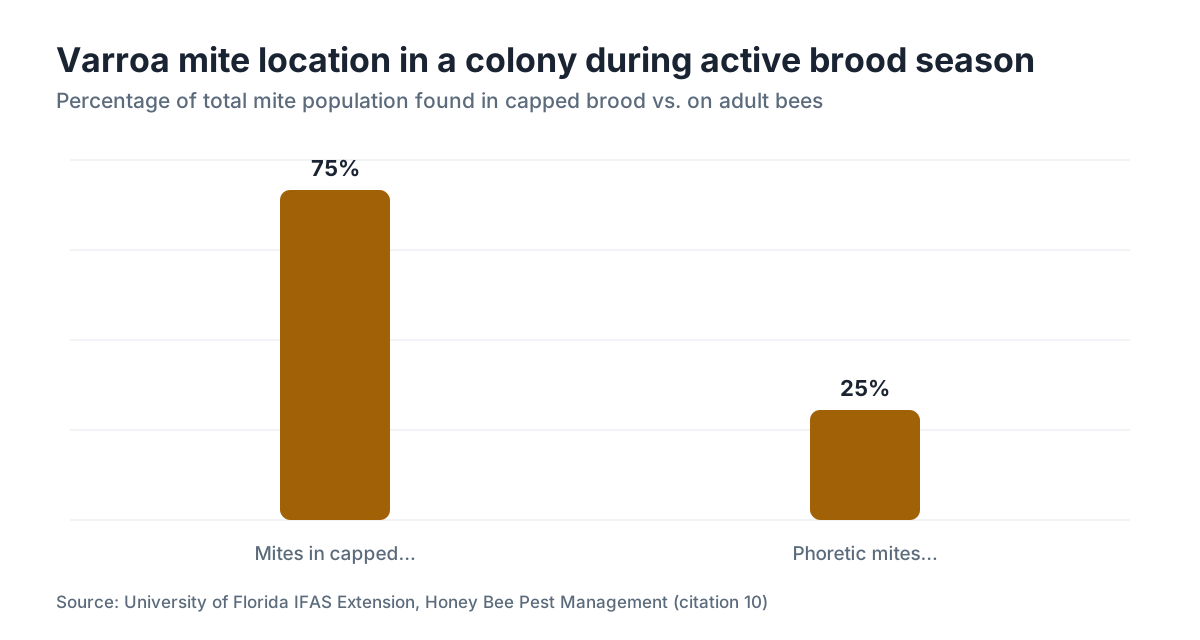
During peak brood season, roughly 70 to 80 percent of a colony's varroa load sits under cappings at any moment [2]. The phoretic mites riding on adult bees are the minority. A treatment that never reaches the brood nest ignores most of the infestation. Apivar gets around this through nurse bees, but only if those nurse bees are actually crossing the strip.
Amitraz degrades fairly fast in a warm hive, which is why the label sets a 42-day minimum treatment window [1]. That length exposes several brood cycles worth of emerging mites to the treated nurse bees. Cut the treatment short, or cut bee-strip contact, and you knock the legs out from under the whole thing.
Why does strip placement in the brood nest matter so much?
Hang your strips between two frames of honey on the outside edge of the box and almost nothing useful happens. The bees on those frames are older foragers and honey-storage bees. They don't crawl into capped brood. You've put strips in the hive, sure, but you haven't put them where the mites live.
The Honey Bee Health Coalition's Varroa management guide says strips should sit "in the center of the brood nest, between frames of brood" for maximum efficacy [2]. That phrasing is not decoration. It describes how amitraz travels through a colony: outward from wherever the nurse bees pile up, which is always the brood cluster.
University of Minnesota Bee Lab resources and Penn State extension work both name bad placement as one of the most common, most fixable reasons hobbyists get weak knockdown after a full Apivar run [3][4]. You can treat for the full 42 days, test at the end, and still find counts above 2 mites per 100 bees if the strips sat in the wrong frames.
Here's the part that stings. A misplaced strip costs you the same $24 to $30 per package as a perfectly placed one, and returns a fraction of the kill. This is the single easiest variable you control, and people blow it all the time.
Where exactly should you put Apivar strips in the hive?
Put strips in the brood, one strip per five frames of bees. The EPA-registered label for Apivar (registration number 86052-6) directs beekeepers to insert one strip per five frames of bees, between frames containing brood [1]. For a standard 10-frame Langstroth deep with a full brood nest, that's usually two strips, one on each side of the central brood area, roughly at positions 3-4 and 7-8.
Each strip has a hook at the top. Hang it from the top bar so it drops down between two frames, touching or nearly touching the bottom bar. What counts is that bees walking on the neighboring frames can reach the strip surface. If the frames are so thick with bees you can barely wedge the strip in, that's perfect. Dense contact is the engine here.
Two-story colonies with brood in both boxes need strips in both boxes, placed in the brood frames of each. Don't count on amitraz drifting up from a lower box on its own. The transfer is local. Bees in the upper box need their own source.
A colony that has pulled into a tight winter cluster with little open brood makes placement harder. Get the strips as close to the cluster as you can. For late-fall treatments, some beekeepers slide strips right into the frames where the cluster sits tightest. That's the right call. See more on equipment choices for different hive configurations at beekeeping supplies.
What happens if Apivar strips don't touch or come near brood frames?
The mite kill drops, hard. That's the short version. The longer version is that the drop can be bad enough to count as a failed treatment while looking, to you, like a finished one.
A study in the Journal of Economic Entomology reports amitraz-based treatments hitting 93 to 97 percent efficacy under optimal conditions [5]. Field numbers from extension services routinely come in lower, often 70 to 85 percent, with placement error one of the main culprits [3]. The gap between 95% and 75% sounds tiny until you run the math. In a colony carrying 2,000 mites, that's the difference between 100 survivors and 500. Mite populations can double in about three weeks, so those extra 400 mites turn into a crisis a month later.
Then there's resistance. Sublethal amitraz exposure, which is exactly what mites get when strips are poorly placed and contact is spotty, is one of the conditions that can push selection toward amitraz-tolerant mite genotypes [6]. Amitraz resistance has already turned up in some US populations, and the usual explanation involves inconsistent or under-strength dosing. Bad placement can cost you more than this season. It can chip away at the treatments you'll need next year.
How many Apivar strips does a colony need?
One strip per five frames of bees, per the label [1]. Count frames well-covered with bees, not frames that merely exist in the box. A 10-frame hive with bees on 8 frames gets two strips. A nucleus with bees on 4 or 5 frames gets one.
Piling on extra strips past the label rate is illegal and probably useless. The transfer mechanism doesn't speed up in proportion to strip count. What matters is that nurse bees in the brood area keep bumping into amitraz across the whole 42 days. Two well-placed strips do that. Six scattered ones don't.
Underdosing is the real risk. One strip in a big double-deep with lots of brood leaves pockets where exposure is too low for good nurse-bee transfer. Recount your frames of bees any time a colony has grown a lot since your last treatment.
| Colony size | Frames of bees | Strips needed |
|---|---|---|
| Nucleus (5-frame) | 4-5 | 1 |
| Single deep, light population | 5-6 | 1-2 |
| Single deep, strong | 7-10 | 2 |
| Double deep, moderate | 10-14 | 2-3 |
| Double deep, strong | 15-20 | 3-4 |
How long should Apivar strips stay in the hive?
The label minimum is 42 days [1]. Some beekeepers pull at 6 weeks and get fine results. Others leave strips 8 weeks, especially for late-season treatments where cool weather slows bee movement and drops contact rates.
Those 42 days cover about three full brood cycles. A worker runs roughly 21 days from egg to emergence. That timing means mites emerging from one round of capped brood meet treated nurse bees, reproduce in the next round, and see their offspring exposed again before you pull the strips. Cut treatment short by even a week and one of those cycles can slip through with little exposure.
Leaving strips past 8 weeks probably won't hurt the colony, but the amitraz in the matrix keeps degrading, so you gain little after week 8. There's also the honey super question. Apivar can't be in the hive with supers on, and a stretched-out treatment can collide with a late nectar flow [1].
Once you remove strips, dispose of them under local pesticide disposal rules. Never reuse a strip, in the same colony or any other.
Can Apivar be used during a honey flow?
No. The Apivar label flatly prohibits use with honey supers in place [1]. Amitraz can contaminate honey at detectable levels, and contaminated honey can't be sold legally. This is one of the strictest limits on the product.
Timing Apivar around honey production is a genuine headache for most beekeepers. The standard move is to treat after the main harvest, in late summer or early fall, usually August through October depending on your region. A second window in early spring, before the main flow starts, works for beekeepers whose counts demand it.
If you run hives for honey and your late-summer counts spike, you may have to pull supers earlier than you wanted, treat, and let the late-flow honey stay in the brood box as winter stores. That beats skipping treatment and burying the colony by January.
For how varroa hits colony health more broadly, the varroa mite overview goes into the biology and population math.
Does temperature affect how well Apivar strips work?
Yes, but far less than oxalic acid vaporization or formic acid does. Amitraz transfer keeps working as long as bees move actively through the hive and across the strips. Below about 50 degrees Fahrenheit, winter cluster behavior cuts bee mobility and slows transfer.
The EPA label sets no minimum temperature the way formic acid labels do, but Penn State extension guidance points to Apivar working best when daytime temps stay consistently above 50 degrees Fahrenheit and the colony still raises some brood [4]. Start a late-fall treatment when the cluster is already tight and brood is minimal, and efficacy runs below the same treatment done in September while the colony is still humming.
That's why the late-summer window (August across most of the northern US, September in cooler spots) is the timing most people recommend. You catch mites before winter bees are made, hive traffic is still heavy, and you get the full 42 days before cold shuts down normal movement.
VarroaVault's free seasonal protocol tool works out treatment windows from your local climate and last expected brood date, so you're not eyeballing the calendar.
How do you know if your Apivar treatment worked?
You test, twice. Before treatment, set a baseline with an alcohol wash or sugar roll on a 100-bee sample [2]. After the 42 days are up and strips are out, test again. The Honey Bee Health Coalition recommends retesting 48 hours to one week after strip removal [8].
Say your pre-treatment count was 4 mites per 100 bees and your post-treatment count is 0 to 1. It worked. If you're still at 2 or above, something went sideways: placement, strip count, duration, or possibly resistance.
The Honey Bee Health Coalition's action threshold is 2 mites per 100 bees in the summer brood season and 1 per 100 in fall when winter bees are being raised [2]. Land at or above those numbers after treatment and you retreat with a different active ingredient. Repeating the same product when you suspect a weak kill just pushes resistance along.
Alcohol wash is the accurate method. Sugar rolls are gentler on bees but a bit less reliable. Sticky boards give you a daily drop count, but they can't tell you what percentage of your bees are infested, and that percentage is the number you make decisions on [8].
What are the signs that Apivar treatment failed and what should you do?
The clearest sign is a post-treatment mite count above threshold. Watch also for deformed wing virus symptoms (bees with crumpled or stunted wings) showing up or hanging on through and after treatment, a population slide that doesn't reverse in the weeks after strips come out, or a brood pattern that stays spotty and pocked.
If treatment looks like it failed, run this checklist before you blame resistance:
Were the strips in the brood nest, not the honey area? Did you use the right number for colony size? Did you run the full 42 days? Was the colony raising brood the whole time (you need at least some brood for the nurse-bee delivery to work)? Was there any chance of reinfestation from a nearby collapsing hive?
If placement, duration, and count all checked out and you still have high loads, resistance is a real possibility. The Honey Bee Health Coalition documents confirmed amitraz resistance in Varroa destructor in some US apiaries, mostly those with long Apivar histories [2]. In that case, rotate to oxalic acid (dribble, vapor, or extended-release) or a miticide with a different mode of action.
Never just rerun a failed treatment with more Apivar. That's how resistance spreads through your local mite population.
Are there any safety or legal rules for handling Apivar strips?
Apivar is a federally registered pesticide (EPA Reg. No. 86052-6), and following the label is a legal requirement under FIFRA, the Federal Insecticide, Fungicide, and Rodenticide Act [7]. You can't bump the dose, run it with honey supers on, use it in hives not managed for bee production, or skip the minimum treatment period. "Label is law" isn't just a slogan. Violating a pesticide label is a federal violation.
For handling, the label calls for chemical-resistant gloves and says avoid skin contact with the strip material. Amitraz is toxic to dogs, seriously so even at low doses, and harmful to fish and aquatic invertebrates. Store strips securely and dispose of used ones as hazardous waste or through your local pesticide disposal program [1].
Keep strips away from children. Keep opened packages away from food. And never stack used strips anywhere a dog can reach them. The dog toxicity is no joke. Amitraz is a common source of veterinary emergency calls when dogs chew on used strips tossed in the yard.
Shopping for Apivar and other supplies? Beekeeping supply companies can point you to legitimately sourced product with intact labeling. Counterfeit or relabeled amitraz is out there, and it carries real legal and efficacy risks.
Frequently asked questions
Can I put Apivar strips directly on top of brood frames instead of hanging them between frames?
The label specifies hanging strips between frames, not laying them flat on top. A flat strip gets less bee contact from both sides and can trap or injure bees if it gets propolized in place. Hanging between brood frames gives bees access to both strip faces and keeps the strip where nurse bees are busiest.
My colony has brood in two boxes. Do I need strips in both?
Yes. Put strips in the brood frames of each box where brood is present. The transfer is local: bees in the upper box get little to no amitraz from strips in the lower box alone. Count frames of bees in each box separately and scale strips accordingly, following the one-strip-per-five-frames rule on the label.
How long does it take Apivar to start killing mites after I install the strips?
You'll see some phoretic mite kill in the first week as bees pick up amitraz. Brood-mite kill takes longer because it depends on nurse bees carrying amitraz into capped cells repeatedly over several brood cycles. Meaningful colony-level impact usually shows by week 3 to 4, which is why the full 42-day minimum matters.
Can I use Apivar in a nucleus colony or a new package?
Yes, but use one strip for a 5-frame nucleus or a new package with bees on 4 to 5 frames. Place it in the active brood area once brood is present. For very new packages with no capped brood yet, some beekeepers wait for the first capped brood before installing, since the nurse-bee delivery needs brood to matter.
Is it normal for bees to chew on or remove Apivar strips from the hive?
Some chewing of the plastic matrix is normal and doesn't meaningfully cut efficacy during the 42-day window. Full removal by bees is uncommon but happens in heavily propolized hives. Check strips at week 2 or 3 to confirm they're still hanging. If a strip was fully removed early, replace it and restart the timer.
Do I need to do a mite count before treating with Apivar?
You don't legally have to, but you absolutely should. A pre-treatment count sets your starting infestation level and gives you a baseline to compare against afterward. Without it you have no way to know whether the treatment worked. The Honey Bee Health Coalition's Varroa management guide recommends alcohol wash as the most accurate method for this number.
What's the difference between Apivar and Apistan? Can I use them interchangeably?
Apivar contains amitraz. Apistan contains tau-fluvalinate. Different active ingredients, different modes of action. Apistan resistance in Varroa is widespread across the US and documented for decades, making Apistan largely useless in many apiaries. Apivar resistance is less common but growing. They are not interchangeable, and using a product with known local resistance wastes time and money.
What should I do with Apivar strips after treatment is complete?
Dispose of used strips as hazardous waste. Don't leave them on the ground near your hives, don't compost them, and don't toss them in household trash where a dog might get at them. Many counties run agricultural pesticide disposal programs. Check your state extension service or local cooperative extension office for drop-off sites and rules.
Can varroa become resistant to Apivar, and how would I know?
Yes, amitraz resistance in Varroa destructor has been confirmed in US apiaries. Suspect it if you nailed placement, strip count, and the 42-day duration and still find counts at or above your pre-treatment level when you test after strip removal. Confirmed resistance means switching active ingredients. The Honey Bee Health Coalition documents this in its varroa management guide.
Can I use Apivar at the same time as other treatments like oxalic acid?
The Apivar label doesn't ban concurrent use of other registered treatments, but combining active ingredients at once isn't standard practice and the field interactions aren't well studied. The common approach is sequential: run Apivar for the main cycle, then follow with oxalic acid dribble or vapor in broodless winter conditions to clean up survivors.
How do I treat a broodless colony or a colony preparing to swarm with an empty brood nest?
A broodless colony removes the mite-in-capped-brood problem for a while, which makes it the best time for oxalic acid, not Apivar. Apivar's mechanism needs nurse bees entering brood cells, and a broodless hive has no such pathway. If a colony goes accidentally broodless mid-treatment, leave the strips in and let brood resume rather than writing off the window.
Does it matter which direction Apivar strips face between frames?
No. Both faces carry amitraz. Hang the strip so it swings freely between frames without being pinched tight against either frame face. You want bees moving across both surfaces. If the strip is jammed flat because the frames are full of honey and pressed together, shift it one frame toward the center where bees have room to move.
Sources
- EPA, Apivar label (Reg. No. 86052-6), Veto-Pharma: Apivar contains 3.3% amitraz; label requires one strip per five frames of bees, placement between brood frames, 42-day minimum treatment, and no use with honey supers present
- Honey Bee Health Coalition, Varroa Management Guide (2023): Strips should be placed in the center of the brood nest between frames of brood; action threshold is 2 mites per 100 bees in summer and 1 per 100 in fall; alcohol wash is most accurate test method; amitraz resistance confirmed in some US apiaries
- University of Minnesota Extension, Bee Lab varroa management resources: Improper strip placement identified as a leading correctable cause of poor Apivar efficacy in hobbyist apiaries
- Penn State Extension, honey bee and varroa management resources: Apivar is most effective when daytime temperatures stay consistently above 50 degrees Fahrenheit and the colony is still raising some brood
- Journal of Economic Entomology, amitraz efficacy research: Amitraz-based treatments achieve 93 to 97 percent efficacy against varroa under optimal conditions
- USDA Agricultural Research Service, Bee Research Laboratory: Sublethal amitraz exposure from inconsistent or subtherapeutic treatments may accelerate selection for amitraz-tolerant varroa genotypes
- EPA, FIFRA (Federal Insecticide, Fungicide, and Rodenticide Act) overview: Using a pesticide in a manner inconsistent with its label is a violation of FIFRA; label is a legally binding document
- Honey Bee Health Coalition, Varroa Management Guide: monitoring methods: Sticky boards cannot provide infestation percentage; alcohol wash recommended for treatment decision thresholds; retest 48 hours to one week after strip removal
- University of Florida IFAS Extension, Honey Bee Pest Management: Approximately 70 to 80 percent of colony varroa load is in capped brood at any time during the active brood season
Last updated 2026-07-09