How many Apivar strips per brood box: the complete dosing guide
TL;DR
- The EPA-registered label for Apivar (amitraz 3.3%) requires exactly 2 strips per brood box, whether you run a single or double brood chamber.
- A two-box hive gets 4 strips total.
- Strips hang between frames in the brood nest for 6 to 10 weeks.
- Never exceed the label dose.
- Timing and placement decide whether you actually clear the mites.
What does the Apivar label actually say about strip count?
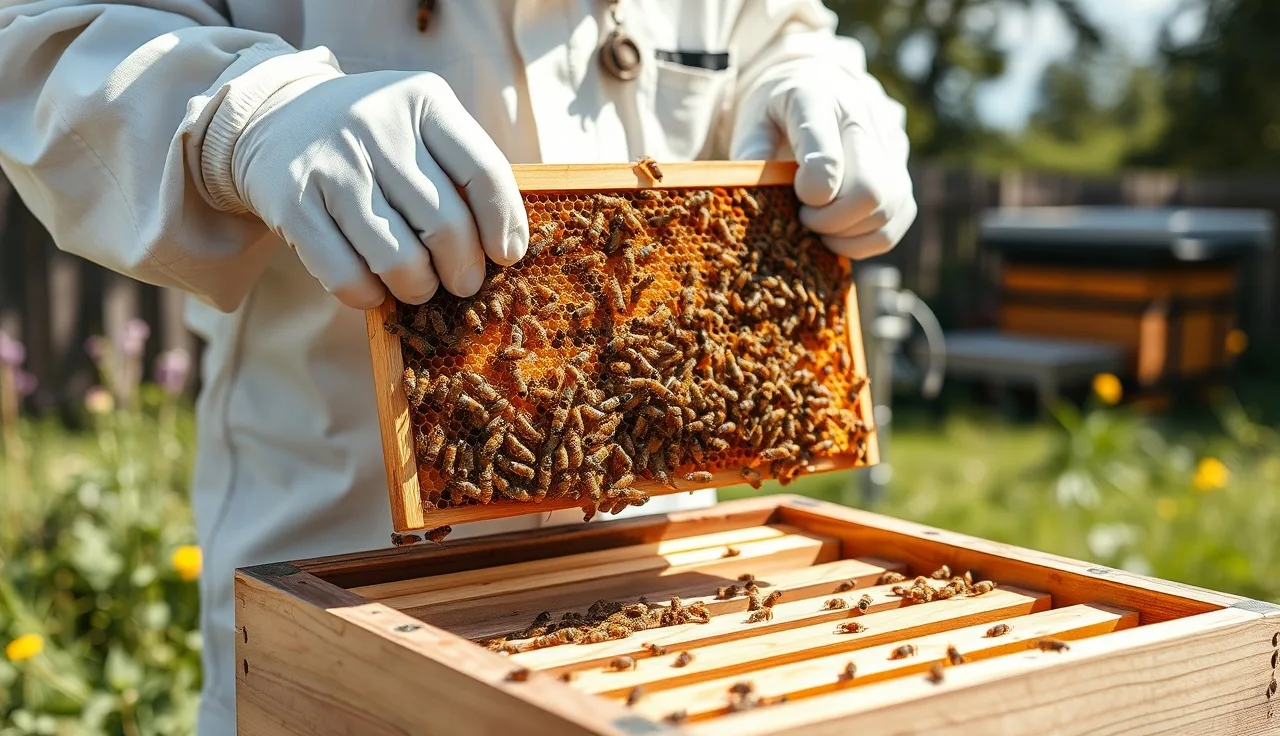
Two strips per brood box. That's the number, and it's not a suggestion. The EPA-registered Apivar label says each brood box gets 2 strips, and that label is federal law under FIFRA [1]. A single brood box colony gets 2 strips. A double brood box setup gets 4 strips total, one pair in each box. A triple brood box, rare but not unheard of in a big flow year, gets 6.
The active ingredient is amitraz at 3.3% concentration. The strip releases it slowly through contact as bees walk across and around it [2]. Under-dose and you leave enough mites alive to rebuild the population before the treatment window closes. Over-dose and you risk amitraz residues in wax and honey above the tolerances EPA has set. The label dose is calibrated for both efficacy and safety at exactly 2 per box. Stick to it.
One detail beekeepers miss all the time: the label counts brood boxes, not supers. Honey supers never enter the strip math. If you run a single deep brood box with two honey supers stacked on top, you still put in 2 strips total, both down in the brood box where the queen and bees cluster.
Does hive size or frame count change how many strips I need?
No. Apivar's label is built around standard 10-frame Langstroth equipment, but it applies the same way to 8-frame boxes as long as the box holds the brood nest. You don't scale strip count by frame count within a box. One brood box, 8-frame or 10-frame, gets 2 strips [1].
Colony population still matters in a practical sense. A weak colony, say 3 or 4 frames of bees, may not contact both strips if you spread them too far apart. Keep the strips closer together inside the cluster rather than placing one on each side of the box. You want maximum bee contact with the strip surface. Amitraz moves from strip to bee to bee, so low contact means low transfer and weak results [2].
For nucleus colonies, the practical guidance is 1 strip per nuc box. A 5-frame nuc gets treated as half a brood box for dosing purposes. If your nuc has grown to fill two medium boxes and is really a full colony, treat it like one.
Top-bar hives are a real regulatory gap, not a nitpick. Apivar's label was written for Langstroth frames, so technically it doesn't cover you. Check with your state apiarist. The Honey Bee Health Coalition's Varroa management guide acknowledges the equipment mismatch and points beekeepers in non-standard setups to their state department of agriculture [3].
Where exactly do you place Apivar strips in the brood box?
Placement drives contact, and contact drives efficacy. The label says to hang one strip between frames 3 and 4 from one side, and the second between frames 7 and 8 counting from the same side, in a standard 10-frame box [1]. That puts both strips inside or right next to the brood nest, where most of the bees live and where mites reproduce.
Hang the strips directly in the densest bee traffic. If your brood cluster is off-center because the hive dwindled or because it's early spring and they haven't spread out yet, move the strips to bracket the actual cluster instead of following the by-the-numbers frame positions.
The strip has to hang freely between frames with bees on both sides. Don't wedge it flat against comb. That kills the surface area bees can walk on. Hook it over the top bar so it dangles into the bee space. Most strips come with a notch or fold point for this. If the comb is thick and the strip gets pinched, trim it a little shorter rather than forcing it.
For a double brood box, put 2 strips in the lower box and 2 in the upper box. Keep them in the brood area of each box, not shoved into the corners. If the queen is only laying in the upper box and the lower box is mostly honey, you can weight both pairs toward the upper box's brood area, but keep them in their respective boxes per the label.
How long do Apivar strips stay in the hive?
Six weeks minimum, 10 weeks maximum [1]. That window exists because amitraz release is gradual and temperature-dependent. In cooler weather (fall treatments, for example), release slows and you need the full 10 weeks to get the mite kill you're after. In warm late-summer treatments, 6 to 8 weeks usually does it, and you don't want strips in longer than necessary because prolonged exposure raises the odds of amitraz building up in wax.
Six weeks is the floor, not the target. Most experienced beekeepers treating in fall aim for 8 weeks as a working middle ground. Pull strips, retest mite levels, and let the data tell you whether the treatment was long enough.
Remove every strip when treatment ends. Leaving strips in indefinitely breaks label compliance and feeds amitraz resistance in mite populations. Resistance to amitraz is already documented in some populations of Varroa destructor across the United States and Europe, and it appears tied to chronic low-level exposure [4]. Pulling strips on schedule is resistance management, more than paperwork.
Store used strips in a sealed bag before disposal. Don't burn them. Don't compost them.
Can you use Apivar while honey supers are on the hive?
No. The Apivar label flatly prohibits application when honey supers meant for human consumption sit on the hive [1]. This is a hard rule. Amitraz and its breakdown products can move into honey, and there's no established safe residue tolerance for amitraz in honey sold for human consumption in the U.S. under current EPA registration.
This restriction shapes the whole treatment calendar for most beekeepers. Across most of the continental U.S., the two practical windows are early spring before the main flow (supers not yet on) and late summer or early fall after supers come off. The late-summer window, roughly August through September depending on your region, matters more, because that's when you have to drop mite loads before the colony raises the winter bees that carry it through to spring [3].
If you have a fall honey flow with supers on into October, you're stuck until they come off. Plan ahead. The Honey Bee Health Coalition recommends testing mite levels in late July or early August so you can decide whether to pull supers early if counts are already climbing [3]. A honey crop that costs you the colony isn't worth it.
What mite level should trigger Apivar treatment?
The most widely used threshold, recommended by the Honey Bee Health Coalition and most U.S. extension programs, is 2 mites per 100 bees (2%) using an alcohol wash or sugar roll [3]. At or above that number, treat. Below it, monitor more often.
Context still matters. A 2% load in August, with winter bees about to be raised, is more urgent than 2% in April during buildup. Many experienced beekeepers treat at 1% in late summer because the population trajectory beats the snapshot. A colony at 1% in August with a rising curve is in worse shape than a colony at 2% in May that's leveling off.
The Honey Bee Health Coalition's guide says it plainly: "Mite populations left untreated can reach levels that cause serious harm to colony health, particularly if high mite levels coincide with the rearing of winter bees (August through October in most of North America)." [3]
Track your mite counts, treatment dates, and threshold crossings with free protocol tools. VarroaVault's free varroa management tracker keeps this data organized without paying for hive management software.
For varroa mite biology background that explains why timing matters so much, that article walks through the mite's reproductive cycle inside capped brood.
How effective is Apivar at the correct dose?
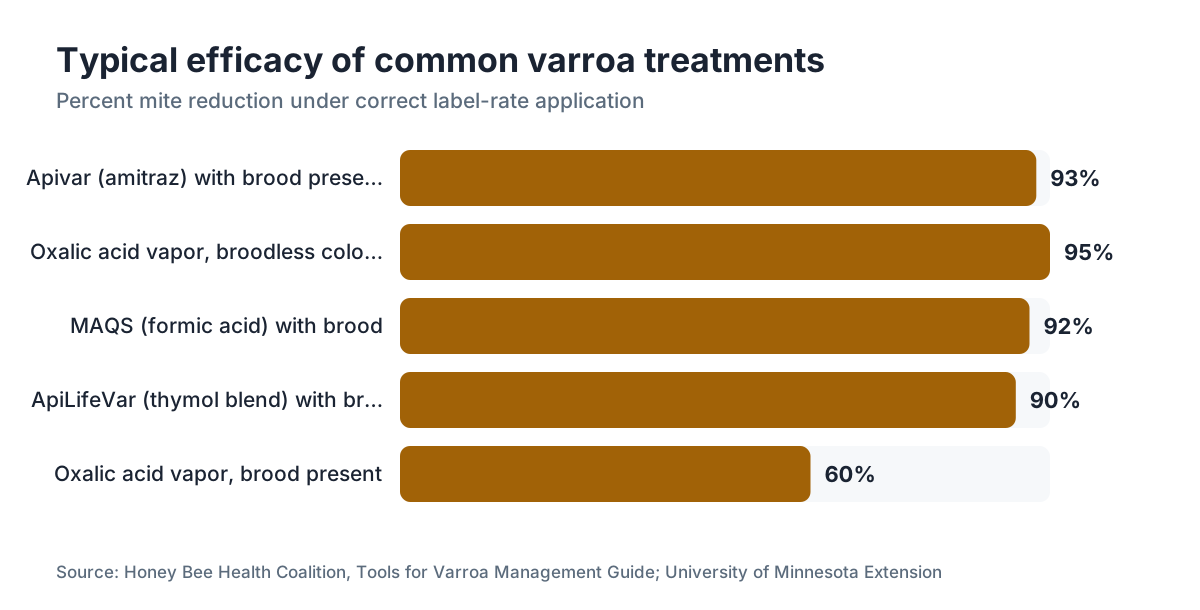
Field trials and university studies generally report 90 to 97% mite reduction when Apivar is applied at label rates for the full treatment duration [5]. That's strong performance. Oxalic acid vaporization, for comparison, runs 90 to 99% in broodless conditions but drops hard when brood is present because it doesn't reach into capped cells [6].
Apivar's edge is that it works with brood in the hive. Amitraz releases slowly, bees spread it through the colony over weeks, and mites emerging from capped cells contact treated bees and die. That's what makes Apivar so useful for late-summer treatment, when the brood nest is large.
Efficacy falls off when strips sit poorly (packed against comb, far from the cluster), when treatment runs short, or when the colony carries amitraz-resistant mites. Treat correctly, retest at 8 weeks, and if mite loads haven't dropped much, resistance is a real suspect. At that point, switch to a different chemical class for the next cycle.
The table below compares Apivar to other common treatments on the dimensions that matter in practice.
| Treatment | Works with brood? | Temperature limits | Honey super restriction | Typical efficacy |
|---|---|---|---|---|
| Apivar (amitraz) | Yes | None specified | No supers | 90-97% [5] |
| Oxalic acid vapor | Best without brood | Above 50°F recommended | No supers | 90-99% broodless [6] |
| MAQS (formic acid) | Yes | 50-85°F | No supers | 90-95% [7] |
| ApiLifeVar (thymol blend) | Yes | 59-69°F ideal | No supers | 85-95% [7] |
Can you reuse Apivar strips or use a partial strip?
The label doesn't authorize reuse, and the reason holds up. A used Apivar strip has depleted amitraz it already released during the first treatment. You can't know how much active ingredient is left without lab testing. Put a partly spent strip into a new cycle and you're probably under-dosing, which is both weaker on mites and a good way to select for resistance.
There's a gray area some beekeepers work in: running strips 6 weeks in one colony, then moving them straight (no storage) to a second colony for a fresh 6-week treatment. The logic is that the strip is still inside its 10-week release window. The problem is the label doesn't endorse it, and it drops you into unclear regulatory territory. Do this and you're off-label. Apivar strips run roughly $1 to $1.50 apiece depending on quantity and source, so the savings from reuse don't cover the risk of poor mite control.
Cutting strips for nucs is a separate question. Treating a 5-frame nuc with 1 full strip is common and sensible. Some beekeepers cut a strip and use half in the nuc. Neither is explicitly labeled, but 1 full strip in a nuc lines up better with the dosing guidance and is what most extension programs recommend.
What happens if you use too many or too few Apivar strips?
Under-dosing is the more common and more costly mistake. Two strips in a double brood box, covering both boxes with a single pair, halves the intended dose. Mite kill comes out incomplete, the colony stays stressed, and any genetically resistant mites get a selective advantage to reproduce and pass that trait on. Mite populations can bounce back from partial treatment within a few weeks.
Over-dosing brings a different set of problems. Excess amitraz in a hive can suppress queen performance. Some research links high amitraz concentrations to reduced queen egg-laying [8]. Residues in beeswax accumulate with repeated treatment and can persist for years, because amitraz binds to wax. Over time, high wax residues may affect brood viability and could create regulatory headaches if you sell comb honey or beeswax.
EPA set a tolerance of 200 parts per billion (ppb) for amitraz residues in honey [9]. Used correctly at label rates, Apivar typically leaves wax residues within acceptable bounds. Stacking treatments, reusing strips, and adding extra strips all push those residue levels up.
The practical bottom line: two strips per brood box, every time, no shortcuts in either direction.
How does temperature affect Apivar strip performance?
Apivar's label doesn't set a temperature cutoff the way formic acid and thymol products do. Amitraz release slows at lower temperatures, which is why the minimum treatment period stretches to 10 weeks in cool-season use, but the product still works in the cold [1]. That makes it more flexible for late-fall treatment in northern climates than MAQS or thymol options.
Treatment in very cold conditions with a small winter cluster is a contact problem, not a chemistry problem. If the cluster is tight and barely touching the strips, fewer bees pick up amitraz and the transfer rate drops. In most northern U.S. states, the practical window for fall Apivar treatment runs September through mid-October. Later than that and you're racing cluster contraction.
High summer temperatures don't seem to degrade Apivar's efficacy in any meaningful way. In practice, summer treatment is blocked by the no-super restriction, not by heat. Treat in August or September once supers are off and before the colony clusters for winter.
Store unused strips at room temperature, out of direct sunlight. The label specifies storage between 41°F and 86°F [1]. Don't leave them in a hot vehicle.
How do you monitor whether Apivar treatment worked?
Test mite loads before treatment to set your baseline. Test again 2 to 4 weeks after strip removal to check efficacy. A successful treatment should drop your alcohol wash count below 1%, ideally close to zero.
The alcohol wash is the most reliable monitoring method for treated colonies. The Honey Bee Health Coalition and most university extension programs recommend it over sticky boards, because sticky boards count mite fall rather than infestation level and are harder to read accurately [3]. Take a half-cup sample of bees (about 300 bees) from a frame near the brood nest, not from honey storage frames.
A post-treatment count still above 2% means you've got a problem. Placement was off, treatment ran short, mites are immigrating from neighboring colonies (a real issue in dense apiary areas), or resistance is emerging. The University of Minnesota Extension recommends repeat testing and consulting your local apiarist or extension specialist when post-treatment counts stay high [10].
For ongoing monitoring between treatments, a monthly alcohol wash from June through October keeps you ahead of population explosions. Write the numbers down. Mite loads that look fine in June can triple by August if a strong summer flow lulls you into skipping checks.
To structure your testing and treatment calendar in one place, VarroaVault's free protocol tools log wash results and flag threshold crossings automatically.
For sourcing strips and monitoring gear, this guide to beekeeping supply companies covers what to look for and where to buy reliably.
Are there situations where Apivar is not the right choice?
Yes. If you suspect amitraz resistance in your mites, sticking with Apivar is exactly the wrong move. Resistance to amitraz in Varroa is documented in the U.S., Europe, and South America [4]. Warning signs include proper treatment with little mite drop and post-treatment counts that barely budge. Rotate to a different mode of action: oxalic acid or formic acid are the usual alternatives.
If your operation leans heavily on treatment-free management, Apivar fits as a crisis rescue but probably not as a routine tool. That's a values call, not a chemistry argument.
Certified organic operations can't use Apivar at all. Amitraz isn't approved for organic production under USDA's National Organic Program. Oxalic acid (OMRI-listed formulations) is the main option there.
Urban hobbyists with close neighbors and shared forage face a real reinfestation risk from untreated or poorly managed nearby colonies. Treating correctly with Apivar still helps, but knocking down mite levels in dense beekeeping areas often takes coordinated effort across nearby beekeepers, more than one person's treatment discipline.
Beekeepers new to all this should read the overview of varroa mite biology before locking in a protocol. Understanding how the mite reproduces inside capped brood explains why no single treatment is ever permanent.
Frequently asked questions
How many Apivar strips do I need for a double brood box hive?
Four strips total: 2 in the lower brood box and 2 in the upper brood box. The label requires 2 strips per brood box regardless of hive configuration, so a two-box setup doubles the count. Place each pair in the brood area of its box, hanging between frames where bee traffic is highest. Honey supers do not count as brood boxes and receive no strips.
Can I use just 1 Apivar strip in a single brood box to save money?
No. The label requires 2 strips per brood box, and under-dosing produces incomplete mite kill. At roughly $1 to $1.50 per strip, saving one strip risks losing the whole colony to mite-transmitted viruses. Incomplete treatment also selects for amitraz-resistant mites, which weakens future treatments across your whole apiary. The math on not skimping is clear.
When is the best time of year to use Apivar?
Late summer to early fall, after honey supers come off and before the colony starts raising winter bees in earnest. Across most of the continental U.S., that means August through September. A successful August or September treatment drops mite loads before the long-lived winter bees are raised, giving the colony a much better shot at surviving to spring. Spring treatment is a secondary window, useful for colonies entering spring with high counts.
How do I know if Apivar treatment worked?
Do an alcohol wash 2 to 4 weeks after removing the strips. A successful treatment brings mite counts below 1%, ideally near zero, from your pre-treatment baseline. If counts sit at 2% or higher after a full 6- to 10-week treatment at the correct dose, look at placement errors, early strip removal, mite immigration from nearby colonies, or possible amitraz resistance as explanations.
Can I put honey supers on right after removing Apivar strips?
The label bans supers during treatment but doesn't set a mandatory waiting period after strip removal before adding them. In practice, most beekeepers and extension programs wait at least a few days to a week after removal. The more relevant point is that late-fall treatment (when Apivar is often used) usually means you're not adding supers again until the following spring anyway.
What mite count should trigger Apivar treatment?
The Honey Bee Health Coalition's threshold is 2 mites per 100 bees on an alcohol wash, roughly 2%. Many beekeepers treat at 1% in late summer, when winter bee rearing is close, because the colony's vulnerability runs higher even if the raw count looks manageable. Weigh the time of year and the trend in your counts against the single snapshot number.
Can Apivar strips be reused in a second hive?
The label doesn't authorize reuse. A used strip holds an unknown amount of remaining amitraz, and putting it into a second treatment likely means under-dosing. Given strips cost around $1 to $1.50 each, the savings are small and the risk of poor mite control is real. Buy fresh strips for each treatment cycle. It also keeps you on the right side of EPA label requirements.
Does Apivar work in cold weather?
Yes, better than formic acid or thymol alternatives, which have temperature ceilings and floors that make fall use tricky. Amitraz release slows in cooler temperatures, which is why the label stretches the window to 10 weeks for fall use, but the product still works. The practical limit is cluster size: a very tight winter cluster may not contact the strips enough for good transfer.
How many strips does a 5-frame nuc need?
One strip. Most extension programs and the practical reading of the label treat a 5-frame nuc as half a brood box. One strip hung in the middle of the brood nest gives reasonable coverage for the smaller bee population. If your nuc has grown to fill two boxes and behaves like a full colony, treat it as one, with 2 strips per box.
Is Apivar safe for queens?
At label doses, Apivar is generally considered queen-safe, and most beekeepers don't report queen loss tied to correct use. Some research links high amitraz concentrations to suppressed queen egg-laying, which is one more reason over-dosing matters. Use the correct 2 strips per box and don't add extra, and queen risk stays low. Queens that fail during or after treatment more often reflect pre-existing issues or re-queening stress unrelated to amitraz.
Can I use Apivar in a top-bar hive?
The label is written for Langstroth frame equipment and doesn't explicitly cover top-bar hive geometry. Technically, using it in a top-bar hive puts you off-label. Some beekeepers do it anyway, hanging strips from the bars near the brood cluster. If you're in this spot, contact your state apiarist for guidance. Oxalic acid vaporization may be a more practical, better-supported option for non-Langstroth equipment.
How does Apivar compare to oxalic acid for mite control?
The main difference is brood penetration. Apivar works with brood present because bees transfer amitraz to each other over weeks, reaching mites emerging from capped cells. Oxalic acid in any form (dribble or vapor) doesn't reach into capped cells, so it's most effective in broodless or near-broodless conditions. For summer and fall treatments with brood abundant, Apivar typically beats a single oxalic acid application. Oxalic acid repeated every 5 days during a broodless period can match Apivar efficacy.
What do I do with used Apivar strips after treatment?
Seal them in a plastic bag and dispose of them with household waste. Don't burn them, compost them, or leave them in the hive. The label requires complete removal at the end of the treatment period. Leaving spent strips in creates chronic low-level amitraz exposure, which is associated with resistance development in mite populations and residue buildup in beeswax.
Can Apivar cause amitraz resistance in varroa mites?
Yes. Resistance to amitraz is already documented in Varroa destructor populations in the U.S. and other countries. It's associated with chronic under-dosing and prolonged exposure, both of which select for mites that survive amitraz. Using the correct dose for the full labeled period and pulling strips promptly reduces (but doesn't eliminate) resistance pressure. Rotating modes of action across treatment years is the standard resistance management recommendation.
Sources
- U.S. EPA, Pesticide Registration (Apivar amitraz product label): 2 strips per brood box, 6-10 week treatment duration, no supers during treatment, storage between 41°F and 86°F
- Penn State Extension (honey bee and Varroa management): Amitraz transfers from strip to bee to bee via contact; placement near the brood cluster is key to efficacy
- Honey Bee Health Coalition, Tools for Varroa Management Guide: 2% mite level threshold for treatment; late summer treatment critical for winter bee health; alcohol wash preferred over sticky board for monitoring; non-Langstroth equipment gap acknowledged
- Journal of Apicultural Research (amitraz resistance in Varroa destructor): Amitraz resistance documented in U.S., European, and South American Varroa populations; linked to chronic sub-lethal exposure
- University of Maryland Extension (honey bee Varroa management): Apivar field efficacy typically 90-97% mite reduction at label dose over full treatment period
- University of Minnesota Extension (Varroa mites): Oxalic acid efficacy 90-99% in broodless conditions; efficacy drops substantially when brood is present
- Honey Bee Health Coalition, Tools for Varroa Management (MAQS and thymol efficacy): MAQS formic acid efficacy approximately 90-95%; ApiLifeVar thymol blend efficacy approximately 85-95%; temperature restrictions for both
- PLOS ONE (effects of amitraz on honey bee queen reproductive performance): High amitraz concentrations associated with suppressed queen egg-laying in research settings
- U.S. EPA, Pesticide Tolerances: EPA tolerance for amitraz residues in honey set at 200 ppb
- University of Minnesota Extension (Varroa mite treatments): Post-treatment retesting recommended; counts remaining above 2% warrant consulting a local apiarist or extension specialist
Last updated 2026-07-09