Bee infected by varroa mites: what really happens inside a hive
TL;DR
- Varroa destructor mites feed on honey bee fat body tissue during both the phoretic and reproductive phases, spreading viruses like deformed wing virus that cripple bees physically and immunologically.
- An untreated hive in most of North America collapses within one to three years.
- A mite load above 2 to 3 percent during brood season means treat now.
What does a varroa mite actually do to a bee?
For decades beekeepers said varroa 'sucks hemolymph,' basically bee blood. That picture is mostly wrong. Research published in 2019 by Samuel Ramsey and colleagues at the University of Maryland confirmed that varroa feeds mainly on the bee's fat body tissue, not hemolymph [1]. The fat body does the work of a liver, an immune organ, and an energy store all at once. When a mite punches through the cuticle and feeds, it opens a wound and pulls out fat body cells the bee can't grow back.
The wound matters as much as the meal. It stays open. That gives bacteria and viruses a direct road into the bee's circulatory system. Here's the real amplifier of varroa damage: the mite is bad, but the pathogens riding along with it are worse.
A single mite on an adult bee is stressful. Multiple mites during the brood stage can be catastrophic for that individual. A bee that grew up in a heavily parasitized cell can emerge with a shortened abdomen, lower body weight, weaker learning ability, and a compromised immune system [2]. That bee dies younger than a healthy nestmate. Almost always.
How does varroa reproduce inside a honey bee colony?
The varroa life cycle runs in two phases: phoretic and reproductive. In the phoretic phase, a mated female mite rides on an adult bee, feeds, and waits for the right moment to enter a brood cell. In the reproductive phase, she slips into a larval cell just before capping, lays eggs on the developing pupa, and her offspring mate inside the sealed cell before emerging with the bee.
Worker brood takes about 12 days from capping to emergence. In that window a female varroa usually produces one or two viable daughters (the first egg she lays is male, and he fertilizes his sisters). Drone brood is even more attractive because the longer capping period, about 14 to 15 days, gives more offspring time to fully mature [3]. That's why heavy drone brood in spring often lines up with faster mite growth.
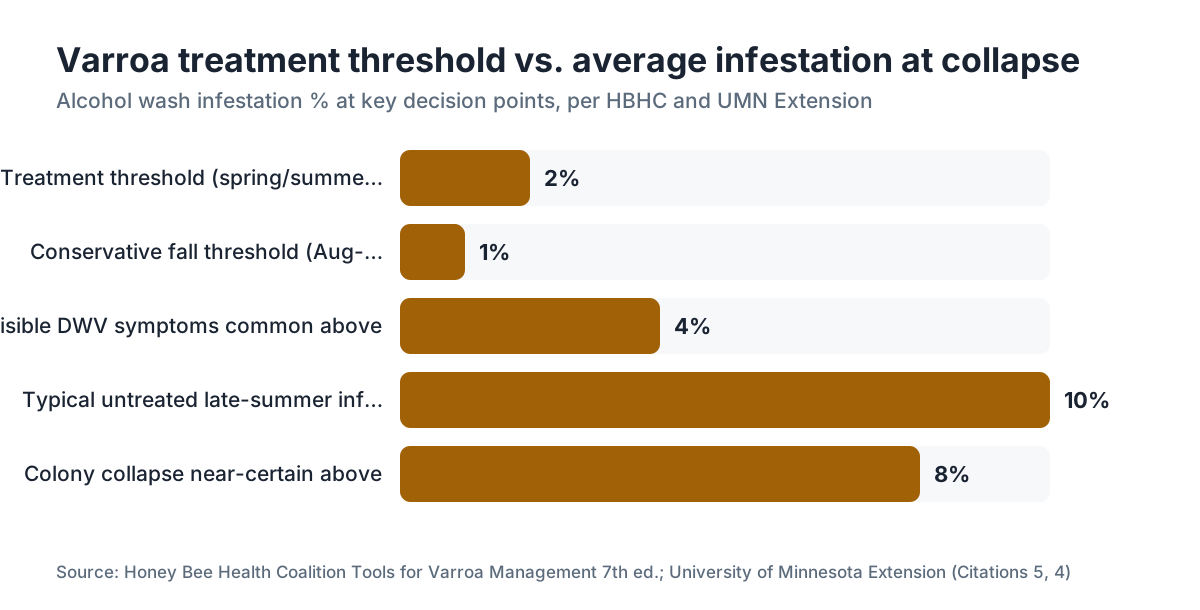
The math compounds fast. A single mite reproducing across a season, assuming one daughter per cycle and brood always available, can throw off dozens of mites by late summer. Untreated colonies in the mid-Atlantic United States routinely pass 10 percent infestation by August or September, a level that almost always kills the colony before the next spring [4].
The life cycle explains why drone brood removal works as a soft management tool. You pull the most productive nursery cells out of the hive before the mites emerge. It won't wipe out an infestation. Done consistently, it can slow the population curve enough to matter.
Which viruses does varroa spread and why do they matter?
Varroa carries at least 18 honey bee viruses, and deformed wing virus (DWV) is the one that ends colonies [5]. Without varroa, DWV sits at low levels in most colonies and rarely causes visible disease. Varroa flips that. By feeding inside sealed cells and wounding adult bees, the mite pushes DWV titers up by several orders of magnitude and injects the virus straight into bee tissue, skipping the gut defenses that normally hold it back.
Bees that emerge from infested cells with high DWV loads often have crumpled or vestigial wings. They can't fly, forage, or do their hive jobs. They die within days. Once you spot a lot of crawling, wingless bees on the landing board, DWV is already deep in the colony and your mite load has been dangerously high for weeks [2].
Sacbrood virus, acute bee paralysis virus (ABPV), and chronic bee paralysis virus (CBPV) also spread or amplify through varroa. The Honey Bee Health Coalition, in its varroa management guide, states that 'viruses vectored by Varroa are considered the primary driver of colony losses attributed to the mite' [5]. Sit with that for a second. The mite's feeding damage is real, but the virus load it generates is what collapses colonies at scale.
For a wider look at honey bee biology and which bee species catch which pathogens, see our overview of beekeeping species.
What are the visible signs that a hive has been infected with varroa mites?
Early infestation shows nothing you'll catch without actively looking. That's the trap. By the time damage is obvious to the naked eye during an inspection, you've usually blown past the window for an easy fix.
Here's what to watch for as infestation climbs:
Crawling bees with deformed wings are the most recognizable sign, caused by DWV. You'll see them on the landing board or on the ground out front, unable to fly.
A patchy, spotty brood pattern can point to varroa plus viral disease. Spotty brood has other causes too (chalkbrood, European foulbrood), so treat it as a reason to test, not a diagnosis.
A sudden population crash in late summer or fall, sometimes called fall dwindle, is classic. The hive looked strong in July. You open it in September and the cluster is small and disorganized. Mite numbers peak right as the colony's population falls, so the ratio of mites to bees spikes hard.
Actual mites on bees. Varroa are reddish-brown, about 1.5 mm wide, shaped like a tiny apple seed. You can sometimes see them with the naked eye, especially on newly emerged bees or inside a freshly uncapped drone cell. If you're spotting mites on a real percentage of bees, your infestation is severe [3].
None of these signs replaces a number. The only way to know your mite load is an alcohol wash or sugar roll on a 300-bee sample.
How do you measure mite infestation level in an infected hive?
Three practical methods exist: alcohol wash, sugar roll, and sticky board count. The Honey Bee Health Coalition, university extensions, and the USDA all point to the alcohol wash as the most accurate for hobbyist beekeepers [5].
For an alcohol wash, collect roughly 300 adult bees (about half a cup) from a frame of brood where nurse bees are working, drop them in a jar with isopropyl alcohol, shake for 30 to 60 seconds, and pour the liquid through a mesh screen. Count the mites in the liquid. Divide by 300 and multiply by 100 for your infestation percentage. Nine mites in 300 bees is a 3 percent infestation rate.
The sugar roll uses powdered sugar instead of alcohol, so most bees survive (some die from the stress), but it consistently undercounts mites by roughly 25 to 40 percent compared to an alcohol wash [6]. If you want live bees back, it's fine. Treat the number as a floor, not a ceiling.
Sticky boards measure mite fall over 24 to 72 hours. They're good for trending (is your load rising or falling?) but weak for precise rates, because natural mite drop shifts with colony size, bee behavior, and temperature.
Action thresholds by season (from Honey Bee Health Coalition guidelines):
| Season | Threshold | Action |
|---|---|---|
| Spring buildup (March-May) | 2% | Treat |
| Summer active season (June-Aug) | 2% | Treat |
| Pre-winter buildup (Aug-Sept) | 2% | Treat immediately |
| Winter cluster (no brood) | Not reliably measurable by wash | Monitor via sticky board |
The 2 percent threshold is widely cited. Some researchers and experienced beekeepers push for treating at 1 percent going into fall, because the winter bees raised in August and September need to be healthy to survive the cold [5]. I'd take the conservative number for any colony you plan to overwinter.
How quickly can a varroa-infected colony collapse?
Without treatment, a colony in most of North America collapses within one to three years of the first infestation [4]. The exact timeline depends on local mite pressure (how much robbing from infested colonies, how much drift), colony genetics, and whether the bees carry any hygienic behavior traits.
The collapse follows a predictable arc. Mite numbers grow slowly in spring while brood is limited. They speed up through summer as brood rearing peaks. By late summer, when the colony starts raising winter bees and brood rearing slows, the mite-to-bee ratio explodes. Those winter bees, raised in heavily parasitized cells, come out compromised and short-lived. The colony can't hold its winter cluster size. Cold and starvation finish it.
The University of Minnesota Extension calls this the mite bomb scenario, where a collapsing infested colony gets robbed out by its neighbors, spreading mites across an apiary in days [7]. This is why letting a varroa-infected hive 'die naturally' is not a neutral act. It hits every other colony in foraging range, including feral ones.
For newer beekeepers who want a handle on the full range of threats a colony faces, beekeeping supplies that support regular monitoring (like a dedicated mite-wash kit) are a smart early buy.
Do bumble bees and other bee species get varroa mites?
No. Varroa destructor is specific to honey bees in the genus Apis. It can't complete its reproductive cycle on bumble bees (Bombus spp.), mason bees, leafcutter bees, or any other native bee. 'Bumble bee varroa mite' is a common search, but there's no established varroa problem in bumble bees [8].
The mite co-evolved with the Asian honey bee, Apis cerana, which built behavioral defenses against it over thousands of years. When varroa jumped to Apis mellifera (the European honey bee most beekeepers keep) in the 20th century, it landed on a host with no evolutionary history of fighting it. That's why A. mellifera colonies collapse under mite loads that A. cerana shrug off.
Bumble bees carry their own parasites, including the gut pathogen Nosema bombi and certain phorid flies, but varroa isn't one of them. Worried about your garden bumble bees? Varroa from your honey bee hives is not the threat.
What treatments are approved for a varroa-infected hive?
The EPA registers every varroa treatment used in managed honey bee colonies. As of 2025, the main options split into two groups: organic acids and synthetic miticides [9].
Organic acids:
- Oxalic acid (vapor, dribble, or extended-release) works on phoretic mites and shines during broodless periods. The dribble method at 3.5 g per bee seam is the USDA-recommended rate. Extended-release products like glycerin strips hold efficacy across brood cycles [9].
- Formic acid (Formic Pro, MAQS) penetrates capped brood and kills mites in cells, which makes it one of the only organic treatments that works during heavy brood production. Temperature limits apply (above 50 degrees F, below about 85 degrees F) [10].
- Thymol (Apiguard, Api Life Var) works through vapor and needs temperatures above 60 degrees F. Effective, but it can interrupt queen laying in hot weather.
Synthetic miticides:
- Amitraz (Apivar strips) is highly effective and easy to use. Leave strips in 6 to 8 weeks. Resistance is a growing worry in regions where amitraz gets used over and over without rotation [11].
- Tau-fluvalinate (Apistan) and coumaphos (CheckMite+) have serious resistance problems in many North American mite populations and no longer work as sole treatments in most areas.
Rotating between chemical classes is the standard resistance management advice from university extensions and the Honey Bee Health Coalition alike [5]. No single product used forever stays effective.
For planning purchases, beekeeping supply companies that stock EPA-registered products from multiple classes give you room to rotate the way you should.
What is the right treatment protocol for a heavily infected hive?
A hive at or above 3 percent infestation needs treatment now, not at the next convenient inspection. Here's how I'd handle it.
First, decide whether the colony is still worth saving. If more than 20 to 30 percent of emerging bees show deformed wing virus and the cluster is already small for the season, treatment may not save it. Combining it with a stronger colony (after treating both) is often the better call.
If the colony is still viable, pick your treatment by season and by whether brood is present. Summer with lots of brood: formic acid or amitraz, because both reach mites inside cells. Late fall or winter with little or no brood: oxalic acid dribble or vapor, highly effective and gentle on bees.
After any treatment, retest in 3 to 4 weeks. A follow-up alcohol wash tells you whether the treatment worked or whether resistance or an application error left you short [5]. Skipping the recheck is one of the most common mistakes hobbyist beekeepers make.
VarroaVault's free protocol tools help you map treatment timing against your local brood cycle and seasonal conditions, which matters more than most beekeepers realize when they're choosing between products.
One thing worth knowing: africanized honey bees tend to score higher on hygienic behavior than European lines, which gives them some natural mite resistance. They are not immune, and they still need management.
Can a varroa-infected hive recover on its own?
Almost never in the United States, not without human help. Documented feral populations have persisted without treatment, most famously the Gotland study in Sweden and the Arnot Forest feral colonies in New York studied by Thomas Seeley [12]. These bees show more grooming, more hygienic behavior, and in some cases mite-resistant brood traits. But they're survivorship-selected populations that emerged after years of colony deaths, not typical managed or feral stock.
For a managed colony on average commercial European genetics, the answer is no. It won't develop resistance in one or two seasons. It won't 'learn' to handle varroa. The mites reproduce, DWV escalates, the colony collapses.
The Arnot Forest research is genuinely interesting and worth reading if the biology grabs you. Applying it to your 18-month-old nuc in a suburban backyard is not a reasonable inference. Seeley himself backs small cell sizes and survivor stock in managed settings, not leaving colonies untreated and hoping [12].
Breeding for resistance traits is a legitimate long game. It takes years of selection, a decent number of colonies, and a clear plan. It is not a substitute for treating the infected hive you have right now.
How do you prevent re-infestation after treating a varroa-infected hive?
Treatment clears mites from your colony. It does nothing to stop reinfestation from robbing or drift out of neighboring infested colonies. In high-density beekeeping areas or near feral colony habitat, reinfestation can push your mite load back over threshold within 4 to 8 weeks of a successful treatment [7].
The practical moves: test on a schedule (every 4 to 6 weeks in summer), more than when you're worried. Cut drift by marking hives clearly and skipping uniform rows of identical boxes. Cut robbing pressure by reducing entrances during nectar dearths. And if you keep bees near others, push for shared mite monitoring norms in your local club. One apiary running 15 percent infestation is a constant reinfestation source for everyone in range.
Re-queening with a more hygienic or VSH (Varroa Sensitive Hygiene) queen adds another layer. VSH colonies detect and pull varroa-infested pupae at higher rates, which mechanically suppresses mite reproduction. The USDA Baton Rouge lab has bred VSH lines for years, and queens from certified VSH producers are commercially available [13].
To track your supplies and monitoring schedule in one place, resources from beekeeping supply companies and pollen-flow tracking like beehive pollen monitoring fit into a broader hive health picture.
What do researchers and regulators say about managing varroa long-term?
The scientific consensus, stated consistently by the USDA ARS, the EPA, and university apiculture programs, is that integrated pest management (IPM) is the only sustainable approach to varroa [9]. IPM for varroa means regular monitoring on a set schedule, treatment decisions driven by thresholds instead of the calendar, rotation of chemical classes for resistance, and selection for resistant genetics as a long-term overlay.
The EPA's registration process requires applicants to demonstrate efficacy and residue safety, especially in honey and wax. The label is a legal document. Using a registered product off-label (wrong dose, wrong timing, wrong method) is illegal and often counterproductive [9].
Penn State Extension puts the research position plainly: 'No single management tool will provide long-term control of Varroa. Beekeepers must integrate multiple strategies' [14]. That's not hedging. It reflects 30 years of field data showing that any single-method approach to varroa eventually fails through resistance, reinfestation, or both.
The Honey Bee Health Coalition's Tools for Varroa Management guide, now in its seventh edition, is the most practical synthesis of current research for working beekeepers. It's free to download and covers every registered treatment, application method, and resistance management framework in detail [5].
Frequently asked questions
What does a hive that has been infected with varroa mites look like?
Early infestation looks completely normal, which is why monitoring is essential. As mite load climbs above 3 to 4 percent, you'll see bees with crumpled wings on the landing board (deformed wing virus), a declining and spotty brood pattern, and a colony that seems to collapse suddenly in late summer or fall despite looking strong earlier. By the time symptoms show, the infestation is usually severe.
How long does it take for varroa to kill a colony?
Most untreated colonies in North America collapse within one to three years of infestation. The timeline shortens when local mite pressure is high (many infested colonies nearby) or when the colony has no hygienic behavior traits. The death spiral speeds up in late summer, when the ratio of mites to bees spikes as brood rearing slows and winter bees develop in heavily parasitized cells.
Can bees recover from varroa without treatment?
Rarely. Documented survivor populations exist (like Seeley's Arnot Forest feral bees) but they represent years of selection after mass die-offs, not typical managed colony genetics. For most hobbyist beekeepers with European stock, an untreated colony above the 2 percent threshold will not naturally recover. The viruses varroa spreads, especially deformed wing virus, compound faster than the colony can compensate.
Do bumble bees get varroa mites?
No. Varroa destructor is specific to Apis honey bees and cannot complete its reproductive cycle on bumble bees or other bee species. Bumble bees face different parasites (including Nosema bombi and certain phorid flies), but varroa from your honey bee hive poses no direct risk to wild bumble bees. The 'bumble bee varroa mite' concern is common but not supported by evidence.
What is the 2% mite threshold and where does it come from?
The 2 percent threshold means treating when your alcohol wash shows 2 or more mites per 100 bees. It comes from field research linking mite loads to colony winter survival and was formalized in the Honey Bee Health Coalition's management guide. Some researchers recommend treating at 1 percent in August and September, because the winter bees raised then need to be healthy to survive until spring.
What is the best treatment for a heavily infected hive in summer?
In summer with active brood, formic acid (Formic Pro or MAQS) or amitraz (Apivar) are the strongest options because both penetrate capped cells where most mites reproduce. Oxalic acid alone is much weaker when brood is present because it only kills phoretic mites on adult bees. Apply per label instructions and retest with an alcohol wash 3 to 4 weeks after treatment.
How do varroa mites spread from hive to hive?
Mainly through robbing and bee drift. When a collapsing varroa-infested colony gets robbed out by healthy colonies, those robber bees carry mites home. Foragers also drift between hives, carrying mites with them. In high-density apiaries or areas with many feral colonies, a successfully treated hive can climb back to dangerous mite levels within 4 to 8 weeks with no change in your own management.
Can I see varroa mites on bees with the naked eye?
Yes, with effort. Varroa females are about 1.5 mm wide, reddish-brown, and look like a tiny flat tick clinging to the bee's body, usually between the thorax and abdomen. They're easier to spot on pale newly emerged bees or inside uncapped drone cells. Don't rely on visual inspection for counts. An alcohol wash is far more accurate. Seeing mites on multiple bees means infestation is already severe.
Is an alcohol wash harmful to the colony?
You lose the 300 bees in the sample, a small fraction of a normal colony. For a strong colony of 40,000-plus bees, that's under 1 percent of the population. You typically sample nurse bees around the brood, bees that would have stayed in the hive anyway. The population cost of accurate mite monitoring is trivial next to the cost of missing a dangerous mite level.
What viruses do varroa mites spread to bees?
Varroa carries at least 18 honey bee viruses. The most damaging is deformed wing virus (DWV), which varroa amplifies from background levels to epidemic loads. DWV causes bees to emerge with vestigial wings and shortened abdomens. Acute bee paralysis virus (ABPV), sacbrood virus, and chronic bee paralysis virus (CBPV) also spread or worsen through varroa feeding wounds.
How often should I test for varroa in an infected hive?
During the active season (April through October in most of North America), test every 4 to 6 weeks. After a treatment, retest at 3 to 4 weeks to confirm it worked. Going into winter, test in late August or early September before you lose the ability to treat effectively. Many losses beekeepers blame on winter starvation are actually varroa crashes that started in September.
Can varroa-resistant queen genetics actually help?
Yes, meaningfully. VSH (Varroa Sensitive Hygiene) queens from certified producers suppress mite reproduction by raising the rate at which workers detect and remove infested pupae. USDA research shows pure VSH colonies can hold low mite loads with less chemical treatment. In practice, most commercial VSH queens are hybrids and still need integration with other IPM methods, but they are a real and proven tool.
Does drone brood removal actually reduce varroa?
It slows mite population growth but doesn't control it alone. Varroa prefer drone brood at roughly 8 to 10 times the rate of worker brood. Removing and destroying capped drone brood every 3 weeks pulls a disproportionate share of reproducing mites out of the colony. Extension services describe it as a useful supplemental tool that works best alongside chemical treatment, not as a standalone solution.
Sources
- PNAS, Ramsey et al. 2019 - 'Varroa destructor feeds primarily on honey bee fat body tissue': Varroa destructor primarily feeds on fat body tissue, not hemolymph, as confirmed by fluorescence microscopy and isotopic labeling in the 2019 study.
- USDA ARS Bee Research Laboratory - Honey Bee Health and Varroa: Bees emerging from varroa-parasitized cells show reduced body weight, shortened abdomen, impaired learning, and compromised immune function.
- Penn State Extension - Varroa Mite Management: Drone brood capping period of 14-15 days vs. 12 days for worker brood allows more varroa offspring to mature per reproductive cycle; mites are visible as reddish-brown 1.5mm flat ovals.
- University of Minnesota Extension - Varroa Mite: Untreated colonies in North America typically collapse within one to three years; late summer mite loads in untreated colonies routinely exceed 10% infestation.
- Honey Bee Health Coalition - Tools for Varroa Management (7th ed.): HBHC states 'viruses vectored by Varroa are considered the primary driver of colony losses attributed to the mite'; treatment threshold is 2% in all active seasons; oxalic acid, formic acid, and amitraz are all recommended with rotation.
- Journal of Apicultural Research - Comparison of varroa monitoring methods: Sugar roll consistently undercounts mite infestation by roughly 25-40% compared to alcohol wash in side-by-side comparisons.
- University of Minnesota Extension - Varroa Mite and Colony Collapse: Robbing from collapsing varroa-infested colonies can spread mites across an apiary in days; re-infestation can return mite loads to threshold within 4-8 weeks post-treatment in high-density areas.
- USDA ARS - Bee Pests and Diseases Overview: Varroa destructor is specific to Apis honey bees and cannot complete its reproductive cycle on bumble bees or other bee species.
- EPA - Varroa Mite Pesticide Registrations: EPA registers all varroa treatments and requires efficacy and residue safety data; the product label is a legal document and off-label use is prohibited.
- National Pesticide Information Center - Formic Acid (MAQS/Formic Pro) Label Summary: Formic acid products require application temperatures above 50°F and below approximately 85°F and penetrate capped brood cells to kill mites.
- USDA ARS - Amitraz Resistance in Varroa destructor: Amitraz (Apivar) resistance is documented in varroa populations in regions with prolonged exclusive use; resistance management through chemical class rotation is recommended.
- Seeley et al. - 'A survivor population of wild colonies of European honeybees in the northeastern United States' PLOS ONE 2015: Feral Arnot Forest colonies show elevated grooming and hygienic behaviors and have persisted without treatment, representing survivorship-selected populations after decades of selection pressure.
- USDA ARS Honey Bee Breeding Genetics and Physiology Lab - VSH Bees: USDA Baton Rouge lab developed VSH (Varroa Sensitive Hygiene) lines; VSH colonies detect and remove varroa-infested pupae at significantly higher rates than standard stock.
- Penn State Extension - Integrated Varroa Management: Penn State Extension states: 'No single management tool will provide long-term control of Varroa. Beekeepers must integrate multiple strategies.'
Last updated 2026-07-09