The complete beekeeping schedule: what to do every month of the year
TL;DR
- A beekeeping schedule runs all twelve months, not spring to fall.
- Monitor varroa monthly and treat when mites pass 2 per 100 bees.
- Inspect brood every 7-10 days in spring.
- Feed in dearth and again in fall.
- Get colonies ready for winter by early September in most climates.
- Timing shifts 4-6 weeks by USDA hardiness zone.
Why does a beekeeping schedule matter so much?
Most new beekeepers treat this like a warm-weather hobby. They open hives in May, close them in October, and then wonder why 40% of their colonies die over winter. The bees never clock out. You shouldn't either.
The colony is always doing something that either sets it up for spring or quietly kills it. A queen failing in August is a winter deadout you just can't see yet. A varroa load that crosses 3% in September is a virus bomb, and it will collapse the cluster before February. The schedule exists to catch those things while you can still fix them.
The Honey Bee Health Coalition's Varroa Management Guide states directly: "Timing treatments to the colony's brood cycle is as important as selecting the correct treatment" [1]. Read that twice. Doing the right thing at the wrong time is nearly as useless as doing nothing. A well-timed oxalic acid treatment in December can cut mite loads by more than 90%. The same treatment in May, when brood is capped everywhere and the mites are hiding, might knock them down 30%. Same product. Wildly different result.
This schedule assumes a temperate Northern Hemisphere climate, roughly USDA zones 5-7, which covers most of the continental United States. In zone 8 or 9 (the Gulf Coast, California, the Pacific Northwest), shift everything 4-6 weeks earlier. In zone 4 and colder, push spring tasks later and start winter prep in July. The tasks stay the same. Only the calendar moves.
What does a beekeeper actually do in winter (December through February)?
Winter is not down time. It's your best mite-treatment window and your highest-stakes stretch for survival. Get this wrong and you find out in March.
In December and January, the queen has stopped or nearly stopped laying across most zone 5-7 apiaries. That broodless gap is when oxalic acid vaporization does its best work. With no capped brood, every mite is riding an adult bee, fully exposed. The EPA-registered label for Api-Bioxal notes that broodless-period applications are the most effective [2]. One vaporization session (or a three-dose dribble over 10 days) here can reset your mite load to near zero before spring buildup starts. Don't skip it.
Other December and January tasks:
- Check heft: lift the back of each hive. If it barely moves, they have food. If it tips easily, they're starving. Fondant or winter patties go straight on the top bars, no full inspection needed.
- Mouse guards: if they aren't on yet, do it now. A mouse that overwinters inside a hive shreds comb and kills bees.
- Entrance reducers: smallest setting in hard cold, back to medium during mild spells so bees can take cleansing flights.
- Ventilation: a screened bottom board or a top vent keeps moisture from building up over the cluster. Condensation dripping on bees kills them faster than cold does.
February is the colony's most dangerous month. Stores hit their low point, the queen has started laying again, and there's still nothing to forage. Check weight again. Find a light hive and you feed it that day. A winter cluster can starve in a matter of days once it breaks to reach stores that turn out not to be there.
Not sure which varroa treatments are legal in your state or how to apply them? The varroa mite guide on this site walks through treatments, resistance management, and application protocols.
What should you do in early spring (March and April)?
Spring buildup is the fun part and the risky part. The colony expands fast, mite numbers climb right alongside the brood, and the beekeeper is often so happy to see bees flying that they forget to count mites. That's how a strong spring turns into a dead fall.
March tasks:
- First full inspection of the year. Confirm a laying queen, scan for disease (sunken or perforated cappings can mean American foulbrood), and assess food stores.
- Treat with oxalic acid or another approved product if you skipped the winter treatment, or if a mite wash comes back above 1-2 mites per 100 bees. The threshold runs lower in spring because the colony is small and has little margin [1].
- Add a pollen substitute patty if natural pollen is scarce. Early-spring brood rearing is protein-limited, and a protein-starved colony raises weak bees.
- Reverse brood boxes if you run Langstroth hives and the cluster has moved up into the top box. That gives them room to expand downward.
April is your fastest month. In a good nectar flow the colony can add a full box of bees and brood every 10-14 days. Your job is to stay one step ahead of them.
- Inspect every 7-10 days during buildup and look for queen cells. A swarm is a colony you no longer manage, which is to say half your bees now live in a neighbor's tree.
- Add supers before they run out of room. Crowded colonies swarm no matter how kind you are to them.
- Run a sugar roll or alcohol wash. Penn State Extension puts the active-season treatment threshold at 2 mites per 100 bees (2%) [3].
- Flag any queen that looks spotty or slow. A queen that looks marginal in April will be a failing queen by August.
What happens in the main honey flow (May through July)?
This is the part the videos love: full supers, busy landing boards, golden frames. It's also when an untreated varroa population quietly doubles about every 4-6 weeks. The prettiest hive in your yard can be the one hiding the biggest mite problem.
May tasks:
- Add honey supers as needed. A 10-frame Langstroth deep full of honey weighs 80-90 pounds, so make sure your hive stand can carry the load.
- Keep checking for swarm cells, especially in the first half of May before the flow suppresses the swarming urge.
- Mite wash every 30 days. At or above 2%, treat with something compatible with supers on. Formic acid (Mite-Away Quick Strips or FORMIC PRO) is approved for use while honey supers are in place [4]. Oxalic acid is not approved over capped brood in a full production colony.
June is often the best honey month in the Midwest and Northeast. Don't over-inspect during a flow. You break comb, kill bees, and stress the colony for no reason. Lift the super, check for capped honey, add another box if it's 80% full. Done.
July is when it tightens up. Across most of the country the main flow is winding down or already over. The colony senses the dearth, and so does every robber bee in the county. Reduce entrances to something the colony can defend. Stop leaving sugar syrup open outdoors. Check mite loads again, because you're heading into the fall brood cycle that produces your overwintering bees.
Worth bookmarking early: the beekeeping supplies guide covers the gear you'll want across every season. The wrong equipment at the wrong time of year costs money and wastes a Saturday.
What is the most important mite treatment window of the year?
August. No contest.
The bees hatching in August, September, and early October are your winter bees. They live 4-6 months instead of the usual 6-week summer lifespan, and they carry the fat body reserves the colony leans on until March. Raise those bees in high-mite brood cells and they emerge damaged, short-lived, and less able to do the cluster work that keeps everybody warm [5].
The Coalition's guide says it plainly: "The single most impactful timing for varroa management is a late-summer treatment that protects the winter bee cohort" [1]. Nearly every strong fall colony I've watched crash over winter had one thing in common. Nobody treated it in August.
What to do:
- Take a mite wash the first week of August. At or above 2 mites per 100 bees, treat that week.
- Oxalic acid vaporization works well here as brood levels drop. Formic acid works too and penetrates capped brood.
- A full Apivar (amitraz strip) cycle takes 6-8 weeks, so start no later than mid-August. Treatment needs to end before you pull supers for extraction [10].
- Pull honey supers before treating unless you're using formic acid, which is labeled for use with supers on.
August is also the right time to requeen any colony whose queen is more than two years old. A vigorous new queen installed now lays hard through September and hands you a bigger, healthier cluster for winter.
VarroaVault's free mite tools (at varroavault.com) include a threshold calculator and a treatment timing calendar that maps your August window to your own colony's brood cycle.
What should you do in fall (September and October)?
Fall is about setting up everything you can't fix in January. The colony is contracting, the queen's laying is slowing, and your job is to get out of the way while making sure they have food, space, and a low mite load. This is the last month your choices still change the winter outcome.
September:
- Pull honey supers once the flow is clearly over and before nighttime temps drop below 50°F for good (cold honey doesn't extract well).
- Take a final mite wash. If you treated in August, confirm it worked. If you didn't, treat now and accept that some winter-bee damage already happened.
- Feed 2:1 sugar syrup (2 parts sugar to 1 part water by weight) so they backfill empty comb with stores. Colonies in most zone 5-6 climates need 60-80 pounds of honey equivalent going into winter [6], roughly 8-10 full deep frames of capped stores.
- Check queen status. A laying queen with a tight pattern is the goal.
October:
- Switch to a top feeder or inner-cover feeder once temps drop below 50°F. Bees can't work a hive-top jar below that, and they'll starve with food sitting right above them.
- Apply grease patties or powdered sugar if small hive beetles are a problem in your area.
- Install mouse guards before the first hard freeze.
- Reduce entrances.
- In zone 4 or colder, wrap hives in tar paper or insulation board. The point isn't warmth. It's wind protection and solar absorption on cold, sunny days.
How often should you inspect your hive throughout the year?
The honest answer: it depends on the season and the reason. There's no fixed number that fits January and May both.
During spring buildup (April through May), inspect every 7-10 days. A colony can go from no queen cells to full swarm prep in under a week. Miss it and you lose bees.
During the main flow (June through early July), every 14-21 days is plenty for most experienced beekeepers. In a strong flow the bees know exactly what they're doing. Add space, then leave them alone.
During late summer and fall (August through October), do a visual check every 2-3 weeks plus a monthly mite wash no matter what. This is when mite monitoring matters most and when most beekeepers do it least.
In winter (November through February), don't open the hive below 50°F without a specific reason. A quick external check (noise, entrance activity on a warm day, a heft test) covers it. Cold air flooding a winter cluster kills brood and burns through the bees' calories.
A workable cadence for a hobbyist with 2-5 hives:
| Season | Inspection Frequency | Mite Wash |
|---|---|---|
| December-February | External only; no opening below 50°F | Once (broodless window) |
| March-April | Every 7-10 days | Monthly |
| May-June | Every 14-21 days | Monthly |
| July-August | Every 14 days | Every 2-4 weeks |
| September-October | Every 2-3 weeks | Once after summer treatment |
| November | External only | Broodless check if temps allow |
Penn State Extension's inspection guidance says every beekeeper should be able to find the queen or confirm her presence by spotting fresh eggs on each active-season visit [3]. Eggs mean a laying queen was there within the last three days. That's the fastest read you get.
How do you set up a beekeeping schedule for your first year?
First-year beekeeping is not the same animal as mature-colony beekeeping. A package or nuc installed in April spends the whole season playing catch-up. It usually won't make surplus honey worth extracting, it's more prone to mite buildup because it starts small, and it needs feeding more often.
Month-by-month for a first-year package installed in April (zone 5-6):
April: Install the package, feed 1:1 sugar syrup nonstop until they quit taking it, and inspect after 7 days to confirm the queen is out and laying. Don't add a second box until the first is 80% drawn.
May: Keep inspecting every 7-10 days. Add the second box when they're ready. Take your first mite wash around day 30 post-install and treat if you're above 2%.
June: A healthy first-year colony might start drawing a super, but don't bank on honey this year. The goal is a big, healthy colony going into fall. Feed if the flow is weak.
July: Mite wash again. First-year colonies are especially exposed here because they're often still small. Treat proactively at 1.5% or above; the Coalition recommends lower thresholds for smaller colonies [1].
August: The month that decides everything. Treat for mites. Period. A first-year colony that enters fall with a high mite load almost never sees spring. Requeen if the queen looks poor.
September-October: Feed heavily to build stores. A first-year zone 5-6 colony that doesn't have 60 pounds of stores by November 1 starves before March.
November-December: Wrap if needed. Oxalic acid treatment during the broodless window. Heft check monthly. Then leave them be.
What equipment do you need before each season starts?
Getting gear ready late is one of those small failures that snowballs. A hive body you forgot to paint sits wet through spring. A super you meant to clean has wax moth damage by May. The rule is simple: everything ready one month before you need it.
Before spring (by March 1):
- Clean and inspect all boxes; scrape propolis, swap out frames with badly damaged comb
- Check the smoker, hive tool, and veil for wear
- Order pollen substitute if you plan to use it
- Have your spring varroa treatment on hand (oxalic acid or a formic acid product)
- Confirm a mite-monitoring kit: alcohol or powdered sugar, a jar with a mesh lid, a measuring cup
Before the flow (by late April):
- Honey supers assembled and ready
- A reliable extractor lined up; many local clubs rent extractors to members if you don't own one
- Jars, lids, and labels if you plan to sell or give away honey
Before fall (by mid-August):
- Your late-summer treatment on hand (Apivar strips for a 6-8 week amitraz treatment, or oxalic acid)
- Mouse guards ready
- Entrance reducers
- Winter patties or fondant for emergency feeding
- A feeder system you've confirmed still works
For a closer look at equipment options and where to source them, the beekeeping supply companies guide covers the major suppliers, what they stock, and how pricing compares.
How do varroa mite levels change through the season and what does that mean for your schedule?
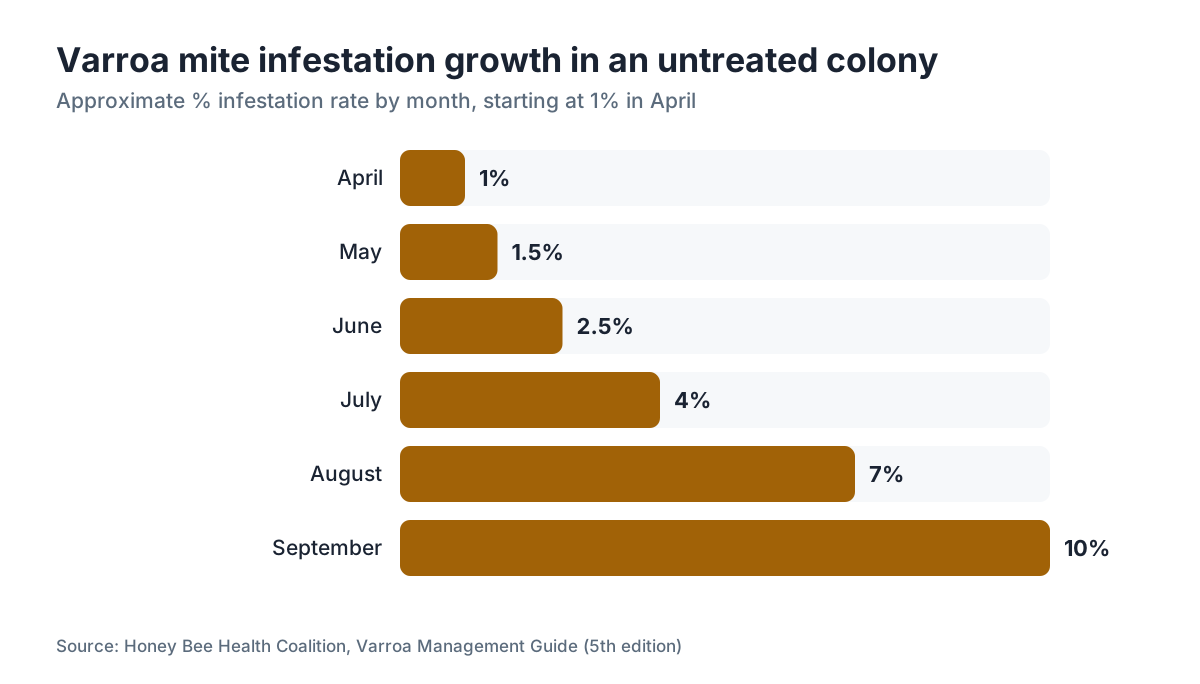
Varroa populations track the brood cycle. When brood expands, mites reproduce inside capped cells and the infestation climbs. When brood contracts in late summer and fall, mites shift onto adult bees, and that's exactly when treatments hit hardest.
A rough growth model from the Honey Bee Health Coalition shows an untreated colony starting at 1% infestation in April reaching 5-10% by August [1]. Around 5%, colonies start showing virus symptoms. Above 5%, winter survival drops off a cliff. University of Minnesota Extension reports that colonies entering winter above 2% infestation die at much higher rates than those brought below that line [7].
That's why the schedule has hard monitoring checkpoints instead of vague intentions:
| Month | What mites are doing | Your action threshold |
|---|---|---|
| February-March | Low; mostly on adults (limited brood) | Treat if above 1-2% |
| April-June | Reproducing in capped brood; rising | Treat if above 2% |
| July | Peak reproduction if untreated | Treat if above 2% |
| August | Critical: winter bees being raised | Treat if above 1-2% (lower threshold) |
| September-October | Concentrated on adults as brood drops | Monitor; treat if above 2% |
| November-December | Broodless or near-broodless | OAV treatment in broodless window |
Don't monitor when the mood strikes. Put mite washes on specific dates in your calendar. The bees won't remind you.
The EPA registration documents for oxalic acid products (Api-Bioxal) spell out the approved methods (vaporization, dribble, extended-release) and the seasonal restrictions on each [2]. Read the label. The label is a legal document, and following it is the difference between legal treatment and a fine.
Does the beekeeping schedule change if you're in a warmer or colder climate?
Yes, a lot. The task list holds. The calendar bends.
In USDA zones 8-9 (Gulf Coast, Southern California, inland Pacific Northwest valleys), winter might mean a broodless gap of only 2-4 weeks instead of 2-3 months. Some colonies in South Florida or the Rio Grande Valley never go fully broodless at all. That compresses the oxalic acid window and leaves you with year-round mite pressure. Beekeepers in these zones often run two or three treatment cycles a year and never get the free mite reset a hard northern winter hands out.
In zones 4 and colder (northern Minnesota, Wisconsin, upstate New York), the broodless window is long and dependable, which helps oxalic acid treatments, but you need 80-100 pounds of stores rather than 60-70 to carry a colony through a 5-6 month winter. Splits and queens have to be timed tight, because the window to raise and mate a new queen is short.
A reliable move: find your local agricultural extension service and pull their beekeeping calendar. University of Minnesota Extension [7], Penn State Extension [3], and NC State Extension [6] each publish region-specific timelines more precise than any national guide can be.
If you're in africanized honey bee country, seasonal management gets an extra layer of caution. Africanized colonies abscond or requeen themselves unexpectedly, so swarm prevention and requeening call for tighter oversight.
Curious about non-Apis species? The management schedule is a different thing entirely. The beekeeping species overview covers solitary and stingless bees that run on their own rhythms.
How do you track your beekeeping schedule and keep useful records?
Records are where most hobbyists quietly fail. You open a hive, see a lot happening, make a mental note, and by the next visit all you remember is that it looked "pretty good." That won't carry you through a season.
A minimum useful inspection record: date, colony ID, queen status (seen / not seen / eggs present), brood pattern (solid or spotty), estimated population (frames of bees), mite count if taken, stores assessment, and any action taken. Three minutes of writing.
The Honey Bee Health Coalition offers free inspection record templates on its website [1]. Oregon State University Extension publishes similar forms for Pacific Northwest beekeepers [9].
For varroa, write down the exact count and sample size every single time, never "high" or "low." A note that reads "mite wash 8/3: 3 mites in 100 bees" is something you can act on. "Looked bad" is not.
Some beekeepers keep a physical notebook in a weatherproof bag out in the yard. Others use spreadsheets or apps like Hive Tracks or BeeKeepR. The tool doesn't matter. The habit does.
VarroaVault's free protocol tools include a seasonal checklist and a mite monitoring log you can print and laminate. It won't manage your bees for you, but it takes the guesswork out of what to check on each visit.
One thing worth tracking that most people ignore: the date of your last requeen and the rough age of each queen. Peak laying usually lands in year one and year two. By year three, laying quality is often sliding. Mark your queens when you can (numbered discs, paint pens, or a dab of white-out) and record the hatch year. It'll save you from a pile of mysterious fall collapses.
Frequently asked questions
What month should you start beekeeping as a beginner?
Most beginners start in April, installing a package or nuc when daytime temperatures stay reliably above 55°F and fruit trees are blooming. That gives the colony a full spring buildup to establish. Ordering bees in January or February for April delivery is standard, and suppliers in most regions sell out by March. Some areas allow fall nuc installation, but that's a harder start for a new beekeeper.
How many times a year should you treat for varroa mites?
Most beekeepers in temperate zones treat twice: once in late summer (August) to protect winter bees, and once during the broodless window in December or January with oxalic acid. Some years call for a third treatment in spring if the mite load climbs above 2% before the summer treatment. The Honey Bee Health Coalition recommends basing treatment decisions on actual mite washes, not a fixed calendar.
When is the best time to split a beehive?
Early spring, usually April or early May, once the colony has grown to at least 8-10 frames of bees and brood. Split too early and both halves are too small to survive a cold snap. The goal is to split before the swarming urge peaks, which in most zone 5-7 areas runs late April through May. A split needs at least 4-5 frames of bees, 2-3 frames of brood, and a viable queen or queen cell.
When should you add honey supers?
Add a super once the colony has filled roughly 7 of 10 frames in the top brood box with bees and comb. In most zone 5-6 climates that happens in late April or May. Too early and you slow the colony by giving them more space to heat. Too late and you trigger swarming. Check every 14-21 days during the flow and add a box when the current super is 70-80% full.
What should you feed bees in fall?
Feed 2:1 sugar syrup (2 parts white cane sugar, 1 part water by weight) in September so the colony can backfill empty comb before winter. It's heavier than spring syrup and closer to honey's sugar content, which encourages capping and storage instead of brood rearing. Switch to fondant or winter patties once temperatures drop below 50°F, because bees can't evaporate water from thin syrup in the cold.
What is the broodless period and why does it matter for mite treatment?
The broodless period is the 4-8 week winter window when the queen stops or sharply reduces laying, leaving no capped brood in the hive. It matters because varroa reproduce inside capped brood cells. With no brood, every mite is on an adult bee and fully exposed to oxalic acid. A single vaporization session during a confirmed broodless period can cut mite loads by more than 90%, per EPA-registered label data for Api-Bioxal.
How do you know if your bees have enough food going into winter?
The heft test is the fastest check: stand behind the hive and lift the back edge. A well-stocked hive in a single deep should feel very heavy, roughly 80-100 pounds total in cold climates. Two-deep Langstroth colonies need 60-80 pounds of honey equivalent, about 8-10 full deep frames of capped stores. If the hive tips easily or you can see empty frames, feed immediately.
Can you do a hive inspection in winter?
You can open the hive briefly if temperatures are above 50°F with no wind. Below that, cold air flooding the cluster kills brood and forces bees to burn calories rewarming the space. Most winter checks should stay external: rap the side and listen for a healthy hum, look at the entrance for dead bees (some is normal; a large pile with no activity is a red flag), and run a heft test for stores.
When should you requeen a hive?
Late July through August is the ideal window in most climates. A queen installed in August has time to settle her laying pattern and produce a full cohort of healthy winter bees before brood rearing winds down. Fall requeening (September-October) is possible but risky, since the new queen has less time to prove herself. Requeen right away if the colony lays poorly, turns excessively aggressive, or the queen is more than 2 years old.
What is the varroa mite treatment threshold for beekeepers?
The widely used threshold is 2 mites per 100 bees (2% infestation) during the active brood season, based on Penn State Extension and Honey Bee Health Coalition guidance. In August and early September some researchers recommend a lower 1-1.5% threshold, because the bees raised then will overwinter and are especially worth protecting. Always use an alcohol wash or sugar roll with a precise count, never a visual guess.
How long does a beekeeping inspection take?
A thorough inspection of one Langstroth hive takes an experienced beekeeper 15-30 minutes. A beginner may need 45-60 minutes on the same hive. Inspecting 5 hives runs most hobbyists 2-3 hours including travel between hives, lighting the smoker, and taking notes. Schedule inspections on calm, warm, sunny days between 10 a.m. and 4 p.m., when foragers are out and the in-hive population is lower.
What is the beekeeping schedule difference between Langstroth and top bar hives?
The seasonal tasks are identical: mite monitoring, feeding, swarm prevention, winter prep. The execution differs. Top bar hives don't use removable supers, so honey harvesting is less systematic. Splitting a top bar colony means cutting comb instead of moving frames. Winter insulation can be trickier in a top bar design. Mite monitoring is the same: an alcohol wash with a measured bee sample from the brood nest area.
Do bees need water year-round, and is it part of the schedule?
Yes. Bees need water to dilute thick honey in winter and to cool the hive by evaporative fanning in summer. A reliable source within 500 feet of the apiary eases the load on foragers and keeps bees out of neighbors' pools. Set up water before you install bees in spring and keep it filled. A bird bath with corks floating on the surface works fine and costs almost nothing.
Sources
- Honey Bee Health Coalition, Varroa Management Guide (5th edition): Timing treatments to the colony's brood cycle is as important as selecting the correct treatment; late-summer treatment is the single most impactful timing for varroa management; lower thresholds recommended for smaller colonies.
- EPA, Api-Bioxal (oxalic acid) pesticide registration and label: EPA-registered label for Api-Bioxal specifies approved application methods (vaporization, dribble, extended-release) and that broodless-period applications are most effective; seasonal restrictions apply to each method.
- Penn State Extension, Varroa Mite Management: Penn State Extension recommends a threshold of 2 mites per 100 bees as the treatment trigger during the active brood season; also recommends confirming queen presence via fresh eggs on every active-season inspection.
- EPA, FORMIC PRO (formic acid) pesticide label: Formic acid (FORMIC PRO and Mite-Away Quick Strips) is approved for use while honey supers intended for human consumption are in place.
- Journal of Apicultural Research, Dainat et al., Predictors of Winter Mortality in Honey Bees (2012): Winter bees raised in high-mite brood cells emerge with shorter lifespans and reduced fat body reserves, directly linking August mite loads to winter colony mortality.
- NC State Extension, Apiculture Program, Seasonal Beekeeping Calendar: NC State Extension recommends zone 5-6 colonies have 60-80 pounds of honey equivalent going into winter, roughly 8-10 full deep frames of capped stores; 2:1 syrup feeding recommended in September.
- University of Minnesota Extension, Bee Lab, Varroa Mite Management: Colonies entering winter above 2% mite infestation have significantly higher winter mortality than those treated below that threshold; region-specific beekeeping timelines published for northern climates.
- USDA Agricultural Research Service, Honey Bee Research: National bee loss surveys and research supporting mite management protocols and colony health monitoring recommendations for U.S. beekeepers.
- Oregon State University Extension, Pollinator Health: OSU Extension publishes inspection record templates and region-specific management calendars for Pacific Northwest beekeepers.
- EPA, Apivar (amitraz) pesticide label: Apivar (amitraz) strips require 6-8 weeks of exposure in the hive for full efficacy; label specifies removal before placing honey supers for human consumption.
Last updated 2026-07-09