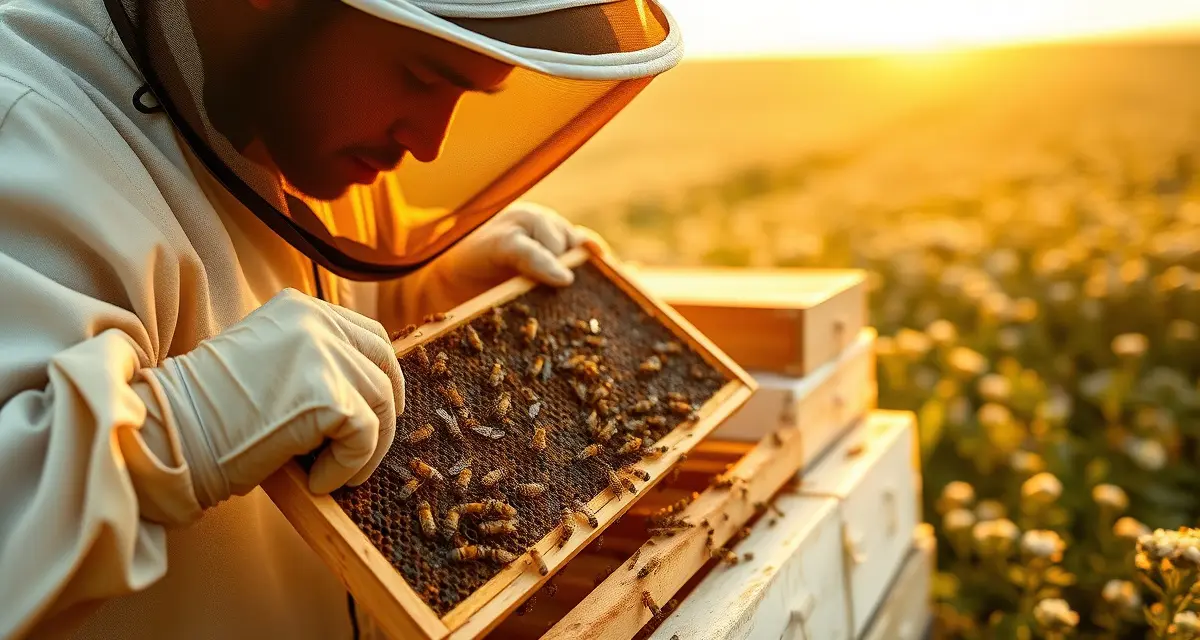
Beekeeping Software for North Dakota Beekeepers: Clover Country Varroa Management
North Dakota produces over 30 million pounds of honey annually, representing roughly 30% of total US production. That's not a footnote, it's what defines beekeeping here. When you're a commercial or semi-commercial operation moving colonies into the clover belt, every treatment decision has a direct dollar figure attached to it.
The problem most beekeeping software North Dakota operations run into is that generic apps weren't built for commercial-scale production beekeeping. They don't understand the clover flow PHI math. They don't flag when a planned treatment will conflict with your primary production window. VarroaVault does.
TL;DR
- North Dakota's climate means harsh winters provide reliable 12+ week broodless periods and the state is a major honey-producing region
- Commercial pollination operations require precise phi documentation
- All EPA-registered varroa treatments are available in North Dakota; check with your state apiarist for local restrictions
- Monthly mite monitoring (every 30 days) is recommended year-round to catch pressure spikes early
- PHI management is important around North Dakota's nectar flows to avoid contaminating honey
- VarroaVault exports treatment records formatted for North Dakota state inspection requirements
The Clover Country Challenge
North Dakota's major honey flows, sweet clover, alfalfa, and canola, create treatment windows that demand careful planning. Apply a synthetic acaricide at the wrong time and you're either pulling supers prematurely or risking honey contamination. Apply too late and your varroa load climbs through your most productive weeks.
The North Dakota varroa management problem isn't just about mite thresholds. It's about aligning your mite control program with the production calendar. A colony that hits 3% infestation during peak clover flow is a problem. But treating it the wrong way at the wrong time can cost you the very honey you're managing the colony to produce.
VarroaVault's North Dakota clover flow PHI calendar is pre-loaded to keep supers off treated hives during the primary production window. You enter your treatment dates and the system shows you exactly when supers can go back on, and flags any conflicts before they happen.
What North Dakota Commercial Beekeepers Need from Software
PHI Calendar Integration
This is non-negotiable for any ND commercial operator. When you're managing hundreds or thousands of colonies across multiple yards, you cannot afford to manually track every strip removal date and PHI countdown. VarroaVault automates this entirely.
Log your Apivar application date and the system calculates strip removal, the 14-day PHI countdown, and your safe super-addition date. It surfaces conflicts before they become compliance problems.
Yard-Level Treatment Batch Logging
North Dakota operations often treat by the yard, not by the hive. VarroaVault supports batch treatment logging so you can apply one treatment record across all colonies in a yard simultaneously. That's a practical feature for anyone running commercial-scale operations on the prairie.
NDDA Apiary Records
North Dakota's NDDA apiary inspection records are available as exportable files from your VarroaVault account. Treatment logs, mite counts, and colony health data are timestamped and formatted for state inspector review. No more reconstructing records from memory before an inspection.
Managing Varroa Around the Clover Flow
The practical treatment calendar for North Dakota looks different than it does for most other states. Here's how most successful ND operations structure it:
Pre-migration treatment (spring): Before moving colonies into North Dakota for the clover season, treat if mite loads warrant. Get incoming colonies into the summer with low mite counts.
In-season monitoring: Use alcohol washes or sticky boards during the flow, not to treat, but to know where you stand. Flag colonies trending high so you're ready to act immediately post-harvest.
Post-harvest treatment window: Once supers come off after the clover flow, you have a narrow but critical window to treat aggressively before colonies build their winter populations. This is your most important treatment of the year.
Overwintering preparation: Colonies heading into the long North Dakota winter need low mite loads. Winter bees that develop under high mite pressure don't survive well. This is not the year to cut corners.
VarroaVault's treatment calendar builder maps all of these windows automatically based on your yard locations and your logged flow dates.
Related Articles
FAQ
How do North Dakota commercial beekeepers schedule varroa treatment?
Most ND commercial operators use a three-point program: pre-migration treatment in spring, aggressive post-harvest treatment after supers come off, and monitoring during the flow to catch high-mite colonies early. VarroaVault's PHI calendar and batch logging tools make this schedule manageable at scale.
What is the treatment window for North Dakota clover country?
The post-clover-flow window, typically late July through August, is the most important treatment window for North Dakota beekeepers. This is when supers come off and before the colony shifts to producing winter bees. Treating during this window with an effective acaricide sets colonies up for winter survival.
Does VarroaVault support North Dakota NDDA apiary records?
Yes. VarroaVault generates NDDA-compatible treatment and inspection records from your logged data. You can export these for state inspections or compliance documentation. Every treatment entry captures product, date, colony ID, mite count, and PHI calculation automatically.
Is VarroaVault available to beekeepers in North Dakota?
Yes. VarroaVault is available to beekeepers across all 50 states including North Dakota. The app supports state-specific PHI calendars, monitoring reminders calibrated to your region's nectar flow and temperature patterns, and export formats suitable for North Dakota apiary inspection requirements.
What records does the North Dakota state apiarist expect during an apiary inspection?
While requirements vary and you should confirm with your state apiarist, most states expect treatment records that include the product name, EPA registration number, application dates, hive identifiers, and applicant name. Beekeepers in North Dakota should also be prepared to document mite count results from the monitoring periods before and after each treatment. VarroaVault's export function generates this information in a formatted PDF.
Does VarroaVault support tracking multiple apiaries in North Dakota?
Yes. VarroaVault supports unlimited apiary locations within a single account. Each apiary can have its own set of hives with individual treatment and mite count records. For North Dakota beekeepers managing multiple yards across different counties or climate zones, yard-level reporting allows you to compare mite pressure and treatment efficacy between locations.
What is Beekeeping Software for North Dakota Beekeepers: Clover Country Varroa Management?
VarroaVault is beekeeping management software built for North Dakota's commercial and semi-commercial operations. Unlike generic apps, it understands the clover flow PHI (pre-harvest interval) math critical to protecting North Dakota's 30-million-pound annual honey crop. It tracks varroa mite monitoring schedules, flags treatment conflicts with primary nectar flows, and exports treatment records formatted specifically for North Dakota state inspection requirements—making it a purpose-built tool for clover country beekeepers.
How much does Beekeeping Software for North Dakota Beekeepers: Clover Country Varroa Management cost?
VarroaVault offers tiered pricing based on colony count, making it accessible for both semi-commercial and large commercial operations. Exact subscription costs vary by plan. Visit VarroaVault.com for current pricing details. Given that North Dakota beekeeping is a significant commercial enterprise where every treatment decision carries a direct cost, most operators find that the software pays for itself quickly through better PHI compliance and reduced honey contamination risk.
Sources
- American Beekeeping Federation (ABF)
- USDA ARS Bee Research Laboratory
- Honey Bee Health Coalition
- Penn State Extension Apiculture Program
- Project Apis m.
Built for the Scale of North Dakota Beekeeping
North Dakota beekeeping runs at a scale that smaller-state operations rarely experience. The software you use needs to work at that scale too. Learn how VarroaVault handles state inspection requirements and explore the [pre-harvest interval tracker](/pre-harvest-interval-tracker) that keeps your clover honey clean and compliant.
Start your free VarroaVault account and bring your PHI math under control before the next flow season.
Get Started with VarroaVault
North Dakota beekeepers face specific varroa management challenges that generic beekeeping apps are not designed around. VarroaVault handles monitoring reminders, PHI tracking, treatment efficacy scoring, and state inspection export in a single tool built specifically for varroa management. See pricing and free tools at varroavault.com.