Best oxalic acid bee tools: a practical buyer's guide
TL;DR
- The best oxalic acid tool depends on whether your colony has capped brood.
- Vaporizers work best for brood-free colonies or multiple treatments through a brood cycle.
- Dribble syringes are cheapest and fine for winter treatments on small operations.
- Extended-release strips are the only EPA-registered option that works with brood present.
- Budget $30 to $300 by method.
What is oxalic acid and why do beekeepers use it against varroa?
Oxalic acid (OA) is a natural organic acid found in rhubarb, spinach, and plenty of other plants. In beekeeping it's the active ingredient in several EPA-registered treatments aimed at varroa mites, the biggest driver of colony loss in North America. The Honey Bee Health Coalition calls varroa "the most serious threat facing honey bee colonies today" [1].
OA kills varroa on adult bees by direct contact. It does not get into capped cells. That one fact shapes every decision you'll make about which tool to buy. The mite is only exposed during its phoretic phase, when it's riding on an adult bee outside a sealed cell. In a normal brood cycle, only about 20 to 30% of mites are phoretic at any moment. The rest are under cappings, reproducing, out of reach [2].
That biology explains the whole product landscape. You need one of three things. A brood-free colony (winter cluster, package, or artificial swarm). Multiple treatment rounds spaced close enough to catch mites as they emerge. Or an extended-release system that keeps OA present across multiple brood cycles. Every tool below is a different way of solving the same problem.
What are the main types of oxalic acid tools available?
There are three delivery methods, and each one has its own tool category. Vaporizers, dribble syringes, and extended-release strips. Which one fits depends almost entirely on whether your colony has brood.
1. Vaporizers (sublimation wands)
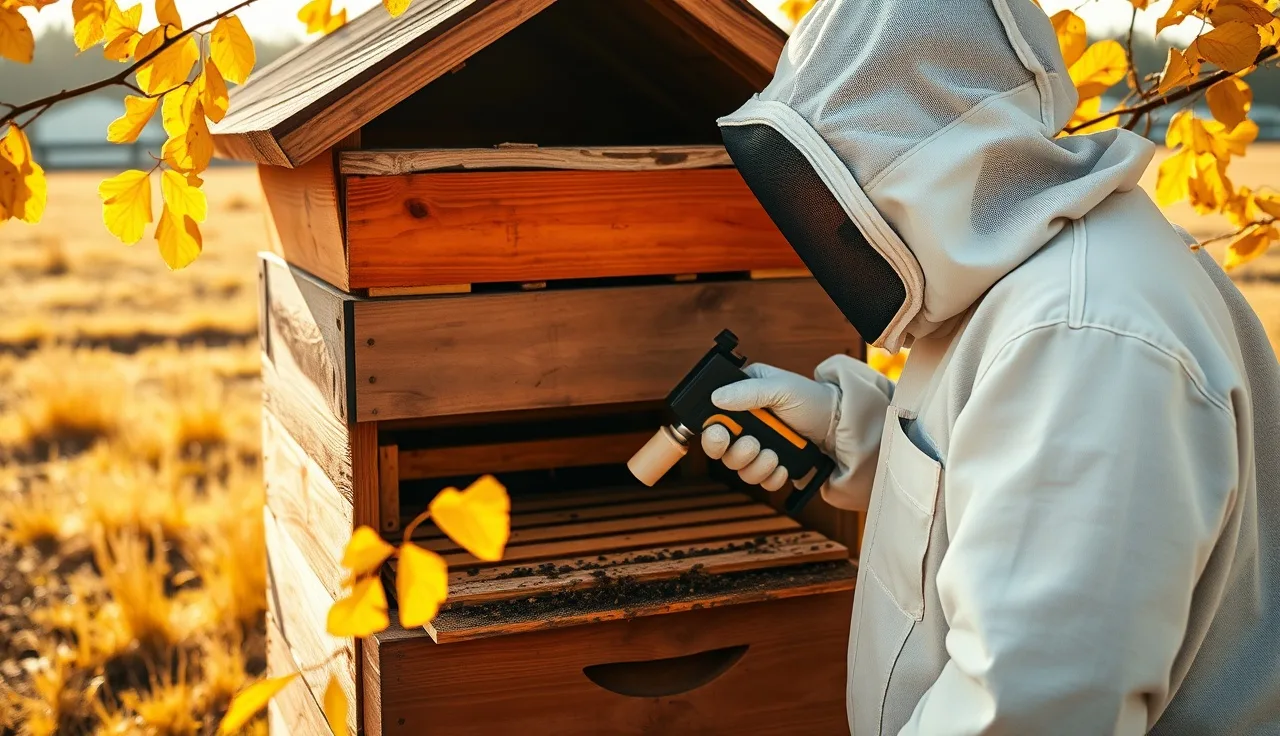
A vaporizer heats a measured dose of OA crystals until they sublimate into a fine vapor that spreads through the hive. You seal the entrance, insert the heating cup, and run a cycle that takes 2 to 3 minutes per hive. The vapor coats every surface, bees included, and kills phoretic mites on contact. This is the method most hobbyists and sideliners reach for now.
2. Dribble (trickle) syringes
You mix OA crystals into a 1:1 sugar syrup and apply 5 mL per seam of bees using a large syringe or squeeze bottle. It's the cheapest way in and needs no electricity. The downside: bees have to groom the solution off each other, which is less efficient than vapor and causes more bee mortality at high doses [3]. Rules vary by state, so check your local extension before you dribble outside of winter.
3. Extended-release (slow-release) strips
Registered products like Api-Bioxal extended-release strips soak OA into glycerin-loaded cellulose or cardboard. You hang them between frames and leave them 4 to 8 weeks. The slow bleed of OA is the only method EPA currently registers for colonies with capped brood. That matters a lot for summer treatments [4].
There's a fourth niche too. Some beekeepers use OA foggers that disperse the acid in a water-based mist instead of dry vapor. The research on foggers is mixed and EPA registration for the method is thin. I wouldn't make it your main tool.
Which oxalic acid vaporizer is actually worth buying?
Vaporizers run from roughly $30 for a basic battery-powered wand to $300 or more for an automatic timed unit. The core parts are the same in all of them: a metal heating cup, a power source, and some kind of timer or indicator. What changes is build quality, heat consistency, and how much hand-holding the tool needs.
| Vaporizer tier | Typical price range | Power source | Approx. cycle time | Notes |
|---|---|---|---|---|
| Entry (generic wand) | $30-$60 | Battery or 12V | 2.5-3 min (manual) | Works fine; heat gets inconsistent on cold days |
| Mid-range (Varomorus, ProVap) | $80-$150 | 12V or AC | 2-3 min | Steadier heat; the most popular tier |
| High-end (OAV Pro, Heilyser) | $200-$350 | AC | ~2 min auto-shutoff | Worth it past 30 hives; overkill for a hobbyist |
For a hobbyist with 1 to 10 hives, a mid-range 12V wand run off a small battery pack is the sweet spot. You get reliable heat without paying for features you'll use twice a year. Units like the Varomorus have been around long enough to have a real track record among beekeepers.
What kills vaporizers isn't quality. It's misuse. Always use pre-measured OA doses (1 to 2 grams per brood box, per the Api-Bioxal label [4]) and never eyeball it. Too much OA damages bees and doesn't kill more mites. Too little wastes the whole round.
One field note. A 12V car battery or a jump-start pack powers these wands fine. You don't need to run an extension cord out to the apiary.
How does the oxalic acid dribble method compare to vaporization?
Dribble is older, simpler, and needs almost no gear. A large veterinary syringe ($2 to $5) and a bag of Api-Bioxal crystals covers it. Mix by the label: 35 grams of OA per liter of 1:1 sugar syrup, then apply 5 mL per seam of bees (per seam, not per frame) [4].
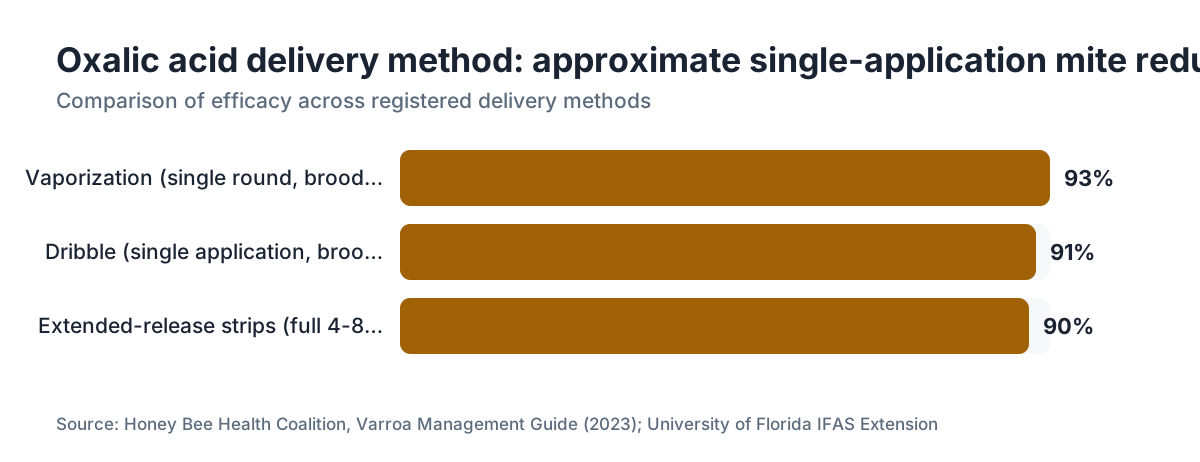
Efficacy studies put a single dribble at 90 to 95% mite reduction in a brood-free colony, about the same as a single vaporization round [3]. The gap shows up in conditions. Dribble works best above about 5 degrees C (41 F), when bees are actively grooming. In a cold cluster below that, the syrup can chill bees or run right off the cluster. Vapor sidesteps that because it adds no moisture.
Dribble also kills more bees than vapor, especially applied heavy. A University of Florida IFAS Extension review found repeated dribble applications were harder on colonies than the equivalent vapor treatments [3]. For a single winter treatment on a broodless colony, dribble is a fine choice. For repeated rounds through a brood cycle, vapor or strips win.
Starting out with one or two hives in January? Buy a syringe and a small Api-Bioxal package. Hold the vaporizer budget until you're sure beekeeping is going to stick.
When should you use oxalic acid strips instead of a vaporizer?
Reach for extended-release OA strips (sold as Api-Bioxal extended-release in the US) when you have open brood in the hive and can't run repeated vaporization rounds. They're the only EPA-registered OA option approved for colonies with capped brood [4].
The mechanism is simple. OA bleeds out of the glycerin-soaked strips over 4 to 8 weeks, killing phoretic mites as they keep emerging from cells. One application covers one to two full brood cycles. That makes strips practical for summer, when matching them with vapor would take 5 to 7 rounds over 3 to 4 weeks.
Strips are effective but not as fast as vapor in a broodless colony. A 2020 Virginia Cooperative Extension resource put OA strip efficacy near 90% mite reduction over the full treatment period [5]. The catch is patience. You won't watch the mite board crater overnight the way you do after a strong vaporization.
Strips cost more per treatment too, usually $15 to $25 per package for one hive. Treating 20 hives in midsummer, that stacks up. My honest take: strips fit the beekeeper who can't commit to weekly hive visits for a full vapor series, or who finds a mite problem in July with the colony packed wall to wall with brood.
Don't stack strips with other OA treatments in the same hive at the same time. The label prohibits it, and there's no evidence it helps [4].
What do you actually need to do an oxalic acid treatment safely?
OA is an acid and it will hurt you if you get careless. The EPA label for Api-Bioxal spells out the personal protective equipment: chemical-resistant gloves, a chemical-resistant apron, and eye protection during mixing and application [4]. For vaporization, wear a properly fitted respirator rated for acid vapors (a half-mask with organic vapor/acid gas cartridges, an N95 at bare minimum for brief exposure, and a full-face respirator is better still).
The vapor is the real hazard. It irritates your eyes, nose, throat, and lungs. Don't lean over the entrance during treatment. Stand upwind. Let the sealed hive sit at least 10 minutes after the cycle before you open it, so the vapor settles and the mites die before you're breathing anywhere near the entrance.
A few things worth keeping in the vaporizer kit:
- Pre-measured OA packets (some suppliers sell them; they kill scale errors in the field)
- Nitrile or neoprene gloves rated for acid use
- Safety glasses with side shields
- A small first-aid eyewash bottle
Keep kids and pets well clear of the treatment area. OA is allowed in organic production and the residues in honey are naturally occurring, but that's no reason to handle it casually. Treat it like any farm chemical. Read the label, wear the PPE, store it locked up.
For PPE and gear that pairs with OA treatments, see beekeeping supplies for a broader checklist.
How many treatments do you need to actually knock down varroa?
This is where a lot of beekeepers go wrong. They treat once, feel good about it, and come back six weeks later to find mites have rebounded. How many treatments you need comes down to one thing: whether the colony had capped brood while you treated.
Brood-free colony (winter cluster, swarm, package): a single vapor or dribble treatment gets 90 to 95% mite reduction in one shot [3]. That's often enough to carry the colony through winter if you time it right, ideally after it goes broodless in late fall.
Colony with brood present (vaporization): the Honey Bee Health Coalition's Varroa Management Guide recommends 3 to 5 vapor rounds spaced 5 to 7 days apart to beat the brood cycle's protection [1]. Each round catches mites as they emerge before they can reproduce. Skip rounds and you blow the protocol.
Colony with brood present (strips): one application, left in place 28 to 56 days per the label [4]. The slow release handles the brood-cycle timing for you.
The math tells the story. At 90% kill per round, starting from 200 mites, one round leaves you 20. Five rounds at the same rate drops you near zero. That's why the protocol matters as much as the tool.
Track mite counts with an alcohol wash or sugar roll before and after treatment. The Honey Bee Health Coalition recommends treating when counts hit 2% or higher (2 mites per 100 bees) during the honey flow season [1]. Don't treat blind.
Is oxalic acid safe to use with honey supers on?
No, and there's no wiggle room here. The EPA label for Api-Bioxal vaporization and dribble states plainly that honey supers meant for human consumption must come off before treatment [4]. OA can push honey residues above the natural background if you treat with supers on.
The extended-release strip formulation carries different label language. Check the current registered label at the EPA's pesticide site before using any OA product during a honey flow [6].
Late fall or winter, after supers are pulled, is the cleanest timing for exactly this reason. You get the brood-free window, no super worries, and the colony heads into winter with a much lower mite load. That alignment is one reason the fall/winter single treatment became standard for hobbyists.
Mite emergency in July with supers on? Pull the supers, wait 48 hours, treat, then decide when to put supers back based on your label. That's the honest answer.
What does an oxalic acid treatment protocol actually cost?
Here's a realistic cost breakdown for a hobbyist with 5 hives running a full-season OA program.
| Item | Cost | Notes |
|---|---|---|
| Api-Bioxal 275g (dribble/vapor, ~35 treatments) | $30-$50 | Lasts small operations several seasons |
| Basic battery vaporizer | $40-$60 | One-time buy |
| Mid-range 12V vaporizer | $100-$150 | Better build, lasts longer |
| Extended-release strips (per hive treatment) | $15-$25 | Per application, per hive |
| PPE (gloves, eyewear, respirator) | $30-$60 | One-time; replace cartridges yearly |
| Alcohol wash supplies (jar, alcohol) | $10-$15 | One-time |
A first-year setup doing winter dribble only runs under $100, OA and syringe included. A proper vapor setup lands at $150 to $250 total. The vaporizer is the only real ongoing equipment cost, since OA crystals are cheap per treatment.
Don't buy OA from anyone who isn't selling the registered Api-Bioxal product. Unregistered OA (sometimes sold as wood bleach, or labeled for other uses) is illegal to apply to bee colonies under federal law, even when the chemistry is identical [6]. The registration is what makes it legal.
For comparison shopping on tools and supplies, check beekeeping supply companies or look for vendors with free shipping on honey bee supplies to trim the per-unit cost on small orders.
How do you build a full varroa management calendar using oxalic acid tools?
OA works best inside a planned season, not as a panic move. Here's a calendar framework most hobbyists in temperate North America can adapt.
Spring (April-May): Run an alcohol wash mite count before the honey flow ramps up. If counts hit 2% or higher, treat with vaporization (3 to 5 rounds, 5 to 7 days apart) before supers go on. Pull supers first if they're already stacked.
Summer (June-August): This is the hardest window. Brood is everywhere, supers are on, and mite populations can double every 4 to 5 weeks [2]. Monthly alcohol wash monitoring earns its keep here. If counts spike past 2%, OA strips (supers off) are your best tool.
Late summer/fall (August-September): The most important treatment window in many temperate climates. The winter bees being raised right now carry the colony to spring. High mite loads during this stretch damage those long-lived bees. Treat hard: multiple vapor rounds or strips, depending on brood status.
Winter (November-February): Once the cluster goes broodless, a single vapor or dribble treatment gives you the highest mite kill of the whole year. It's the easiest treatment of the season. Don't skip it even if fall counts looked okay.
The Honey Bee Health Coalition's Varroa Management Guide lays out this kind of seasonal framework in detail and is worth downloading as a reference [1]. You can plug your counts and colony status into VarroaVault's free protocol tools to generate a treatment calendar for your setup.
Knowing the varroa mite life cycle in detail will make all these timing calls a lot clearer.
What are the most common mistakes beekeepers make with oxalic acid tools?
A handful of patterns come up over and over.
Treating without counting first. If you don't know your mite load before and after, you can't tell whether the treatment worked or whether you need another round. An alcohol wash takes 15 minutes. Do it.
Using unregistered OA. The EPA registration for Api-Bioxal exists for a reason. Using wood bleach or lab-grade OA on hives breaks federal law under FIFRA [6]. It's not worth it when registered product is cheap and easy to find.
Under-dosing or over-dosing vapor. The label says 1 gram per brood box, 2 grams maximum per hive per application for most vaporizers [4]. More is not better. More kills bees and burns product.
Skipping rounds in a vapor series. Commit to a 5-round protocol and the rounds have to stay on schedule. Ten days between rounds instead of 5 to 7 gives emerging mites time to slip back into brood cells and rebuild the protected population you're trying to collapse.
Treating in the wrong season with the wrong tool. Dribbling a colony with heavy brood and a full honey flow is close to pointless. Know your tool's conditions.
Not treating at all. This is the most common of all. The 2022-23 national honey bee colony loss survey put annual losses near 48% [7]. Varroa is the dominant factor. A vaporizer and two good treatment windows a year cost less than a single replacement package.
Are there any oxalic acid alternatives worth knowing about?
OA isn't the only tool in the box, and for some situations another treatment makes more sense. The short version:
Formic acid (Mite-Away Quick Strips or Formic Pro) gets into capped brood, so it kills mites in cells OA can't touch. A single round can reach 90% or higher including capped brood [8]. The trade-off is a narrow temperature window (50 to 85 F for most label uses) and a higher risk of queen and brood loss when it's hot.
HopGuard (hops beta acids) is gentler and can go on with supers in some formulations, but its efficacy data is weaker than OA or formic acid [8].
Amitraz (Apivar strips) is a synthetic miticide with strong efficacy and a long track record. It works through the brood cycle without the temperature limits of OA or formic. The concern is resistance and the need to pull strips before supers go on [8].
The Honey Bee Health Coalition's resistance guidance recommends rotating between chemical classes (organic acids, amitraz) to slow resistance [1]. Running only OA year after year beats not treating, but a rotation is the smarter long game.
Nobody has great long-term data on field resistance to OA specifically. The mode of action (physical and chemical damage rather than a receptor-specific mechanism) makes resistance less likely than with amitraz. The closest studies suggest OA resistance hasn't shown up as a practical problem, but that rests on limited field surveillance.
Frequently asked questions
Can I use oxalic acid on a hive with capped brood?
Yes, but only with EPA-registered extended-release OA strips like Api-Bioxal extended-release. Vaporization and dribble don't kill mites inside capped cells, so a single treatment won't control mites when brood is present. With strips, the slow OA release over 28 to 56 days catches mites as they emerge, which makes them the only OA method registered and practical for colonies with active brood.
How do I measure oxalic acid crystals for vaporization without a scale?
You need a scale. Measuring OA crystals by volume isn't accurate enough for safe dosing because crystal density varies. A basic digital kitchen or postal scale accurate to 0.1 grams costs $10 to $15. The Api-Bioxal label calls for 1 gram per brood box, up to 2 grams per hive per treatment. Pre-measured OA packets from some suppliers skip the weighing if you'd rather not do it in the field.
What temperature is too cold to vaporize oxalic acid?
The Api-Bioxal label doesn't set a hard lower temperature limit for vaporization the way it does for dribble. In practice, vapor works well even in very cold weather because the method doesn't depend on bee activity. Bees do need to be clustered on frames (not spread out) so the vapor reaches them. Dribble, by contrast, is generally not recommended below about 5 degrees C (41 F).
How long does an oxalic acid vaporizer last before it needs replacing?
The heating cup wears out first. On mid-range 12V wands, most beekeepers get 3 to 5 seasons of regular use before the cup cracks or the element fails. High-end units have replaceable cups. Keep a spare cup if you treat a lot of hives. The rest of the wand (wiring, probe, handle) usually outlasts the cup by years if you don't drop it or let OA vapor get into the wiring.
Is Api-Bioxal the only registered oxalic acid product in the US?
Api-Bioxal (made by Chemicals Laif/Chemica-Italia, sold through US distributors) is the primary EPA-registered OA product for honey bee use in the US. Some state registrations exist for other products, but Api-Bioxal is the baseline most beekeepers reference. Always check the current EPA pesticide registration database for updates. Using unregistered OA on hives violates FIFRA regardless of whether the chemistry is identical.
Can I make my own oxalic acid syrup instead of buying Api-Bioxal?
No. Compounding your own OA treatment from bulk crystals for bee colony use isn't legal under US federal law without an EPA registration. Even sourcing pharmaceutical or reagent-grade OA, applying it to a hive as a pesticide without a registered label is a FIFRA violation. Api-Bioxal is cheap enough that there's no practical reason to use an unregistered alternative.
How do I know if my oxalic acid treatment actually worked?
Run an alcohol wash mite count 48 to 72 hours after a vaporization round, or 4 to 6 weeks after placing OA strips. Compare it to your pre-treatment count. A good treatment should cut counts by 90% or more in a brood-free colony. If you're still above 2 mites per 100 bees afterward, plan more rounds or switch methods. A sticky board count after vaporization gives a fast read on mite drop but isn't as precise as an alcohol wash.
What respirator should I wear when vaporizing oxalic acid?
The Api-Bioxal label requires respiratory protection during vaporization. A half-face respirator with combination organic vapor and acid gas cartridges (OV/AG rating) protects well. An N95 dust mask isn't enough for acid vapor. A full-face respirator with OV/AG cartridges gives the best protection and covers your eyes at the same time. Replace cartridges at least yearly, or whenever you catch any odor while wearing the mask.
How many times per year can I treat with oxalic acid?
The Api-Bioxal label permits up to 3 vaporization applications per year, with individual applications spaced at least 5 days apart within a series. Extended-release strips count as one application per placement. Always follow the current label, since EPA can update terms. For most hobbyists the practical limit is a fall/winter vapor series plus a summer strip treatment if needed, which sits well within label limits.
Can I use oxalic acid in a nucleus colony or package?
Yes, and it's close to ideal. Packages and nucs are often brood-free or nearly so when they arrive, which makes them perfect for a single OA treatment that knocks mites down before the first brood cycle starts. A single vapor or dribble application at installation can sharply lower the mite load the new colony begins with. Ask your package supplier whether they've already treated.
What's the difference between oxalic acid vapor and oxalic acid fog?
Vapor (sublimation) heats dry OA crystals into a dry aerosol that coats hive surfaces. Fog dissolves OA in water and uses a sprayer to make a mist. Vaporization is EPA-registered for bee colonies in the US. Fogging is not currently registered under the same label terms. Efficacy data on fogging is limited and inconsistent. Stick with registered vaporization or dribble unless the regulatory picture changes.
Will oxalic acid hurt my queen?
At label doses, OA has low direct toxicity to queens. The main risk is indirect: over-dosing or stressing a weak colony can push the queen to fail. Some beekeepers report supersedure cells after an aggressive treatment series, but that isn't consistently documented at proper label doses. Treat at the right dose, skip colonies that are already weak or queenless, and you're unlikely to lose a queen to OA alone.
Is oxalic acid effective against varroa that has developed resistance?
Current evidence suggests varroa hasn't developed meaningful resistance to OA. The kill mechanism is physical and chemical damage rather than hitting a specific receptor pathway, which makes resistance harder to evolve than with synthetic acaricides like amitraz. That said, field resistance surveillance for OA is limited. If you're seeing poor results at proper doses, rule out application error and too few treatment rounds before you blame resistance.
Can I treat a hive in summer without removing honey supers?
No, not with vaporization or dribble. The Api-Bioxal label requires removing honey supers meant for human consumption before vaporization or dribble application. Extended-release strips carry different label language, so check the current registered label. The safest practice is to pull supers before any OA treatment, wait 48 hours, treat, and replace supers only after checking your label's re-entry and pre-harvest intervals.
Sources
- Honey Bee Health Coalition, Varroa Management Guide (2023): Varroa is the most serious threat facing honey bee colonies today; treatment threshold is 2 mites per 100 bees during honey flow; 3-5 vaporization rounds recommended for colonies with brood
- University of Minnesota Extension, Varroa Mite Management: Approximately 20-30% of varroa mites are phoretic at any given time during a normal brood cycle; mite population can double every 4-5 weeks in summer
- University of Florida IFAS Extension, Oxalic Acid for Varroa Control: Single dribble treatment efficacy 90-95% in brood-free colonies; repeated dribble applications cause more colony stress than equivalent vapor treatments
- EPA, Api-Bioxal Registered Label (EPA Reg. No. 86797-3): Label requirements: remove honey supers before treatment; dose 1 gram per brood box up to 2 grams per hive per vapor application; extended-release strips registered for use with capped brood; maximum 3 applications per year; PPE requirements for mixing and application
- Virginia Cooperative Extension, Oxalic Acid Varroa Treatment Options (2020): Extended-release OA strips achieve approximately 90% mite reduction over the full treatment period
- EPA, Pesticide Product and Label System (registered OA labels; FIFRA requirements): Applying unregistered oxalic acid to bee colonies violates FIFRA even if the chemistry is identical; check current registered labels before use during a honey flow
- USDA NASS, Honey Bee Colony Loss Survey 2022-2023: Annual honey bee colony losses near 48% in the 2022-23 survey period
- Honey Bee Health Coalition, Varroa Management Guide, Treatment Options Summary: Formic acid can achieve 90%+ efficacy including capped brood in one treatment; HopGuard efficacy data is weaker than OA or formic; Apivar (amitraz) has strong efficacy with resistance concerns; rotation between chemical classes recommended
- Penn State Extension, Varroa Mite Sampling Methods: Alcohol wash is the most accurate method for assessing varroa infestation levels in a colony
- Michigan State University Extension, Oxalic Acid as a Varroa Miticide: Vaporization works effectively in cold temperatures where dribble method performance declines; OA vapor coats hive surfaces and kills phoretic mites on contact
Last updated 2026-07-09