Brood break for varroa control: how it works and when to use it
TL;DR
- A brood break stops the queen from laying for 3 to 4 weeks, forcing every mite out of capped cells and onto adult bees where treatments hit them.
- Done alone, it cuts mite loads by 50 to 90%.
- Paired with a single oxalic acid treatment at zero capped brood, field trials exceed 95% mite mortality.
- It's one of the strongest tools a hobbyist or sideliner has.
What is a brood break and why does it matter for varroa?
A brood break is exactly what it sounds like. You interrupt the queen's egg-laying so no new brood gets capped for at least 21 to 24 days. That window is long enough for every mite already sealed in a cell to finish its reproductive cycle, ride out on the emerging bee, and shift to the phoretic phase, meaning it's clinging to an adult bee instead of hiding under wax.
Why does that matter so much? Varroa treatments barely touch mites inside capped cells. Oxalic acid, the standard for organic control, kills phoretic mites at rates above 90% per the EPA product label, but it has almost no penetration through wax cappings [1]. Treat during a brood break and you catch every mite at once. Treat during normal brood rearing and you only hit the 10 to 30% that happen to be riding on bees that day.
The biology is the whole point. In a healthy, actively laying hive, somewhere between 70% and 90% of the mite population is sealed inside capped cells at any given moment [2]. A mid-season oxalic dribble or vaporization without a brood break might kill only 10 to 30% of your real mite load. You feel like you treated. You didn't really treat.
For how the mite reproduces and what its lifecycle looks like, see our overview of the varroa mite.
How does varroa reproduce inside capped brood, and why does that make brood breaks work?
The female varroa enters a brood cell just before it's capped, usually when the larva is about 5 to 6 days old. Once sealed in, she lays her first egg (a non-viable male) and then one female egg roughly every 30 hours. The daughters mate with their brother inside the cell, and when the adult bee emerges about 12 days later for worker brood, the foundress and any mature daughters ride out on that bee [2].
Here's the fact that makes the whole strategy work: varroa can only reproduce inside capped brood. Nothing reproduces on adult bees. So every day the queen lays, new cells get capped and new mites vanish behind wax where treatments can't reach.
A brood break shuts off that pipeline. No new eggs means no new capped cells. The mites already inside will emerge over the next 12 days as those cells hatch. After 21 to 24 days with no laying, the colony has essentially no capped brood left and nearly every mite in the hive is phoretic [3]. That's when you treat. That's when the treatment actually works.
Worker brood stays capped about 12 days. Drone brood stays capped about 14. Mites prefer drone brood at roughly 8 to 10 times the rate of worker brood [2], which is why some beekeepers pull drone comb as a partial brood break. It helps, but it's nowhere near as effective as stopping the queen entirely.
How much can a brood break actually reduce mite levels?
A lot, especially paired with a treatment.
A brood break alone, no chemical or organic treatment at all, cuts mite populations by 50 to 90% depending on how cleanly it runs and how long it lasts [3]. The range is wide because so much rides on reinfestation from neighboring colonies, the length of the break, and whether any brood got missed.
Pair the break with a single oxalic acid treatment at the point of zero capped brood, and efficacy in multiple field trials has passed 95% mite mortality [4]. The Honey Bee Health Coalition's Varroa Management Guide calls the brood break plus oxalic acid combination one of the highest-efficacy options a beekeeper has, especially in late summer and fall [3].
A 2016 study by Nanetti and colleagues in the journal Apidologie found colonies given a queen-caging brood break followed by oxalic acid showed mite reductions above 96%, much higher than oxalic acid applied while brood was present [4]. That gap held long enough to matter for winter survival.
The catch, and nobody should skip past it, is that brood breaks stress a colony. You give up 3 to 4 weeks of brood, roughly one full cycle of worker bees. Run it in spring or early summer and that loss can set a strong colony back hard. Run it in late summer when you're slowing production anyway and the cost is small.
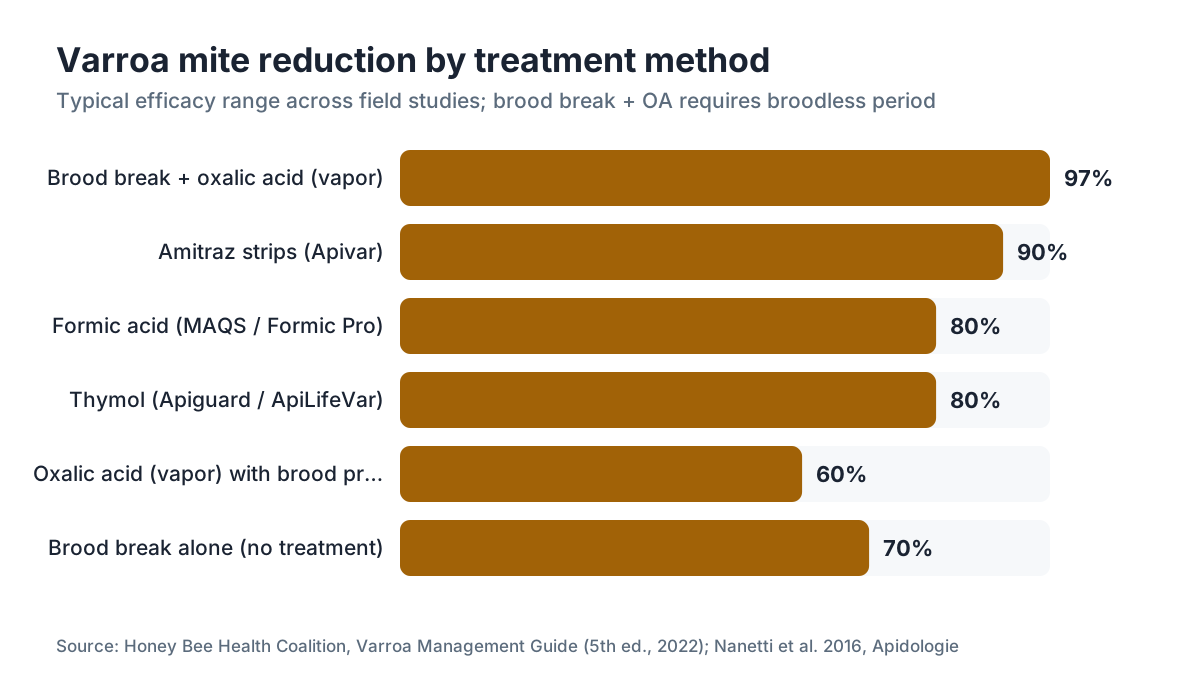
The table below compares mite reduction across the common treatment strategies.
What are the main methods for creating a brood break in a hive?
There are four practical ways to make a brood break, and each costs you something different in time, risk, and disruption.
Queen removal. The simplest. Find the queen, remove her (cage her, put her in a nuc, or, if she's at the end of her life anyway, cull her), and let the colony go queenless for 24 days or until all brood has hatched. Then reintroduce her, add a new mated queen, or let the colony raise one from a frame of eggs you provide. It works, but finding the queen in a booming colony takes skill and a little luck.
Queen caging. Cage her in a push-in cage or a JZ BZ cage right on the comb. She can't lay, but her pheromone still flows, so the colony stays calmer than it would fully queenless. Release her after 24 days. Gentler on colony morale, but you still have to find her first.
Making a walk-away split. Split the hive so the queenright half goes elsewhere or into a nuc, leaving the original box queenless. The queenless portion stops getting new eggs on its own. You make increase and create a brood break in one move. After treating, recombine or keep both. Plenty of beekeepers consider this the cleanest approach.
Natural late-season brood break. In northern climates, colonies slow or stop laying from late October into early December. That's a real brood break you get for free. The trap is timing. You have to catch the broodless window and apply oxalic acid when brood is truly absent. Most beekeepers who miss with this treat too early, while brood is still present.
Every method depends on knowing your local nectar flow. Force a brood break during a major flow and the colony isn't building population when it should be, which costs you honey and winter bees.
When is the best time of year to do a brood break for varroa?
Timing is the decision that trips up most beekeepers. Get it right and you protect the winter cluster without wrecking build-up. Get it wrong and you either lose the summer crop or head into fall with a weak, mite-loaded colony.
Late summer, roughly mid-July through August across most of the continental United States, is the window most experienced beekeepers and extension programs point to [8]. The logic is clean: the main flow is largely done, the colony is winding down anyway, and you still have time to raise a full cohort of winter bees before the cold. Winter bees (the fat-bodied, long-lived bees raised in September and October) are the ones that carry the colony to spring. If they emerge into a high-mite hive, the colony is in real trouble.
Spring brood breaks show up for early-season control, but the price is steep. A spring colony is trying to explode toward the flow, and pulling the queen back right when she should be ramping is a genuine trade. You'd only do it if mite counts are already alarming in early spring, say above 3% on an alcohol wash, and you have to knock them down before they compound.
Mid-summer breaks (June in most temperate regions) carry the most risk. They interrupt peak build-up and collide with summer flows. Some beekeepers thread that needle with a June split that makes a brood break in the original hive while creating increase.
The Honey Bee Health Coalition recommends checking mite levels every 30 days through the active season and setting treatment timing on actual counts, not a calendar date [3]. A 2% alcohol wash reading is a common trigger to act.
How do you combine a brood break with oxalic acid treatment?
This pairing turns a mildly useful tool into one of the strongest varroa moves you can make. The sequence matters.
Step one: create the break by your chosen method (queen removal, caging, or split). Write down the date.
Step two: wait. All existing capped brood has to hatch. Worker brood takes 12 days from capping to emergence. To be safe, most protocols call for 21 to 24 days from the last egg laid, not from when you pulled the queen. If you can confirm zero capped brood by eye, you can treat sooner. But 24 days from queen removal is the conservative, reliable number.
Step three: apply oxalic acid. Dribble works (Api-Bioxal mixed to 3.2% oxalic acid in 1:1 sugar syrup, about 5 mL per seam of bees, 50 mL maximum per colony) and so does vaporization, both per the EPA-registered label [1]. With truly no capped brood, one treatment gets you to 95%+ mortality. If you're vaporizing and have any doubt about leftover capped brood, some beekeepers run two treatments 5 to 7 days apart.
Step four: reintroduce the queen or let the colony raise one. Take another mite count 30 days after treatment to confirm the drop and watch for reinfestation from neighbors.
One detail people miss: the dribble method is approved for use once per colony per year under the current EPA label, while vaporization with approved vaporizers can be done multiple times a year at set intervals [1]. Read the label for your registered product before you treat. "The label is the law" is more than a saying. It's federal pesticide law under FIFRA.
For sourcing EPA-registered Api-Bioxal and gear, reputable beekeeping supply companies are worth your time.
What are the risks and downsides of a brood break?
A brood break costs you something. Here's what goes wrong.
Population loss. Three to four weeks with no brood means roughly 40,000 to 60,000 fewer bees in the pipeline (a laying queen produces about 1,500 to 2,000 eggs a day). A weak colony going into a break can come out too small to rebuild before winter. That's probably the most common reason brood breaks fail to save colonies.
Emergency queen cells. A queenless colony will try to raise its own queen from young larvae. Caging instead of removing sidesteps this. If you've removed the queen, the colony may build emergency cells from whatever young larvae were present, and those cells can hatch and end your break early, or multiple virgins can emerge and fight. Inspect 10 days after removal and destroy any queen cells if you plan to reintroduce the original queen.
Robbing. Queenless or weakened colonies are targets. A late-summer break during prime robbing season without entrance reduction is a setup for disaster. Cut the entrance to 2 to 3 inches maximum during any break from late July through September.
Reinfestation. Mites move between colonies on drifting and robbing bees. Treat one hive perfectly while your neighbors run mite-bomb colonies and you can climb from near-zero back to crisis in 4 to 6 weeks. This hits hardest for apiaries near untreated feral colonies or hobbyists whose neighbors don't coordinate.
Missing the queen. A break only works if laying truly stops. If a cage fails, or you missed her during removal and she's laying in a corner, you still have capped brood and the treatment underperforms.
Honest read: for most hobbyists with 1 to 10 hives, the brood break is worth learning and using. The risks above are manageable with attention. For sideliners running 50-plus hives, the labor of finding and caging every queen pushes you toward natural or split-based breaks instead.
Can you do a brood break without touching the queen?
Yes, and it's how a lot of beekeepers skip the stressful queen hunt entirely.
The cleanest queen-free method is a split. Move the queenright portion to a new spot at least a few feet away, or to a separate yard if you want a fully clean break. The original box is now queenless with no new eggs coming. Foragers return to the original stand, so the queenless box keeps its adult population. After 24 days, treat the original box with oxalic acid, then recombine with a newspaper combine or keep the units apart.
Another queen-free option uses a queen excluder to section the hive. Put the queen below the excluder with a frame or two of brood and foundation. The upper boxes go broodless as older brood hatches and no new eggs enter, since she can't pass the excluder. Treat the upper boxes after 24 days, then pull the excluder. This is a partial break at best, because the frames below with the queen still hold brood.
The full walk-away split is the cleanest hands-off option. And honestly, it's my preferred move in late summer. It makes increase, creates the break, and forces a treatment window all at once.
For tracking colonies through this and keeping mite counts straight, the free protocol resources at VarroaVault help you map timing across multiple hives without losing track of where each one sits in its treatment window.
How do you monitor mite levels to know if a brood break worked?
You need a count before and a count after. Without numbers you're guessing.
Alcohol wash is the most accurate method during and after a break. Take about 300 adult bees (roughly half a cup) from the brood nest, wash them in 70% isopropyl alcohol, and count the mites that drop. Divide mites by 300 and multiply by 100 for a percentage [3][10]. You want it under 2% going into fall.
A sticky board count (mite drop over 24 to 72 hours on a bottom board insert) is less precise but doesn't kill bees, which helps if your colony is already small. The Honey Bee Health Coalition's Varroa Management Guide gives conversion factors for reading sticky board counts as approximate infestation levels, though those are estimates [3].
Sugar roll uses the same methodology as an alcohol wash without killing bees. The trade-off is that it runs about 20 to 30% less accurate, because sugar doesn't dislodge mites as reliably as alcohol [11].
When to count: baseline before the break starts. A second count at treatment time (zero capped brood) confirms the break is complete. A final count 30 days after treatment shows what you actually got and flags reinfestation.
Still above 2% after treatment? Something went wrong. Residual capped brood, a bad application, or mite bombs from neighbors. That's a signal to treat again, not to wait and see.
How does a brood break compare to other varroa treatment methods?
A brood break is a tool, not a full strategy by itself. Here's how it stacks up.
| Method | Mite Reduction (typical) | Brood Present OK? | Cost per Hive (USD) | Timing Flexibility |
|---|---|---|---|---|
| Brood break + oxalic acid (vapor) | 95 to 99% [4] | No, requires broodless period | $5 to $15 (consumables only) | Late summer/fall, or any planned gap |
| Oxalic acid (vapor) during brood | 50 to 70% [1] | Yes, but reduced efficacy | $5 to $15 | Any time, repeated applications needed |
| Formic acid (MAQS/Formic Pro) | 60 to 95% [6] | Yes, penetrates cappings | $10 to $20 per treatment | Temperature-dependent (50 to 85°F) |
| Amitraz strips (Apivar) | 85 to 95% [7] | Yes | $10 to $20 per strip | Keep in hive 6 to 8 weeks |
| Thymol (Apiguard/ApiLifeVar) | 70 to 90% [6] | Yes, reduced efficacy below cappings | $10 to $20 | Temperature-dependent (60 to 105°F) |
Formic acid is one of the few treatments that actually reaches through cappings to kill mites inside cells [6]. That makes it competitive with a brood break plus oxalic acid, though it's touchier about temperature and can damage brood when it's hot. Apivar (amitraz) is effective and forgiving on timing, but it needs rotation to slow resistance, and its status as a synthetic miticide bothers some beekeepers.
Honest conclusion: no single method wins every time. A brood break plus oxalic acid is my preferred late-summer reset because it's cheap, leaves no residue, and delivers the highest single-treatment efficacy. But if mites spike in June during peak brood, waiting around for a brood break window is the wrong call. Formic acid or Apivar makes more sense then.
The Honey Bee Health Coalition's Varroa Management Guide lays out an integrated approach that most state extension programs now back [3].
What do researchers and extension programs actually say about brood breaks?
University extension programs and apiculture researchers have been steady on this for about a decade.
Penn State Extension describes brood interruption as one of the most effective management strategies for varroa when combined with oxalic acid, and notes that natural winter brood breaks in northern states give beekeepers an annual treatment window they often miss [5].
The Honey Bee Health Coalition, which pulls together researchers, government agencies, and industry groups, states in its Varroa Management Guide (5th edition, 2022) that "oxalic acid treatments are most effective when there is no capped brood present," and recommends brood breaks to create that condition [3].
The 2016 Nanetti study in Apidologie found colonies managed with a queen-caging brood break followed by oxalic acid showed mite reductions above 96%, well beyond oxalic acid applied with brood present [4].
The USDA Agricultural Research Service has published guidance confirming the phoretic phase is where chemical and organic treatments work best, which is the entire foundation of the brood break approach [2].
State programs from Minnesota, Oregon, and North Carolina all fold brood-break protocols into their seasonal management calendars, with timing tuned to local climate and flows [8][9][10]. Unsure about timing in your region? Your state department of agriculture apiculture page is the best starting point. Those resources update more often than most books and speak to your climate.
For the full sweep of varroa biology and management tools, see our varroa mite overview.
Is a brood break practical if you have multiple hives?
Yes, but the logistics scale up fast.
For a hobbyist with 2 to 5 hives, running a timed break in each hive across a couple of August weekends is manageable. Figure 30 to 45 minutes per hive for the queen search or split, then a return trip three weeks later for the oxalic acid.
For a sideliner with 50 to 150 hives, queen-based breaks turn into serious labor. Experienced sideliners mix methods: splits off the strongest hives (which make breaks in the queenless portion), banked queens, and late-season natural breaks in northern climates. Queen banks let them hold spares so they can requeen fast after a break instead of waiting on new queen emergence.
Group management helps too. If all your hives sit in one yard, timing a coordinated break across the whole yard at once cuts the number of separate treatment trips.
One practical note on records: with multiple hives at different stages, tracking is the whole game. Treat too early with brood still present and you waste product and get false confidence. Treat too late with queens back and laying resumed and efficacy drops. A notebook or spreadsheet with the queen-removal date per hive and the target treatment date saves real headaches.
VarroaVault's free varroa protocol tracker is built for exactly this kind of multi-hive coordination across overlapping treatment windows.
Frequently asked questions
How long does a brood break need to last for varroa control?
At least 21 to 24 days from the last egg laid. Worker brood stays capped about 12 days, so after 24 days with no new eggs, essentially all capped brood has hatched and nearly every mite in the colony is phoretic. Some protocols stretch to 28 days as a safety margin if you're not certain exactly when the queen stopped laying.
Can you use a brood break without any chemical treatment at all?
A brood break with no follow-up treatment still cuts mite populations by 50 to 90%, because mites trapped in the shrinking pool of capped brood eventually die without new brood to reproduce in. But surviving phoretic mites stay in the hive and start reproducing again the moment the queen resumes laying. Most researchers recommend pairing the break with oxalic acid for much better results.
What mite count level should trigger a brood break?
The Honey Bee Health Coalition recommends acting when an alcohol wash shows 2% infestation or higher in summer, or 1% in late summer when winter bees are being raised. If your count sits at or above these thresholds and a brood break fits your timing, it's a reasonable move. Base the decision on actual wash counts, not visual guesses.
Does a brood break harm the queen?
Queen removal or caging is low-risk when done carefully. Queens survive weeks in a cage as long as attendant bees can reach them and the cage sits on warm comb. The bigger risk is the colony raising emergency queens while yours is caged, which leads to virgins fighting after release. Inspect for emergency cells around day 10 and remove them if you plan to reintroduce the original queen.
Can I create a brood break by just removing frames of brood?
Only partially. Pulling capped brood frames removes the mites inside those cells, but as long as the queen keeps laying, new cells get capped every day. Continuous removal would take repeated visits and isn't practical. It works better as a supplement (especially removing drone comb) than as a standalone break. A true brood break requires stopping all new egg-laying.
How do you know when there is truly no capped brood left in the hive?
Inspect every brood frame. Capped worker brood is easy to spot: tan or light brown cappings, slightly convex. Find none after 24 days from queen removal and you're likely clear. Find any and wait another 7 days, then recheck. You can also run an alcohol wash during this period. Zero mites with no treatment applied yet means all mites are phoretic and you're ready to treat.
Is a natural winter brood break good enough for varroa control?
It can be, if you time the oxalic acid correctly and the colony actually stops laying. In northern US states (USDA hardiness zones 4 to 6), colonies often go truly broodless from late November through January. The challenge is confirming broodlessness before treating. Treating in mid-October while brood is still present is a common mistake that gives false confidence. Always verify with an inspection.
How many times a year should you do a brood break?
Most experienced beekeepers do one planned break per year, usually late summer, paired with oxalic acid. Combined with monitoring and a possible early-season treatment if counts spike, that's generally enough. Two breaks a year is possible but doubles the population disruption. More than two in a season would seriously compromise colony strength.
Does a brood break prevent varroa resistance to treatments?
Indirectly, yes. Because a brood break plus oxalic acid reaches near-complete mortality (95%+), it leaves fewer mites surviving each treatment cycle. Resistance builds when a small subset survives and reproduces, so higher kill rates slow it down. Oxalic acid also has no known resistance mechanism in varroa to date, another reason it pairs so well with brood breaks.
Can you do a varroa mite brood break with package bees or a new nuc?
A new package or nuc installed in spring is already in a partial natural break: there's little or no capped brood for the first week or two after installation. Many beekeepers apply oxalic acid 5 to 7 days after installation, before much brood is capped, to knock mites down from the start. It isn't a full planned break, but it uses the same biology.
What happens to the colony's honey production during a brood break?
During the break, fewer nurse bees are needed to tend larvae, so some shift to foraging, and short-term honey production doesn't necessarily crash. The real cost lands 3 to 4 weeks later when the population dips as the interrupted cycle catches up. A break during a peak summer flow costs you honey. One in late July or August as flows wind down costs much less.
Do I need a mite wash kit and special equipment to do a brood break?
For the break itself, you need basic hive tools and the ability to find your queen or make a split without finding her. For the oxalic acid follow-up, you need Api-Bioxal and either a vaporizer or a dribble applicator. A decent oxalic acid vaporizer runs roughly $30 to $150 depending on the model. For monitoring, an alcohol wash jar and measuring cup are enough. Reputable beekeeping supply companies carry EPA-registered Api-Bioxal and vaporizers.
Can africanized honey bees be managed with brood breaks the same way?
The biology applies equally to Africanized bees, since varroa reproduction inside capped cells is identical. The practical problem is that Africanized colonies are far more defensive, which makes queen finding and manipulation much more dangerous. If you're where africanized honey bees are established, the walk-away split method is safer than direct queen handling.
How does a brood break affect the bees' ability to raise winter bees?
This is the timing consideration that matters most. Winter bees (the physiologically distinct bees raised from late August through October) are what carry the colony through. A break that ends by early to mid-August leaves time to raise a full cohort of winter bees before the cold. A break ending in September or later cuts dangerously into that window. Finish the break, treat, reintroduce the queen, and let her rebuild before the fall brood window closes.
Sources
- EPA, Api-Bioxal (oxalic acid) product label and registration: Oxalic acid (Api-Bioxal) is registered for varroa control; the dribble method is approved once per year, vaporization may be repeated per label intervals; product has minimal efficacy against mites in capped brood
- USDA Agricultural Research Service, Varroa destructor biology overview: 70 to 90% of the varroa population is inside capped brood at any given time during normal brood-rearing; mites reproduce only inside capped cells; drone brood is preferred at 8 to 10x the rate of worker brood
- Honey Bee Health Coalition, Varroa Management Guide (5th ed., 2022): Oxalic acid treatments are most effective when no capped brood is present; brood break plus oxalic acid is among the highest-efficacy options; 2% alcohol wash threshold recommended for summer treatment action
- Nanetti et al. (2016), Apidologie, queen-caging brood break study: Colonies managed with queen-caging brood break followed by oxalic acid treatment showed mite reductions exceeding 96%, significantly higher than oxalic acid applied during active brood rearing
- Penn State Extension, Varroa Management in Honey Bee Colonies: Brood interruption described as one of the most effective strategies for varroa when combined with oxalic acid; natural winter brood breaks in northern states offer a valuable annual treatment window
- Honey Bee Health Coalition, Varroa Management Guide (5th ed., 2022), formic acid section: Formic acid (MAQS, Formic Pro) penetrates capped brood and achieves 60 to 95% mite reduction; temperature-dependent efficacy; thymol-based products achieve 70 to 90% reduction and are also temperature-dependent
- EPA, Apivar (amitraz) pesticide registration: Amitraz strips (Apivar) approved for varroa control with 6 to 8 week in-hive period; typical efficacy 85 to 95% mite reduction when used per label
- University of Minnesota Extension, Varroa Mite Management: Late summer (mid-July through August) is the recommended timing for brood breaks and varroa treatment in northern US states to protect winter bee cohort
- Oregon State University Extension, Bee Health and Varroa Management: State extension programs include brood-break protocols in seasonal management calendars, with regional timing adjustments for local nectar flows
- North Carolina State University Apiculture, Varroa Mite Control: Brood break strategies included in seasonal varroa management calendars; alcohol wash recommended as most accurate monitoring method at approximately 300 bee sample size
- Honey Bee Health Coalition, Varroa Management Guide (5th ed., 2022), monitoring section: Alcohol wash is the most accurate mite monitoring method; sugar roll is 20 to 30% less accurate; 1% threshold recommended in late summer when winter bees are being raised
Last updated 2026-07-09