Brood break for varroa: how it works and how long it takes
TL;DR
- A brood break stops the queen from laying for at least one full worker brood cycle, about 21 days.
- With no capped brood, reproductive varroa have nowhere to hide, so any follow-up treatment lands harder.
- Done right, a brood break alone drops mite populations 50-90 percent.
- Paired with oxalic acid, it clears nearly the whole infestation.
What is a brood break and how does it knock down varroa?
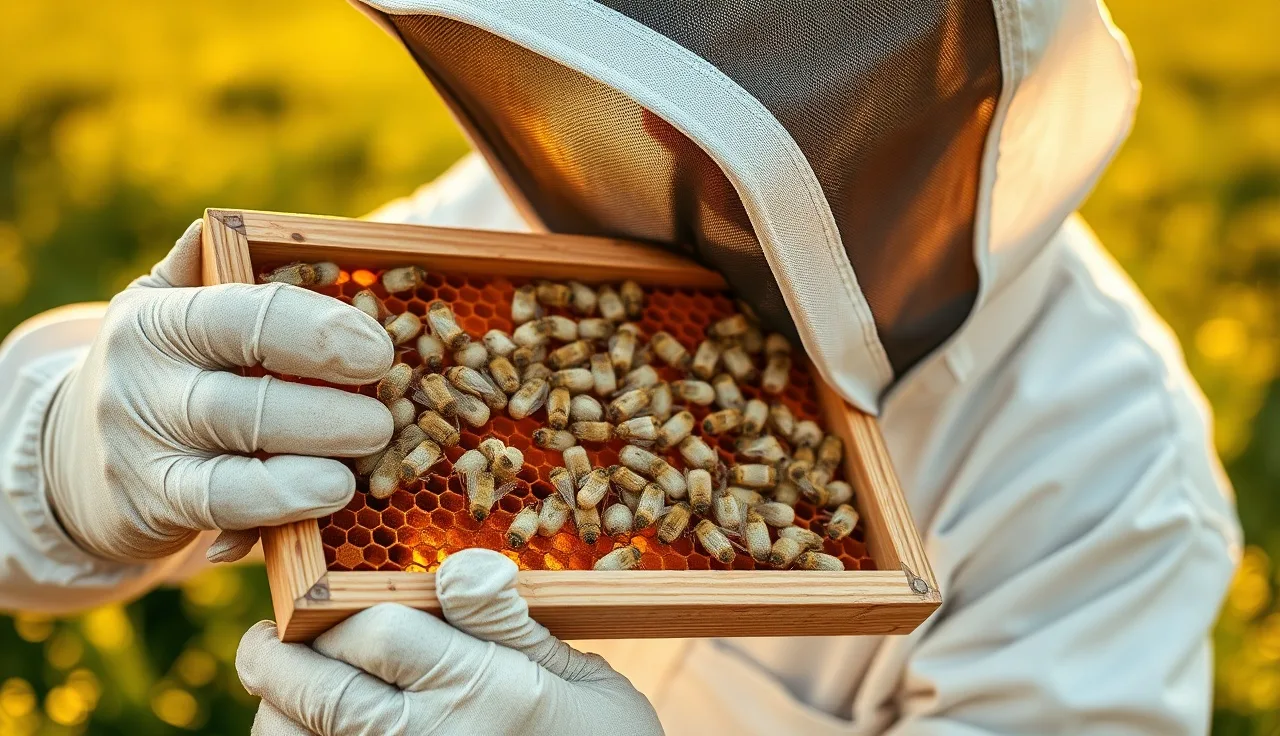
A brood break is a planned interruption of the queen's laying cycle long enough that every worker cell passes through the capped stage and emerges. The number that matters is 21 days, the time from egg to emerging adult worker. Once you clear that window with no new cells being capped, every varroa mite that chose to reproduce is stuck riding a bee's back as a phoretic mite, with no sealed cell to retreat into.
That matters because varroa only reproduce inside capped brood cells [1]. A female mite slips into a cell just before capping, lays eggs on the developing pupa, and her offspring mate inside that sealed space. Treatments applied to a colony full of capped brood can't touch those foundresses or their young until the cell opens. Strip away the capped brood and you strip away varroa's armor.
The Honey Bee Health Coalition's Varroa Management Guide states that "the most effective time to treat is when the colony has little or no capped brood" [2]. That single sentence is the whole case for a brood break. Everything after it is execution.
How long does a brood break for varroa need to last?
Aim for 24 days if you want certainty. Worker cells are capped around day 9 after the egg is laid and emerge on day 21 [1]. If you stop laying on day zero, you still have cells that were capped before you started. Those finish emerging over the next 12 days. Add a few days of buffer for temperature swings and you land at 21 to 24 days as the practical minimum.
Some beekeepers push to 28 days to cover drone brood, which stays capped about 14 to 15 days and runs 24 days total from egg to emergence. Varroa strongly prefer drone cells, reproducing there at roughly 2 to 3 times the rate they manage in worker cells [3]. If your colony carries a lot of drone comb, that extra week earns its keep.
The short answer: 24 days of no laying is your floor. Four weeks is cleaner math and gives you a real safety margin without putting the colony at population risk during summer, when bees live only 4 to 6 weeks anyway [4].
The table below lays out the brood timing that decides how long your break has to run.
| Brood type | Days egg to capping | Days capped | Total days egg to emergence |
|---|---|---|---|
| Worker | 9 | 12 | 21 |
| Drone | 10 | 14-15 | 24-25 |
| Queen | 5.5 | 7.5 | 16 |
What actually causes a brood break in a hive?
Several methods get you there, and they aren't equally good. Which one you pick comes down to your season, your equipment, and how much risk you'll stomach.
Queen removal or caging. The simplest approach. Catch the queen, put her in a cage with a few attendants, leave her there 24 to 28 days. The colony raises emergency queens in the meantime, which takes about 16 days for a virgin to emerge, plus a week or two to mate and start laying. You end up with a younger queen. The downside is real: the colony runs without a mated queen for the full gap, worker numbers drop, and you risk a laying-worker situation if the virgin fails.
Queen banking alongside the parent colony. You pull the queen but keep her alive in a bank or a nucleus. After the break, reintroduce her or let the new queen run. This protects your genetics and gives you a fallback if the virgin never mates.
Deliberate swarm management. Some beekeepers use a natural swarm or an artificial one to force a brood break in the parent hive. When a swarm leaves (or you split off a nuc with the old queen), the remaining colony goes broodless while a new queen mates. This happens on its own in spring, so you can time treatments around it.
Seasonal winter broodlessness. In temperate climates, colonies naturally stop rearing brood from roughly late October through January [5]. This is the single best window for an oxalic acid dribble or vaporization, because you get full phoretic mite exposure without touching the queen at all. Plenty of experienced beekeepers treat once in late fall and once in early spring, timing both to natural low-brood windows.
Temperature manipulation (advanced, risky). Cooling a hive enough to halt laying shows up in research settings but is not a real field technique for hobbyists. Ignore it.
How much does a brood break actually reduce varroa mites?
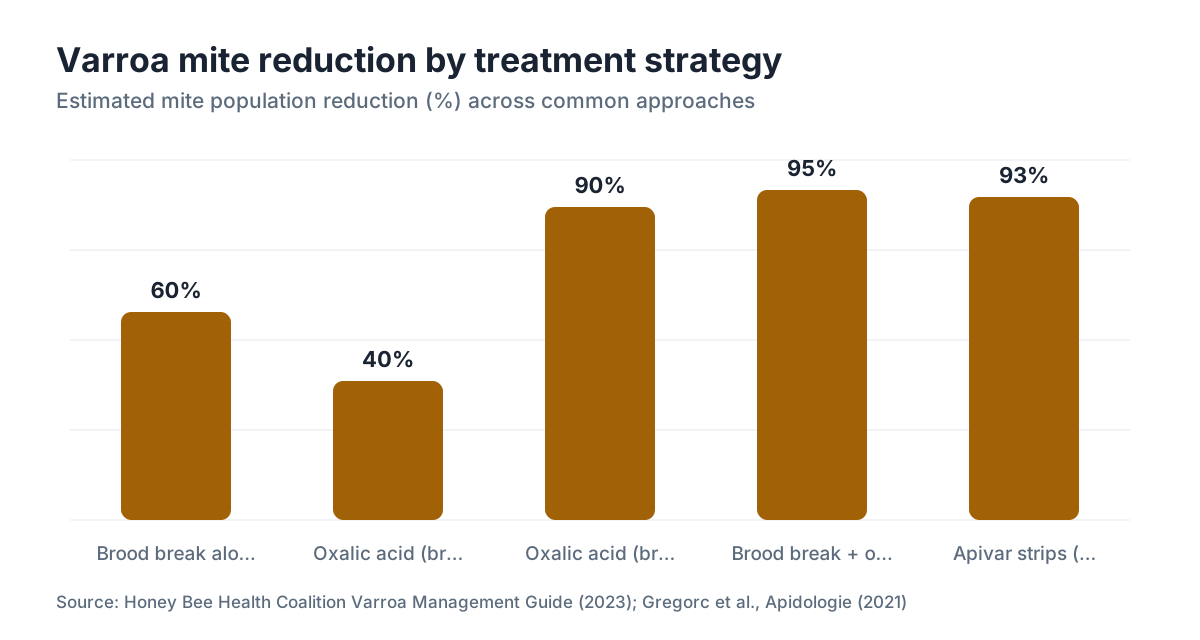
The reduction depends on where your colony starts and how clean your execution is. A tidy 24-day break with full brood emergence cuts the total mite population 50 to 70 percent with no chemical at all, because phoretic mites die with the bees they ride and never reproduce [6]. That's real, but usually not enough on its own to pull a heavily infested colony back below the action threshold of about 2 to 3 mites per 100 bees before summer hits [2].
Paired with oxalic acid during the break, the results jump. Oxalic acid hammers phoretic mites and does essentially nothing to mites sealed inside capped cells [7]. Apply it mid-break when brood is at its minimum and you can expect 90 to 97 percent efficacy [7]. That combination, brood break plus well-timed oxalic acid, is about as close to a reset as hobbyist beekeeping gets.
A 2021 study in Apidologie found colonies that went through a queen-caging brood break followed by oxalic acid carried significantly lower mite loads 60 days later than colonies treated with oxalic acid alone [6]. The break isn't magic by itself. It converts a mediocre treatment window into an excellent one.
If you're already running varroa mite monitoring and your wash comes back above 2 percent, a brood break belongs on your short list.
When is the best time of year to do a brood break for varroa?
Timing a deliberate brood break is mostly about not wrecking your honey crop and not starving your winter bees. That narrows the windows fast.
Late summer (July through August in most of North America). The highest-value window. Your colony finishes the main flow, mite populations sit at or near their annual peak, and the bees you raise from September onward are the winter bees that have to carry the colony through to spring [4]. A break now, followed by oxalic acid, sets those winter bees up with far fewer mites. The colony loses some bees to the gap, but summer populations are usually large enough to absorb it.
Natural winter broodlessness (October through January). No intervention needed. Confirm broodlessness with a quick inspection and treat with oxalic acid. One vaporization treatment (or two, a week apart, if you're not sure the colony is truly broodless) during this window is the lowest-effort, highest-payoff move in varroa management.
Spring splits. Split a colony in spring and the queenless half goes broodless while a new queen develops and mates. That's a free brood break. Treat during it.
Don't force a brood break mid-summer during an active nectar flow, or in early spring when you need population to build. Timing matters more than most beekeepers think.
Can you combine a brood break with oxalic acid treatment?
Yes, and you should. This is the pairing that turns a good idea into a genuinely powerful varroa tool. The EPA-registered oxalic acid product in the US is Api-Bioxal, approved for use by dribble or vaporization, and the label directs use in broodless or nearly broodless colonies for maximum effectiveness [7]. (Apivar is amitraz, not oxalic acid, so don't confuse the two.)
The timing within the break matters. Apply oxalic acid at the point where emerging brood bottoms out, typically around day 10 to 14 of the break. By then most of the brood that was capped when you started has emerged, and no new capped brood can form without a laying queen. That's your window of maximum phoretic mite exposure.
One application of vaporized oxalic acid during a true broodless period gives efficacy that approaches the 97 percent Api-Bioxal's own label claims under ideal conditions [7]. That's not marketing copy; the underlying oxalic acid research was validated across European field trials going back to the early 2000s. The Honey Bee Health Coalition guide confirms vaporization as a preferred method during broodlessness [2].
If you're sourcing a vaporizer or Api-Bioxal, check beekeeping supply companies for current availability, since prices and stock swing a lot by season.
What are the risks of doing a brood break and how do you avoid them?
A brood break isn't risk-free. Here's what can go wrong.
Failed queen supersedure. If you pull the queen and the colony's attempt to raise a virgin fails (bad weather during mating flights, no drones around, disease in the larvae), you end up with a laying-worker colony [8]. That's very hard to fix. Reduce the risk by running the break in summer when drones are plentiful, or by banking the original queen instead of killing her.
Population crash. A 24-day laying gap means 24 days with no new workers entering the pipeline. With a summer adult lifespan of 4 to 6 weeks [4], a colony of moderate size absorbs this. A small, already-struggling colony may not. Don't force a deliberate break on a nucleus or a colony below 4 to 5 frames of bees.
Starvation. A queen-right colony with no open brood has fewer mouths to feed but also loses the foraging drive that strong brood pheromone stimulates. Make sure the colony has adequate stores before you start, especially if the break spans a dearth.
Accidental early requeening. If you don't mark your queen before removing her and you plan to reintroduce her, you can accidentally introduce a different queen or lose her entirely. Mark your queen before any manipulation.
Robbing. A weakened colony with a reduced population is a robbing target. Keep the entrance reduced through the break.
Does a brood break alone control varroa, or do you need to treat too?
Alone, probably not. With treatment, almost certainly yes.
The honest math: a 24-day break kills phoretic mites over time because they die with the bees they ride, and reproduction stops. But foundress mites sealed inside cells when the break started stay protected until those cells emerge. After emergence they're phoretic again, alive, and ready to enter the next round of brood the moment laying resumes.
In a lightly infested colony (under 1 percent mite wash), a clean break with no treatment might push the population below the economic injury threshold for several months. That's a legitimate move in some integrated pest management programs [9]. But for any colony at or above 2 percent, pair the break with treatment.
The practical answer for most hobbyists: do the break, apply oxalic acid at peak broodlessness, monitor with a mite wash 3 to 4 weeks later, and treat again with a different mode of action (amitraz strips, formic acid pads) if counts rebound. That's a complete cycle, not an either/or.
VarroaVault's free protocol tool maps out that sequence against your local climate and current mite count, which helps when you're syncing the break timing to your first hard frost or a planned split.
How do you monitor whether the brood break actually worked?
You need a baseline and a post-treatment count. The alcohol wash is the right tool for both, and it beats the sugar roll on accuracy [11].
Take a wash from a frame of nurse bees before you start the break. Record the count. Take another wash 30 days after treatment (not immediately, since newly released mites from emerging cells skew the count). Compare the two.
A successful brood break plus oxalic acid should show at least a 90 percent drop in mite wash results. If you were at 4 percent (4 mites per 100 bees) before, you want 0.5 percent or below after. If you're still at 1.5 to 2 percent, the break may have been incomplete (some queen activity you missed) or mite immigration from neighboring colonies has already started rebuilding the population [3].
The Honey Bee Health Coalition recommends re-treating if a mite wash exceeds 2 percent during the active brood-rearing season [2]. That's your go/no-go line. Don't skip the post-treatment wash because everything looks fine inside the hive. Varroa loads stay invisible to the naked eye until they're catastrophic.
Can a brood break help with resistant varroa or reduce chemical resistance?
Yes on both counts, and this is one of the underrated arguments for brood breaks.
Chemical resistance in varroa is real and growing, especially with synthetic miticides like amitraz (Apivar) and tau-fluvalinate (Apistan). Tau-fluvalinate resistance is widespread enough in North America that many extension services now discourage its use entirely [9]. Amitraz resistance has been documented across multiple US apiaries [10]. Rotating modes of action helps slow resistance, but a brood break cuts the number of treatment rounds you need per year, which lowers selection pressure on the mite population.
For mites already partly resistant to a given chemical, a brood break is especially useful because it removes their refuge (capped brood) and exposes the whole population to whatever you apply. A resistant mite inside a capped cell survives a treatment it would resist anyway. A resistant mite riding a bee during a break is at least exposed to the physical and biological stresses of the phoretic state, and dies when the bee it rides dies.
Nobody has solid data on whether brood breaks slow resistance evolution directly. The honest statement is this: cutting treatment frequency while raising the efficacy of each round is better resistance management than treating often with patchy coverage.
Brood break varroa management: a step-by-step summer protocol
Here's the sequence I'd run for a late-summer brood break and oxalic acid treatment. It's not the only way, but it has clear decision points and honest tradeoffs.
Week 1, day 1: Mite wash baseline. Take an alcohol wash from a frame of nurse bees near capped brood. At 2 percent or above, proceed. Below 1 percent, weigh whether the break is worth the population risk right now.
Week 1, days 1 to 3: Locate and cage or remove the queen. A JZ-BZ queen cage with a candy plug works well. Cage her, hang the cage between two brood frames. The colony still senses her, stress runs lower than full removal, and you can retrieve her easily. Or bank her in a separate nucleus.
Days 10 to 12: Inspect for queen cells. The colony has been raising emergency queen cells. If you caged the queen instead of removing her, it may or may not make them, depending on how much pheromone gets through the cage. Note what you see but don't intervene unless cells are capped (white, peanut-shaped).
Days 14 to 16: Apply oxalic acid. By now most pre-break brood has emerged. Apply Api-Bioxal by vaporization per the EPA label: one treatment of 2.275g oxalic acid dihydrate per hive body [7]. Wear proper PPE (respirator, goggles). Keep the hive closed for 10 minutes after vaporizing.
Days 24 to 28: Release or reintroduce the queen. If you caged her, open the cage on day 24 to 25. If you banked her, introduce her with a standard newspaper or candy-plug method. By now the colony has been broodless long enough and is eager for a laying queen.
Days 55 to 60 (4 weeks after reintroduction): Mite wash follow-up. Your verdict. Below 1 percent means the protocol worked. Above 2 percent means a follow-up treatment, probably Apivar strips, given the mode-of-action rotation logic.
For tracking all this across multiple hives, a simple spreadsheet or a free tool like the one at VarroaVault keeps dates from slipping.
What about using a brood break with nucleus colonies or package bees?
Nucleus colonies and packages are strong candidates for a brood break early in their development, but for different reasons.
A new package installed in spring starts with no brood at all. That's a natural brood break. Install the package and treat with oxalic acid before the queen begins laying, and you hit any mites that rode in on the package bees. The Honey Bee Health Coalition and several state extension programs recommend treating packaged bees on installation for exactly this reason [2].
A nucleus colony with a mated queen already has brood, so you don't get the same free window. Nucs are also small enough that the population risk from a break is real. For a nuc below 4 frames of bees, I'd treat with oxalic acid vaporization during any natural low-brood moment (a cold snap, a dearth) rather than forcing a break.
One more thing worth knowing: mite immigration from other colonies is a major way varroa populations rebuild after treatment [3]. In a high-density beekeeping area or near collapsing feral colonies, your beautifully treated nuc can get reinfested within weeks. A break and treatment reset the clock, but they don't build a fence. Monitor through the season regardless.
Frequently asked questions
How long does a brood break need to be to kill varroa?
At minimum 21 days, the time it takes for the last worker cell to emerge. In practice, aim for 24 days to account for cells capped just before you started. If your colony has significant drone comb, push to 28 days, since drone brood takes up to 24 to 25 days from egg to emergence and varroa reproduce at higher rates in drone cells.
Will a brood break alone get rid of varroa without chemicals?
A brood break alone can cut mite populations 50 to 70 percent by removing the protected brood environment varroa need to reproduce. That's usually not enough for a heavily infested colony. Paired with oxalic acid during the broodless window, efficacy jumps to 90 to 97 percent. For colonies above 2 percent mite wash, the brood break makes chemical treatment work better, not a replacement for it.
What is the best time of year to do a brood break for varroa control?
Late summer (July through August in most of North America) is the highest-value window because you protect the winter bees being raised in September and October. The natural winter broodless period (October through January) is also excellent and needs no queen manipulation, just a well-timed oxalic acid treatment to catch mites while they're fully phoretic.
Can you use oxalic acid during a brood break?
Yes, and it's the recommended approach. The EPA label for Api-Bioxal (the registered oxalic acid product in the US) directs use during periods of little or no capped brood for maximum effectiveness. Apply around day 14 of the break when brood emergence peaks and before any new cells can be capped. Efficacy in true broodless conditions is documented as high as 90 to 97 percent.
Does caging the queen cause a brood break?
Yes. Caging the queen stops new eggs immediately. Existing brood keeps developing and emerges over the next 12 to 21 days, after which the colony is fully broodless. This is the simplest way to create a deliberate break without permanently removing the queen. Keep her caged 24 to 28 days, apply oxalic acid around day 14, then release or reintroduce her.
How do I know when a colony is broodless enough to treat with oxalic acid?
Open the hive and inspect at least 4 to 5 frames. Look for no capped worker or drone cells. Some eggs or very young larvae are fine, since oxalic acid still reaches phoretic mites on adult bees. If you see capped brood, wait another 5 to 7 days and inspect again. The Honey Bee Health Coalition recommends treating when capped brood is absent or minimal.
What happens to varroa during a brood break?
Without capped brood, all varroa are phoretic, riding adult bees. Phoretic mites can't reproduce and die when the bee they're attached to dies. Adult summer bees live 4 to 6 weeks, so over a 24-day break a meaningful fraction of the phoretic mite population dies naturally. Any oxalic acid applied during this window reaches the full phoretic population, unlike treatments applied while mites hide inside brood cells.
How do you do a brood break without losing the queen?
Bank the queen in a separate nucleus rather than caging or killing her. She keeps laying in the nuc, staying productive and protecting your genetics, while the parent colony goes broodless. After the break and treatment, reintroduce her to the parent colony using a standard method. This is more work than caging but removes the risk of accidental queen loss during a broodless manipulation.
Can you do a brood break with a package installation?
A freshly installed package runs naturally broodless for the first 9 to 12 days after the queen begins laying (the stretch before her first eggs get capped). Treat with oxalic acid within the first few days of installation, before any brood is capped, and you catch any mites that came with the package. Many extension programs recommend this as a standard new-package protocol.
Does a brood break stress the colony too much?
A healthy colony of 5 or more frames of bees handles a 24-day break without permanent harm. Population dips but recovers fast once laying resumes. The real risks show up in weak colonies (fewer than 4 frames), failed queen mating during the break, and robbing from neighboring hives during the reduced-population period. Keep the entrance reduced and don't force a deliberate break on a struggling colony.
How many times a year should you do a brood break for varroa?
Most beekeepers use one deliberate break per year, usually in late summer, combined with a natural winter broodless period for a second oxalic acid treatment. That gives you two high-efficacy treatment windows a year. More than two deliberate breaks per year risks cumulative population stress and cuts the colony's honey-producing and overwintering capacity.
What is the difference between a brood break and splitting a hive for varroa control?
A split creates a brood break in the queenless half by removing the laying queen, while the queen-right half keeps laying normally. The queenless half gets the break effect over 16 to 24 days while a new queen develops and mates. Splitting is more disruptive than caging but produces a new colony and a new queen as side benefits, which makes it popular in spring varroa management.
Sources
- University of Florida IFAS Extension, Biology of the Varroa Mite: Varroa mites reproduce only inside capped brood cells; worker brood emerges on day 21, drone brood on day 24-25
- Honey Bee Health Coalition, Varroa Management Guide (2023 edition): The most effective time to treat is when the colony has little or no capped brood; action threshold is approximately 2-3 mites per 100 bees; alcohol wash recommended for monitoring
- Fries, I. et al., Apidologie: Varroa destructor mite preferences and reproduction in drone vs worker brood: Varroa reproduces at roughly 2-3 times the rate in drone cells compared to worker cells; mite immigration from collapsing colonies is a major reinfestation pathway
- Penn State Extension, Honey Bee Biology and Beekeeping: Summer worker bees live approximately 4-6 weeks; winter bees raised in September-October must survive until spring
- USDA Agricultural Research Service, Bee Research Laboratory: Colonies in temperate North American climates typically cease brood rearing from late October through January
- Gregorc, A. et al., Apidologie (2021): Brood interruption combined with oxalic acid treatment: Colonies undergoing queen-caging brood break followed by oxalic acid treatment had significantly lower mite loads 60 days post-treatment compared to oxalic acid treatment alone
- EPA, Api-Bioxal (oxalic acid) Pesticide Registration and Label: Api-Bioxal label specifies use during broodless or nearly broodless conditions for maximum effectiveness; registered dose is 2.275g oxalic acid dihydrate per hive by vaporization; efficacy approaches 97% in broodless colonies
- NC State Extension Apiculture, Queen Problems and Laying Workers: Colonies without a mated queen for extended periods develop laying workers, which are extremely difficult to correct
- Michigan State University Extension, Integrated Pest Management for Varroa: Tau-fluvalinate resistance is widespread enough in North America that many extension services discourage its use; low-infestation colonies may be managed with brood break alone under IPM protocols
- Boncristiani, H. et al., Scientific Reports (2021): Amitraz resistance in US Varroa populations: Amitraz resistance has been documented in multiple US apiaries, confirming the need for treatment rotation and efficacy-maximizing strategies like brood breaks
- Cornell University Department of Entomology, Honey Bee Program: Alcohol wash is more accurate than sugar roll for varroa monitoring; 30-day post-treatment wash recommended to avoid skewed counts from emerging mites
Last updated 2026-07-09