Hive inspection checklist: everything to look for every time
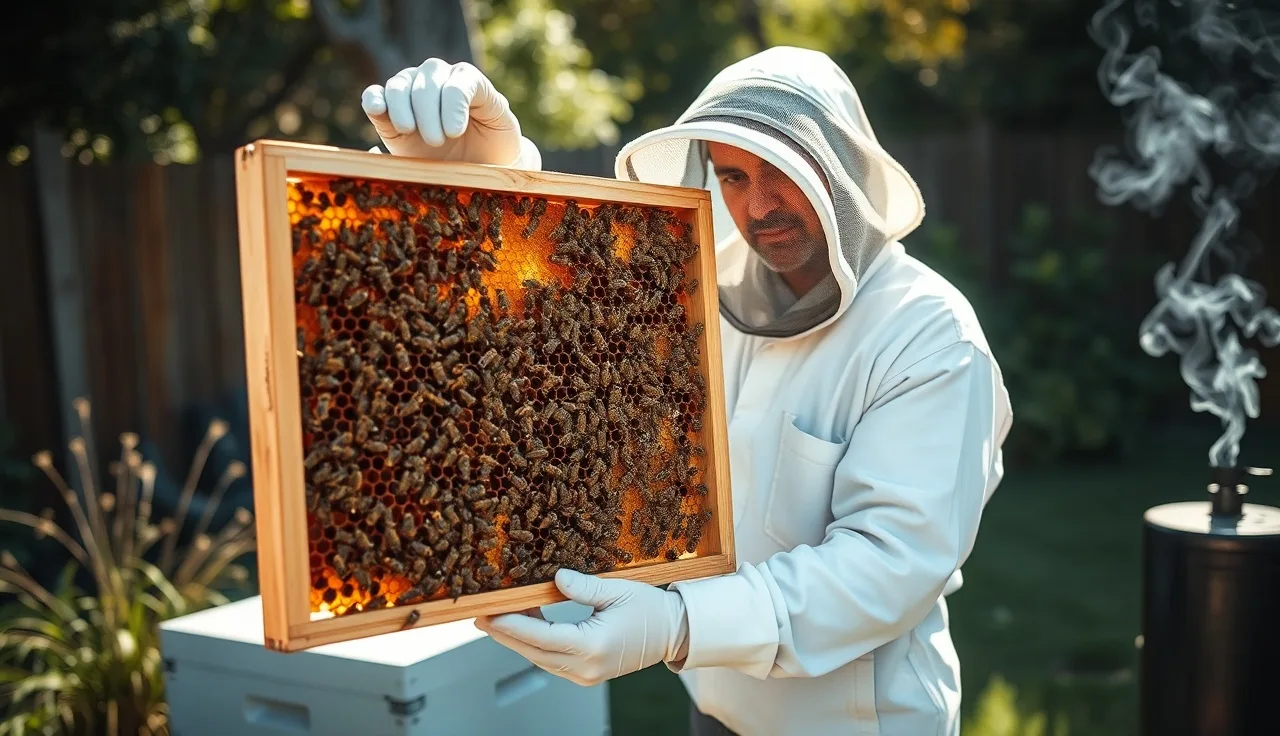
TL;DR
- Every hive inspection should check five areas: queen status (eggs, laying pattern), brood health (capped and uncapped, plus the overall pattern), colony population and temperament, food stores (honey and pollen), and varroa mite load.
- A mite wash or sticky board count at least once a month tells you more than any visual guess.
- This checklist covers all of it.
Why does a hive inspection checklist actually matter?
Most colony losses are visible weeks before the colony dies. You just have to know what you're looking at. The trap is that beginners, and experienced keepers on a busy day, drift toward checking a few obvious things and calling it done. They see bees, they see capped honey, they close the lid. That's not an inspection.
A real checklist forces you to slow down and work through every area of the hive in order. It also builds a paper trail. If a colony crashes in October, your July notes can tell you whether the queen was already failing, whether mite loads were climbing, or whether you just missed something.
The Honey Bee Health Coalition, whose Varroa Management Guide is the most cited practical resource in American beekeeping, builds its whole approach around monitoring plus thresholds plus treatment. The monitoring part is what an inspection is. Without consistent notes, you have no threshold data [1].
One honest point: inspections take time and they disturb the bees. That's real. Don't open a hive in cold weather, don't do it during a nectar dearth if the neighborhood is robbing-prone, and don't do it more than you need to. For most hobbyists in temperate climates, every 7 to 14 days during the active season is the right cadence.
What gear do you actually need before you open the hive?
You know the basics: veil, gloves, hive tool, smoker. A few other things genuinely change the quality of an inspection, and they're worth naming.
A good smoker with real fuel matters more than most beginners expect. Cool, white smoke from burlap, pine needles, or cotton buys you 10 to 15 minutes of calm bees. Thin, hot, or sparse smoke gets you stings and running bees that are hard to read.
Bring a small spray bottle with water or 1:1 sugar syrup. A light mist parts the bees on a frame enough to see eggs without smoke drying out young larvae.
For varroa, you need either a plastic wash container with a mesh lid for an alcohol wash or a prepared sticky board. You cannot judge mite load by eye during a routine inspection with any reliability. The Honey Bee Health Coalition recommends the alcohol wash or sugar roll as quantitative tools. A sticky board left in for 24 or 72 hours detects presence but does not give you a real infestation rate [1].
A phone or notepad for recording findings. Not your memory. Your memory is wrong six weeks later.
A pen light or small headlamp is underrated for spotting eggs on overcast days or deep in a brood chamber. Eggs are tiny, translucent, and stand upright in the cell. If you can't find them, tilt the frame so direct light falls into the cells.
For a full breakdown of the gear worth having versus what's a waste of money, see our guide to beekeeping supplies.
What does a full hive inspection checklist look like, section by section?
Here's the checklist in the order you'd actually work a hive, from the outside in.
Before you open the lid
- Flight activity at the entrance: steady traffic is good, no bees coming and going is a warning sign
- Guard bee behavior: some fanning at the entrance is normal, boiling-out aggression is not
- Dead bees on the landing board: a small pile after a cold night is normal, hundreds of dead workers daily is not
- Pollen coming in: pollen foragers almost always mean a laying queen is present right now (workers don't haul pollen to a queenless colony for long)
- Wax moth or small hive beetle adults visible near the entrance
- Signs of robbing: frantic wavy flight, fighting at the entrance, bees chewing at propolis cracks
Bottom board or screened bottom board
- Debris composition: wax caps, pollen, dead mites, and bee parts are normal. A heavy mold smell, standing moisture, or a large wax moth mess is not.
- Sticky board mite count: if you placed one 24 to 72 hours ago, collect it and count the daily drop. A drop above 8 to 10 mites per 24 hours generally means a load worth treating, though it's less precise than a wash [1]
Lower brood box
- Overall population: are the frames well covered?
- Are the bees moving calmly or running off the frames?
- Smell: warm wax, honey, and propolis. A foul or sour odor is a red flag for American foulbrood or European foulbrood
- Work frames from the outside toward the center
Brood nest (the box that matters most)
- Eggs present: confirms a queen laid within the last 3 days
- Young larvae (C-shaped, pearly white, floating in royal jelly): healthy larvae look plump and white. Brown or melted larvae signal disease.
- Capped worker brood pattern: solid, with only a few empty cells scattered through. A shotgun pattern of scattered cappings and gaps signals queen failure, disease, or laying workers.
- Capping color and texture: tan and slightly convex. Sunken, dark, or perforated cappings are classic American foulbrood warning signs.
- Drone brood: a moderate patch of domed, larger cappings is normal. Heavy drone brood across the main brood area can mean a failing or drone-laying queen.
- The queen: you don't always need to find her if eggs and young larvae confirm she was here 72 hours ago. If you do find her, check that she's moving freely and laying in a continuous sequence.
- Queen cells: check the bottom bar of every frame. A swarm cell hanging off the bottom is hard to miss. Supersedure cells in the middle of a frame are easy to overlook.
Honey and pollen stores
- Pollen next to the brood: healthy colonies keep a pollen arc just outside the brood area. Seeing it is reassuring. Its absence is worth a note.
- Capped honey in the upper corners and top boxes: for overwintering, you want 60 to 80 pounds of capped honey depending on climate. A two-story Langstroth colony packed with capped honey on both boxes is in good shape. A single shallow of honey going into November in the northern US is not [2].
- Uncapped honey or nectar: fine during a flow, but watch for fermentation (bubbles, sour smell) if a dearth hits before it can be capped
- For more on pollen and colony nutrition, see beehive pollen
Varroa mite assessment
- Alcohol wash (preferred): pull a sample of about 300 adult bees from a brood-nest frame with open brood. Wash in 70% isopropyl alcohol for 60 seconds, strain through mesh, count the mites. Above 2% (6 mites per 300 bees) is the treatment threshold recommended by the Honey Bee Health Coalition [1].
- Visual check on adult bees: you can see reddish-brown dots on the abdomen, but a visual check alone misses most of the mite population because most mites hide in capped brood at any moment [3]
- Deformed wing virus symptoms: bees with shrunken, crumpled wings or shortened abdomens signal a high mite load even when your count looks low
- More on varroa mites and their lifecycle if you want to understand why the brood phase makes visual detection so unreliable
Pests and diseases
- Small hive beetles: adults run about 5mm, dark brown-black, and fast. Any adults mean larvae may follow. A beetle trap earns its keep in a warm-climate state.
- Wax moths: larvae and webbing in frame corners or along top bars. Strong colonies control them. Weak ones can't.
- American foulbrood (AFB): run the ropy string test on suspicious cappings (push a toothpick in and pull slowly, AFB-infected brood strings out 1 to 2 cm). The disease is reportable in most US states [4]. If you suspect it, do not move equipment.
- European foulbrood (EFB): larvae die in uncapped cells, twisted, discolored, and sour-smelling. Less severe than AFB but worth addressing.
- Sacbrood: dead larvae in a sac of fluid under the capping, head end curled up. Usually self-limiting in a healthy colony.
- Chalkbrood: mummified larvae, chalky white or gray, in or near cells. Spores live for years.
- Nosema: chronic dysentery streaking at the entrance in spring, or a hive that dwindles for no obvious reason. A firm diagnosis needs microscopy or a lateral flow test [5].
Overall colony assessment
- Population trajectory: growing, holding, or shrinking?
- Temperament change: a calm colony that turns aggressive may have lost a gentle queen and accepted a wild supersedure, or it may carry Africanized honey bee genetics in regions where that matters
- Space: is the colony honey-bound with no room to lay? Add a super or pull capped frames.
- Winter prep: by late summer you should be making calls about mite treatment timing, queen quality, and stores.
What is the treatment threshold for varroa mites?
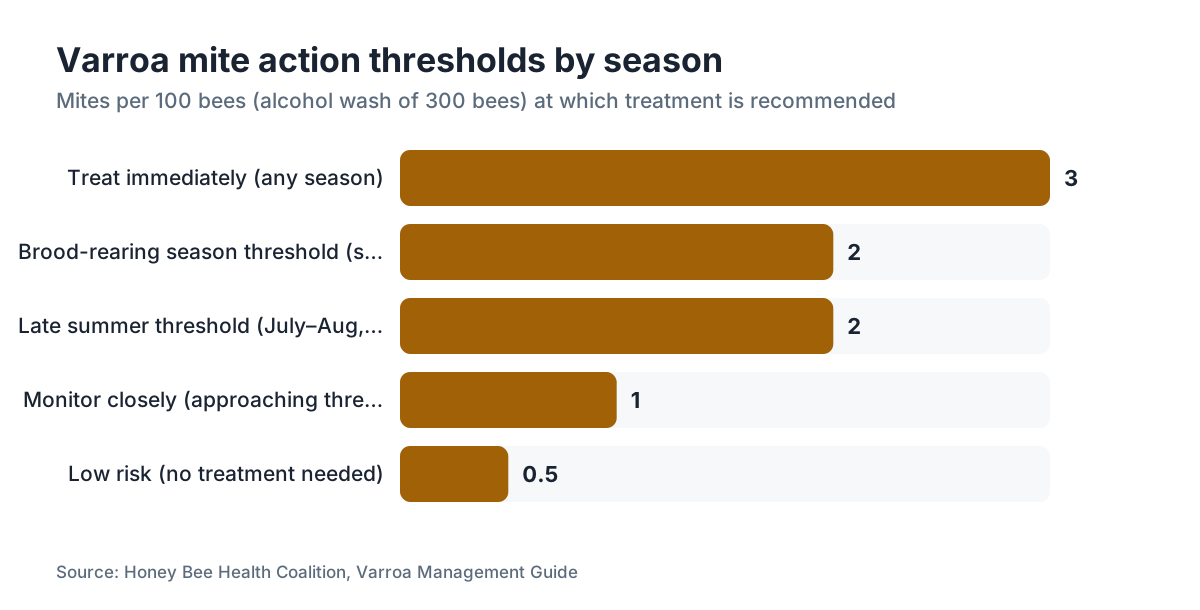
The number most US extension programs and the Honey Bee Health Coalition agree on is a 2% infestation rate, measured by alcohol wash or sugar roll. That's 6 mites per sample of 300 bees [1].
Season shifts the emphasis. The University of Minnesota Extension recommends treating at 2% or higher during the brood-rearing season, but acting earlier in late summer (July and August), because that's when the mite population trapped inside capped brood peaks relative to adult bees, and because August and September are when winter bees get raised [6]. A colony that enters October with a high mite load raises winter bees already weakened by deformed wing virus.
The Honey Bee Health Coalition's Varroa Management Guide puts it plainly: "A treatment threshold of 2% (2 mites per 100 bees) is recommended for the brood-rearing season" [1]. That's the closest thing to a consensus number US beekeeping has.
Sugar roll (powdered sugar instead of alcohol) reads lower than an alcohol wash because some mites cling on even when coated. The alcohol wash kills the sampled bees but gives a cleaner count. For a two-hive hobbyist, losing 300 bees a month to a wash is nothing. For a 200-colony operation it starts to add up, but it's still the right call for accuracy.
Some beekeepers resist monthly testing because it takes time. My honest take: test only twice a year and you'll lose hives to mite loads you never saw building. One test in May and one in August is the floor. Monthly is better.
How do you spot a failing or missing queen during an inspection?
The queen is elusive, and you don't have to find her every time. What you have to find are signs of her work.
Fresh eggs (standing upright in the cell bottom, one per cell, about the width of a thread) mean she laid within 72 hours. If you see eggs, she's fine. Move on.
No eggs, no young larvae, a completely broodless hive: the queen is dead or gone, and has been for at least a week. Look for emergency queen cells (usually 3 to 15 of them built on the face of frames over old larvae). If some are capped, the bees may be handling it. If the cells have all been torn open with a hole at the side, a virgin queen has emerged and may still be unmated.
A spotty or shotgun brood pattern means something is wrong, but it doesn't by itself mean the queen is gone. It can point to disease (AFB, EFB), mite damage, chilled brood from a cold snap, or a queen with poor genetics. Look at several frames to tell them apart.
A colony queenless long enough starts producing laying workers. Their unfertilized eggs all become drones. You'll see multiple eggs per cell, eggs on the cell walls instead of the bottoms, and a spread of scattered drone brood with no worker brood. Requeening a laying-worker colony is hard and often not worth it for a small operation. The practical fixes are combining it with a queenright colony over a newspaper board, or introducing a new mated queen after shaking out the adult population in a different spot.
What should brood look like in a healthy hive?
Healthy worker brood has a consistent warm-tan capping that's slightly convex, like a gently rounded lid. The pattern is dense, meaning most cells across the brood area are filled, with only occasional gaps. A frame with 80 to 90% of central brood cells capped is typical of a productive queen.
Under the cappings, healthy larvae are pearly white, glistening, and C-shaped, floating in royal jelly. Anything brown, yellow, flat, or dry is a problem.
Capped brood darkens slightly as it ages, from lighter fresh cappings to darker older ones. That's normal. A distinctly brown-black, wet-looking, or sunken capping with a hole punched in the center is not. That's the classic look of American foulbrood.
The ropy string test for AFB is simple and worth running any time you see suspicious cappings. Push a toothpick in, stir gently, and pull it out slowly. Healthy dead larvae fall off. AFB-infected larvae string out 1 to 3 centimeters in a thin, coffee-brown thread. If you get that, stop the inspection, sterilize your tools in a flame, and call your state apiarist. AFB is regulated in every US state because the spores survive in equipment for 40 to 80 years [4].
Sacbrood and EFB look different. Sacbrood larvae form a sac of liquid under the capping. EFB larvae die before capping, twisted and yellowed in sour-smelling heaps. Neither matches AFB for damage, but both deserve attention.
How much honey do bees need to survive winter?
It varies by climate, but the most commonly cited range for a standard Langstroth colony in the northern United States is 60 to 80 pounds of honey by late fall [2]. A full deep Langstroth box of capped honey weighs roughly 90 pounds, so a colony with one packed deep plus a half-full medium is in reasonable shape. A colony with only a medium of honey heading into a Minnesota December will very likely starve.
In warmer climates (USDA Zones 8 and up), colonies need less stored honey because the winter brood break is shorter or absent and bees can forage year-round in some areas. Even so, 30 to 40 pounds is a safe floor.
From July onward, note the store weight or your estimate of capped honey frames at each inspection. If the colony is light heading into August, you still have time to feed 2:1 sugar syrup to push capping. After mid-October in the north, bees won't process thin syrup well, and adding moisture to a sealed cluster area causes its own problems.
Pollen matters too, especially the protein stores that carry the colony through late winter when the queen ramps up laying but no fresh pollen is coming in. Two to three frames of capped and partly capped pollen next to the cluster in late summer is a good sign.
How often should you inspect a hive, and does season matter?
During the active brood-rearing season (roughly April through August in temperate North America), every 7 to 14 days is a reasonable frequency. The 7-day interval matters for swarm control: open swarm cells can be caught and managed, but once they cap, your window to stop the swarm is short.
In late summer and fall, shift focus to varroa counts, food stores, and queen quality. Frequency can drop to every 2 to 3 weeks, but the alcohol wash should still happen at least once in August and once in September.
In winter, keep the hive closed in cold weather. In most northern US climates that means no full inspections from November through February. Cracking a hive during a cold snap can chill open brood and kill the cluster. Heft the back of the hive to gauge weight (very light in late winter means danger), or take a quick look at the entrance on a mild day above 45 degrees F (7 degrees C). Wait for a day above 50 degrees F to lift the cover and confirm the cluster is alive.
Spring is the inspection that carries the most weight. Your first real look after winter should check survival, queen status, any starvation or winter kill, and remaining stores. Early spring is when you're most likely to find a colony that lost its queen over winter or came through too weak to build up before local swarm season.
If you're still building out your inventory, our beekeeping supply companies guide covers where to source reliable inspection gear.
What are the most common things beekeepers miss during inspections?
Varroa counts top the list. Most recreational beekeepers inspect visually and never run an alcohol wash. A visual check of adult bees catches only a fraction of the load because most mites sit in capped brood at any moment. You can have a colony at 4% or 5% infestation and never spot a single mite on an adult bee during a frame-by-frame look [3].
Queen cells on the bottom bar. They look like peanut shells and they're easy to skip if you're not scanning every bottom bar on every frame. Plenty of swarms leave because a beekeeper admired a strong colony, missed five capped swarm cells hanging off the bottoms, and closed up.
Food store totals. Beekeepers see honey and assume it's enough. Pick up the hive. A hive that feels light in August needs feeding even if it looks like there's some honey up top. The heft tells you more than the look.
Brood diseases that aren't AFB. Sacbrood, EFB, and chalkbrood are common and often written off as a bad year or weak bees when they're actually treatable or at least actionable. Learn what healthy larvae look like so that slightly-off registers immediately.
Temperament changes. A hive that was gentle last month and now puts three bees on your veil before you lift the lid is telling you something changed. New queen, defensive queenless colony, or an absconding situation building. Don't ignore it.
If you keep beekeeping species beyond Apis mellifera, inspection protocols differ. Stingless bees and others have different colony structures and seasonal rhythms, but the principle of systematic observation still holds.
How do you record inspection results so they're actually useful later?
Paper notecards on each hive work. A phone spreadsheet works. A dedicated hive management app works. The format barely matters. Consistency does.
At a minimum, record for each inspection:
- Date and weather
- Eggs and young larvae present (yes/no)
- Queen seen (yes/no/not looked)
- Brood pattern (solid/spotty/none)
- Estimated frames of honey
- Mite wash result (% or "not tested")
- Queen cells present (yes/no, location)
- Disease or pest signs
- Action taken (fed syrup, added super, placed beetle trap, started treatment)
The mite count column is the one most beekeepers leave blank. That's the mistake. VarroaVault's free varroa tracking tools let you log counts and watch a trend line build over the season, which beats any single data point. A 1.5% count in May that climbs to 3.8% by July tells you the colony is on the wrong path even though May's number looked safe.
One thing I'd push: name or number your hives and write that ID on every card or spreadsheet row. If you have four hives and you're reading notes in September, "hive 3" beats "the hive by the fence."
What does good versus bad look like: a quick comparison table
Use this for fast reference during or right after an inspection. The "act now" column means the issue needs a response this week, not next month.
| What you're looking at | Healthy / Normal | Concerning (monitor) | Act now |
|---|---|---|---|
| Eggs present | Yes, one per cell, upright | None found, larvae present | No eggs, no larvae, no queen cells |
| Brood pattern | Dense, 80-90% of cells filled | Scattered cells, less than 70% | Shotgun pattern + disease signs |
| Capped brood cappings | Tan, slightly convex, intact | A few sunken/perforated caps | Multiple sunken caps + ropy smell |
| Larvae color/shape | White, C-shaped, glistening | Slightly off-color, one frame | Yellow/brown, melted, sour smell |
| Varroa wash (300 bees) | Under 1% (0-3 mites) | 1-2% (3-6 mites) | Above 2% (6+ mites) |
| Honey stores (mid-summer) | 2+ full boxes or 60+ lbs | 1 box, 40-50 lbs | Under 30 lbs, no flow imminent |
| Pollen stores | 2-3 frames adjacent to brood | 1 frame, none coming in | No stored pollen, no foragers |
| Queen cells | None (spring/summer) | 1-2 supersedure cells (center frame) | 5+ swarm cells bottom bar |
| Temperament | Calm, few bees at veil | Moderate following, some stings | Running bees, stinging unprovoked |
| Small hive beetle adults | 0-2 visible | 3-10, no larvae | Adults + larvae + wax moth webbing |
| Wax moth | None | Webbing in corners, weak colony | Larvae in combs, brood frames compromised |
When should you call your state apiarist or a more experienced beekeeper?
A handful of situations call for outside help or legal guidance.
If you suspect American foulbrood, stop the inspection and contact your state apiarist. Every state has one, and most USDA state extension services list the contact. AFB is a regulated disease, and in most US states you are legally required to report it [4]. Moving or selling equipment from an AFB-positive hive spreads the disease to neighboring apiaries. The spores shrug off bleach and normal cleaning. Burning the frames and wooden equipment (usually not the boxes, unless heavily contaminated) is the standard response.
If your colony turns highly aggressive and you're in a region where Africanized honey bee genetics are possible (parts of Texas, Florida, California, Arizona, New Mexico, Nevada, and several other southern states), contact your county extension office or state apiarist for a genetic test. Africanization is not something you can confirm by eye.
If you're in your first two years and you see something that just looks wrong but you can't match it to any written description, most local beekeeping clubs have experienced members who'll come out to your apiary. That's not weakness. That's how good beekeepers get made. The diseases that cost you the most are the ones you saw and couldn't name.
For a lab diagnosis, the USDA's Beltsville Bee Lab runs a sample submission service for disease identification, and most state departments of agriculture test samples at low or no cost [4].
Frequently asked questions
How long should a hive inspection take?
A thorough inspection of a two-box Langstroth colony takes 20 to 30 minutes for an experienced beekeeper and 45 to 60 minutes for a beginner. Rushing is how you miss queen cells and misread brood. If you're consistently under 10 minutes, you're probably not checking brood frames closely enough. Build in extra time on your first inspection after a long winter break.
What time of day is best for a hive inspection?
Mid-morning to early afternoon on a warm, clear, low-wind day, roughly 10am to 2pm. Most foragers are out then, so the population inside runs lower and calmer. Skip inspections at dusk, in rain, or during a nectar dearth when robbing pressure is high. Cold mornings, before bees warm up, make them more defensive and harder to read.
Can you inspect a hive without a smoker?
Yes, experienced beekeepers do it regularly with gentle stock in good weather. A spray bottle of sugar syrup calms bees enough for a quick check. But for a full systematic inspection, smoke buys you time and calmer bees, which means fewer mistakes. If you're new or your colony has been defensive, skip the no-smoker experiment and light it.
What does it mean if there are a lot of dead bees outside the hive?
A small pile of dead bees at the entrance is normal, especially in the morning after a cold night. Hundreds of dead bees, plus crawling wing-deformed bees nearby, signals a heavy varroa infestation or pesticide exposure. If the dead bees look uniform (all workers, all with deformed wings, no larvae dragged out), run an alcohol wash right away. If you suspect pesticide poisoning, contact your state apiarist.
How do you tell a swarm cell from a supersedure cell?
Location is the main clue. Swarm cells appear on the bottom bars of frames, often 5 to 15 at a time. Supersedure cells appear on the face of frames, usually 1 to 3 near the center. Swarm cells with capped pupae mean you have days, not weeks, before the colony may swarm. Supersedure cells usually mean the bees have decided their queen is failing and are replacing her quietly.
What is the ropy string test and when should you do it?
The ropy string test checks for American foulbrood. Push a toothpick into a dark, sunken, or perforated capping, stir the contents gently, and pull the toothpick out slowly. If the material strings out 1 to 2 centimeters in a brown, elastic thread, that's a positive sign for AFB. Run it any time you see cappings that look sunken, discolored, or punctured. AFB is a notifiable disease in most US states.
How do you do a varroa alcohol wash?
Shake or brush about 300 adult bees from a frame near open brood into a jar. Pour in enough 70% isopropyl alcohol to cover them. Seal with a mesh lid or fine strainer, shake for 60 seconds, then strain the liquid into a white tray. Count the brown-red oval mites that drop out. Divide by 300 for your infestation percentage. Above 2% (6 or more mites) triggers treatment per Honey Bee Health Coalition guidelines.
Can you tell if a colony is queenless without seeing the queen?
Yes. Fresh eggs standing upright in cell bottoms mean a queen was present within the last 72 hours. No eggs, no young larvae, and empty brood cells throughout mean the colony has been queenless for at least a week. Emergency queen cells built on the face of existing brood frames are a strong sign the bees are raising a replacement. Multiple eggs per cell points to laying workers, which means weeks without a queen.
What does a varroa-damaged bee look like?
The clearest sign is deformed wing virus, which leaves wings shrunken, crumpled, or missing. Affected bees often have shortened abdomens and can't fly. You may see them crawling on the landing board or on the ground in front of the hive. Finding even a few is a red flag for a high mite load, because these symptoms only show in heavily parasitized colonies.
How do I know if there's enough honey for winter?
A full standard deep Langstroth box of capped honey weighs roughly 90 pounds. Most northern US guidance calls for 60 to 80 pounds of stored honey heading into winter. Heft the back of the hive and compare it to a hive you know is well-stocked. If it feels noticeably light in September or October, feed 2:1 sugar syrup right away so bees can cap it before the cold. A single medium super of honey is not enough for a northern winter.
What should the inside of a healthy hive smell like?
Warm wax, sweet honey, and a faint propolis resin note, sometimes described as warm toast or a woodsy caramel. That's healthy. A sharp sour or vinegar smell means fermented nectar or early European foulbrood. A fishy or putrid smell is a strong warning for American foulbrood. A musty or ammonia-like smell points to excess moisture or possible Nosema. Smell is a real diagnostic tool.
What pests should I look for other than varroa mites?
Small hive beetles are the second most damaging pest in warm-climate US states. Adults are small, dark, and fast. Larvae slime combs and can wreck a weak hive in days. Wax moths target stressed or weak colonies; strong colonies police them out. Ants and mice also nest in hives, especially in late fall when mice hunt for winter shelter. Check for mouse evidence under the cover and at the bottom board.
How do you keep your smoker from going out during an inspection?
Puff the smoker every 3 to 5 minutes even when you're not using it. A smoker that dies mid-inspection is a common beginner frustration. Pack enough slow-burning fuel to last the whole visit, make sure the fuel is fully lit before you open any boxes, and stand the smoker upright on the ground near you. Burlap, dried pine needles, cotton rope, or smoker pellets hold an ember longer than newspaper or dry leaves.
Sources
- Honey Bee Health Coalition, Varroa Management Guide (latest edition): Recommended treatment threshold of 2% (2 mites per 100 bees) during brood-rearing season; alcohol wash and sugar roll as primary monitoring tools; sticky board as presence-detection only
- Penn State Extension, Preparing Honey Bee Colonies for Winter: Recommended winter honey stores of 60 to 80 pounds for colonies in the northern United States
- University of Minnesota Bee Lab, Varroa mite biology and detection: Most varroa mites are hidden in capped brood at any given time, so visual inspection of adult bees badly underestimates the true infestation rate
- USDA ARS Beltsville Bee Research Laboratory, honey bee disease diagnosis service: American foulbrood spores survive in equipment for decades; the lab offers a disease sample submission service, and AFB is a reportable disease in most US states
- USDA ARS Beltsville Bee Research Laboratory, Nosema disease: Nosema diagnosis requires microscopy or lateral flow testing; visual symptoms alone are not diagnostic
- University of Minnesota Extension, Varroa Mite Monitoring and Treatment: Late summer (July/August) is the critical treatment window because winter bees are being raised then; mite levels during this period directly affect colony winter survival
- North Carolina State University Apiculture, Honey Bee Biology and Beekeeping: Brood pattern assessment and egg identification methods for routine hive inspection
- EPA, Varroa Mite Pesticide Treatments for Honey Bees: EPA-registered varroa treatment products, label requirements, and use conditions for US beekeepers
- University of Florida IFAS Extension, Small Hive Beetle Management: Small hive beetle biology, monitoring during inspections, and management thresholds in warm-climate apiaries
- Mississippi State University Extension, Honey Bee Diseases and Pests: Wax moth identification, lifecycle, and colony vulnerability thresholds during hive inspection
Last updated 2026-07-09