How to talk to neighbors about varroa pressure from nearby hives
TL;DR
- Varroa mites move between colonies through drifting and robbing bees, so one untreated apiary can reinfest treated neighbors within weeks.
- The approach that works is a direct, data-led talk: share your mite wash results, explain the mite bomb, and make one specific ask.
- Most beekeepers respond well when you treat them as peers, not as the problem.
Why does a neighbor's varroa problem become yours?
A colony collapsing under varroa doesn't die quietly. In the weeks before it crashes, the bees get disoriented, and healthy colonies from a mile or two away pick up those foragers through drifting. Robbers come in too, and they carry mites home. This is the mite bomb effect, and it's well documented. The Honey Bee Health Coalition's Varroa Management Guide puts it plainly: "collapsing colonies can spread mites to other colonies through robbing and drifting." [1]
The radius for robbing runs from about half a mile to two miles depending on colony density and forage, though honest researchers admit the precise spread data is thin. What isn't thin is the lived experience of beekeepers who treat carefully all season, then watch their mite counts spike in late summer after a neighbor's colony crashes down the road.
So here's the short version. You share the same airspace. Your neighbor's mite load becomes your mite load, sooner or later. That's not a complaint. It's apiary biology, and framing it that way is what keeps the conversation from blowing up.
Who actually counts as a 'neighbor' for varroa?
Most beekeepers picture the person next door with two hives on the back fence. That's a real concern. But the meaningful radius for varroa reinfestation through robbing runs roughly one to two miles, which in suburban or semi-rural areas can mean dozens of beekeepers you've never met. [1]
Your local beekeeping club is often the practical boundary. If you're all foraging the same clover fields and drawing bees from the same feral population, you're ecologically linked. That's why the conversations that actually move the needle rarely happen one-on-one. They happen at club meetings, in shared Google Groups, or on community platforms like Nextdoor, where one post reaches every beekeeper in your flight range at once.
Feral colonies in wall voids, tree cavities, and abandoned structures are part of this too. You can't treat them, you can't talk to their owner, and they can carry enormous mite loads. If feral colonies are your main reinfestation vector, the neighbor conversation shifts from treatment coordination to swarm removal and reporting to your local extension office. For the species and subspecies background, the varroa mite page here has a solid primer on Varroa destructor biology.
What data should you bring to a neighbor conversation?
Nothing lands better than your own numbers. Say "I ran an alcohol wash on three colonies last week, two came back at 2 percent, then after a robbing event in August my counts jumped to 5 percent within three weeks," and you're no longer making a vague complaint. You're showing cause and effect with evidence.
The threshold most extension programs use for treatment action is 2 percent mites per hundred bees during the brood-rearing season, from guidance including the University of Minnesota Bee Lab and reinforced by the Honey Bee Health Coalition. [2] [3] That's a clean, citable number. Print it out if you need to.
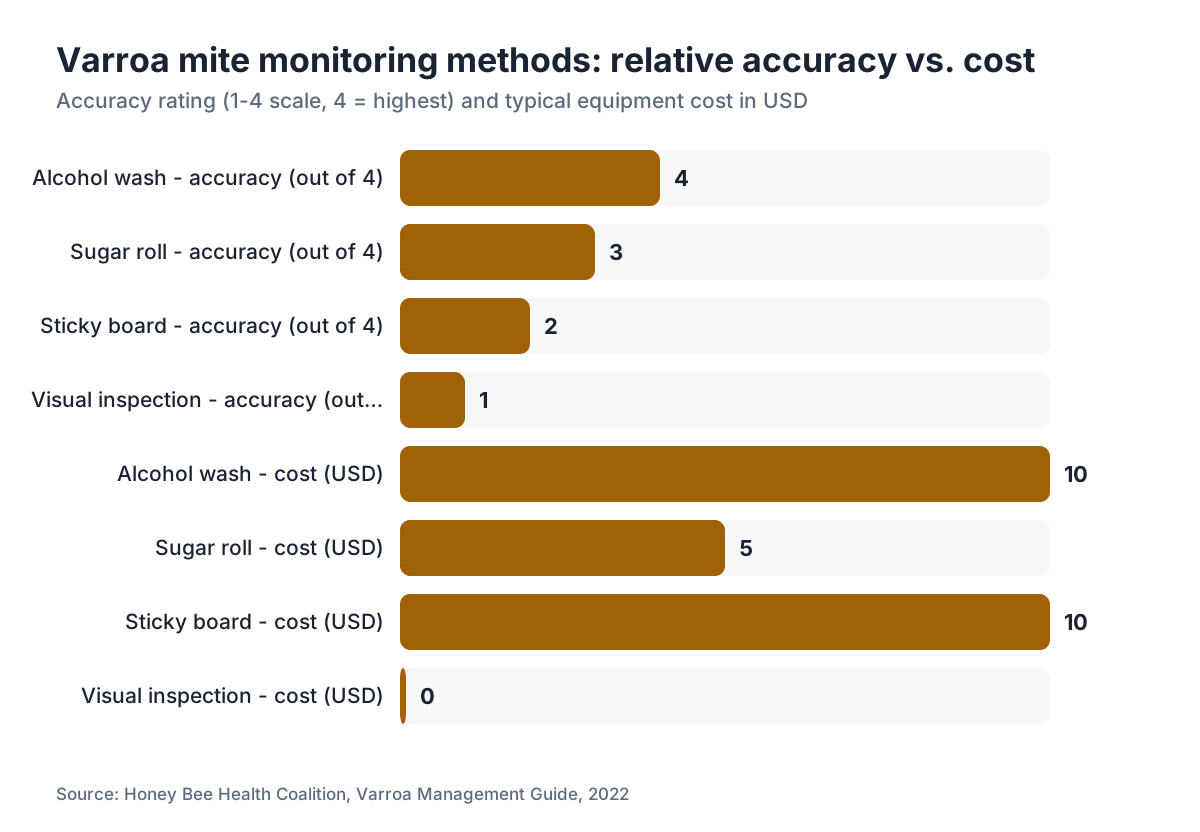
Alcohol wash is the most accurate count method there is. Sugar roll spares the bees but gives you a looser number. Sticky boards report mite fall but need conversion math and ignore what's hiding under capped brood. If your neighbor has never run a count, this is your opening. Don't lecture. Do one side by side. Most people find it genuinely interesting once they see what's floating in the jar.
A simple summary you can share:
| Method | Accuracy | Bee mortality | Equipment cost |
|---|---|---|---|
| Alcohol wash | High | ~300 bees | Under $10 [4] |
| Sugar roll | Moderate | None | Under $5 [4] |
| Sticky board | Low-moderate | None | $5-15 [4] |
| Visual inspection | Very low | None | Free |
If you want a pre-built record sheet to hand your neighbor, the Honey Bee Health Coalition offers free downloadable monitoring logs on their website. [11]
How do you start the conversation without being condescending?
This is where most beekeepers blow it. They lead with the problem: "your hives are mite bombs." Terrible opening. Nobody likes being told their bees are a threat, especially when they're proud of keeping bees at all.
Start with the shared interest. You both want healthy colonies. You both spent money on equipment, time on inspections, probably some heartbreak on bees that died. That's real common ground. The conversation goes better when you open with your own experience: "I've been fighting varroa reinfestation every late summer, and I'm trying to work out whether we could time treatments better together as neighbors."
Then ask before you offer. Do they monitor? What have they tried? Do they know their counts right now? Their answers tell you whether you're talking to someone who's never heard of varroa or someone who knows more than you do. Those are two different conversations.
If they're genuinely new to mite management, offer help. Bring your alcohol wash gear. Walk them through it. This isn't charity. It's self-interest. A neighbor who suddenly understands varroa biology is worth more to your apiary than any treatment you can apply alone.
If they're dismissive, don't push. Leave them a printout of the Honey Bee Health Coalition guidance and a note with your phone number. You've planted the seed. Some people need a season of dead colonies to get serious, and that's sad, but you can't shortcut it.
What should you actually ask for in these conversations?
Vague asks get vague commitments. If you want a real outcome, be specific about what you're proposing. Four asks that work in practice:
One: synchronized monitoring. Ask if you can both count mites in the same two-week window, say mid-July and again mid-August, then compare. This costs neither of you anything but an hour.
Two: treatment timing coordination. If you're both treating, do it in the same window so one apiary isn't a mite reservoir while the other is mid-treatment. Most oxalic acid and miticide label windows are flexible enough to line up. EPA-registered varroa treatments include oxalic acid (Api-Bioxal), amitraz (Apivar), and fluvalinate (Apistan), each with its own application windows and conditions on the label. [5] [6] [7]
Three: a heads-up before a collapse. If they see a hive weakening fast in late summer, ask them to tell you, so you can put entrance reducers on your strongest hives and cut the robbing opportunity.
Four: shared resources. If they're newer, offer to split a pack of Api-Bioxal wands or lend them your oxalic acid vaporizer. Goodwill goes up. The treatment gets done.
Notice that none of these asks require your neighbor to do anything uncomfortable. Each one is framed as cooperation, not correction.
Are there any legal requirements for reporting high varroa levels?
In most U.S. states, varroa is not a reportable pest the way American foulbrood is. You're generally not required to notify anyone about high mite loads. Many states do require beekeepers to register hives with the state department of agriculture, and registered apiaries can be subject to inspection. [8]
Some states have specific rules for abandoned colonies or colonies in collapse. If a neighbor's hive is truly neglected and actively spreading disease, your state apiarist's office is the right contact. They can inspect, and in some cases order treatment or removal. That's a last resort, not a first move, but it exists.
If you're unsure of your state's registration rules, the American Beekeeping Federation maintains links to state apiarist contacts, and most land-grant extension programs run state-specific apiculture pages. [9]
Feral colonies on public or abandoned property are worth reporting to your county agricultural extension office. They often work with pest control operators who relocate rather than kill, which is better for everyone, bees included.
How do you bring this up at a local beekeeping club meeting?
The club meeting is the highest-leverage venue for this, because you reach everyone at once and the room is more collegial than a doorstep visit ever will be.
Ask for five minutes on the agenda. Don't frame it as "we have a varroa problem in the neighborhood." Frame it as "I want to propose a neighborhood mite monitoring network." That's affirmative and interesting. Then walk through what it looks like: everyone monitors in the same two-week window, shares results to one sheet or group chat, and coordinates treatment timing where possible.
Bring printed threshold charts. The 2-percent-during-brood-season benchmark fits on a half-sheet. If your club doesn't already share monitoring data, propose a simple shared Google Sheet where members log counts and dates. That builds peer accountability without confrontation.
Some clubs have started formal neighborhood varroa agreements, where members commit to monitoring at least three times a season and reporting to the group. This is more common where beekeeper density runs high. The Honey Bee Health Coalition's community resources discuss this kind of coordinated approach. [1]
If you want a structured monitoring and treatment planning tool to share with your club, VarroaVault's free protocol tools give you printable schedules and count sheets, and nobody has to sign up for anything.
What if a neighbor refuses to treat and their colony is collapsing?
This is the hard one, and there's no clean answer. You can't force a neighbor to treat. In most jurisdictions, neglected hives aren't covered by nuisance laws in any useful way unless the colony is also aggressive enough to pose a stinging risk. If aggression is part of the picture, see the section on africanized honey bee dynamics, because that shifts the legal calculus quite a bit.
Your practical options when a neighbor won't treat:
One: cut your own robbing exposure. Entrance reducers on every hive, no open feeding, strong populations that can defend themselves. This won't stop all mite transfer, but it closes the robbing door.
Two: count more often. If reinfestation is happening, you want to catch a mite spike early, before the next brood cycle buries it. Going from three counts a season to monthly counts from July through September is cheap insurance.
Three: contact your state apiarist. If you genuinely believe the colony is collapsing and spreading mites, a state inspection may be warranted. Most state apiarists would rather make one visit than watch several apiaries fail. Your state department of agriculture website is the place to start. [8]
Four: accept the limit and treat around it. With an untreatable reinfestation source nearby, you may need to run oxalic acid more often, or use drone comb removal as a mite sink. Nobody has clean data on how much that compensates, but it beats doing nothing.
How do you handle this conversation with a non-beekeeper neighbor who is worried about your hives?
Sometimes the worry runs the other direction. Someone near your apiary is nervous about stings, allergic reactions, or swarms, and isn't sure what to make of the boxes in your yard. This is a different conversation, but it tends to show up alongside varroa talk once neighbors know you keep bees.
Start with reassurance, not facts. Let them lay out the full concern before you explain a thing. Then answer it head on. "Do honey bees sting?" comes up constantly, and an honest reply works: yes, but a healthy, well-managed colony is far less defensive than yellowjackets or wasps, and it's the mite-weakened colonies that turn unpredictable. The do honey bees sting piece on this site covers the full biology if you want something to share.
For a neighbor who's actually curious, an apiary tour in proper gear is one of the best relationship builders there is. People who've looked inside a hive almost never file the complaint.
If they wonder whether your bees are working their flowers, the honest answer is yes, and in most localities that counts as a benefit, not a nuisance. Pollination is goodwill capital with gardening neighbors.
What resources can you share with a neighbor to help them get started on mite management?
The best thing to hand a receptive but green neighbor is the Honey Bee Health Coalition's Varroa Management Guide. It's free, on their website, peer-reviewed, and written for exactly this reader. [1] The current edition was updated in 2022 and covers monitoring methods, treatment options, and threshold decisions in plain language.
For treatment label information, the EPA pesticide registration database lists every currently registered varroa treatment with its full label, including oxalic acid products, amitraz strips, and pyrethroid treatments. [5] Labels are legal documents. They are the only source of truth on application rates, timing restrictions, and honey super rules.
If your neighbor is buying monitoring gear for the first time, the cost is small: a canning jar with a hardware cloth lid, isopropyl alcohol, and a white plastic tray runs under fifteen dollars total. If they want to compare vendors, the beekeeping supply companies roundup ranks sellers with the widest treatment and monitoring stock.
VarroaVault's free monitoring and treatment calendar lets you plug in your location and colony count and get a season-long schedule. Worth sending the URL if your neighbor prefers a plan over a PDF.
A regional university extension fact sheet is the last piece, since it carries local timing data the national guides skip. Penn State Extension, the University of Minnesota Bee Lab, and the UC Davis apiculture program all keep free, current varroa resources online. [2] [3] [10]
How do you document neighbor conversations and mite counts in case you need them later?
Most neighbor talks about varroa never escalate. But in the few that do, a paper trail matters. Keep a simple log: the date, who you spoke to, what you asked, what they said. A text or email confirming any agreement beats a handshake every time.
For your own counts, record the date, colony ID, method, sample size, and mite number. If you ever have to convince a state apiarist that a neighboring apiary is your reinfestation source, a six-month count history showing pre- and post-event spikes carries far more weight than "I think their bees are the problem."
This documentation protects you too. If a neighbor later claims your hives spread disease to theirs, your records show whether your counts were above threshold and exactly when you treated.
Spreadsheets work fine. The Honey Bee Health Coalition's downloadable monitoring logs have pre-formatted fields that print cleanly. [11] Some beekeeping apps like Hive Tracks export count data as PDFs, which are easy to share or file.
Frequently asked questions
How far away can varroa mites spread from one hive to another?
The main pathways are robbing and drifting bees, which typically work within a one-to-two mile radius. The Honey Bee Health Coalition notes that collapsing colonies actively spread mites through these routes. Exact distances shift with colony density, forage, and season. Late summer, when forage is scarce and weak colonies get robbed hard, is the highest-risk window.
What is a 'mite bomb' and how does it affect nearby beekeepers?
A mite bomb is a colony collapsing under high varroa load that spreads mites to neighboring hives through robbing and drifting. Bees from the dying colony carry mites as hitchhikers into healthy hives a mile or two away. This can push a treated apiary back above the 2 percent action threshold within weeks, even if the beekeeper did everything right.
Is a beekeeping neighbor legally required to treat for varroa?
In most U.S. states, there's no legal mandate to treat for varroa specifically. Many states do require hive registration with the department of agriculture, and registered hives may be subject to inspection. If a colony is in obvious collapse, some states give the state apiarist authority to order treatment or removal. Check your state agriculture department website for current rules.
How do I approach a neighbor about their bees without starting a conflict?
Lead with shared interest, not accusation. Open by talking about your own mite struggle and ask if they'd want to coordinate monitoring timing. Offer help instead of criticism: bring your alcohol wash gear, offer to run a count together. Most beekeepers respond well as peers. Come in with data about your own hives, not assumptions about theirs, and the conversation stays constructive.
What mite count threshold should I share with a neighbor as a treatment trigger?
The widely cited threshold is 2 percent mites per hundred adult bees during the brood-rearing season, from University of Minnesota Bee Lab guidance and the Honey Bee Health Coalition's Varroa Management Guide. Some programs use 3 percent as a conservative trigger. In late summer, when winter bees are being raised, many beekeepers treat at any detectable level because those winter bees decide whether the colony survives.
Can I report a neighbor's untreated hives to the state?
Yes. If you believe a neighboring apiary is collapsing and spreading mites or disease, contact your state apiarist through your state department of agriculture. They can inspect and, in some states, order treatment or removal for severely neglected hives. This is a last resort after direct conversation fails, but it's a legitimate option, and most state apiarists take these reports seriously.
What treatments can I recommend to a neighbor who has never treated for varroa?
EPA-registered options include oxalic acid (Api-Bioxal), amitraz strips (Apivar), and pyrethroid strips (Apistan, ApiLife Var). Oxalic acid vaporization is low-cost, effective, and the easiest starting point for a new beekeeper. Always point them to the product label for application rates and timing restrictions. The Honey Bee Health Coalition's Varroa Management Guide also runs a side-by-side treatment comparison covering efficacy, cost, and temperature windows.
How do I get my local beekeeping club to take neighborhood varroa coordination seriously?
Ask for five minutes on the agenda and frame it as a neighborhood monitoring network, not a complaint. Propose that members share counts in a simple spreadsheet twice a season and coordinate treatment windows. Print the 2 percent threshold on a half-sheet to hand out. Clubs that already share swarm data are often receptive, since this uses the same collaborative infrastructure. Peer accountability without confrontation is the goal.
What is the best monitoring method to demonstrate to a new beekeeper neighbor?
Alcohol wash is the most accurate and easy to show in a backyard. You need a jar with a hardware cloth lid, isopropyl alcohol, and a white pan. Sample roughly 300 bees from the brood nest area, wash, and count the mites in the pan. The whole process takes about ten minutes. Showing someone their own count in real time beats explaining it in the abstract.
What should I do if a neighbor's bees are robbing my hives heavily?
Reduce entrance size on all your hives right away, pull any open feeding, and if you can, shift hive orientation so the entrance faces a fence or barrier that foragers have to work around. You can't stop robbing entirely, but you shrink the mite transfer pathway. Bump your monitoring to weekly during any active robbing event, and treat promptly if counts climb above 2 percent.
Are there free resources I can print and give to a neighbor about varroa?
Yes. The Honey Bee Health Coalition's Varroa Management Guide is free to download and includes monitoring logs, treatment comparison charts, and threshold tables. Extension programs at Penn State, the University of Minnesota, and UC Davis also publish free, downloadable fact sheets with region-specific timing. These carry more weight than anything you write yourself, because they're peer-reviewed.
How often should neighboring beekeepers compare mite counts?
At minimum twice during the brood season: once in late spring (May or June) and once in midsummer to late summer (July or August). The late-summer count matters most, because that's when the winter bee cohort is being raised and when collapsing colonies create the heaviest robbing pressure. If anyone finds counts above 2 percent, a third check three weeks after treatment confirms whether it worked.
Does coordinating treatment timing with neighbors actually reduce reinfestation?
The logic is sound and most apiarists recommend it, though controlled trial data specific to neighborhood-scale coordination is limited. If everyone within your flight radius treats in the same window, the pool of mite-loaded bees available to drift or rob shrinks sharply. The Honey Bee Health Coalition's guide recommends community-scale treatment coordination as a reinfestation strategy, especially in high-density beekeeping areas.
What if I suspect feral colonies, not neighbors, are the reinfestation source?
Feral colonies are common reinfestation sources, especially in wooded or older suburban areas. You can't treat them directly. Your options: report feral colonies in accessible structures to your county extension office for possible removal, keep your own monitoring tight and treat aggressively in late summer, and use entrance reducers during peak robbing season. Sometimes accepting a baseline reinfestation pressure and managing it proactively is the realistic path.
Sources
- Honey Bee Health Coalition, Varroa Management Guide (2022 edition): Collapsing colonies spread mites to other colonies through robbing and drifting; community-scale treatment coordination recommended
- University of Minnesota Bee Lab, Varroa Mite Management: 2 percent mites per hundred bees used as treatment action threshold during brood-rearing season
- Penn State Extension, Varroa Mite Management in Honey Bee Colonies: 2 percent threshold cited as standard action point; seasonal monitoring schedule recommended
- Honey Bee Health Coalition, Varroa Management Guide, Monitoring Methods Comparison: Alcohol wash, sugar roll, and sticky board cost estimates and relative accuracy ratings
- EPA, Pesticide Registration (Api-Bioxal oxalic acid label): Api-Bioxal is an EPA-registered oxalic acid product for varroa treatment; application conditions and restrictions on label
- EPA, Pesticide Registration (Apivar amitraz label): Apivar is an EPA-registered amitraz strip treatment for varroa with specific application windows on label
- EPA, Pesticide Registration (Apistan fluvalinate label): Apistan is an EPA-registered fluvalinate strip treatment for varroa; label governs timing and honey super restrictions
- American Beekeeping Federation, State Apiarist Directory: ABF maintains links to state apiarist contacts for each U.S. state
- UC Davis Department of Entomology and Nematology, Honey Bee Research Program: UC Davis apiculture program publishes free varroa management resources with California-specific timing
- Honey Bee Health Coalition, Varroa Management Guide, Downloadable Monitoring Logs: Free downloadable monitoring log templates available for beekeeper use
Last updated 2026-07-10