How to save a collapsing colony with high varroa load
TL;DR
- A colony with a varroa wash count above 3% and a shrinking population is actively collapsing.
- The window is narrow.
- Treat immediately with oxalic acid vapor or amitraz strips, check whether the queen and brood mass can rebuild, and decide within a week whether to push through or merge into a stronger hive.
- Some collapsing colonies aren't worth saving alone.
How do you know the colony is actually collapsing from varroa and not something else?
Before you spend a week and forty dollars treating the wrong problem, prove it's varroa. Mite-driven collapse has a specific fingerprint: a wash count above 2-3% (2-3 mites per 100 bees), an adult population dropping faster than the season explains, deformed wings on emerging bees, spotty or sunken brood, and greasy-looking bees with shortened abdomens. The Honey Bee Health Coalition's Varroa Management Guide describes the syndrome as "mite bombs" radiating out of brood cells into the adult population, and it accelerates once it starts [1].
Other killers look different. Pesticide exposure is fast and sudden, with piles of dead bees at the entrance. Small hive beetle pressure leaves slimy, fermented comb. Nosema leaves crawling bees and dysentery streaks. American foulbrood gives you ropy, foul-smelling brood. Varroa collapse is slower and systemic: sick adults, a shrinking cluster, and a wash count that should settle the argument.
Haven't done a wash yet? Do one before you touch anything else. Alcohol wash or a sugar roll, 300 bees minimum, pulled from the brood nest. Count the mites. The number tells you how bad it is and which tool you reach for first. A count under 1% in a struggling hive means varroa probably isn't the main driver, and you should keep looking. A count of 5% or higher means the colony has been overwhelmed for weeks and you're in triage.
What mite level means the colony is too far gone to save?
There's no single number where a hive flips from savable to doomed, but the math turns brutal fast. The Honey Bee Health Coalition's treatment threshold is 2 mites per 100 bees during the brood-rearing season and 1 mite per 100 in late summer, when winter bees are being raised [1]. By the time a wash reads 5-8%, the mite population hidden in capped brood is several times higher than what landed in your jar.
A rough figure from the biology: for every mite you find on adult bees, roughly 2 to 4 are tucked in capped brood, depending on the brood-to-adult ratio [2]. So a 6% wash in a hive full of sealed brood can mean a true infestation pushing 20% of all bees and brood combined. The viral load, mostly deformed wing virus, has been building for weeks.
My honest read. If the wash is above 5%, the queen is present and laying a solid pattern, and there are four or five frames of bees, treat and monitor. You can pull a hive back from a 6-7% count. If the wash is above 8%, the queen has failed or the brood nest is wrecked, and the population is down to two or three frames, the numbers change. You're better off treating those bees and shaking them into a stronger hive than burning resources on a colony that can't rebuild before winter or the flow ends.
Nobody has clean published data on the exact point of no return, because outcomes hinge on season, forage, queen age, and virus pressure all at once. The closest population-level evidence comes from USDA ARS and state survey work: colonies above 3% in August carry much higher overwinter mortality [3].
What is the fastest-acting treatment you can use right now?
Speed matters in a crash. You want something that kills mites riding on adult bees fast, because those are the bees spreading virus this week.
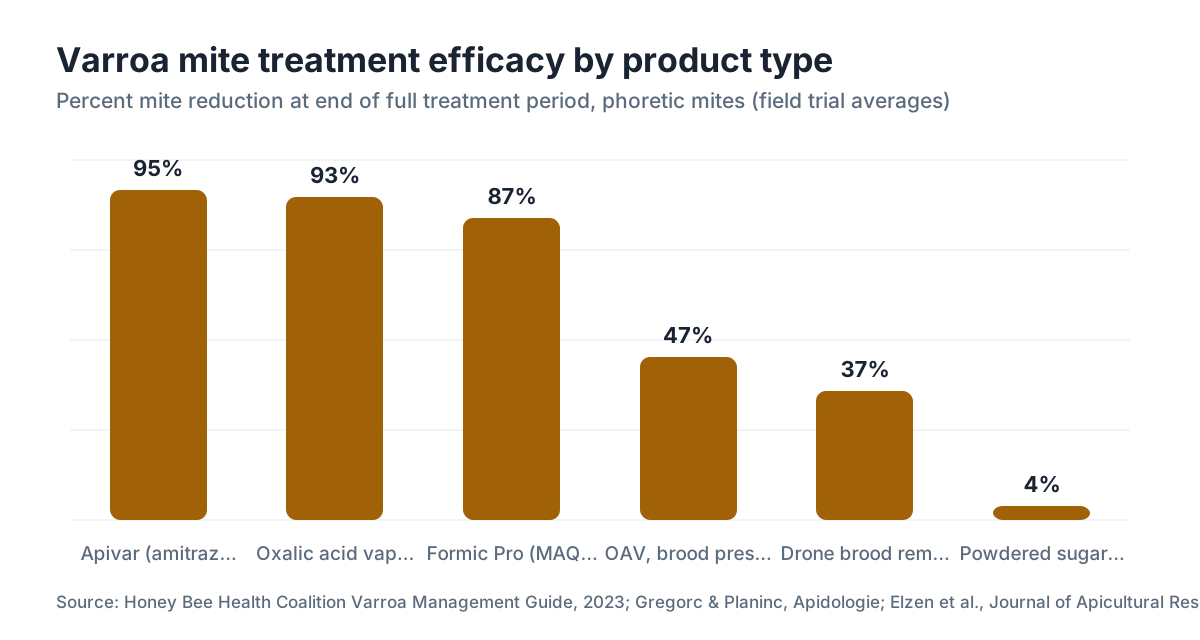
Oxalic acid vaporization is the quickest hit for a broodless or low-brood colony, and you can repeat it every five days. A single vapor treatment reaches close to 95% efficacy on phoretic mites (mites on adult bees) but does almost nothing to mites sealed in brood [4]. That's the catch. If the hive is packed with capped brood, one vaporization won't fix it.
Amitraz strips (Apivar) start working within 24 to 48 hours and stay effective against phoretic and emerging mites across a 42 to 56 day treatment window. Field trials put efficacy at 90-99% when applied right [5]. The downside is the clock. A collapsing colony may not have six weeks to wait for the full cycle.
Here's the triage sequence a lot of experienced beekeepers use. With moderate to heavy brood, install Apivar strips right away for the sustained effect, then run one or two oxalic acid vaporizations in the first week to knock the phoretic load down now. This combination isn't spelled out on every product label, so check your state rules, but the Honey Bee Health Coalition's 2023 guide notes that combining treatments for heavily infested colonies is an approach in field use [1].
Formic acid (MAQS or Formic Pro) penetrates cappings and kills mites in brood, which sounds perfect. Two problems: it's temperature sensitive and it stresses the colony. A weak, collapsing hive may not tolerate the fume load, and efficacy drops hard below 50°F or above 85°F [6]. In a colony already bleeding population, formic can push the queen out. I'd reach for amitraz plus oxalic vapor before formic in a real emergency.
What's legal, and at what dose and timing, comes down to the EPA registration and label for each product [7]. Read the label. Follow the label. The label is the law.
Should you try to save the colony or merge it into a stronger one?
Most beekeepers dodge this question because merging feels like quitting. It isn't. Merging a varroa-bombed hive into a healthy one without treating first is how you kill two colonies instead of one.
Here's a simple decision framework:
| Condition | Recommended action |
|---|---|
| Wash 3-5%, queen present, 5+ frames of bees | Treat immediately, monitor, support with feed |
| Wash 5-8%, queen present, 4+ frames of bees | Treat immediately, consider a supplemental brood frame from another hive |
| Wash 5-8%, queen present, fewer than 3 frames of bees | Treat bees before merging, then merge into a stronger colony |
| Wash above 8%, queen failing or absent | Treat all bees, then merge or shake out |
| Queen absent, no eggs, wash high | Emergency queen introduction or full merge after treatment |
The newspaper merge works fine once the bees from the collapsing hive have been treated. Don't rush it. Let treatment run at least 48 to 72 hours to knock the mite load down before combining, or you're handing mite-heavy bees to a healthier hive.
One thing worth knowing. Bees from a high-mite colony are often virus-compromised even when they look normal, and they may live shorter lives than healthy bees. The surviving population you merge in might not deliver as many foraging weeks as you'd hope. That's no reason to skip the merge. It is a reason to be generous with feed and to carry the receiving colony through its next brood cycle.
How do you treat when there's a lot of capped brood present?
Capped brood is where mites hide from almost every treatment. That's the central technical problem in a crash, because collapsing hives often still hold a lot of brood even as the adult population falls off a cliff.
Apivar (amitraz strips) is the most practical choice with brood present. The strips transfer amitraz onto adult bees by contact, and those bees spread it through the colony and onto young bees chewing out of cells. Across the 42 to 56 day window, successive cohorts carry it to mites as they emerge [5]. You aren't killing mites inside sealed cells directly. You're catching them the moment they come out. Place strips in the brood nest, not on the outer frames.
Oxalic acid vaporization with brood present needs repeat applications. The logic: vaporize every five days and you catch mites emerging from cells between treatments before they slip into fresh brood. Studies testing 3 to 4 vapor applications over 12 to 20 days found reasonable efficacy against a single treatment, though still below amitraz over a full cycle [4]. USDA ARS recommends this extended approach for hives you can't make broodless.
Caging the queen to force a temporary broodless window is a legitimate move, and it hands oxalic vapor close to 95% efficacy in a single shot [4]. Cage her on a frame or in a queen cage, wait 24 days for all brood to emerge, then vaporize. The trouble in a crash is obvious. You've stopped new bee production for nearly a month, and that month may be time you don't have. This works better as prevention earlier in the season than as emergency triage.
Go the Apivar route and recheck counts at day 42. If the wash hasn't dropped below 1%, leave the strips two more weeks. Some beekeepers hit resistance in their local mites, though documented amitraz resistance in US varroa is still uncommon next to Europe [3].
What else does the colony need beyond mite treatment?
Treatment alone won't save a colony that's also starving, queenless, or short the nurse bees it needs to raise healthy brood. You fix everything at once.
Feed. A collapsing colony almost always has thin stores, because the forager population has crashed. Feed 1:1 sugar syrup in fall, or 2:1 if it's late and you want them storing it fast instead of just burning it. Set pollen substitute patties right on the top bars over the brood nest. Mite-damaged bees have hypopharyngeal glands that never developed properly, so nurse bees may be making lower-quality royal jelly. Extra protein helps the next generation compensate [8]. For more on how pollen factors into hive health, see beehive pollen.
A frame of open brood from another colony. If you have a healthy hive to pull from, giving the collapsing one a frame of open (uncapped) brood does two jobs. It gives young nurse bees something to cluster over and keep warm, and if you shake the adhering bees in too, it adds nurses with working hypopharyngeal glands. That gives the remaining population a focus and can trigger colony-building behavior. Never give sealed brood from an unknown source. You may be importing more mites.
Queen status. Every step above assumes a laying queen. Check for eggs or very young larvae. If she's gone and the colony has no eggs or young larvae to raise a replacement, you introduce a mated queen or combine. A laying worker colony, where workers start laying unfertilized eggs in a queenless hive, is very hard to rescue. Most experienced beekeepers combine laying worker colonies rather than fight to re-queen them.
Ventilation and space. A weak colony can't hold heat well. Put the entrance reducer in to cut robbing pressure and shrink the space the bees have to defend. Robbing is savage on a weak hive and speeds the collapse. Screened bottom boards are fine, but close the drawer in cold weather so the cluster keeps its heat.
When you need gear fast in the middle of a crisis, beekeeping supply companies can help you find it quickly.
How fast does a high-varroa colony collapse, and how much time do you have?
It depends on the season, and it's faster than most beekeepers expect.
Varroa populations grow roughly 25-35% per month in an established colony during brood rearing [2]. A hive that hit the 3% threshold in July and went untreated can realistically reach 10-15% by September. At that point the winter bees, the long-lived bees meant to carry the colony to spring, are being raised alongside 10-plus mites per 100 adults, and most are DWV-infected before they even emerge.
USDA ARS and university extension data consistently show colonies untreated or undertreated in late summer die over winter at 2 to 3 times the rate of treated colonies [3]. August and early September is the single highest-leverage treatment window for overwintering, because those are the weeks winter bees develop.
In a hive that's already visibly crashing, you count time in days, not weeks. A cluster that slides from five frames of bees to three in two weeks is on an exponential decline. You probably have one or two brood cycles (21 to 42 days) to turn it before the population is too small to hold cluster temperature through cold nights, which kills it regardless of mite count.
If it's already September or October and you're seeing these signs, be honest about the calendar. In northern states (USDA hardiness zones 4-5), colonies generally need to be cluster-ready by October, with a young mated queen and enough bees. A September collapse in Maine is a different animal from the same collapse in Georgia, where you still have warm brood cycles left.
For how varroa biology drives these timelines, see varroa mite.
What does oxalic acid vaporization actually do to phoretic mites, and how do you use it safely?
Oxalic acid vaporization sublimates crystalline oxalic acid dihydrate into a fine aerosol that settles on bee bodies and coats the hive interior. Phoretic mites (the ones riding adult bees) contact the acid and die. The exact mechanism isn't fully settled in the literature, but it's thought to disrupt the mite's cuticle chemistry. It does not penetrate wax cappings to any meaningful degree, and that's the core limit [4].
The EPA-registered product in the US is Api-Bioxal, 98.2% oxalic acid dihydrate. The label calls for 1 gram of active ingredient per brood box by vaporization [7]. For most vaporizers that works out to about 2.05 grams of Api-Bioxal crystals. Don't use hardware-store oxalic acid. It isn't food-safe and isn't registered for this use.
Safety is not optional. Oxalic vapor is corrosive to eyes and airways. The EPA and USDA both call for a respirator rated for acid vapors (an N95 with an acid cartridge at minimum, though a P100 with an organic vapor/acid combination cartridge is what most serious beekeepers wear), eye protection, and gloves. Work upwind or run a sealed vaporizer with a remote shutoff. Never vaporize in an enclosed space. The acid disperses fast outdoors, but in a shed or garage the concentration builds.
In a crash, oxalic vaporization is often the first thing you do while Apivar strips are on the way, or the immediate knockdown before a longer-acting treatment takes hold. One vapor treatment won't fix a high-mite hive, but it drops the acute phoretic load within 24 to 48 hours, and that buys time.
Can a heavily mite-damaged colony recover its full strength, or is it permanently weakened?
The honest answer: it depends on what the mites damaged.
If the brood nest is intact, the queen is young and healthy, and you treat hard and early enough, colonies do recover. The mite-damaged adults that are already compromised die off on their natural schedule over the next few weeks, and low-mite bees replace them. A summer worker lives 4 to 6 weeks, so within six weeks of a successful treatment most of the adult population should be new bees raised in a cleaner environment [2].
The caveat is viral load. Deformed wing virus and sacbrood virus don't leave the colony just because mite numbers fall. Virus circulates through the adult population by trophallaxis and grooming. Studies have found DWV titers stay elevated for several weeks after mite loads are controlled [9]. Most of the time it resolves as the virus-laden adults age out, but in colonies with extreme pre-treatment DWV levels, recovery runs slower and sometimes stays incomplete.
A practical benchmark. If the brood pattern looks noticeably more solid four weeks out, fewer empty cells, less sunken or discolored capping, you're on track. If the pattern is still poor or the queen has vanished, something else is wrong, and a new queen may be the next step.
One more lever. Long-term survival after a mite crash leans on genetics. Colonies with VSH (Varroa Sensitive Hygiene) or general hygienic behavior clean out mite-infested brood more aggressively. If you're replacing the queen after a collapse, sourcing VSH or locally bred hygienic stock is worth the money. Keep a simple log of your wash counts through the recovery period so you aren't guessing about progress.
How do you prevent the same collapse from happening again next season?
Saving a collapsing hive is the hard way to manage varroa. The easy way is counting mites on a schedule and treating before the curve goes exponential.
The Honey Bee Health Coalition recommends alcohol wash or sugar roll counts at least four times a year: early spring, pre-swarm season (April-May), midsummer (July), and late summer (August), with the August count mattering most for overwinter survival [1]. Some beekeepers count monthly from April through September. That adds maybe 20 to 30 minutes per hive per year and gives you far better data.
The thresholds are clear: 2 mites per 100 bees during brood season, 1 per 100 in late summer when winter bees develop. These come from USDA ARS and university apiculture extension research and are widely used as practical guidance [3].
Rotate treatments across seasons to cut selection pressure for resistance. Don't lean on Apivar every single year. Mix in formic acid or oxalic vapor cycles. The Honey Bee Health Coalition's guide spells out rotation strategies [1].
Records are the piece most hobbyists skip. Date of count, count result, treatment applied, follow-up count. A notebook, a spreadsheet, or a tracking tool all work. When a colony crashes, you want to look back and see whether you had a monitoring gap or a treatment failure, because the fix differs.
For a closer look at the mite itself and why it's so hard to control, varroa mite covers the biology behind these practices.
Are there natural or treatment-free options that can save a collapsing colony?
People ask me this a lot, so here's the straight answer. No. There is no natural or treatment-free intervention with documented efficacy that stops an active varroa collapse in a managed colony in the short term.
Essential oils, powdered sugar dusting, drone brood removal, and assorted folk remedies have all been studied, and none produce the mite reduction needed to pull back a 5%-plus infestation. Powdered sugar dusting is well-documented to have no meaningful mite-control effect [10]. Drone brood removal, where you pull and freeze frames of capped drone brood to strip out the mites that prefer it, can cut mite population growth by 30-40% when done consistently, but it's a tool for keeping mites low, not for hauling a hive back from a crash [1].
Small-cell foundation, unselected genetic resistance, and "survival of the fittest" approaches have all been tested. The consensus from USDA ARS and university research is that they don't reliably control varroa to levels that prevent colony loss in North American conditions [3]. Genuinely VSH-trait bees bred under selection can show real self-regulation, but that's a different thing from unselected bees on natural comb.
If you're committed to treatment-free beekeeping, that's a plan for a healthy hive with good genetics and low counts, not for a colony in active collapse. An active collapse is a veterinary emergency. You treat it.
Frequently asked questions
What is the treatment threshold for varroa before a colony is considered at risk?
The Honey Bee Health Coalition sets the field treatment threshold at 2 mites per 100 bees (2%) during the brood-rearing season, and 1% in late summer when winter bees develop. Above these levels, colony health and overwinter survival decline sharply. The 3% level is where many researchers describe active damage to the colony's population and productivity.
How do I do an alcohol wash to check varroa levels in a collapsing hive?
Collect about 300 bees (roughly half a cup) from the brood nest frames, not the entrance. Put them in a jar with 70% isopropyl alcohol, shake 60 seconds, and pour through a mesh strainer into a white tray. Count the mites. Divide by 3 for percentage: 15 mites from 300 bees equals 5%. Always sample from the brood nest for the most accurate reading.
Can I treat a collapsing colony that has no brood with oxalic acid?
Yes, and it's the best-case scenario for oxalic acid. With no capped brood, every mite is phoretic and fully exposed. A single oxalic acid vaporization in a broodless colony reaches roughly 90-95% efficacy. This is why some beekeepers cage the queen to create a broodless window before treating. Api-Bioxal is the EPA-registered product. Follow the label for dose and safety.
How long does Apivar take to work in a high-mite colony?
Apivar (amitraz strips) starts working within 24 to 48 hours, but the full course runs 42 to 56 days. You won't see the full reduction for weeks because the strips work by contacting adult bees that spread amitraz to emerging bees and newly exposed mites. Trials report 90-99% efficacy at the end of the full period. Do a wash after 42 days to confirm success before pulling the strips.
Is it safe to merge a varroa-infested colony into a healthy one?
Only after treating the collapsing colony first. Merging without treatment pushes mites straight into your healthy hive and can drive its count over threshold within weeks. Treat the failing colony at least 48 to 72 hours to knock down phoretic mites, then use the newspaper method to combine. The high-mite bees may also be virus-compromised, so recheck the combined colony's mite level two weeks after merging.
What time of year is it hardest to save a collapsing varroa colony?
Late summer (August-September in northern states) is the worst time for a colony to crash from varroa, because those weeks produce the long-lived winter bees that carry the colony to spring. A hive crashed in August lacks the time to raise a healthy winter cohort before cold sets in. September collapses in USDA zones 4-5 are very hard to reverse before overwintering populations must be established.
How many frames of bees does a collapsing colony need to be worth saving?
Most experienced beekeepers treat four or more frames covered with bees as the rough minimum for a colony worth saving on its own. Below three frames, the cluster can't hold temperature, nurse bees can't cover the brood, and the decline often outpaces recovery even after successful treatment. Below two to three frames, merging into a stronger colony after treatment is almost always the better call.
Will feeding sugar syrup help a varroa-collapsing hive recover?
Feeding helps but doesn't replace mite treatment. A 1:1 sugar syrup (one part sugar, one part water by weight) gives a starving colony carbohydrate energy. Pollen substitute patties address the protein deficit that mite-damaged nurse bees face. Feeding supports recovery after treatment, but a well-fed colony with an 8% mite load is still collapsing. Treat first, feed at the same time.
Can laying workers prevent a collapsing colony from recovering?
Yes. Laying workers develop when a colony has been queenless three or more weeks. They lay unfertilized eggs in worker cells, producing only drones. Laying worker colonies almost never accept a new queen and are very hard to rescue. If you see multiple eggs per cell scattered across the comb in a queenless hive, you likely have laying workers. The practical option is to combine those bees into a healthy colony after treating for mites.
Does varroa resistance to amitraz (Apivar) exist in the US?
Documented amitraz resistance exists in US varroa populations but is less widespread than in some European countries where amitraz has been used longer and harder. USDA ARS monitoring has found resistant populations in some regions. A warning sign is a count that won't drop below 2% after a full Apivar cycle. Rotating treatment chemistries across seasons cuts selection pressure and is standard Honey Bee Health Coalition guidance.
How soon after treating a collapsing colony should I do another mite wash?
For oxalic acid vaporization, do a follow-up wash 3 to 5 days after the final treatment to see the knockdown. For Apivar, wait until day 42 to 56, because full efficacy builds over the treatment period. If the count at day 42 is still above 1%, leave strips in another 1 to 2 weeks and recount. A successful treatment should bring the wash below 1% by the end of the period.
What does deformed wing virus look like and does it mean the colony is doomed?
Deformed wing virus (DWV) makes bees emerge with crumpled, shrunken, or absent wings. You may also see shortened abdomens or disoriented bees at the entrance. An occasional DWV bee doesn't mean the colony is doomed, but more than a few a day during brood emergence signals high mite pressure. After successful treatment, DWV symptoms fall as mite-free brood cycles replace the compromised generation, usually within four to six weeks.
Can I use formic acid (MAQS or Formic Pro) on a weak, stressed colony?
Formic acid is harder on a colony than oxalic acid or amitraz, especially a weak one. It has a narrow temperature window (50-85°F), and in a stressed colony with a small population it can drive queen loss. The MAQS and Formic Pro labels specify a minimum colony strength. In an active collapse, most practitioners prefer oxalic vaporization or Apivar, saving formic for stronger colonies where its brood-penetrating advantage pays off.
Is powdered sugar dusting an effective emergency varroa treatment?
No. Multiple university trials found powdered sugar dusting has no statistically significant effect on varroa populations. It causes some mite drop, but not enough to lower infestation meaningfully. The Honey Bee Health Coalition doesn't recommend it as a treatment. Using it instead of a registered acaricide in a collapsing colony costs you several days of treatment time and won't save the hive.
Sources
- Honey Bee Health Coalition, Varroa Management Guide (2023 edition): Treatment threshold is 2% during brood season and 1% in late summer; mite bomb syndrome description; drone brood removal reduces mite growth by 30-40%; powdered sugar not recommended
- Rosenkranz et al., Apidologie (2010): Biology and control of Varroa destructor: Varroa populations grow approximately 25-35% per month during brood season; for each mite on adult bees roughly 2-4 are in capped brood; adult worker lifespan 4-6 weeks in summer
- USDA ARS Bee Research Laboratory, varroa management resources: Colonies above 3% mite load in August have significantly higher overwinter mortality; overwinter mortality 2-3x higher in untreated colonies; amitraz resistance exists but is less common in US than Europe; small-cell and treatment-free approaches do not reliably control varroa in North American conditions
- Gregorc & Planinc, Apidologie: Oxalic acid efficacy and brood penetration studies: Single OAV treatment achieves approximately 95% efficacy on phoretic mites; minimal penetration of wax cappings; multiple applications over 12-20 days improve efficacy when brood is present
- Elzen et al., Journal of Apicultural Research: Amitraz efficacy trials: Apivar (amitraz strips) shows 90-99% efficacy in field trials over 42-56 day treatment period
- Formic Pro product label, NOD Apiary Products (EPA Registration No. 83923-1): Formic acid efficacy sensitive to temperature; optimal range 50-85°F; label specifies minimum colony strength
- EPA, Api-Bioxal product label (Reg. No. 84304-3): Registered dose for OAV is 1 gram active ingredient per brood box; 2.05 grams Api-Bioxal crystals per brood box; safety PPE requirements
- Amdam et al., Proceedings of the Royal Society B: Varroa effects on hypopharyngeal gland development: Mite-parasitized bees show reduced hypopharyngeal gland protein content, impairing royal jelly and royal food production; protein supplementation supports next-generation nurse bee development
- Nazzi et al., PLOS Pathogens: DWV titer persistence after varroa control: DWV titers remain elevated for several weeks after mite loads are controlled; DWV circulates through trophallaxis in adult population
- Steinhauer et al. / University of Maryland Extension, powdered sugar dusting efficacy review: Powdered sugar dusting has no statistically significant effect on varroa mite populations in multiple university trials
- Penn State Extension, Varroa Mite Management in Honey Bee Colonies: Alcohol wash protocol: 300 bees from brood nest, 60-second shake, count mites in tray; treatment frequency and threshold guidance
Last updated 2026-07-09