When a colony is too far gone to save from varroa
TL;DR
- A colony is probably past saving when an alcohol wash reads above 6 percent in late season, many adult bees show deformed wings, the brood pattern looks shotgunned, and the cluster has shrunk below three frames of bees.
- Treatment rarely rescues a colony that far along.
- The bigger danger is it turning into a mite bomb for your other hives.
What does 'too far gone' actually mean for a varroa-infested colony?
It means the mite population has outrun any treatment you can throw at it. Varroa treatments take time. Oxalic acid vapor on a broodless colony works in days. A full course of Apivar strips takes 6 to 8 weeks [1]. If the bee population is already collapsing and new adults are emerging heavily parasitized, the arithmetic works against you. You'd be treating a patient who can't survive the recovery period.
The idea beekeepers borrow here is the economic injury threshold from agricultural pest management. For varroa, the Honey Bee Health Coalition's Varroa Management Guide puts the treatment action threshold at 2 percent (2 mites per 100 bees) during summer brood rearing, and 2 percent again heading into fall when the long-lived winter bees are on the line [2]. A colony at 8 or 10 percent in September with a shrinking cluster is a different animal from one at 3 percent in June with a booming population.
So 'too far gone' isn't one number. It's mite load, colony population, time of year, and clinical signs in the bees read together. Miss any one of those four and you'll misjudge the call.
What mite count signals a colony probably can't recover?
There's no universal cutoff, and anyone who hands you a single magic number is oversimplifying. Most experienced beekeepers and the published guidance still cluster around a few practical marks.
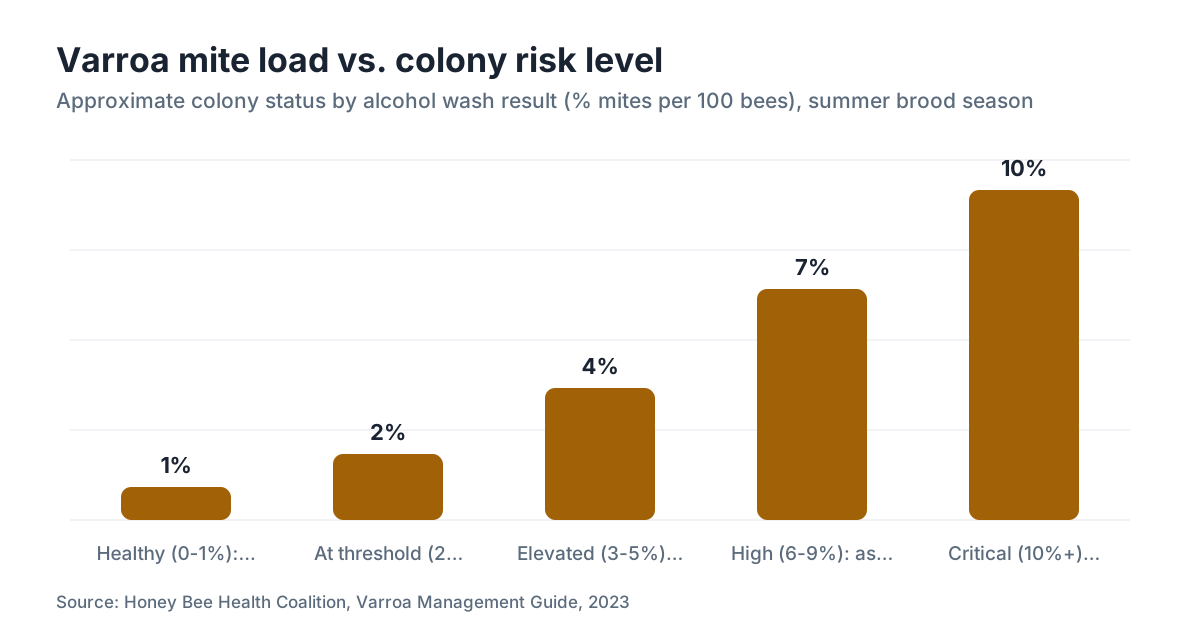
The Honey Bee Health Coalition recommends treating at 2 percent in summer and fall [2]. At 4 to 5 percent the colony is already in trouble. At 6 percent or higher late in the season, it's almost certainly headed for collapse before any treatment cycle can finish, because most of the next generation of winter bees will emerge carrying multiple mites and virus loads that gut their lifespan [3].
Here's the ugly part of varroa math. Mite populations can double roughly every 4 weeks during peak brood season [4]. A colony you test at 4 percent in August could hit 8 percent by mid-September. By the time obvious clinical signs show up, you're already two or three doubling periods behind.
| Mite load (alcohol wash) | Approximate colony status | Recommended action |
|---|---|---|
| 0-1% | Healthy, monitor | No treatment yet, test again in 30 days |
| 2% | At threshold | Treat now |
| 3-5% | Elevated, likely some DWV present | Treat immediately, evaluate colony size |
| 6-9% | High, probable virus damage | Treat, but assess whether colony is viable |
| 10%+ | Critical | Consider euthanizing or combining if population allows |
These ranges come from the HBHC guidance [2] combined with field experience in extension literature from Penn State and the University of Minnesota [5]. They're not carved in stone. They're the best working framework we have.
What visible signs in the bees tell you the colony is collapsing?
Mite counts are the gold standard, but the bees themselves tell you plenty if you look.
Deformed wing virus (DWV) is the clearest sign. You'll see adults emerging or crawling at the entrance with shriveled, crumpled wings and stubby abdomens. Varroa transmit DWV when they feed on developing pupae, and DWV prevalence climbs sharply with mite load [3]. Even 1 to 2 deformed bees per minute on the landing board means the mite population is already high. If a big share of your emerging bees look that way, the colony is in acute crisis.
A shotgunned brood pattern is the next tell. Healthy colonies have solid slabs of capped brood with few empty cells. A varroa-damaged colony, especially one also fighting sacbrood or chalkbrood kicked off by immune stress, has frames that look like Swiss cheese. Many of those empty cells held pupae too heavily parasitized to finish developing.
Check the cappings. Varroa-infested cells often have cappings that look sunken, greasy, or perforated. Workers uncap and recap struggling pupae, which leaves a pockmarked look.
Then count frames of bees, honestly. Pop the lid and look. If the colony is down to three frames or fewer in summer, when it should be growing, the population is crashing. Three frames barely covers the space needed for temperature control and nursing. Pile a heavy mite load on top of that and it's almost always fatal.
How does time of year change whether a colony can be saved?
This might be the single biggest variable. Same mite count, wildly different odds depending on the calendar.
Late spring through midsummer, a colony at 4 to 5 percent but still strong in numbers has a real chance. You treat, the colony keeps rearing brood, and over 6 to 8 weeks a healthier generation replaces the damaged one. The margin is thin, but it works.
Late summer and fall change everything. Colonies start raising the long-lived winter bees around August, with exact timing shifting by latitude. Those bees need to survive 6 to 7 months. If they emerge with high virus loads because mites ran wild during their pupal stage, they die early, the cluster dwindles through winter, and the colony won't reach spring no matter what you do in October [3]. The Honey Bee Health Coalition warns that mite levels above 2 percent in August and September put winter survival at serious risk [2].
Winter is the cruelest test. A broodless colony in January looks like a fine time to treat with oxalic acid, because the mites all ride on adult bees and sit exposed. That part is true. But if the cluster is small and the bees are already virus-damaged, killing the mites can't rebuild the bees. The lifespan damage is already done.
Spring is a partial exception. A colony that limped through winter with a high mite load sometimes, not always, keeps a small cluster that rebuilds if you treat hard in very early spring before brood rearing feeds the mite population again. It's a gamble. Worth a shot if the cluster has at least three frames of bees and a laying queen. Don't bet the season on it.
Can you combine a failing colony with a healthy one?
Sometimes yes. Sometimes it's the worst move you can make.
The problem is mite transfer. Dump a collapsing high-mite colony onto a healthy low-mite one and you hand the mites a fresh flood of brood to parasitize. You can wreck two colonies instead of saving one. Before you combine, treat the failing colony hard and drive its mite load as close to zero as you can [5].
Standard advice: treat the failing colony for a full effective cycle, test again, and only combine once the load is below 1 to 2 percent. In practice, if the colony is truly collapsing, you may not have 6 weeks for a full Apivar course. Oxalic acid dribble or vapor knocks down mites on adult bees within days, which is handy before combining, but it does nothing for mites in capped cells [6].
A workable protocol: vaporize the weak colony twice over 5 days to cut the phoretic mite load, then combine using the newspaper method with the weak colony on top. Check the combined colony's mite load 2 to 3 weeks later. No guarantees. Still better than doing nothing or combining blind.
Do not combine if the weak colony shows American foulbrood. Mite load is one problem. AFB is a different and worse one, and it will spread.
You'll need the right gear for any quick-treatment protocol. For supply sourcing options, see the beekeeping supply companies roundup.
What happens if you just leave a failing colony alone?
It becomes a mite bomb. That's the term researchers and experienced beekeepers use for a collapsing colony that drifts and absconds, spraying mite-laden bees into neighboring hives [4].
When a colony collapses from varroa, the dying bees don't just vanish. They drift into nearby hives. Robber bees from healthy colonies strip the failing hive of its honey and carry the hitchhiking mites home. If you run multiple hives, one neglected collapsing colony can push mite counts up across your whole apiary within weeks.
Feral colonies nearby take the same hit. Letting a colony die 'naturally' from varroa is not a neutral choice. It's an active threat to every colony within roughly a 3-mile foraging radius.
So once you've decided a colony is past saving, move fast. Euthanize it with soapy water, freeze the frames, or combine it after mite reduction. Don't let it sit. The longer you wait, the more mites scatter.
How do you humanely euthanize a colony that can't be saved?
Nobody enjoys this part. It's still part of responsible beekeeping.
The common method: close the entrance at night when all the bees are home, then pour a bucket of very soapy water (dish soap is fine) straight down through the top. The surfactant destroys the bees' ability to breathe through their spiracles. It's fast, usually under a minute for full effect.
Another approach is to seal the entrance and suffocate the colony inside a heavy-duty garbage bag left in the sun. Slower and messier. Most beekeepers go with soapy water.
After euthanizing, freeze all frames for at least 48 hours at 0 degrees F (-18 degrees C) to kill any remaining mites and prevent robbing [7]. Seal the equipment in garbage bags before moving it if you're not headed straight to a freezer. Hive bodies, frames, and supers can go back into service after cleaning, but any frames with heavy AFB should be burned.
Some beekeepers feel real grief over this call. That's normal. You put time and care into that colony. The right decision is still the right decision.
What should you do with the equipment after a colony dies from varroa?
Freeze it first. Forty-eight hours at 0 degrees F kills varroa, wax moths, small hive beetles, and their eggs [7]. That makes the gear safe to store or reuse without spreading the mite problem.
Beeswax and comb can hold pathogens beyond varroa. If the failing colony had heavy chalkbrood or other disease signs, old dark brood comb is better melted down than reused. Fresh comb and relatively clean drawn frames are worth keeping.
Inspect frames closely after freezing. Any frame with a sunken, greasy, or ropy look to the brood residue needs a hard look for American foulbrood before it goes into another hive. If you get the classic stringy, caramel-colored rope when you twist a twig into a suspicious cell, call your state apiarist. AFB is a regulated disease in most states [8].
Equipment that checks out clean goes back into rotation. Paint and sun it for a few weeks first if you want to be thorough. There's no hard evidence UV kills varroa, though it does help with some bacterial pathogens.
How do you stop this from happening to your other hives?
Monitor every colony, every 30 days during brood season. That's the floor. The Honey Bee Health Coalition rates the alcohol wash as the most accurate method, using a sample of 300 bees (about half a cup) from the brood nest [2]. Sugar roll is acceptable but undercounts by roughly 30 percent compared to alcohol wash [9].
For tracking test dates and thresholds across multiple colonies without leaning on memory, the free protocol tools at VarroaVault help you keep a monitoring schedule straight.
Treat at 2 percent. Not 3, not 4. Waiting costs you weeks you don't have. Every 30-day delay past threshold is another mite doubling period.
Rotate treatment classes. Running Apivar (amitraz) every single cycle selects for resistance. The EPA registers several active ingredients for varroa: amitraz (Apivar), oxalic acid (various formulations), thymol (Api-Life Var, ApiLife Var), and fluvalinate (Apistan, though resistance is widespread in US mite populations) [6]. Rotating between oxalic acid and amitraz is a practical strategy most extension programs back.
Keep records. Date of last test, count, treatment applied, date of next test. The colonies where you skip a testing cycle are the ones that blindside you in October.
For the biology behind all of this, the varroa mite foundational guide goes deeper.
Are there any treatments that can still work when mite loads are very high?
Yes, with real caveats.
Oxalic acid vaporization during a broodless period is the best rapid knockdown available to hobby and sideliner beekeepers. With no capped brood to hide in, mites have nowhere to shelter, and a single vaporization hits 90 to 99 percent efficacy in a truly broodless colony [10]. If you can force or find a broodless window in a collapsing colony, that's your best shot at a fast reset.
The catch is that a collapsing summer colony is rarely broodless. You can try to create a broodless window by caging or removing the queen for 24 to 25 days (a full brood cycle), then treating. But if the colony is already too weak to hold temperature and nurse brood, pulling the queen may speed the collapse.
Apivar (amitraz strips) gets good efficacy over 6 to 8 weeks even with brood present, because amitraz penetrates capped cells somewhat and hits mites as they emerge [1]. The problem is time. A colony at 8 percent in September doesn't have 8 weeks.
Hopguard 3 (hop beta acids) can go on with honey supers in place and works without the temperature limits of thymol products, but its efficacy runs lower than oxalic acid or amitraz, typically 60 to 80 percent depending on conditions [11].
No treatment saves a truly terminal colony. The honest answer: very high mite loads plus a small population plus late-season timing mostly can't be beaten by any registered product. Treatments are prevention and early-intervention tools. They aren't rescues.
How do you tell the difference between a varroa crash and other causes of colony loss?
This matters because the right response depends on the cause.
Varroa collapse looks like this: gradual or sudden population decline, deformed wing virus on adult bees, a shotgunned brood pattern, mites visible in uncapped drone brood (pull drone cells with a cappings scratcher), and high counts on an alcohol wash. The hive often still holds honey but simply runs out of bees.
Pesticide kill looks different. A sudden pile of dead bees in front of or inside the hive, adults dying in convulsing postures, full or partial honey stores with relatively intact brood. The die-off hits fast, inside 24 to 48 hours of exposure [12].
American foulbrood carries a distinct rotten smell (sometimes described as decaying meat), sunken and discolored cappings, and that ropy, stringy twig test. It requires reporting to your state apiarist in most states [8].
Small hive beetle collapse, common in warm climates, leaves the hive smelling fermented, with combs that look slimy and destroyed by beetle larvae. The bees abscond instead of dying in the hive.
Varroa and secondary infections often overlap. A mite-weakened colony may also pick up European foulbrood, sacbrood, or other pathogens. When you're not sure, send a sample to your state bee lab or the USDA Beltsville lab, which offers free diagnostic services to beekeepers [13].
Frequently asked questions
What mite count means my colony is too far gone to save?
There's no single number. A colony at 6 percent or higher on an alcohol wash during late summer or fall, plus a shrinking population and visible deformed wing virus, is very likely past recovery. The Honey Bee Health Coalition sets the action threshold at 2 percent, so a colony at 6 to 10 percent is already 2 to 3 doubling periods behind where it should have been treated. Time of year and colony size matter as much as the count.
Can I save a colony with deformed wing virus symptoms?
Sometimes, if the colony still has a large population, DWV is low (only a few bees affected), and you're early enough in the season. Treat hard and now. If a big share of your emerging bees have shriveled wings, the mite load has been high for several brood cycles, the virus reservoir is large, and recovery is unlikely even with treatment. Recheck mite counts 2 to 3 weeks after starting to see if you're gaining ground.
How many frames of bees is too few to save a colony?
Below three frames of bees in summer is a serious warning. At three frames the colony can barely hold core temperature and nurse brood. Add high mite loads and a colony this small rarely rebuilds. Two frames or fewer in summer is almost certainly terminal. In early spring, 2 to 3 frames can sometimes build up if mite loads are controlled and you start feeding right away, but it's a race against time.
Will treating a dying colony spread mites to my other hives?
Treating reduces that risk. Not treating guarantees it. A collapsing untreated colony releases drifting mite-laden bees and invites robbing by neighbors, both of which spread mites fast across an apiary. Even if the failing colony can't be saved, hitting it with oxalic acid to knock down phoretic mites before it fully collapses gives your other colonies some cover from the dispersal event.
What is a varroa mite bomb and how do I recognize one?
A mite bomb is a collapsing or recently collapsed colony whose dying bees drift into neighboring hives carrying large numbers of mites. You recognize the aftermath when healthy colonies show sudden mite count spikes with no obvious explanation. Empty or near-empty hives left open for robbing are the most dangerous version. Seal any dead-out promptly and freeze the equipment so robbers can't reach mite-loaded comb.
Is it too late to treat in October or November?
For saving winter bees, often yes. The bees that carry a colony through winter in most of the US are raised from mid-August through September. If they emerged heavily parasitized, their lifespan is already cut short and no fall treatment fixes that. That said, an oxalic acid treatment on a broodless or near-broodless winter cluster kills phoretic mites and gives surviving bees a cleaner setting, which can tip a borderline colony. Worth doing even in November. Just don't expect miracles.
Should I combine a varroa-crashed colony with a healthy one?
Only after treating the weak colony to reduce its mite load first. Combining without treating hands the mite problem to your healthy colony and can speed its collapse. Vaporize the weak colony with oxalic acid twice over 5 days to knock down phoretic mites, then combine using the newspaper method. Test the combined colony's mite load 2 to 3 weeks later. Never combine if you suspect American foulbrood in the weak colony.
How do I euthanize a bee colony that can't be saved?
Close the entrance at night, then pour a bucket of soapy water (a few tablespoons of dish soap per gallon) through the top of the hive. Death is fast. Afterward, freeze all frames at least 48 hours at 0 degrees F to kill remaining mites before storing or reusing equipment. This is a legitimate and humane end-of-life option for a colony that would otherwise turn into a mite source for your other hives and neighboring apiaries.
Can varroa-damaged equipment be reused safely?
Yes, with proper handling. Freeze all frames and equipment 48 hours at 0 degrees F to kill varroa, wax moths, and hive beetles. Inspect frames for American foulbrood before reuse. Old, dark brood comb is worth melting down rather than reusing regardless of mite history. Clean hive bodies with a scraper, sun them for a few weeks, and they're ready for new packages or nucs. No need to toss sound woodenware over a varroa collapse.
How fast can varroa mites destroy a colony?
Faster than most new beekeepers expect. Mite populations roughly double every 4 weeks during peak brood season. A colony at 2 percent in early July can reach 8 percent by early September if left untreated. Full collapse can happen within 60 to 90 days of crossing a critical threshold. Winter survival studies consistently show colonies entering fall above 2 to 3 percent mite load have dramatically lower survival through the following spring.
What's the best mite monitoring method to catch problems before they're too far gone?
Alcohol wash on 300 bees from the brood nest, run every 30 days during brood season. The Honey Bee Health Coalition rates it as the most accurate method available to beekeepers. Sugar roll underestimates counts by roughly 30 percent. Sticky boards tell you mites are present but won't give reliable counts. The goal is to catch colonies at 1 to 2 percent and treat before the population climbs, not to confirm a problem after it's already severe.
Do any varroa treatments work fast enough to save a critically infested colony?
Oxalic acid vaporization in a broodless colony comes closest, hitting 90 to 99 percent efficacy in a single treatment when there's no capped brood to shelter mites. The trouble is a collapsing summer colony is rarely broodless. Apivar takes 6 to 8 weeks. No currently registered treatment is fast enough to save a colony where the population is already crashing and late-season winter bees are emerging damaged. Treatments work best well before the crisis.
How do I know if my colony died from varroa or from something else?
Varroa collapse typically shows gradual population decline, deformed wing virus in adult bees, a shotgunned brood pattern, and high mite counts on an alcohol wash. Pesticide kill is sudden, with piles of dead bees and an intact brood nest. American foulbrood smells rotten and shows ropy, discolored cappings. If you're unsure, the USDA Beltsville Bee Lab offers free diagnostic services and can identify the cause of colony death from a sample.
Sources
- EPA, Apivar (amitraz) product label and registration: Apivar strips require 6-8 weeks of contact time for full efficacy against varroa
- Honey Bee Health Coalition, Varroa Management Guide (2023): HBHC sets the varroa treatment action threshold at 2 mites per 100 bees (2%) during summer and fall; exceeding this in August-September puts winter survival at serious risk
- Highfield et al., Deformed wing virus implicated in overwintering honeybee colony losses, Applied and Environmental Microbiology (2009): DWV prevalence rises sharply with mite load and is associated with winter colony mortality; the study concluded that 'Varroa mite infestation was significantly correlated with DWV levels'
- Seeley, T.D. and Smith, M.L., Wild honey bees as mite source and mite bomb dynamics, Bee World (2015): Varroa mite populations roughly double every 4 weeks during peak brood season; collapsing colonies disperse mites to neighboring hives via drifting and robbing
- Penn State Extension, Varroa Mite Management: Field thresholds for mite load and guidance on combining colonies after mite reduction treatment
- EPA, Oxalic acid and amitraz registrations for varroa control in honey bee colonies: EPA-registered active ingredients for varroa include amitraz, oxalic acid, thymol, and fluvalinate; oxalic acid does not treat bees in capped cells
- University of Minnesota Extension, Honey Bee Research, Small hive beetle and wax moth control via freezing: Freezing frames at 0°F (-18°C) for 48 hours kills varroa, wax moths, small hive beetles, and their eggs
- Macedo et al., Comparison of sugar roll and alcohol wash methods for varroa monitoring, Journal of Apicultural Research (2021): Sugar roll underestimates varroa counts by approximately 30% compared to alcohol wash
- Coffey, M.F. and Breen, J., Efficacy of oxalic acid in broodless honey bee colonies, Apidologie (2013): Oxalic acid vaporization achieves 90-99% efficacy against varroa in truly broodless colonies
- UC Davis Apiaries and Bee Breeding Group, Hopguard efficacy summary: Hopguard 3 (hop beta acids) efficacy ranges from approximately 60-80% depending on conditions and brood presence
- USDA AMS National Honey Report, Pesticide kill diagnosis guidance: Pesticide kills typically produce sudden mass bee mortality within 24-48 hours of exposure with intact brood nest
- USDA ARS Beltsville Agricultural Research Center, Bee Research Laboratory: The USDA Beltsville Bee Lab provides free diagnostic services to beekeepers for colony disease identification
Last updated 2026-07-10