Controlling varroa mite naturally: what actually works
TL;DR
- Natural varroa control means using organic acids (oxalic acid, formic acid), essential oils (thymol), and management tactics (brood breaks, drone comb removal) instead of synthetic miticides.
- Oxalic acid dribble or vaporization is the most effective organic option for broodless colonies, hitting over 90% efficacy in some trials.
- No single method is enough alone.
- Combining two or more keeps mite loads below the 2-3% treatment threshold.
What does 'natural' varroa control actually mean?
The word 'natural' gets thrown around loosely in beekeeping circles, so let's pin it down. For varroa, natural or organic control means treatments and techniques that skip synthetic acaricides like fluvalinate (Apistan), coumaphos, or amitraz (Apivar). What qualifies: organic acids, plant-derived compounds, physical management tactics, and breeding for mite-resistant stock.
Natural is not the same as doing nothing. Colonies managed with zero intervention average over 3,000 mites by late summer across most of North America [1], and at that load the hive dies. The Honey Bee Health Coalition puts it plainly: 'Varroa mites are the number one killer of honey bee colonies worldwide' [2]. Passive is not a plan.
The practical toolkit breaks into three categories. Registered organic treatments come first: oxalic acid (OA) and formic acid are EPA-registered active ingredients with legal product labels in the United States. Thymol, from thyme oil, is also registered in products like Apiguard and ApiLife VAR. Second, cultural controls: brood breaks, queen trapping, drone comb removal, and small-cell experimentation. Third, genetic approaches: selecting for hygienic behavior or resistant traits like VSH (Varroa Sensitive Hygiene). You can mix and match across all three, and most experienced beekeepers do.
How effective is oxalic acid for varroa, and how do you use it?
Oxalic acid is the closest thing to a silver bullet in the organic toolkit, with one giant caveat: it only kills mites riding on adult bees, not mites sealed inside capped brood. That caveat defines everything about when and how you use it.
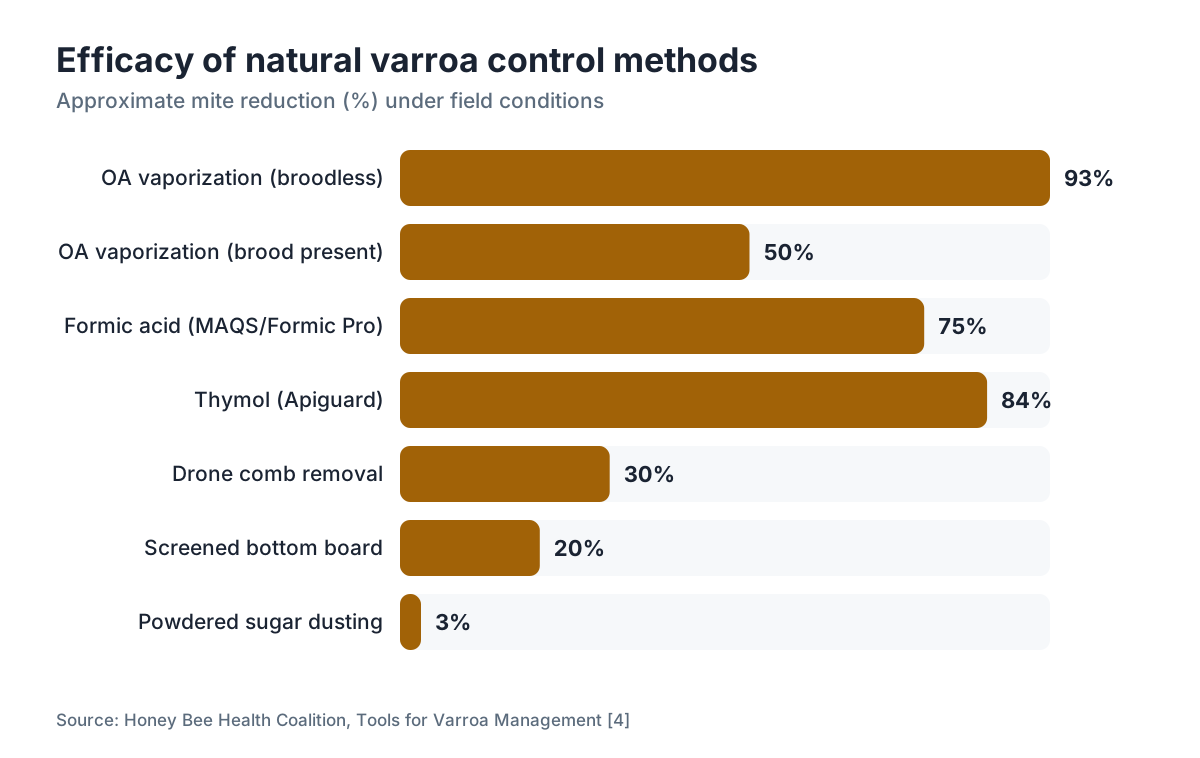
In a broodless colony (midwinter, or after a queen removal), a single oxalic acid vaporization kills over 90% of the mite population [3]. In a colony with a normal brood nest, that number drops to roughly 40-60%, because most of the mites are tucked safely inside cells [4]. The math explains why timing beats the product itself.
Api-Bioxal is the only federally registered oxalic acid product in the United States as of 2024 [5]. The label allows three application methods: dribble (a 2% solution poured between frames), vaporization (1 gram of crystalline OA per brood box sublimated with a vaporizer), and extended-release strips. Vaporization is the one I reach for. It contacts bees on both sides of every frame without cracking the hive open in cold weather.
For a broodless winter treatment, one or two vaporizations three to five days apart is a common protocol. For colonies with brood, repeated treatments every five days across a full brood cycle (roughly 21 days for workers) can bring mites down. Nobody has clean data on exactly how many repeat OA treatments a queen and her brood can shrug off. The closest published work suggests three to four vaporizations are generally well tolerated [3]. Keep that uncertainty in mind and watch how the colony responds.
Cost is low. Api-Bioxal runs roughly $25 to $35 for 35 grams, which covers many treatments. A decent battery-powered vaporizer costs $70 to $150. Set that against the price of a dead hive and it's trivial math.
One safety point that isn't optional: oxalic acid vapor is corrosive to eyes and lungs. Wear a respirator rated N95 or better, and goggles.
Does formic acid work, and how is it different from oxalic acid?
Formic acid has one big advantage over oxalic acid: it drives into capped brood cells and kills the mites inside. That makes it usable at almost any point in the season, not only during broodless windows [4].
The registered products in the US are Mite Away Quick Strips (MAQS) and Formic Pro. MAQS uses a 68% formic acid gel pad laid on top of the frames for seven days. Formic Pro uses a two-strip system over a 14-day or extended application. Both can be run while honey supers are on, which is a real practical edge over most other treatments [5].
Field efficacy usually lands in the 60-90% range, moving with temperature and application method. The MAQS label specifies an ambient range of roughly 50 to 85°F (10 to 29°C). Above 85°F you risk killing brood and sometimes the queen. That temperature ceiling is the product's main weakness in hot climates.
Formic acid has a sharp, vinegar-like smell that irritates bees. Expect a burst of activity and maybe some temporary bearding on the hive front. Queen loss in published trials runs around 2-10% depending on conditions [4]. The risk is real. Have a plan for a replacement queen before you treat.
If you want to treat while honey is coming in and brood is present, formic acid is the best organic option going. If you have a broodless window instead, OA is more effective and easier on the colony.
What about thymol treatments like Apiguard?
Thymol is a compound from thyme essential oil. Apiguard (a thymol gel) and ApiLife VAR (a thymol-based tablet) are both EPA-registered [5]. Thymol is fumigant-active, meaning it works by vapor spreading through the hive.
Efficacy in studies usually falls between 74 and 93% under favorable conditions [4]. The catch is temperature. Thymol needs ambient temperatures consistently above 59°F (15°C) to vaporize well, and ideally 65 to 105°F. So it's a spring and fall treatment in most climates, never a winter one. Above 95°F it can damage brood, which leaves a narrow window in warm regions.
Apiguard comes in 50-gram gel trays set over the top bars. A full treatment uses two trays, two weeks apart. ApiLife VAR uses a tablet delivery. Both require honey supers off during treatment.
In practice, thymol earns its place in a fall protocol in temperate climates where temperatures are sliding down but still in range. It's not my first pick when I have OA vaporization and a broodless window. For a beekeeper without a vaporizer, though, it's a solid alternative.
What cultural management methods reduce varroa naturally?
Cultural controls need no chemical at all. They work by breaking the varroa reproductive cycle, which depends entirely on capped brood.
Brood breaks are the strongest non-chemical tool you have. Remove the queen or cage her for at least 24 days (the full brood cycle plus a buffer), and all capped brood emerges while the mites lose their nursery. Research from the University of Minnesota Extension and others shows a brood break paired with an OA treatment during the broodless gap can reach 95%+ mite reduction [6]. For most northern US beekeepers the timing looks like this: create the brood break in early August, treat with OA once the last capped brood is gone, then let the colony rebuild before winter. Watch that it's building fast enough.
Drone comb removal is a simpler, ongoing tactic. Varroa parasitize drone brood at a rate roughly 8 to 10 times higher than worker brood, because drone cells stay capped longer [7]. Put in a frame of drone foundation (or let the bees draw drone comb at the bottom of a deep frame), then pull and freeze that frame once it's capped. You yank a lopsided share of mites out of the system. It won't control varroa on its own, but it slows the growth rate as a support tactic.
Screened bottom boards swap out solid floors so naturally falling mites drop out of the hive instead of climbing back onto bees. Studies put the reduction at roughly 10-30%, depending on the study [4]. That's real but modest. I run a screened bottom board as a baseline no matter what else I'm doing, both for ventilation and the passive drop.
Brood trapping with a queen cage or caged queen frame is a more hands-on version of the brood break. You trap the queen's output for a set period, let brood emerge, then treat. Plenty of protocols exist. The Walk-Away Split is a beekeeper-friendly version that opens a broodless period in one split while it raises a new queen.
Small cell comb (foundation with a smaller cell diameter) got promoted for years as a natural mite control. The evidence does not back it. A controlled trial in the Journal of Apicultural Research found no significant difference in mite levels between small-cell and standard-cell colonies [8]. Save your money and your effort.
Can selective breeding help control varroa naturally?
Yes, but this is a longer game than most hobbyists can play solo. Two traits carry the strongest evidence for natural mite resistance: Varroa Sensitive Hygiene (VSH) and general hygienic behavior.
VSH bees find and uncap mite-infested brood cells, which interrupts varroa reproduction. Strong VSH colonies can hold low mite levels with minimal treatment, but keeping that expression high takes sustained selection pressure. The USDA Bee Lab in Baton Rouge led much of this work and documented that VSH expression fades when colonies open-mate with non-selected drones [9].
Hygienic behavior, the broader knack for detecting and pulling out diseased or parasitized larvae, tracks with lower mite reproduction. You can test colonies with freeze-killed brood (FKB) assays or pin tests, then propagate from your best queens.
For most hobbyists and sideliners, the sane path is to buy queens from breeders already selecting for VSH or mite resistance, rather than running a full selection program yourself. VSH-selected queens cost more (roughly $35 to $60+ versus $25 to $40 for standard queens), but a colony that needs fewer treatments and still thrives earns back the premium. The Honey Bee Health Coalition's Varroa management guide lists reputable queen breeders and selection programs [2].
One more thing worth noting: Africanized honey bees show notably lower varroa infestation in some studies, because their grooming and shorter brood development cut mite reproduction. That doesn't make Africanization desirable. It just points to the behavioral traits breeders should chase in gentler stock.
What are the treatment thresholds, and how do you monitor mite levels?
You can't manage what you don't measure. The two standard monitoring methods are the alcohol wash and the sugar roll. Alcohol wash is more accurate because it kills the mites and gives you a clean count.
The Honey Bee Health Coalition's Varroa management guide recommends treating when mite levels reach 2% of the bee sample (2 mites per 100 bees in an alcohol wash) during spring and summer buildup, or 1-2% in late summer as the colony shifts toward winter bees [2]. Some extension services use a 3% threshold in midsummer. That variation reflects honest uncertainty about exactly where the cliff sits. Treat at 2% and don't wait for the argument to settle.
An alcohol wash goes like this. Collect about 300 bees (roughly half a cup) in a jar with a mesh screen lid. Add isopropyl alcohol (70% works fine). Shake for 30 seconds. Count the mites that fall through the screen, divide by the number of bees, multiply by 100 for your percentage.
Monitor at least four times a year: spring buildup (March-April in the northern US), early summer (June), late summer (July-August, the make-or-break window), and fall before treatment [6]. If you're running organic treatments across multiple rounds, monitoring between rounds tells you whether you're winning.
If you're tracking several hives or still learning the timing, the free tools at VarroaVault let you log alcohol wash results, chart mite counts over time, and get protocol reminders keyed to your location and season. Structured tracking makes a real difference once you're juggling a handful of colonies.
The varroa mite article here covers the biology in depth if you want to understand exactly why the reproductive cycle is the lever for controlling this pest.
What's the best natural varroa treatment schedule by season?
Seasonal timing is where most natural programs live or die. The mite population rides the brood cycle, so your treatments track the brood calendar, not the one on your wall.
Spring (March-May, northern US): Monitor as soon as the colony is actively building. If mites are above 2%, treat with formic acid (if brood is present and temperatures allow) or plan a brood break. Don't wait to 'let the colony build up first.' A rising spring mite count scales with brood, and you'll be underwater by summer.
Early summer (June-July): The highest-risk stretch, because mites accelerate alongside peak brood. Monitor monthly. Drone comb trapping earns its keep here as a support measure.
Late summer (July-August): The single most important treatment window of the year. Winter bees start developing in August across most northern locations, and those bees carry the colony through the cold. Mites that parasitize winter bees shorten their lifespan and weaken the cluster. Get mites below 1% before August brood is capped if you can. A brood break plus OA vaporization is the strongest organic approach for this window.
Fall (September-October): After the main nectar flow, run a final alcohol wash. Above 2%, treat. OA vaporization works well here as the colony contracts and the broodless period nears.
Winter broodless treatment (December-February, depending on location): The easiest high-efficacy treatment of the year. One or two OA vaporizations when the colony is fully broodless knock the population back to near zero and hand the colony a clean start in spring [3]. This one treatment may be the highest-leverage move a beekeeper makes all year.
A rough rule: if you do nothing else natural, do a late-summer monitoring round and a winter OA treatment. Those two, done right, save more colonies than any other pair.
What doesn't work, and what's a waste of money?
Some natural varroa approaches have been tested and came up empty. Spend a minute here so you don't repeat the mistakes.
Small-cell foundation: as noted above, controlled trials found no significant mite reduction [8]. This is a real finding across more than one study. Buying small-cell foundation to control varroa wastes both money and time.
Essential oil sprays (spearmint, lemongrass, assorted blends): there's a cottage industry selling these, and they get plenty of airtime in online forums. No EPA-registered essential oil product exists for varroa control beyond thymol formulations, and no peer-reviewed trial shows meaningful mite reduction from field-applied sprays of other oils. If someone sells you a 'natural mite spray,' ask to see a third-party field trial. Nobody has good data on these.
Powdered sugar dusting: the theory was that bees would groom the sugar off and take mites with it. Multiple trials found no significant mite reduction [4]. It's laborious and ineffective. Skip it.
Organic acid foggers (vinegar-based acetic acid): floated online now and then. Not registered for varroa treatment in the US, no controlled efficacy data for mites, and potentially harmful to bees at concentrations that would harm mites.
Being honest about this matters. Beekeepers who chase dead-end treatments lose their hives. The natural toolkit is real and effective when used right, but it demands the same discipline as any program: monitor, treat at threshold, monitor again, adjust.
How do you combine natural methods into a real varroa management program?
Single-tool programs fail. The natural management that actually holds combines monitoring, cultural tactics, and registered organic treatments in a sequence that matches your local brood calendar.
Here's a framework extension apiculturists and the Honey Bee Health Coalition both endorse in broad strokes [2][6]:
First, set a monitoring calendar and stick to it. Four alcohol washes a year minimum, more if you're treating. Write down every result.
Second, run screened bottom boards as a baseline. The gain is modest, but there's no downside and it helps ventilation.
Third, work in drone comb removal during summer buildup. It slows mite growth a bit and gives you a read on overall mite pressure.
Fourth, plan a brood break in late summer (July-August) in northern climates. Split, cage the queen, or use a natural swarm event. Build OA vaporization into the tail end of that broodless window.
Fifth, if mites spike mid-season and you need to treat without a brood break, use formic acid (MAQS or Formic Pro) inside the label temperature guidelines.
Sixth, do a winter OA vaporization during the broodless period. The easiest win of the year.
Seventh, source queens from VSH or hygienic-selected breeders when you requeen. Over time that shifts the whole apiary toward more mite-tolerant stock.
Managing more than four or five hives, the tracking gets complicated fast. VarroaVault's free protocol tools are built for exactly this: enter your colony counts and location, and the system helps you track treatment windows and alcohol wash results across the whole apiary. It won't replace your judgment. It keeps logistics from becoming the reason you skip a monitoring round.
Check with local beekeeping supply companies for Api-Bioxal and vaporizers. Availability and pricing swing by region.
Are there legal or label restrictions on natural varroa treatments?
Yes, and they matter. In the United States, any compound applied to a beehive for pest control is a pesticide and must be EPA-registered. That covers oxalic acid and formic acid formulations. Using unregistered products, or applying registered ones off-label (say, raw oxalic acid crystals that aren't Api-Bioxal), is technically a federal violation of FIFRA, the Federal Insecticide, Fungicide, and Rodenticide Act [5].
For hobbyists: enforcement against individuals for off-label OA use has been rare in practice, but the registered products are cheap and worth using. You get legal cover plus standardized formulations and dosing. Mixing your own from bulk OA adds concentration variability that can harm bees.
For sideliners and commercial operations: if you sell honey or bees, clean records of registered treatments protect you during inspections. Some organic-honey certifiers require documentation that only approved organic compounds were used.
Honey super restrictions: MAQS and Formic Pro can go on with honey supers in place. OA products (Api-Bioxal) and Apiguard require supers off during treatment. That's a label requirement, not a suggestion. Residue studies back these labels. OA residues in honey from treated colonies have been found within normal background levels for honey [5], but the label still governs.
Always read the full current label before you treat. EPA product labels change. The current Api-Bioxal label is available through the EPA's pesticide registration section [5].
Frequently asked questions
Can you treat varroa mites without chemicals at all?
Purely non-chemical options exist, mainly brood breaks, drone comb removal, screened bottom boards, and VSH bee stock. None of them alone controls varroa reliably in most North American climates. The Honey Bee Health Coalition recommends combining cultural controls with at least one registered organic treatment (oxalic or formic acid) each season for dependable results. Doing nothing is not safe. Untreated colonies typically collapse within one to three years.
Is oxalic acid safe for bees and honey?
Oxalic acid occurs naturally in honey at background levels of roughly 10 to 30 mg/kg. Studies behind the Api-Bioxal label found that OA treatments do not significantly raise honey residues above those natural levels. The treatment is lethal to mites but not bees at label doses. The main risk is misapplication: too much OA, or repeated treatments on the same bees, can cause bee mortality. Follow the label rates.
How often should I check mite levels if I'm using natural treatments?
At minimum four times a year: spring buildup, early summer, late summer (the most important window), and fall. If you're running a multi-round organic treatment like repeated OA vaporizations, do an alcohol wash before you start and again 7 to 10 days after your final treatment to confirm the result. That feedback tells you whether it worked or whether mites are rebounding from remaining brood.
What temperature do I need for oxalic acid vaporization to work?
OA vaporizers sublimate the acid by heating it on a metal plate, so ambient temperature isn't the limiting factor for the chemistry. Treating below about 40°F (4°C) does mean bees cluster too tightly for vapor to reach every bee. Most practitioners aim for a calm day above 40°F. The colony must be broodless, or efficacy drops sharply because OA can't penetrate capped cells.
Does drone brood removal really reduce varroa mite populations?
Yes, modestly. Varroa reproduce in drone cells at a rate roughly 8 to 10 times higher than in worker cells, because drone cells stay capped longer. Removing and freezing capped drone frames pulls a lopsided share of reproducing mites from the system. Studies suggest the tactic alone reduces infestation by 20 to 40% versus untreated controls, but it can't replace organic acid treatment when mite levels run high.
Can I use natural varroa treatments when honey supers are on?
Formic acid products (MAQS and Formic Pro) are label-approved for use with honey supers on the hive. Oxalic acid (Api-Bioxal) and thymol products (Apiguard, ApiLife VAR) require supers off during treatment. This restriction is based on residue and bee behavior data. Never apply any treatment against label instructions, both for legal reasons and because those restrictions protect honey quality.
How do I treat varroa naturally if I live somewhere hot in summer?
High summer heat rules out formic acid above roughly 85°F and thymol above 95°F. In hot climates the practical options shift toward OA vaporization (flexible on the chemistry side, though you need a broodless window or repeated applications) plus cultural controls like drone comb removal and brood breaks. Timing a brood break for late summer and treating with OA during that window is the strongest hot-climate natural protocol.
What is a brood break and how does it help with varroa?
A brood break is any period when the colony has no capped worker brood, created by removing or caging the queen or splitting the hive. Since varroa can only reproduce inside capped cells, a break of 24 or more days forces all reproducing mites out onto adult bees where oxalic acid can reach them. A single OA vaporization during a true brood break routinely hits 90%+ kill, versus 40-60% when brood is present.
Is thymol (Apiguard) as effective as oxalic acid for varroa?
In ideal temperature conditions (65 to 95°F), thymol products like Apiguard show 74 to 93% efficacy in published studies, similar to OA in colonies with brood. The differences are mainly practical: OA works better in cold weather and broodless colonies, while thymol needs sustained warmth to vaporize. Neither is flatly 'better' in all cases. The right choice depends on season, climate, and whether brood is present.
What is VSH and how do I get VSH bees?
VSH stands for Varroa Sensitive Hygiene, a genetic trait where bees detect and remove mite-infested capped brood cells, disrupting varroa reproduction. Colonies with strong VSH expression hold lower mite levels with fewer treatments. You get VSH bees by buying queens from breeders actively selecting for the trait, documented by the USDA Bee Lab in Baton Rouge. VSH expression fades with open mating, so queen source matters every generation.
How do I know if my natural varroa treatment worked?
Do an alcohol wash before treatment and again 7 to 10 days after the final treatment in a series. If mites per 100 bees dropped from, say, 4% to below 2%, it worked. If counts are still above 2% after a full protocol, ask whether brood was present during treatment (which cuts OA efficacy), whether temperatures limited formic or thymol volatilization, or whether resistant mites are present. Follow-up treatment or a different approach is warranted.
Can I combine oxalic acid and formic acid treatments?
Not at the same time. Each has its own label and application protocol. Sequential use is fine and often done: use formic acid to knock mites down during the brood season, then follow with OA vaporization during the winter broodless period. There's no chemical incompatibility, and the Honey Bee Health Coalition's management guide describes integrated protocols using multiple organic tools across a season. Follow each label separately and allow appropriate time between treatments.
Does powdered sugar dusting control varroa mites?
No. Multiple controlled trials found no significant reduction in mite levels from powdered sugar dusting. The original theory was that a sugar coating would prompt bees to groom mites off, but a mite's grip on bee cuticle is stronger than powdered sugar dislodges. It's a popular idea in beginner circles, but the evidence doesn't support it as a varroa control. The time spent dusting is better spent on an alcohol wash.
How does natural varroa control compare in cost to synthetic miticide treatments?
Organic acids generally cost less per treatment than synthetic miticides. A vaporizer is a one-time $70 to $150 purchase; Api-Bioxal runs roughly $25 to $35 for 35 grams. Apivar (amitraz strips) costs roughly $3 to $5 per strip, two strips per hive, replaced each treatment cycle. Across multiple hives and years, OA vaporization is typically the lowest per-hive cost. Formic acid strips (MAQS or Formic Pro) run $6 to $12 per treatment, similar to Apivar.
Sources
- USDA Agricultural Research Service, Bee Research Laboratory, Beltsville MD: Untreated colonies average over 3,000 mites by late summer in most of North America
- Honey Bee Health Coalition, Varroa Management Guide (Tools for Varroa Management): Varroa mites are the number one killer of honey bee colonies worldwide; treatment thresholds of 2% recommended for spring and summer
- Gregorc A. & Planinc I., Acaricidal effect of oxalic acid in honeybee colonies, Veterinarski Arhiv 2002: Single OA vaporization in broodless colonies achieves over 90% mite kill; three to four vaporizations generally well tolerated by colonies with brood
- Honey Bee Health Coalition, Tools for Varroa Management, efficacy summary table: Formic acid efficacy 60-90%; thymol efficacy 74-93%; OA in colonies with brood 40-60%; screened bottom boards 10-30%; powdered sugar dusting not significantly effective
- US EPA, Pesticide Registration (Api-Bioxal label and FIFRA registration): Api-Bioxal is the EPA-registered oxalic acid product; MAQS and Formic Pro registered with honey supers on; Apiguard and ApiLife VAR registered; OA honey residues within normal background levels per label studies
- University of Minnesota Extension, Varroa Mite Management: Brood break combined with OA treatment during broodless period can achieve 95%+ mite reduction; monitoring schedule of four times per year recommended
- Calderone NW, Honey bee Varroa mite infestation rates in worker and drone brood, Journal of Apicultural Research 1994: Varroa preferentially parasitize drone brood at a rate roughly 8 to 10 times higher than worker brood
- Coffey MF, Breen J et al., Brood-cell size has no influence on the population dynamics of Varroa destructor mites, Journal of Apicultural Research 2010: Controlled trial found no significant difference in mite levels between small-cell and standard-cell colonies
- USDA Agricultural Research Service, Honey Bee Breeding, Genetics and Physiology Research, Baton Rouge LA: VSH expression degrades when colonies open-mate with non-selected drones; USDA Baton Rouge documented VSH trait selection
- Pennsylvania Department of Agriculture, Apiary Program and Varroa Management Resources: State regulatory guidance on registered organic treatments and beekeeper record-keeping requirements
- NC State University Extension, Apiculture Program: Varroa Mite Control: Protocol guidance on seasonal timing of organic treatments and alcohol wash monitoring thresholds
Last updated 2026-07-09