How to confirm the broodless period before oxalic acid treatment
TL;DR
- Oxalic acid vaporization or dribble kills varroa only on adult bees, not mites inside capped cells.
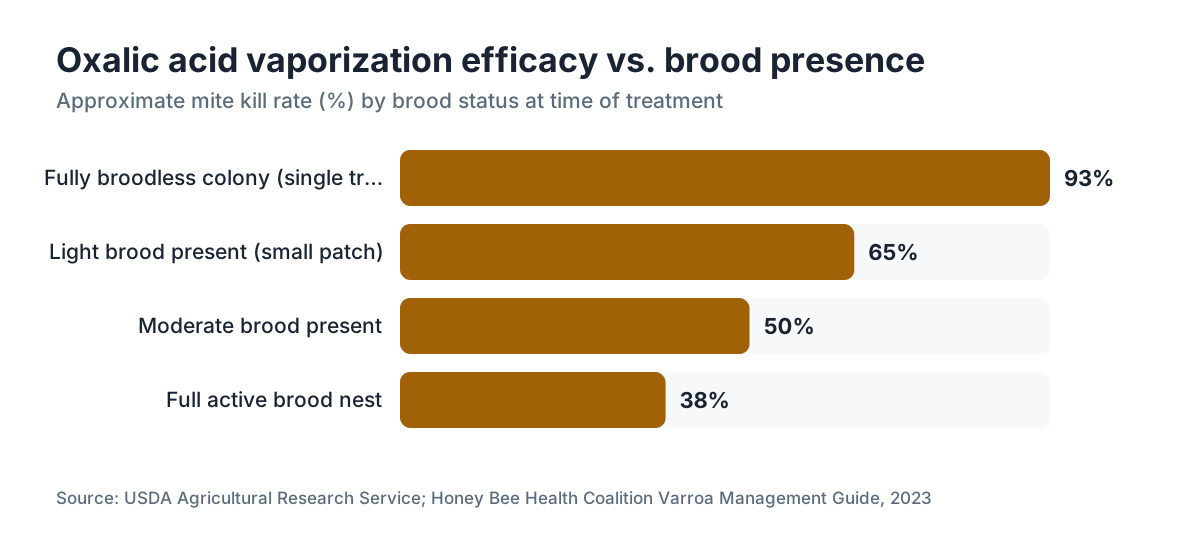
- Treating during a true broodless period, usually December into early January in temperate climates, raises efficacy from roughly 40-50% to above 90%.
- Physically confirm there is no capped brood before you treat.
- Do not trust the calendar.
Why does the broodless period matter so much for oxalic acid?
Oxalic acid is contact-only. When you vaporize or dribble it into a hive, it reaches the bees walking on the combs, and the mites riding on those bees pick up a lethal dose. Mites tucked inside capped brood cells are completely shielded. The EPA-registered oxalic acid labels, including the Api-Bioxal label, state this directly: efficacy is highest when little or no capped brood is present. [1]
So treating in November when your colony still has a football-sized brood nest accomplishes frustratingly little. You might knock back 40-50% of the mite population, but you leave the 70-80% of mites reproducing inside cells completely untouched. [2] Those mites emerge with the next generation of bees and reinfest the adults you just treated.
Get the timing right and the math flips. A truly broodless colony treated once with vaporized oxalic acid typically sees 90% or greater mite kill in a single application. [3] That is the number that actually protects a colony going into the winter cluster, when low mite loads set up healthy spring growth. One treatment, done right, beats three treatments done wrong.
When does the natural broodless period actually happen?
It depends on your latitude, local climate, and your queen's genetics. No single date works everywhere.
In the northern US and Canada, most colonies go broodless sometime between late November and late January, with December and early January being the most common window for the mid-Atlantic, Midwest, and Pacific Northwest. [4] In the deep South, some colonies never fully stop rearing brood during mild winters, which makes confirmed broodlessness genuinely hard to reach without cold snaps. In the UK and northern Europe, the broodless window often runs November through February.
Temperature is the main driver. Queens generally stop laying when sustained cold keeps the cluster from holding the temperature brood needs, roughly 35°C (95°F) at the cluster core. When daytime temperatures stay below 10°C (50°F), most colonies start winding down brood. When nighttime lows hit 4°C (40°F) or below for several consecutive nights, broodlessness tends to follow within 2-4 weeks, though this varies. [4]
The biggest mistake beekeepers make is trusting the calendar instead of the colony. A warm November can push your broodless window into January. A cold October snap can bring it on early. The calendar tells you when to look. The hive tells you the answer.
For a deeper look at varroa mite biology and why the reproductive cycle matters so much for treatment timing, the varroa mite page covers the foundational biology.
How do you physically confirm there is no capped brood?
This is where beekeepers get themselves into trouble. Checking for broodlessness in December is cold, the bees are clustered, and cracking the hive open for a full inspection feels risky. But an assumed broodless period is not a confirmed one.
Here are the practical methods, in order of reliability.
Full visual inspection of brood frames. On a mild December day, ideally above 10°C (50°F) with no wind, open the hive and pull each frame in the cluster zone. You are looking for capped cells with the tan-to-brown convex cappings of worker brood, or the bullet-shaped cappings of drone brood. If you see any, the colony is not ready. You want zero capped cells, not a small patch. Even a small patch harbors reproductive mites.
Brood frame lighting. Hold each frame up to strong backlighting or a bright flashlight at a low angle. Capped brood casts a distinctive shadow pattern. This speeds up inspection and cuts the time the cluster is disturbed.
Minimal disruption inspection. If it is too cold for a full frame-by-frame pull, you can partially open the hive, lift the inner cover, and shine a flashlight down between the frames to check the top bars of the cluster area. You will not see the lower portions of frames, so this method is less reliable. It can rule in broodlessness if the cluster is tight and the top frame faces show only honey and clustered bees. It cannot rule out a small patch deeper in the nest.
Alcohol wash or sugar roll. These tell you mite loads, not brood presence. They are useful for knowing whether treatment is urgent but do not confirm broodlessness. Use them alongside a visual check, not instead of one.
A word on thermal cameras and other gear: infrared thermal imaging can show the shape and location of the cluster and sometimes the warmer core of an active brood nest. Some beekeepers use this to avoid opening hives in deep cold. It is a useful tool, but it takes experience to read correctly, and a false negative is possible if brood is minimal and buried in the warm cluster.
What if you find a small patch of capped brood?
Wait. That is the honest answer, and it is also the right one.
A small brood patch in December is usually within two weeks of completion. Worker brood takes 21 days from egg to emergence; the capped pupal stage runs roughly 12 days. If you find capped brood today, those cells will be empty within two weeks at most, assuming a normal spread of capping ages.
Mark the date you saw it and come back in 10-14 days. Check again. If those cells are now empty and no new eggs were laid in the interim, you are likely in your window. The queen often will not resume laying until temperatures warm in late January or February, so the gap between that last patch emerging and new eggs appearing can run 6-10 weeks in a cold northern winter. [4]
Do not treat through brood and plan to retreat. Retreating works, but it piles on hive disturbance, adds oxalic acid exposure for the colony, and costs you extra time and product. The two-week wait is almost always the better path.
If you keep finding brood through December and into January because you are in a warm climate, you may need a brood break strategy, like induced queen caging or removal for 24 days, which is a separate topic with its own tradeoffs. The Honey Bee Health Coalition's Varroa Management Guide covers induced brood breaks and when they make sense. [2]
How does the queen's laying pattern affect your timing?
A healthy mated queen in good condition may resume laying earlier than you expect, especially after a mild stretch in January. That is one reason a single December check is not always enough. You confirm broodlessness on December 20th, life gets busy, and you treat on January 15th. If the queen resumed laying around January 5th during a warm spell, you missed your window.
Frustrating, and common. The fix is to treat promptly once you confirm broodlessness, within a day or two if weather allows, and inside the same week at the latest.
African or Africanized genetics produce colonies that stay broodless for shorter periods and often keep rearing brood through mild winters. If you work with these genetics, expect a shorter, less predictable broodless window. You can read more background on colony-level behavior differences in the africanized honey bee overview.
Highly productive Italian-lineage queens are also known for holding brood production later into fall and starting earlier in spring than other stock. If your colony still has eggs in mid-December, ask whether your queen's genetics are working against your treatment timing.
What does a proper oxalic acid treatment look like once broodlessness is confirmed?
First, use a registered product with a current EPA label. In the US, the primary registered oxalic acid product is Api-Bioxal (active ingredient: oxalic acid dihydrate at 35g/L). [1] Using raw oxalic acid powder bought outside the beekeeping supply chain is an off-label use and technically illegal for varroa treatment in the US, though common practice in some regions.
For a broodless colony, you have two application methods: vaporization and dribble.
Vaporization (sublimation): The Api-Bioxal label allows one to three applications at 5-day intervals for broodless colonies, or one application per brood cycle for colonies with brood. For a truly broodless colony, a single thorough vaporization is usually enough and is what most practitioners use. Dose is 1 gram of Api-Bioxal per brood box. [1]
Dribble (trickle): 3.5% oxalic acid solution, 5mL per seam of bees (seams between frames occupied by bees, not frames), maximum 50mL per colony. The dribble method is less popular in cold winter conditions because it adds moisture to the cluster, which can cause problems. Vaporization does not.
Weather matters. Vaporization works fine on cold days; the bees do not need to be flying or even particularly active. The oxalic acid gas moves through the hive regardless. You do need bees clustered and not spread all over every box, which is generally the case in December.
Protective gear: a full respirator rated for acid gases (at minimum, a half-face respirator with organic vapor/acid gas cartridges), goggles, and gloves. Oxalic acid fumes are a serious respiratory irritant. Do not treat in an enclosed space without ventilation. [1]
To plan your full seasonal treatment schedule around this December window, VarroaVault's free protocol tools help you map backward from your expected broodless period to fall mite monitoring dates.
How do mite loads before treatment affect whether you should treat at all?
If you made it to December, you should almost certainly treat. The December broodless treatment is a winter insurance policy, and skipping it because you think your mites are low is a common mistake.
That said, knowing your mite load going in is still useful. The Honey Bee Health Coalition recommends an economic threshold of 2% or above (2 mites per 100 bees on an alcohol wash) as the trigger for treatment during the active season. [2] In late fall and winter, many practitioners treat at any detectable level, because the overwinter multiplication math is unforgiving.
Here is that math. A colony going into winter at 1% infestation with a tight cluster has most of those mites phoretic during the broodless period. A single oxalic vaporization at 90%+ efficacy leaves you around 0.1% going into spring. That colony can build back up before mites become a problem. A colony going into winter at 3%, treated at the same efficacy, emerges at 0.3%, still manageable but with less buffer before the spring mite climb. [3]
If your December wash somehow shows zero or one mite, you are in great shape. You can still treat as insurance, or monitor carefully in early spring instead. If you find 3% or more in December, treat as soon as broodlessness is confirmed. Do not wait for ideal conditions.
For equipment like alcohol wash cups and refractometers for mixing solution, the beekeeping supply companies roundup has current options.
What are the risks of treating when brood is still present?
The main risk is not to the colony's health. Treating through brood will not kill your bees or cause obvious acute harm. The risk is efficacy failure. You spend time and product on a treatment that leaves most of your mite population untouched, the colony emerges from winter with a high mite load, and you have a failing colony by April.
There is a secondary risk worth knowing. Oxalic acid has been detected in small amounts in beeswax after vaporization treatments, and some residue buildup in comb is possible with repeated treatments. [3] Treating unnecessarily or more often than the label allows raises this exposure without adding benefit. The label limit exists for a reason.
Repeated hive opening in cold weather without finishing the treatment goal also adds chilling stress. Open the hive in December as few times as needed. Confirm broodlessness, treat immediately, close up, leave them alone.
How do you handle multiple hives with different broodless timing?
This is real life for anyone with more than two or three colonies. Different queens, different genetics, different hive locations, different sun exposure, and different population sizes all shift when individual colonies go broodless. Some hives may be ready in late November; others may not be ready until January.
Check each colony individually. Mark each hive with the date you last confirmed broodlessness and the date you treated. Do not treat a whole apiary on a single date just because most hives are ready. The one hive that still has brood will undermine your whole-apiary mite management.
Batching inspections on the same mild day and then treating only the confirmed-broodless colonies that day is efficient. Come back a week or two later for the rest.
Keeping records by hive, at minimum a simple notebook with dates and observations, pays off here. If you want a structured format, VarroaVault's hive tracking tools include a broodless confirmation log and treatment date fields that make multi-hive management less chaotic.
Does a broodless period happen in warm climates, and what do you do if it doesn't?
In climates where winter lows rarely drop below 10-15°C (50-60°F), many colonies rear brood year-round or pause only briefly. Florida, southern Texas, southern California, and similar zones fall into this category. The December broodless treatment that works beautifully in Wisconsin is not straightforwardly available to a beekeeper in Miami.
Options for warm-climate beekeepers:
Monitor for natural broodless breaks. Even in warm climates, brief cold snaps or drought-driven nectar dearths can trigger temporary slowdowns in brood rearing. Watch for these and act fast.
Induce a brood break. Caging the queen for 24 days (long enough for all capped brood to emerge) creates an artificial broodless period. This means finding the queen, which is its own skill, and it takes more labor, but it works. The colony's mite population crashes during the caging period, and you can then treat with high efficacy. [2]
Multiple oxalic acid treatments. The Api-Bioxal label allows repeated applications on colonies with brood, though efficacy per application is lower. This takes more treatments to hit the same mite reduction as a single broodless treatment.
Other registered treatments. Amitraz (Apivar strips) and formic acid products (Mite-Away Quick Strips, FormicPro) kill mites inside capped cells and do not depend on a broodless period. [5] For warm-climate beekeepers who cannot reach broodlessness, these may be the better tools. The EPA registration and label requirements for each differ.
What records should you keep and what should a post-treatment mite wash show?
Keep four things for every December treatment: the date you confirmed broodlessness (and how you checked), your pre-treatment mite wash result, the treatment method and dose applied, and the date you retreated if you did. This takes five minutes and is worth every second.
A post-treatment mite wash, done 10-14 days after the oxalic acid application, is the best way to know whether treatment worked. On a truly broodless colony treated with vaporized oxalic acid, mite loads should drop to near zero. A post-treatment wash above 1% suggests one of three things: brood was present and shielded mites, the application was incomplete, or your colony has unusually high mite pressure that needs a follow-up.
Oregon State University extension guidance is blunt on this point: post-treatment monitoring is the only way to confirm treatment success and flag colonies that need retreatment before spring build-up. [4]
Skip the post-treatment check and you fly blind into spring. The entire point of December treatment is to start the new year at near-zero mite loads. Confirming that you got there is worth the cold hands.
Frequently asked questions
How do I know when my colony is truly broodless in December?
Physical inspection is the only reliable method. On a day above 10°C (50°F), pull each frame in the cluster zone and look for capped brood cells. Tan-to-brown convex cappings indicate worker brood; bullet-shaped cappings indicate drone brood. If you see any capped cells at all, the colony is not fully broodless. Calendar dates are a starting point, not a confirmation.
Is it safe to open the hive in December to check for brood?
Yes, with common sense. Choose a calm, mild day, ideally above 10°C (50°F). Work quickly, have your equipment ready before opening, and minimize exposure time. A brief December inspection causes far less harm than treating through brood and failing to control mites. Bees in a winter cluster are docile and generally tolerant of a careful inspection.
How long is the typical broodless window in December?
In temperate northern climates, the natural broodless window often runs 4-10 weeks, roughly late November through January or early February, depending on the year and location. It varies by queen genetics, colony strength, and winter temperatures. Warm spells can trigger early brood resumption. Some colonies in warm climates never reach a full broodless period at all.
Can I do one oxalic acid treatment on a broodless colony or do I need multiple?
One well-timed vaporization on a confirmed broodless colony is typically enough. Studies show 90% or greater mite kill with a single application when no capped brood is present. The Api-Bioxal label permits up to three applications at 5-day intervals, but for a truly broodless colony most practitioners get excellent results from a single thorough treatment.
What temperature is too cold to treat with oxalic acid vaporization?
The Api-Bioxal label does not specify a minimum ambient temperature for vaporization. In practice, vaporization works in very cold weather because the heat source sublimes the oxalic acid regardless of outside temperature and the gas disperses through the hive. The colony should be clustered (not spread thin across many boxes) for the treatment to reach all bees effectively.
What if my colony never goes broodless?
If you are in a warm climate and your colony keeps brood year-round, you have two main options: induce a broodless period by caging the queen for 24 days, or switch to treatments that kill mites inside capped cells, such as amitraz (Apivar) or formic acid products (FormicPro, Mite-Away Quick Strips). These are EPA-registered for use in colonies with brood and do not depend on broodlessness.
Does dribble or vaporization work better for the winter broodless treatment?
Vaporization is generally preferred in winter. The dribble method adds moisture to the cluster, which can promote chilling and condensation problems in cold weather. Vaporization spreads oxalic acid gas without adding moisture, works well even in cold temperatures, and reaches bees in hard-to-access areas of the hive. Both methods are on the Api-Bioxal label for broodless colonies.
How do I do a mite wash in December without chilling the bees?
Collect your sample of roughly 300 adult bees from a frame in the cluster zone, ideally a frame adjacent to the cluster rather than the center. Work quickly and keep sample collection under two minutes per hive. Complete the alcohol wash indoors if possible. December mite washes are harder than summer ones but still valuable; post-treatment levels tell you whether the December treatment actually worked.
Can I treat with oxalic acid if there is one small patch of brood left?
You can, but efficacy drops in proportion to how many mites are inside those capped cells. A small late-season brood patch likely hosts a disproportionate number of reproductive mites. The better choice is to wait 10-14 days for that brood to emerge and then treat. Patience costs you two weeks. Treating through brood costs you a large chunk of your mite control.
What mite level should I see after a successful December broodless treatment?
A post-treatment alcohol wash done 10-14 days after oxalic acid vaporization on a broodless colony should show mite loads close to zero. Oregon State University extension guidance suggests aiming for below 1% (1 mite per 100 bees) going into winter. If your post-treatment wash is still at 1% or above, investigate whether brood was present during treatment or whether the application was complete.
Do I need a license or special registration to use Api-Bioxal?
In the US, Api-Bioxal is a restricted-use pesticide in some states but not all. Requirements vary by state, so check your state department of agriculture's current rules. The federal EPA registration (EPA Reg. No. 84922-4) requires following the label as the law. No special federal license is required for hobbyist beekeepers, but some states require a pesticide applicator license for any registered pesticide use.
How does the broodless period affect mite population dynamics heading into spring?
During the broodless period, all mites are phoretic on adult bees, meaning exposed and treatable. A successful oxalic acid treatment collapses the mite population to near zero. Spring build-up then starts from that near-zero baseline, giving the colony several weeks of mite-free brood production before the mite population starts climbing again. This delay matters enormously; colonies starting spring below 0.5% infestation rarely crash before summer.
Should I treat all my hives on the same day or check each one separately?
Check each hive individually and treat only confirmed-broodless colonies. Different queens produce different laying patterns, and some hives lag others by weeks. Treating an apiary as a single unit on a fixed date risks treating several colonies that still have brood. It takes more trips to the apiary but produces significantly better outcomes across the whole operation.
Sources
- EPA, Api-Bioxal label (EPA Reg. No. 84922-4): Api-Bioxal efficacy is highest when little or no capped brood is present; label allows 1 gram per brood box for vaporization and up to 3 applications at 5-day intervals for broodless colonies
- Honey Bee Health Coalition, Varroa Management Guide (2023 edition): Economic threshold of 2% mite infestation triggers treatment; induced brood breaks (queen caging for 24 days) create artificial broodless periods for oxalic acid use in warm climates
- USDA Agricultural Research Service, Honey Bee Research: Single oxalic acid vaporization on truly broodless colonies achieves 90% or greater mite kill; residue accumulation in beeswax is possible with repeated treatments
- Oregon State University Extension, Varroa Mite Management in Honey Bee Colonies: Broodless period timing correlates with sustained ambient temperatures below 10°C; post-treatment monitoring is recommended to confirm treatment success before spring build-up
- EPA, Pesticide Registration for Amitraz (Apivar) and Formic Acid Products: Amitraz (Apivar) and formic acid products (FormicPro, Mite-Away Quick Strips) are EPA-registered for varroa treatment in colonies with brood and do not require broodlessness
- Pennsylvania State University Extension, Varroa Mite Control: Varroa mites reproducing inside capped cells are not reached by contact-mode treatments including oxalic acid; the majority of mite population during active brood season is inside capped cells
- University of Minnesota Extension, Managing Varroa Mites in Honey Bee Colonies: Colonies entering winter at low mite loads show significantly better survival rates; December treatment timing recommendations for northern US climates
- Cornell University, New York State Integrated Pest Management, Honey Bee Program: Alcohol wash method and mite count thresholds for winter treatment decisions; monitoring protocols for pre- and post-treatment assessment
- NC State University Extension, Apiculture Program: Warm-climate broodlessness challenges and alternative treatment strategies for colonies that do not achieve a natural broodless period
- Honey Bee Health Coalition, Tools for Varroa Management Guide (6th edition): Comparison of treatment efficacy across registered varroa management products; oxalic acid broodless period treatment ranked among highest single-application efficacy options available
Last updated 2026-07-09