How to find the broodless window in winter for oxalic acid

TL;DR
- Honeybee colonies in cold climates go broodless for 4-10 weeks between late November and February.
- During that window every mite rides on adult bees, so a single oxalic acid dribble or vaporization kills 90-99% of them.
- The catch is confirming the colony is actually broodless before you treat, rather than assuming it from the calendar.
Why does the broodless window matter so much for oxalic acid?
Oxalic acid only kills mites it can touch. It does almost nothing to mites tucked inside capped brood cells, because the acid can't get through the wax cap. Any brood in the hive shelters a chunk of the mite population and lets it wait out your treatment.
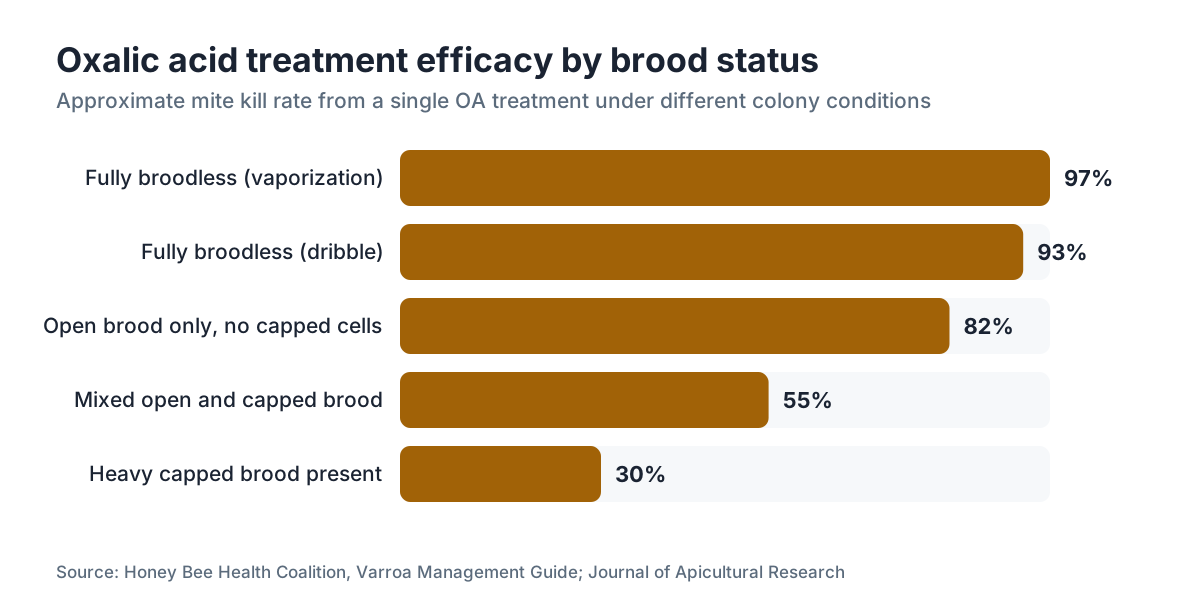
When the colony is fully broodless, every mite is riding an adult bee. One well-timed application reaches 100% of them. Under those conditions studies land on 90-99% mite kill [1]. Leave even a small patch of capped brood in there and a share of the mites survives, walks back out, and reinfests the hive. Your spring mite count then looks far worse than it should.
That's the whole logic of winter treatment. You're not treating in winter because oxalic acid likes the cold. You're treating because winter hands you a broodless window for free, one you'd otherwise have to build by caging the queen.
For the biology behind all of this, read the varroa mite overview before you lock in your protocol.
When does the broodless window typically happen?
It depends on your climate, your bee stock, and the individual colony. No single date works everywhere.
Across most of the northern United States and Canada, the broodless period falls between late November and mid-February. In USDA hardiness zones 5-7, late December through January is the center of gravity. In zone 8 and warmer (coastal California, the Deep South, Hawaii), colonies may never go fully broodless, or the window may last only a week or two in January [2].
The Honey Bee Health Coalition's Varroa Management Guide states that "colonies in cold climates may be broodless for 4-10 weeks in winter," and it tells you to inspect rather than trust the calendar [1].
Carniolan and Buckfast bees shut brood down earlier and harder than Italians. Italians drag their feet, sometimes carrying brood into January even in zone 6 [9]. Run Italians and you should add two or three weeks of buffer before you assume they've stopped.
Start checking in mid-November in colder climates. Adjust from there. The calendar is a starting point, not a prescription.
How do you actually confirm a colony is broodless without freezing the cluster?
This is where beekeepers go wrong. They skip confirmation (bad) or crack the hive on a 25 degree day and spend fifteen minutes pulling frames (worse). Both extremes cost you.
The right method depends on temperature. Here are three, ranked by how much they disturb the cluster.
Method 1: The hive-top thermometer check (least invasive)
On a day below 50 degrees F with the cluster tight, lift the outer cover just enough to slip an infrared thermometer or a cheap probe near the top bars. A healthy cluster reads 70-95 degrees F at its surface. This confirms the colony is alive. It tells you nothing about brood. Use it only to find the cluster before you commit to a visual check.
Method 2: Quick visual on a mild day (recommended)
Wait for a calm day at or above 50 degrees F, ideally 55 or higher. Pull the outer cover and inner cover. Without lifting frames, shine a flashlight down between them where the cluster sits. You're hunting for the tan or brown caps of worker brood. Backs of clustered bees and the odd honey frame? Good sign of broodlessness. Any flat, uniform worker-cap pattern means brood is present.
At 60 degrees F or above, gently pull one or two frames from the center of the cluster. A truly broodless frame in December or January shows bees, honey, maybe empty cells or pollen. Watch the cap color: honey caps run lighter and irregular, and old pollen can pass for old brood, so look hard.
Method 3: Alcohol wash before treatment
Run an alcohol wash (or sugar roll) on about 300 bees from the cluster before you treat. It gives you two things: your pre-treatment mite load, which tells you how urgent this is, and a rough read on brood rearing (a sample with few very young bees hints that laying has paused). It doesn't replace the visual check. It adds a data point [3].
Nobody has clean data on how often a quick visual misses a small brood patch. Extension guidance puts it around 10-15% for experienced beekeepers working fast in cool weather. Go slow. Use a good light.
What temperature is safe to open a hive for a broodless check?
Most extension programs cite 50 degrees F as the floor for any real inspection, with 55-60 much safer for the bees [4]. Below 50 the cluster contracts hard, and exposing it can chill the bees on the edges. Opening a broodless hive carries less risk than opening one with brood to protect, but the risk is still real.
Here's the window most people miss: midwinter warm spells. Nearly every region gets a stretch of 50-65 degree days once or twice between December and February, even cold ones. Watch your 10-day forecast starting in late November. When a mild stretch shows up, that's your inspection moment. Don't hold out for a perfect week. You may never get one.
If temperatures refuse to cooperate, do the top-of-cluster visual through a small crack instead of a full frame pull. Less definitive. Still beats waiting until March or treating blind.
What are the oxalic acid treatment options once you've confirmed broodlessness?
The EPA approves two application methods for oxalic acid in the US: dribble (trickle) and vaporization. A third, the extended-release shop-towel method, is approved without a broodlessness requirement because it releases acid slowly over weeks, which is a separate protocol [5].
For the broodless window, dribble and vaporization are your tools. Here's the comparison:
| Method | Label dose | Efficacy (broodless) | Equipment cost | Notes |
|---|---|---|---|---|
| Dribble (Api-Bioxal) | 5 mL per seam of bees, max 50 mL | 90-95% [1] | ~$20 for syringe/solution | Disturbs cluster; works in cold weather |
| Vaporization (Api-Bioxal or generic OA) | 1 gram per brood box | 95-99% [1] | $75-$200 for vaporizer | Minimal disturbance; needs sealed hive; battery or electric |
I'd pick vaporization for the broodless window. You treat without really lifting the lid, the vapor reaches every crack in the hive, and the efficacy runs a touch higher in most studies. The costs are the equipment and the respirator (an N95 is the minimum, a P100 half-mask is better) [5].
For dribble, follow the Api-Bioxal label exactly: 35 grams of oxalic acid dihydrate per liter of 1:1 sugar syrup, 5 mL per occupied seam. Don't eyeball it. A kitchen scale accurate to 1 gram and a graduated syringe from a livestock supply store cost under $30 together.
Both methods are sold without a prescription in the US under the current Api-Bioxal label. Read the current label anyway. This has changed before [5].
How many times can you treat with oxalic acid during the broodless window?
The Api-Bioxal label allows one dribble treatment per year and up to three vaporizations [5]. In a true broodless window, one vaporization does the job. The reason anyone runs three vapor treatments 5-7 days apart is to catch mites emerging from cells in a colony that still has brood. Doing that during broodlessness is pointless and just piles extra acid on the bees.
Confirm broodlessness, run one vaporization or one dribble, then retest with an alcohol wash about two weeks later. A clean post-treatment wash sits well under the 2% threshold (fewer than 2 mites per 100 bees). Still above 2% after a confirmed broodless treatment? Either the application missed or the colony wasn't as broodless as you thought.
One treatment, done right, in a truly broodless colony. That's the goal. Multiple treatments compensate for brood, they don't beat a single clean shot.
What signs tell you the broodless window is ending?
Colonies don't flip a switch. Brood rearing comes back gradually, and it often starts sooner than beekeepers expect. In most temperate regions colonies begin laying again from late December into January, frequently tied to the winter solstice nudging the queen's hormones [2].
Signs the window is closing:
- Fresh eggs on a warm inspection day (tiny white grains standing upright in cells). Eggs mean the queen has laid within the last 3 days.
- Open larvae but no capped brood yet. You have roughly 6-9 days before mites can re-enter cells.
- Bees hauling in pollen on days above 50 degrees F. Strong signal that brood is present or coming, since pollen feeds larvae [4].
- The cluster gets louder or more active when you tap the side of the hive.
See eggs and you haven't fully missed it, but decide fast. You can still treat in the first few days of laying with almost no brood in the way. There'll be a little larvae and no capped cells, so a single vaporization still hits nearly all the mites. Wait another week and you're basically running a mid-season treatment, with the lower efficacy that comes with it [8].
Don't wait to see a lot of brood before you call the window closed. A few eggs is your cue to move now or write it off until next winter.
What if your colony never goes fully broodless?
Real problem in warm climates and with certain stock. Zone 8 or warmer, or Italian-heavy genetics, and a fully broodless winter colony may be rare or absent.
You have options.
Check your timing assumptions first. Even in Florida, brief broodless spells happen in some colonies in January, often right after a cold snap. Weekly monitoring from December 15 through February 15 catches them.
Consider the extended-release oxalic acid method next (the glycerin-saturated shop towel or a commercial equivalent). The Honey Bee Health Coalition describes this slow-release approach as built for hives that never go broodless [1]. Efficacy runs lower than a broodless treatment, roughly 60-80% depending on brood levels and conditions, but it beats nothing.
Third, in warmer regions your calendar may need to lean on summer splits and mid-season treatment instead of a winter broodless shot. The University of Florida IFAS Extension has region-specific guidance worth pulling up [6].
What I'd do in a colony that stays brood-active: run a hard mite count in October, treat aggressively that fall with a longer-acting product like Apivar if mites top 2%, and use whatever broodless window shows up in winter as a bonus. Don't build your whole year around a window that may never appear.
How do you track and plan for the broodless window year to year?
The best tool is a plain inspection log. Record the date you last saw capped worker brood, the date you confirmed broodlessness, the date you treated, and the date eggs or larvae came back. Two or three winters in, you'll have a dependable pattern for your exact spot and stock.
Free tools like VarroaVault's protocol tracker let you log inspection results and set a treatment reminder the moment you flag a broodless inspection, which helps when you're running several hives and tracking each window separately.
On supplies, the beekeeping supply companies roundup covers where to source oxalic acid, vaporizers, and inspection gear. Watching the budget? The free shipping honey bee supply companies page lists sources that cut shipping on heavier vaporizer orders.
A spreadsheet works as well as any app. The data is yours, and three years of your own records beats any general calendar advice from outside.
What does a proper broodless-window treatment protocol look like, step by step?
Here's what I'd do, plainly.
Starting mid-November: Check the 10-day forecast weekly. You want a stretch with at least one day above 55 degrees F.
First warm day above 55: Quick visual. Open the hive, shine a light between the top bars, look for capped brood. See it? Close up and check again in 2-3 weeks. Don't see it? Pull one or two center frames to confirm.
Broodless confirmed: Run an alcohol wash on 300 bees from the cluster right away. That's your pre-treatment mite count. Record it.
Within 48 hours of confirmation (sooner is better): Treat. Vaporizing: 1 gram of Api-Bioxal per brood box, seal all entrances and vents for at least 10 minutes, wear respiratory protection [5]. Dribbling: 5 mL per occupied seam of bees, never over 50 mL total per colony.
14-21 days post-treatment: Return for a post-treatment alcohol wash. Target is below 2 mites per 100 bees. Above that, figure out whether brood was present or the application failed.
January through February: Keep watching the forecast. Note the first day you see pollen coming in, and the first inspection with eggs. That data sharpens next year's window estimate.
That's the protocol. It sounds simple because it is. The hard part is timing and confirmation, not the treatment.
Are there any risks to the bees from treating in cold winter conditions?
Yes, real ones. Dribble carries the most cold-weather risk because it drops cold liquid straight onto clustered bees. Cold syrup below 40 degrees F can chill the bees on the cluster's surface and add to winter losses. If you dribble, do it above 45 degrees F and use room-temperature solution, not something that sat in a cold car [4].
Vaporization is safer in the cold. You're introducing a warm vapor, not a cold liquid, and you barely disturb the cluster. You do seal the entrance to hold the vapor in, which briefly cuts ventilation, but 10 minutes is nothing.
For either method, skip a colony that already looks stressed: very low bee count, no food stores visible at the top bars, signs of disease. A weak or tiny cluster can tip over from any winter intervention. If the colony is in bad shape, feed it. Mites come second.
One more thing, plainly: oxalic acid at label doses does not harm queens in studies, but repeated off-label doses or treating very small clusters raises queen-loss risk [7]. Stick to label rates [5].
Frequently asked questions
How do I know if my colony is broodless without opening the hive in winter?
You can't confirm it for certain without at least a visual check. Indirect signals help: no pollen coming in, a tightly contracted cluster, and a queenright colony going into fall. Those make broodlessness likely without proving it. Wait for a day above 55 degrees F and do a quick frame check. Even a 60-second look with a flashlight between the top bars beats guessing.
Can I use oxalic acid vaporization when there is still some brood present?
Yes, but efficacy drops hard. The vapor doesn't reach mites inside capped cells, so they survive. With a little open brood and no capped cells, one treatment still hits most mites. With capped brood present, you'd need 3 vaporizations 5-7 days apart to catch mites as they emerge, and you'll still miss some. The Api-Bioxal label allows up to 3 vaporizations per year [5].
What is the best temperature for oxalic acid vaporization in winter?
The vaporizer makes its own heat, so ambient temperature matters less than it does for dribble. You can vaporize down to around 40 degrees F. Below that there's no established evidence of lost efficacy, but the risk of disturbing the cluster climbs. Most beekeepers vaporize between 40 and 55 degrees F on calm, still days. Skip rain and high wind whatever the temperature.
How long does the broodless window last in a typical colony?
The Honey Bee Health Coalition's Varroa Management Guide says colonies in cold climates may be broodless for 4-10 weeks [1]. That range reflects real spread: a Carniolan colony in Minnesota might pause 8-10 weeks, an Italian colony in Virginia only 3-4. Warmer climates and some stocks shrink or erase the window. Track your own colonies over several winters for reliable local numbers.
Do I need a prescription to buy oxalic acid for bees in the US?
No. Under the current Api-Bioxal registration, oxalic acid dihydrate formulated for bees needs no veterinary prescription for hobby beekeepers in the US. Large commercial operations may face different requirements. Always check the current EPA-registered label and your state rules before you buy, because this has changed before and could change again [5].
How do I do an alcohol wash in winter without harming the cluster?
Collect about 300 bees (roughly half a cup) from a frame near the center of the cluster on a day above 50 degrees F. Move fast and target nurse bees in the cluster, not outliers. Add 70% isopropyl alcohol, shake 60 seconds, strain, and count mites and bees. Losing 300 bees from a winter cluster is minor but real, so don't sample colonies under 3 frames of bees [3].
Is one oxalic acid treatment enough during the broodless window?
Usually, if you've confirmed true broodlessness. Studies show a single treatment in a broodless colony kills 90-99% of mites [1]. Follow up with a post-treatment alcohol wash 14-21 days later to confirm. If mites sit above 2% after a broodless treatment, the confirmation or the application went wrong. A second treatment is rarely needed after a well-timed single broodless shot.
What happens if I treat with oxalic acid and the colony wasn't actually broodless?
You get partial efficacy. Mites on adult bees die (usually 90%+ of the phoretic ones), but mites in capped cells survive and emerge later. Your post-treatment count looks better than before yet worse than a true broodless treatment would give. You haven't hurt the bees, but you've spent your one annual dribble (or one of three vaporizations) for reduced results.
Can I use the oxalic acid dribble method and then vaporize again later in the season?
The Api-Bioxal label treats dribble and vaporization as separate methods with separate limits: one dribble per year, up to three vaporizations. You can combine them in a season as long as you stay within each limit. Mixing methods inside the same winter broodless window is unnecessary, though. Pick one for the window and save the other allowances for follow-up later in the season [5].
What mite level should I see before I bother treating in winter?
If you have bees, treat during a confirmed broodless window. It's the single highest-efficacy chance of the year, and a colony that tested at 1% in fall can rebound fast if you skip it. The Honey Bee Health Coalition recommends treating at or above 2 mites per 100 bees any time of year, but many experienced beekeepers treat during any confirmed broodless window as a preventive step [1].
Do I need to feed syrup after treating with oxalic acid in winter?
Not because of the treatment itself. But check food stores during your inspection. A colony heading into February with less than a medium super of honey risks starvation no matter what the mites do. If stores look thin, emergency fondant or dry sugar on the inner cover is safer than liquid syrup in the cold, since bees won't break cluster to take liquid below about 50 degrees F.
How early in fall should I finish other varroa treatments before relying on the winter broodless window?
Multiple extension programs say to get your colony into winter with mites below 2%. That usually means a fall treatment finishing by late September to early October across most of the US [4]. Relying on the winter broodless window as your only annual treatment is high-risk. Fall treatment plus winter cleanup is the standard two-treatment approach most varroa programs recommend.
Does the broodless window differ based on the bee race I keep?
Yes, meaningfully. Carniolan and Russian bees go broodless earlier and more reliably, giving you a more predictable window [9]. Italians often keep some brood late into winter, which shortens or erases a clean window. Africanized bees in warm climates rarely stop brood at all. To learn your stock's habits, start an inspection log in your first November with those bees. It's the fastest route to accurate expectations.
Sources
- Honey Bee Health Coalition, Varroa Management Guide (current edition): Colonies in cold climates may be broodless for 4-10 weeks in winter; single oxalic acid treatment in broodless colony achieves 90-99% mite kill
- University of Minnesota Extension, Bee Lab, Varroa Mite Management: Broodless window timing varies by climate zone and bee race; colonies in northern US typically broodless late November through mid-February
- Penn State Extension, Varroa Mite Sampling and Treatment Thresholds: Alcohol wash using 300 bees is the recommended sampling method; results below 2 mites per 100 bees indicate acceptable mite levels
- Oregon State University Extension, Honey Bee Varroa Mite Management: Minimum temperature of 50F recommended for hive inspections; fall treatment should complete by late September to early October to protect winter bees
- EPA, Api-Bioxal Oxalic Acid Product Registration (Reg. No. 83623-3): Api-Bioxal label allows one dribble treatment and up to three vaporizations per year; dose is 1 gram per brood box for vaporization and 5 mL per occupied seam for dribble; respiratory protection required
- University of Florida IFAS Extension, Honey Bee Pest Management: Colonies in southern US climates may rarely or never achieve full broodlessness; extended-release or alternative seasonal treatment strategies recommended for these regions
- USDA Agricultural Research Service, Bee Research Laboratory: Oxalic acid at label doses does not significantly harm queen bees; off-label repeated high doses increase queen loss risk
- Cornell University, New York State Integrated Pest Management Program, Varroa in Honey Bees: Varroa mites in capped brood are protected from contact and vapor treatments; phoretic mites on adult bees are the only population targeted by oxalic acid
- Washington State University Extension, Bee Integrated Pest Management: Italian honey bee colonies tend to maintain brood later into winter than Carniolan or Russian stocks, affecting broodless window availability
- Journal of Apicultural Research, Oxalic acid efficacy review (Gregorc & Planinc, various years): Multiple controlled studies demonstrate 90-99% oxalic acid efficacy in confirmed broodless colonies vs significantly lower efficacy when capped brood is present
Last updated 2026-07-09