Extension cord length limit for vaporizer safety: what you need to know
TL;DR
- For oxalic acid vaporizers, keep extension cords to 25 feet or less at 12 to 14 AWG.
- Longer runs bleed voltage, which can overheat the cord, trip a breaker, or stop the vaporizer from reaching sublimation temperature.
- Match cord gauge to your vaporizer's amperage before you plug anything in.
- Need more reach?
- Go heavier, not longer.
Why does extension cord length matter for an oxalic acid vaporizer?
An oxalic acid vaporizer is a resistive heater. It pulls a fixed slug of current the moment you switch it on, and that current has to travel the whole length of the cord before it reaches the heating element. Every foot of wire adds resistance, and resistance bleeds voltage. Drop enough voltage and one of three things happens: the vaporizer takes forever to heat, it never reaches treatment temperature, or the cord itself gets hot enough to cook its own insulation.
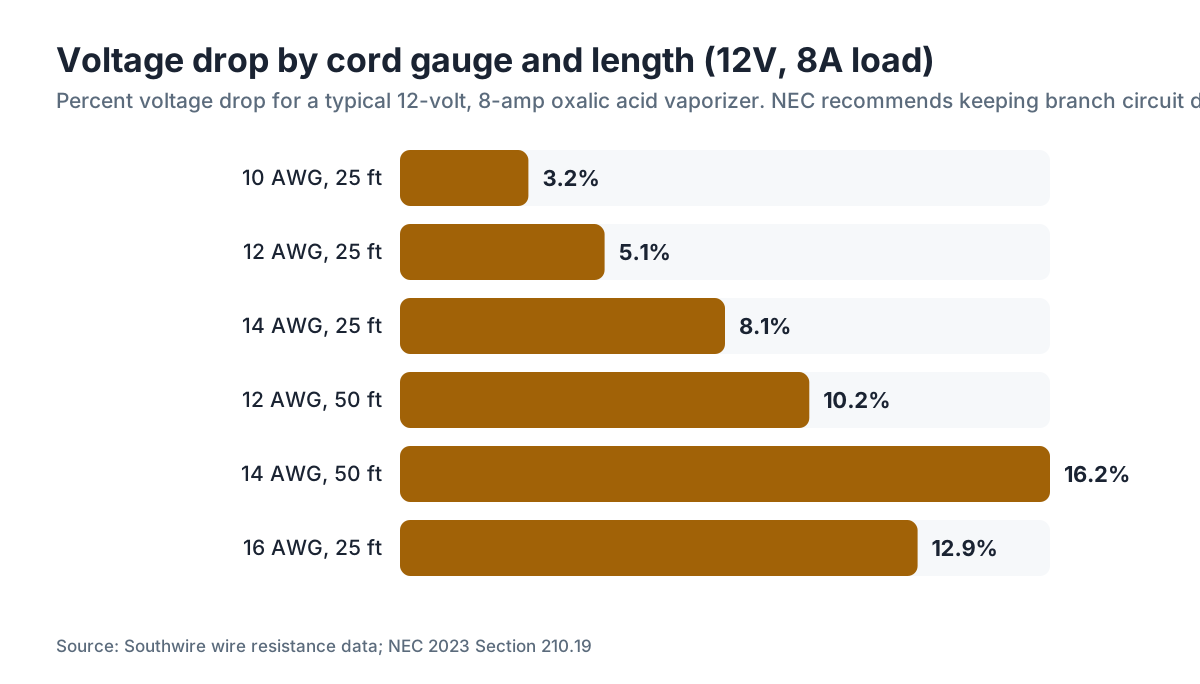
This isn't theoretical. The National Electrical Code, which most states adopt, limits voltage drop to 3 percent on a branch circuit and 5 percent on the feeder plus branch circuit combined [1]. A 12-volt vaporizer pulling 8 amps through 50 feet of 16 AWG cord loses roughly 3.2 volts to resistance. That's a 26 percent drop. The unit will struggle, the cord will warm up, and the heating plate won't reach the 210 to 230°F (99 to 110°C) window that oxalic acid sublimation needs.
Most hobby beekeepers never think about this. Extension cords all look the same from the outside. They aren't.
What is the maximum safe extension cord length for a vaporizer?
The honest answer rides on two numbers: your vaporizer's amperage draw and your cord's wire gauge. No single length covers every setup, but there's a practical ceiling that covers most of them, and it's 25 feet at 12 AWG.
For the common 12-volt DC vaporizers hobbyists run (Varrojet, Varomorus, ProVap and the like), manufacturers and electricians land in roughly the same place:
| Wire Gauge (AWG) | Max Recommended Length | Notes |
|---|---|---|
| 10 AWG | Up to 50 ft | Overkill for most setups; safe for high-draw units |
| 12 AWG | Up to 35 ft | Good all-purpose choice |
| 14 AWG | Up to 25 ft | Minimum practical gauge for most vaporizers |
| 16 AWG | 15 ft or less | Marginal; avoid if possible |
| 18 AWG or thinner | Do not use | Fire and equipment risk |
Twenty-five feet at 12 AWG is the number you'll see most often, both in vaporizer instructions and in the extension cord guidance published by the U.S. Consumer Product Safety Commission [2]. Need more reach? Step up in gauge, not in length.
For 110-volt AC vaporizers (rarer in beekeeping, but they exist), the same logic holds. AC tolerates longer runs than DC at the same gauge, but keep AC cords to 50 feet or less at 14 AWG and check the listed amperage before you assume anything.
How do I calculate voltage drop for my specific vaporizer setup?
You don't need an engineering degree. The formula is short.
Voltage drop (V) = 2 × Length (ft) × Current (A) × Resistance per foot (ohms)
The "2×" is there because current runs out and back through the circuit. Resistance per foot by gauge: 12 AWG is about 0.00193 ohms, 14 AWG about 0.00307 ohms, 16 AWG about 0.00488 ohms [3].
Say your vaporizer draws 8 amps and you're running 30 feet of 14 AWG cord.
Drop = 2 × 30 × 8 × 0.00307 = 1.47 volts
On a 12-volt system that's a 12.3 percent drop. Most manufacturers spec their units at plus or minus 10 percent of nominal voltage, so 12.3 percent puts you outside the safe window. Switch to 12 AWG and that same 30-foot run drops to 0.93 volts, a 7.7 percent drop. Better. Still worth shortening the run if you can.
Hate math? Southwire and other wire makers publish free voltage drop calculators online [3]. Plug in your numbers before you buy the cord, not after.
What gauge extension cord should I use with a vaporizer?
Start with the vaporizer's documentation. The amperage draw is usually printed on the unit or listed in the manual. Can't find it? A clamp meter on the cord during operation reads it in seconds. Most 12-volt DC hobby vaporizers pull somewhere between 6 and 15 amps depending on the heating element.
Match that draw against this guide from the CPSC [2]:
- 0 to 7 amps: 18 AWG minimum (go heavier for any length over 10 feet)
- 7 to 10 amps: 16 AWG minimum
- 10 to 13 amps: 14 AWG minimum
- 13 to 15 amps: 12 AWG minimum
For beekeeping, ignore the 18 and 16 AWG rows entirely. You work outdoors, often in cold weather, and cold nudges wire resistance up. You may also be running from a battery through jumper cables or a dedicated lead, which piles on resistance upstream. Buy 12 AWG and stop thinking about it. The price gap between a 12 AWG and a 14 AWG cord is a few dollars. The headache gap is enormous.
One more thing. Look for cords rated for outdoor use, marked with a W or WA in the cable designation. They handle moisture, UV, and temperature swings that indoor cords can't [4]. Treating hives means dew-wet grass and cold mornings. An indoor-rated cord in that environment is a corrosion and insulation problem waiting to happen.
Can a too-long extension cord damage my vaporizer?
Yes, in two distinct ways.
First, chronic undervoltage. If the cord is long enough that the vaporizer keeps seeing 10 to 20 percent less voltage than it wants, the heating element runs cooler than designed. For oxalic acid treatment that means the acid doesn't fully sublimate. You get incomplete vaporization, residue caked on the heating plate, and a treatment that doesn't hit varroa mites hard enough to matter. The Honey Bee Health Coalition's Varroa management guide ties oxalic acid efficacy to reaching proper sublimation temperature [5]. A weak signal from a marginal cord undermines the whole treatment.
Second, overheating at the plug. If the cord is too light for the load, resistance dumps heat at the connection points first. Plug-end fires from undersized extension cords are a documented CPSC concern [2]. The risk climbs when cords are daisy-chained, which you should never do with a vaporizer.
Daisy-chaining means plugging one extension cord into another. It multiplies resistance and adds connection points that can arc. Just don't.
Is it safe to run a vaporizer from a car battery with long leads?
Most hobbyists run their 12-volt oxalic acid vaporizer straight off a car battery or a dedicated sealed lead-acid battery, not a wall outlet. The voltage-drop rules are identical. The setup is a little different.
Battery leads aren't extension cords in the usual sense, but the physics is the same. A pair of 20-foot jumper cables adds resistance on both the positive and negative runs. Thin leads (16 AWG or lighter) over that distance can drop 1 to 2 volts before the treatment even starts, and terminal voltage sags further as the battery discharges. Start at 12.6 volts, lose a volt to the leads, and the vaporizer sees 11.6 volts or less by mid-treatment.
Keep battery leads to 6 feet or less and use 10 or 12 AWG cable. If the battery has to sit farther away, go 10 AWG minimum. A fully charged deep-cycle battery with short, heavy leads beats a car battery running 20 feet of lamp cord every single time.
Check state of charge before each session. A battery below 12.4 volts (roughly 75 percent charged) starts behind on voltage margin [6].
What do oxalic acid vaporizer manufacturers say about cord requirements?
This varies more than it should. Some manufacturers put explicit cord warnings in their documentation. Others say nothing. A few data points from products you can actually buy:
Varomorus vaporizers, common in the U.S. hobby market, generally call for a minimum 12 AWG extension cord in their product documentation. ProVap 110, an AC unit, references cord requirements in its label directions. The label is the law for EPA-registered pesticide application equipment [7], so anything the label says about cord specs isn't optional.
The EPA-registered oxalic acid products (Api-Bioxal is the primary one in the U.S.) carry label language on equipment use that beekeepers are legally bound to follow [7]. The label doesn't always spell out cord gauge, but it requires equipment be used according to the equipment manufacturer's instructions. So your vaporizer manual's cord guidance carries legal weight through that chain.
If your vaporizer's documentation says nothing about cords, treat that as a gap in their paperwork, not as permission to grab whatever cord is coiled in the garage.
When you're mapping out a full treatment setup and tracking mite counts against treatment dates, VarroaVault's free protocol tools let you log equipment notes alongside your monitoring data, so you're not rebuilding the same checklist every spring.
Does ambient temperature affect how the cord performs?
It does, and cold weather is quietly on your side here. Copper resistance drops as temperature falls, so a 12 AWG cord at 35°F carries current a touch more efficiently than the same cord at 90°F. The difference is small, maybe 5 to 8 percent across the range you'd actually treat in [3], but it runs in the right direction.
What cold really changes is flexibility. PVC-jacketed cords stiffen and turn brittle below about 40°F. A stiff cord bent around hive bodies and dragged over frozen ground is more likely to crack its jacket, especially near the plug. Cords with thermoplastic rubber (TPR) or rubber jackets stay flexible well below freezing and earn their extra cost if you treat in January or February, which is often the best time for oxalic acid vaporization because colonies go broodless [8].
Oxalic acid works best when there's little or no capped brood, because the vapor reaches mites riding adult bees but can't get under cappings. USDA ARS has documented this broodless-period advantage [8]. Winter treatment means your cord has to bend in freezing air without cracking.
What are the fire risks of using the wrong extension cord with a vaporizer?
The CPSC estimates extension cords cause about 4,700 residential fires a year in the United States, killing 50 people and injuring 280 [2]. Most involve cords that were undersized for their load, damaged at the insulation, or paired with high-draw appliances.
A vaporizer is a high-draw resistive heater. It's exactly the kind of device that punishes an undersized cord. The failure mode is predictable. The cord heats along its length, insulation softens or cracks, copper conductors arc, and whatever's nearby (dry grass, pine shavings, that stack of hive boxes you left in the sun) catches.
Treatment areas are full of fuel. Dead grass. Wooden hive boxes. Propolis-coated frames. The risk is real.
Three rules kill most of it:
- Use the right gauge (12 AWG or heavier, 25 feet or less unless you've run the math).
- Never daisy-chain cords.
- Inspect before every use. Any crack, fraying, or heat discoloration at the plug means replace the cord, not tape over it.
OSHA's general industry cord rules, which reach agricultural operations above certain thresholds, ban cords with damaged insulation and prohibit running cords through walls, under rugs, or through any passage where damage hides [9]. Those rules make sense even if your apiary isn't covered by OSHA.
How does cord length affect vaporizer treatment time?
A vaporizer running low on voltage takes longer to reach sublimation temperature, which stretches the treatment window for every hive. Sounds harmless. It creates two problems.
First, longer exposure to oxalic acid vapor. Api-Bioxal label requirements mandate a respirator rated for organic vapors (an OV/P100 half-face or better) during vaporizer use [7]. Longer treatment times mean more time behind that respirator, and the label is blunt about oxalic acid vapor being a respiratory hazard.
Second, battery drain. Longer heating cycles empty your battery faster on battery power. On a 20-hive sideline, the gap between a vaporizer that cycles in 2.5 minutes and one that drags to 4 minutes per hive is about 30 extra minutes of treatment total, and maybe one fewer full battery before you're forced to recharge or swap.
If you track treatment efficiency across apiaries, the right cord is one of the cheapest gains on the board. Tools like the ones at VarroaVault help you spot patterns across treatments and catch whether your equipment setup is quietly adding variance to your results.
For dialing in the rest of your varroa treatment kit, vaporizers included, see our guide to beekeeping supplies.
What other safety precautions should I take when using an oxalic acid vaporizer?
The cord is one piece of a bigger setup. The EPA-registered label for Api-Bioxal (the only registered OA product for U.S. use) spells out several requirements that apply no matter what cord you're running [7]:
- Wear a half-face respirator with OV/P100 cartridges. Not a dust mask.
- Wear nitrile or chemical-resistant gloves.
- Seal hive entrances during treatment and for at least 10 minutes after.
- Don't treat when ambient temperature is below 40°F if bees can't cluster tightly. Many beekeepers push below that in true winter to hit broodless colonies. The label guidance here is really about colony condition more than air temperature.
Beyond the label, keep a clear exit path away from the entrance during treatment. Oxalic acid vapor is heavier than air and settles low, but bees fanning at the entrance can push a puff your way. Stand to the side, never in front.
Keep records: treatment dates, mite counts before and after, ambient conditions. The Honey Bee Health Coalition's Varroa management guide, free to download and the best current consensus from U.S. beekeeping science, builds its whole approach on monitoring and recording [5].
For the biology behind every treatment decision, our varroa mite overview covers the lifecycle in detail. And for buying gear without overpaying, the beekeeping supply companies guide covers vendors worth using.
Frequently asked questions
What is the maximum extension cord length for an oxalic acid vaporizer?
Most manufacturers and electricians cap it at 25 feet for 14 AWG cord and 35 feet for 12 AWG cord. Past those lengths, voltage drop gets big enough to hurt heating performance and risk cord overheating. Need more reach? Increase wire gauge instead of length. Ten AWG safely extends to about 50 feet. Never use 16 AWG or thinner for a vaporizer.
Can I use a 50-foot extension cord with a bee vaporizer?
Only if it's 10 AWG. A 50-foot run of 12 AWG at 8 amps loses about 1.55 volts on a 12-volt circuit, a 13 percent drop that's outside most vaporizers' safe range. A 50-foot 10 AWG cord drops only about 0.97 volts at the same draw, roughly 8 percent, which is marginal but workable. Run the calculation for your vaporizer's exact amperage before committing.
What wire gauge extension cord do I need for a 12-volt vaporizer?
For most 12-volt beekeeping vaporizers pulling 6 to 15 amps, use 12 AWG minimum for runs up to 35 feet. On short runs under 15 feet, 14 AWG is fine. Skip 16 AWG or thinner at any length. Cold weather and battery use both eat into voltage margin, so heavier gauge always buys headroom you'll be glad you have.
Is it safe to daisy-chain two extension cords for a vaporizer?
No. Daisy-chaining doubles resistance and adds connection points between cords that can arc, overheat, or fail under load. The CPSC flags cord-to-cord connections as a real fire risk for high-draw appliances. If one cord isn't long enough, buy a single longer cord of the right gauge. Never run two cords in series for a vaporizer under any circumstances.
Does the EPA oxalic acid label specify anything about extension cords?
The Api-Bioxal label (the primary EPA-registered oxalic acid product in the U.S.) requires vaporization equipment be used per the equipment manufacturer's instructions. It doesn't list cord gauges itself, but because it binds you to the manufacturer's documentation, any cord requirements in your vaporizer's manual carry legal weight. Violating equipment manufacturer specs during pesticide application can void your legal protection under FIFRA.
What happens to a vaporizer that runs on too low a voltage due to cord drop?
It either fails to reach full sublimation temperature (cutting efficacy against varroa) or takes much longer to cycle. Chronic undervoltage can also stress the heating element and shorten its life. On the cord side, the undersized wire warms along its length, degrading insulation over time and creating a fire risk at connection points. The equipment suffers and so does the treatment.
How do I check if my extension cord is getting too hot during vaporizer use?
Run your hand along the cord during operation. It should feel warm at most, never hot. If any section feels uncomfortably hot, especially near the plug or midpoint, stop right away: the cord is undersized for the load. An infrared thermometer gives a precise reading if you want to be rigorous. Jacket surface temperature above 140°F (60°C) is a warning sign.
Can I run an oxalic acid vaporizer from a generator with an extension cord?
Yes, with the right cord gauge and a properly rated generator. For AC vaporizers like the ProVap 110, use a 12 AWG outdoor-rated cord under 50 feet. Make sure the generator outlet matches the vaporizer's plug type and is rated for the amperage draw. Generator voltage can swing under load, so a short, heavy cord matters even more than it would on stable grid power.
What type of extension cord is rated for outdoor use during hive treatment?
Look for cords with a W or WA in the cable type marking (SJTW or SJTWA, for example). Their jackets are rated for outdoor moisture and UV. For cold-weather winter treatments, pick cords with a thermoplastic rubber or rubber jacket rather than PVC, since PVC turns brittle below about 40°F and can crack when you bend it around hive equipment.
How often should I inspect my vaporizer extension cord?
Before every treatment session. Check for cracks or cuts in the jacket, discoloration or melting near plugs, bent or corroded prongs, and any spot where the outer jacket has pulled away from the connector. Discard any cord showing these signs. Extension cords are consumable items in outdoor use, not permanent tools. A replacement 12 AWG outdoor cord runs $15 to $30, cheap insurance against equipment damage or fire.
Does cord length affect the accuracy of my mite treatment dose?
Indirectly, yes. Oxalic acid sublimation needs the heating plate to hold a consistent window (roughly 210 to 230°F). If voltage drop from a long cord blocks full temperature, the acid vaporizes incompletely. Less acid reaches the hive, so mite knockdown falls. The Honey Bee Health Coalition's varroa management guide ties efficacy directly to proper sublimation temperature, which makes cord setup part of the dosing equation.
Are there vaporizers that are less sensitive to extension cord length?
AC-powered vaporizers (110-volt) shrug off cord length better than 12-volt DC units, because higher voltage means lower current for the same wattage, and lower current means less voltage drop over the same resistance. A 110-volt, 6-amp vaporizer over 25 feet of 14 AWG loses only about 0.5 percent of its voltage, well inside tolerance. The tradeoff: AC units need mains power or a generator, which limits reach in remote apiaries.
Where can I find beekeeping supply companies that sell properly rated cords and vaporizers?
Most dedicated beekeeping retailers carry oxalic acid vaporizers and can advise on cord requirements. For a vetted supplier list, see our guide to beekeeping supply companies. Hardware chains and electrical wholesalers are the better bet for 12 AWG outdoor-rated cords, since beekeeping suppliers don't always stock heavy-gauge outdoor cable.
Sources
- NFPA, National Electrical Code (NEC) 2023, Section 210.19: NEC limits voltage drop on branch circuits to 3 percent, and combined feeder plus branch circuit drop to 5 percent
- U.S. Consumer Product Safety Commission, Extension Cords Safety: Extension cords cause roughly 4,700 residential fires per year; CPSC publishes amperage-to-gauge matching guidance and warns against daisy-chaining
- Southwire, Voltage Drop Calculator and Wire Resistance Reference: Resistance per foot by AWG: 12 AWG ~0.00193 ohms/ft, 14 AWG ~0.00307 ohms/ft, 16 AWG ~0.00488 ohms/ft; temperature coefficient for copper resistance
- OSHA, Extension Cord Safety, 29 CFR 1910.305: OSHA requires outdoor-rated cords for outdoor or wet-location use and prohibits use of cords with damaged insulation
- Honey Bee Health Coalition, Varroa Management Guide (2023 edition): Oxalic acid efficacy depends on reaching proper sublimation temperature; monitoring and recording treatment dates and mite counts is the foundation of effective management
- U.S. Department of Energy, Battery Basics and State of Charge: A lead-acid battery below 12.4 volts is roughly 75 percent charged, starting with reduced voltage margin
- EPA, Api-Bioxal Oxalic Acid Registered Label (EPA Reg. No. 69688-14): Api-Bioxal label requires OV/P100 respirator during vaporizer use, mandates equipment use per manufacturer instructions, and specifies minimum 10-minute sealed entrance period
- USDA Agricultural Research Service, Varroa Mite Management: Oxalic acid is most effective against varroa during broodless periods because the acid reaches mites on adult bees but cannot penetrate capped brood
- OSHA, 29 CFR 1910.305(g), Flexible Cords and Cables: OSHA prohibits flexible cords from running through walls or passages where damage goes undetected, and bans use of damaged cords in general industry settings
- University of Minnesota Extension, Oxalic Acid Vaporization for Varroa Control: Proper vaporizer temperature is essential for complete oxalic acid sublimation; winter broodless treatment with a vaporizer is recommended practice
Last updated 2026-07-09