Fogging bees for mites: mineral oil and oxalic acid explained
TL;DR
- Fogging mineral oil suppresses varroa by coating bees and disrupting mite attachment, but it does not kill mites reliably and has no EPA registration as a miticide.
- Oxalic acid vaporization is EPA-registered, hits 90-plus percent efficacy on phoretic mites, and is the only fogger-adjacent method with solid clinical backing.
- Use oxalic acid vapor.
- Use mineral oil fogging only as a documented stop-gap.
What does fogging bees for mites actually mean?
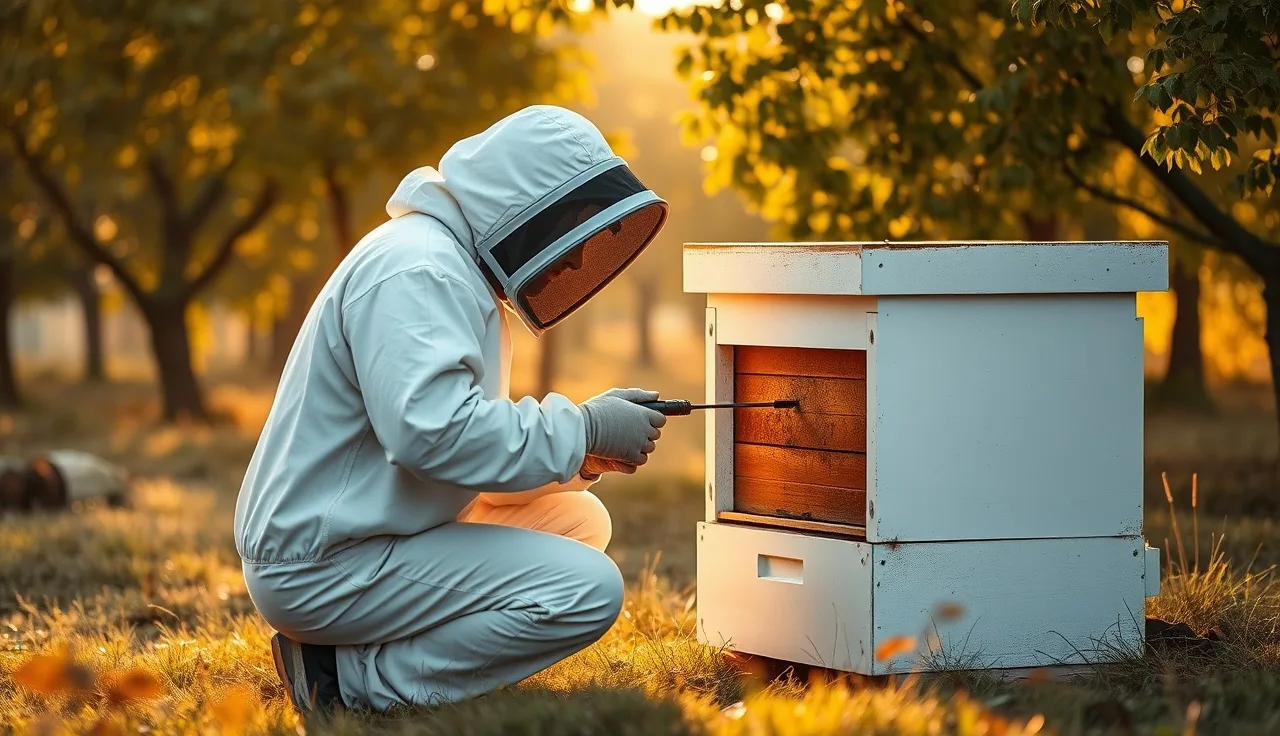
Fogging is exactly what it sounds like. You push a fine mist or vapor through a hive entrance or top so it coats the bees and the interior surfaces. The idea is that a substance on the bees physically interferes with mite behavior, mite reproduction, or mite survival without seriously hurting the bees. Two substances dominate the conversation among hobbyist beekeepers: mineral oil and oxalic acid.
The confusion starts because people lump these two things together under "fogging." They work through completely different mechanisms, have very different legal statuses in the United States, and produce very different results in practice. Mineral oil fogging is an off-label, unregistered use. Oxalic acid vaporization is a registered federal pesticide treatment with an EPA-approved label. That difference matters enormously if you care about food safety, legal liability, or whether the thing you're doing actually works.
A third approach exists too: food-grade mineral oil mixed with thymol or wintergreen. The data on combination fogging is thin, and I'll flag where the evidence gets sparse rather than pretend certainty exists.
For context on the pest you're fighting, the varroa mite page covers the biology of Varroa destructor in detail. Understanding the mite's life cycle, particularly the difference between phoretic (riding on adult bees) and reproductive (sealed in brood cells) phases, is the single most important frame for why any fogging method succeeds or fails.
How does mineral oil fogging affect varroa mites?
Mineral oil fogging works, to the extent it works at all, through physical action rather than chemistry. When a fine mist of food-grade mineral oil coats a bee's body, it may interfere with the sensory structures mites use to find and grip bees. Mites detect bees partly through chemical cues, and a film of oil could disrupt that. The oil may also make the bee's cuticle slippery enough to reduce mite attachment.
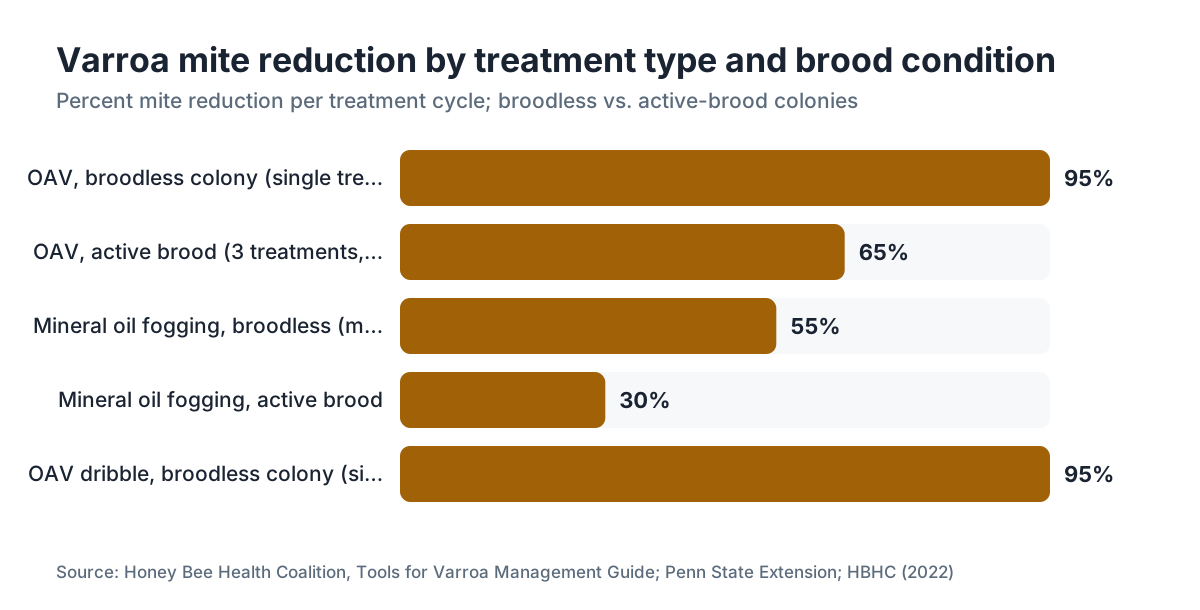
This is a suppression story, not an eradication story. No randomized, peer-reviewed trial has shown mineral oil fogging cutting varroa loads by more than 50 to 60 percent in field conditions, and most informal reports cluster well below that. Compare that to the 90-plus percent efficacy figures for oxalic acid vaporization in broodless colonies [1].
Mineral oil does not penetrate capped brood cells at all. The roughly 70 percent of mites reproducing inside sealed cells during the active season are completely untouched. That is the defining limitation of any fogging-only approach during brood rearing. You can fog weekly and still watch your mite load climb, because the sealed-brood reservoir keeps replenishing the phoretic population you're partially suppressing.
Mineral oil fogging was studied at Cornell in the 1990s and early 2000s, and some trials showed meaningful knockdown in broodless or near-broodless conditions. That mirrors why oxalic acid works best in the same window. When beekeepers report that mineral oil "works," they're usually either running broodless colonies or doing so many repeated treatments that they're grinding down the phoretic population faster than it rebuilds. Neither scenario is a practical management strategy for most hobbyists.
Food-grade mineral oil on bees is generally considered acceptable at low concentrations. But there is no established maximum residue limit for mineral oil in honey under FDA rules, specifically because it is not approved for this use. If you sell honey, that matters.
Is mineral oil fogging legal and EPA-registered for varroa?
No. Mineral oil has no EPA registration as a miticide for use in bee colonies [2]. Using any substance in a way inconsistent with its label violates the Federal Insecticide, Fungicide, and Rodenticide Act (FIFRA), which makes it unlawful to use a registered pesticide "in a manner inconsistent with its labeling." Mineral oil used as a varroa treatment is not a registered pesticide at all, so the situation is even simpler. There is no label to follow, and the use is unregistered.
Some beekeepers treat this like any folk remedy: unregistered, but low enough risk that enforcement stays theoretical. That's a judgment call individuals make. If you're a sideliner selling honey or beeswax, or you get inspected by a state apiarist, document what you use and understand that unregistered pesticide use in hives can affect market access.
Oxalic acid is the counterpoint. The EPA registered oxalic acid dihydrate for use in honey bee colonies under the product Api-Bioxal in 2015 [3]. The label allows three application methods: dribble, vaporization, and extended-release (sponge). Vaporization, the method closest to fogging, is approved for colonies with or without brood under specific conditions. The label is the law. You can read the Api-Bioxal label directly from the National Pesticide Information Center or the EPA's pesticide registration section.
Some beekeepers also use generic oxalic acid products registered under the same EPA umbrella. The active ingredient is identical, and so are the label requirements.
How does oxalic acid vaporization work against varroa?
Oxalic acid vaporization, also called OAV, works by sublimating solid oxalic acid crystals into a vapor that fills the hive. When the vapor contacts mites, the acid disrupts the mite's body in ways that kill it. The precise mechanism is not fully resolved in the literature, but contact with the acid appears to damage the mite's cuticle and interfere with basic physiology. Bees tolerate oxalic acid far better than mites do, especially at the concentrations the label specifies.
Here is the constraint that shapes everything: oxalic acid vapor kills phoretic mites on adult bees, but it does not penetrate capped brood cells [4]. A single treatment during peak brood season knocks down phoretic mites, then the population recovers as capped mites emerge. This isn't unique to OAV. It applies to any contact-only treatment. The standard protocols handle it two ways. Time treatments to broodless periods (winter cluster, an induced brood break, or swarm season), or run multiple treatments spaced to catch emerging mites before they re-enter cells.
The Honey Bee Health Coalition's Varroa management guide states that oxalic acid is "most effective when used on colonies without capped brood" [5]. That's the whole protocol in eight words. In a mid-winter treatment on a broodless colony in a cold climate, a single OAV pass routinely hits 90 percent or better mite reduction. In a summer colony with heavy brood, you may need three treatments spaced seven days apart to run the population down through successive emergence cycles.
The Api-Bioxal label specifies 1 gram of oxalic acid dihydrate per brood box per vaporization treatment. Do not eyeball this. Use a calibrated gram scale. Overdosing stresses queens and can cause brood damage.
What equipment do you need to fog or vaporize a hive?
For oxalic acid vaporization, you need a vaporizer (sometimes called an oxalic acid sublimator), a calibrated gram scale, a timer, and proper personal protective equipment. The PPE is not optional and is spelled out on the Api-Bioxal label: a NIOSH-approved respirator for acid vapors (minimum a P100 or combination organic vapor/acid gas cartridge), safety goggles, and gloves. Oxalic acid vapor irritates the airways and eyes. Beekeepers have been seriously hurt ignoring this.
Vaporizers run from simple resistive-heating wands that plug into a 12-volt battery (around $30 to $80) to propane-powered and fan-driven units built for larger operations. For a hobbyist with one to five hives, the basic wand-style vaporizer works fine. The Varrox and Sublimox are European designs with long track records, and several lower-cost U.S.-available units work adequately. To compare your supply options, the beekeeping supply companies page lists major vendors.
For mineral oil fogging (if you choose to use it despite the legal and efficacy caveats above), you need a fogger that can atomize food-grade mineral oil into a fine mist. Repurposed garden foggers or purpose-built bee foggers both get used. Particle size matters. Too large and the oil falls out of suspension before it coats bees. Too small and you lose most of it through hive ventilation. There is no standardized droplet specification for bee fogging, because there is no registered product with an approved label to define one.
Sealing the hive entrance during OAV treatment is standard practice. Ten minutes of exposure with the entrance sealed is a typical protocol, though the label specifies the dose, not a fixed exposure time. Seal screened bottom boards from below or close the entrance with foam.
What does the research say about efficacy: mineral oil versus oxalic acid vapor?
The evidence base here is lopsided. Oxalic acid vaporization has decades of European field trials, multiple U.S. university extension trials, and an EPA registration process that required efficacy data. Mineral oil fogging has mostly informal reports, a handful of small trials from the 1990s, and no regulatory efficacy dossier.
A frequently cited Pennsylvania State University extension summary puts OAV efficacy in broodless colonies at 90 to 99 percent mite reduction in a single treatment [6]. That range is real, and the variation reflects colony size, whether the colony is truly broodless, hive sealing during treatment, and applicator technique.
For mineral oil, the best available data comes from Cornell and USDA-ARS work in the 1990s. Those studies showed 40 to 60 percent mite reduction with repeated treatments, and the effect was strongest when brood was absent or minimal. No large randomized controlled trial comparing mineral oil fogging to OAV in matched colonies has been published that I can point you to with confidence. The honest answer: the data doesn't exist at that level.
The Honey Bee Health Coalition's guide [5], the closest thing to a consensus document for U.S. beekeepers, does not list mineral oil fogging as a recommended treatment. It does list oxalic acid as a Tier 1 treatment for broodless colonies.
One nuance worth stating plainly. Repeated mineral oil fogging at very short intervals (every three to five days) through a full brood cycle has theoretical merit, because you keep grinding the phoretic population while the brood matures and emerges. Whether that's practical, and whether queen stress and disruption outweigh the benefit, is genuinely unresolved. I wouldn't do it as a primary strategy.
| Treatment | Efficacy in broodless colony | Efficacy in active brood | EPA registered | Honey residue risk |
|---|---|---|---|---|
| Oxalic acid vapor (OAV) | 90-99% [6] | 50-70% (multiple treatments) | Yes (Api-Bioxal) [3] | Negligible at label dose [4] |
| Mineral oil fogging | 40-60% (informal data) | Low | No | Unknown |
| Oxalic acid dribble | 90-99% broodless | Not recommended in brood | Yes (Api-Bioxal) [3] | Negligible at label dose [4] |
When should you use oxalic acid vaporization in your annual protocol?
Timing is everything with OAV. Three windows perform best: late fall or early winter when the colony is broodless or near-broodless, an induced brood break (caging the queen or removing her temporarily), and right after a swarm when the original colony sits queenless and broodless for a stretch.
For most hobbyists in temperate North American climates, the late-winter or early-spring treatment before the colony ramps up brood production is the highest-leverage single treatment of the year. You hit a low mite load with high efficacy right when the colony is most vulnerable to a spring mite explosion.
Summer OAV is messier. With capped brood present, a single treatment may only cut your mite load 30 to 50 percent, because so many mites sit sheltered in cells. The standard approach is three treatments, seven days apart, to catch mites as they emerge before they enter new cells. Some extension protocols recommend five-day intervals. University of Minnesota extension has published practical summer OAV protocols worth reading [7].
If your mite wash in August runs above 3 percent (three mites per hundred bees), act fast regardless of season. Don't wait for a broodless window. Use OAV in a multi-treatment schedule, or switch to a longer-residual treatment like Apivar (amitraz strips) that works in the presence of brood.
To build a full-season mite management calendar that ties OAV to alcohol wash monitoring, the free protocol builder at VarroaVault maps treatment windows against your local bee calendar without doing the math from scratch every year.
How do you safely apply oxalic acid vapor without harming bees or yourself?
Put on your PPE before you open the vaporizer packaging. The acid gas is a real hazard. Respiratory protection is the non-negotiable item: a half-face respirator with combination organic vapor and P100 (acid gas) cartridges, not a dust mask. Safety glasses or goggles, better than a face shield alone. Nitrile gloves. This is what the Api-Bioxal label requires and what the EPA's worker protection guidance specifies [8].
Weigh 1 gram of Api-Bioxal per brood box on a calibrated scale. One gram. Not a heaped teaspoon, not a guess. Wand vaporizers hold the measured dose in a small pan at the heating tip. Insert the wand through the entrance, seal the entrance around it with foam or a board, start the heating cycle, and leave the area for at least ten minutes. Do not stand downwind of the hive during treatment.
After the treatment time, pull the wand and keep the entrance closed for another five minutes to let the remaining vapor settle. Then open the entrance and step away again before removing your respirator.
Common mistakes: too much acid (queen loss, brood damage), treating on a cold day when the cluster is very tight (uneven distribution), and failing to seal the bottom board on screened floors (vapor escapes before it coats the bees). A study from the University of Bern noted that vaporizer performance varies across device types, worth knowing if you're comparison-shopping equipment [9].
Don't treat in wind. Don't treat through a top entrance if the main entrance is open. Keep records of every treatment: date, product, lot number, and outcome. If you sell honey commercially, those records may be required.
Can you combine mineral oil and oxalic acid fogging for better results?
Some beekeepers have tried mixed approaches: mineral oil fogging for weekly suppression during the brood season, then OAV during a brood break. The logic is defensible. The oil keeps the phoretic load trimmed between treatments, and the OAV delivers a high-efficacy knockdown when conditions line up.
But this combination has no registered product, no published efficacy trial I can confidently cite, and it drags in the legal problem of using an unregistered substance in a hive. If you combine them, you're making two separate decisions: one legal (OAV per label) and one off-label (mineral oil fogging).
Nobody has good data on whether the oil film on bees reduces OAV penetration or efficacy. It's biologically plausible that coating bees with oil before OAV slightly reduces acid vapor contact with the mites riding those bees. Or it could be irrelevant at the concentrations used. I wouldn't assume these two approaches are strictly additive.
The practical advice: if you're going to fog mineral oil at all, treat it as a holding action between properly timed OAV treatments, not a standalone strategy and not a way to dodge buying a vaporizer. A basic OAV wand costs $30 to $80 and pays for itself in the first colony you save.
What do state regulations say about fogging and OAV?
Federal EPA registration (Api-Bioxal) sets the baseline for substance approval, but states can add restrictions on top of the federal rules. Some states require a pesticide applicator license to use any registered miticide, including oxalic acid. Others allow hobbyist use without a license. Check with your state department of agriculture before your first treatment.
Mineral oil fogging falls outside the registered pesticide framework entirely. State apiarists generally don't formally approve or prohibit it, but they also can't issue you a certification of legal use. If a state inspector finds mineral oil residue in your honey during testing, you're in an awkward spot with no label to point to.
The National Pesticide Information Center (NPIC) maintains fact sheets on registered bee treatments and is a good first call if you're uncertain about your state's rules [10].
For a broader look at what beekeeping equipment and treatments suppliers carry in your state, checking beekeeping supply companies can help you confirm what's being sold legally in your market.
What are the signs that fogging isn't working and your mite load is still too high?
The only honest answer comes from a mite wash, not from eyeballing the colony. You cannot see a 2 percent mite infestation by looking at bees. You can't smell it. Bees with deformed wing virus, the main viral pathogen varroa spreads, may show wing deformities, crawling, or small body size, but by the time those symptoms are common the colony is already in serious trouble [11].
Do an alcohol wash or sugar roll before and after any treatment to measure efficacy directly. The Honey Bee Health Coalition's guide has detailed alcohol wash protocols. If your pre-treatment wash shows 3 mites per 100 bees or more during the brood season, treat immediately. A post-treatment wash two weeks after a broodless OAV treatment should show a sharp drop. If it doesn't drop by at least 80 percent, something went wrong. The colony may not have been broodless, the dose may have been off, or the vaporizer underperformed.
If you're fogging mineral oil and your washes aren't improving, that's your signal to stop and switch to a registered treatment. The mite won't wait for you to get the protocol right.
How much does fogging equipment and oxalic acid treatment cost?
A basic OAV wand vaporizer runs $30 to $80. Mid-range units with better heat control are $80 to $150. Commercial propane-powered vaporizers for sideline operations run $200 to $500. A 35-gram container of Api-Bioxal costs roughly $25 to $35 from most suppliers and holds enough for about 35 treatments at the 1 gram per box label dose. That's well under a dollar per treatment for the active ingredient.
The respirator is your biggest upfront cost if you don't already own one: a half-face respirator with the right cartridges runs $30 to $60. Replacement cartridges cost $15 to $25 per pair. Do not skip the respirator or try to substitute a cloth mask.
Mineral oil itself is cheap. Food-grade mineral oil suitable for fogging costs $10 to $20 per quart. A fogger that generates a fine enough mist for bee treatment runs $30 to $100. So the raw material cost is low, but the real question is whether the money buys actual mite reduction, and the evidence says not reliably.
Against Apivar (amitraz strips) at roughly $2 to $3 per strip or Mite-Away Quick Strips (formic acid) at $5 to $8 per strip, OAV is extremely cost-competitive, especially for beekeepers running multiple hives.
For supply sourcing, free shipping honey bee supply companies covers vendors who reduce the shipping sting on equipment purchases.
Frequently asked questions
Does mineral oil fogging actually kill varroa mites?
Not reliably. Mineral oil does not kill mites chemically. It disrupts their ability to grip bees and may interfere with chemical sensing. Field data suggests 40 to 60 percent reduction at best, mostly on phoretic mites. Mites in sealed brood cells are completely unaffected. No EPA-registered mineral oil miticide for honey bees exists, so any use is unregistered and off-label under FIFRA.
Is oxalic acid vaporization safe for bees and queens?
At the label dose of 1 gram per brood box per treatment (Api-Bioxal), oxalic acid vaporization is generally safe for adult bees and queens. Overdosing causes queen loss and brood damage. Do not exceed the label dose. Studies show negligible oxalic acid residue increase in honey at the label dose. Queens are more sensitive than workers, so accurate dosing matters.
How often can you apply oxalic acid vapor?
The Api-Bioxal label permits up to three vaporization treatments per year per colony when brood is present, at minimum five-day intervals. For broodless colonies, a single treatment is often enough. Some state extension programs recommend three treatments seven days apart for summer use. Always follow the current label, which supersedes any extension protocol if they conflict.
Can you use oxalic acid when honey supers are on?
The Api-Bioxal label prohibits vaporization when honey supers intended for human consumption are present. Remove supers before treatment. Studies show oxalic acid residues in honey occur naturally and the treatment raises them only slightly at label doses, but the label restriction is the legal requirement you must follow in the United States.
What is the best time of year to fog or vaporize for varroa?
Late fall through early winter, when colonies are broodless or near-broodless, is the highest-efficacy window for oxalic acid vaporization. A single treatment in a truly broodless colony achieves 90 to 99 percent mite reduction. Summer treatments need three or more applications spaced five to seven days apart to catch mites as they emerge from brood cells. Timing beats any technique.
What PPE do you need for oxalic acid vaporization?
The Api-Bioxal label requires a NIOSH-approved respirator rated for acid gas and P100 particulates, chemical splash goggles, and chemical-resistant gloves. A standard dust mask does not protect against oxalic acid vapor. Respiratory protection is the item you cannot skip. Oxalic acid vapor irritates the airways and can cause serious harm with repeated unprotected exposure.
How do you know if your fogging treatment worked?
Perform an alcohol wash or sugar roll before and after treatment. A successful broodless OAV treatment should cut your mite count by 80 percent or more. Target below two mites per 100 bees (2 percent) during the brood season. Colonies still above 3 percent after treatment need an additional or different intervention. Visual inspection of bees never replaces a mite wash.
Can you fog a hive with brood present?
Yes, but efficacy drops substantially because mites reproducing inside sealed cells are protected from contact treatments. OAV in a colony with brood typically achieves 50 to 70 percent reduction per treatment. Running three treatments seven days apart is the standard protocol to address multiple emergence cycles. Mineral oil fogging with brood present has even lower efficacy.
Is fogging with mineral oil legal?
No, not as a registered pesticide use. Mineral oil has no EPA registration as a varroa miticide for honey bee colonies. Using it as a treatment is an unregistered pesticide use under FIFRA. The legal and practical risk is highest for commercial or sideliner beekeepers selling honey. Oxalic acid vaporization via Api-Bioxal is the EPA-registered alternative.
What concentration of oxalic acid is used in vaporization?
The Api-Bioxal label specifies 1 gram of oxalic acid dihydrate per brood box per treatment. This is a measured weight, not a concentration in solution. Use a calibrated gram scale. Do not prepare your own oxalic acid crystals from industrial-grade bulk acid for use in hives. Use only the registered Api-Bioxal product per its label.
How long does oxalic acid vapor stay active in the hive?
Oxalic acid vapor is a contact treatment, not a residual one. It acts during and immediately after the treatment period, roughly 10 to 15 minutes with the entrance sealed. Once the vapor settles, there is no ongoing killing effect. That's why timing and repeated treatments matter. There is no slow-release protection between applications the way there is with amitraz strips.
Can you treat a nucleus colony or a small split with OAV?
Yes, and nucs respond very well because they are often broodless or low-brood, and their smaller volume concentrates vapor effectively. Use a reduced dose proportional to the number of boxes: 1 gram per brood box, so a single-box nuc gets 1 gram. Seal any gaps carefully, because small enclosures can leak vapor more easily than a full-size hive.
Does fogging with oxalic acid leave residue in honey?
Oxalic acid occurs naturally in honey at low levels. Research cited in the Api-Bioxal registration shows vaporization at the label dose causes a small, detectable increase in hive oxalic acid levels that stays within the range of natural variation across honey types. The label still prohibits treatment when honey supers are on, and that restriction is binding.
What varroa mite infestation level requires immediate fogging or treatment?
The Honey Bee Health Coalition and most extension programs set the action threshold at 2 percent (2 mites per 100 bees) during the brood season and 1 percent before winter build-up. Above 3 percent in summer or fall, delay is risky. Mite populations can double in weeks. At those levels, waiting for a broodless window is not an option. Use a multi-treatment OAV schedule or switch to a brood-penetrating product like Apivar.
Sources
- Honey Bee Health Coalition, Tools for Varroa Management Guide (7th edition): Oxalic acid is most effective in broodless colonies; efficacy of 90 percent or higher in a single broodless treatment is cited across multiple HBHC-reviewed trials
- EPA, Pesticide Registration: Federal Insecticide, Fungicide, and Rodenticide Act (FIFRA): Mineral oil has no EPA registration as a varroa miticide for use in honey bee colonies; unregistered pesticide use violates FIFRA
- EPA, Pesticide Registration: Api-Bioxal Registration (Reg. No. 83923-1): Oxalic acid dihydrate registered as Api-Bioxal for use in honey bee colonies in 2015, with vaporization as an approved application method
- USDA Agricultural Research Service, Bee Research Laboratory: Oxalic acid vapor does not penetrate capped brood cells; treatment targets only phoretic mites on adult bees; honey residue increases are minimal at label dose
- Honey Bee Health Coalition, Tools for Varroa Management Guide, oxalic acid section: HBHC guide states oxalic acid is 'most effective when used on colonies without capped brood' and lists it as a recommended Tier 1 treatment for broodless colonies
- Pennsylvania State University Extension, Varroa Mite Management: OAV efficacy in broodless colonies cited at 90 to 99 percent mite reduction in a single treatment in Penn State extension summaries
- University of Minnesota Extension, Varroa Mite Control: UMN extension publishes practical summer OAV protocols recommending multiple treatments spaced 5 to 7 days apart to address brood-cycle mite emergence
- EPA, Worker Protection Standard and Api-Bioxal Label Requirements: Api-Bioxal label requires NIOSH-approved respirator for acid gas and P100 particulates, chemical splash goggles, and chemical-resistant gloves for vaporization application
- University of Bern, Institute of Bee Health, research on OAV vaporizer performance: Study from University of Bern noted that vaporizer performance and distribution efficacy vary across device types and designs
- National Pesticide Information Center (NPIC), Oregon State University and EPA: NPIC maintains fact sheets and state-specific guidance on registered bee treatments including oxalic acid products
- USDA ARS, Deformed Wing Virus and Varroa mite vectoring research: Deformed wing virus, the primary pathogen vectored by Varroa destructor, causes wing deformities and crawling bees; visible symptoms indicate an advanced infestation level
Last updated 2026-07-09