How long varroa mites live off the host bee
TL;DR
- Varroa mites die fast without a bee.
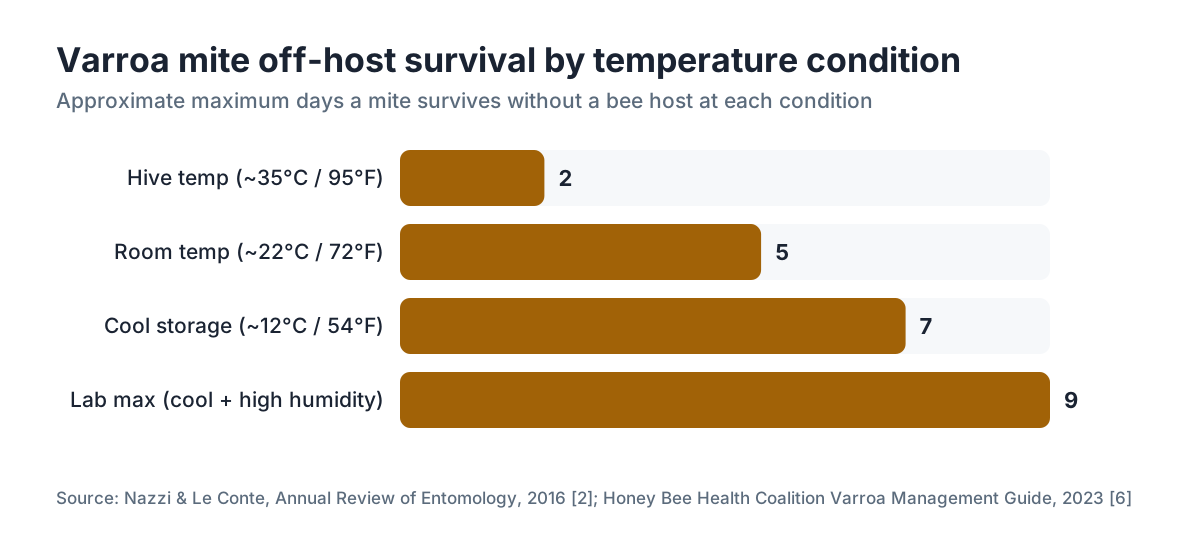
- At hive temperatures near 35°C, a mite knocked off its host is dead within 1 to 5 days.
- Cooler room air buys them maybe a week.
- That short window explains why varroa spread through bee contact, not through empty combs in storage, and why waiting two weeks makes dead-out equipment safe to reuse.
How long can a varroa mite actually survive off a bee?
Not long. Published research puts the off-host survival window for Varroa destructor at roughly 1 to 5 days in hive-like conditions, stretching to about a week at cooler ambient temperatures [1]. A handful of lab studies pushed the ceiling to around 9 days at very cool temperatures with high humidity, but that's an edge case you won't see in a real hive or a storage shed [2].
The mite is an obligate parasite. Its gut handles nothing but bee tissue. It can't eat, can't reproduce, can't do anything useful without a host. The moment it drops off a bee, a clock starts running.
Temperature and humidity set the speed of that clock. Warm and dry kills fast. Cool and damp drags it out. Everything else in this article follows from those two facts.
What happens to a varroa mite when it falls off a bee?
It starts drying out almost immediately. Whether the mite lands on the bottom board, a frame, or bare comb, it loses moisture to the air through breathing pores called spiracles. Without a warm, humid bee body to cling to, dehydration is what kills it [1].
At hive temperatures around 35°C, in the dry air of a ventilated box, a dropped mite is in trouble within 24 hours. At room temperature, roughly 20 to 25°C, with moderate humidity, it holds on longer. That's why some lab runs record survival out to 5 to 7 days. Those numbers are real, but they mark a ceiling, not what usually happens.
Mites also move badly on flat surfaces. They're built to grip bee hairs, not wood or wax. A dropped mite is stranded. It can wave its legs and creep along, but it won't find a new host on its own unless a bee walks right over it.
Does temperature change how long mites survive off the host?
Yes, more than any other single factor. Warmer air speeds up desiccation and shortens survival. Cooler air slows it down. Here's how the relationship shakes out in practice:
| Condition | Approximate off-host survival |
|---|---|
| Hive temperature (~35°C / 95°F) | 1 to 2 days |
| Room temperature (~20 to 25°C / 68 to 77°F) | 3 to 5 days |
| Cool storage (~10 to 15°C / 50 to 59°F) | Up to ~7 days |
| Near-freezing temps | Immobilized fast, dead within hours to a few days |
Those figures come from controlled lab observations in published acarology research [1][2]. The hive-temperature row is the one that matters to you, because that's the air inside your boxes.
Heat accelerates drying. Low humidity accelerates it more. A screened bottom board with real airflow drops mites into conditions that kill them faster than a solid board would. That's a small point in favor of screened bottoms, though the mortality from mite drop is minor next to what a proper oxalic acid or miticide treatment does [3].
Freezing is a sure thing. Drawn comb in a chest freezer at 0°F (-18°C) for 24 hours kills every mite on it. Handy to know if you're storing comb and wondering whether a quick freeze clears residual mites. It does.
Can varroa mites spread through empty comb or stored equipment?
Almost certainly not through stored gear alone [1][4]. Since mites die within days at room temperature without a host, combs sitting in a barn for two weeks carry essentially zero varroa risk. By day five to seven, any mite on that equipment is dead.
The real spread routes look nothing like that. Mites move between colonies mostly through drifting and robbing bees: an infested bee from one hive walks into another, and the mite hops over. Swarms carry mites too. And beekeepers spread them by hand, moving frames of brood between hives without checking mite levels first. That last one causes a lot of avoidable damage.
So if you're eyeing a stack of supers pulled from a dead-out, holding them a couple of weeks before reuse settles the varroa question. What you're really waiting out is small hive beetles and wax moths, which are their own problem. For varroa, time does the work.
How does off-host survival relate to the mite's life cycle?
Why mites die so fast off the host makes sense once you see the life cycle. Varroa destructor spends its life in two phases: the phoretic phase riding on an adult bee, and the reproductive phase sealed inside a capped brood cell [4].
In the phoretic phase, the mite clings to the bee, feeds on fat body tissue, and waits for its ride to enter a cell about to be capped so it can slip in and breed. This window runs longer when there's no brood (winter) and shorter when brood rearing is booming. A phoretic mite that loses its grip has no backup. There is no free-living stage in varroa biology [4].
This is exactly why broodless treatments work so well. In winter or during a brood break, nearly all mites sit on adult bees, exposed. Oxalic acid hits almost every one. During heavy brood rearing you might reach only 10 to 20% of the population with the same treatment, because the rest are sealed in cells where vapor and dribble can't touch them [5].
And because the mite can't outlast a week off the bee, "starving out" varroa by emptying equipment does work, as long as you wait long enough. At room temperature that means a week minimum to feel confident. Most extension guidance says two weeks to be safe, which is a sensible buffer [3].
Does humidity affect how long mites survive off bees?
It does, though it matters less than temperature in most real settings [2]. Higher humidity slows drying and stretches survival a bit. The lab studies reporting the long tail (5 to 9 days) usually run at 70 to 80% relative humidity, which is damp. A well-ventilated hive or storage room runs closer to 40 to 60% RH.
For practical purposes, you don't manage humidity to kill mites on equipment. You just give it time. If you're running a mite wash or a sticky board count and want to preserve mites for later identification, a cool, damp container keeps them recognizable longer. Useful when you're still learning to tell varroa from debris.
Humidity is mostly worth knowing because it explains the spread you see between studies. When one paper says two days and another says five, they're often just running different temperature and humidity. Both can be right at once.
Why does knowing this help you time varroa treatments?
This is where the biology turns into action. The short off-host window means varroa management is about what's on bees and in brood, never about what's sitting on surfaces.
Plan an oxalic acid vapor treatment for when mite loads are high on adult bees and low in capped cells. A late-winter or early-spring treatment, before brood rearing ramps up, catches the largest share of mites possible [5]. That matches the Honey Bee Health Coalition's Varroa management guide, which recommends oxalic acid during broodless periods or when brood is minimal [6].
Running a split or a package gives you a natural brood break where nearly every mite is phoretic. Treat in that window and you can crash mite numbers before the brood nest rebuilds. It's one of the strongest moves a small-scale beekeeper has.
To track when these windows open and space out your treatment intervals, VarroaVault's free varroa management tools help you build a protocol around your local conditions and hive count.
Mites dying within days off the host also means you don't need to treat empty equipment, freeze drawn comb before every use (freezing still earns its keep for wax moth prevention), or quarantine hive tools between yards for varroa reasons.
Can a mite survive long enough to transfer through shared equipment?
It depends on timing and temperature, but equipment transfer is a low risk next to moving bees or brood. If you share hive tools, frames, or bottom boards across several hives, this is the question you're really asking.
Here's the honest picture. A mite on a hive tool you used in one hive and carried straight to another could transfer if a bee contacts the tool while the mite is still alive and mobile. Real, but tiny. The mite has to be on the tool, still active, and a bee has to walk directly over it within minutes to hours. It happens. It's probably not a meaningful spread route at the colony level.
Moving a frame of capped brood with bees on it from a high-mite hive into a clean one is a different animal entirely. That can shift hundreds of mites in one motion. The varroa mite overview walks through those spread mechanics in full.
The takeaway is clean: guard against moving bees and brood, not against sharing tools. Wipe your scraper if it makes you feel better. Don't lose sleep over the one you forgot.
How does this compare to other bee pests that survive off the host?
Varroa's off-host fragility is one of its few weak spots, and it stands out against pests that persist in the environment. Here's the contrast.
Small hive beetles (Aethina tumida) survive weeks to months as adults outside the hive, pupate in soil, and re-enter hives on their own. Far tougher in the environment than varroa. Wax moths persist as larvae in comb for a long stretch without any bees around.
Tracheal mites (Acarapis woodi), which live in the breathing tubes of adult bees, die almost the instant their host dies, so their transfer window is even tighter than varroa's. American foulbrood spores run the opposite direction: they survive in equipment for 40 or more years [7]. These gaps shape how long you quarantine or treat gear for each threat.
For varroa, the short survival window works in your favor. It's a parasite that can't hang on in the environment without a steady supply of bees. No bees, no varroa. That's why a sustained brood break plus a well-timed treatment can drive mite numbers down to almost nothing, which is much harder against pests that have a free-living stage.
What does off-host survival mean for dead-outs and equipment reuse?
Finding a dead colony stings, but the varroa side of equipment reuse is simple. Leave the gear closed up for two weeks at ambient temperature and any surviving mites are dead [1][3]. You don't need to treat the boxes, frames, or bottom boards for varroa.
What you do need to check is everything else. Look for American foulbrood scale: a ropy texture, a foul smell, dried larvae stuck to the bottom of cells. AFB spores shrug off waiting, freezing, and most disinfectants. Any doubt about AFB, don't reuse the comb. Those spores outlast everything.
For varroa, wait two weeks, inspect the comb for AFB, and reuse with confidence. Want to be thorough? A 24-hour freeze at 0°F (-18°C) kills any varroa on drawn comb for certain, plus wax moth eggs and small hive beetle larvae and eggs. A nice multipurpose step if your freezer has the room.
When you're restocking for a new colony, beekeeping supply companies carry replacement frames and foundation for any old comb too dark or damaged to keep.
Are there any conditions that let varroa mites survive longer than a week off the host?
The published evidence doesn't support survival past 9 to 10 days under any realistic conditions [2]. A study on mite desiccation tolerance found that even at 85% relative humidity and 20°C (68°F), most mites were dead by day 7, with the odd individual hanging on to day 9. Those survivors were immobile and unlikely to reach a bee [2].
The Honey Bee Health Coalition's guidelines state that varroa "cannot survive for long periods without bee hosts," and name no environmental condition that would stretch viability meaningfully past what lab studies show [6].
There's no credible evidence that varroa can enter dormancy or a desiccation-resistant state the way some other mites can. No known quiescent phase exists. If someone tells you mites survive for weeks or months on equipment, the literature doesn't back it.
One honest caveat: most off-host survival work happens in controlled labs. Field data on mites that fall through screened bottom boards into debris, where conditions near the hive floor might run warmer and damper, is thin. What we have suggests the same timeline holds, but there's a real study waiting for someone to run.
Frequently asked questions
Can varroa mites survive in an empty hive with no bees?
No, not for long. With no bee to feed on, varroa mites dry out and die within 1 to 7 days depending on temperature and humidity. An empty hive at room temperature holds no viable mites after about a week. Waiting two weeks before reusing dead-out equipment gives a comfortable margin. The main worry with dead-out gear is American foulbrood, not varroa.
How long do varroa mites live in total, including time on a bee?
It depends on the role. A female mite in the reproductive phase, cycling through brood cells, lives about 2 to 3 months during active brood season. In winter, riding a bee in the phoretic phase, she can last up to 5 months. Male mites die inside the cell after mating and never leave it. The 1 to 5 day off-host window is only the time after she loses contact with a bee.
Will freezing drawn comb kill varroa mites?
Yes. Drawn comb held in a freezer at 0°F (-18°C) for 24 hours reliably kills varroa mites on it, along with wax moth eggs and larvae and small hive beetle eggs and larvae. That makes freezing a useful step before storing or reusing comb. It does not kill American foulbrood spores, so inspect comb for AFB before reuse whether or not you freeze it.
Can you spread varroa mites on hive tools between hives?
In theory yes, in practice barely. A mite on a hive tool would need to be alive and mobile, and a bee in the next hive would have to touch it within hours. Equipment transfer isn't a major varroa spread route. Moving frames of bees or capped brood between hives is far riskier. Be careful with brood transfers and stop worrying about your hive tool.
Do varroa mites survive on cut or dead bees?
A mite can cling to a dead bee briefly, but a dead bee offers no feeding and dries out fast. Studies on mite survival on dead bees are limited, but since the mite feeds on living fat body tissue, a dead bee buys it little extra time. For practical purposes, assume the same 1 to 5 day maximum applies.
Why do mites die so quickly without a bee host?
Varroa mites are obligate parasites that feed on nothing but bee tissue. Off the bee they lose moisture through their breathing pores, called spiracles, and have no way to replace it. There's no free-living or dormant stage in their biology. Once separated from a host, drying out kills them, faster in warm, dry air and slower in cool, humid air.
Does a screened bottom board kill mites that fall through?
Mites that fall through a screened bottom board land below the mesh and can't climb back up. They die within 1 to 2 days at hive temperatures. But the natural daily mite drop is small, so this passive mortality won't control a mite population on its own. Screened bottoms help with monitoring via sticky boards and add modest ventilation, but they don't replace treatment.
Is there any environment where varroa mites can survive indefinitely without bees?
No. No documented environment lets varroa mites survive indefinitely without a bee host. They have no feeding mechanism other than parasitizing living bees and no known dormant stage. The longest survival recorded in controlled labs runs around 9 to 10 days under cool, high-humidity conditions. Outside those edge cases, survival past 5 days is uncommon.
How does mite survival off the host affect treatment planning?
Knowing mites die fast off the bee confirms that your target is always living bees and capped brood, never surfaces or equipment. It also explains why broodless treatments hit so hard: with no cells to hide in, nearly all mites sit on adult bees, exposed to treatments like oxalic acid. Time your treatments for these windows, the late-winter broodless period or an induced brood break, for the best results.
Can varroa mites transfer from cut comb honey to consumers?
No. Even if a mite was present at harvest, the conditions in honey (low water activity, acidic pH) plus the few-day off-host limit mean no viable mites reach a consumer. Varroa mites pose no food safety concern for honey. They also don't infect humans or other mammals in any way.
Do Africanized honey bees have lower varroa infestation rates because of behavior?
Africanized honey bees show some behaviors that slow varroa buildup, including more frequent swarming (which creates a brood break) and some grooming. But they still get varroa and can still lose colonies to high mite loads. Off-host survival time is the same in Africanized colonies as in European ones. There's more on the biology in our article on the africanized honey bee.
How long should I wait before moving bees into a hive that had a mite-infested dead-out?
For varroa, two weeks at ambient temperature is safe. All mites will be dead by then. In practice most beekeepers also clean out dead colony debris, check for AFB, and replace dark or damaged comb before bringing bees back in. The varroa question is the easiest part of reusing dead-out equipment.
What percentage of varroa mites are in the phoretic phase vs. inside brood cells?
It swings hard with season and brood activity. At peak brood season, roughly 80 to 90% of mites sit in capped cells, mostly capped worker brood, leaving only 10 to 20% phoretic on adult bees. During a broodless winter stretch, close to 100% are phoretic. That ratio is why treatment efficacy sinks during heavy brood season and why the Honey Bee Health Coalition times oxalic acid treatments to broodless periods.
Sources
- Ifantidis, M.D. (1983). Ontogenesis of the mite Varroa jacobsoni in worker and drone honeybee brood cells. Journal of Apicultural Research, 22(3), 200 to 206.: Varroa mites cannot survive for extended periods off a bee host; off-host survival is limited by desiccation.
- Nazzi, F. & Le Conte, Y. (2016). Ecology of Varroa destructor, the Major Ectoparasite of the Western Honey Bee. Annual Review of Entomology, 61, 417 to 432.: Off-host survival of Varroa destructor is limited to days; temperature and humidity are the primary determinants, with survival up to approximately 9 days recorded only at cool, high-humidity lab conditions.
- University of Minnesota Extension, Varroa Mite Management: Screened bottom boards allow fallen mites to drop below the mesh where they cannot return to bees and die; two-week equipment rest recommended before reuse after a dead-out.
- Rosenkranz, P., Aumeier, P. & Ziegelmann, B. (2010). Biology and control of Varroa destructor. Journal of Invertebrate Pathology, 103 Suppl 1, S96, S119.: Varroa destructor is an obligate parasite with no free-living stage; its life cycle alternates between a phoretic phase on adult bees and a reproductive phase inside capped brood cells.
- U.S. Environmental Protection Agency, Varroa Mite Control: Oxalic acid treatments are most effective during broodless periods when the vast majority of mites are in the phoretic phase on adult bees.
- Honey Bee Health Coalition, Varroa Management Guide (2023 edition): Varroa 'cannot survive for long periods without bee hosts'; oxalic acid treatments recommended during broodless periods for highest efficacy; approximately 80 to 90% of mites reside in capped brood during active brood season.
- USDA Agricultural Research Service, American Foulbrood: American foulbrood spores can survive in equipment for 40 or more years, in contrast to varroa mites which die within days off the host.
- Pennsylvania State University Extension, Varroa Mite Biology and Management: Phoretic mites account for roughly 10 to 20% of the total mite population during active brood season; during broodless winter periods nearly 100% of mites are phoretic.
- Delaplane, K.S. & Hood, W.M. (1999). Economic threshold for Varroa jacobsoni in the southeastern USA. Apidologie, 30(5), 383 to 395.: Colony-level mite population dynamics depend on phoretic and reproductive phase ratios, confirming that off-host mites are not a meaningful reservoir of infestation.
Last updated 2026-07-10