How soon after treatment can you add honey supers?

TL;DR
- The waiting period before adding honey supers depends entirely on the treatment product.
- Oxalic acid vaporization requires 0 to 4 weeks depending on label and brood status.
- Apiguard and ApiLife VAR require supers off during the full treatment course.
- Apivar requires supers off for the entire 42 to 56 day strip period.
- Always read the current EPA-registered label, which is the legal standard.
Why can't you just put supers on right after treating?
The short answer is contamination. Every registered varroa treatment leaves some residue in wax, and that residue can move into honey that people will eat. The EPA registration process for each product sets a pre-harvest interval, sometimes called a PHI, which is the minimum time between the last treatment application and when you can legally harvest honey from treated combs. Put supers on before the PHI ends and you risk honey that exceeds allowable residue limits. That's a food safety problem, not a paperwork one.
There's a colony health angle too. Some treatments need warm temperatures and open brood cycles to work. Stacking supers during treatment can drop hive temperatures enough to cut efficacy, or the bees simply spend their foraging energy drawing new comb instead of keeping mite levels down. Both problems are real, and both hurt your outcome.
The Honey Bee Health Coalition's Varroa Management Guide makes the point clearly: treatment timing, temperature windows, and brood status all interact, and supers complicate every one of those variables [1]. So the rule isn't bureaucratic caution. It's built around actual chemistry and actual bee behavior.
What is the waiting period for oxalic acid treatments?
Oxalic acid is where the most confusion lives, because there are three application methods and each has different label language.
For dribble (Api-Bioxal, the only EPA-registered oxalic acid product in the US): the label specifies use only when there is no capped brood present, and honey supers must be removed before treatment. The pre-harvest interval isn't stated as a day count. Instead, the label restricts use to broodless colonies and to a single treatment per year. In practice, if you're dribbling in winter when there's no honey super to worry about, the question doesn't apply. Try to dribble in a split with a super, though, and you're off-label [2].
For vaporization (also Api-Bioxal under its vaporization label): the label allows treatment with brood present, up to three treatments per year at seven-day intervals. The key restriction is that honey supers intended for human consumption must not be present during treatment. After the final vaporization, you can add supers. The current Api-Bioxal label lists no mandatory day-count wait for vaporization if no supers were present during treatment, but university extension guidance typically suggests waiting until the vaporized oxalic acid has dissipated from the hive air. Most researchers consider that complete within a few days [3].
For extended-release oxalic acid (Api-Bioxal glycerin-soaked cellulose strips, approved under FIFRA section 3): the label requires supers off during the treatment period. Treatment runs up to 56 days. Supers go back on after the strips come out.
Bottom line for oxalic acid: remove supers before treating, finish your treatment course, then add supers. The precise day count depends on the method. The consistent rule is supers off during any active treatment.
How long do you wait after Apivar (amitraz strips)?
Apivar strips stay in the hive for 42 to 56 days, and the label is blunt: honey supers must not be present during treatment [4]. You remove supers before putting in the strips, run the full treatment, pull the strips, and then supers can go on for the honey flow.
Apivar's active ingredient is amitraz, a synthetic acaricide that builds up in beeswax over time and moves into honey at low levels. That's exactly why the label bans supers during treatment rather than setting a short pre-harvest interval afterward. Once the strips are out, the current label states no additional mandatory wait before supers go back on. But amitraz residues in wax are a long-term concern separate from the pre-harvest question. Rotating treatments to keep wax residues down is smart practice regardless [1].
Most beekeepers who use Apivar treat in late summer after the main nectar flow, when supers are already off. That's the cleanest way to run it. Treat in spring and you'll delay super addition by the full strip period, which is 6 to 8 weeks.
What about Apiguard and ApiLife VAR (thymol-based treatments)?
Both Apiguard and ApiLife VAR use thymol, a compound from thyme oil, and both carry the same super restriction: remove supers before starting, keep them off for the entire course, and don't add supers until treatment is done [5].
Apiguard's label specifies two gel tray applications, each left in place for two weeks, for a total treatment period of about four weeks. Temperature rules are strict. Effectiveness drops sharply below 59°F (15°C), and the label says not to start treatment if ambient temperatures will stay below that. Adding supers during treatment cuts thymol volatilization because the bees are less clustered and the temperature in the upper hive space drops.
ApiLife VAR tablets go in over three rounds spaced 7 to 10 days apart, putting the treatment window at roughly 3 to 4 weeks. Same restriction. Supers off during treatment.
Thymol doesn't build up in honey the way amitraz does in wax, but it does taint honey flavor at elevated concentrations. The risk is real and documented in European field studies. Beekeepers who've left supers on during thymol treatment have pulled honey that smells like cough drops [5].
After the last Apiguard or ApiLife VAR application comes out and treatment is complete, you can add supers. Current labels prescribe no extra waiting period.
Does the waiting period differ for brood-right colonies versus splits?
Yes, and this is where beekeepers get caught off guard.
A colony with a lot of capped brood at treatment time will have mites emerging from cells as brood hatches. If you're using a contact miticide like Apivar, those emerging bees walk across the strip and pick up amitraz, which kills the phoretic mites riding them. The treatment duration is built to cover a full brood cycle (about 21 days for workers) plus a buffer. That's why 42 days is the minimum. Cut the strip period short because you want supers on, and mites in late-emerging brood survive untreated.
A broodless colony is a different story. A nuc, a swarm, or a hive in a winter broodless stretch is wide open. Oxalic acid dribble works so well in a broodless hive precisely because every mite is phoretic, exposed, and vulnerable. A single dribble treatment in a broodless colony can knock mite levels down by over 90% [3]. There's no long window waiting on a brood cycle. You treat, the mites are gone, and supers can go on once honey flow begins.
Splits and packages start out nearly broodless too, which is one reason late-spring treatment of new splits before they build up makes sense. If you're vaporizing oxalic acid on a split with no sealed brood, two or three treatments over 14 days covers you, and supers can go on for the summer flow without a long delay.
What does the EPA label actually say, and where do you find it?
The EPA-registered label is the legal document. Using a varroa treatment in a way that contradicts the label breaks federal pesticide law (FIFRA), no matter what you read on a beekeeping forum [6]. Labels change. The Api-Bioxal label, for example, was amended after its initial 2015 registration to allow vaporization. Older copies floating around online don't reflect current permissions.
The National Pesticide Information Center maintains label databases, and the EPA's pesticide registration site (search by registration number) gives you the current official label as a PDF [6][11]. Bee Informed Partnership and university extension programs like Penn State's, NC State's, and UC Davis's apiculture programs publish label summaries. When there's a conflict, the current EPA label wins.
For Api-Bioxal, the EPA registration number is 83923-1. For Apivar, it's 86449-5. For Apiguard, it's 71422-2. Search those numbers directly on the EPA website to pull the current label PDF [6].
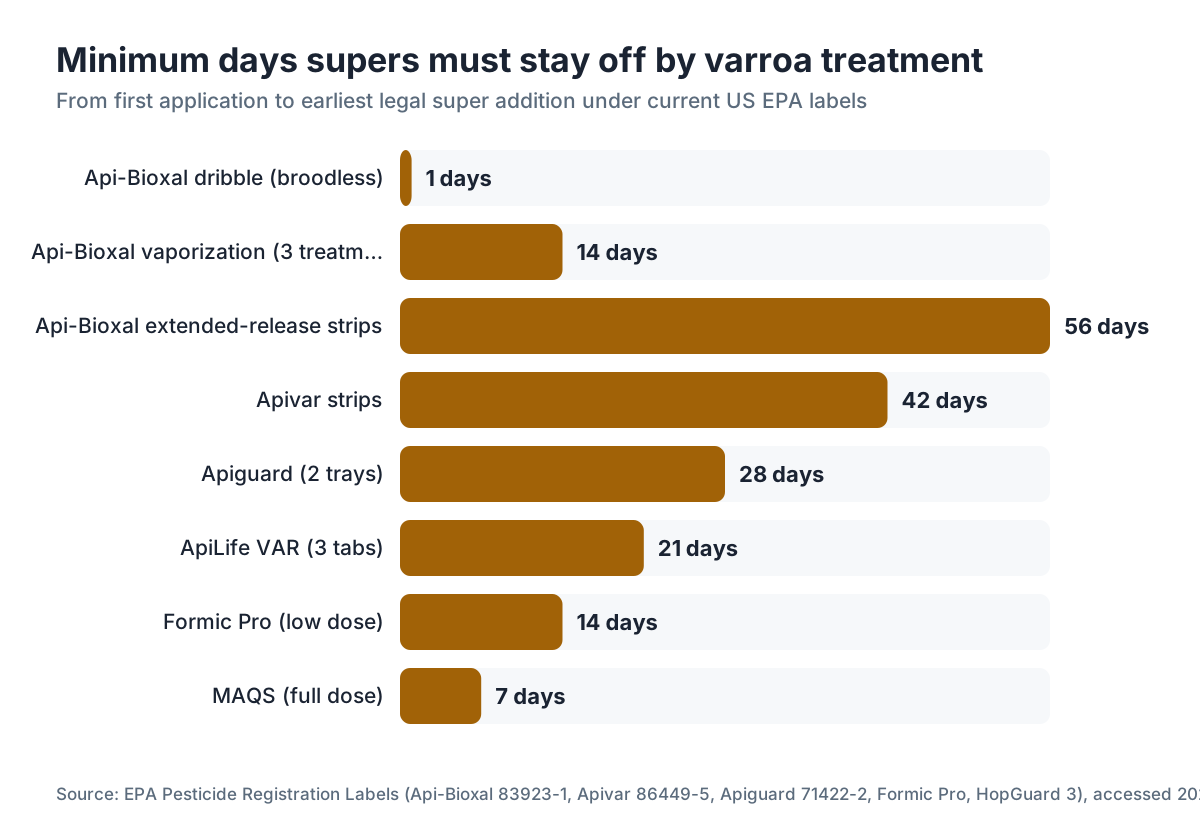
A table of current restrictions by product:
| Treatment | Active Ingredient | Supers Allowed During Treatment? | Minimum Treatment Duration | Notes |
|---|---|---|---|---|
| Api-Bioxal (dribble) | Oxalic acid | No | Single application | Broodless colonies only |
| Api-Bioxal (vaporization) | Oxalic acid | No | 3 treatments over 14 days | Can use with brood present |
| Api-Bioxal (extended release strips) | Oxalic acid | No | Up to 56 days | Newer label, check current version |
| Apivar | Amitraz | No | 42 to 56 days | Full brood cycle coverage |
| Apiguard | Thymol | No | ~28 days (2 trays) | Min 59°F required |
| ApiLife VAR | Thymol | No | ~21 to 30 days (3 tabs) | Min 60°F recommended |
| MAQS / Formic Pro | Formic acid | No | 7 to 28 days depending on product | Temperature limits apply |
Can any treatment be used with supers on?
Almost none at typical doses. The one exception people bring up is formic acid at very low, extended-release concentrations, but the current US labels for both MAQS (Mite Away Quick Strips) and Formic Pro flatly prohibit supers during treatment [7]. The European experience with some low-dose formic acid dispensers is different because those products are registered under different regulatory frameworks. In the US right now, supers off is the rule for every registered varroa treatment.
Some beekeepers ask about hop beta acids (HopGuard 3). The current HopGuard 3 label carries a more nuanced restriction: supers may stay on during treatment, but honey in those supers is not to be harvested for human consumption [8]. That's a different kind of label language. It isn't a clean green light. It's a restriction on harvest rather than on super presence. Treat with HopGuard 3 and then harvest that honey anyway, and you're still off-label.
The practical takeaway: no registered US varroa treatment is clearly approved for use with harvestable honey supers on the hive. Plan your treatment windows around the honey flow, not the other way around.
How do you plan your season so treatment and honey flow don't conflict?
This is the real skill. It's what separates beekeepers who pull good honey crops year after year from those who feel like they're always choosing between varroa control and honey production.
The standard approach is two treatment windows: late summer after the main flow ends (typically late July through September depending on your region), and early spring before the main buildup. Late summer treatment with Apivar or thymol lines up naturally with supers already off after harvest. You remove supers, put in strips or trays, run the treatment, and the colony goes into winter with controlled mite loads.
Spring treatment is trickier. A January or February oxalic acid dribble or vaporization in a broodless colony gets mite levels down before the colony explodes in population. By the time the dandelion flow starts in April or May in most temperate climates, treatment is long finished and supers can go on clean.
The danger zone is trying to treat during the summer honey flow. It's tempting when you check in July and find a 3% mite load, but putting Apivar in with supers up means you either harvest contaminated honey or pull the supers and lose weeks of prime flow. Monitor from April onward with an alcohol wash or sugar roll, and target treatment before mite loads reach 2% (the Honey Bee Health Coalition threshold). Do that and you catch problems early enough to treat in a gap between flows [1].
For tracking mite counts and scheduling your treatment windows around local nectar flows, the free protocol tools at VarroaVault can help you map the timing without guesswork.
You can also read more about the mite biology driving these decisions in the varroa mite overview.
What happens if you accidentally leave supers on during treatment?
It depends on the treatment and how long the supers stayed on.
For oxalic acid: OA is naturally present in honey at low background levels anyway. Studies measuring residues in honey after OA vaporization with supers inadvertently left on found levels that stay within or near natural background ranges, partly because OA doesn't penetrate capped honey cells well [3]. Still, the label says supers off, so this is a violation, and you're gambling on residue levels. Catch it after one vaporization and pull the supers, and the risk is probably low in practice. Harvest that honey, though, and you're off-label.
For thymol (Apiguard, ApiLife VAR): the problem is flavor, not toxicity. Thymol taints honey taste at concentrations well below any safety threshold. If your honey sat in open cells, it may smell or taste strongly of thyme. Some buyers won't take it. You can blend it down, or use it for mead or cooking, but selling it as pure varietal honey is basically impossible.
For amitraz (Apivar): residue migration into honey is documented. Amitraz and its metabolite DMPF have been detected in honey from hives treated with strips. The US has no legal residue tolerance for amitraz in honey, which means any detectable level is technically non-compliant. That's a genuine concern for commercial sales and export markets [4].
The honest advice: if you left supers on by accident, don't harvest that honey for human sale. Feed it back to bees, make mead for personal use, or chalk it up as a learning cost.
Does treating a nucleus colony before adding it to a hive affect the super timeline?
Nucs and packages often get an oxalic acid dribble before installation, precisely because they're broodless or nearly broodless at that stage. If a nuc was dribbled before you received it, or if you dribbled it yourself before installation, the oxalic acid residues in the wax and adult bees are minimal and clear within days.
No label requirement sets a waiting period between treating a newly installed package or nuc with oxalic acid and adding supers once the colony is established. The practical point is that a new package won't need supers for 4 to 6 weeks anyway, because that's how long it takes to build population and comb. By the time supers would even be appropriate, any treatment concern is moot.
For new beekeepers getting started with their first colonies, having good beekeeping supplies including a reliable mite wash kit matters as much as having the right treatments. You can't plan your super timing without knowing your mite counts.
The trickier situation is installing a treated nuc into an existing hive body that already has supers on it. The labels don't address that directly. The conservative read: supers come off during any active treatment and go back on after treatment ends, even in a newly combined hive.
What do university extension programs recommend for super timing?
Penn State Extension's apiculture program recommends treating in late summer, typically August in Pennsylvania, after the main honey flow and before varroa populations peak ahead of winter brood rearing [9]. Their guidance points to removing supers before treatment rather than timing around super presence.
NC State's apiculture program and the Honey Bee Health Coalition both frame varroa management as a calendar planning problem: build your treatment schedule first, then fit honey production around it [1][10]. The framing matters because it flips how a lot of beekeepers think. Most hobbyists plan honey production first and hope to squeeze in treatment. The programs that have studied colony survival keep finding that flipping that priority leads to better winter survival.
UC Davis's apiculture work has examined oxalic acid residue studies in depth, finding that "oxalic acid treatment of honey bee colonies by vaporization does not result in honey residues above background levels found naturally in untreated honey" [3]. That's a direct quote from their extension publication, and it's the best evidence we have for why OA is considered the lowest-residue option.
The Honey Bee Health Coalition's Varroa Management Guide, now in its third edition, is the single most useful free resource for matching treatment to brood cycle to honey flow. It's available as a free PDF from the Coalition's website [1].
Frequently asked questions
Can I add supers the day after removing Apivar strips?
Yes, the current Apivar label sets no waiting period after strip removal before supers can be added. Remove the strips after 42 to 56 days, then supers can go on. The residue concern with amitraz is in wax over repeated treatments, not in a post-strip waiting window. That said, if the honey flow hasn't started, there's no urgency.
How long after oxalic acid vaporization can I add supers?
The Api-Bioxal vaporization label requires supers off during treatment. After your final vaporization (usually the third treatment in a 14-day course), most extension guidance suggests waiting a few days for vaporized OA to fully dissipate from hive air before adding supers. No mandatory day count is stated on the label, but a 3 to 7 day buffer is common practice and sensible.
What is the pre-harvest interval for Api-Bioxal?
The Api-Bioxal label doesn't state a traditional pre-harvest interval in days the way some agricultural pesticides do. Instead, it restricts super presence during treatment. Once treatment is complete and supers are added, you can harvest honey from those supers at any point during the season. The restriction is on concurrent treatment and super presence, not on time after treatment ends.
Can you treat with Apiguard if supers are already full of honey?
No. The Apiguard label requires supers to be removed before starting treatment. Thymol volatilizes into hive air and can penetrate uncapped honey, causing flavor contamination. Even capped honey is at some risk if the colony breaks the wax cappings. Remove supers, treat for the full four weeks, then add clean supers for any remaining flow.
Is it safe to leave supers on during HopGuard 3 treatment?
HopGuard 3's label allows supers to remain on the hive during treatment, but specifically states that honey in those supers must not be used for human consumption. It's a harvest restriction rather than a removal requirement. In practice, most beekeepers treat with HopGuard 3 when supers are off anyway. If you leave supers on, don't harvest that honey.
Does treating in winter mean I can add supers earlier in spring?
Yes, and this is one of the best arguments for winter broodless-period oxalic acid treatment. A January or February dribble or vaporization in a broodless colony knocks mite loads down to near zero with no super conflict. By the time spring buildup produces a hive ready for supers, 8 to 12 weeks have passed. You can add supers confidently at first nectar flow with no residue or label concerns.
What mite level should trigger treatment before the honey flow?
The Honey Bee Health Coalition recommends treating when alcohol wash counts reach 2% (2 mites per 100 bees) or higher during the brood-rearing season. At 2%, mite populations are typically doubling every 4 to 6 weeks. Treating at 2% gives you time to complete a full treatment course before the main flow begins, rather than discovering a 5% load in the middle of a nectar flow.
Can you treat a swarm with oxalic acid and add supers right away?
A swarm is broodless for the first 8 to 10 days after it settles, making it ideal for oxalic acid dribble or vaporization. One or two vaporizations 7 days apart gives excellent knockdown. After the final treatment, there's no label-specified waiting period before adding supers. Since a swarm won't be ready for supers for several weeks anyway, the timing rarely creates a conflict.
Do formic acid treatments (MAQS, Formic Pro) require supers off?
Yes. Both MAQS and Formic Pro labels in the US require honey supers intended for human consumption to be removed during treatment. Formic acid can penetrate capped honey cells and alter flavor at the concentrations needed for mite kill. MAQS runs 7 days at full dose; Formic Pro can run 14 or 28 days at lower doses. Supers go back on after treatment is complete.
How do I know if my honey is contaminated from treatment overlap?
You can't tell visually or by taste for most treatments except thymol, where the odor is detectable. Lab testing through commercial food-testing labs or through state apiarist programs can test honey for amitraz metabolites or formic acid levels. For hobbyist use, if you suspect contamination, the safest path is to not sell that honey and use it to feed bees back or make mead for personal consumption.
Does the waiting period change if I'm an organic beekeeper?
Certified organic operations in the US are restricted to oxalic acid and formic acid treatments under most certifier standards. The label restrictions are the same regardless of certification status: supers off during treatment. Organic certification doesn't exempt you from EPA label requirements. Some certifiers add their own restrictions on top of label minimums, so check with your specific certifier.
Can I alternate between honey supers and treatment in the same season?
Yes, with planning. A common pattern: super up for the spring flow, pull supers in late July, treat with Apivar for 6 to 8 weeks through August and September, remove strips, and add supers again if there's a fall flow in your area. In climates with a strong fall aster or goldenrod flow, this works well. The key is a treatment window that fits completely between flows.
Where can I find the most current version of each varroa treatment label?
The EPA's pesticide registration site at epa.gov lets you search by product name or registration number to download the current official label PDF. Api-Bioxal is registration 83923-1, Apivar is 86449-5, Apiguard is 71422-2. University extension programs like Penn State's and NC State's publish label summaries, but always cross-check against the current EPA label, which is the controlling legal document.
Sources
- Honey Bee Health Coalition, Varroa Management Guide (3rd edition): 2% mite threshold recommendation, treatment timing relative to brood cycles and honey flows, and amitraz wax residue concerns from repeated Apivar use
- EPA, Api-Bioxal Label (Registration No. 83923-1): Api-Bioxal dribble method requires broodless colonies and prohibits honey supers during treatment; single treatment per year limit
- UC Davis Apiculture, Oxalic Acid Residue Extension Publication: Oxalic acid vaporization does not result in honey residues above natural background levels; single OA dribble in broodless colonies achieves over 90% mite knockdown
- EPA, Apivar Label (Registration No. 86449-5): Apivar strips must remain in hive 42 to 56 days; honey supers prohibited during treatment; amitraz and metabolite DMPF detected in honey from treated hives
- EPA, Apiguard Label (Registration No. 71422-2): Apiguard requires supers removed before treatment, two tray applications over approximately 28 days, minimum 59°F for efficacy
- EPA, Federal Insecticide Fungicide and Rodenticide Act (FIFRA): Using a registered pesticide contrary to label directions is a violation of FIFRA; the label is the law
- EPA, Formic Pro / MAQS Label: Formic acid treatments (MAQS and Formic Pro) require honey supers intended for human consumption to be removed before and during treatment
- EPA, HopGuard 3 Label: HopGuard 3 allows supers to remain on hive during treatment but honey in those supers must not be used for human consumption
- Penn State Extension, Varroa Mite Management: Late summer treatment (August in Pennsylvania) recommended after main honey flow ends, before varroa populations peak ahead of winter brood rearing
- NC State Extension Apiculture, Varroa Mite Control: Treatment schedule should be built first with honey production planned around it; monitoring and treating before 2% threshold prevents loss of treatment window
- National Pesticide Information Center, Pesticide Label Database: NPIC maintains pesticide label databases and provides access to current registered label documents for verification
Last updated 2026-07-09