How to combine treatments for integrated varroa management
TL;DR
- Integrated varroa management stacks mechanical controls (brood breaks, drone comb removal), organic acids (oxalic and formic), and synthetic miticides in a sequence timed to the mite life cycle.
- No single treatment holds up year-round.
- Keep infestation below 2 mites per 100 bees before supers go on and before fall winter-bee buildup begins.
What is integrated varroa management and why does one treatment never work alone?
Integrated varroa management means combining two or more controls from different modes of action, so mites never fully adapt to any single pressure. Rotate the attack the way a farmer rotates herbicides. Single-mode reliance breeds resistance, and with varroa the price of resistance is a dead colony.
Varroa destructor hides. Roughly 70-80% of mites at any moment are sealed inside capped brood cells, out of reach of contact treatments [1]. A formic acid strip or an oxalic acid dribble hits the phoretic (bee-riding) fraction well and does almost nothing to the foundresses already tucked under wax cappings. That single biological fact is why stacking methods matters.
The Honey Bee Health Coalition's Tools for Varroa Management guide says it flatly: no single product or technique controls varroa across all seasons and colony states [2]. Their recommended path is the layered one. Monitor first, combine mechanical and chemical tools, then monitor again to prove the treatment worked.
There are three tool categories to draw from. Mechanical controls (brood breaks, drone comb sacrifice, screened bottom boards) remove mites or interrupt reproduction with no chemicals. Organic acids (oxalic acid, formic acid) kill on contact and break down without residue. Synthetic miticides (amitraz, fluvalinate, coumaphos) hit harder but carry resistance and residue risks. A real IVM protocol pulls from at least two of these categories, often all three, rotated by season.
What mite threshold should trigger a treatment decision?
The standard action threshold is 2 mites per 100 adult bees (2%) during the brood-rearing season, with some extension programs using 3% as the outside limit before real colony damage begins [3]. Below 2% in spring and summer, a healthy colony tolerates the load without acute harm. Above 2%, virus transmission speeds up fast enough that waiting costs you bees.
In fall the threshold tightens. The Honey Bee Health Coalition recommends treating at or above 1-2% in late summer (roughly August across the northern US), because the long-lived winter bees raised in September and October are the ones that carry the colony to spring [2]. A mite-damaged winter bee dies in January instead of April, and the cluster math collapses.
After winter, when broodless or nearly broodless colonies break cluster, an oxalic acid treatment knocks mite loads down hard before spring buildup adds capped brood again. Plenty of beekeepers skip this window, then wonder why they're chasing high counts in May.
Monitoring method matters as much as timing. The alcohol wash (or the sugar roll, a lower-mortality alternative) gives you a percentage. Sticky boards tell you mite fall rate, not infestation percentage, which makes them hard to act on. Penn State Extension calls the alcohol wash the most accurate field method [3].
| Monitoring method | Mite count type | Recommended by | Accuracy |
|---|---|---|---|
| Alcohol wash | % infestation | HBHC, Penn State | High |
| Sugar roll | % infestation (lower mortality) | HBHC | Moderate-high |
| Sticky board (24-hr) | Mite fall rate | Common field use | Low-moderate |
| CO2 wash | % infestation | Research settings | High |
How do you sequence mechanical controls with chemical treatments?
The sequencing rule is short: use mechanical methods first to cut the mite population and push more mites from capped brood into the phoretic phase, then apply treatments that hit phoretic mites hardest.
Drone comb removal is the most accessible mechanical tool. Varroa infests drone brood at roughly 8-10 times the rate of worker brood [4]. Put a frame of drone foundation in the hive, let it get drawn and capped, then freeze it and remove it. You pull a real slice of the mite population out of the system. Do this every 24-28 days during buildup and you're running a continuous mite trap with zero chemical input. It won't hold counts below threshold on its own in a high-pressure apiary. Paired with an oxalic acid application, it stretches the interval between full chemical treatments.
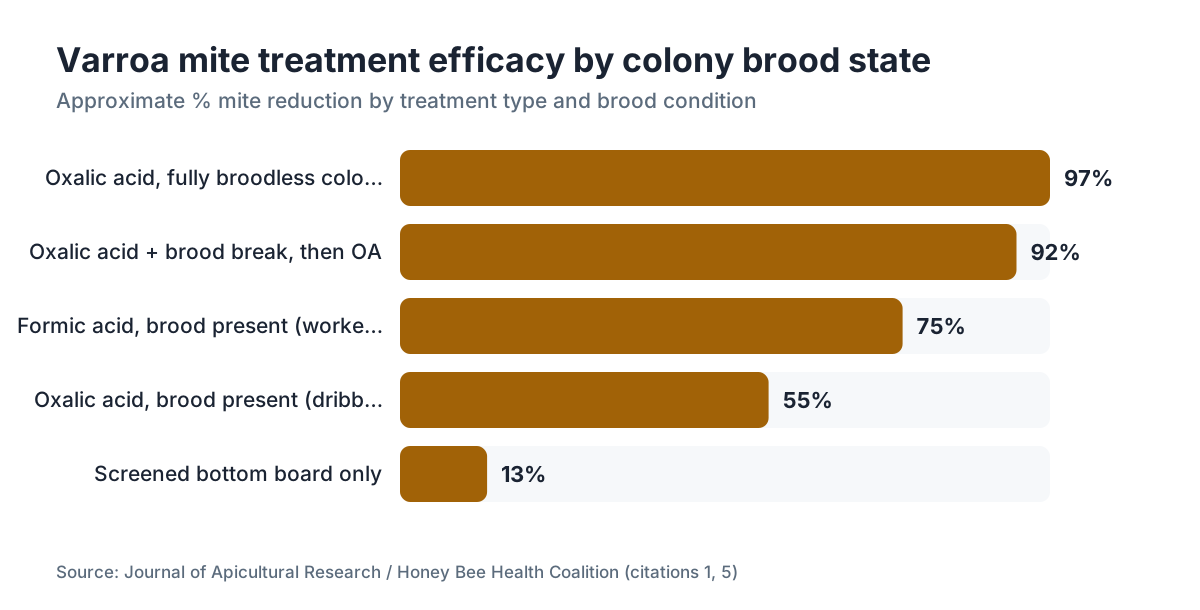
A brood break, natural (swarm or supersedure) or managed (caging or removing the queen for 24 days), forces every mite into the phoretic phase once all capped brood has emerged. At that point an oxalic acid dribble or vaporization reaches close to 95-99% efficacy in a completely broodless hive, against roughly 50-60% with brood present [5]. Most of the treatment failures beekeepers blame on bad oxalic acid are actually brood-present applications that left the protected reservoir untouched.
Screened bottom boards add a small passive reduction (studies generally show 10-15% versus solid floors) and nothing close to enough alone [6]. Keep them for ventilation and monitoring, not as a primary control.
The practical sequence runs like this. Drone comb removal for 2-3 cycles in spring. A mid-season alcohol wash to read the load. A brood break if you're over threshold. Oxalic acid vaporization during the broodless period. A follow-up wash 3 weeks later to confirm. If counts keep climbing after that, a synthetic with brood-penetrating action earns its place.
Which organic acid treatments work best in a combined protocol, and how do you use them?
Oxalic acid and formic acid are the two organic acid workhorses in IVM. They have different strengths, and knowing which one to reach for is where a lot of hobbyists get tripped up.
Oxalic acid dihydrate (sold as Api-Bioxal in the US) is EPA-registered and kills phoretic mites on contact [5]. It works best as a vaporization treatment (sublimation with a heated vaporizer) or as a dribble for broodless colonies. Vaporization allows repeat doses, and the label permits up to three treatments 5 days apart in a broodless colony. In colonies with brood, repeated vaporization gives partial control by hitting phoretic mites again and again, but it never touches mites under capped cells. The dribble method (3.5 g Api-Bioxal in 35 ml of 1:1 sugar syrup per seam of bees) is very effective in a truly broodless winter cluster and less practical in peak season.
Formic acid (sold as Mite Away Quick Strips, MAQS, and Formic Pro in the US) has one property oxalic acid lacks: it penetrates capped brood [7]. It vaporizes at room temperature and reaches mites inside sealed cells. That makes it the tool for brood-rearing season when a full brood break isn't practical. The trade-off is temperature sensitivity (MAQS: 50-85 degrees F; Formic Pro runs 50-92 degrees F per the product label) and higher bee toxicity at the top of that range. Queen loss is a real risk when it's hot. Read the current label before every treatment.
Sequencing: use oxalic acid in the broodless window (late fall through early spring, depending on your region) and formic acid during the brood season when counts climb over threshold and you can't afford a 24-day brood break. A common plan is formic acid in late summer, then oxalic acid vaporization in midwinter when the colony is broodless. Two hits, two modes of action, one season. That's the spine of a defensible IVM plan.
The full tool comparison and timing guidance sits in the Honey Bee Health Coalition's guide, free to download and updated regularly [2].
When should synthetic miticides enter the rotation, and how do you avoid resistance?
Synthetics are the blunt instruments of varroa control. Amitraz (Apivar strips), fluvalinate (Apistan), and coumaphos (Checkmite+) are the EPA-registered options in the US [8]. They work, but resistance to fluvalinate and coumaphos is already widespread across North America, which makes them unreliable as standalone treatments in many regions [9].
Amitraz (Apivar) still performs in most tested populations, but amitraz resistance has shown up in Europe and in some US apiaries, so it's on the same road [9]. Using it every year as your only heavy hitter is exactly how you get there faster.
A resistance-aware rotation has a few rules. Use synthetics no more than once per year in any hive. Alternate the active ingredient across years. Never run two synthetics in the same season. Pair every synthetic treatment with a wash before and after to confirm it's working. A 21-day post-treatment alcohol wash showing less than 80% reduction in mite load is a red flag that resistance may be building in your apiary.
Synthetics are temperature-independent, unlike organic acids, which makes them useful where mild winters keep colonies rearing brood and oxalic acid's broodless window never reliably shows up. In Florida or coastal California, a well-timed Apivar rotation paired with mechanical controls may be your most practical backbone.
Never apply synthetic strips while honey supers are on. Amitraz and coumaphos accumulate in wax and honey [10]. Fluvalinate is especially prone to wax contamination and lingers in comb for years, one reason its resistance is so pronounced: mites keep meeting low-level fluvalinate in contaminated wax even between formal treatments.
How do you build a full-year IVM calendar?
A year-round IVM protocol has four phases, each with a primary tool set.
Early spring (cluster break through the first brood cycle). This is the broodless or near-broodless window in cold climates. Oxalic acid vaporization or dribble here is high-value, low-disturbance, cheap. Run an alcohol wash once brood rearing is underway to set your baseline for the season. Insert drone comb frames now.
Late spring through early summer (buildup and honey flow). Drone comb removal every 24-28 days. Monitor every 30 days with an alcohol wash. Cross 2% and you decide whether a formic acid treatment fits your temperature window. No synthetics while supers are on.
Late summer (winter-bee production, roughly July through September in the northern US). This is the most important treatment window of the year. Winter bees raised in August and September need to be low-mite bees. Treat hard at 1-2% or above. Formic acid, or a brood break plus oxalic acid, both hold up here. If you're using an Apivar strip, this is the season to deploy it, pulled before supers go back on the following spring.
Fall and winter. Pull supers, run a final alcohol wash, and apply oxalic acid once the colony goes broodless (typically below 57 degrees F cluster temperature, which tracks with sustained outside temps below roughly 50 degrees F). In Langstroth equipment, vaporization beats dribble at this stage for speed and ease. Multiple vaporizations 5 days apart outperform a single treatment.
VarroaVault's free protocol builder maps this calendar to your region and colony count if you'd rather work from a checklist than rebuild it every year.
The table below shows how the tools layer across the season:
| Season | Primary tool | Secondary tool | Monitoring |
|---|---|---|---|
| Early spring (broodless) | Oxalic acid (vaporize/dribble) | Screened bottom board | Alcohol wash after brood starts |
| Spring buildup | Drone comb removal | Formic acid (if >2%) | Monthly alcohol wash |
| Summer honey flow | Drone comb removal | None (supers on) | Monthly alcohol wash |
| Late summer | Formic acid or Apivar | Brood break + OA | Alcohol wash 3 wks post-treatment |
| Fall | Apivar (if not used in summer) | Oxalic acid (broodless) | Pre- and post-treatment wash |
| Winter (broodless) | Oxalic acid vaporization | Visual check only | Visual check only |
Can you apply oxalic acid and formic acid in the same season without harming bees?
Yes, and timing is the whole game. The two acids use different mechanisms and don't interact directly, so running both in one season is standard IVM practice. The rules are simple: don't overlap their application windows (no formic acid followed immediately by oxalic acid while bee stress from the first treatment is still high), and confirm the colony has recovered before hitting it again.
A typical double-organic-acid season looks like this. Formic acid (Formic Pro, one full course of 2 pads, removed after 14 days per label) in July or August, with brood present and temperatures in range. Then an oxalic acid vaporization series in November or December when the colony is broodless. The two treatments hit different infestation compartments at different times, and together they cover the full mite life cycle across the season.
What you avoid is stacking two treatments in one short window. Don't run MAQS and follow it 10 days later with oxalic acid vaporization while the colony is already stressed and only partly queen-right. Give bees 3-4 weeks between treatments, minimum, and confirm queen activity after any formic acid treatment before you proceed.
One point nobody says enough: mixing organic acids with a synthetic in the same treatment window is not recommended by any label or extension guidance, and co-applying organic acids with in-hive medications can produce chemical interactions you can't predict. Keep treatment types separated by at least 3-4 weeks.
What does the research say about combining mechanical and chemical controls together?
The evidence for combination approaches is solid, even where study designs vary enough that clean head-to-head comparisons are hard. A 2010 study by Calderone in PLOS ONE found that combining management tactics, mechanical and chemical, cut colony losses compared to single-tactic approaches, with effect sizes that depended heavily on timing and local mite pressure [11].
The best-documented combination is brood interruption plus oxalic acid. A study from the University of Bern found that a queen-cage brood break followed by an oxalic acid dribble reduced mite loads by more than 90%, against roughly 50-60% for oxalic acid alone in brood-present colonies [5]. The brood break adds no chemical load. It just moves the mite population into a phase where the treatment you already own works far better.
Drone comb removal combined with formic acid hasn't been studied as cleanly, but the additive logic holds: drone comb pulls a lopsided mite load out before treatment, so the treatment faces a smaller remaining population. Extension programs at Penn State and the University of Minnesota both describe this combination as a reasonable integrated approach for hobby-scale operations [3].
The honest caveat: most combination studies run at experiment-station scale under controlled conditions. Hobby beekeepers treating across multiple hives with variable timing, different queen states, and real-world temperature swings get messier results. The 3-week post-treatment alcohol wash is your reality check. The research tells you what should work. The wash tells you whether it did.
How does brood break management change the math on mite loads?
A brood break changes varroa math more than almost any other single manipulation. Here's the mechanism.
With continuous brood rearing, roughly 70-80% of mites in a hive sit protected inside capped cells at any given moment. A contact treatment that kills 100% of phoretic mites still leaves that majority untouched. As new brood hatches, the protected mites emerge and reinfest within days. Your post-treatment count looks good for a week, then rebounds.
A 24-day brood break (long enough for all capped worker brood to emerge, since the worker cycle runs 21 days from egg to emergence) forces every mite into the phoretic state. Now an oxalic acid vaporization series reaches nearly the whole mite population. Studies put oxalic acid efficacy in a fully broodless colony at 95-99% reduction [5]. That's a one-time reset that takes months to rebuild from.
Caging a queen feels fiddly to a lot of hobbyists. The simpler version is timing treatment to a natural broodless period. In cold climates, most colonies go broodless for at least 4-8 weeks in midwinter. That window is free, predictable, and you should use it every single year.
Managing several hives opens another option. A planned split does double duty: it controls swarming and creates a temporary broodless state in the original colony. Do the split, let the queen cells cap (or introduce a mated queen 3-4 weeks later), and apply oxalic acid during the queenless broodless interval. Two colonies and a mite knockdown from one manipulation.
Varroa mite biology is worth knowing in detail, because the timing of every mechanical or chemical control ties straight to the mite reproductive cycle.
What mistakes do beekeepers make when trying to combine treatments?
The most common mistake is treating without monitoring first. Beekeepers apply a treatment because the calendar says it's time, not because an alcohol wash confirmed the need. That means unnecessary chemical exposure, wasted money, and no feedback loop to tell you whether the treatment worked.
Second most common: applying treatments out of sequence. Run an Apivar strip in spring right before supers go on and you'll either pull the strip early (before the 6-8 week minimum on the label) or delay your supers. Both are bad outcomes. Synthetics belong in the late summer or fall window, after supers come off and before winter bees are raised.
Third: using oxalic acid in a brood-heavy colony, then calling it ineffective. It IS less effective in that state, by design. The beekeeper didn't fail. They used the right product in the wrong colony state. The fix is a brood break, not a different product.
Fourth: skipping post-treatment monitoring. A 21-day post-treatment alcohol wash is the only honest way to know your protocol worked. Plenty of beekeepers treat in August, don't check again until spring, and find colonies dying in February with no idea why. Either the treatment failed or reinfestation from neighboring colonies happened afterward.
And the last one: using the same synthetic active ingredient year after year. Fluvalinate resistance is widespread enough that Apistan should not be anyone's default miticide [9]. Rotate active ingredients across years, and test for resistance by watching post-treatment efficacy.
For stocking treatment supplies across the season, beekeeping supply companies that carry Api-Bioxal, Formic Pro, and Apivar ship to most US addresses. Check label restrictions and state registration before you order.
How do you manage IVM across multiple hives without it becoming overwhelming?
Scale gets easier when you standardize. The answer for a 10-hive operation is not 10 custom protocols. It's one seasonal protocol applied consistently, with monitoring data recorded per hive so you catch the outliers.
Record keeping is non-negotiable. A notebook or spreadsheet with hive ID, wash date, mite count, treatment applied, and post-treatment wash result gives you the data to spot high-mite colonies before they become reinfestation sources for their neighbors. A single untreated colony at 8% in August can reinfest your whole apiary as its bees drift and rob.
Batch your treatments by colony state. Group hives by whether supers are on, whether the queen is laying, and whether brood is present. Treat same-state colonies together. Now you can vaporize 6 broodless colonies in a two-hour session instead of juggling six timelines.
VarroaVault's free tools are built for exactly this workflow, logging washes and treatments per hive and flagging colonies above threshold.
Budget time before money. An alcohol wash takes about 15 minutes per hive once you're practiced. Five hives monitored monthly is 75 minutes a month, less than most beekeeping YouTube rabbit holes. That time directly buys back colony losses.
For equipment across multiple hives, beekeeping supplies like wash cups, alcohol, and drone comb frames are worth buying in bulk to keep the friction of monitoring low.
Frequently asked questions
Can I use oxalic acid and Apivar at the same time?
No. Mixing an organic acid with a synthetic miticide in the same hive at the same time is not approved by any product label, and there's no evidence of synergistic benefit. The combination also risks higher bee toxicity and unpredictable residue levels. Run one treatment, let it finish the full labeled course, do a post-treatment wash, then decide whether a second treatment type is needed.
How many times per year can I treat with oxalic acid?
The current US EPA label for Api-Bioxal allows up to three treatments per application event, spaced 5 days apart, and permits multiple application events per year in colonies without honey supers. In practice, most beekeepers treat once in late fall or early winter during the broodless period, then add a spring vaporization series if mite counts warrant it. Always read the current label; registrations are updated periodically.
Does combining treatments cause resistance faster?
The opposite is generally true. Using two products with different modes of action reduces the selection pressure any single product puts on the mite population. Resistance develops fastest when mites meet one chemical at one dose over and over. Rotating between organic acids and synthetics, and adding mechanical controls that carry zero chemical resistance risk, slows resistance in your apiary.
What is the best varroa treatment for a new beekeeper?
Oxalic acid vaporization in the broodless winter window is the most forgiving starting point: low cost, minimal residue risk, high efficacy when the colony is truly broodless, and a clear application protocol. Pair it with monthly alcohol washes during brood season and drone comb removal during spring buildup. That three-tool approach handles most colony years without touching synthetics.
How do I know if my varroa treatment actually worked?
Do an alcohol wash 21 days after the end of your treatment. If infestation dropped below 2% and you're in a non-critical period, you're in range. If you treated in late summer and the post-treatment count is still above 1-2%, treat again before winter bees are raised. A sticky board showing reduced mite fall is supporting evidence, not proof on its own.
Can brood interruption alone control varroa without chemicals?
Brood interruption sharply reduces mite populations but doesn't eliminate them. A 24-day brood break shifts nearly all mites to the phoretic phase, but without a treatment applied during or after that window, mites resume reproduction in the next brood cycle. Brood interruption combined with oxalic acid can hit 90%+ knockdown. Alone, without a chemical follow-up, it's an incomplete protocol in most managed hives.
What temperature ranges do I need to worry about for formic acid treatments?
Formic Pro (formic acid gel pads) is labeled for 50 to 92 degrees F. MAQS (Mite Away Quick Strips) specifies 50 to 85 degrees F. Above the upper limit, vaporization runs too fast, raising the risk of queen loss and bee mortality. Below 50 degrees F, efficacy drops because the acid doesn't vaporize well. Always check the specific product label, since formulations differ and label updates change these numbers.
How often should I monitor for varroa mites?
Monthly alcohol washes during the brood-rearing season (roughly March through October in northern US climates) give you enough data to catch rising infestations before they cross action thresholds. That's 8 wash events per hive per year. At minimum, monitor in early spring before buildup, in late summer before winter-bee production, and 3 weeks after any treatment. Monitor more often in high-pressure years or near feral colonies.
Does drone comb removal actually make a significant difference?
Yes, as a supplemental tool. Varroa reproduces in drone brood at roughly 8-10 times the rate of worker brood. Removing capped drone comb every 24-28 days during spring and early summer can cut the overall mite population by a meaningful margin with no chemical input. It won't hold counts below threshold in a high-pressure apiary on its own, but paired with an organic acid treatment it stretches the interval between full chemical treatments.
Is fluvalinate (Apistan) still worth using?
In most of North America, fluvalinate resistance is widespread enough that Apistan should not be a primary treatment choice. Multiple studies document high-level resistance in varroa populations across the US and Europe. If you use Apistan and see no significant mite drop in a wash 3 weeks later, resistance is the likely reason. Amitraz (Apivar) currently shows better efficacy in most tested populations, though amitraz resistance is emerging in some regions.
Can I treat during a honey flow with any varroa product?
No registered synthetic miticide should be applied while honey supers are on the hive. Oxalic acid (Api-Bioxal) is not approved for use with supers in place either. Formic acid (Formic Pro, MAQS) has label language allowing limited use with supers present under certain conditions, but you must read the current label carefully and follow it exactly. When in doubt, pull supers, treat, and return them after the treatment course finishes.
Do screened bottom boards help control varroa on their own?
No. Screened bottom boards let mites that fall off bees drop out of the hive instead of re-attaching, which gives a small passive reduction. Studies generally find around 10-15% versus solid floors, not enough to stop mite population growth on its own. Screened boards help with monitoring (with a sticky board insert) and ventilation, but they aren't a control method and shouldn't replace treatment in any IVM protocol.
How do I prevent reinfestation from neighboring colonies after treatment?
You can't fully prevent it, but you can cut it down. Robbing is the main reinfestation route: bees from a high-mite collapsing colony carry mites into your treated hives. Reduce hive entrances in late summer and fall, don't leave frames or equipment exposed, and treat your whole apiary at once rather than hive by hive. In areas dense with feral or hobby colonies, plan a follow-up wash 6-8 weeks after treatment to catch reinfestation early.
What's the cheapest effective IVM protocol for a hobbyist with 2-3 hives?
Drone comb removal (one drone frame per hive, roughly $3-5), monthly alcohol washes (isopropyl alcohol and a mason jar), and oxalic acid vaporization in the winter broodless window (Api-Bioxal runs around $25-30 for enough to treat multiple hives, plus a $30-80 vaporizer) covers most years without synthetics. Annual variable cost per hive stays well under $20 if you already own a vaporizer. Add formic acid in years when summer counts spike above threshold.
Sources
- Honey Bee Health Coalition, Tools for Varroa Management Guide: Roughly 70-80% of varroa mites at any given time are inside capped brood cells, protected from contact treatments
- Honey Bee Health Coalition, Tools for Varroa Management Guide: No single product or technique controls varroa across all seasons and colony states; the HBHC recommends a layered monitoring and treatment approach including the 2% late-summer threshold
- Penn State Extension, Methods to Reduce and Monitor Varroa Mite Levels in Honey Bee Colonies: The alcohol wash is the most accurate field method for measuring varroa infestation; action threshold of 2-3% during brood-rearing season
- USDA Agricultural Research Service, Bee Research Laboratory: Varroa preferentially infest drone brood at roughly 8-10 times the rate of worker brood
- Nano et al., Journal of Apicultural Research (University of Bern), oxalic acid efficacy with and without brood: Oxalic acid in a fully broodless colony achieves 95-99% mite reduction; brood break followed by OA reduces mite loads by over 90% compared to roughly 50-60% in brood-present colonies
- USDA Agricultural Research Service, Bee Research Laboratory: Screened bottom boards provide approximately 10-15% reduction in mite loads compared to solid floors, insufficient as a standalone control
- EPA, Pesticide Registration (Formic Pro, formic acid): Formic acid penetrates capped brood cells and kills mites during the reproductive stage; approved use window is 50-92 degrees F for Formic Pro
- EPA, Pesticide Registration (varroa miticide registrations): Amitraz (Apivar), fluvalinate (Apistan), and coumaphos (Checkmite+) are EPA-registered varroa miticides in the US
- Milani, N., Journal of Apicultural Research, varroa resistance to synthetic acaricides: Resistance to fluvalinate and coumaphos is widespread in varroa populations across North America and Europe; amitraz resistance has appeared in Europe and some US apiaries
- Mullin et al., PLOS ONE, pesticide residues in wax and honey: Amitraz and coumaphos can accumulate in beeswax and honey; fluvalinate persists in comb for years, contributing to sublethal mite exposure between formal treatments
- Calderone, N.W., PLOS ONE, 2010, Insidious Threats to Honey Bee Colonies: Combining multiple management tactics reduced colony losses compared to single-tactic approaches; effect sizes depended on timing and local mite pressure
- EPA, Pesticide Registration (Api-Bioxal, oxalic acid): Api-Bioxal label allows up to three oxalic acid treatments per application event, spaced 5 days apart, with no honey supers present; multiple events permitted per year
Last updated 2026-07-09