How to create a brood break without losing your queen
TL;DR
- A brood break stops all capped brood for 21-plus days.
- That starves phoretic varroa of the cells they breed in and makes a single oxalic acid treatment reach nearly every mite.
- You get there by caging the queen on a frame, moving her to a nuc, or letting a queenless split raise its own queen.
- None of these has to cost you your queen.
What is a brood break and why does it matter for varroa?
A brood break is any stretch of 21 or more days when the colony has no capped brood. Varroa destructor breeds only inside capped brood cells. Take that habitat away and every mite left in the hive is phoretic: riding on adult bees, out in the open, not reproducing. That single fact changes how and when you treat.
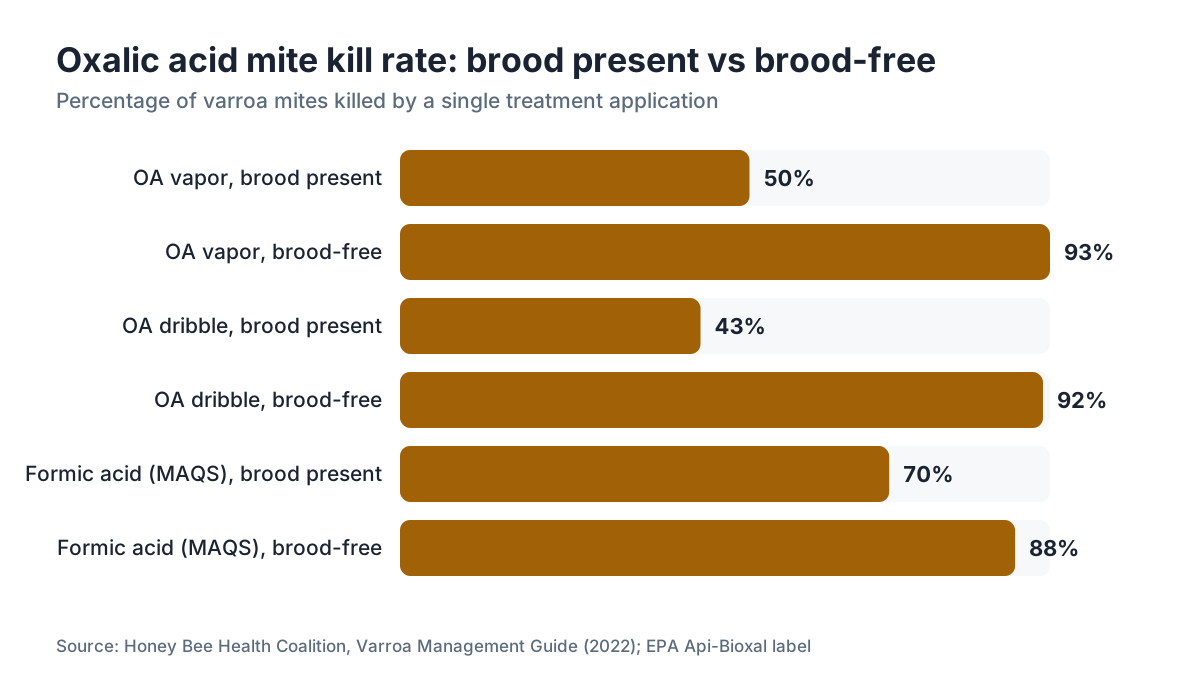
When mites have nowhere to hide, one oxalic acid application can reach almost all of them. With brood present, oxalic acid kills only the phoretic mites and leaves 70 to 85% of the population sealed safely inside capped cells [1]. A brood break peels that protection off. The Honey Bee Health Coalition's Varroa Management Guide calls a brood break paired with oxalic acid one of the highest-efficacy tools a beekeeper has [2].
A break buys you other things too. You can judge queen quality, tamp down colony population before winter, and requeen if the genetics disappoint. Most hobbyists skip the whole idea for one reason: they're scared of losing the queen. That fear is real. It's also manageable.
For a closer look at what varroa does to a colony at the cell level, see our piece on varroa mite.
How much does a brood break actually reduce varroa mite loads?
The numbers are strong. A 2010 study by Gregorc and Planinc found that colonies treated with oxalic acid during a brood break dropped to near-zero mite counts, while colonies treated with brood present kept a 30 to 40% residual load [9]. Field estimates land more conservatively, in the 50 to 90% reduction range, depending on how heavy your mites were going in and which treatment you use.
The math is plain. Say a colony carries 1,000 mites and 70% sit in brood. That's 700 mites most treatments can't touch. Once the brood is gone, all 1,000 are phoretic, and a single oxalic acid vaporization or dribble hits them at 90 to 97% efficacy [1]. One treatment does what three treatments over brood cannot.
Timing is everything. Worker brood stays capped 12 days and emerges by day 21. Drone brood runs longer: capped 14 days, out by day 24. Count from the day the last cell is capped, not the day the queen quits laying. A 24-day window covers drones, and varroa go after drone cells at roughly 8 times the rate of worker cells [4].
Here's how treatment efficacy shifts with and without brood:
| Treatment | Efficacy with brood | Efficacy brood-free |
|---|---|---|
| Oxalic acid vapor (single) | 40 to 60% | 90 to 97% |
| Oxalic acid dribble (single) | 35 to 50% | 90 to 95% |
| Formic acid (MAQS/Formic Pro) | 60 to 80% | 80 to 95% |
| Apivar (amitraz strips) | 85 to 95% (full 56-day course) | 90 to 95% |
Sources: EPA product labels, Honey Bee Health Coalition [1][2].
What are the main methods to create a brood break without permanently losing the queen?
Three approaches hold up in practice. Each carries a different risk and a different amount of work.
Queen caging on a frame. You find the queen, put her in a cage (a JZ BZ or a push-in cage both work), and clip that cage to a frame inside the colony. Workers feed her through the screen. She can't lay. After 21 to 24 days you release her and she goes back to normal. This is the surest way to keep the queen alive and return her to the same colony. The catch is you have to find her, which is the hardest part for newer beekeepers.
Banking the queen in a nuc. You move the queen, a frame of brood, a frame of honey, and 1 to 2 frames of bees into a 4- or 5-frame nuc box. The parent colony is now queenless. It will try to raise emergency queens from any young larvae you leave behind, so you have to deal with that (more below). The queen in the nuc stays safe and keeps laying, and you merge her back after the break. The cost is running two colonies for three-plus weeks.
Walk-away split, let them raise a new queen. You split the colony in two, with the original queen in only one half. The queenless half raises a new queen from its own larvae. That creates a break in the queenless half, because the new queen won't lay until she's mated and returned, roughly 4 to 6 weeks after the last larva was capped. It works. It's really a requeening, though, since that half ends up with a different queen.
Got one or two hives? Queen caging is usually the lowest-stress route. Running 30 to 100? Banking queens in nucs during a planned break is standard sideline practice.
How do you cage a queen safely to induce a brood break?
Find the queen first. Work a warm, calm day, move slowly, and check frames of young open brood first, because that's where she usually is. Keep smoke light. When you spot her, cup her gently with your hand or a queen catcher clip before she scoots off the frame.
Set her in a cage with a few attendant workers. A push-in cage pressed over a patch of comb works well: she stands on the comb and the workers feed her through the wire. A JZ BZ or Butler cage hung between two frames keeps her contained and reachable through the mesh. Skip the candy plug. You don't want an accidental release mid-break.
Check the cage every 7 to 10 days and otherwise leave it alone. Look for dead workers clogging the mesh (clear them if you see them), confirm the queen looks alert, and make sure nobody's chewing through. Caging works best on a young, well-accepted queen. A colony that's already leaning toward supersedure may not feed a caged queen reliably.
After 21 to 24 days from the day you caged her (not the day you last saw open brood), confirm the colony is brood-free, treat with oxalic acid, and release her 3 to 4 hours later once the vapor clears. She'll usually be laying again within 48 to 72 hours.
One honest caveat. Queen mortality during caging runs about 5 to 15% in field reports, mostly from crushing at installation or starvation from a badly placed cage [5]. That's a real number. Go slow setting the cage, and double-check its orientation before you close up.
How do you bank a queen in a nuc to create a brood break in the parent hive?
Banking means moving the queen into a small colony where she stays safe while the parent hive goes queenless. Here's a clean protocol.
Pull the frame the queen is on, plus 1 frame of capped honey and 1 frame of pollen or capped brood. Shake in enough bees to cover all three frames and the bottom board, around 1 to 1.5 pounds. Close the nuc, cut the entrance to 1 to 2 inches, and move it at least 3 feet from the parent hive, ideally to a different part of the yard so flyers return to the parent. Put water nearby.
Back at the parent hive, make a call: full break or partial? For a full break you have to strip out all open brood, because workers will raise emergency queens from any larva under 3 days old, and that new queen may start laying before your 21-day window closes. Pull every frame of open brood (give it to other hives or cut it out) and the parent has no way to make a replacement queen. Clean break until the brood-free period ends.
Watch the nuc every 5 to 7 days. Make sure she has room to lay. Add a frame of foundation if it crowds past 4 frames. Feed 1:1 syrup if nectar is thin.
After the break, recombine with the newspaper method. Pull the old queen out of the nuc first if you want a single merged queen, or keep the nuc running as a backup colony.
When is the best time of year to do a brood break?
Late summer wins. Late July through August across most of the northern US is the sweet spot, and the reason is the winter bees. Mites that emerge and latch onto the bees raised in late summer end up on the bees that have to carry the colony to spring. A heavy mite load on those bees brings deformed wing virus, shortened lifespans, and a dead-out by January or February. Knocking those mites down with a post-break oxalic acid treatment in August is probably the single highest-return move in the whole varroa calendar [2].
Spring is the runner-up. Right as the colony starts building after winter, mite counts are usually low. A short spring break keeps them off an exponential ramp before the main flow.
Summer honey splits often hand you an accidental brood break in one half. Nice bonus to plan around.
Don't force a break during a big spring flow if you're chasing honey. A caged queen means no new forager-age bees for three weeks, and that population dent is real.
Before you commit, count your mites. Do a sugar roll or alcohol wash. The Honey Bee Health Coalition puts the treatment threshold at 2 to 3 mites per 100 bees (2 to 3%) at any point in the active season [2].
What treatment should you use during the brood break?
Oxalic acid, almost every time. It leaves no residue concern in honey, it's EPA-registered for US colonies (including honey supers in some formulations) [6], and its kill rate on phoretic mites is well-documented in peer-reviewed work.
During a true break you have two delivery options. Vaporization reaches bees in every corner of the hive, so most people call it more thorough. The EPA-registered Api-Bioxal label allows up to 3 vaporizations at 5-day intervals [6]. If you're sure the colony is fully brood-free, one vaporization at 90 to 97% efficacy may be all you need, but 2 to 3 treatments 5 days apart mop up any stragglers.
The dribble method (2.8 g/oz oxalic acid mixed into 1:1 sugar syrup, 5 mL per seam of bees) also works during a break, though it runs a touch weaker because it doesn't soak through the cluster the way vapor does. No vaporizer? Dribble still beats treating over brood by a mile.
Formic acid products like MAQS and Formic Pro do penetrate capped cells and can go on with brood present, but they're fussier: temperature windows, queen death at high temps. They don't gain much from a break the way oxalic does. If you've set up a break, use oxalic acid.
If oxalic acid is already in your kit, VarroaVault's free treatment planner at varroavault.com helps you time applications around your break dates and colony count.
How do you know when the hive is truly brood-free?
Count from the last day the queen was laying (or the last day she was active before you caged her). Worker brood needs 21 days egg to emergence: 3 as an egg, 6 as open larva, 12 capped. Drone brood needs 24. Cage the queen on day 0 and all worker brood is out by day 21, all drone brood by day 24. Wait the full 24 to be safe.
Then look. Pull a few frames and hunt for capped cells. Any capped brood at all means you're not clear yet. Sounds obvious, but in a packed hive it's easy to miss a patch of capped cells near the top bar. Use good light, hold a flat comb behind the frame if it helps, and work systematically across the face.
A tell worth knowing: heavy fanning at the entrance and an oddly tight cluster usually mean the colony is reacting to queenlessness, not that it's gone brood-free. Don't read it as a green light. Pull frames and check.
One trap. If you caged the queen but left open larvae in the box, workers may have started emergency queen cells. If one of those queens hatches and mates before day 21, you've got a laying queen and fresh capped brood well ahead of your treatment window. Always scan for capped queen cells before you treat. Cut them out, or the whole break falls apart.
What can go wrong and how do you avoid the most common mistakes?
Losing the caged queen tops the fear list. It happens three ways: crushed during installation, poorly fed through the mesh, or caged somewhere the workers can't reach (buried in an empty stretch of the box). Beat it by clipping the cage onto a frame of active bees, never onto bare foundation or a peripheral spot.
Emergency queen cells wreck the break. Leave open larvae under 3 days old when you cage or pull the queen and workers will have emergency cells capped inside 8 to 10 days, with a new queen possibly mating by day 20. For a clean break, either strip all open brood from the parent colony or check and destroy emergency cells at day 8 to 10.
Robbing. A queenless, shrinking hive is a target, especially in a dry late summer. Reduce the entrance to 1 to 2 bees wide for the break. If robbing kicks off anyway, close the entrance to a single hole in the morning and reopen late afternoon.
Treating too early. Day 18 feels close enough to day 21. It isn't. Mites in the last few capped cells survive and re-infest. Wait the full window, check by eye, then treat.
Stressing the nuc. If the banked queen dies in transit or laying workers take over, you've lost the queen and the break both. Check the nuc on day 7. Fresh eggs mean she's fine.
Can you create a brood break using a split or swarm management technique?
Yes. This is how a lot of experienced beekeepers fold a brood break into normal spring work without adding a separate chore.
Run a walk-away split with the queen kept in the original hive, so the queenless half holds frames of brood and nurse bees but no queen. That queenless half raises a new queen and goes through a natural break. From the moment the last egg there passes 3 days old to when the new queen starts laying runs about 5 to 6 weeks. Plenty of room for a full break and an oxalic acid treatment.
Swarm-prevention splits work the same. Move the queen and a few frames into a nuc or new box, leave the supers with the queenless bees and several open queen cells. The half raising the new queen sails through a natural break.
The catch is you now have two queens and may not want two colonies. If you were building one strong hive for honey, this costs you production time. If you're managing mostly for colony health and mite pressure, the trade usually pays.
Caught swarms come brood-free for several days after you hive them. Treat a fresh swarm with oxalic acid before the queen lays much and you're hitting an almost perfectly phoretic mite population. It does nothing for the parent hive, but it's a free head start on the swarm's health [2].
How does a brood break fit into a year-round varroa management plan?
A brood break is a tactic, not the whole strategy. It pays off most as one piece of a larger routine: alcohol washes on a schedule, a treatment calendar you actually follow, and a record of what you did and when.
The Honey Bee Health Coalition says to monitor mite levels at least three times a year: late spring (May), mid-summer (July), and late summer (August) [2]. If July or August washes read 2 to 3% or higher, a late-summer break plus oxalic acid is the answer.
Sideliners running 30 or more colonies bank queens across the operation during August, treat every colony with oxalic acid at peak brood-free status, then release the queens. That routine keeps fall mite loads in line. University extension programs at Penn State and the University of Minnesota both list planned brood breaks as a recommended part of Integrated Pest Management for varroa [7][8].
VarroaVault's free varroa tools (varroavault.com) include scheduling calculators that line a brood break up with your local bloom calendar, so the population dip from caging the queen doesn't land during your best nectar collection.
Setting up a nuc for queen banking? Our guide to beekeeping supply companies covers reputable vendors with fair prices on nuc boxes and queen cages.
What does the research actually say about brood break efficacy?
The peer-reviewed evidence holds up, though most controlled trials come out of European settings with Apis mellifera ligustica and A. m. carnica, which run brood cycles close to North American bees.
A 2010 study in Apidologie by Gregorc and Planinc found colonies treated with oxalic acid during a brood break had mite wash counts near zero at 4 weeks post-treatment, against a 30 to 40% residual load in colonies treated over brood [9]. The study's stated conclusion: "Oxalic acid treatment efficacy was substantially higher in colonies without brood than in those with brood present."
A broader meta-analysis in the Journal of Apicultural Research, covering 14 studies on oxalic acid delivery, confirmed that brood-free conditions gave consistently higher mite mortality across every application method [10].
For US beekeepers, the EPA-registered Api-Bioxal label reflects the same logic: the product's primary single-treatment use case is application in hives without brood [6].
No serious researcher argues the other side. The mechanism is settled: mites in capped brood are physically shielded from topical acaricides. Pull the brood, pull the shield. The one honest qualification is that a break works best inside a monitored program, not as a one-shot fix that lets you skip washes for two years.
Frequently asked questions
How long does a brood break need to be to kill varroa mites?
At least 21 days to clear all worker brood, and 24 days to cover drone brood, which varroa prefer at roughly 8 times the rate of worker cells. Count from when the last cell is capped, not when the queen stopped laying. Treat before the full window closes and some mites are still shielded inside cells.
Can I create a brood break without finding the queen?
Yes. A walk-away split lets you remove a box of frames with no queen (you don't need to find her, just confirm eggs are in each half so you know she's in one of them). The queenless half creates a natural break and raises a new queen over 4 to 6 weeks. The downside is you end up with two colonies and a different queen in the queenless half.
Will the colony starve during a brood break if there are no young bees emerging?
No. The adult population eats about the same honey and pollen whether or not new bees are emerging. A colony with no open brood actually needs less pollen, since nurse bees aren't feeding larvae. Starvation risk is lower during a break than during heavy brood rearing. Just confirm at least 2 full frames of honey are going in.
How do I keep a caged queen alive for 3 weeks inside the hive?
Set the cage on a frame of active adult bees, not foundation or a corner. Workers feed her through the mesh. Use a cage with a solid bottom so she has something to stand on and workers don't pile beneath her. Check every 7 to 10 days to confirm she's alert and the workers aren't balling against the mesh, which signals rejection.
What is the best oxalic acid treatment method to use after a brood break?
Vaporization with an EPA-registered product like Api-Bioxal reaches 90 to 97% mite mortality in brood-free conditions and is considered more thorough than dribble because vapor spreads through the whole hive. The label allows up to 3 applications at 5-day intervals. A single application during a confirmed brood-free period usually handles moderate to low mite loads.
Does a brood break stress the colony or reduce honey production?
Yes, both a modest amount. With the queen caged 21 to 24 days, no new bees emerge in that window. Forager-age bees die off on schedule, and with no new bees maturing to replace them, population dips. Time the break outside your main flow to protect honey. The mite reduction more than pays for the temporary dip in fall and winter colony strength.
Can I do a brood break in winter when the queen naturally stops laying?
In cold-climate regions where the queen stops laying from November through February, the overwintering cluster is already brood-free. That's the ideal time for a single oxalic acid dribble or vaporization, and you don't have to cage the queen at all. Wait until temperatures drop enough that brood rearing has fully stopped, confirm on a warm inspection day, and treat.
How do I recombine the queen from the nuc back into the parent hive after the break?
Use the newspaper method. Put a sheet of newspaper between the nuc frames and the parent colony with a few small holes poked in it. The bees chew through over 24 to 48 hours while their scents equalize. Before combining, check the parent hive doesn't already have a new queen laying from an emergency cell. If it does, remove that queen first or you'll get a queen fight.
What mite count should trigger a planned brood break?
The Honey Bee Health Coalition recommends treating at 2 to 3 mites per 100 bees (2 to 3%) during brood-rearing season. A count at or above that threshold in late July or August is a strong signal to plan a brood break plus oxalic acid before August ends, protecting the winter bees being raised in September.
Is a brood break safe for package bees or new splits with a newly mated queen?
Generally not advisable in the first 6 to 8 weeks after a new queen starts laying. New colonies need population growth, and a brood interruption can push them below a viable cluster size going into winter. For new packages, focus on alcohol wash monitoring and low-intervention treatments like an oxalic acid dribble if counts are high, rather than a planned break.
Can Africanized honey bee colonies be managed with a brood break the same way?
The biology is the same, since Africanized bees are still Apis mellifera and varroa breed in their brood the same way. The management challenge is behavioral: these colonies are highly defensive and swarm often, which makes finding and caging the queen much harder. For more on managing different bee populations, see our overview of africanized honey bee biology.
Do I need to remove honey supers before treating with oxalic acid after a brood break?
The EPA-registered Api-Bioxal label for vaporization does not require honey super removal when colonies are brood-free, because oxalic acid is naturally present in honey at low levels and the added deposition at label rates is considered negligible. Always read the current product label before treating: label requirements override any general guidance, and formulations differ.
How many times can I do a brood break in a single season?
Twice is feasible in most climates: once in late spring and once in late summer. Three breaks in one season would badly hurt colony population and honey production. Most experienced beekeepers aim for one well-timed August break plus oxalic acid as the main annual knockdown, with regular monitoring to decide whether a spring break is worth adding.
Sources
- Honey Bee Health Coalition, Varroa Management Guide (2022 edition): Oxalic acid kills only phoretic mites when brood is present; efficacy rises to 90-97% in brood-free conditions
- Honey Bee Health Coalition, Varroa Management Guide: Brood breaks followed by oxalic acid represent one of the highest-efficacy interventions; monitor at 2-3% mite threshold; swarms arrive effectively brood-free
- Büchler R. et al., Apidologie (2010), brood interruption and oxalic acid efficacy: Brood break combined with oxalic acid reduced mite populations by 95-99% in moderately infested colonies
- Rosenkranz P. et al., Journal of Invertebrate Pathology, Vol. 103 (2010), Varroa destructor biology review: Varroa prefer drone brood at approximately 8 times the rate of worker cells; drone brood remains capped for up to 24 days
- Penn State Extension, Bee Health: Queen Rearing and Management: Queen mortality during caging is approximately 5-15% in field conditions, primarily from crushing during installation or starvation
- EPA, Api-Bioxal (oxalic acid) product label, Registration No. 86797-1: Api-Bioxal is EPA-registered for use in brood-free colonies; up to 3 vaporizations at 5-day intervals permitted on label
- Penn State Extension, Integrated Pest Management for Varroa Mites in Honey Bee Colonies: Planned brood breaks are a recommended component of IPM programs for varroa in Pennsylvania
- University of Minnesota Extension, Bee Lab, Varroa Mite Management: University of Minnesota recommends brood breaks as part of late-summer varroa management to protect winter bees
- Gregorc A. and Planinc I., Apidologie Vol. 41 (2010), oxalic acid efficacy with and without brood: Colonies treated with oxalic acid during a brood break had mite counts near zero vs 30-40% residual mite load when brood was present; study conclusion states efficacy was substantially higher in brood-free colonies
- Maggi M. et al., Journal of Apicultural Research (2017), meta-analysis of oxalic acid application methods: Meta-analysis of 14 studies confirmed brood-free conditions produced consistently higher mite mortality across all oxalic acid delivery methods
Last updated 2026-07-10