How to make a sticky board insert at home (step-by-step guide)
TL;DR
- A homemade sticky board insert costs almost nothing.
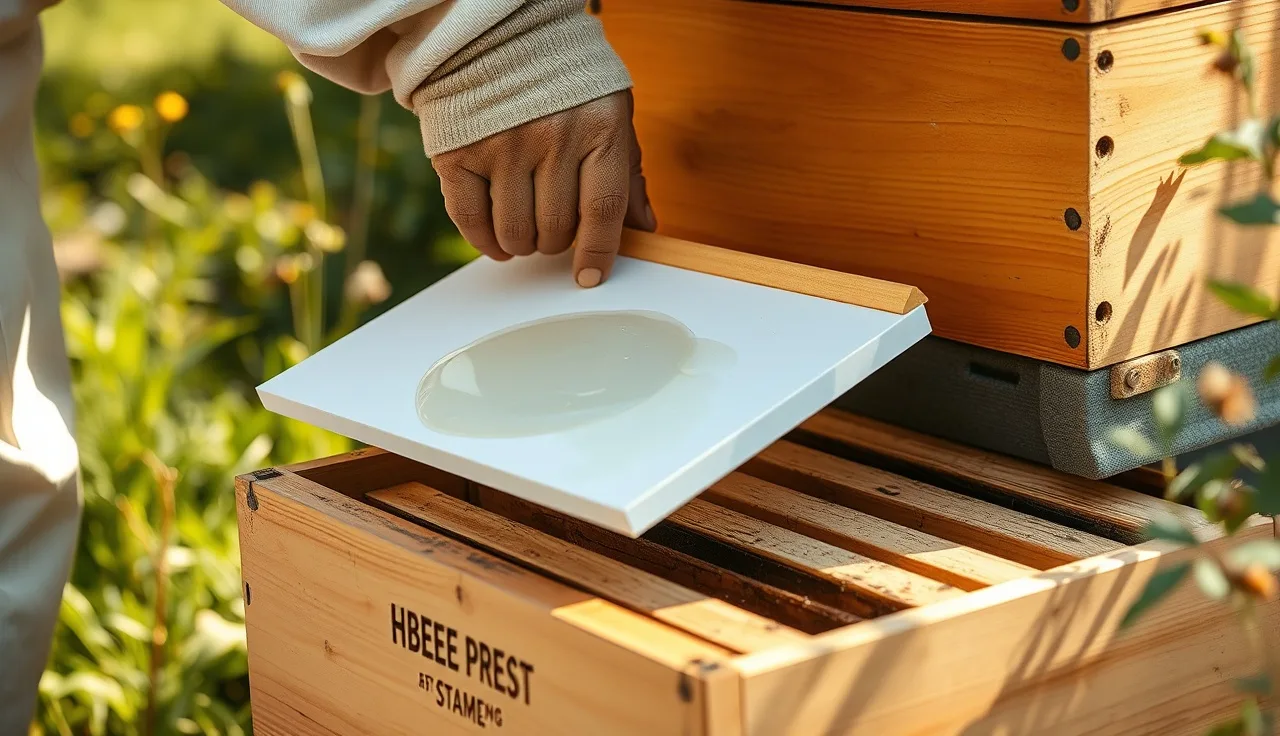
- Cut corrugated cardboard or poster board to fit your bottom board, coat it with petroleum jelly or vegetable shortening, and slide it under a screened bottom board.
- Leave it 24 to 72 hours, count the mite drop, divide by days.
- That gives you a real mites-per-day number that tells you when to treat.
What is a sticky board insert and why do beekeepers use one?
A sticky board is a flat insert that slides under a screened bottom board and catches varroa mites as they fall off bees during normal hive activity. Varroa destructor mites drop off host bees constantly. Put a sticky surface below the screen and those mites land, stick, and wait for you to count them. That number per day is called the natural mite fall, or the daily mite drop.
This method kills nothing and treats nothing. It is a monitoring tool. You count mites over a set window and use that count to decide whether the colony needs treatment now, soon, or not yet. Skip monitoring and you are guessing. The Honey Bee Health Coalition's Varroa Management Guide states that "monitoring is the cornerstone of an effective varroa management program" [1].
Screened bottom boards spread partly because of varroa. When mites fall through a solid floor, many climb back onto bees. A screen lets them fall through, and with a sticky insert in place, they stay trapped where you can count them. Plenty of beekeepers install screened bottom boards and never slide a sticky board underneath. They miss the whole point.
One more thing worth knowing. Sticky boards also catch hive beetle larvae, wax moth debris, and bee lice (Braula coeca). A careful count gives you a snapshot of several hive problems at once, mites included.
How accurate is a sticky board compared to alcohol wash or sugar roll?
Honest answer: a sticky board is less accurate than an alcohol wash for estimating a colony's actual infestation rate. An alcohol wash of a roughly 300-bee sample gives you a direct percentage of mites per bee, and that percentage is what treatment thresholds are built on. A natural mite drop is an indirect signal. Brood amount, colony size, season, and how hard workers are grooming all change the drop rate, so the same drop number means different things in May than in October [2].
Still, a sticky board earns its keep. It is the cheapest way for a new beekeeper to start monitoring before buying supplies and building the confidence an alcohol wash takes. It is also good for tracking trends. If your daily drop climbs from 5 to 40 over three weeks, that is a real warning even when the absolute number is fuzzy.
The Honey Bee Health Coalition does publish general sticky board thresholds, with a caveat: treat them as rough guides, not hard cutoffs. During the broodless winter cluster, a daily drop above roughly 50 to 60 mites is a warning sign [1]. In the main brood-rearing months, drop correlates weakly with infestation percentage, so an alcohol wash is the better call then.
Use a sticky board for trend-tracking, seasonal checks, and beginner monitoring. Move to an alcohol wash when you want a precise infestation percentage before you commit to a treatment.
What materials do you need to make a sticky board at home?
The build is simple. Here is what actually works.
Base material. A sheet of corrugated cardboard cut to fit your hive's bottom board opening is the common choice. Heavy white poster board also works and reads mites more clearly against the pale background. A sheet of paper inside a plastic sleeve or a zip-lock bag is a third option: wipe petroleum jelly onto the plastic, and the whole thing washes clean and gets reused.
Sticky substance. Petroleum jelly (Vaseline is the name everyone knows) is the standard. It stays tacky across a wide temperature range, holds up for 24 to 72 hours without drying out, and does not draw bees. Vegetable shortening behaves about the same and is what many beekeepers grab when the petroleum jelly runs out. Skip motor oil and WD-40. They stick mites fine, but you do not want petroleum distillates inside a food-producing hive.
Gridding tool. A permanent marker and a ruler. Divide the insert into squares, usually 1 cm x 1 cm or 2 cm x 2 cm. The grid speeds up counting because you tally one square at a time instead of chasing hundreds of scattered dots across a full sheet.
Screening (optional but recommended). A piece of 8-mesh hardware cloth cut to the insert size, sitting between the insert and the hive above it. It keeps bees off the sticky surface. If your screened bottom board already has a tight screen above the insert slot, skip the extra layer.
Total material cost: under $2 if you buy a small tub of petroleum jelly. Zero if you already have Vaseline in the house.
Want to compare vendors, or buy pre-made inserts instead of building? The beekeeping supply companies page breaks down the sources.
Step-by-step: how do you actually build the sticky board?
Here is the process, plainly.
Step 1. Measure your bottom board opening. Every hive is a little different. Measure the opening width and depth on your screened bottom board. Standard Langstroth bottom boards run roughly 14.5 inches wide and 16 inches deep, but measure yours. Cut your cardboard or poster board with about a quarter-inch clearance on each side so it slides in and out without binding.
Step 2. Draw your counting grid. With a ruler and permanent marker, lay a grid across the insert. Two-centimeter squares balance detail against counting speed. Label rows with letters and columns with numbers so you can record which zones held the heaviest mite counts, which sometimes hints at where brood sits in the cluster above.
Step 3. Apply the sticky coating. Scoop a generous glob of petroleum jelly onto the insert and spread it thin and even with an old credit card, a stiff piece of cardboard, or a butter knife. You want full coverage, not a thick blob. With the plastic-sleeve method, coat the outer surface evenly.
Step 4. Slide the insert in. Push it gently into the slot under your screened bottom board until it is fully seated. No slot, just a screen mounted in a frame? Set the insert on the ground directly beneath and open the entrance reducer for airflow. Results run a little messier that way, but it still works.
Step 5. Record the start time. Write the date and time on a piece of tape stuck to the front of the hive, or in your hive notes. You need the exact hours in place to calculate daily drop.
Step 6. Pull the insert after 24 to 72 hours. Longer counts average out daily swings, but 48 hours is a good practical target. Slide it out carefully so you do not tilt it and scatter mites.
Step 7. Count the mites. Work through the grid square by square with a magnifying glass or reading glasses in good natural light. Varroa mites are reddish-brown oval dots, about the size of a pinhead, roughly 1.1 mm wide. Under magnification they look almost crab-like. Pollen grains, wax flakes, and debris share the board; with practice you sort them fast. Count every mite, record by square, add the total.
Step 8. Calculate daily mite drop. Divide total mites by the number of days (or hours divided by 24). That is your mites-per-day figure. Compare it to known thresholds [1].
The insert cleans up and reuses. Wipe it with a paper towel, re-coat with petroleum jelly, and it is ready again. A cardboard insert is single-use. Poster board and plastic sleeves go 10 rounds or more.
How long should you leave a sticky board in the hive?
Most university extension programs recommend 24 to 72 hours [2]. Shorter counts get thrown off by one odd day of activity: a brief cold snap, a swarm, a heavy nectar flow. Longer counts give you an average, which you can trust more.
For a quick check, 24 hours does the job. For a baseline before you decide on treatment, 48 to 72 hours is better. Some beekeepers run a 7-day check in fall for a very stable pre-winter number, though at that point you are waiting a week for data you could get in minutes with an alcohol wash.
One thing to avoid: leaving the insert in permanently. Debris, small hive beetles, and wax moth turn it into a mess that is hard to read. Pull it, count it, store it flat until next time. The hive does not need a sticky board sitting in it all season.
What mite drop number means you need to treat?
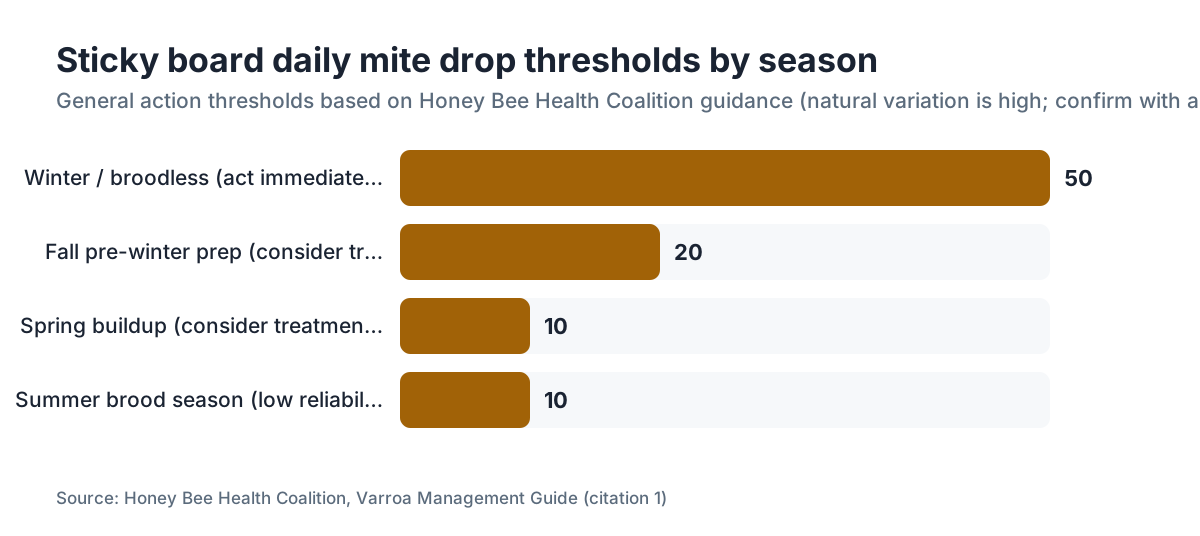
Thresholds shift by season and by who you ask. The Honey Bee Health Coalition, which publishes the most widely referenced varroa guidance in the US, breaks it down this way [1]:
| Season / Situation | Natural mite drop threshold (mites/day) | Recommended action |
|---|---|---|
| Spring buildup (March-May) | Around 10+ | Consider treatment |
| Summer brood season (June-Aug) | Hard to interpret; use alcohol wash | Verify with alcohol wash if drop is high |
| Fall pre-winter prep (Aug-Oct) | Around 50-60 for some references | Treat before cluster forms |
| Winter (broodless cluster) | 50-60+ per day | Treat immediately |
These numbers come from research correlating natural drop with infestation rates, but the correlation is loose, especially in brood-rearing months. A drop of 10 mites per day in June in a large colony might mean a low infestation rate. The same drop in a small colony, or in September, could be serious. That is why the Honey Bee Health Coalition and most university extension programs tell you to confirm with an alcohol wash before treating [1][3].
If your drop is genuinely low, under 5 per day outside winter, you probably have time. If it is above 50 per day at any point in the year, act quickly no matter the season.
Can you make a reusable sticky board that holds up long-term?
Yes, and the small extra effort pays off once you run more than two or three hives.
The best reusable version starts with a rigid base: a piece of Coroplast (corrugated plastic signboard, sold at most hardware and sign shops) or thin plywood cut to size and sealed with a couple coats of exterior paint or polyurethane. Coroplast is the pick. It is light, waterproof, and wipes clean in seconds. Cut it to fit, draw your grid with a permanent marker, coat it with petroleum jelly before each use, wipe it clean with paper towels after counting. It lasts years of regular use.
Another option is a thin wooden frame holding a piece of white artist canvas board, sealed on both sides with gloss paint. The smooth surface wipes easily and the white background speeds up counting.
Whatever material you pick, store inserts flat and out of direct heat. Petroleum jelly liquefies around 100 to 110 degrees Fahrenheit, so a coated insert baking in a hot car in July is a bad plan.
How do you read a sticky board and tell varroa mites from debris?
This is where new beekeepers get stuck. A working hive drops a lot of material: pollen granules, wax scales, propolis flakes, bee body parts, and yes, mites. Under a magnifying glass, Varroa destructor is easy to spot once you know the shape.
Mites are reddish-brown to dark brown, oval, wider than they are long, and about 1.1 mm across [4]. Under a hand lens you can count eight legs. Pollen grains are round or oblong and come in yellow, orange, tan, or white depending on the plant. Wax scales are irregular, translucent, and usually much smaller. Bee legs and body segments look obviously insect-shaped.
Light makes or breaks this. Indirect daylight beats a single overhead lamp, which throws glare across the petroleum jelly. A cheap 10x loupe from a photography or jeweler supply is perfect for the job. Stuck on a speck? Photograph it with your phone's macro mode, or hold a magnifying glass over the phone camera lens and zoom.
Debris piles up heaviest in the center of the insert, under the brood cluster, and thins toward the edges. Mites concentrate in that same central zone, matching where the brood sits. A cluster of mites all in one zone is telling you something real about where varroa is most active in the hive.
For the mite itself, the varroa mite article covers its biology and life cycle in detail.
Does a screened bottom board alone reduce varroa without a sticky board?
This question comes up constantly, and the research answer is: somewhat, but probably less than you hope.
A 2001 study by Harbo and Harris found screened bottom boards cut varroa levels by roughly 20 to 30% compared to solid bottom boards, because mites that fall through the screen cannot climb back onto bees [5]. That sounds handy. But if your colony sits at a 4% infestation rate, dropping it to 3% will not save it. Varroa still needs direct treatment once it crosses threshold levels.
The real value of a screened bottom board is that it makes monitoring possible, not that it fixes the mite problem. Think of the screened floor as a monitoring platform with a minor mite-reduction bonus, not as a treatment. Pair it with an active monitoring routine and a timed treatment schedule and you have the right setup.
If your hives run solid bottom boards and you want monitoring without replacing everything, some beekeepers cut a screen insert and set it in the entrance area, or build a riser frame that holds a screen. Less elegant, but it counts mites just fine.
What else can a sticky board reveal besides varroa mites?
Plenty. A careful look at what lands on the insert over 48 to 72 hours works like a window into hive activity.
Small hive beetle (Aethina tumida) larvae show up as small white grubs, sometimes moving across the insert. Adult beetles are dark and obvious. Heavy small hive beetle pressure on the board in warm months warns you the colony may be too weak to guard its comb.
Wax moth eggs and frass appear as white specks and fine powder. This rarely calls for separate action because a strong colony controls wax moth on its own, but it is useful background.
Bee lice (Braula coeca) sometimes get mistaken for varroa, but they are insects (six legs) and slightly larger. They have gone very rare in areas where Apistan saw wide use, because tau-fluvalinate also kills Braula.
Pollen color and load on the insert tells you about forager activity and what is blooming within flight range. Interesting, but no action needed.
Heavy wax scales and uncapped wax point to active comb-building, often during a nectar flow. And a noticeable pile of bee body parts or full dead bees on the insert is worth investigating, since it can signal pesticide exposure, disease, or another stressor.
How does a homemade sticky board fit into a full varroa management plan?
A sticky board is one piece of a larger protocol. It gives you trend data and a cheap way to start monitoring. It works best alongside periodic alcohol washes for precision, a written treatment calendar, and a clear rule for when to pull the trigger on treatment.
The Honey Bee Health Coalition's Varroa Management Guide (free at their website) is the most practical single-document framework for US beekeepers. It covers monitoring schedules, treatment thresholds, and timing treatments before the winter cluster forms [1]. State extension programs in North Carolina, Pennsylvania, and Minnesota publish region-specific guides that say much the same thing [2][3][7].
VarroaVault has a free protocol tool that walks you through monitoring frequency and treatment timing based on your region and colony status. It can help you decide when sticky board monitoring is enough and when to switch to an alcohol wash.
Experienced beekeepers hammer one point: monitoring has to be a habit, not a one-time event. A colony that tests clean in May can hit threshold by late July. The bees do not send up a flare. You have to look.
Building out your first hive setup? The broader beekeeping supplies guide covers what else you need beyond monitoring tools.
Are there any limits to what a homemade sticky board can tell you?
A few real limits worth knowing.
Natural mite drop does not separate mites that were riding adult bees from mites that just emerged from capped brood. During heavy brood-rearing, a big chunk of the mite population hides inside capped cells and never shows up in your drop count. Research by Branco and colleagues estimates that during peak brood season only about 20 to 30% of mites are phoretic on adult bees, with the rest sealed in cells [6]. Your sticky board captures only the phoretic fraction that falls off. That is exactly why an alcohol wash is the preferred diagnostic during brood-rearing months: it reads the phoretic rate directly instead of relying on fall-off counts.
The sticky coating also wears out in heat or heavy debris. Check the insert the first morning after placement. If the petroleum jelly has dried out or gone under a layer of sawdust and crud, pull it and start over with a fresh coat.
And a sticky board tells you nothing about the queen's status, disease (American foulbrood, Nosema, and the rest), nutrition, or brood pattern. It is one data point. Treat it as one.
Frequently asked questions
Can I use cooking oil instead of petroleum jelly on a sticky board?
Liquid cooking oils work in a pinch but dry out or soak into cardboard within a few hours, which means mites fall off before you count them. Vegetable shortening (solid at room temperature, like Crisco) is a much better substitute for petroleum jelly. It stays tacky for 48 to 72 hours, does not harm bees, and is food-safe inside the hive.
What size should my sticky board be for a Langstroth hive?
For a standard 10-frame Langstroth bottom board, cut your insert to roughly 14 inches wide by 15.5 to 16 inches deep. Measure your specific bottom board slot before cutting, because dimensions vary by manufacturer by up to half an inch. The insert should slide in without force and without leaving big side gaps where falling mites could miss the board.
How do I count mites on a sticky board if there is a lot of debris?
Work in good natural light with a 5x to 10x loupe. Go square by square across your grid, focusing on one square at a time. Varroa mites are reddish-brown ovals about 1.1 mm wide with eight legs under magnification. Pollen grains are round and monochromatic. The difference gets obvious with practice. Photographing a square and zooming in on your phone also works surprisingly well.
How often should I use a sticky board throughout the season?
Most experienced beekeepers run a 48-hour count three or four times a year: early spring for a baseline, mid-summer as populations build, August before fall treatments, and late October or November to confirm winter readiness. Between those checks, an alcohol wash gives more reliable precision during the brood-rearing months.
Is a sticky board or an alcohol wash more accurate for varroa monitoring?
An alcohol wash is more accurate for actual infestation rate during brood-rearing season, because it measures mites per bee directly instead of inferring it from a drop count. Sticky boards work better as trend monitors over time and during the broodless winter period, when most mites are phoretic on adult bees. Both tools are worth knowing, and they complement each other.
Can I make a sticky board for a Warré or top-bar hive?
Yes, though the geometry differs. Warré and top-bar hives are not built around a standard screened bottom board, so measure the specific floor opening and cut a custom insert. The same materials apply: a rigid base coated with petroleum jelly and a counting grid drawn on it. The counting method and thresholds stay the same regardless of hive style.
Do bees get stuck on the sticky board inside the hive?
They should not, if your screened bottom board has intact, tight-fitting 8-mesh screen above the insert slot. The screen keeps bees off the sticky surface. If you set an insert in a hive without a screen above it, place your own 8-mesh hardware cloth between the insert and the bees. A bee stuck to petroleum jelly stresses the colony and is easy to avoid.
How do you tell a varroa mite from a pollen grain on a sticky board?
Shape is the tell. Varroa mites are wider than they are long (about 1.1 mm wide, 1.6 mm long), reddish-brown, with legs visible under a hand lens. Pollen grains are round or slightly oval, come in yellow, orange, tan, or white depending on plant source, and have no appendages. Under 10x magnification the difference reads clear within a few minutes.
What is a good daily mite drop threshold that suggests I need to treat?
The Honey Bee Health Coalition publishes rough guidelines. During the broodless winter period, a drop above 50 to 60 mites per day is a warning sign that calls for prompt action. In spring or fall, lower thresholds around 10 mites per day may warrant closer monitoring or confirmation by alcohol wash. During summer brood season, daily drop is hard to interpret and an alcohol wash is preferred.
Can I leave a sticky board in the hive permanently?
No. Left in permanently, it becomes a debris trap that turns unreadable within a week or two, and it gives small hive beetle larvae and wax moth a place to breed in the accumulating crud. Use it for a defined 24 to 72 hour window, pull it, count it, and store it outside the hive. Clean and re-coat before each use.
Does cold weather affect sticky board results?
Yes. In cold weather bees cluster tight, move less, and groom less, so fewer mites fall during a 24-hour window even when infestation is high. A winter count can undercount the real problem. On the flip side, winter is when most mites are phoretic, so on warmer days when bees move the drop can spike suddenly. Extend winter counts to 72 hours for better averaging.
How much does it cost to make a sticky board versus buying one?
A homemade sticky board costs essentially nothing if you have petroleum jelly and cardboard on hand. A small tub of petroleum jelly (around $3 to $5 at any drugstore or hardware store) makes dozens. Commercial pre-made sticky board inserts run roughly $8 to $20 each depending on the supplier. The homemade version monitors just as well.
Can a sticky board help me figure out where in the hive the mites are concentrated?
Roughly, yes. The zone on the insert catching the most mites corresponds to the hive area directly above it. Heaviest counts in the center of the insert mean mites are most active in the center of the cluster, where brood is usually densest. This is not precise mapping, but it is a useful gut check when you read the board.
Sources
- Honey Bee Health Coalition, Varroa Management Guide: Monitoring is the cornerstone of an effective varroa management program; the guide publishes natural mite drop thresholds and seasonal monitoring recommendations.
- NC State Extension, Apiculture Program: University extension guidance on sticky board use, monitoring frequency, and seasonal threshold interpretation for hobbyist beekeepers.
- University of Minnesota Extension, Bee Lab: Recommendations for combining sticky board monitoring with alcohol wash for more precise varroa infestation rate measurement.
- USDA ARS Beltsville Bee Lab, Varroa Mite Identification: Varroa destructor mites are approximately 1.1 mm wide and 1.6 mm long, reddish-brown and oval-shaped.
- Harbo, J.R. and Harris, J.W. (2001). Journal of Economic Entomology, 94(6), 1319-1323.: Screened bottom boards reduced varroa levels by approximately 20 to 30% compared to solid bottom boards by preventing mites from re-boarding bees after falling.
- Branco, M.R., et al. Research on phoretic vs. reproductive mite ratios in honey bee colonies. Apidologie.: During peak brood season, approximately 20 to 30% of the total mite population is phoretic on adult bees; the rest are in capped cells and not captured by sticky board counts.
- Pennsylvania State University Extension, Bee Health and Integrated Pest Management: Guidance on sticky board counting protocol, including grid layout, counting duration recommendations, and interpretation of mite drop by season.
- EPA, Pollinator Protection: EPA oversight of registered varroa treatments and guidance that monitoring data should precede treatment decisions.
Last updated 2026-07-09