How to prevent varroa reinfestation from neighboring colonies

TL;DR
- Varroa reinfestation from nearby colonies moves in on robbing bees and drifting drones, and it can rebuild a dangerous mite load within 6 to 12 weeks of treatment.
- Your best defenses are cutting robbing pressure, coordinating treatment timing with neighbors, running physical robbing screens, and washing for mites monthly so you catch a rebound before it spirals.
Why does varroa come back so fast after treatment?
You treat, counts drop, you relax. Six weeks later the alcohol wash reads above 3 percent. Nothing you did failed. The mites walked back in.
Varroa can't fly between hives on their own, but they hitchhike constantly. The two main highways are robbing bees and drifting drones. A honey bee from a collapsing, mite-loaded colony carries live phoretic mites right through your entrance. One study published in PLOS ONE (2015) found that a single robbing event involving a heavily infested colony could move dozens to hundreds of mites into a recipient hive within hours [1]. Drones drift even more freely than workers, and nearly any colony accepts them, mites and all.
The Honey Bee Health Coalition's Varroa management guide notes that "reinfestation from outside apiaries is one of the most common reasons treatments fail to produce lasting results" [2]. That's not a fringe observation. It's the consensus of everyone who has tracked mite counts across a full season.
Here's the uncomfortable part. If you keep bees in any populated beekeeping area, you're partly managing your neighbors' mites, like it or not. Accepting that is where useful action starts.
How far away can mites travel from a source colony?
Foragers routinely range 1 to 3 miles from the hive, with occasional flights to 5 miles when forage is thin [3]. Any infested colony inside roughly a 3-mile radius is a plausible mite source for your apiary. In a suburban or agricultural landscape with scattered hobbyist hives, there are almost always untreated or badly managed colonies inside that range, including feral swarms living in tree cavities and wall voids.
Feral populations are the hardest part of this. A 2016 survey by the USDA Agricultural Research Service estimated feral honey bee colony density in some U.S. regions at 1 or more colonies per square mile [4]. Many go years without any mite treatment and become what researchers call "mite bombs": colonies that keep shedding mites into the surrounding landscape through robbing and drift as they weaken.
Distance matters less than colony condition. A strong, healthy colony 400 feet away sends almost no mites your way. A collapsing, mite-saturated colony a quarter mile off can crash your counts in weeks. So the real question isn't just how far. It's which direction, and what's there.
For more on the biology behind mite movement, see our breakdown of the varroa mite life cycle and how it disperses.
What role does robbing play in spreading varroa between hives?
Robbing is the fastest, most concentrated route for varroa between colonies. When a weak hive can't defend its entrance, foragers from other colonies pour in, strip the stored honey, and carry phoretic mites home. The mite doesn't have to originate in the robbed colony. The robbing bee itself may have picked it up in any infested hive she visited.
Robbing pressure peaks in late summer and early fall, exactly when forage drops off and mite populations hit their seasonal high. The timing is brutal. That's the moment you most need low mite loads heading into winter, and it's the moment robbing runs hardest.
Several common habits push robbing risk up without the beekeeper noticing. Leaving hive parts with residual honey exposed. Opening hives during a nectar dearth without a reason. Running weak colonies that can't defend a full-width entrance. Even harvest practices matter. Extracting honey out in the open near your yard can draw hundreds of bees from several colonies and set off a robbing cascade.
A robbing screen is one of the cheapest, most effective barriers you can bolt onto a hive. A properly installed screen forces bees through a side entry that resident bees learn fast and robbers can't work out. Entrance reducers help during dearths, but they don't replace a full robbing screen on a colony that's already stressed.
Does drone drift really spread mites between apiaries?
Yes, and beekeepers keep underrating it. Drones are built to drift. They visit multiple apiaries across a region, nearly every queen-right colony accepts them, and they fly on warm afternoons regardless of nectar flow. A drone from an infested colony carries phoretic mites and drops them in any hive he enters.
Research by Frey and Rosenkranz (2014) documented that drones from infested colonies regularly carried phoretic mites and passed them to recipient colonies during normal drift [5]. The study found the transfer was measurable and consistent across apiaries, not some rare event.
You can't stop drone drift. You can lower your exposure by keeping colonies strong enough that resident bees groom off phoretic mites fast, by treating before the regional mite peak (so neighboring colonies are less loaded), and by not running hives that pull in extra drifting drones, like a laying-worker mess or a failing queen.
How do you know if reinfestation is the problem and not treatment failure?
The shape of the curve tells you. A count that drops sharply right after treatment, then climbs steadily over the next 6 to 10 weeks, points to reinfestation. A count that barely moves during treatment points to resistance, poor application, or a brood cycle that sheltered mites from the chemical [6].
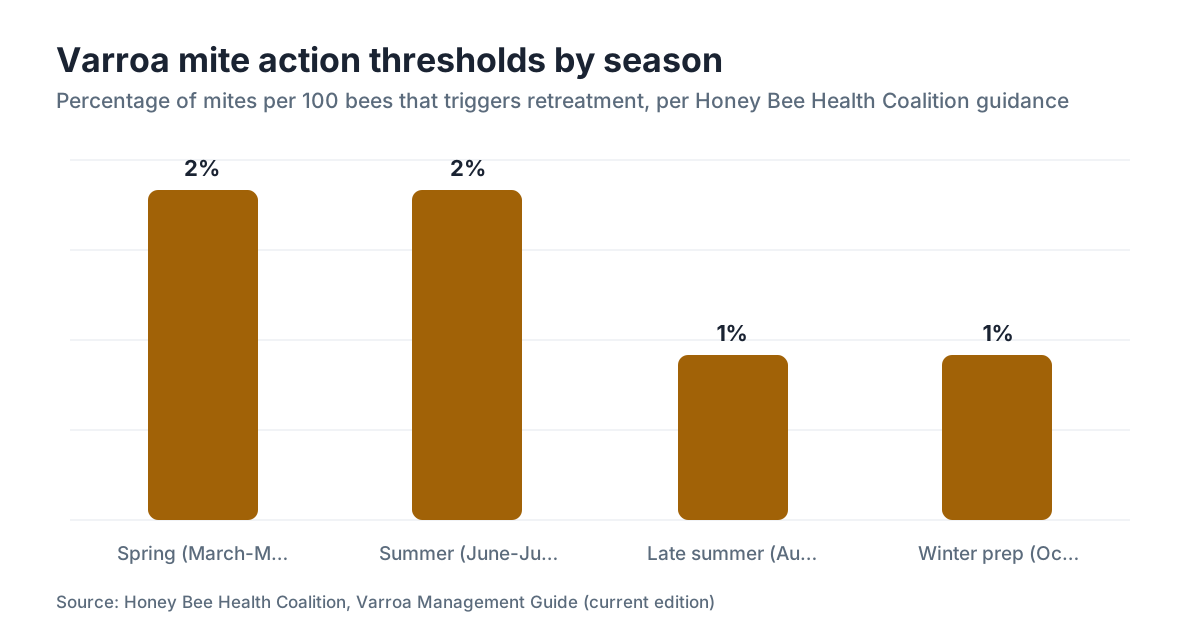
Keep a written log with dates and counts. An alcohol wash or sugar roll every 4 weeks gives you the data to read that shape. The Honey Bee Health Coalition recommends monitoring at least every 30 days through the active season, with an action threshold of 2 percent (2 mites per 100 bees) for most of the year, dropping to 1 percent in August and September as winter bees begin developing [2].
Treat in July, count 0.5 percent in early August, then find 3 percent in late September, and reinfestation is the leading explanation. That's doubly true if there's no meaningful leftover capped brood from the treatment period that could have harbored mites the whole time.
Talking to neighboring beekeepers is diagnostic too. If everyone in your area saw counts spike in August no matter when they treated, that points to a regional mite bomb, usually a failing feral colony or an unmanaged hobbyist hive nearby.
What are the most effective strategies to prevent reinfestation?
There's no single fix. Reinfestation prevention is a stack of practices that each lower the odds of mites getting into your hive. Here's what the evidence actually supports:
Coordinate treatment timing with neighbors. This is the highest-leverage move available to most beekeepers, and it costs nothing but organization. If everyone in your local club treats within the same 2 to 3 week window in late summer, you drain the regional mite pool together instead of one beekeeper going clean while the neighbors stay loaded [2]. The Honey Bee Health Coalition specifically calls for community-level coordination in its guide.
Install robbing screens from July through September. During dearth, a screen forces bees to work a side entrance that residents learn but invaders can't. Commercial robbing screens run about $5 to $15 per hive and ship from most beekeeping supply companies.
Reduce your entrance during dearths. An entrance reducer at the smallest setting (about 1 bee wide) won't stop a committed robbing mob, but it slows the first rush enough for resident bees to mount a defense. Use it with a robbing screen, not instead of one.
Keep colonies strong. A colony with a big, well-fed worker force grooms harder, defends the entrance better, and strips phoretic mites off returning foragers before those mites can reproduce. Mite transfer happens in every colony. The question is how fast the resident bees clean off the incoming ones.
Don't feed open syrup. Open feeders draw bees from other colonies and are one of the surest ways to start a robbing cascade. Use in-hive feeders, and fill them at dusk.
Find and report mite bombs. If you locate a collapsing feral colony or an abandoned managed hive nearby, call your state apiarist. Many states have a process for abandoned apiaries, and some allow destruction of feral colonies in structures under certain conditions. Your state department of agriculture's apiary program page lists the contact [7].
Monitor monthly, no exceptions. The only way to catch reinfestation before it turns into a disaster is regular alcohol wash counts. Wait until you see sick bees and you're already 4 to 8 weeks behind. VarroaVault's free monitoring templates can set up a consistent schedule if you're starting from scratch.
Does coordinating with neighboring beekeepers actually make a measurable difference?
The evidence is indirect but convincing. A 2017 modeling study from the University of Exeter, published in PLOS Computational Biology, found that mite dynamics in local bee communities depend heavily on neighbor behavior: apiaries surrounded by untreated colonies rebounded significantly faster after treatment than those in coordinated treatment zones [8]. The effect was large enough that the authors concluded individual treatment efficacy was substantially undercut by neighbor inaction.
Put plainly. Treat in August, watch your neighbor's untreated colony collapse in September, and your hives will likely be reinfested before winter. Your treatment bought you 4 to 8 weeks, not a whole winter.
Getting neighbors on board is a social problem as much as a technical one. Local clubs are the best venue. Offer to demonstrate an alcohol wash. Share resources. Some beekeepers don't treat because they don't think mites are a real problem, or because they're committed to treatment-free methods. That's a harder talk, but worth having. Lead with survival data rather than philosophy. Overwinter losses in untreated colonies run roughly 50 to 80 percent in some surveys, and that number tends to land harder than abstract mite biology [9].
Can you use physical barriers or apiary placement to reduce mite immigration?
Physical barriers won't stop aerial dispersal, but apiary placement and hive orientation do shift drift patterns and robbing dynamics.
Pointing hive entrances in different directions within a yard cuts worker drift between your own hives. Placing hives so entrances are partly screened by shrubs or fencing pushes bees to approach from set angles and seems to ease robbing pressure, though the controlled research on that specific point is thin.
Elevating hives off the ground and steering them away from other apiaries' flight paths probably matters less than folklore suggests. The mites arrive on flying bees, and flight-path geometry at the scale of a few hundred yards doesn't change contact odds much.
What does matter is distance from known mite sources. An abandoned apiary a quarter mile away worries me more than a well-managed commercial yard a mile off. If you can, push to have that abandoned site treated or removed. Scouting a new location? A rural site with low hobbyist density carries lower background reinfestation pressure than a suburban patch full of small operations of unknown quality.
Should you treat more aggressively if you're in a high-risk reinfestation area?
Treating more often has real costs: chemical exposure to bees and wax, money, resistance selection pressure, and your time. Blanket escalation isn't the answer.
In a high-risk spot, treat on a schedule tied to your monitoring data, not the calendar. Under heavy ambient mite pressure, counts may rebound to the action threshold faster than in a quiet area, and an extra late-season treatment makes sense. But that call should come from your monthly counts, not a hunch.
EPA-approved treatments differ in residual activity and brood penetration, and some suit late-season reinfestation better than others. Oxalic acid (active ingredient: oxalic acid dihydrate) has zero residual activity and kills only phoretic mites, so a single oxalic treatment does nothing against mites that arrive after application [10]. It's excellent for a broodless winter hive and useless as a buffer against ongoing reinfestation. Amitraz strips (Apivar) hold activity for 6 to 10 weeks and kill mites as they emerge from capped brood across that window, plus phoretic mites arriving during treatment, which gives you real cover against reinfestation [11].
Know the mechanism of your treatment and you can reason clearly about whether a second application or a follow-up oxalic drench makes sense once the primary window closes.
How should you monitor for reinfestation after treating?
Start counting 3 to 4 weeks after treatment ends. For a brood treatment like Apivar, that's 10 to 12 weeks after strips go in (6 to 10 weeks of treatment plus a few weeks for brood cycles to turn over). For oxalic acid in a broodless colony, count again 3 weeks after application.
An alcohol wash is the gold standard. Take a 300-bee sample (about half a cup scooped from the brood nest, not the entrance), add 70 percent isopropyl alcohol, shake for 60 seconds, and pour through a mesh strainer [12]. Count the mites and divide by 3 for the percentage. At or above 2 percent in summer, or at or above 1 percent in August and September, treat again [2].
Count every 4 weeks through the active season. Keep a plain log: date, colony ID, sample size, mite count, percentage, and any treatment applied. After two seasons you'll have a pattern that tells you exactly when reinfestation pressure peaks in your location, and you can time management ahead of it instead of chasing it.
If you're building out record-keeping, the free tools at VarroaVault are set up for this kind of season-over-season tracking.
What should you do if you suspect a nearby feral colony is a mite source?
Feral colonies in tree cavities and building voids almost never get treated and often carry mite loads far above anything a managed colony would survive. A feral colony running 10 to 20 percent infestation is not rare in areas with no feral management.
Your options are limited but real. Contact your state apiarist or department of agriculture and ask whether feral colonies in your county fall under any regulation. Some states give inspectors authority to order treatment of accessible feral colonies deemed a disease risk to managed apiaries, though enforcement is uneven [7].
If the colony sits in a structure, the property owner may want it removed by a cutout specialist (removed, not exterminated, if the bees are reachable). Some beekeepers do removals for a living and will relocate the colony into managed care.
If neither works, treat your own hives harder in the season when that feral colony is most likely collapsing (usually late summer through fall), and watch your counts for the fast rebound signature described earlier.
Does running locally adapted or mite-resistant bees help reduce reinfestation impact?
Yes, with realistic expectations. Bees selected for hygienic behavior and varroa sensitive hygiene (VSH) traits pull mites out of capped brood more effectively and slow the rate at which imported mites reproduce once inside [9]. They don't stop mites from entering through robbing and drift. They handle the incoming ones better.
The Minnesota Hygienic line, VSH-selected stock from the USDA Baton Rouge lab, and various locally selected survivor stocks all show measurable drops in mite population growth compared to unselected commercial stock. The USDA and several university extension programs have documented these differences [4].
In practice: in a high mite-pressure area with neighbors who don't treat, VSH or hygienic stock buys you time between treatments and may let you run at slightly higher thresholds without the same loss risk. It doesn't remove the need to monitor or treat, and it doesn't make reinfestation irrelevant. Treat it as one layer in a layered defense, not a solution by itself.
Some beekeepers also try small-cell foundation and natural cell size on the theory that smaller cells cut mite reproduction. The evidence is weak and contested. I wouldn't build a reinfestation plan around it.
Frequently asked questions
How quickly can varroa mites reinfest a hive after treatment?
Reinfestation can begin the moment treatment ends and can rebuild dangerous mite levels within 6 to 12 weeks. Speed depends on how many infested colonies sit nearby and how much robbing and drift is happening. That's why monthly alcohol wash monitoring is essential even after a clean treatment: counts that look fine in week 4 can sit above threshold by week 10.
What is the best robbing screen to prevent mite immigration?
Any robbing screen that shifts the entrance to a side opening and forces bees through a 90-degree turn works. Commercial designs from most beekeeping suppliers run $5 to $15 per hive. Install them July through September when nectar dearth and peak regional mite populations line up. Resident bees learn the new entrance within a day or two.
How far apart do hives need to be to avoid varroa reinfestation?
There's no safe distance inside a typical beekeeping landscape. Foragers range 1 to 3 miles routinely, and drones drift farther. Moving apiaries away from known mite-heavy sources lowers pressure, but distance alone doesn't solve it. Coordinating treatment timing with neighbors and cutting robbing pressure matters more than how far apart your hives sit.
Should I treat again if my mite counts spike 8 weeks after treatment?
Yes. If counts reach or pass 2 percent in the active season or 1 percent in August and September, treat again regardless of when you last treated. A spike at 8 weeks strongly suggests reinfestation, not treatment failure. Pick a treatment whose residual period covers the ongoing immigration window, and monitor again 3 to 4 weeks after the new treatment ends.
Can a single neighboring hive cause significant reinfestation across my whole apiary?
Yes. One collapsing, heavily infested colony can trigger intense robbing that exposes every hive in your yard and beyond. Researchers have documented robbing events from mite-bombed colonies moving hundreds of mites into recipient hives within hours. If you spot a nearby colony that looks like it's failing, treat or remove it if it's yours, or contact the owner and your state apiarist if it isn't.
Does oxalic acid help with reinfestation, or does it only work on existing mites?
Oxalic acid kills only phoretic (non-capped) mites and has no residual activity at all. Once the treatment ends, new mites arriving by robbing or drift are untouched. It's excellent for a mid-winter broodless treatment but gives no ongoing protection against reinfestation. If your situation involves continuous mite immigration, a longer-residual treatment like Apivar suits the primary treatment better.
How do I convince neighboring beekeepers to coordinate treatments?
Lead with data, not pressure. Bring your mite count logs to club meetings and show the pattern: treatment, then a fast rebound during high-neighbor-activity periods. Offer to demonstrate an alcohol wash so they can see their own mite levels. Frame coordination as mutual survival insurance, not criticism. The Honey Bee Health Coalition's free tools (honeybeehealthcoalition.org) are a credible, non-preachy resource to share.
Are feral honey bee colonies always a reinfestation risk?
Not always, but often. Feral colonies that survived several seasons without treatment may carry mite-resistant genetics and hold manageable mite levels. Many, though, cycle through periods of high infestation and collapse, shedding mites into the landscape during that collapse phase. There's no reliable way to know which type is nearby without direct sampling, which is rarely practical.
Does running VSH or hygienic bees reduce reinfestation risk?
VSH and hygienic bees pull infested brood cells and phoretic mites more efficiently, which slows how fast mite populations grow after immigration. They don't keep mites out of the hive, but they handle incoming mites better than unselected stock. In a high-pressure area, hygienic stock can meaningfully stretch the time before counts reach action thresholds after treatment.
What signs indicate reinfestation rather than treatment resistance?
Read the shape of your mite count curve over time. Reinfestation shows a sharp post-treatment drop, then a steady climb starting 4 to 8 weeks later. Resistance or treatment failure shows poor mite reduction right after treatment, with counts staying high or dropping only slightly. Keep dated records of every count so you can tell the two patterns apart cleanly.
Is there any benefit to treating in spring specifically to reduce summer reinfestation?
A spring treatment lowers the mite load your colony carries into the honey flow and summer, which cuts what you contribute to your neighbors' reinfestation risk. It also starts you from a lower baseline heading into summer. It won't prevent late-summer reinfestation from collapsing colonies nearby, but a lower starting population means more buffer before counts reach threshold.
Can I prevent all varroa reinfestation if I do everything right?
No. You can cut it substantially, and you can catch it early enough to treat before it does serious harm. Complete prevention isn't possible in any real beekeeping environment with other colonies nearby. The goal is to keep monitoring tight enough that reinfestation never gets ahead of you, and to slow mite immigration with robbing screens, coordination, and strong colony defense.
Sources
- PLOS ONE, Frey et al., 2015, 'Mite transfer during robbing events': A single robbing event involving a heavily infested colony can introduce dozens to hundreds of mites into a recipient hive within hours
- Honey Bee Health Coalition, Varroa Management Guide (current edition): Reinfestation from outside apiaries is one of the most common reasons treatments fail; action thresholds of 2% during active season and 1% in August-September; community-level treatment coordination recommended
- University of Georgia Cooperative Extension, Honey Bee Biology and Beekeeping: Foragers typically range 1 to 3 miles from their hive, with occasional flights to 5 miles in low-forage conditions
- USDA Agricultural Research Service, Bee Research Laboratory: Feral honey bee colony density in some U.S. regions estimated at 1 or more colonies per square mile; VSH-selected stock shows measurable reductions in mite population growth
- Frey and Rosenkranz (2014), Apidologie, 'Mite transfer via drifting drones': Drones from infested colonies regularly carried phoretic mites and introduced them to recipient colonies during normal drift behavior
- Penn State Extension, Varroa Mite Management: A count that barely drops during treatment is more consistent with resistance or poor application, while a post-treatment spike is consistent with reinfestation
- University of Exeter, modeling study on community-level mite dynamics, 2017, PLOS Computational Biology: Apiaries surrounded by untreated colonies showed significantly faster mite rebound after treatment than those in coordinated treatment zones
- University of Minnesota, Bee Lab, Varroa and Hygienic Behavior Research: Untreated colony losses roughly 50 to 80 percent overwinter in some surveys; hygienic bee lines remove mites from capped brood more effectively than unselected stock
- EPA, Oxalic Acid Product Label and Registration (Reg. No. 84676-1): Oxalic acid has zero residual activity and kills only phoretic mites, not mites in capped brood or mites arriving after application
- EPA, Apivar (Amitraz) Label and Registration: Apivar strips maintain activity for 6 to 10 weeks and kill phoretic and emerging mites during the treatment period
- North Carolina State University Apiculture Program, Varroa Management Resources: Alcohol wash using 300-bee sample with 70% isopropyl alcohol is the gold standard method for mite monitoring
Last updated 2026-07-09