How to store unused Apivar strips so they stay effective
TL;DR
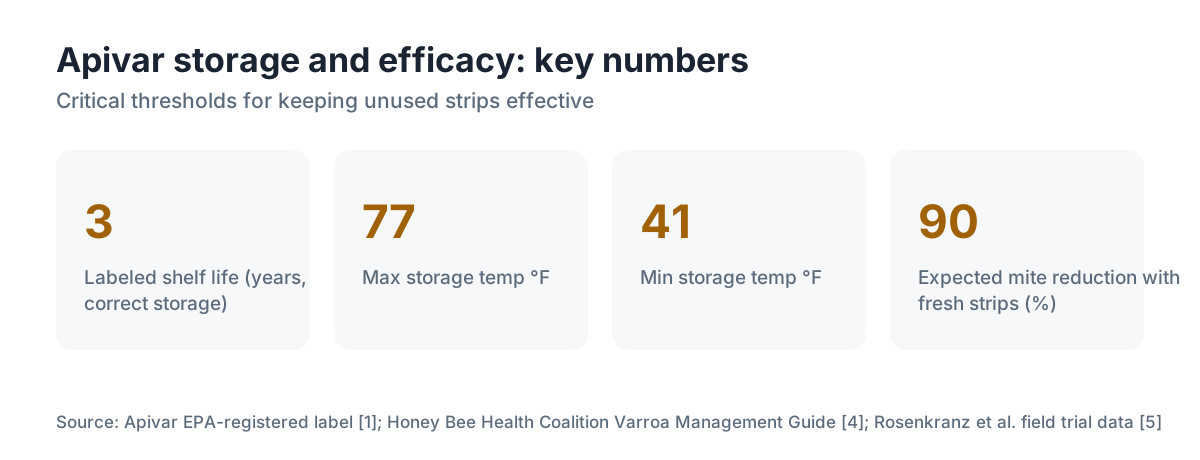
- Store unused Apivar strips in their original sealed foil pouch, at room temperature between 41°F and 77°F (5°C, 25°C), away from direct light and moisture.
- Reseal the pouch tightly after each use.
- The labeled shelf life is 3 years from manufacture.
- Strips left open, overheated, or frozen degrade and fail to control varroa.
What does the Apivar label actually say about storage?
The Apivar label is the legal governing document for this product, and it is specific. Strips must be stored "at room temperature (between 41°F and 77°F / 5°C and 25°C)," away from direct sunlight, in the original closed container [1]. That is the short answer. Everything below is context for what those instructions mean at your bench.
The active ingredient is amitraz, a formamidine acaricide impregnated into plastic polymer strips at 3.3% concentration [1]. Amitraz degrades under heat, UV light, and moisture. The polymer matrix releases that amitraz slowly across the 6 to 10 week treatment window, but the release depends on the strip staying chemically intact before you ever hang it. Bad storage burns through the active ingredient before the strip does any work.
Here is the part beekeepers skip: the foil pouch is part of the storage system, more than packaging. It blocks moisture and light. Once you open it, the clock speeds up. If you use half a package, squeeze out the air, fold the pouch tightly, and clip or tape it shut. Do not dump the strips into a sandwich bag or a shoebox and call it storage.
What is the shelf life of Apivar strips?
Apivar's registered shelf life is 3 years from the date of manufacture when stored correctly [1][2]. The manufacture date or expiration date appears on the outer packaging. Check it before you buy a second box at the tail end of a season.
That 3-year window assumes proper storage the whole time. A box that spent a July in a hot barn or a truck cab does not get the full three years. And there is no field test to tell you whether a strip has degraded, which is the real problem. You cannot smell or see amitraz breakdown. The strip looks fine, goes into the hive, and you find out at your next mite wash that the counts never dropped. That is an expensive way to learn about bad storage.
Nobody has published good comparative degradation data on improperly stored versus properly stored Apivar strips specifically. But amitraz thermal instability is well documented [3]. Above 86°F (30°C), amitraz hydrolysis speeds up. At 104°F (40°C), which a shed or a car hits easily in summer, degradation becomes significant within days.
What temperature is safe for storing Apivar strips?
The labeled range is 41°F to 77°F (5°C to 25°C) [1]. That is a cool room, nothing fancy. A climate-controlled house or apartment works perfectly. An uninsulated shed, a barn, a garage, or a vehicle does not, at least not across most of North America for most of the year.
Refrigeration is not recommended and is not on the label. Below 41°F you risk condensation when the strip warms back up, and that puts moisture inside the foil pouch. Freezing is worse. No manufacturer guidance and no university extension guidance recommends freezer storage for Apivar, and it would likely void any product performance claims [2].
Cold winters cut both ways. An unheated outbuilding can dip below 41°F for weeks. A shelf inside your house is better, away from kitchen heat and windows. A spare bathroom cabinet works. So does a basement corner that stays under 77°F all summer, as long as it is not damp.
How should you package unused strips for long-term storage?
Here is the sequence I follow:
- Keep strips in the original foil pouch. Do not move them to another container.
- After opening the pouch, take out only the strips you need right now.
- Press the excess air out, fold the open end over at least twice, and secure it with a binder clip, zip tie, or strong tape.
- Put the sealed pouch back in the cardboard outer box. The box adds physical protection and blocks light.
- Store that box in a cool, dark spot inside a climate-controlled building.
Some beekeepers add a small airtight container (a mason jar or a rigid food storage box) as a second shell around the foil pouch. That is another barrier against humidity and crushing. Not required, but it costs nothing if you already own one.
Wear nitrile gloves when handling strips, in the hive and during storage. Amitraz absorbs through skin, and sorting or repackaging strips by hand adds up [1]. Gloves also keep hand oils and grime off the strip surface.
Can you preserve unused Apivar strips that have already been opened?
Yes, with caveats. Strips pulled from the pouch and then not used can go back into storage, but their remaining shelf life is now uncertain. Even an hour of open air means some amitraz has volatilized and some moisture may have reached the surface.
Say you opened a pouch to treat a 5-frame nuc and had strips left over. Reseal the pouch that same day using the method above, and use those strips for your next treatment cycle rather than saving them for next season. Treat them as short-dated.
Strips that went into a hive and got pulled early (which is not the recommended protocol) count as used. Do not reuse or store them. Used strips have depleted amitraz and become a waste product that needs proper disposal per label instructions [1].
The Honey Bee Health Coalition's Varroa Management Guide notes that "resistance and treatment failures have been linked to subtherapeutic amitraz exposure," which is exactly what a degraded or half-spent strip delivers [4]. Do not cut corners here.
Does heat or cold exposure ruin Apivar strips?
Heat is the bigger threat. Amitraz breaks down through hydrolysis and oxidation, and heat drives both reactions [3]. A strip that has taken repeated high-temperature exposure (above 86°F) for days or weeks carries measurably less active ingredient, even if it looks perfect.
Cold does less chemical damage but creates a moisture problem. When a cold strip warms up, moisture in the package can condense on the strip surface. Moisture on the polymer matrix changes how amitraz migrates to the surface and transfers to bees walking over the strip.
Freezing puts physical stress on the polymer. There is no peer-reviewed data specific to Apivar in a freezer, but the manufacturer is clear: stay between 41°F and 77°F [1]. Anything outside that range is user error, and no manufacturer will refund or replace strips when a treatment fails because of storage you controlled.
So the call is simple. If your strips spent a summer in a hot shed or a winter in an unheated outbuilding, buy fresh before your next treatment. A new package costs a fraction of a dead colony.
How do improper storage conditions affect varroa mite treatment outcomes?
Varroa destructor is a tough parasite, and the margin for error in treatment is thin. Correctly applied Apivar reduces mite loads by more than 90% in field studies [5]. That number assumes full-strength active ingredient.
A degraded strip releases less amitraz per day. Drop the release rate below the threshold needed to transfer lethal doses to mites, and you get sublethal exposure instead of a kill. Sublethal amitraz exposure is the exact condition tied to amitraz-tolerant varroa populations, a growing worry in Europe and now surfacing in parts of North America [6].
Using degraded strips is arguably worse than not treating at all. You select for resistance without clearing the infestation. If you have any doubt about a strip's storage history, run a different treatment class (oxalic acid, formic acid) for that cycle and source fresh Apivar for the next one. For background on varroa biology and why treatment efficacy matters so much, the varroa mite overview is a good starting point.
Want a structured way to track treatment dates, mite wash results, and storage notes across every hive? VarroaVault's free protocol tools are built for exactly that kind of seasonal recordkeeping.
Where should you NOT store Apivar strips?
The list of bad spots runs longer than people expect.
Garage: temperature swings hard with the seasons and with daily sun loading. In summer it easily hits 100°F and up.
Vehicle: same trap. A car parked in July sun reaches 140°F inside. Do not stash strips in your truck between weekend hive visits.
Near a water heater or furnace: an obvious heat source that people miss because it sits in an otherwise cool basement.
On a windowsill or near a window: UV light degrades amitraz [3].
In a chicken coop, barn, or similar farm building with no climate control: temperature and humidity both swing too far.
Freezer or refrigerator: below the labeled floor, plus condensation risk on warm-up.
Near strong-smelling chemicals: there is no documented cross-contamination issue from storing herbicides or solvents nearby, but keeping pesticides separated is good practice. Some plastics and supply items off-gas, so keep strips clear of them.
The right spot is a shelf in a climate-controlled interior room. That is the whole answer. The inconvenience is close to zero.
How do you know when Apivar strips have gone bad?
Honestly, you usually cannot tell by looking. Degraded strips do not change color, smell different, or feel different from fresh ones. The polymer looks the same. That is what makes bad storage a quiet problem.
Some beekeepers report strips that crumble or feel brittle, which can point to freeze-thaw damage to the polymer matrix. If your strips are physically fragile, throw them out. But chemically degraded strips often look fine.
The only reliable signal is a treatment failure: mite counts that do not drop after a full 6 to 8 week treatment with correct application. At that point you cannot cleanly separate storage-related degradation from resistance or application error, but rule out bad storage first.
Strips within shelf life (check the package date), stored properly, and still failing? That is worth reporting to your state apiarist and possibly the EPA. Resistance surveillance is active in North American beekeeping [6][7].
One more angle for buyers. A box of Apivar that sat in a hot distributor warehouse for two years starts your storage clock far later than the manufacture date suggests. Reputable beekeeping supply companies should be able to tell you the lot date, so ask.
What do you do with leftover Apivar strips at the end of the season?
Got partial packages at season end? Store them properly, then plan to use them early in the next treatment window. Do not let them sit another full year before you decide whether they are still good.
Timing matters. The Honey Bee Health Coalition and most university extension guidance recommend a late-summer treatment (roughly late July through September, depending on your region) after honey supers come off, plus a late-fall treatment if mite loads still warrant it [4][8]. Treated in August and have strips left? Those are a resource for spring or the following fall, but only if you can document clean storage.
End of season is also the time to check the expiration date. If the strips will expire before your next planned treatment window, use them now on colonies with borderline mite levels rather than let them expire in the box. An accurate mite wash tells you which colonies justify a late treatment.
Used strips (pulled from hives) need proper disposal. The label says to dispose of used strips and packaging per local regulations, generally wrapped in newspaper and placed in household trash unless your municipality has specific pesticide disposal rules [1][9]. Do not compost them and do not burn them.
Is there anything else in your beekeeping supplies that affects how you store Apivar?
The main concern is what surrounds the strips. If you keep Apivar on the same shelf as wax foundation, the foundation will not contaminate the strips (the foil pouch handles that), but the reverse could matter if your pouch is compromised. Amitraz is fat-soluble and can transfer to wax-based materials [10]. Keep damaged or open pouches away from wax goods.
Worth a thought if you make your own beekeeping supplies or store a lot of drawn comb near your treatments. Contaminated wax is a real problem in commercial beekeeping and has shown up in studies testing miticide residues in hive materials [10].
For most hobbyist and sideliner beekeepers, the answer is plain: a separate labeled bin or shelf for all miticide treatments, away from wax, away from heat, inside the house. Label it with the product name and expiration dates so you never have to dig through the box to check a date.
Frequently asked questions
Can Apivar strips be stored in the refrigerator?
No. The Apivar label specifies storage between 41°F and 77°F (5°C, 25°C). Refrigerators typically run at 35°F to 38°F, below the labeled floor. The bigger practical risk is condensation: when a cold strip warms up in a damp environment, moisture accumulates on the polymer surface and affects amitraz release. Store strips at room temperature in a climate-controlled indoor space instead.
Can you freeze Apivar strips to extend shelf life?
No. Freezing sits outside the labeled storage range and is not supported by manufacturer guidance or any university extension recommendation. It can stress the polymer matrix and create condensation risk when the strip thaws. The labeled shelf life of 3 years under correct storage is already generous. Freezing to push beyond that is not a valid strategy and can leave you with strips that fail silently.
How long do Apivar strips last once the foil pouch is opened?
The manufacturer does not publish a specific window for opened pouches. The guidance is to reseal the pouch tightly after each use and store it in the labeled conditions. Plan to use opened pouches within the same treatment season rather than storing them for a full year. Amitraz volatilizes in open air, so a loosely resealed pouch loses active ingredient faster than an intact sealed one.
What happens if Apivar strips get wet?
Moisture on the strip surface changes how amitraz migrates through the polymer and transfers to bees. The foil pouch is a moisture barrier for exactly this reason. If strips have seen water or high humidity for an extended period, treat them as compromised and do not use them where you cannot afford a failure. Buy fresh strips and store the new package properly.
Do Apivar strips lose potency in a hot car or truck?
Yes, almost certainly. A car parked in summer sun reaches 140°F inside, far above the labeled 77°F maximum. Amitraz hydrolysis accelerates above 86°F. If strips spent time in a hot vehicle, their remaining amitraz concentration is unknown and possibly subtherapeutic. Using degraded strips risks a treatment failure and can select for amitraz-tolerant varroa. Replace them before treating.
Can I transfer Apivar strips to a zip-lock bag for storage?
It is not recommended. The original foil pouch is a better moisture and light barrier than a standard zip-lock bag. If the original pouch is damaged or lost, a heavy-duty foil-lined bag (the kind used for coffee) is a closer substitute. Place it inside a dark, rigid container in a cool, dry, indoor spot. This is off-label, so you are taking the storage risk yourself.
How do I find the expiration date on Apivar packaging?
The manufacture date or expiration date prints on the outer cardboard box and sometimes on the foil pouch itself. Look for a lot number or date code on the box bottom or side panel. Apivar's labeled shelf life is 3 years from manufacture under correct storage. If the box has no readable date, contact the supplier for the lot information before relying on those strips for a treatment that matters.
What should I do with Apivar strips that are expired or degraded?
Do not use expired or suspected-degraded strips on hives. For disposal, the Apivar label instructs you to dispose of used strips and packaging per local regulations, typically wrapped in paper and placed in household trash. Do not burn them (amitraz combustion produces toxic byproducts) and do not compost them. Check your state or county pesticide disposal guidelines for specifics, especially with large quantities.
Does storing Apivar near other pesticides affect the strips?
Chemically, the foil pouch isolates the strips well. But keeping all pesticides together in one labeled storage area is good practice for safety and accountability. The main risk to watch is physical damage to the pouch from sharp-edged containers nearby. Amitraz is fat-soluble, so a pouch breached near wax-based materials can contaminate them. Keep the pouch intact and stored away from wax goods.
How do I know if my Apivar treatment failed because of bad strips versus varroa resistance?
You cannot cleanly separate the two after the fact. Rule out storage first: check the expiration date, review where and how the strips were stored, and confirm correct application (proper placement, full 6 to 8 week exposure, appropriate colony size). If storage and application were correct and counts still did not drop by more than 90%, report the potential resistance issue to your state apiarist and consider switching treatment classes.
Can opened Apivar strips from last year still be used this season?
Only if they were resealed properly and held at the 41°F to 77°F range, away from light and moisture, the entire interval. Check the expiration date first. If both conditions are met, the strips are probably fine, but use those older strips early in the season and watch mite wash results closely after treatment to confirm efficacy. When in doubt, buy fresh.
What is the correct way to dispose of used Apivar strips after a treatment?
The Apivar label requires disposal of used strips per applicable local, state, and federal regulations. Standard guidance is to wrap used strips in newspaper or paper and place them in household trash. Do not burn them. Do not compost them. Do not put them in recycling. With a large number of strips to dispose of, contact your county extension office or local hazardous waste facility for options specific to your area.
Should hobbyist beekeepers buy Apivar in bulk to save money?
Bulk buying makes sense only if you can use the strips within the 3-year shelf life under proper storage. Buying more than two seasons' worth is usually a bad deal for hobbyists, because storage mistakes get more likely over time and one hot summer can compromise the whole stock. Sideliners with 20-plus colonies and reliable indoor storage can justify larger purchases, but run the math on your actual colony count and treatment schedule first.
Sources
- Véto-Pharma / EPA, Apivar (amitraz) registered product label: Storage at room temperature between 41°F and 77°F (5°C, 25°C), away from direct sunlight, in original closed container; 3.3% amitraz active ingredient; disposal instructions for used strips
- Véto-Pharma, Apivar product page and technical documentation: 3-year shelf life from manufacture date under correct storage conditions
- Wrobel, E. et al., Journal of Apicultural Research, amitraz thermal and hydrolytic stability: Amitraz is susceptible to hydrolysis and oxidation; degradation accelerates at elevated temperatures and with UV light exposure
- Honey Bee Health Coalition, Varroa Management Guide (2023 edition): Subtherapeutic amitraz exposure linked to resistance development; late-summer treatment timing guidance
- Rosenkranz, P. et al., Journal of Invertebrate Pathology, Apivar efficacy field trials: Correctly applied Apivar treatment reduces mite loads by more than 90% under field study conditions
- Traynor, K.S. et al., Scientific Reports (2021), US National Honey Bee Disease Survey and miticide resistance: Amitraz-tolerant varroa populations documented in Europe and emerging in North America; sublethal amitraz exposure associated with resistance selection
- USDA Agricultural Research Service, Honey Bee Research: Treatment failure and resistance surveillance in North American varroa populations
- Pennsylvania State University Extension, Varroa Management in Honey Bee Colonies: Recommended late-summer treatment window (roughly late July through September) for varroa control after honey supers are removed
- EPA, Pesticide Disposal and Disposal of Unused Pesticides: General pesticide disposal guidance: wrap in paper and place in household trash unless local regulations specify otherwise; do not burn
- Mullin, C.A. et al., PLOS ONE (2010), High Levels of Miticides and Agrochemicals in North American Apiaries: Amitraz and its metabolites detected in wax comb; fat-soluble miticides can transfer to and accumulate in wax-based hive materials
- University of Minnesota Extension, Varroa Mite Management: Guidance on correct Apivar application, treatment duration (6 to 8 weeks), and mite wash monitoring post-treatment
Last updated 2026-07-09