How to vaporize oxalic acid for varroa mite control
TL;DR
- Oxalic acid vaporization (OAV) is one of the most effective varroa treatments a hobbyist can run.
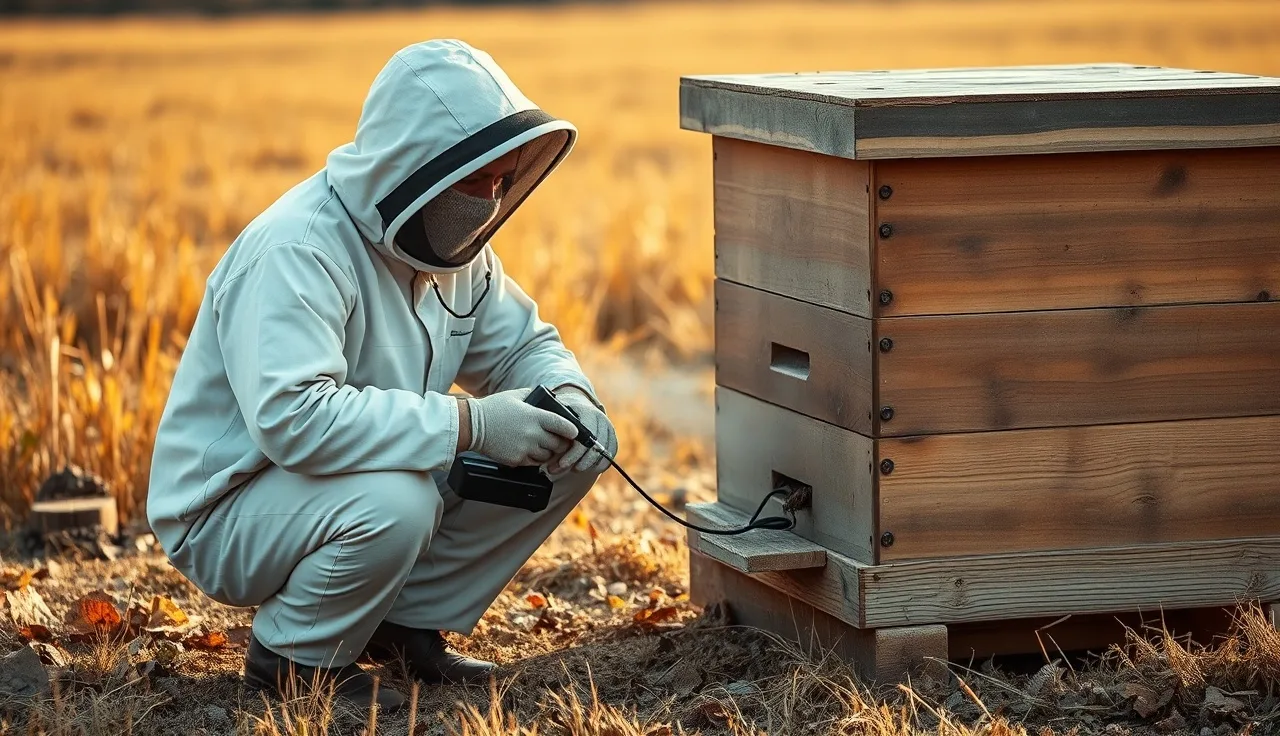
- You put 1 gram of oxalic acid crystals in a vaporizer, seal the hive, and let the sublimated vapor coat mites riding on adult bees.
- A single treatment kills 90 to 97 percent of phoretic mites.
- Brood-free colonies need one treatment.
- Colonies with brood need a series, every 5 days, over 40-plus days.
What is oxalic acid vaporization and how does it kill varroa?
Oxalic acid vaporization heats oxalic acid crystals until they sublimate, turning straight from solid to gas. That gas fills the hive and coats the waxy cuticle of every varroa mite clinging to an adult bee. The acid wrecks the mite's cuticle and probably its gut. Mites die. Bees shrug it off at the doses used.
Oxalic acid is a natural organic acid. You'll find it in rhubarb and spinach.
The catch is penetration. Oxalic acid vapor does not reach mites inside capped brood cells in any useful concentration, so mites hiding under cappings survive a single treatment [1]. That isn't a defect in the product. It's physics. The vapor only kills phoretic mites, meaning mites out in the open riding on adult bees. That one fact drives every scheduling decision you'll make.
The EPA registered oxalic acid (sold as Api-Bioxal) for US beehives in 2015, and the registration covers vaporization, dribble, and spray [2]. Vaporization won the popularity contest because it's fast, it doesn't wet the cluster with syrup, and it reaches mites throughout the hive without pulling a single frame.
Before you build a treatment schedule, read the varroa mite overview. It explains how mites reproduce inside capped cells, which is the whole reason timing matters so much.
What equipment do you need to vaporize oxalic acid?
You need five things: a vaporizer, Api-Bioxal (the only EPA-registered oxalic acid product in the US), a respirator rated for acid vapors, nitrile gloves, and eye protection [2]. Everything else is convenience.
Vaporizers start around $30 for a simple wand that runs off a 12V battery and climb past $200 for units with temperature control and timers. The cheap wands work fine for a handful of hives. Once you're running 20 or more colonies, faster heat-up and consistent dosing start earning their keep, because you spend less time standing over a hot wand. The Varomor and Sublimox are the popular European imports. Domestic wand units from Mann Lake and similar vendors cover most US hobbyists. For a sideline of under 30 hives, I wouldn't spend more than $80 to $100.
The respirator is where most beekeepers cut a corner they shouldn't. An N95 dust mask does nothing against acid vapor. You need a half-face respirator with acid-gas cartridges (OV/P100 combination cartridges are the right pick) [3]. Oxalic acid vapor burns mucous membranes, and the damage adds up over time. Buy a real respirator. It runs $30 to $60 and lasts years on new cartridges.
Round out the kit with a gram scale accurate to 0.1g, foam or magnetic strips to seal entrances, and a timer. That's it. Source most of this from beekeeping supply companies, or check the free shipping honey bee supply companies options if you're batching an order.
What is the correct oxalic acid dose for vaporization?
The EPA-registered Api-Bioxal label specifies 1 gram of oxalic acid dihydrate per hive body [2]. Most beekeepers read that as 1 gram per brood box the bees actually occupy, up to 2 grams for a strong colony filling two deeps. The label is federal law here. Going over it is illegal and genuinely risks hurting your bees.
One gram sounds like nothing, and it nearly is. Weigh it on a real scale. Don't eyeball it. Some vaporizer pans hold 1g comfortably and others hold 2g, so know your gear.
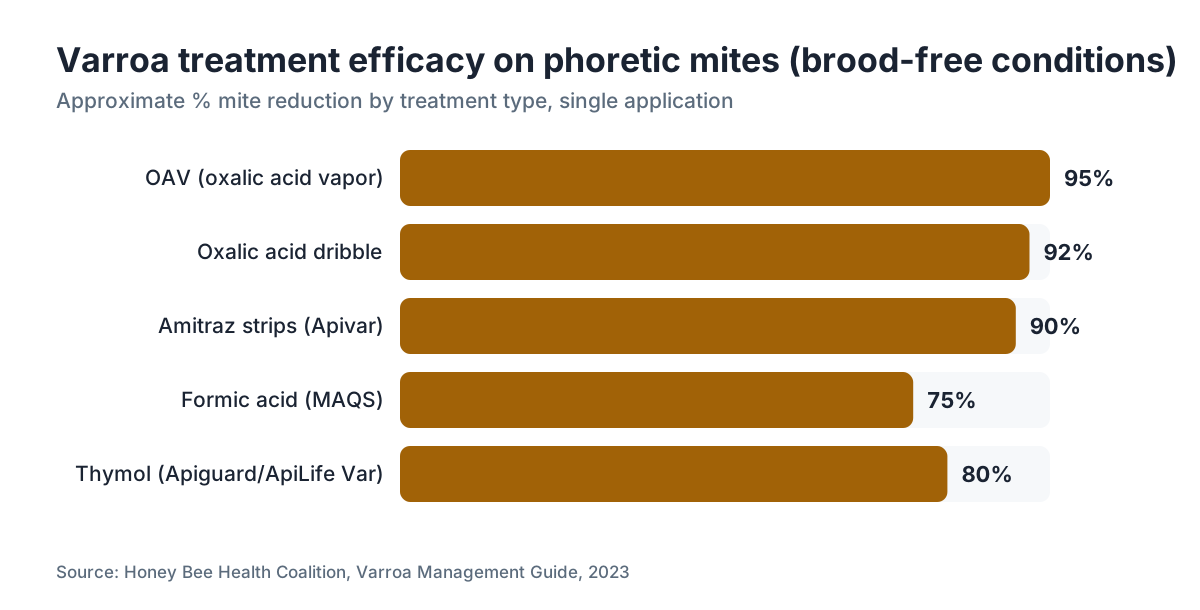
The Honey Bee Health Coalition's Varroa Management Guide sets 1g per hive body as the standard dose and notes efficacy above 90 percent on phoretic mites from a single treatment in brood-free conditions [1].
| Scenario | Dose | Sessions needed |
|---|---|---|
| Brood-free colony (winter cluster) | 1g per hive body | 1-3 over 5-7 days |
| Colony with brood, full season | 1g per hive body | 3-5 treatments, every 5 days |
| Split or package (no brood) | 1g | 1-2 treatments |
| Swarm cell removal + OAV | 1g | 1 treatment is often enough |
For colonies with brood, the logic is simple. New mites keep emerging from cells between treatments. You treat often enough to catch each wave of newly phoretic mites before it slips back under cappings to breed. The 5-day interval lines up with the varroa reproductive cycle in that window.
How do you actually perform an oxalic acid vaporization treatment step by step?
Step one: check mite loads before you treat. An alcohol wash or sticky board count tells you whether you even need to treat and gives you a baseline to measure against afterward. The Honey Bee Health Coalition recommends treating once alcohol wash counts pass 2 mites per 100 bees in summer [1]. Don't skip it.
Step two: gear up before you touch anything. Respirator on, gloves on, glasses on. Do it away from the hive, not once you're already holding a hot wand.
Step three: load the pan with 1 gram of Api-Bioxal. Do not use raw bulk oxalic acid from online or industrial suppliers in a US hive. Api-Bioxal is the registered product, and putting an unregistered pesticide in a hive breaks federal law [2].
Step four: seal every entrance and any screened bottom board opening. Foam or magnetic strips do the job. No bees should be flying in or out during treatment.
Step five: slide the vaporizer in through the entrance or a small gap in the bottom board. Most wands have a long enough handle to keep your hands clear of the heated pan. Hook up the 12V battery and start the timer.
Step six: most wand units run 2.5 to 3 minutes after vapor first appears. Follow your specific vaporizer's instructions. Pull the wand and keep the hive sealed for at least 10 minutes so the vapor works through the cluster [1].
Step seven: unseal the hive and walk away. The bees ventilate on their own.
Step eight: log the date, dose, temperature, and hive ID. Run a follow-up wash 48 to 72 hours later if you want to confirm the kill.
That's the whole thing. On a warm day with calm bees, figure about 15 minutes per hive including setup.
When is the best time of year to vaporize oxalic acid?
The best window is late fall into early winter, when the colony is brood-free or close to it. One to three treatments then can crush mite loads before spring buildup. University of Minnesota Extension has documented that a single OAV treatment during a brood-free period achieves 90 to 97 percent mite reduction, which no other licensed treatment beats on ease [4].
That doesn't make OAV a winter-only tool. You can treat any time there's no honey super in place that you'll harvest for people, which is a firm label restriction [2]. Mid-season treatments are common and often necessary when a colony is carrying a heavy load.
Brood breaks are gold. Make a split, pull every queen cell, and give the colony 10 to 14 days before a new queen's brood gets capped. That gap is a brood-free window. A single OAV during it hits nearly every mite in the box.
Temperature matters too. Below about 50°F (10°C), bees cluster hard and vapor may spread unevenly through a dense ball of bees. Some beekeepers treat down to 40°F and get decent results, especially across multiple treatments. Above that, distribution is usually reliable. Pick a calm, dry day when few bees are out foraging, so more of them are home to catch the vapor.
How many oxalic acid vaporization treatments does a colony with brood need?
This is where beekeepers undertreat and then act surprised when the counts bounce back. If your colony has brood, one OAV treatment will not hold.
Worker mites keep emerging from capped cells as brood hatches, on roughly a 12-day rhythm. So you treat every 5 days, catching each wave of newly phoretic mites before it re-enters cells and breeds. A standard protocol is 3 treatments 5 days apart, covering about 10 to 15 days of mite emergence. Some protocols push to 5 treatments.
A 2021 study in PLOS ONE by Gregorc and colleagues found that 5 OAV applications over 40 days cut mite infestation by 87 to 96 percent in colonies with brood, against untreated controls [5]. Real efficacy, but it costs you more trips to the yard than a single winter shot.
The Honey Bee Health Coalition's Varroa Management Guide gives a practical rule for brood-present colonies: treat 3 times at 5-day intervals as a minimum, confirm with a follow-up wash, and repeat the series if counts stay above threshold [1]. That's the protocol I follow and the one I'd tell a friend to run.
The VarroaVault treatment protocol OS (free at varroavault.com) builds a seasonal calendar around your local brood cycle, so you're not doing this math by hand every time.
Is oxalic acid vaporization safe for bees and honey?
At label rates, yes. Studies keep finding that OAV at 1g per hive body does no real harm to adult bees, brood survival, or queen laying [6]. Oxalic acid already sits in honey naturally at low levels (roughly 1 to 38 mg/kg depending on floral source), and label-rate treatments don't push residues meaningfully above what's already there [7].
The EPA label still bars use when honey supers meant for people are on the hive [2]. That's a regulatory line, not a warning that OAV poisons honey. Plenty of commercial beekeepers treat between flows without trouble, as long as supers headed for harvest aren't on during treatment.
The bees themselves can suffer if you overdo it. Treating too often, or above the label dose, causes bee mortality and brood damage. Stay on the label. Don't exceed what it permits in a given period.
What safety precautions do you need when vaporizing oxalic acid?
Oxalic acid vapor is genuinely dangerous to you. It's corrosive to the respiratory tract, eyes, and skin, and OSHA lists oxalic acid as a health hazard [3]. The EPA Api-Bioxal label requires specific protective equipment: a NIOSH-approved respirator with acid-gas cartridge, chemical-resistant gloves, and protective eyewear [2].
Never treat in an enclosed space. Vapor disperses outdoors, but in a shed or garage it builds to harmful levels. Treat outside.
Keep bystanders, kids, and pets away. During treatment and for 10 minutes after, hold an exclusion zone of roughly 10 to 15 feet around the hive.
Never heat Api-Bioxal over an open flame or a jury-rigged setup. Commercial vaporizers hold a controlled temperature that sublimes the crystals cleanly. Improvised rigs can scorch the material or throw off inconsistent vapor, which raises both your toxicity risk and your uncertainty about whether it even worked.
Store Api-Bioxal in its original container, dry, away from heat. The expiration date is real: degraded product loses efficacy.
If you take in a lungful of vapor, get to fresh air and call Poison Control (1-800-222-1222 in the US). See a doctor for any respiratory irritation that doesn't clear fast.
How do you know if the treatment worked? What should your mite counts show?
Treat. Wait 48 to 72 hours. Run an alcohol wash on about 300 bees pulled from the brood nest. If your pre-treatment count was 5 mites per 100 bees, a successful OAV series should bring you to 1 or below. Under 1 per 100 bees in summer sits below the economic threshold in most US contexts [1].
A sticky board drop in the first 24 to 48 hours after treatment is another good read. A sharp spike in fallen mites means the vapor reached a lot of them. No drop doesn't automatically mean failure (your load might just be low), but if you expected heavy loads and saw almost nothing fall, check your vaporizer and confirm the hive was actually sealed.
Don't skip the follow-up count. It's how you catch reduced susceptibility early and how you know whether another series is due. Counts that climb back to threshold within 4 to 6 weeks are a flag worth chasing down. Maybe brood coverage ran heavier than you thought. In rare cases, it points to reduced susceptibility in your local mites.
The varroa mite article walks through a proper alcohol wash if you've never done one.
Can you vaporize oxalic acid during a honey flow or when supers are on?
No, not legally in the US. The EPA-registered Api-Bioxal label flatly prohibits use when honey supers meant for human consumption are on the hive [2]. That applies to all three methods: vaporization, dribble, and spray.
So you plan treatments around your honey calendar. Treat in early spring before supers go on, or in late summer once you pull supers after the main flow. A mid-season treatment means pulling supers first.
Some beekeepers leave empty, no-harvest supers on during treatment, but that's a label gray area I wouldn't lean on. Follow the label.
For packages and new splits with no super, this restriction almost never creates a conflict. It bites hardest for beekeepers running stacks of supers through a long summer flow, who end up choosing between treating early (lower load, easier) or waiting for supers to come off (higher load, harder to claw back).
How does oxalic acid vaporization compare to other varroa treatments?
Here's an honest side-by-side of the main options:
| Treatment | Efficacy on phoretic mites | Efficacy in brood | Colony disruption | Honey use restriction |
|---|---|---|---|---|
| OAV (oxalic acid vapor) | 90-97% | None | Very low | No supers |
| Oxalic acid dribble | 90-95% (brood-free) | None | Low | No supers |
| Formic acid (Mite Away Quick Strips) | 60-90% | Some (>50%) | Moderate | 5-day withdrawal |
| Amitraz (Apivar strips) | 85-95% | Some via contact | Low | 6-week withdrawal |
| Thymol (ApiLife Var, Apiguard) | 70-90% | Some | Low-moderate | No supers; temp-dependent |
OAV wins on ease of use in brood-free conditions. Formic acid and amitraz get the edge mid-season with brood, because they reach into capped cells or linger on contact. No single product covers every situation. Rotating chemistries also matters for holding off resistance [1].
The Honey Bee Health Coalition recommends running OAV inside an integrated treatment plan rather than as a lone yearly treatment, specifically to lower the odds that mite populations develop reduced susceptibility [1].
Where to buy Api-Bioxal and what does it cost?
Api-Bioxal sells through most major US beekeeping retailers. A 35-gram packet (35 treatments at 1g each) usually runs $25 to $40 depending on the supplier [retail pricing as of 2024-2025; check current prices, they move]. At that scale, material cost lands under $1.50 per treatment, which makes OAV one of the cheapest per-hive treatments going.
Don't buy raw oxalic acid from industrial or food-grade suppliers for hive use in the US. Only Api-Bioxal carries EPA registration for this job. Using unregistered products in a hive violates federal pesticide law (FIFRA) even when the chemical is identical [8].
When you're building your full kit, the beekeeping supplies guide covers vaporizers, protective gear, and sourcing in one place. Budget roughly $80 to $150 to get started, including a decent vaporizer and proper PPE.
VarroaVault's free tool suite at varroavault.com includes a treatment cost calculator and a mite-load tracker that links your wash results to treatment decisions, so you're deciding on data instead of a hunch.
Frequently asked questions
How long do you leave a hive sealed after oxalic acid vaporization?
At least 10 minutes. That's the minimum the Honey Bee Health Coalition recommends for vapor to spread through the cluster and contact mites across the hive. Some beekeepers seal for 15 to 20 minutes, especially in cold weather when bees cluster tight, but 10 minutes covers most conditions. After that, unseal the entrance and let the bees ventilate on their own.
Can you vaporize oxalic acid in winter when bees are clustered?
Yes, and winter is the best time for a single-treatment approach because colonies are usually brood-free. Vapor reaches mites throughout the cluster. Treat above 40°F when you can for reliable efficacy. Below that, extremely tight clustering can hurt distribution. One to three treatments spaced 5 to 7 days apart during the brood-free window gives the best knockdown heading into the new season.
Does oxalic acid vaporization harm the queen?
At label rates (1g per hive body), OAV does not meaningfully harm queens. Multiple studies found no significant difference in queen survival or laying between treated and untreated colonies when the registered dose is used correctly. Overdosing or treating too often above label limits can stress a colony and potentially affect the queen, which is one more reason to stay strictly on the label.
Can you use a homemade vaporizer for oxalic acid?
Technically possible, strongly discouraged. Improvised heating rigs risk uneven heat, incomplete sublimation, or combustion, all of which change the chemistry and your exposure risk. EPA-registered commercial vaporizers are built to hit the right temperature range to sublimate the crystals cleanly. For a treatment that costs under $1.50 per application in materials, a proper $30 to $80 vaporizer is cheap insurance on safety and efficacy.
How many times per year can you vaporize oxalic acid?
The Api-Bioxal label sets no hard annual cap but restricts use to periods when honey supers for human consumption are off the hive. In practice, most beekeepers treat once in late fall (the brood-free window) and once or twice mid-season as counts demand. The Honey Bee Health Coalition recommends letting monitoring drive treatment decisions rather than treating on a fixed calendar.
What temperature does oxalic acid vaporize at?
Oxalic acid dihydrate sublimes at about 157°C (315°F). Most commercial vaporizers are built to reach and hold 200 to 300°C, which drives fast sublimation. That's why the pan goes from white crystals to clear vapor quickly once the unit hits operating temperature. Too little heat leaves you with incomplete sublimation and weaker efficacy.
Do you need to remove bees from the hive before vaporizing?
No, and you shouldn't. The bees need to be inside for the treatment to work, since the vapor coats the bees and the mites riding on them. Seal the hive before you insert the vaporizer, treat, and keep it sealed at least 10 minutes. Bees exposed during treatment aren't significantly harmed at label rates and resume normal activity once the hive is unsealed.
How is oxalic acid vaporization different from the dribble method?
Dribble uses oxalic acid dissolved in sugar syrup, applied straight over the seams of bees on each frame. It works, but it means opening the hive and reaching every seam. It also can't be repeated as often without killing bees, because the syrup wets the cluster. Vaporization doesn't require opening the hive, performs better in cold weather, and repeats more safely at short intervals for brood-present colonies.
Can oxalic acid vaporization be used on nucleus colonies and packages?
Yes. Nucs and packages are often brood-free or nearly so, which makes them excellent OAV candidates. A single treatment on a freshly installed package before any brood is capped can drop mites to near zero. For nucs, check whether the queen is laying and capping brood before you choose a single versus multi-treatment approach. The dose stays 1g per occupied hive body.
Is Api-Bioxal the only legal oxalic acid product for beehive use in the US?
Yes, as of 2025. Api-Bioxal, registered by the EPA in 2015, is the only oxalic acid product with a federal label for use in honey bee colonies in the United States. Using any other source of oxalic acid in a hive, even a chemically identical product sold for other purposes, violates the Federal Insecticide, Fungicide, and Rodenticide Act (FIFRA). State-level exemptions have varied historically but have largely expired.
How do you dispose of leftover Api-Bioxal solution or empty packaging?
Follow the label for disposal. Store unused Api-Bioxal in its original container, away from heat and moisture. Empty packets can generally go in regular trash once triple-rinsed, following EPA pesticide container disposal guidance. Don't pour unused material down drains. Contact your local extension office or household hazardous waste program if you have large quantities to get rid of.
What should you do if oxalic acid vapor gets in your eyes or you inhale it?
For eye exposure, flush immediately with plenty of water for at least 15 minutes and get medical attention. For inhalation, move to fresh air right away. If coughing, chest tightness, or difficulty breathing persists, call Poison Control at 1-800-222-1222 or go to an emergency room. Oxalic acid is corrosive and symptoms can be delayed. Tell medical staff you were exposed to oxalic acid vapor.
Sources
- Honey Bee Health Coalition, Varroa Management Guide (2023): OAV achieves 90-97% mite reduction in brood-free colonies; treatment thresholds and multi-treatment protocols for colonies with brood; recommendation to use OAV as part of an integrated rotation.
- EPA, Api-Bioxal Pesticide Registration (Reg. No. 92647-1): 1g per hive body label dose; prohibition on use with honey supers intended for human consumption; required PPE including acid-gas respirator; Api-Bioxal is the only registered OAV product in the US; registration granted 2015.
- OSHA, Occupational Chemical Database: Oxalic Acid: Oxalic acid classified as a health hazard; corrosive to respiratory tract, eyes, and skin; requirement for acid-gas respirator and protective equipment.
- University of Minnesota Extension, Bee Lab: Varroa Management: Single OAV treatment during brood-free period achieves 90-97% mite reduction; seasonal timing recommendations for Minnesota and similar climates.
- Gregorc A. et al., PLOS ONE (2021): Efficacy of repeated oxalic acid vaporization in honey bee colonies with brood: Five OAV applications over 40 days reduced mite infestation by 87-96% in colonies with brood compared to untreated controls.
- Aliano N.P. & Ellis M.D., Journal of Apicultural Research (2005): A strategy for using oxalic acid dihydrate for controlling Varroa destructor: OAV at label rates does not significantly harm adult bees, brood survival, or queen laying.
- Bogdanov S. et al., Apidologie (2002): Oxalic acid residues in honey and beeswax after oxalic acid treatment in the field: Oxalic acid occurs naturally in honey at 1-38 mg/kg; OAV at label rates does not meaningfully raise residue levels above natural background concentrations.
- EPA, Federal Insecticide, Fungicide, and Rodenticide Act (FIFRA) Overview: Using an unregistered pesticide in a hive is a federal violation under FIFRA regardless of chemical identity.
Last updated 2026-07-09