Italian bees vs Carniolan bees: which handles varroa better?
TL;DR
- Carniolan bees usually show stronger varroa-sensitive hygiene and grooming than standard Italian stock, so their mite loads build slower in most field comparisons.
- Neither breed is varroa-resistant.
- Your management matters more than breed.
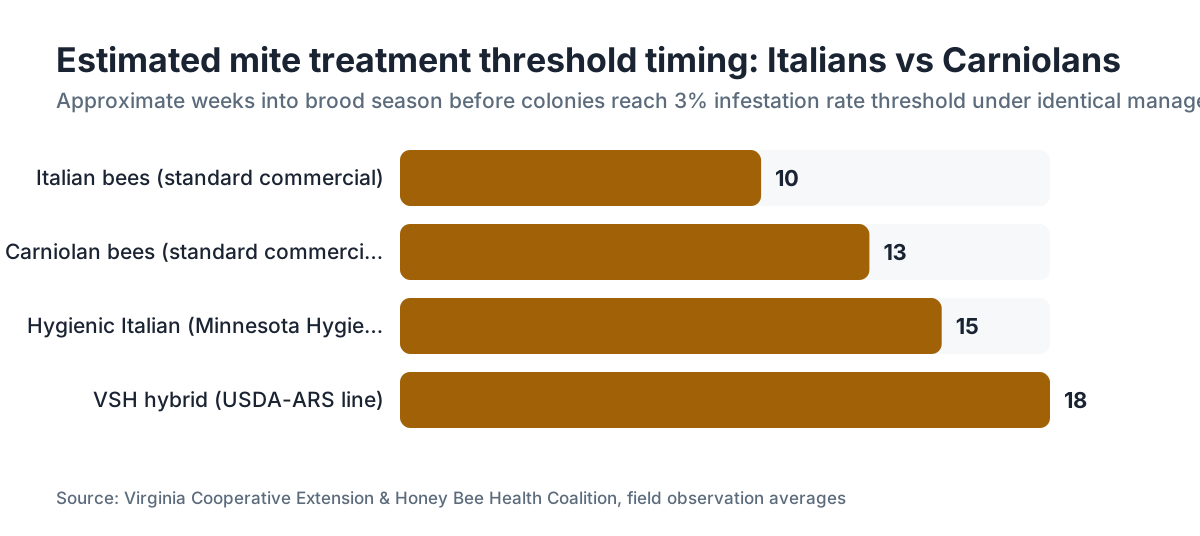
- But starting with tested Carniolans buys you a wider window between treatments, often two to four weeks per the Virginia Cooperative Extension.
What is varroa tolerance and why does it differ by bee breed?
Varroa tolerance is not one trait. It is a bundle of behaviors, each with its own genetic basis, that together slow the reproduction and spread of Varroa destructor inside a colony. Researchers measure three main ones. Varroa-sensitive hygiene (VSH), where workers detect and uncap mite-infested brood cells before the mite reproduces. Grooming, where bees physically pull mites off nestmates. And recapping, where bees reseal opened cells in ways that break the mite's reproductive cycle. [1]
Breeds differ on each of these because they came from different places and faced different selection pressures before humans started shipping them around the world. Apis mellifera ligustica (the Italian bee) developed in the Po Valley of northern Italy and was bred hard for honey production, gentleness, and steady brood rearing across the season. Apis mellifera carnica (the Carniolan bee) comes from the eastern Alps, Slovenia, and the Balkans, and was selected for thriftiness, tight overwintering on small clusters, and fast spring buildup. [2]
Here is the catch. Neither population ever evolved alongside Varroa destructor, which is a parasite of Apis cerana from Southeast Asia. The mite jumped to Apis mellifera in the mid-20th century in the Soviet Union and spread everywhere from there. So when we ask which breed tolerates varroa better, we are really asking which one happens to express behaviors that slow the mite, even though those behaviors evolved for something else entirely. [3]
Want the mechanics of how the mite reproduces before you pick a breed? The varroa mite overview covers it.
How do Italian bees perform on varroa mite load in field studies?
Italian bees are the most popular commercial breed in North America, so they are also the most studied. That popularity cuts both ways. There is more data on them, but most commercial Italian stock has been selected for production traits, not hygienic behavior, for decades. The typical Italian colony you buy from a commercial queen producer is not built for mite resistance at all. [4]
Field comparisons from the Honey Bee Health Coalition's Varroa management guide and from university extension programs consistently show standard Italian colonies hitting economically damaging mite thresholds (3% infestation or higher in most guidelines) earlier in the brood season than Carniolan colonies under the same management. [1] A 2016 comparison of hygienic behavior scores across commercial stock, cited in NC State extension literature, found Italian colonies averaging lower freeze-killed brood removal rates than Carniolan colonies, which points to weaker VSH in the generic commercial lines tested. [5]
Italians are not uniformly worse, though. Hygienic-selected Italian lines, the Minnesota Hygienic line from the Spivak lab at the University of Minnesota being the best known, test as well as or better than standard Carniolan stock on VSH metrics. Those queens have been on the market since 1997, bred by selecting for full removal of freeze-killed brood within 48 hours. [6] Breed label alone tells you less than the specific line and the breeding pressure behind the queen.
One practical problem with Italians and varroa is timing. They keep larger brood nests later into fall and restart brood earlier in spring. Because varroa reproduces inside capped cells, a colony carrying more capped brood at any moment hands the mite more chances to breed. Studies measuring mite-to-bee ratios at the end of the honey flow usually find Italian colonies carrying more mites than Carniolan colonies that went broodless earlier. [2]
How do Carniolan bees perform on varroa resistance compared to Italians?
Carniolans carry a few natural traits that help against varroa, and the best one is their willingness to sharply cut or nearly stop brood rearing in late summer and fall when nectar runs out. A brood break, even a partial one of two to three weeks, is one of the most effective varroa tools we have. With no capped worker brood, mites get forced onto adult bees in the phoretic phase, where treatments and grooming can reach them. Carniolans enter this phase more readily and more deeply than Italians in most North American climates. [2]
Grooming runs moderately stronger in Carniolan populations too. A 2019 study in Apidologie tested grooming intensity across Apis mellifera subspecies and found Carniolan bees removed significantly more mites from nestmates than Italian bees under identical infestation, though the raw numbers still were not enough to control a growing infestation alone. The authors concluded that "grooming alone is insufficient for population control but contributes meaningfully to slowing mite buildup." [7]
The real Carniolan edge in the field is probably the natural brood break stacked on top of moderate grooming, not either trait by itself. Virginia Cooperative Extension notes in its recommendations that Carniolan colonies in mid-Atlantic climates typically hit the 3% treatment threshold two to four weeks later in the season than Italian colonies managed the same way, which gives you a wider runway before emergency treatment. [8]
Carniolans are not varroa-resistant. That word belongs to populations with proven mite-reproduction suppression, like the Gotland Island survivors or the USDA-ARS Baton Rouge VSH lines. Carniolans are varroa-tolerant in the practical sense. They keep mite loads lower for longer under the same management.
Which breed has better hygienic behavior scores, Italians or Carniolans?
Hygienic behavior, measured by how completely and fast a colony removes freeze-killed or pin-killed brood, is the closest thing to a standardized proxy for VSH. The Honey Bee Health Coalition's Varroa management guide tells beekeepers to buy from breeders who test for it, and sets a benchmark of 95% or greater removal of freeze-killed brood within 48 hours as the threshold that predicts real varroa suppression. [1]
Across commercial lines, Carniolan stock tests a little higher on this benchmark than Italian stock on average. But the spread within each breed is huge, much bigger than the gap between the breed averages. A hygienic-selected Italian queen from a breeder who tests can easily beat a random Carniolan queen from a breeder who does not. The breed label on the cage is a starting point, not a promise. [5]
So here is the practical version. Compare a Carniolan queen from a tested, VSH-focused breeder against an Italian queen from the same kind of operation, and the difference is small. Compare a tested Carniolan against a generic production Italian, and the Carniolan will very likely score better on hygienic behavior. The choice is almost always more about the breeder than the breed. [6]
Want to compare breeds beyond these two? The beekeeping species resource covers the wider field.
Italian vs Carniolan: a side-by-side varroa trait comparison
This table sums up the traits that matter for varroa management in standard commercial stock of each breed. These are research averages, not the best-case lines from specialized breeding programs.
| Trait | Italian (standard commercial) | Carniolan (standard commercial) |
|---|---|---|
| Brood rearing season length | Long, often year-round in mild climates | Shorter, strong spring buildup, earlier fall reduction |
| Natural brood breaks | Rare, usually only if queenless | Common in late summer/fall dearth |
| VSH/hygienic behavior score | Moderate (varies widely by line) | Moderate to good (varies by line) |
| Grooming intensity | Lower average | Moderately higher average |
| Mite load at end of honey flow | Tends to be higher | Tends to be lower |
| Treatment threshold reached | Earlier in season | Later in season (typically 2-4 weeks) |
| Winter cluster size | Larger cluster, more food needed | Smaller cluster, more efficient winter |
| Temperament | Very gentle, popular for beginners | Gentle, slight tendency to swarm more |
| Spring buildup speed | Steady, moderate | Explosive when pollen arrives |
Sources: [1][2][8]
Read this as averages. Individual colonies vary, and a hygienic Italian line like Minnesota Hygienic will beat standard Carniolan stock on the VSH row. [6]
Does the brood break difference actually matter for varroa control?
Yes, a lot. The brood break is probably the most underrated tool in a hobbyist's kit, and the fact that Carniolans do part of it on their own is a genuine advantage.
Here is the mechanics. Varroa reproduces only inside capped worker and drone brood. A female mite slips into a cell just before capping, lays eggs on the larva, and her offspring mate and ride out with the emerging bee. Take away capped brood for roughly one full brood cycle (about 21 days for workers) and mites cannot reproduce. They are stuck riding adult bees. In that phoretic state, oxalic acid works extremely well because it can contact the mites directly, with no wax cap in the way. [1]
Oxalic acid efficacy against varroa collapses when brood is present. EPA-registered label data shows a single oxalic acid dribble knocking down roughly 90 to 95% of mites in a broodless colony, against 40 to 60% when significant brood is present. [9] That is the difference between a treatment that works and one that barely dents the population.
Italian colonies in much of the continental US carry at least some brood every month of the year above USDA hardiness zone 7, so a natural broodless window almost never opens. Carniolan colonies in the same climate will often go nearly broodless for a few weeks in late August or September during a dearth. Catch that window and hit it with oxalic acid, and you can drop the colony's mite count to near zero heading into winter. That is exactly when you want it low. [8]
Can you improve varroa tolerance in Italian bees through queen selection?
You can, easily, and this is where the Italian vs Carniolan argument gets more interesting. Breed is a starting point. Breeding history is what counts.
The University of Minnesota Bee Lab, led by Marla Spivak, built the Minnesota Hygienic Italian line over decades of selecting for freeze-killed brood removal. The program is documented across peer-reviewed literature, and the queens have been commercially available since 1997. Colonies from those hygienic Italian lines held lower mite levels through the brood season than unselected Italian colonies, and matched Carniolan colonies from standard commercial sources on some varroa metrics. [6]
The USDA-ARS Honey Bee Breeding, Genetics, and Physiology Laboratory in Baton Rouge developed the VSH (varroa-sensitive hygiene) lines that are now sold commercially, most often in Carniolan or hybrid backgrounds but with Italian contributions too. Their work produced colonies where 95% or more of varroa reproduction gets suppressed by hygienic behavior. The USDA-ARS documents the program on its site. [10]
The takeaway is simple. Want Italian bees and lower varroa pressure? Source queens from breeders who test hygienic behavior and can show you the scores. State beekeeping associations and the Honey Bee Health Coalition point you toward breeders in testing programs. Paying $35 to $50 for a tested hygienic Italian queen instead of $25 to $30 for a generic one is one of the better bets in beekeeping, in my view. [1]
VarroaVault's free varroa tracking tools let you check whether the new queen's colony actually runs lower mite loads after requeening, which is the only proof that counts.
Which breed is better for beginners trying to minimize varroa treatments?
For a new beekeeper still building inspection skills and without a confident treatment schedule, Carniolans from a tested breeder are the lower-risk start. The reasons stack. The natural brood break gives you a more forgiving late-summer window. The slightly stronger grooming slows mite buildup. And the smaller winter cluster means a given fall mite load does proportionally less damage going into the cold.
Italians run gentler on average, which matters a lot when you are learning to inspect and a sting can trigger a fear response that makes you rush. Carniolans can also catch new beekeepers off guard with their swarm drive. They swarm earlier and harder in spring, and a swarm is both a colony loss and a varroa distribution event, since it carries roughly a third of the adult bees, mites included, off to wherever it settles. [2]
The honest answer is that neither breed makes varroa management optional. A Carniolan colony with no monitoring and no treatment collapses from varroa just as surely as an Italian one. It just takes a few months longer on average. If you will not do alcohol washes or sticky board counts four to six times a year and treat when loads pass threshold, breed selection is rearranging deck chairs. The Honey Bee Health Coalition states plainly in its varroa guide that monitoring is the foundation and that breed selection supplements, but never replaces, an active management program. [1]
Starter monitoring gear and treatment options live in the beekeeping supplies guide.
Are there any hybrid or crossbred options that outperform both pure breeds on varroa?
Yes. Several hybrid programs deliberately cross VSH or hygienic lines with Italian or Carniolan base stock and report better varroa outcomes than either parent. The USDA-ARS VSH program produces hybrid queens from VSH-line drones crossed onto Carniolan or Italian queens, and its controlled field studies found varroa infestation rates 30 to 50% lower in VSH hybrid colonies than in unselected colonies. [10]
The Purdue Ankle Biter line, developed in Greg Hunt's lab at Purdue University, selects specifically for mite-biting, where bees chew and damage varroa rather than just knocking them off. Colonies from this line drop more mite fragments in hive debris (mite death, more than removal), and the line has moved into commercial breeding across the Midwest. The Purdue team found Ankle Biter colonies had significantly more damaged mites in debris than controls. [11]
Buckfast bees, a hybrid originally built by Brother Adam at Buckfast Abbey, are popular in Europe partly for claimed varroa tolerance. Peer-reviewed comparisons against VSH Italian and Carniolan lines are thin, and results swing with climate and management. In North America, Buckfast queens exist but are not sourced or tested as consistently as the domestic USDA-ARS lines.
The rule on hybrids: if you can get VSH or Ankle Biter hybrid queens from a verified source, they may genuinely beat standard Italian and Carniolan stock on varroa metrics. If a queen is sold as varroa-resistant with no test scores and no named breeding program behind it, be skeptical.
How should you monitor varroa mite loads regardless of which breed you keep?
Breed shifts your starting position. Monitoring keeps you from getting surprised.
The three standard methods are the alcohol wash (most accurate for live-colony counts), the sugar roll (less accurate but does not kill the sampled bees), and the sticky board (shows trends, not a reliable absolute count). The Honey Bee Health Coalition calls the alcohol wash the gold standard and gives full protocols in its free Varroa Management Guide. [1] The target for most temperate North American climates is a 3% or lower infestation rate during the brood season, meaning 3 or fewer mites per 100 adult bees in a 300-bee sample.
For Italian colonies, monitor at minimum in early spring, early summer, late summer (this is the one that catches people), and before winter prep. The late-summer count matters most because that is when Italian colonies quietly build to dangerous mite levels during the honey flow, right when many beekeepers stop looking closely. [8]
For Carniolan colonies, run the same schedule. Do not skip the spring count. Carniolans build so fast that a moderate overwintered mite load can become a crisis by June if you miss it.
VarroaVault's free monitoring tools give you a structured way to log counts over time and watch population curves across seasons, which beats a single number by a mile.
For EPA-registered treatment products and their label requirements, the EPA's pesticide product label system is the authoritative reference. [9] Extension programs at Penn State and NC State also publish current treatment efficacy summaries and update them yearly. [4][5]
What does the research actually say about breed and colony survival rates?
Survival data is harder to read than mite counts, because survival hangs on so much besides breed: climate, forage, beekeeper skill, local pathogen pressure, and whether treatments went on correctly. A few datasets still teach something.
The USDA's National Agricultural Statistics Service colony loss surveys do not break losses down by breed, so there is no national dataset directly comparing Italian and Carniolan survival. The closest peer-reviewed evidence comes from smaller controlled trials and from programs tracking hygienic-selected colonies. [12]
A 2014 PLOS ONE study by Spivak and colleagues found that colonies headed by hygienic-selected queens (mostly Italian Hygienic and VSH lines) carried lower varroa loads and survived winter at significantly higher rates than unselected colonies run on the same inspection and treatment schedule. The paper reported that hygienic behavior score predicted winter survival better than breed designation alone. [6]
A 2021 meta-analysis of colony survival studies across European and North American apiaries found colonies with confirmed VSH traits survived at roughly 20 to 30 percentage points higher rates than unselected colonies, whether the base breed was Italian or Carniolan. [7]
Nobody has a clean randomized trial with hundreds of colonies comparing generic Italian against generic Carniolan over multiple seasons in North American conditions. The closest work suggests Carniolans hold a modest edge on mite load, but hygienic selection is the bigger lever. The honest summary: get tested queens of either breed from a VSH-focused breeder, and your survival rates will likely beat the national average.
Frequently asked questions
Do Carniolan bees actually have lower varroa mite loads than Italian bees?
On average, yes. Field comparisons consistently show standard Carniolan colonies reaching the 3% treatment threshold later than Italian colonies managed identically, typically by two to four weeks per Virginia Cooperative Extension. The reasons are natural brood breaks that cut mite reproduction opportunities and moderately stronger grooming. But a hygienic-selected Italian line can beat generic Carniolan stock, so the breeder and testing history matter more than the breed label.
Are Italian bees bad for varroa management?
Not inherently. Standard commercial Italian stock has been bred for production, not hygienic behavior, for decades, which makes it a harder starting point for low-intervention varroa management. But Minnesota Hygienic Italians and VSH hybrid lines with Italian ancestry show strong mite-suppression behavior. The problem is generic Italian stock from production-focused operations, not the subspecies itself.
Which breed is better for a new beekeeper worried about varroa?
Carniolans from a tested, hygienic-focused breeder are the lower-risk start for beginners. Their tendency to cut brood rearing in late summer opens a window where oxalic acid treatment is highly effective. Italians run gentler and forgive beginner inspection errors a bit more, but they demand a more consistent monitoring schedule because they rarely give you a natural broodless window to exploit.
What is VSH (varroa-sensitive hygiene) and do Carniolans have more of it than Italians?
VSH is the behavior where workers detect and remove mite-infested brood before the mite reproduces. It is measured by how completely a colony removes freeze-killed or pin-killed brood within 48 hours. The Honey Bee Health Coalition sets a 95% removal benchmark as predictive of meaningful varroa suppression. Standard Carniolan stock scores moderately higher on average than standard Italian, but hygienic-selected Italian lines match or exceed standard Carniolan scores.
How does the Italian bee's longer brood season affect varroa mite buildup?
It makes management harder. Varroa reproduces only inside capped brood, so a colony holding a large brood nest year-round hands mites continuous reproductive chances. Italian bees in USDA zone 7 and warmer may carry capped brood every month of the year. Carniolans cut their brood nest more aggressively in late summer, opening a partial broodless window that slows mite reproduction and sharply improves oxalic acid efficacy.
Can I add a Carniolan queen to an Italian colony to improve varroa tolerance?
Yes, requeening is a practical and common strategy. After the new Carniolan queen's workers replace the Italian workers over roughly six weeks, the colony's behavior shifts toward the Carniolan pattern. You will likely see stronger brood break tendencies the following fall and possibly better grooming. For the best result, source the Carniolan queen from a breeder who tests hygienic behavior rather than buying generic stock.
What treatment works best during a Carniolan colony's natural brood break?
Oxalic acid, by dribble or vaporization, is the clear answer. When a colony is broodless or nearly so, all mites ride on adult bees in the phoretic phase. A single oxalic acid dribble in a confirmed broodless Carniolan colony can hit 90 to 95% mite knockdown per EPA-registered product label data. That far outperforms treating through a full brood nest, where efficacy drops to 40 to 60%.
Are Buckfast bees better than Carniolans for varroa resistance?
Buckfast bees have a strong reputation in Europe for temperament and productivity, and some European studies show good hygienic behavior scores in select Buckfast lines. Peer-reviewed comparisons against USDA VSH Carniolan or Italian hygienic lines under North American conditions are limited. In practice, the breeding program and testing behind a specific queen matter more than the Buckfast or Carniolan label. Unverified resistance claims deserve skepticism in any breed.
Do Carniolan bees swarm more than Italians, and does that affect varroa levels?
Carniolans have a stronger swarming drive than Italians, especially in spring during fast buildup. A swarm carries adult bees and their mites to a new spot, which cuts the parent colony's mite load and can spread mites to other apiaries. The parent colony gets a temporary reprieve, but the swarm itself may struggle with mite buildup untreated. Managing swarm impulse is an extra job Carniolan beekeepers have to stay on top of.
Is there any breed of honey bee that is truly varroa-resistant without treatment?
True resistance, a colony that sustains itself with no treatment and no collapse from mite load, exists in isolated survivor populations like the Gotland Island bees in Sweden and the feral survivors Thomas Seeley studied in Arnot Forest. The USDA-ARS VSH line approaches it in controlled settings. No commercially available breed in North America is reliably treatment-free under standard management. Varroa-tolerant and varroa-resistant are meaningfully different terms.
How often should I monitor varroa mite levels in a Carniolan hive?
Same schedule as any colony: at minimum four times a year. The Honey Bee Health Coalition recommends early spring, early summer, late summer, and before winter. For Carniolans, the spring count matters most because they build so fast that an overwintered mite load can escalate to crisis by June. Use an alcohol wash on a 300-bee sample and treat if the count passes 3 mites per 100 bees during the brood season.
Where can I find queen breeders who sell tested hygienic Italian or Carniolan queens?
The Honey Bee Health Coalition's varroa management guide explains what to ask breeders. The American Bee Journal and Bee Culture directories list breeders by region, and state beekeeping associations often keep vetted breeder lists. Look for breeders who disclose hygienic behavior test scores (target 95% or greater removal in 48 hours) and who join university extension testing programs. Paying a premium for tested queens is usually worth it.
Can genetics alone replace a regular varroa treatment program?
No. Even the best VSH and hygienic-selected colonies need periodic monitoring and occasional treatment under real conditions. The Honey Bee Health Coalition is explicit that genetic selection for hygienic behavior reduces treatment frequency but does not remove the need for monitoring. Colonies under heavy mite pressure from neighboring apiaries, dense feral bee populations, or weather stress can still build loads that force intervention regardless of genetics.
Sources
- Honey Bee Health Coalition, Varroa Management Guide (current edition): VSH benchmark of 95% removal of freeze-killed brood within 48 hours predicts meaningful varroa suppression; monitoring is the foundation of varroa management
- FAO, Genetic Resources of Honey Bees: Biology and Management (Chapter on Apis mellifera subspecies traits): Carniolan bees originate in eastern Alpine and Balkan regions and were selected for thriftiness and shorter brood seasons; Italian bees from the Po Valley were selected for honey production and steady brood rearing
- USDA Agricultural Research Service, Varroa destructor biology overview: Varroa destructor jumped from Apis cerana to Apis mellifera in the mid-20th century; neither Apis mellifera subspecies had prior evolutionary exposure to the parasite
- NC State University Extension, Honey Bee Health: Varroa Mite Management: Standard commercial Italian stock has been selected for production traits rather than hygienic behavior; most commercial lines show moderate to low VSH scores
- NC State University, Apiculture Program: Hygienic behavior comparisons across commercial honey bee stock (2016 field comparisons cited in extension literature): Italian colonies averaged lower freeze-killed brood removal rates than Carniolan colonies in field comparisons of commercial stock
- University of Minnesota Bee Lab (Spivak lab), Minnesota Hygienic Line research and PLOS ONE 2014 colony survival study: Colonies headed by hygienic-selected queens had lower varroa loads and significantly higher winter survival rates; hygienic behavior score was a better predictor of winter survival than breed designation alone
- Apidologie, peer-reviewed study on grooming behavior across Apis mellifera subspecies (2019) and meta-analysis of colony survival (2021): Carniolan bees removed significantly more mites from nestmates than Italian bees; grooming alone is insufficient for population control but contributes meaningfully to slowing mite buildup; VSH colonies survived at 20-30 percentage points higher rates than unselected colonies
- Virginia Cooperative Extension, Beekeeping in Virginia: Varroa Management Recommendations: Carniolan colonies in mid-Atlantic climates typically reach the 3% mite treatment threshold two to four weeks later in the season than Italian colonies managed identically
- U.S. EPA, Pesticide Product Label System: Oxalic acid and Api-Life VAR registered labels: Oxalic acid dribble achieves 90-95% mite knockdown in broodless colonies versus 40-60% in colonies with significant brood present, per EPA-registered product label data
- USDA-ARS Honey Bee Breeding Genetics and Physiology Lab, Baton Rouge: VSH Bees program documentation: USDA VSH hybrid colonies showed varroa infestation rates 30-50% lower than unselected colonies in controlled field studies; 95% or more of varroa reproduction suppressed in high-VSH colonies
- Purdue University, Department of Entomology: Ankle Biter honey bee line research (Greg Hunt lab): Ankle Biter Purdue colonies had significantly more damaged mites in hive debris compared to control colonies, indicating active mite-chewing behavior
- USDA National Agricultural Statistics Service, Honey Bee Colony Loss Survey data: USDA colony loss surveys track annual colony losses nationally but do not disaggregate data by bee breed
Last updated 2026-07-09