MAQS varroa treatment: how it works, when to use it, and what to expect
TL;DR
- MAQS (Mite Away Quick Strips) are formic acid gel strips you can run with honey supers on.
- A 7-day treatment sends vapor into capped brood cells to kill mites riding adult bees and mites reproducing under the cappings.
- University trials show 54% to 93% mite reduction depending on temperature and colony strength.
- The label window is 50 to 92 degrees F.
- Two strips treat one full colony.
What is MAQS and how does it kill varroa mites?
MAQS stands for Mite Away Quick Strips. They are gel strips soaked with formic acid, made by NOD Apiary Products, registered with the EPA (Reg. No. 84676-3), and legal in all 50 states. Each strip holds about 68.2 grams of formic acid in a slow-release polymer. Two strips per colony put out a steady vapor for seven days, strong enough to kill mites riding on adult bees and, the part that matters most, mites reproducing inside capped brood cells where nothing else reaches them. [1]
Formic acid already sits in honey at low levels, which is why the label carries no honey or wax residue period at all. The vapor moves through the wax cappings and kills the mite while it's breeding. That sub-cap reach is the one thing that separates MAQS from oxalic acid, which only touches phoretic mites and wants a broodless colony to do its best work.
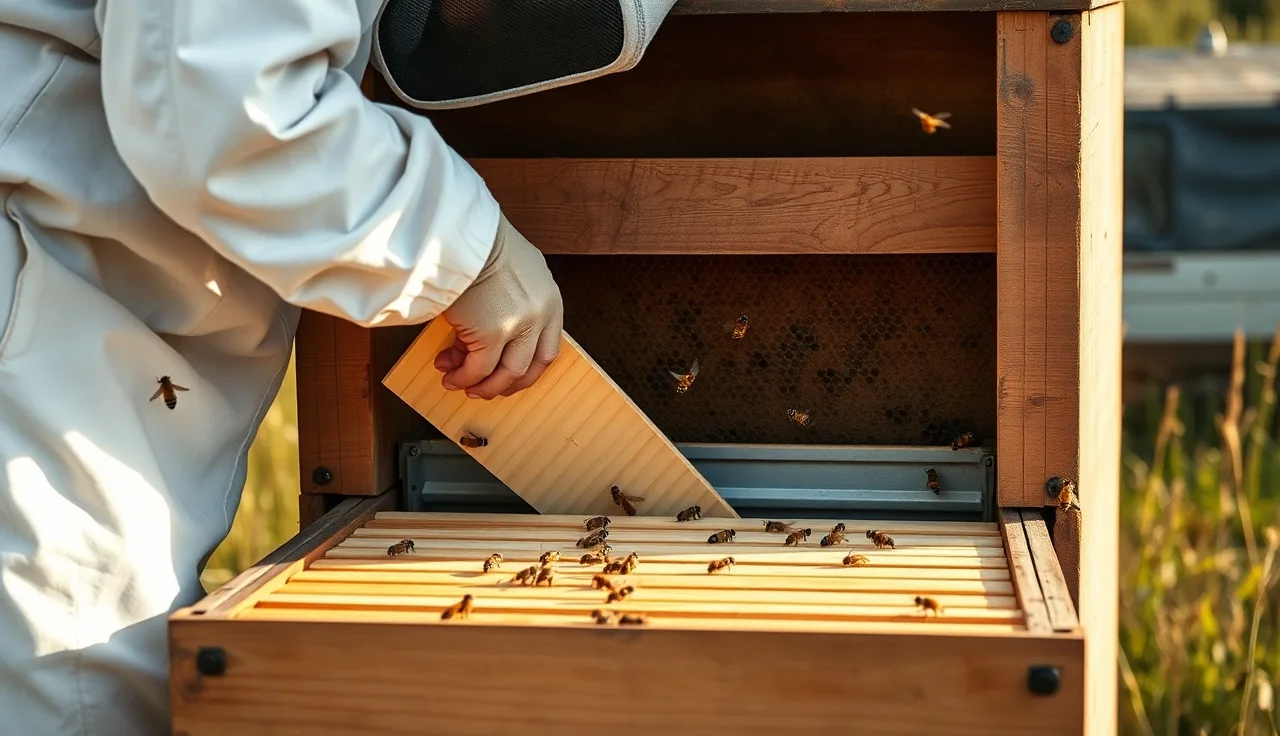
The strips lie on the top bars of the upper brood box, one on each side of the frames. Hive airflow carries the formic vapor down through the brood nest. You mix nothing. You heat nothing. You vaporize nothing. Open the package, set the strips, close the hive, come back in seven days, pull them out.
Is MAQS approved for use with honey supers on?
Yes. This is the single biggest practical edge MAQS holds over most other treatments. The EPA label allows MAQS while honey supers meant for human food are on the hive. [1] You don't pull supers to treat. For sideliners and production folks running through a flow, that one line on the label saves hours of lifting and cuts the robbing risk that comes with stacking full supers off to the side.
Formic acid vapor does drift into the supers a little. But because the acid is already a natural part of honey and is exempt from tolerance requirements under FIFRA, the honey stays fine for sale. [2]
One honest caveat. Some beekeepers taste a faint formic tang in honey extracted right after a MAQS run, especially if the week ran hot. If you sell at a farmers market, wait one to two weeks after pulling strips before you extract capped honey from supers that were on during treatment. That's my practice, not a label rule, but you should know it exists.
What temperature range does MAQS require?
The label wants daytime highs between 50 and 92 degrees F (10 to 33 C) across the full seven days. [1] This matters more than most beekeepers think.
Below 50, formic acid barely volatilizes. The vapor never climbs high enough to push through capped cells. You'll knock down some phoretic mites and miss every mite under the cappings, which throws away the whole reason you reached for MAQS instead of oxalic acid.
Above 92 is the more common summer trap. Heat makes the strips off-gas too fast. The vapor spikes to a level that kills queens, drives bees to beard on the front of the hive, and in bad cases piles up dead adult bees. If a heat wave rolls in after you've placed strips, open the upper entrance if you run one, or prop the outer cover a crack for more airflow. Some beekeepers pull the strips after five days when temps have sat above 85, trading a little efficacy for queen safety.
The University of Minnesota Bee Lab tells beekeepers to check a 10-day forecast before placing MAQS and skip treatment if any day is set to top 90 degrees F. [3] That's the right habit. Aim for late summer (usually August) or early fall across most of North America, when the highs are steady but not brutal.
How effective is MAQS at reducing varroa loads?
Efficacy swings a lot across studies, and I'd rather be straight about the range than quote you the prettiest number.
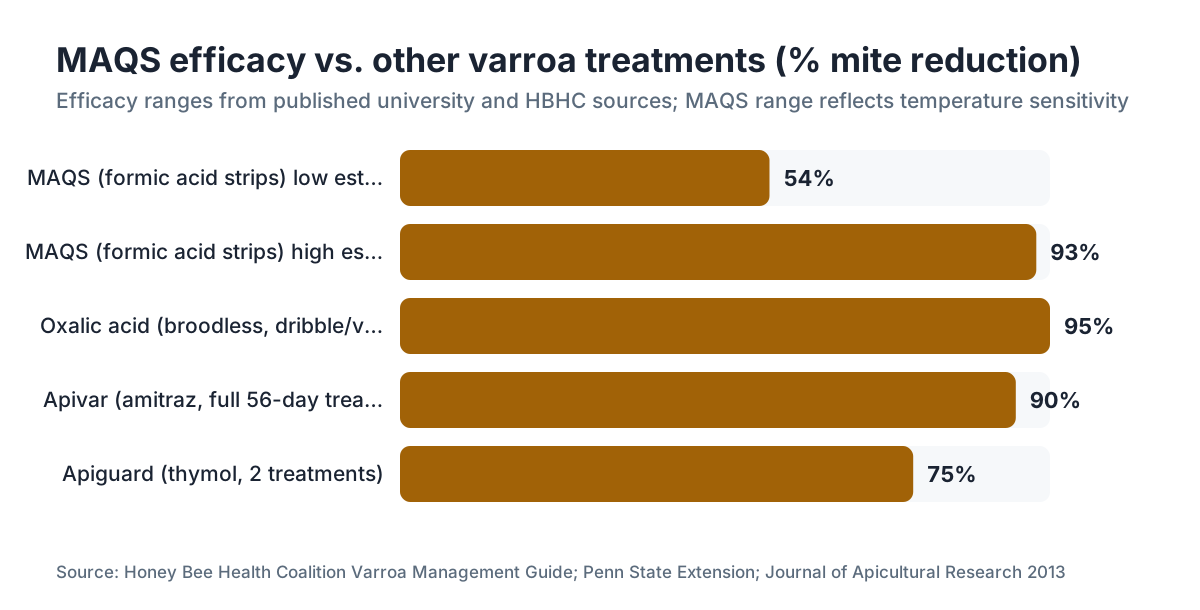
A Penn State Extension trial reported mite reduction from 54% to 93% depending on colony size and temperature during treatment. Small colonies and hot weeks landed at the low end. [4]
A 2013 study in the Journal of Apicultural Research found mean efficacy near 90% under controlled temperatures, and the authors wrote that "treatment efficacy was strongly correlated with ambient temperature during the 7-day exposure period." [5]
The Honey Bee Health Coalition's Varroa Management Guide lists MAQS as a brood-penetrating treatment and recommends it as a top summer option, mostly because of the honey super exemption, while noting efficacy can trail oxalic acid in a broodless colony. [6]
Here's what that means at the hive. If your wash reads 2 mites per 100 bees in July, a clean MAQS run should drop you under 1 per 100. If it takes you from 4 down to 2, plan a follow-up with oxalic acid in late fall once brood rearing slows. Wash or run a sticky board three to four weeks after treatment to see where you actually landed. Start with the varroa mite biology and monitoring basics if wash counts are new to you.
What are the risks of MAQS, including queen loss?
Queen loss is the real risk, and you should walk in expecting it as a possibility. Studies and beekeeper surveys put the rate somewhere between 5% and 15% under normal use. A 2014 field trial reported through the American Bee Journal found queen events (supersedure or confirmed loss) in roughly 10% of treated colonies. [7] The label admits the risk and treats it as a fair price for the mite kill.
What pushes queen loss up: temperatures above 85 during treatment, a small cluster (fewer than six frames of bees), a freshly mated or newly laying queen, and dead-still ventilation. Treating a nuc or a colony that limped out of winter? Wait until it builds, or reach for oxalic acid instead.
Extra bee mortality shows up in the first 24 to 48 hours. You'll see more dead bees than usual on the landing board and bottom board. It usually passes. If the whole colony beards out and refuses to go back inside after 48 hours, pull a strip or both and switch approaches.
Brood disruption is normal. Some eggs and young larvae die in the first few days, and the nest looks rough mid-treatment. It cleans up within two weeks of pulling strips.
The short version: heat is the biggest threat. Manage that and you've managed most of the risk.
How do you apply MAQS correctly, step by step?
- Check the forecast. You need seven straight days with highs between 50 and 92 degrees F. No fudging.
- Wear gloves and eye protection. Formic acid is corrosive. The strips come pre-loaded, so you're not pouring liquid acid, but the vapor off a freshly opened pack stings.
- Open the outer plastic packaging and leave the inner paper wrapper on the strip. That paper is part of the release system. Do not peel it off.
- Lay one strip on each side of the brood nest, flat across the top bars of the upper brood box. Center them over the cluster.
- Give it ventilation. The bottom board should be open or screened. Running solid bottoms? Prop the front of the outer cover 1 to 2 centimeters so vapor can vent. This keeps a lethal cloud from building near the cluster.
- Close up. Don't open for inspection during the seven days. Cracking the lid disrupts the vapor gradient.
- Come back on day 7. Pull the strips and toss them. Used strips go in household trash; the label doesn't classify them as hazardous waste. Don't compost them.
- Wash for mites three to four weeks later. If you're still at or above 2 mites per 100 bees, line up a follow-up.
Running a whole yard? Log treatment dates and post-treatment wash counts somewhere you'll actually check, so you know which colonies need a second round and which are done.
How does MAQS compare to other varroa treatments?
Here's a straight comparison of the main options on the things a working beekeeper actually cares about.
| Treatment | Brood penetration | Supers on? | Temperature window | Queen risk | Cost per hive (approx.) |
|---|---|---|---|---|---|
| MAQS (formic acid strips) | Yes | Yes | 50 to 92 F | Moderate (5 to 15%) | $9 to $14 [8] |
| Oxalic acid dribble | No | No | above 40 F | Very low | $1 to $2 [8] |
| Oxalic acid vaporization | Phoretic only | No | above 40 F | Very low | $1 to $2 [8] |
| Apivar (amitraz strips) | No | No | 50 to 85 F | Very low | $5 to $8 [8] |
| Apiguard (thymol) | No | No | 59 to 105 F | Very low | $4 to $7 [8] |
| ApiLifeVar (thymol blend) | No | No | 59 to 95 F | Very low | $4 to $6 [8] |
The brood penetration column decides summer. If your hive has a laying queen and active brood (most hives, April through August), any treatment that skips capped brood leaves the breeding majority of the mite population sitting untouched. A colony at peak summer can hold 70 to 80% of its mites inside capped cells. [6] Treating only phoretic mites in that situation is bailing a tub with the tap wide open.
MAQS costs more per round than oxalic acid. It's the right tool when brood is present and you can't or won't pull supers. Apivar reaches brood-stage mites too (through contact on nurse bees that touch the wax), over a longer window, but it runs 56 days, can't go on with supers, and carries resistance worries in some regions. [9]
For a beekeeper running through a July flow who checks mites in late June and sees the count climbing, MAQS is usually the cleanest answer.
When in the season should you use MAQS?
Late July through September is the sweet spot across most of North America. Here's why the timing carries so much weight.
The summer-to-fall handoff is the most consequential stretch of the whole varroa year. The bees raised in August and September are the long-lived winter bees that carry the colony to spring. High mite loads during that window mean those winter bees get parasitized as pupae, emerge with cut-short lifespans and weakened immune systems, and the colony walks into winter already hurt. Treat in late July or August, while temps still sit in MAQS range but before the winter bee cohort exists, and you protect those bees before they're even laid.
The Honey Bee Health Coalition's Varroa Management Guide calls the August treatment the single highest-leverage move of the year, and that's right. [6]
Spring MAQS treatments are doable but touchy. April and May temperatures bounce around, and a cold snap mid-treatment wrecks efficacy. If spring mite counts run high, oxalic acid dribble on a broodless swarm, package, or split is usually cleaner. Save MAQS for capped brood, warm steady weather, and ideally supers you can't pull.
Don't treat in winter. There's no point, and most climates won't hold the temperature range anyway.
Can you use MAQS in a nucleus colony or small hive?
The label wants at least five frames of bees (both sides covered) before you treat. Small colonies run a much higher risk of queen loss and adult die-off, because the formic acid concentration per bee climbs when the cluster mass is low. [1]
For a five-frame nuc, if you decide to treat, use one strip instead of two and keep ventilation cranked up. Single-strip dosing is technically off-label but gets discussed in extension circles as harm reduction for smaller colonies. Nobody has solid controlled-trial numbers on it. The closest useful guidance comes from the University of Guelph research group, who developed MAQS and have published on concentration thresholds. [10]
For nucs under five frames, oxalic acid dribble is the better call. Lower risk for small clusters, and it still clears phoretic mites well. Just plan a follow-up once the colony is big enough to take a brood-penetrating treatment.
Same logic rules out MAQS on freshly installed packages. Wait until they've drawn comb, settled a laying queen, and grown to five frames of coverage. Figure four to six weeks post-installation before MAQS is on the table.
Does MAQS cause resistance in varroa mites?
No confirmed formic acid resistance exists in varroa, and the mechanism makes resistance unlikely to develop. Formic acid is a simple organic molecule that kills mites through direct cell toxicity, not by hitting one specific receptor or enzyme. Beating that kind of broad chemical attack takes a whole different biological pathway than beating a synthetic acaricide like amitraz (Apivar) or fluvalinate (Apistan). [6]
Amitraz resistance is documented in varroa populations across the U.S. and Europe, and fluvalinate resistance has been around in some populations for decades. [9] Formic acid and oxalic acid, both organic acids, don't carry that history. That's one reason the Honey Bee Health Coalition tells beekeepers to rotate between organic acids and synthetics rather than lean on one mode of action year after year. [6]
The practical upshot: you can reach for MAQS season after season without worrying you're breeding resistant mites. That's a real advantage, especially if you want to stay off synthetics entirely.
Where can you buy MAQS and what does it cost?
MAQS sells through beekeeping supply retailers across the U.S. and Canada. Most of the big suppliers carry it. A two-strip pack (one full colony treatment) runs about $9 to $14 retail. Case packs of 10 treatments run $70 to $110, which pulls the per-treatment cost down to $7 to $11. Prices move with region and shipping. [8]
The purchase rules changed under FDA reclassification of some apiary drugs. Check with your supplier whether they need any documentation on file before shipping, since requirements shift by state. In practice, many states handle formic acid paperwork through a simple online form with the state apiary program, not a full veterinary visit. Your state department of agriculture apiculture program can tell you exactly what applies where you are.
Canada doesn't require a prescription for MAQS, and Canadian prices tend to run slightly lower.
For sourcing gear and treatments, a comparison of beekeeping supply companies can help you find the best price and shipping in your region.
What safety precautions do you need when handling MAQS?
Formic acid is corrosive to skin, eyes, and airways. At the concentration in MAQS strips the risk is real but manageable with basic protective gear.
Wear chemical-resistant gloves, not the standard latex or nitrile beekeeping ones. The label calls for gloves rated for chemical contact. Safety glasses or a face shield are required too. [1] Treating a bunch of hives in one session? Consider a half-face respirator with an organic vapor cartridge. Vapor from opening pack after pack in a still, hot yard can leave your throat raw and set off a cough.
Don't store unused strips in your truck on hot days. Heat drives off-gassing even inside sealed packaging. Keep strips at room temperature, away from heat, in the original sealed pack until you use them.
First aid: formic acid on skin gets flushed with lots of water for 15 minutes. In the eyes, flush right away and get medical help. The MAQS safety data sheet comes from NOD Apiary Products, and it should ride in your truck if you treat commercially. [1]
Keep kids and pets out of the apiary during strip placement and removal.
Frequently asked questions
Can I leave honey supers on during MAQS treatment?
Yes. The EPA label for MAQS allows application when honey supers meant for human food are on the hive. Formic acid already occurs naturally in honey and is exempt from tolerance requirements under FIFRA, so no withholding period applies. Some beekeepers still wait one to two weeks after pulling strips before extracting honey from supers that were on during treatment, to avoid any trace taste. That's optional, not a label rule.
How many MAQS strips do I use per hive?
Two strips per colony for a full-strength hive of five or more frames of bees. Lay one strip on each side of the brood nest, flat across the top bars in the upper brood box. For smaller colonies or nucs, some extension literature suggests one strip, though that's technically off-label. Colonies covering fewer than five frames are better treated with oxalic acid.
How long do MAQS strips stay in the hive?
Seven days, then pull them. Don't open the hive for inspections during that window. The slow-release polymer is built to deliver effective formic acid concentration over exactly seven days. Leaving strips in longer won't improve the kill and only adds stress on the bees and the queen.
What happens if temperatures go above 92 F during my MAQS treatment?
The strips off-gas too fast at high heat, spiking vapor concentration to levels that cause queen loss, adult bee die-off, and heavy bearding. If a heat wave hits mid-treatment, add ventilation by propping the outer cover a crack. Some beekeepers pull strips after day 5 when heat stays above 85 degrees F, accepting reduced efficacy. Always check a 10-day forecast before you place strips.
Will MAQS kill my queen?
It can. Field trials put queen loss around 5 to 15% of treated colonies, higher when temperatures run hot or the colony is small. Risk factors include temperatures above 85 during treatment, a young or recently mated queen, poor ventilation, and a small cluster. If you lose a queen after treatment, let the colony raise an emergency queen or add a mated replacement before the fall brood cycle ends.
How do I know if MAQS actually worked?
Run a mite wash or alcohol wash on about 300 bees (a half-cup sample) three to four weeks after removing the strips. Below 2 mites per 100 bees means the treatment worked acceptably. At or above 2 per 100, plan a follow-up. A sticky board during the seven days shows a mite drop, but that number alone won't tell you your final load.
Can varroa mites develop resistance to MAQS?
No formic acid resistance has been documented in varroa. The mechanism, direct cellular toxicity from an organic acid, makes resistance biologically hard to develop, unlike resistance to synthetic acaricides such as amitraz or fluvalinate. Formic acid and oxalic acid are currently the safest long-term rotation options from a resistance standpoint.
Do I need a prescription or documentation to buy MAQS?
In the United States, purchase rules shifted under FDA reclassification of some apiary treatments, and requirements vary by state. Many states handle it through a simple online form with the state apiculture program rather than a full veterinary consultation. Canada does not require a prescription for MAQS. Check with your supplier and your state department of agriculture for what applies to you right now.
Can I use MAQS in winter?
No. The minimum is 50 degrees F daytime, and the treatment needs seven straight days in the 50 to 92 range. In most temperate climates that doesn't happen from late October through March. Use oxalic acid dribble or vaporization for winter mite treatments on reduced or broodless colonies instead.
Is MAQS safe for the bees, wax, and honey?
Formic acid leaves no synthetic residue in wax or honey. It's already present in honey naturally and is exempt from tolerance requirements under FIFRA, so no withholding period applies to honey. Wax cappings absorb formic acid briefly during treatment and return to background levels afterward. The bees do take some mortality and brood loss during treatment, which is the known tradeoff.
What is the difference between MAQS and Formic Pro?
Formic Pro is the newer product from NOD Apiary Products, with a slightly different polymer and a label allowing either a 14-day two-strip treatment or a shorter single-strip option. MAQS remains the primary product name in the U.S. market. Both use formic acid and carry similar temperature requirements, efficacy, and risks. Check the label on whichever one you buy, since the two differ in their exact dosing options.
Should I remove the paper wrapper from MAQS strips before placing them?
No. The inner paper wrapper is part of the release system and stays on the strip when it goes in the hive. Remove only the outer plastic packaging. An unwrapped strip volatilizes the formic acid too fast, creating concentrations dangerous to bees and queens with no benefit over the intended release rate.
How does MAQS affect brood, and should I worry about the brood pattern during treatment?
Expect brood disruption. Formic acid vapor kills some eggs and young larvae in the first few days, so the nest looks uneven and spotty mid-treatment. That's a normal side effect, not a failing queen or disease. The pattern normalizes within two weeks of pulling strips as the queen resumes laying and the bees clean out affected cells.
Sources
- EPA, MAQS Pesticide Product Label (Reg. No. 84676-3), NOD Apiary Products: MAQS is registered under EPA Reg. No. 84676-3, approved for use with honey supers present, requires ambient temperatures of 50 to 92 F, and mandates chemical-resistant gloves and eye protection during application.
- EPA, Pesticide Tolerances section: Formic acid is exempt from tolerance requirements under FIFRA, meaning no residue tolerance is needed for honey, resulting in a zero-day pre-harvest interval.
- University of Minnesota Bee Lab, Varroa management guidance: The University of Minnesota Bee Lab recommends checking a 10-day forecast before placing MAQS and avoiding treatment when any day in the window is forecast above 90 F.
- Penn State Extension, Varroa mite management resources: A Penn State Extension trial reported MAQS efficacy ranging from 54% to 93% mite reduction depending on colony size and ambient temperature during treatment.
- Journal of Apicultural Research, formic acid efficacy study, 2013: A 2013 study found mean MAQS efficacy near 90% under controlled temperature conditions, noting that 'treatment efficacy was strongly correlated with ambient temperature during the 7-day exposure period.'
- Honey Bee Health Coalition, Varroa Management Guide: The HBHC Varroa Management Guide identifies MAQS as a brood-penetrating summer treatment option, notes 70 to 80% of mites can be inside capped cells during peak brood season, recommends August treatment as the highest-leverage intervention of the year, and advises rotating organic acids with synthetic treatments.
- American Bee Journal, MAQS field trial queen loss report, 2014: A 2014 field trial reported queen loss or supersedure events in roughly 10% of colonies treated with MAQS under normal use conditions.
- Beekeeping supply retailer price survey, multiple U.S. suppliers, 2024: MAQS retails for about $9 to $14 per two-strip pack (one colony treatment); case packs of 10 run $70 to $110. Oxalic acid dribble costs about $1 to $2 per hive; Apivar about $5 to $8 per hive; thymol-based treatments about $4 to $7 per hive.
- USDA Agricultural Research Service, Bee Research Laboratory: Amitraz resistance is documented in varroa populations in the U.S. and Europe, and fluvalinate resistance has persisted in some populations for decades.
- University of Guelph, Honey Bee Research Centre: The University of Guelph team that developed MAQS has published on formic acid concentration thresholds relevant to small colony dosing, providing the closest available guidance on reduced-strip use in nucleus colonies.
- FDA, Animal and Veterinary program: FDA reclassification of certain apiary treatments changed how some varroa products are purchased commercially in the U.S., with requirements that vary by state.
Last updated 2026-07-09