Amitraz varroa mite treatment: how it works and when to use it
TL;DR
- Amitraz is the active ingredient in Apivar strips, the most widely used varroa treatment in the US.
- Two strips per brood box for 6 to 8 weeks delivers 93 to 99 percent mite knockdown in field trials.
- It works with brood present, unlike an oxalic acid dribble.
- Resistance is real, so rotate your treatments.
What is amitraz and how does it kill varroa mites?
Amitraz is a formamidine acaricide. It binds to octopamine receptors in varroa's nervous system, the insect version of vertebrate adrenergic receptors. The mite loses motor control and drops off the bee or brood cell before it can reproduce. Death follows within hours to a couple of days of contact.
Bees have far fewer octopamine receptors than mites, and that gap is the selectivity the product depends on. Amitraz still has measurable sublethal effects on honey bees at high temperatures or when strips sit too long, so the 6 to 8 week window on the label is not arbitrary. [1]
In the United States, amitraz is registered for honey bees only as Apivar strips (Veto-Pharma). You cannot legally use technical-grade amitraz or cattle pour-on products in a managed hive. The EPA registration number for Apivar is 86580-1. [2] That registration is the legal boundary. Full stop.
Each polymer strip holds 800 mg of amitraz and releases it slowly through contact with bees. The bees walk over it, groom each other, and carry the dose through the colony. Mites riding on nurse bees and hidden in capped brood cells pick up lethal or sublethal amounts across the full treatment window.
How effective is amitraz (Apivar) against varroa in real colonies?
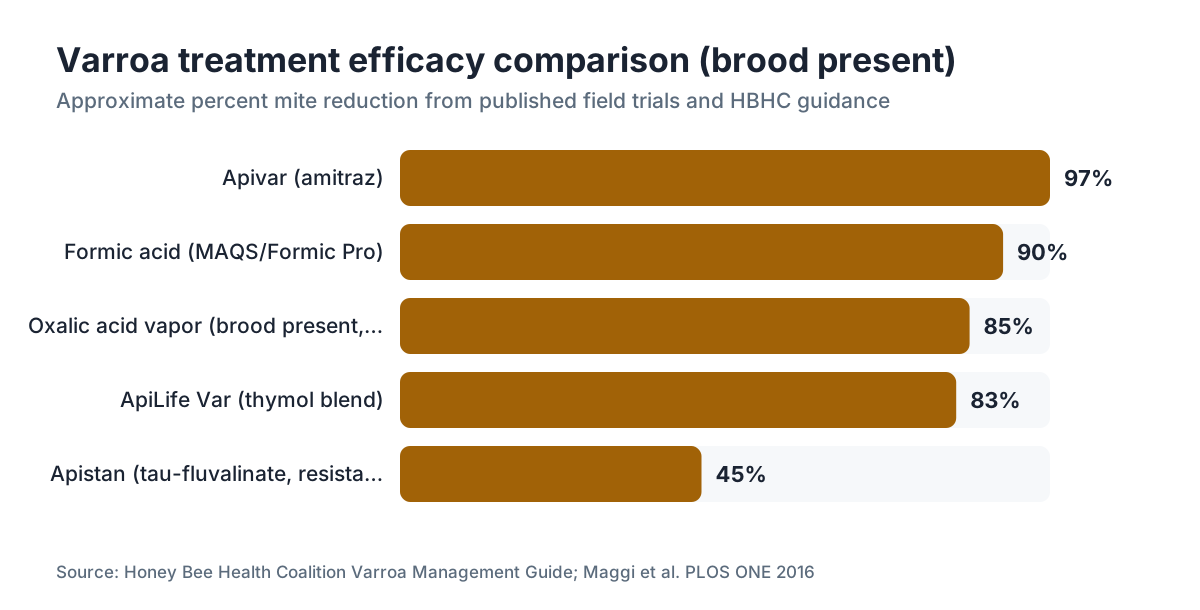
Very effective against susceptible mites, and the numbers hold up across studies. A 2016 field trial in PLOS ONE found Apivar delivered 99% mite reduction in colonies with no prior amitraz history. [3] Apiaries under some resistance pressure usually show 93 to 97 percent knockdown, still enough to pull a colony back from the edge if you catch it early.
Efficacy numbers shift with study design and whether the local mites carry resistance. The Honey Bee Health Coalition's Varroa management guide puts Apivar in its highest efficacy tier for colonies with brood present, and calls it one of only two soft-chemical options that work during active brood rearing. [4] The other is oxalic acid by vapor on a repeated schedule, which costs you more trips to the yard.
Apistan is the cautionary tale. It uses tau-fluvalinate, a pyrethroid, and varroa resistance to it is everywhere in North America. Plenty of beekeepers have Apistan strips on a shelf that now kill almost nothing, because their local mites became resistant back in the late 1990s and early 2000s. Amitraz resistance exists too, but it's far less common in the US as of current monitoring. That gap closes fast if everyone reaches for Apivar every single cycle, which is exactly why rotation is the professional consensus. [4]
| Treatment | Active ingredient | Efficacy (brood present) | Resistance status in US |
|---|---|---|---|
| Apivar | Amitraz | 93-99% | Emerging, localized [3][4] |
| Apistan | Tau-fluvalinate | <50% typical | Widespread [4] |
| Mite-Away Quick Strips | Formic acid | 85-95% | None (organic acid) |
| Oxalic acid (vapor) | Oxalic acid | 90-99% broodless, lower with brood | None (organic acid) |
| ApiLife Var | Thymol blend | 74-93% | None (natural compound) |
What does Apivar cost and where do you buy it?
A 10-strip pack of Apivar, enough to treat five hives once, runs roughly $30 to $40 at US beekeeping vendors as of 2024. A 50-strip pack costs about $100 to $130, which drops the per-hive price to $4 to $6 per treatment. Prices move with the season and with import tariffs, so check before you budget.
You can buy Apivar from larger beekeeping supply companies and many farm and feed stores that carry a beekeeping section. Online vendors sometimes beat those prices on bulk packs, and some state beekeeping associations run cooperative buys.
No prescription needed. Apivar is an over-the-counter product, registered with the EPA and legal for hobbyist use. That's a real difference from some veterinary drug situations beekeepers hit with other treatments.
Store strips in a cool, dry spot below 25°C (77°F). Heat degrades amitraz faster than you'd guess. Leave a pack in a hot car or a baking shed through July and you shorten its working life. Shelf life is two years from the manufacture date when stored right. [2]
How do you apply Apivar strips correctly?
The label calls for two strips per brood box, placed between the two most heavily populated brood frames, one strip per side of the brood nest. A two-box brood nest takes four strips total. The strips hang between the frames, and bees walk over them again and again through the treatment window. [2]
Leave them in no fewer than 6 weeks and no more than 8. Under 6 weeks and you miss mites still cycling out of capped brood. Past 8 weeks you raise the odds of trace amitraz building up in wax, and you pile on selection pressure for resistance with nothing to show for it. That window is on the label for real reasons.
Wear nitrile gloves when you handle the strips. Amitraz absorbs through skin and acts as a monoamine oxidase inhibitor in humans. Repeated bare-handed contact is not harmless. Wash your hands afterward.
Timing through the season matters as much as technique. Most extension programs point to two treatment windows a year: late summer (August across most of the US, after the main nectar flow and before fall buildup) and a spring treatment if mite counts run above threshold. [5] Never treat during a honey flow you plan to harvest. The label requires 14 days between strip removal and honey super placement, though most beekeepers pull supers before treating and hold off on returning them until treatment ends.
After you pull the strips, don't toss them in a trash can sitting in the hive yard. Leftover amitraz on used strips still affects mites and bees. Seal them in a plastic bag and dispose per your local rules. Some places treat them as household hazardous waste.
When is amitraz the right treatment choice versus other options?
The clearest case for Apivar is a colony that's actively rearing brood with a mite count above the action threshold, roughly 2 percent on an alcohol wash (2 or more mites per 100 bees). [4] An oxalic acid dribble only works on broodless colonies, because it can't reach inside capped cells. Oxalic vapor repeated across a brood cycle can get through, but it takes weekly or biweekly trips over 6 weeks. Apivar just hangs in the hive and does the work over 6 to 8 weeks with no repeat visits.
Formic acid (MAQS or Formic Pro) does penetrate capped brood and makes a good rotational partner for amitraz. It has a hard ceiling around 29°C (85°F), because heat-driven volatilization can kill queens and cook brood. In warm climates, late summer treatments often can't use formic acid safely at exactly the moment mite loads peak. [11]
Thymol products (ApiLife Var, Apiguard) are slow, need temperatures above 15°C and below about 30°C, and run 6 to 8 weeks with multiple applications. They work. They're fussy.
Amitraz sits in a practical sweet spot: effective across a wide temperature range, single placement, proven with brood present. The trade-offs are resistance risk from overuse and the fact that it's a synthetic chemical, not an organic acid or essential oil, which matters to some certification programs. Certified organic honey production does not allow amitraz. [6]
For a beekeeper fighting varroa mite pressure across several hives, Apivar in late summer followed by oxalic acid on a broodless winter cluster is the most widely recommended two-treatment rotation in North America. That's more than my opinion. It's the Honey Bee Health Coalition's primary protocol recommendation. [4]
What is amitraz resistance in varroa mites and how worried should you be?
Amitraz resistance in varroa is real. Researchers documented it in the US as early as 2015 in some commercial operations, and isolated reports have surfaced from hobbyist apiaries since. Resistance shows up when a mutation in the varroa octopamine receptor weakens amitraz binding. Mites carrying that mutation survive treatment and pass the trait to their offspring.
The mechanism differs from the metabolic resistance that wrecked tau-fluvalinate (Apistan). Apistan resistance spread fast once it appeared, because broad adoption in the 1990s selected for it hard. The Apivar situation is less dire, but the trend line points the same way if rotation habits don't improve. [3][4]
Signs of resistance in your yard: mite counts barely drop after a full 6 to 8 week Apivar course, or they bounce back unusually fast once treatment ends. If you run alcohol washes before and after and see less than 90 percent reduction, take it seriously. It might be sloppy application or reinfestation from nearby colonies. It might also be resistance.
The fix is rotation. Alternate amitraz with an organic acid or a thymol treatment each cycle. Oxalic acid in winter on a broodless cluster. Formic acid in spring if the temperatures cooperate. Back to amitraz in late summer if you need it. That approach slows resistance by cutting the number of consecutive mite generations exposed to the same mode of action.
Nobody has a clean figure for current US resistance prevalence across hobbyist apiaries. Commercial sampling suggests it's still well under 10 percent of varroa populations, but that data is patchy and self-reported. The closest published numbers come from Veto-Pharma's own monitoring program and university sentinel apiaries, and they show mostly susceptible mites with local exceptions. [3]
Can you use amitraz during honey production or while supers are on?
No. The Apivar label flatly prohibits use while honey supers are on the hive or a honey flow is running. [2] The 14-day pre-placement interval on the label is a minimum. Treat it as a hard floor, not a target.
Amitraz can build up in beeswax. A 2010 study found amitraz and its metabolite DMPF (2,4-dimethylformanilide) in beeswax at detectable levels after repeated treatments. [7] The worry isn't acute toxicity to honey eaters at typical exposure. It's residue piling up in foundation wax that gets recycled into new comb, which is a slow-burn hive health problem.
The practical protocol for most hobbyists: pull supers, harvest, then treat. Don't rush supers back on the moment treatment ends. That 14-day minimum runs from strip removal, not strip placement.
Residues in the honey itself stay extremely low when you follow the label. The European Union maximum residue limit for amitraz in honey is 200 micrograms per kilogram. [8] US rules under EPA registration restrict use to non-honey-production periods. Follow the label and you're compliant with both.
How does amitraz affect queen bees and brood health?
At label-compliant doses and durations, Apivar shows a low rate of queen loss or brood damage in published trials. Even so, some beekeepers report queens going off-lay or getting superseded during treatment, and the literature documents sublethal effects on queen reproduction at elevated amitraz concentrations. [1]
The risk isn't zero, and it climbs with temperature. Amitraz volatilizes faster in a hot hive. A strong colony throwing off a lot of internal heat, plus outdoor temperatures above 30°C, can push the in-hive amitraz concentration higher than intended. Most reported queen loss stories in beekeeper forums cluster around late-summer treatments during heat waves, though those accounts are anecdotal.
To cut queen risk: skip treatment when daytime temperatures stay above 35°C (95°F), never use more strips than the label says, and open the hive at 2 to 3 weeks to confirm the queen is still laying normally.
Drone brood looks more amitraz-sensitive than worker brood in some lab studies, but field evidence of real drone quality loss at label rates is thin. This is an area where the data are weaker than you'd like. The closest study found some sperm quality effects at concentrations above field-realistic levels [1], which is reassuring but not a clean bill of health.
Should you use Apivar in combination with other varroa treatments?
Running amitraz alongside another treatment at the same time is generally not recommended, and in some cases the label bars it. Pairing it with oxalic acid strips is an area of active research, but the current guidance is to use treatments in sequence, not at once. [4]
Hitting resistance from two angles at the same time sounds smart. The data on safety, residue interactions, and actual resistance-management benefit in honey bee colonies isn't mature enough to call it a best practice. University extension programs generally don't recommend combination treatments outside specific protocols still under study.
What does make sense: build your calendar so amitraz and an organic acid cover different seasonal windows in the same year. Late summer Apivar. Winter oxalic acid dribble or vapor on a broodless cluster. That sequence covers the full mite life cycle across the seasons with no simultaneous exposure to two products.
If you're running even five or ten hives, a monitoring and scheduling tool earns its keep. VarroaVault's free protocol builder is one option for mapping treatment windows across a season, though any calendar system that forces you to log mite counts before and after treatment does the same job.
What are the safety precautions for handling Apivar strips?
Amitraz is a monoamine oxidase inhibitor (MAOI) in mammals, humans included. [9] It interferes with the enzymes that break down neurotransmitters, and at enough exposure it can cause dizziness, bradycardia, hypotension, and sedation. The concentration in Apivar strips is low enough that brief skin contact during one application isn't an emergency, but bare-handed handling all season long is a different math problem.
Wear nitrile or latex gloves every single time. Keep strips away from open flame or a heat source, because amitraz is flammable. Wash your hands and any exposed skin after you pull the gloves off.
Keep Apivar away from children and pets. Dogs have been poisoned by amitraz in other product forms (tick collars), and honey bees aren't the only animals in your risk picture.
If someone swallows a strip or gets significant skin exposure, the National Pesticide Information Center (NPIC) hotline at 1-800-858-7378 gives pesticide guidance, and Poison Control at 1-800-222-1222 handles human exposure calls. [9]
Dispose of used strips like any pesticide-contaminated material. Don't leave them in the hive yard, don't burn them, and don't compost them.
How do you measure whether the amitraz treatment actually worked?
The alcohol wash is the gold standard for checking whether treatment worked. Take a 100-bee sample from the brood nest (nurses off a brood frame, not foragers at the entrance) before treatment starts, then again 2 to 4 weeks after you pull the strips. Count mites per 100 bees. A win drops the infestation below 1 to 2 percent. [10]
A sticky board under a screened bottom board gives you a rough daily mite drop. Easier to check daily, harder to turn into an infestation percentage. A spike in mite drop during the first week of treatment, then a decline, tells you the product is working. No spike at all could mean the colony started with very few mites, or that something's wrong with the treatment.
The Honey Bee Health Coalition's Varroa management guide, free as a PDF, has a decision chart that walks through sampling methods, thresholds, and when to treat. [4] It's the best publicly available reference for this whole workflow, and it costs nothing.
Managing several colonies and want to track counts across a season? The varroa mite tracking tools at VarroaVault help you flag apiaries that aren't responding to treatment, which is the early warning you want for resistance.
For stocking up before treatment season, beekeeping supply companies and free shipping honey bee supply companies are good places to source monitoring gear and strips.
Frequently asked questions
How long do you leave Apivar strips in the hive?
The Apivar label specifies a minimum of 6 weeks and a maximum of 8 weeks. Pull strips before 6 weeks and you risk missing mites still cycling out of capped brood. Leave them past 8 weeks and you gain no extra kill while adding wax residue. Set a calendar reminder the day you put strips in so the date doesn't slip past you.
Can I use Apivar when honey supers are on?
No. The EPA-registered Apivar label prohibits use during honey production or while supers are present. Remove all honey supers before placing strips, and wait at least 14 days after strip removal before adding supers back. Amitraz can accumulate in beeswax and honey if used during an active flow.
How many Apivar strips do I need per hive?
Two strips per brood box. A single-box brood nest takes two strips total. A two-box brood nest takes four. Place each strip between the two most heavily populated brood frames, one per side of the brood nest. Using more strips than the label specifies does not improve kill and raises the risk of queen problems.
What is the difference between Apivar and Apistan?
Apivar uses amitraz, a formamidine acaricide. Apistan uses tau-fluvalinate, a pyrethroid. Both are plastic strips placed in the brood nest. The critical difference is resistance: varroa resistance to tau-fluvalinate (Apistan) is widespread across North America, so Apistan is largely useless in most US apiaries. Amitraz resistance exists but stays far less common as of current monitoring.
Is amitraz safe for honey bees?
At label doses and durations, amitraz in Apivar has a strong safety profile for adult bees. Sublethal effects on queen reproduction and drone sperm quality have shown up in lab studies at concentrations above normal field levels. The main real-world risk is queen loss or laying disruption during long treatment in hot weather. Staying inside the 6 to 8 week window reduces it.
Can varroa mites develop resistance to amitraz?
Yes. Amitraz resistance in varroa has been confirmed in the US, mostly in commercial operations. The mechanism is a mutation that weakens amitraz binding to varroa octopamine receptors. A warning sign is less than 90 percent mite reduction after a full treatment course. Rotating amitraz with organic acid treatments each season is the main way to slow resistance.
When is the best time of year to use Apivar?
Late summer, usually August through early September across most of the US, is the primary window. It falls after the main nectar flow ends and before the colony raises its long-lived winter bees. Treating then protects the overwintering cluster, the one that has to survive until spring. A spring treatment fits if mite counts pass the action threshold before the main flow starts.
Does amitraz treatment require a prescription or veterinarian involvement?
No. Apivar is an EPA-registered over-the-counter product in the United States. No veterinary prescription is needed to buy or use it. It's available straight from beekeeping supply retailers. That's different from some other agricultural pesticide situations and keeps it accessible for hobbyists without any veterinary oversight.
Can amitraz be used in organic beekeeping?
No. Amitraz is a synthetic acaricide and is not permitted in certified organic honey production in the United States or the European Union. Organic producers must use approved substances like oxalic acid, formic acid, or thymol-based treatments. If you sell honey under any organic certification, don't use Apivar.
What happens if I accidentally leave Apivar strips in too long?
Leaving strips past 8 weeks mainly raises the risk of amitraz residue building up in beeswax, and can extend sublethal exposure to queens and brood. It doesn't kill more mites. If you find you've left strips in for 10 to 12 weeks, pull them, watch your queen's laying pattern, and note it in your records. One overage rarely ruins a colony, but it's a habit worth fixing.
How do I know if my Apivar treatment is working?
The most reliable check is an alcohol wash before treatment starts and again 2 to 4 weeks after you pull strips. A win drops infestation below 1 to 2 mites per 100 bees. A screened bottom board sticky board shows a mite drop spike in the first week. No spike despite a high pre-treatment count is a flag for resistance or an application error.
Are there any bees that are naturally resistant to varroa that make amitraz treatment less necessary?
Some honey bee populations, including VSH (Varroa Sensitive Hygiene) selected bees and some Africanized genetics, show higher natural mite resistance through hygienic brood removal. Africanized colonies in particular often hold lower varroa loads without chemical help. Even VSH colonies can pass treatment thresholds under heavy mite pressure, though, and most US hobbyists aren't working with VSH stock consistently enough to skip monitoring.
What is the active ingredient in Apivar and what class of chemical is it?
The active ingredient is amitraz at 3.33% per strip (800 mg per strip). Amitraz belongs to the formamidine class of acaricides and insecticides. It acts as an octopamine receptor agonist in arthropods and a monoamine oxidase inhibitor in mammals, which is why personal protective equipment matters during handling even though the label dose is low.
Sources
- Journal of Apicultural Research (Taylor & Francis), studies on amitraz effects on honey bee reproduction: Sublethal amitraz effects on queen reproduction and drone sperm quality documented at concentrations above normal field levels
- EPA, Pesticide Registration, Apivar (amitraz) EPA Reg. No. 86580-1: Apivar is EPA-registered (No. 86580-1) for use in honey bee colonies; label specifies 2 strips per brood box for 6 to 8 weeks, prohibition on use with honey supers, and 14-day pre-placement interval
- PLOS ONE, Maggi et al. 2016, amitraz efficacy and resistance monitoring: Apivar delivered 99% mite reduction in colonies with no prior amitraz treatment history; amitraz resistance confirmed in some US commercial operations as early as 2015
- Honey Bee Health Coalition, Tools for Varroa Management guide: Apivar placed in highest efficacy tier for colonies with brood present; alcohol wash threshold of approximately 2% for treatment action; late summer plus winter oxalic acid recommended as primary rotation protocol
- Penn State Extension, honey bee and varroa mite resources: Late summer (August in most of the US) identified as primary Apivar treatment window, timed after nectar flow and before winter bee rearing
- USDA Agricultural Marketing Service, National Organic Program: Amitraz is not permitted in certified organic honey production; organic producers must use oxalic acid, formic acid, or thymol-based treatments
- Apidologie, Bogdanov 2010, residues of acaricides in beeswax and honey: Amitraz and its metabolite DMPF detected in beeswax at measurable levels after repeated treatments
- European Commission, EU maximum residue levels for pesticides, Regulation (EC) No 396/2005: EU maximum residue limit for amitraz in honey is 200 micrograms per kilogram
- National Pesticide Information Center (NPIC), Oregon State University and EPA, amitraz information: Amitraz is a monoamine oxidase inhibitor in mammals; exposure can cause dizziness, bradycardia, hypotension, and sedation; NPIC hotline 1-800-858-7378
- University of Minnesota Bee Lab, varroa sampling and management resources: Alcohol wash described as gold standard sampling method; approximately 2 mites per 100 bees recommended action threshold
- University of Florida IFAS Extension (EDIS), integrated pest management for varroa mites: Temperature constraints for formic acid treatments (upper limit approximately 29°C/85°F) cited as practical reason amitraz is preferred for late summer treatment in warm climates
Last updated 2026-07-09