Mixing oxalic acid for bees: ratios, safety, and what actually works
TL;DR
- The EPA-registered dribble solution is 3.2% oxalic acid dihydrate by weight-to-volume: 35 grams of oxalic acid dihydrate dissolved in one liter of 1:1 sugar syrup.
- Vaporization uses the same active ingredient with no mixing.
- Both methods need a respirator and eye protection.
- Dribble works only on broodless colonies.
- Vaporization works anytime but takes multiple treatments when brood is present.
What is oxalic acid and why do beekeepers use it on varroa?
Oxalic acid is a natural organic acid found in rhubarb, spinach, and plenty of other plants. In a hive, it kills varroa mites by direct contact, damaging the mites' protective coating while they ride on adult bees. It does not reach mites inside capped brood. That single fact drives every decision you make about timing and method.
The EPA registered oxalic acid for honey bee colonies in 2013, and the label later grew to cover vaporization alongside the dribble method [1]. Because the acid occurs naturally, it is also allowed in certified-organic operations when you follow the label.
Varroa destructor is the main reason colonies collapse across North America and Europe. Want to understand how the mite breeds and spreads before you get into treatment chemistry? Start with the varroa mite overview.
What is the correct ratio for mixing an oxalic acid dribble solution?
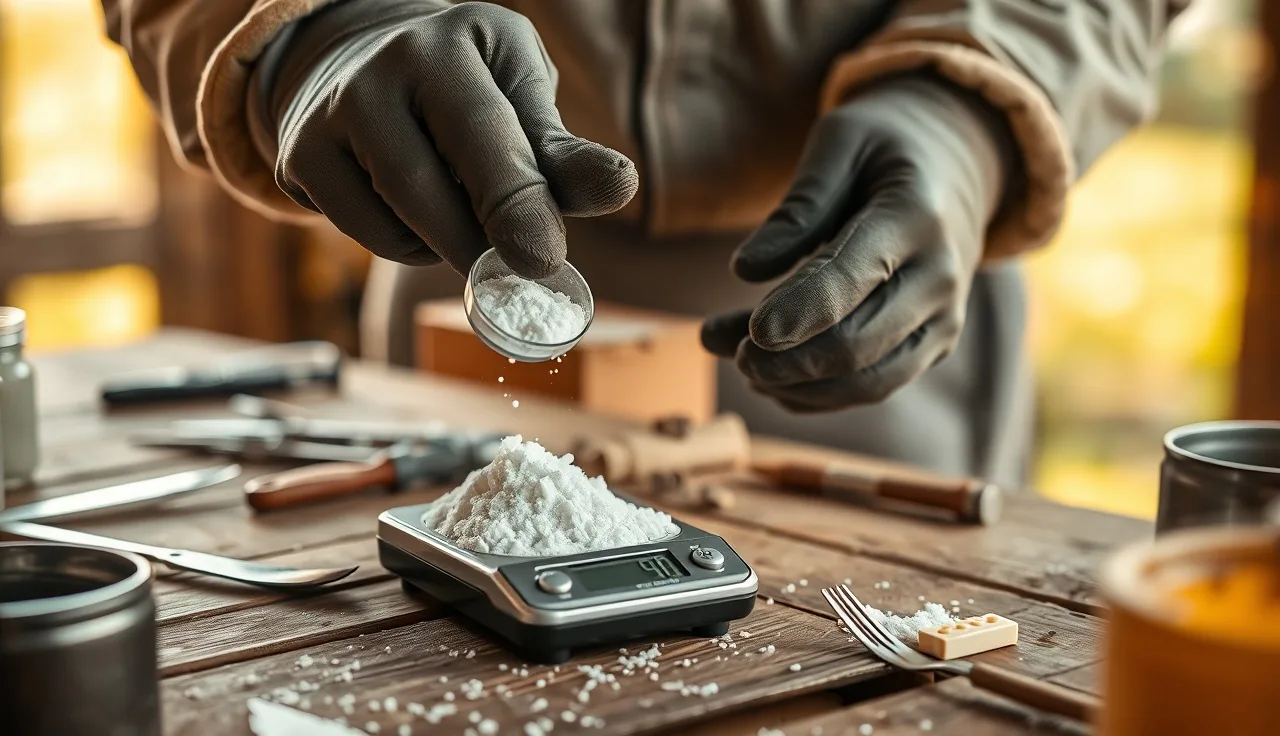
The EPA-registered ratio for the dribble (trickle) method is 3.2% oxalic acid dihydrate by weight-to-volume [1]. Here is what that looks like on your workbench:
| What you need | Amount |
|---|---|
| Oxalic acid dihydrate (Api-Bioxal) | 35 g |
| Warm water | ~500 mL |
| White granulated sugar | 500 g |
| Final volume after mixing | 1 liter |
Dissolve the sugar in warm water first to build a true 1:1 syrup by weight. Then stir in the oxalic acid crystals until the liquid runs clear. Do not heat the solution after the acid goes in. Heated oxalic acid can form small amounts of a compound toxic to bees. The finished solution keeps about two weeks at room temperature, though some extension sources say refrigerate it and use it within a week if your space runs warm [2].
One mistake sinks a lot of first batches: confusing weight-to-volume with weight-to-weight. The 35 g figure is weight of acid per final liter of solution, not per weight of syrup. Scale it straight: 17.5 g per 500 mL, 70 g per 2 liters.
Api-Bioxal is the only oxalic acid product currently registered by the EPA for honey bee colonies in the United States. Generic oxalic acid sold for wood bleaching or rust removal is not labeled for bee use, and using it breaks federal pesticide law [1]. The active ingredient is chemically identical. The label is still the law.
The Honey Bee Health Coalition's Tools for Varroa Management guide says the dribble method works best on broodless or near-broodless colonies, usually in late fall or early winter once the queen has stopped or nearly stopped laying [3].
How much solution do you apply per colony with the dribble method?
The label caps you at 50 mL of solution per colony, spread across the frames of bees. The standard approach is 5 mL per occupied bee space, up to 10 spaces, which lands you at that 50 mL ceiling. Do not go over it. More solution does not kill more mites, and it does raise bee mortality.
You apply directly onto the bees clustered in the gaps between frames, using a syringe or a squeeze bottle with a narrow tip. Move slowly. Cover every occupied inter-frame space. You do not pull frames or inspect brood during treatment.
One treatment per year. The label restricts the dribble method to a single application per colony per year, which is another reason to save it for a broodless stretch when one dose can reach the full mite population sitting on adult bees [1].
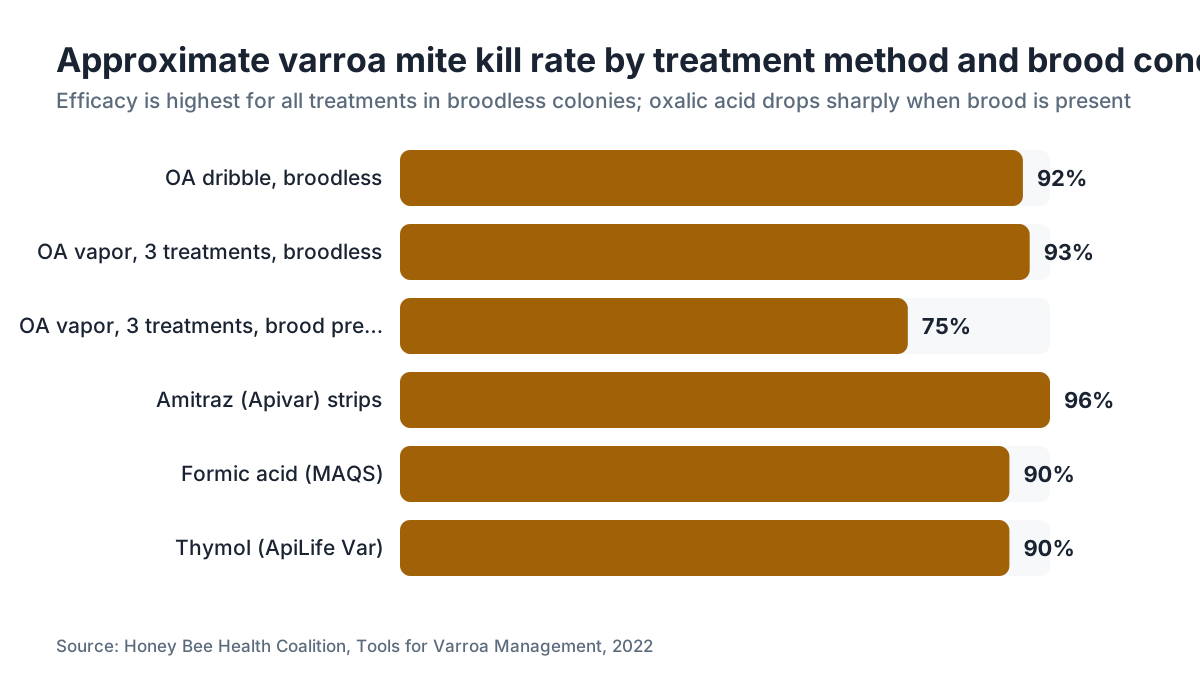
Here is a sentence worth remembering: a University of Florida study reported greater than 90% mite kill in broodless colonies treated by dribble [4]. Add open brood and that number drops hard, because mites hiding in capped cells never get touched.
How does oxalic acid vaporization work, and does it require mixing?
Vaporization skips mixing entirely. You place solid oxalic acid dihydrate crystals into a heated vaporizer pan. The vaporizer heats the crystals to around 315°F (157°C), turning them into a gas that circulates through the hive and settles on bees and comb surfaces, killing mites on contact.
The label allows up to three vaporizer treatments per year. Multiple treatments spaced 7 days apart during brood-rearing beat a single treatment by a wide margin, because the gas cannot reach into capped cells any better than the dribble solution can [1]. The plan is simple: hit newly emerged bees and their fresh mites again and again as caps open.
The dose is 1 gram of Api-Bioxal per brood box. A double-deep hive gets 2 grams total. Seal the hive entrance for at least 10 minutes after treatment.
Vaporization is faster per hive and disrupts brood less than dribbling. The catch is equipment cost. A basic battery-powered vaporizer runs $140 to $200, and propane-powered units cost more. If you run 5 or fewer colonies, a dribble during a natural broodless period is usually the cheaper call.
What safety gear do you actually need when mixing or applying oxalic acid?
Oxalic acid is genuinely dangerous. It burns skin, eyes, and the respiratory tract. The EPA label and OSHA hazard data both call for specific protective gear [1][5].
For mixing the dribble solution:
- Nitrile or rubber gloves (latex tears too easily around acids)
- Chemical splash goggles, not safety glasses
- A half-face respirator with acid-gas/P100 combination cartridges when handling dry crystals, or at minimum an N95 for brief aerosol exposure
- Old clothes or a lab apron
Vaporization raises the stakes because the vapor goes straight to your lungs if you are unprotected. The label requires a NIOSH-approved respirator rated for organic vapors and particulates. A dust mask does not cut it. Stand upwind and keep your face away from the hive entrance during and right after treatment.
Do not mix oxalic acid solutions on windy days outdoors or in an unventilated room. If crystals hit your skin, rinse with lots of water immediately. If they hit your eyes, flush for 15 minutes and get medical help [5].
Store dry Api-Bioxal cool and dry, away from metal containers (the acid reacts with many metals). Keep it away from kids and pets. Neutralize any unused mixed solution with baking soda before disposal. Do not pour it down a drain or into a garden.
When is the best time to apply an oxalic acid treatment?
Timing beats almost everything else with oxalic acid. You want to treat when the largest share of the mite population is riding on adult bees (phoretic mites) instead of hiding inside capped cells.
For the dribble method, aim for a natural broodless window, usually mid-November through mid-January across much of the northern United States, depending on your climate. Your target is a cluster with little or no capped brood. Do not dribble when daytime temperatures sit below 40°F. The solution is cold, the bees cannot rewarm well, and you risk chilling the cluster [2][3].
The vaporizer gives you more room. Three-treatment sequences timed to brood cycles work well in summer once mite counts cross your action threshold (typically 2 to 3 mites per 100 bees on an alcohol wash, per Honey Bee Health Coalition guidance [3]). Plenty of beekeepers run a full autumn vaporization series to knock counts down before the winter cluster forms, then finish with a single dribble once the colony goes broodless.
After any treatment, re-test mite loads with an alcohol wash or sugar roll 24 to 48 hours later, then again 3 to 4 weeks out to confirm it worked. A treatment that fails to pull counts below 1 mite per 100 bees before winter usually means a dead colony by February.
Can you mix oxalic acid with other treatments or ingredients?
Short answer: no, not without reading both product labels very carefully.
Oxalic acid should never share an application with hop compounds, formic acid, or any other miticide. Combination treatments are not approved under the current EPA label, and nobody has good data on how those chemicals interact inside a live colony.
Some beekeepers ask about adding glycerin to oxalic acid for extended-release strips. Registered extended-release oxalic acid glycerin strips now exist (Api-Bioxal in a strip formulation), so there is no reason to brew your own. Homemade glycerin strips fall outside label compliance, and their efficacy against the registered versions has not been characterized well in peer-reviewed work.
Adding anything to the 3.2% dribble solution, essential oils, vinegar, extra sugar, moves your application off-label and breaks federal pesticide law. The label is the law. If you keep your treatment records, protocols, and mite counts in one place, VarroaVault's free protocol tools let you log treatments and flag off-label combinations before you make them.
One thing that pairs cleanly with oxalic acid is drone-comb removal. Pulling capped drone brood during build-up drains off a big share of reproductive mites before you treat, so the acid hits a smaller remaining population. That is not mixing chemicals. It is layering a mechanical method with a chemical one, and most extension programs back the approach [2][9].
Does mixing or applying oxalic acid harm bees or contaminate honey?
At label rates, oxalic acid does little harm to adult bees. Some studies report slightly higher bee mortality at elevated doses, but within-label applications in broodless colonies show minimal excess mortality against untreated controls [4].
Larvae are a different story. Dribbling onto brood kills larvae, which is exactly why the label and every major guidance source tell you to dribble only broodless colonies. Vaporization is generally gentler around brood because the deposit is lighter and more spread out, though it still is not the first pick during heavy brood-rearing if you can time your treatment better.
Honey contamination has been studied. Oxalic acid already occurs naturally in honey at roughly 8 to 9 mg/kg. Research in the journal Apidologie found that oxalic acid treatment did not meaningfully raise residues in honey above those natural background levels when applied correctly [6]. The EPA reached the same conclusion in its registration review [1]. Even so, the United States label still requires pulling honey supers before you treat, which is standard practice anyway.
Remove supers before treating. Full stop.
What equipment do you need to mix and apply oxalic acid?
You do not need much, and most of it is cheap.
For the dribble method:
- A kitchen or postal scale accurate to 1 gram
- A glass or HDPE plastic measuring jug (no metal)
- A stirring rod or wooden spoon (not metal)
- A 60 mL syringe or squeeze bottle with a narrow tip
- The safety gear from the section above
For vaporization you need the vaporizer itself, a 12V battery or propane source depending on the model, foam or rags to seal the hive entrance, and the respirator. The vaporizer is the real spend.
Nothing here is exotic. Most beekeeping suppliers sell the syringes, Api-Bioxal, and protective gear as a bundle. To compare suppliers, the beekeeping supply companies roundup covers the main options, and there is a separate page on free shipping honey bee supply companies for small orders where you want to skip flat shipping fees on a light package.
One piece people skip and should not: a proper mite-counting kit (alcohol wash jar or sticky board). Treating without counting is guessing. You want a pre-treatment count to know if treatment is warranted, and a post-treatment count to know if it worked.
How does oxalic acid compare to other varroa treatments?
Every miticide has its own efficacy window, resistance profile, temperature range, and honey harvest rule. Here is an honest side-by-side:
| Treatment | Best window | Works on brood? | Max efficacy (broodless) | Temp limits | Honey super restriction |
|---|---|---|---|---|---|
| Oxalic acid dribble | Broodless only | No | >90% [4] | 40-60°F | Remove supers |
| Oxalic acid vapor | Any, multi-dose | No | >90% over 3 treatments [3] | >50°F recommended | Remove supers |
| Amitraz (Apivar strips) | Spring/fall | Partially | 93-99% [3] | 50-85°F | Remove supers |
| Formic acid (Mite-Away Quick Strips) | Spring/fall | Yes (some) | 90%+ in-brood [3] | 50-85°F | Remove supers |
| Thymol (ApiLife Var) | Summer/fall | Partial | 85-95% [3] | 59-69°F | Remove supers |
Oxalic acid's edge is cost (Api-Bioxal runs roughly $35 to $50 for 350 grams, enough for many hive-seasons), organic certification eligibility, and no known resistance in varroa populations as of current research [3]. Its weakness is the brood limitation. Treating in summer with brood present? A series of three vaporizer treatments 7 days apart is more realistic than the dribble, though even then you will not clear every mite in one round.
The Honey Bee Health Coalition's Tools for Varroa Management guide, updated in 2022, is still the most complete side-by-side treatment resource you can read without a paywall [3].
What do state and federal regulations say about mixing and using oxalic acid?
Federally, the only legal oxalic acid product for honey bee colonies is Api-Bioxal, registered by the EPA under registration number 84449-1 [1]. The label is the legal document that governs how you mix, apply, store, and dispose of it. Straying from it, whether by using a different concentration or an unlabeled generic acid, breaks the Federal Insecticide, Fungicide, and Rodenticide Act (FIFRA).
Most states follow the federal EPA label with no extra rules, but a handful have historically carried apiary registration requirements or treatment reporting rules. Check with your state department of agriculture if you are unsure. The National Pesticide Information Center (NPIC) keeps a state-by-state contact directory [7].
For certified-organic operations, oxalic acid sits on the USDA National Organic Program (NOP) allowed substances list when used according to the registered label [8]. Run an unregistered formulation, even with identical chemistry, and you put your organic certification at risk.
Keep treatment records. Date, product, lot number, application method, colony ID. Several states now require this for commercial operations, and solid records protect you in a colony health dispute or an insurance claim.
Are there common mistakes people make when mixing oxalic acid?
Yes, and they show up at every experience level.
Wrong product. Using hardware-store oxalic acid instead of Api-Bioxal is the most common violation. The crystals look identical. The label does not.
Wrong ratio. Some older forum guides pass around a 2% recipe or one based on a different syrup concentration. The current registered label specifies 35 g per liter of 1:1 syrup. Use that number.
Treating into brood. Beekeepers in a hurry treat with visible capped brood present, then wonder why the count barely moves. Mites in capped cells survive every dose regardless of method. Wait for broodlessness, or switch to the vaporizer on a multi-dose schedule.
Overdosing. More is not better. Fifty mL per colony is the ceiling for the dribble method. Passing it raises bee mortality without meaningfully raising mite kill.
Skipping the post-treatment count. You cannot know a treatment worked without re-testing. A failure left unchecked for six weeks can take a colony from treatable to gone.
Storing mixed solution too long. Mixed solution is acidic and degrades over time. Do not brew a big batch and keep it all season. Mix what you need, use it within a week or two, and neutralize the remainder before disposal.
Want the bigger picture on hive health past mite treatment, including pollen nutrition and winter survival? The beehive pollen overview connects those dots. For the varroa biology behind why timing matters this much, the varroa mite page lays it out.
What does the Honey Bee Health Coalition recommend for oxalic acid use?
The Honey Bee Health Coalition (HBHC) is the most widely cited non-governmental resource on varroa management in the United States. Their Tools for Varroa Management guide, free online, covers oxalic acid in detail and gets updated as new data lands [3].
The HBHC recommends oxalic acid as a first-line treatment for broodless colonies and as part of an integrated plan during brood season when paired with other methods. They point out that oxalic acid has no known resistance in North American varroa populations, a real practical advantage over synthetic miticides like amitraz, where resistance has been documented in some regions.
The guide states plainly: "Oxalic acid is most effective when applied during broodless periods, as it only kills phoretic mites (those on adult bees)." Hold onto that sentence.
HBHC also recommends alcohol wash monitoring at a threshold of 2 mites per 100 bees as the trigger for treatment, and re-testing 72 hours after a dribble to check knockdown. If counts stay above 1 to 2 mites per 100 bees after a broodless-period dribble, either the application went sideways or the colony was not as broodless as you thought.
VarroaVault's free varroa management tools run on the same threshold-and-monitor framework HBHC describes, so if you want a structured place to log counts and treatment calls, that is a practical next step after the guide.
Frequently asked questions
Can I mix oxalic acid in a metal container?
No. Oxalic acid reacts with most metals, including aluminum, steel, and galvanized containers, which contaminates your solution and degrades the container. Use glass, HDPE plastic, or food-grade polypropylene for mixing and storage. Same rule for your stirring rod: wood or plastic only.
How long does a mixed oxalic acid dribble solution stay good?
Most guidance says use mixed solution within one to two weeks stored at room temperature. Refrigeration may stretch that slightly, but the acid degrades the sugar syrup over time and precipitation can form. Mix what you need for a treatment session rather than stockpiling large batches.
Can I use oxalic acid on a hive that still has honey supers on it?
No. The EPA label for Api-Bioxal requires removing honey supers before treatment, for both the dribble and vaporization methods. Treating with supers on breaks the label and may push oxalic acid residues in honey above background levels, though research shows natural contamination stays low when the label is followed.
What temperature is too cold to apply oxalic acid by dribble?
Below about 40°F (4°C), the risk of chilling the cluster with a cold liquid gets high enough that most extension programs advise against dribbling. The solution is cool, the bees cluster tight, and thermoregulation is stressed. Aim for a mild day, ideally 40-60°F. Vaporization carries less temperature risk because no liquid touches the bees.
How many times can I treat a colony with oxalic acid per year?
The dribble method is limited to one treatment per colony per year under the EPA label. Vaporization allows up to three per year. These are legal limits, not suggestions. Exceeding them breaks FIFRA. If mite counts stay high after label-compliant oxalic acid treatments, switch to a different registered miticide.
Does oxalic acid kill varroa mites inside capped brood cells?
No. This is the core limit of oxalic acid in every form. The acid kills mites only by direct contact while the mite rides an adult bee (the phoretic stage). Mites inside capped cells are fully protected. That is why broodless-period treatment works so much better, and why vaporization during brood season needs multiple doses timed to brood emergence.
Is oxalic acid safe to use around nucleus colonies or packages?
Yes, with care. Packages are often broodless for the first week or two, which makes an ideal treatment window. Nucleus colonies with a newly mated queen may hold capped brood, so the brood limit still applies. The dribble dose maxes at 50 mL per colony regardless of size, though most practitioners use less on small colonies (5 mL per occupied space).
What is the difference between oxalic acid monohydrate and oxalic acid dihydrate?
Api-Bioxal and the EPA-registered formulation specify oxalic acid dihydrate (formula C2H2O4·2H2O). Dihydrate means each molecule of oxalic acid carries two water molecules. The anhydrous and monohydrate forms weigh differently per active molecule. The 35 g per liter recipe assumes the dihydrate. The wrong form at the same mass gives you a different concentration of active acid.
Can oxalic acid dribble treatment harm queen bees?
At label rates, queen mortality from oxalic acid dribble is not consistently higher than background queen loss in controlled studies. Some beekeepers report anecdotally higher queen loss after late-season dribbles. The risk seems to come down to technique, specifically dribbling too heavily into the cluster center where the queen sits. Apply evenly across all inter-frame spaces instead of pooling solution in one spot.
What mite count threshold should trigger an oxalic acid treatment?
The Honey Bee Health Coalition recommends treating when alcohol wash results hit 2 mites per 100 bees during brood-rearing season. Some practitioners use a lower threshold of 1 mite per 100 bees heading into winter, since overwintering colonies cannot tolerate high mite loads. Test monthly during the season, before any treatment to set your baseline, and after to confirm it worked.
How do I dispose of leftover mixed oxalic acid solution safely?
Neutralize it first. Add baking soda slowly until fizzing stops and the pH reaches roughly 7 (check with litmus paper). The neutralized solution can then go to disposal per local rules, usually down a utility sink in small amounts. Never pour the acidic solution into a garden, storm drain, or septic system. Check with your local waste authority for larger volumes.
Does varroa develop resistance to oxalic acid?
As of current published research, there is no confirmed field resistance of Varroa destructor to oxalic acid. The Honey Bee Health Coalition lists this as one advantage of organic acid treatments over synthetic miticides. The mechanism (contact toxicity to the mite's body surface) makes resistance harder to develop than with neurotoxic compounds, though long-term, wide-scale use always carries some risk.
Is a prescription or special license required to buy oxalic acid for bees?
No prescription is required in the United States to buy Api-Bioxal. It is available from beekeeping suppliers without a veterinary feed directive. That differs from some antibiotics used in beekeeping, which do need a veterinary prescription. You still have to follow every label requirement as with any registered pesticide, but the purchase itself is unrestricted for beekeepers and hobbyists.
Sources
- EPA, Api-Bioxal (Oxalic Acid) Pesticide Registration: Api-Bioxal is the only EPA-registered oxalic acid product for use in honey bee colonies in the United States; the registered dribble concentration is 3.2% oxalic acid dihydrate w/v; dribble is limited to one application per colony per year; supers must be removed.
- Penn State Extension, Varroa Mite Management: Dribble application should avoid temperatures below 40°F to prevent chilling the cluster; mixed solution should be used promptly and refrigerated if stored.
- Honey Bee Health Coalition, Tools for Varroa Management Guide (2022): Oxalic acid most effective during broodless periods; action threshold of 2 mites per 100 bees; no known varroa resistance to oxalic acid; comparison of efficacy across registered miticides.
- University of Florida IFAS Extension, Oxalic Acid Treatment for Varroa: Dribble method in broodless colonies achieves greater than 90% varroa mite kill; larval mortality occurs when brood is present during dribble application.
- OSHA, Oxalic Acid Safety Data Sheet Reference: Oxalic acid is corrosive to skin, eyes, and respiratory tract; requires chemical splash goggles, gloves, and appropriate respirator; eyes exposed to crystals should be flushed for 15 minutes.
- Apidologie Journal, Oxalic acid residues in honey (Bogdanov et al.): Treatment with oxalic acid at label rates did not significantly elevate oxalic acid residues in honey above natural background levels of approximately 8-9 mg/kg.
- National Pesticide Information Center (NPIC), State Lead Agencies: NPIC maintains a state-by-state contact directory for pesticide regulation and apiary registration requirements.
- USDA Agricultural Marketing Service, National Organic Program Allowed Substances: Oxalic acid is on the NOP allowed substances list and is approved for use in certified-organic bee operations when applied according to the EPA-registered label.
- Cornell University, Department of Entomology, Bee Health Resources: Drone comb removal as a mechanical varroa management complement to oxalic acid chemical treatments; timing and efficacy guidance for integrated mite management.
- University of Minnesota Extension, Varroa Mite Management: Alcohol wash mite count methodology; threshold-based treatment decisions; re-testing 3-4 weeks post-treatment to confirm efficacy.
Last updated 2026-07-10