OA glycerin treatment vs vaporization: which actually works better?
TL;DR
- OA glycerin strips and oxalic acid vaporization both kill varroa well, but on different clocks.
- Vaporization hits fast: one to two treatments in a broodless colony reach 90-plus percent kill.
- Glycerin strips work slowly over four to eight weeks and treat mites as they crawl out of capped brood.
- Pick strips for summer brood, vapor for broodless windows.
What are OA glycerin strips and how do they differ from vaporization?
Both methods use one active ingredient: oxalic acid dihydrate, the same compound in rhubarb and spinach. The delivery is what changes everything.
Vaporization (also called sublimation) heats solid oxalic acid crystals until they turn to vapor inside a sealed hive. Mites riding adult bees pick up the vapor by contact and die. The treatment is over in minutes. Glycerin strips work the opposite way. Cellulose or cardboard soaked in oxalic acid and glycerin hangs between frames, bees crawl over it constantly, and they spread a thin film of acid through the colony for weeks.
Vaporization is a fast, high-concentration pulse. Glycerin strips are a slow, steady drip. Neither one gets inside capped brood cells, and that single fact decides when you reach for each.
The EPA registered oxalic acid for use in US honey bee colonies in 2015 [1]. Extended-release glycerin formulations using Api-Bioxal picked up label approvals in later years. Check your specific product label every time, because the approved method, dose, and colony conditions are legally binding, not friendly suggestions [2].
How effective is OA vaporization at killing varroa mites?
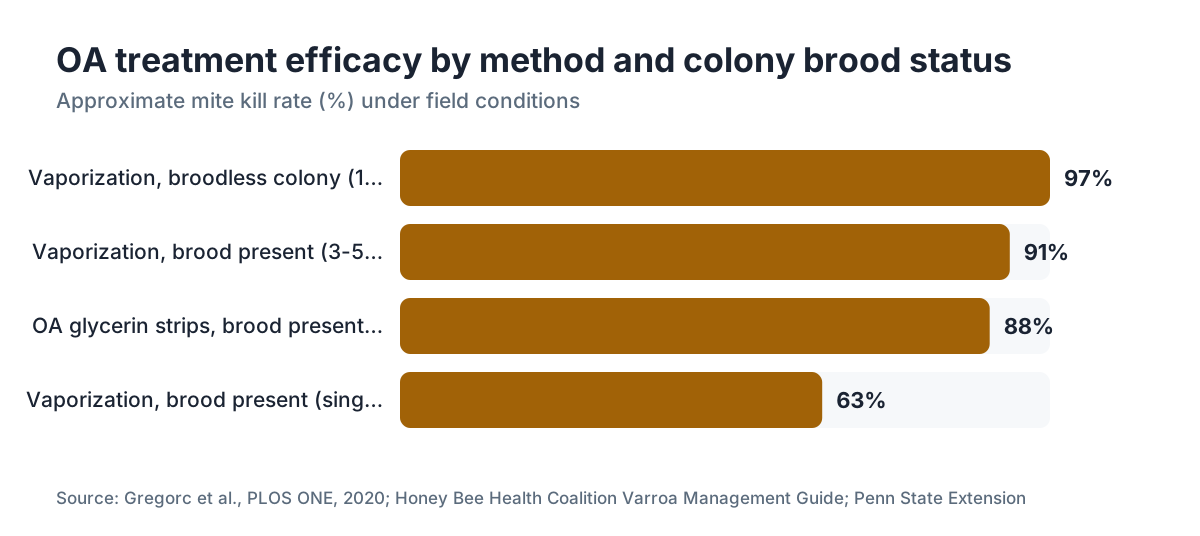
In a broodless colony, a single oxalic acid vapor treatment can knock down 90 to 99 percent of mites [3]. That is a huge kill rate for one treatment. The University of Minnesota Bee Lab puts vaporization efficacy above 95 percent under good broodless conditions, and the Honey Bee Health Coalition's Varroa Management Guide reports similar numbers for winter and post-split applications [4][11].
Here is the catch. That 90-plus number only covers phoretic mites, the ones on adult bees. Every mite sealed inside a capped cell survives the vapor completely. Treat a colony full of brood once and you knock down the phoretic mites, then watch the population climb back as new mites emerge with hatching bees over the following weeks.
So beekeepers using vapor during brood season either repeat treatments on a schedule (commonly three to five rounds, seven days apart) or wait for a broodless window: deep winter, a fresh split, or a caged-queen gap. Three treatments a week apart during the active season usually reach 90-plus percent cumulative reduction. The bee math gets messy because brood keeps emerging the whole time [3].
Vapor also clears out fast. Once it dissipates, nothing is left in the hive to stop reinfestation from mite-laden bees drifting in from a neighbor's yard.
How effective are OA glycerin strips compared to vaporization?
This is where the science gets interesting, because strips do the one thing vapor cannot. They keep working straight through an active brood cycle.
A 2020 study in PLOS ONE by Gregorc and colleagues tested extended-release oxalic acid and found 82 to 93 percent efficacy over a 56-day treatment in colonies with brood [5]. That is below the peak single-shot vapor number. But it is earned through the brood, which vapor cannot reach.
The mechanism is the whole point. A mite that hid inside a capped cell during week one emerges into a colony still coated with low-dose oxalic acid. That newly phoretic mite picks up a lethal dose walking across frames and bees. Since the treatment window outlasts the roughly 12-day capped stage of worker brood, one generation of emerging mites after another gets dosed [5].
A 2021 Virginia Cooperative Extension report described OA glycerin treatments as showing "comparable efficacy to repeated vaporization treatments when applied to colonies with brood present" [6]. That matters. You are not choosing between a great treatment and a weak one. You are choosing between two good tools with different operating windows.
One honest caveat. The efficacy data on glycerin strips is thinner than the vaporization literature. Most large controlled trials come from Europe, where Api-Bioxal in glycerin has been registered longer. US beekeepers should expect the picture to sharpen as more domestic trials publish.
Which method works better when your hive has capped brood?
Strips win here, and it is not close.
Vaporizing a colony full of capped brood means repeat treatments to chase mites as they hatch out, usually every five to seven days for three to five rounds. Each round is a hive disturbance, a vaporizer setup and teardown, and a fresh check that every entrance is sealed. It works. It is a lot of labor.
Glycerin strips handle the brood problem while you are gone. You hang them once (check your label for strips per colony size, often one strip for every two or three seams of bees), and the bees spread the treatment for the next four to eight weeks. Mites leaving the brood keep meeting acid-coated bees. Nobody has to stand over the hive.
For summer colonies carrying eight or ten frames of brood in July or August, strips are the practical choice for most hobbyist and sideliner beekeepers. You have a stack of hives, a short list of free evenings, and the strips keep working while you are at your day job.
Vapor still fits summer in one case: you just made a split and caged the laying queen for a few days, creating a short broodless gap. Some beekeepers do exactly this. Make splits, wait out the brood gap, vaporize once or twice, release the queen. It works well and it takes planning.
Which method works better for a broodless winter or post-split treatment?
Vapor is the clear winner for broodless colonies.
No capped brood means every mite in the hive is phoretic and exposed. One or two vapor treatments a week apart can drop mite levels close to zero. It is fast, cheap in materials (crystals cost pennies per hive), and it barely disturbs a winter cluster if you treat on a mild day when bees are clustered but not flying.
The Honey Bee Health Coalition ranks oxalic acid treatment of broodless colonies as a high-priority winter step [4]. Plenty of beekeepers treat once in late autumn after the first hard cold snap shuts down brood rearing, then again in early January if a mite wash says so.
Strips in a cold winter cluster are the weaker pick. The bees move less, so the mechanical spreading that makes strips shine in summer slows to a crawl. Api-Bioxal's label allows winter use, but the extended treatment window gives you nothing when there is no brood to treat through. You pay in strip cost and colony disruption for slow action you do not need.
For splits and nucs, vaporizing after the queen has been caged for seven to ten days (long enough that no new brood is capped) gives a clean, near-total knockdown. Many queen breeders run this as a standard step before introducing a new or mated queen.
What do OA glycerin strips and vaporization cost to use per treatment?
Cost swings more than you would guess, depending on scale and what you count.
With vaporization, the equipment is the real expense. A battery-powered vaporizer runs roughly $150 to $300 depending on the model [7]. After that, oxalic acid dihydrate (Api-Bioxal or a registered generic) costs about $1 to $3 per hive per treatment. Treat ten hives three times over a summer and you might spend $30 to $90 in acid total. At scale, the vaporizer pays for itself in a season or two.
Glycerin strips carry no equipment cost. Commercial OA glycerin strips run roughly $3 to $8 per strip [7], and a full colony usually needs two to three for a treatment lasting four to eight weeks. Call it $6 to $24 per colony per cycle. At a two-hive backyard scale, that is nothing. At twenty hives, vapor gets a lot cheaper per colony.
Homemade OA glycerin strips from bulk oxalic acid and glycerin are popular in the US hobbyist scene, and the DIY cost is tiny (often under $1 per strip). The legal side is murky. The EPA label for Api-Bioxal specifies the registered formulation and method. Using bulk acid in an unapproved preparation is off-label and can hurt your pesticide compliance if you sell honey.
| Method | Equipment cost | Material cost per colony per treatment | Treatments needed (summer, brood present) |
|---|---|---|---|
| OA vaporization | $150-$300 (one-time) | $1-$3 | 3-5 (weekly) |
| OA glycerin strips (commercial) | None | $6-$24 | 1 (lasts 4-8 weeks) |
| OA glycerin strips (DIY) | Minimal | $0.50-$2 | 1 (lasts 4-8 weeks) |
Is oxalic acid safe for bees and honey?
Yes, used to label. Oxalic acid occurs naturally in many plants and in trace amounts in honey itself. Studies measuring residues in honey from treated colonies have generally found no meaningful rise above natural background levels [8].
The EPA Api-Bioxal label approves the product for honey bee colonies, and some formulations allow honey supers on the hive, though the conditions vary by application method so you have to read the current label [2]. Vaporization has restrictions in some label versions about treating with harvestable supers on. Strips carry their own conditions. Read the label for the exact product in your hand.
Bee mortality from correctly applied OA is low. Brood death runs from minimal to none at label rates. Heavy doses or bad application (treating in scorching weather, over-treating) can stress a colony, but that is true of every treatment. Oxalic acid's toxicology in bees is better studied than most alternatives, and it does not build up in wax the way synthetic acaricides like tau-fluvalinate do [8].
For a hobbyist worried about chemical residue, oxalic acid is about as clean as varroa treatments get.
What are the practical drawbacks of each method?
Vaporization is fast and physical. You seal every entrance tight before you treat, which eats time. You need a power source, battery or outlet. You keep the vaporizer clean and working. And you protect yourself: a well-fitted respirator rated for organic vapors is non-negotiable, because breathing oxalic acid vapor damages human lungs and eyes [2]. Plenty of beekeepers wave this off or reach for a dust mask that does nothing.
Strips have a different weakness: slow feedback. You cannot tell whether they are working for weeks. A colony that starts treatment with a very high mite load may need a follow-up before the strips finish. Strips also need enough bee traffic to spread the dose, so they underperform in small or weak colonies where few bees move across the frames.
Both methods care about temperature. Vaporization disperses best above 50 degrees Fahrenheit. Strips spread better above 50 to 60 degrees when bees are active. Cold application of either one cuts efficacy.
Strips left in too long stop working and can crowd the frames. Follow the label timing. With vaporization, stretch the interval between treatments too far and the mite population rebounds between doses.
Neither method leaves residual protection. Once the acid is gone, it is gone. That stings if your apiary sits in an area with heavy varroa pressure from feral colonies or a neighbor's unmanaged hives.
Can you combine OA glycerin strips and vaporization in the same colony?
You can, and some beekeepers do. The idea is strips through the brood season for steady coverage, then one or two vapor treatments after autumn brood rearing winds down to push mites near zero before winter.
The risk is overloading the bees with acid. The Api-Bioxal label sets minimum intervals between applications and a maximum annual dose. Treating with both methods at once, or back to back without respecting those intervals, is not recommended and can kill bees.
The Honey Bee Health Coalition's guidance on integrated treatment schedules is worth reading before you stack anything [4]. The rule of thumb is to match the tool to the current colony condition, not to pile treatments on top of each other.
For most hobbyists running a handful of hives, a sane annual rhythm looks like this. Strips in summer when brood is present and counts call for it, then a vapor round in late autumn on broodless colonies. That covers the full mite cycle without over-treating.
VarroaVault has a free seasonal treatment protocol tool that maps this kind of schedule to your region and colony calendar if you want a framework instead of a guess.
How do you know if your OA treatment actually worked?
You count mites before and after. That is the only way. No exceptions.
A sticky board under a screened bottom board shows mite drop during and after treatment, which feels good but does not give you an infestation rate. An alcohol wash or sugar roll on a roughly 300-bee sample (about a half cup) gives you mites per hundred bees, and that is the number that tells you where you actually stand [4].
The Honey Bee Health Coalition recommends treating when counts hit 2 mites per 100 bees during the honey flow and 1 per 100 in late summer as the winter bees are raised [4]. After treatment, recount in three to four weeks. Still above threshold? You need another round or a different chemistry.
For glycerin strips, count at the end of the treatment window, four to eight weeks out. Expect levels to stay somewhat elevated during treatment while the strips are still working. A count at six to eight weeks gives the cleanest read on how the strips performed in your hive.
For a broodless vapor treatment, a count one week after the final application tells you plenty. A near-zero wash (under 1 mite per 100 bees) after a proper broodless series means it worked. Finding 3 or 4 per 100 should send you back to check whether the colony was truly broodless and whether your entrances were sealed each time.
Oregon State University Extension has a well-built mite monitoring resource, and your state apiarist can walk you through wash technique [9].
If you want to log pre- and post-treatment counts across hives and seasons, VarroaVault's free tools track that across a full apiary calendar.
What does the research actually say about long-term colony outcomes?
Efficacy is one thing. Whether treated colonies survive better is another.
A long-running project at the USDA Agricultural Research Service found colonies given timely oxalic acid treatment (by any method) in late summer and autumn overwintered at significantly higher rates than untreated controls [10]. No surprise, since varroa is the leading driver of winter colony loss in North America.
The sharper question is whether strips or vapor produces healthier colonies long term when used during brood season. The Gregorc 2020 PLOS ONE study found extended-release colonies held lower mite levels into late summer than single-event treatments, which points to real population-level benefit from sustained exposure [5]. But sample sizes in these trials tend to be modest and colony variability is huge. One mite-loaded swarm moving into your yard can undo a season of careful work.
The honest answer: both tools work well when used correctly at the right time. The beekeeper who monitors, treats promptly, and rechecks counts will beat the beekeeper who runs the "better" method carelessly. Timing and follow-through matter more than which oxalic acid delivery system you picked.
For the biology behind all of this and the full range of options past oxalic acid, our varroa mite overview gives the context that shapes any single treatment call.
Where can you find approved products and what should you check on the label?
In the US, Api-Bioxal (Veto-pharma) is the main EPA-registered oxalic acid product approved for both vaporization and extended-release glycerin strip use, though the registration details and approved methods have changed over time, so confirm against the current label posted through the EPA [2].
State registration matters too. Some states add requirements or restrictions on pesticide use in apiaries. Your state apiarist's office (find contacts through the National Association of State Departments of Agriculture) can tell you what is legal where you keep bees.
On any OA label, check the approved application methods (not every oxalic acid product is registered for every method), the number of treatments allowed per year, the minimum interval between treatments, whether honey supers must be off, the required protective equipment, and the pre-harvest interval.
For gear and product, the links here point to beekeeping supply companies and beekeeping supplies that stock registered OA products. Buy from a reputable supplier so your product arrives clearly labeled with an EPA registration number and lot information.
Never use industrial oxalic acid (the kind sold for wood cleaning or rust removal) in your hives. It can carry impurities and is not EPA-registered for apiary use. The formulation and purity of Api-Bioxal are part of its registration, and that is not a bureaucratic footnote.
Frequently asked questions
How many OA vaporization treatments do I need if my colony has brood?
Plan on three to five treatments, five to seven days apart. One treatment only kills phoretic mites; the ones in capped cells survive. Weekly rounds chase mites as they emerge across the roughly 21-day worker brood cycle. Some beekeepers run three and recount, others do five as a standard summer protocol. After the series, do a mite wash to confirm you hit your target.
Can I use OA glycerin strips in a honey super?
Check your product label closely. Api-Bioxal's conditions for extended-release strip use spell out colony conditions, including whether harvestable honey supers can be present. Some label versions restrict strip placement when harvest supers are on. This is not optional reading. Treating with supers on in violation of the label creates a honey residue compliance problem, especially if you sell.
Are OA glycerin strips or vaporization better for a new beekeeper?
For most beginners, strips are more forgiving. No equipment, no sealing entrances, no respirator to handle them (gloves and eye protection are always smart around any pesticide). Vaporization is safe done right, but it has a steeper learning curve and real respiratory hazards if you skip proper PPE. Get comfortable monitoring mite counts first, then add vaporization once your process is solid.
How long do OA glycerin strips stay effective in the hive?
Commercial strips are built for four to eight weeks of active oxalic acid release. Efficacy falls off after that as the acid depletes. Most labels give a treatment duration and a maximum time to leave strips in. Pull them at the end of the labeled window. Spent strips left in do nothing except clutter the hive and block bee movement between frames.
Can varroa mites develop resistance to oxalic acid?
No confirmed resistance has been documented in the most recent published reviews, which is a big part of why OA is so valuable. It kills by direct contact damage to the mite's body, not through a biochemical pathway that can mutate around it. That is very different from synthetic pyrethroids like fluvalinate, where varroa resistance is well documented. Resistance is not impossible forever, but OA resistance is not a known current risk [4].
What temperature do I need for OA vaporization to work?
Most guidance says treat when the ambient temperature is at least 40 to 50 degrees Fahrenheit so the vapor can spread through the cluster. Colder than that and the vapor condenses fast instead of permeating the colony. Many beekeepers wait for a calm day above 40 for winter broodless treatments. In summer, temperature is rarely the limiting factor since the hives are already warm.
Will OA treatment harm my queen?
At label doses, oxalic acid has not been shown to significantly harm queens in well-designed trials. Queens sit in the same OA environment as workers and generally tolerate it. High or repeated doses above label rates can stress a colony and possibly contribute to queen problems, but that is a dosing issue, not a property of OA itself. Follow the label, do not over-treat, and watch queen presence and laying pattern afterward.
How do OA glycerin strips compare to Apivar (amitraz)?
Apivar (amitraz strips) and OA glycerin strips are both extended-contact treatments, but they are chemically unrelated. Amitraz works by a different mechanism and is a synthetic acaricide with documented resistance concerns in some mite populations. OA has no known resistance. Apivar usually shows high efficacy (90-plus percent) but should be rotated with non-amitraz treatments to slow resistance. OA glycerin strips fit that rotation and leave no synthetic residue in wax.
Do I need a respirator to apply OA glycerin strips?
The Api-Bioxal strip label specifies required PPE, usually chemical-resistant gloves and eye protection. A respirator is generally not listed as required for handling strips the way it is for vaporization. Vaporization needs a NIOSH-approved respirator rated for organic vapors and particulates because you are generating and possibly inhaling oxalic acid vapor. Always read the PPE section of your exact product label. Do not guess.
Can I treat a queenless colony or a nuc with OA strips or vaporization?
Yes to both. A queenless colony with no capped brood is an ideal candidate for vaporization since every mite is phoretic. For nucs with brood, strips work well at a proportionally lower dose (usually one strip for a small colony rather than two or three for a full hive; check your label for colony-size guidance). Mite loads in nucs can spike fast, so monitor closely.
How do I dispose of used OA glycerin strips?
Wrap used strips in a sealed bag and put them in household trash per your local waste rules. Do not compost them or leave them in the apiary where bees or wildlife might contact them. The Api-Bioxal label has a storage and disposal section with specific instructions. Oxalic acid breaks down fairly quickly in the environment, but proper disposal is part of responsible pesticide use.
Is vaporization or strips better for treating a mite bomb situation with counts above 4 per 100 bees?
At very high loads (4 or more per 100 bees), you want fast knockdown. Vaporization in a broodless colony can drop levels dramatically in one to two weeks. If the colony has heavy brood and high mites, some beekeepers cage the queen briefly to halt new brood, vaporize two or three times over the broodless gap, then release her. Strips plus a mite wash at four weeks is a reasonable alternative, but you accept slower action.
Does the time of year affect which OA method I should choose?
A lot. In winter with broodless colonies, vaporization is ideal: fast, complete, minimal disturbance. In summer with active brood, strips are more practical for sustained coverage through the brood cycle. In spring and early summer as brood builds, strips make sense if counts creep toward threshold. In late summer before winter bees are raised (the highest-stakes window), treat aggressively with whichever method fits your colony's brood status.
Sources
- EPA, Pesticide Registration (oxalic acid): EPA registered oxalic acid for use in honey bee colonies in 2015
- EPA, Api-Bioxal Product Label (Veto-pharma): Api-Bioxal label specifies approved application methods, PPE, treatment intervals, and honey super restrictions
- Penn State Extension, Honey Bee Varroa Mite Management: Single broodless oxalic acid vapor treatments reach 90-99% mite knockdown; repeated weekly treatments needed when brood is present
- Honey Bee Health Coalition, Tools for Varroa Management Guide: HBHC recommends thresholds of 2 mites per 100 bees during honey flow and 1 per 100 in late summer; cites OA efficacy in broodless colonies and no documented varroa resistance to oxalic acid
- Gregorc et al., PLOS ONE, 2020, extended-release oxalic acid treatment: Extended-release OA treatments achieved 82-93% efficacy over 56 days in colonies with brood; successive mite generations emerging from brood exposed to OA-coated bees
- Virginia Cooperative Extension, Virginia Tech: OA glycerin treatments showed comparable efficacy to repeated vaporization treatments when applied to colonies with brood present
- University of Florida IFAS Extension, oxalic acid treatment costs and methods: Battery-powered OA vaporizers cost roughly $150-$300; OA material costs approximately $1-$3 per hive per treatment; commercial OA glycerin strips run $3-$8 per strip
- USDA Agricultural Research Service, Bee Research Laboratory: Oxalic acid residues in honey from treated colonies generally show no meaningful increase above natural background levels, and OA does not accumulate in wax like synthetic acaricides
- Oregon State University Extension, varroa mite monitoring: Detailed mite washing technique guidance for a 300-bee sample to determine mites per 100 bees
- USDA Agricultural Research Service, honey bee overwintering research: Colonies receiving timely oxalic acid treatment in late summer and autumn overwintered at significantly higher rates than untreated controls
- University of Minnesota Bee Lab, varroa mite management: Oxalic acid vaporization efficacy cited as greater than 95% under optimal broodless conditions
Last updated 2026-07-09