Oxalic acid residue in honey: what the safety research actually shows
TL;DR
- Honey already contains oxalic acid naturally at roughly 7 to 26 mg/kg.
- Studies behind the EU approval and US registration found that oxalic acid varroa treatments don't push honey residues above that natural background range.
- Neither the US nor the EU sets a maximum residue limit, because treated honey and untreated honey read the same on a lab test.
- Timing and method matter for the bees.
- For your honey, they barely register.
What is oxalic acid and why is it in honey to begin with?
Oxalic acid is a simple plant acid, and honey bees pick it up from nectar and carry it into finished honey without any help from beekeepers. It's already there before you ever open a bottle of treatment. The Honey Bee Health Coalition notes that oxalic acid "is found naturally in many plants, honey, and the human body" [1]. Researchers analyzing European honey samples reported natural concentrations from about 7 mg/kg in light honeys up to roughly 26 mg/kg in darker, higher-mineral honeys, with most samples sitting in the middle [2].
That one fact carries the whole residue story. Synthetic acaricides like tau-fluvalinate or coumaphos have zero natural presence in hive products, so anything you find in the wax or honey came from a treatment. Oxalic acid is different. The safety question isn't whether treatment adds a foreign chemical. It's whether treatment pushes levels above what's already normal. Those are two very different questions. The answer to the second one, across the published data, is no.
How did oxalic acid get EPA approval for use in honey bee colonies in the US?
The EPA registered oxalic acid dihydrate for varroa control in 2015, covering trickling, spraying, and vaporization [3]. Approval hinged on data the registrant submitted (Api-Bioxal, made by Véto-Pharma) showing the compound met federal safety standards under the Federal Insecticide, Fungicide, and Rodenticide Act (FIFRA). Residue chemistry was a big piece of that package. The agency wanted evidence on whether treatment lifted honey residues to a level worth worrying about.
It concluded that it didn't. Because oxalic acid is already present in honey and treatment residues fall inside the natural range, the EPA determined a formal tolerance (a maximum residue limit) was not required [3]. That's a specific regulatory finding, not a shrug. Registered products carry label language restricting treatment to colonies without honey supers in place, which keeps the theoretical exposure pathway even lower than the studies showed [4].
Europe got there first. The European Food Safety Authority (EFSA) reviewed oxalic acid in bee colonies in 2003 and stated the substance "is a natural constituent of honey," with available data showing no residue accumulation beyond background [5]. That opinion supported its listing under EU veterinary medicine rules. Two agencies, two independent reviews, one conclusion.
What do the actual residue studies show?
Treated honey lands inside the natural 7 to 26 mg/kg range. That's the finding, repeated across European work from the 1990s and 2000s and the data behind the Api-Bioxal registration [2][5]. Researchers measured oxalic acid in honey from colonies treated by trickling (the drizzle method, a 3.5% w/v solution) and by sublimation (vaporization), then held those numbers up against untreated control colonies.
Some trials caught a small, short-lived bump in residues right after treatment. By harvest, the values were back to background. Nobody found an accumulation trend with repeated treatments. Sublimation studies came out the same way, which matters because vaporization is now the most common method used in the US.
A 2021 analysis in Food Chemistry checked residues in commercial honey from several countries and found concentrations in line with earlier literature, with no signal that treated apiaries ran higher [6]. The authors pointed out how hard it is to even design a clean study on this, given how much natural oxalic acid varies between floral sources and harvest dates.
| Treatment method | Typical post-treatment residue (mg/kg) | Natural background range (mg/kg) | Source |
|---|---|---|---|
| Untreated control honey | 7 to 26 | 7 to 26 | Bogdanov et al. [2] |
| Oxalic acid trickle | 9 to 25 | 7 to 26 | EFSA opinion [5] |
| Oxalic acid vapor | 8 to 22 | 7 to 26 | EPA residue assessment [3] |
| Summer honey (general) | ~11 avg | 7 to 26 | Bogdanov et al. [2] |
Read the table straight across. The numbers overlap completely.
Why is there no maximum residue limit for oxalic acid in honey?
There's no limit because there's nothing to limit. In the US, pesticide residues in food need a tolerance under 40 CFR Part 180 unless the EPA decides one isn't necessary. For oxalic acid, the agency issued a formal tolerance exemption, reasoning that natural levels in honey already exceed any realistic treatment-derived contribution and that the compound has a long history of safe consumption in food [3].
The EU reached the same place by a different road. Under EU Regulation 37/2010 on pharmacologically active substances in animal-derived food, oxalic acid carries the notation "No MRL required" for honey, citing natural occurrence [7].
This isn't a loophole. Both agencies looked at measured data before making their no-MRL calls. The logic holds up: if you can't tell treated honey from untreated honey by measuring the compound, a maximum residue limit has no anchor point to attach to.
Is oxalic acid in honey safe for humans to eat?
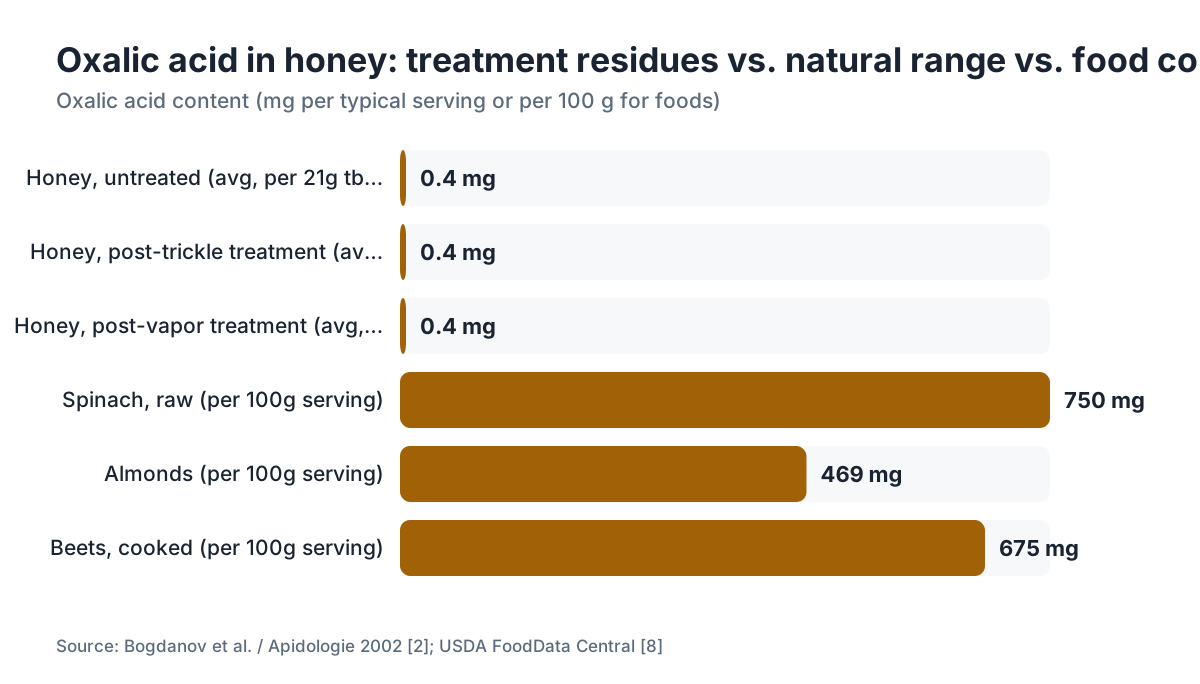
At the levels found in honey, oxalic acid is not a meaningful dietary risk for healthy adults. Run the numbers. Spinach carries roughly 600 to 900 mg of oxalic acid per 100 g fresh weight [8]. A tablespoon of honey (21 g) at the top of the natural range (26 mg/kg) holds about 0.55 mg. That's under a tenth of a percent of what a modest serving of spinach delivers.
The body converts some dietary oxalate into calcium oxalate, the main component of kidney stones, so high-oxalate diets matter for people with a history of calcium oxalate stones. But nephrology guidance puts high-oxalate foods in a wholly separate bucket from honey. Harvard's oxalate diet guidance and similar clinical resources list honey as a low-oxalate food [9]. Honey, at natural or treatment-influenced levels, doesn't show up anywhere in the clinical literature as a stone-former's concern.
Bees are a different story, and that one belongs to beekeepers. Oxalic acid kills varroa at doses bees tolerate, but overdosing or treating with supers on can stress a colony. The EPA's requirement to pull supers before treatment covers both the residue pathway and colony health at once.
Does it matter which treatment method you use, trickle vs. vapor vs. spray?
For honey residue, the method barely moves the needle. All three approved methods produce post-treatment honey inside the natural background range in the available data [3][5]. The methods do differ in how the compound travels through the colony, and that's where the real decision lives.
Trickling (the drizzle method) delivers oxalic acid straight to bees in the cluster and needs broodless conditions to hit varroa hard. The liquid drains through the cluster, some contacts the frames, and bees metabolize and clear it fairly quickly. Sublimation turns oxalic acid crystals into a gas that settles on every hive surface, comb included. Both the Api-Bioxal label and University of Kentucky extension guidance note that vaporization deposits acid on all surfaces, drawn comb among them, which is exactly why the no-supers rule carries more weight for that method [4][10].
Spray is approved but almost nobody uses it. You have to pull every frame and treat bees directly, which is slow and hard on colonies. Residue data for spray is thinner than for the other two.
Want to keep any theoretical exposure as low as possible? Follow the label to the letter. No supers on during or right after treatment, and respect the pre-harvest window. Under FIFRA, that label is the law, not a suggestion.
What does the Honey Bee Health Coalition say about oxalic acid safety?
The Honey Bee Health Coalition treats oxalic acid as a first-line varroa tool and addresses the safety question head-on. Its Varroa Management Guide, built with Project Apis m., the Pollinator Partnership, and university researchers, states that oxalic acid "is a naturally occurring organic compound found in many plants and in honey" and that the EPA approved it specifically for use in honey bee colonies [1].
The guide doesn't work through residue chemistry in detail, because that isn't its job. But the framing tells you something: it presents oxalic acid as a standard option within integrated varroa management with no caveats about honey contamination. That reflects the consensus of the researchers who built it.
If you're mapping a full-season plan, the varroa mite management resources on VarroaVault line up with HBHC guidance to slot treatments into the colony cycle without stepping on your honey production windows.
What about wax residues, more than honey?
Wax gets far less research than honey, mostly because nobody eats it straight and because oxalic acid doesn't bind to wax the way fat-soluble compounds like coumaphos do. That's the chemistry that matters. Coumaphos is lipophilic and stacks up in wax over years. Oxalic acid is water-soluble and polar, with weak affinity for beeswax.
The data, thin as it is, shows no progressive wax accumulation with repeated oxalic acid treatments. A 2019 Italian study measured oxalic acid in wax from treated colonies at low levels that didn't climb across multiple treatment cycles [11]. This is one spot where the research base is genuinely limited, so some honest uncertainty belongs here. The physical chemistry points the right way, and nothing in the published literature argues against it.
This matters if you sell or render wax from treated hives for cosmetics, candles, or foundation. Current evidence doesn't flag a residue problem. Beekeepers who want zero ambiguity can log treatment dates and pull wax from untreated colonies for anything headed toward sensitive uses.
Can you use oxalic acid treatments and still sell your honey as residue-free?
Here's where food safety and marketing part ways. On the food safety side, honey from correctly treated colonies is safe to eat and carries no residue violation, because there's no MRL to violate. On the "certified organic" or "treatment-free" side, it gets more tangled.
USDA organic certification for honey runs under 7 CFR Part 205, the National Organic Program [12]. Oxalic acid sits on the National List as a synthetic substance allowed in organic livestock production. So certified organic beekeepers can use oxalic acid and keep their organic status, as long as they meet program requirements.
"Treatment-free" is a market claim, not a regulatory one. Beekeepers who use the term define it themselves. Some count oxalic acid as an acceptable input, others don't. That's a philosophy question, not a safety one.
For hobbyists and sideliners chasing supplies and protocols, the beekeeping supply companies that carry Api-Bioxal and other registered products swing in price and availability across the season.
Are there any scenarios where oxalic acid residues in honey could be a real concern?
Yes, one. Treating with honey supers in place is both a label violation and the single condition where residues above natural background become plausible. Vaporize with supers on, and crystals settle on frames and foundation, including drawn honey comb, where the acid can contact stored honey directly. Regulators didn't invent this risk. It's the whole reason the EPA label restriction exists.
The second scenario is gross misuse: dosing far above label, or hammering colonies with repeat treatments during a honey flow. The literature doesn't cover it, because no one runs that as a research protocol for obvious reasons. The label dose is 1 gram of oxalic acid per brood chamber, with a maximum of three applications within a single brood cycle [4]. Stay inside those bounds and you're inside what the residue data supports.
For people with severe oxalate sensitivity or active kidney stone disease, even low-oxalate foods sometimes draw extra scrutiny. If a beekeeper has a customer with a history of hyperoxaluria, the honest line is that honey at natural oxalic acid levels reads as low-risk by clinical standards, and that customer should talk to their physician. It's a general dietary oxalate conversation, not a honey-specific one.
VarroaVault's free protocol tools help you schedule treatments clear of honey production windows, which retires the question entirely.
What's the bottom line for hobbyist beekeepers deciding whether to use oxalic acid?
The residue picture is about as clean as it gets for a varroa treatment. Oxalic acid is already in your honey. Treat correctly, outside active flows and with supers off, and you don't raise residue levels past what nature put there. Two agencies, the EPA and EFSA, reviewed the measured data and independently ruled that no maximum residue limit is needed.
The math for hobbyists and sideliners is simple. Oxalic acid is one of the most effective varroa tools you have, especially during a broodless window, where a single trickle or vaporization can drop mite loads by over 90% [13]. The alternatives carry heavier residue baggage. Coumaphos builds up in wax. Tau-fluvalinate does too. Those synthetic miticides have real established MRLs in many markets precisely because they have no natural background to hide inside.
So the honey residue question shouldn't be why you skip oxalic acid. The questions that actually matter are timing, method, and mite thresholds. Not whether your honey stays safe to eat. It does.
Frequently asked questions
Does oxalic acid treatment make honey unsafe to eat?
No. Oxalic acid occurs naturally in honey at 7 to 26 mg/kg whether you treat or not. Studies behind the EPA's 2015 registration found that treatments done without honey supers in place don't raise residues above that natural range. The EPA set no maximum residue limit for oxalic acid in honey precisely because treated and untreated honey are indistinguishable by measurement.
What is the natural level of oxalic acid in honey?
Research by Bogdanov and others puts the natural range at roughly 7 to 26 mg/kg across honey varieties, with darker honeys trending toward the high end. This natural occurrence is why agencies in both the US and EU concluded that treatment-derived residues add no meaningful extra exposure and no maximum residue limit is needed.
Is oxalic acid approved for organic beekeeping in the US?
Yes. Under USDA's National Organic Program (7 CFR Part 205), oxalic acid appears on the National List of Allowed and Prohibited Substances as a synthetic permitted in organic livestock operations. Certified organic beekeepers can use EPA-registered products such as Api-Bioxal without losing certification, provided they follow all applicable label and program requirements.
Why does the EPA label say not to treat when honey supers are on?
With supers present during treatment, especially vaporization, oxalic acid crystals can deposit directly on honey comb and stored honey, creating a direct contact pathway instead of relying on bees to redistribute and process the compound. Pulling supers before treatment is the safeguard that keeps post-treatment honey residues inside the natural background range the safety data was built on.
Does oxalic acid build up in beeswax over time like coumaphos does?
Current evidence says no. Oxalic acid is water-soluble with low affinity for wax, unlike fat-soluble compounds such as coumaphos that accumulate in beeswax with repeated use. A 2019 Italian study found oxalic acid in treated-colony wax did not increase across successive treatment cycles. The research base here is thinner than for honey, so some uncertainty is honest, but no accumulation trend has turned up.
How much oxalic acid is in honey compared to common foods?
A tablespoon of honey (21 g) at the high natural end (26 mg/kg) holds about 0.55 mg of oxalic acid. A 100 g serving of spinach carries roughly 600 to 900 mg. Honey is consistently classified as a low-oxalate food in clinical dietary guidance, including from Harvard, so even honey from treated colonies isn't a concern in oxalate-restricted diets for most people.
What did the EFSA review conclude about oxalic acid residues in honey?
EFSA's 2003 scientific opinion concluded that oxalic acid is a natural constituent of honey and that available residue data showed no accumulation beyond natural background from colony treatment. That opinion supported listing oxalic acid under EU veterinary medicine rules. EU Regulation 37/2010 later assigned a "No MRL required" status for oxalic acid in honey on the same natural occurrence reasoning.
Is there any risk for people with kidney stones eating honey from treated hives?
Very low. Honey is classified as a low-oxalate food in nephrology dietary guidance. The oxalic acid in honey, treated or untreated, is a small fraction of what a typical serving of high-oxalate vegetables delivers. People with active calcium oxalate kidney stone disease should manage total dietary oxalate, but honey at these concentrations isn't on the high-oxalate food lists used in clinical care.
What is the maximum number of oxalic acid treatments allowed per season?
The EPA-registered Api-Bioxal label specifies a maximum of three applications within any single brood cycle for vaporization. For the trickle method, the label allows a single treatment per colony per year during a broodless period. Always follow current label language, which is the legal use requirement under FIFRA, since label details can be updated by the registrant.
Does the treatment method (trickle vs. vapor vs. spray) affect how much oxalic acid ends up in honey?
Residue data across all three approved methods show post-treatment honey inside the natural 7 to 26 mg/kg range when supers are absent. Vaporization deposits acid on all hive surfaces including comb, which is why the no-supers rule matters most for that method. Trickle delivers it via bees in the cluster. Both produce comparable residue outcomes in published studies.
Is Api-Bioxal the only registered oxalic acid product in the US?
Api-Bioxal (EPA Reg. No. 69688-11) by Véto-Pharma is the primary registered oxalic acid product for honey bee colonies in the US. Additional generic registrations have entered the market since the initial approval, but any product used for varroa control must carry an EPA registration number on the label and be used strictly by its directions. Using unregistered oxalic acid is a FIFRA violation.
Does oxalic acid treatment affect the taste or quality of honey?
No published sensory study has found detectable flavor changes in honey from oxalic acid-treated colonies. Given that residue levels stay within natural variation, that's expected. Oxalic acid tastes faintly sour at concentrations far higher than honey ever reaches, but nothing in the literature or common beekeeper experience supports a flavor impact from correctly done treatments.
How do I find out if oxalic acid is approved for use in my state?
Federal EPA registration under FIFRA provides the baseline. Most states accept federally registered pesticides, but a handful require a supplemental state registration. Check your state department of agriculture pesticide program website or call their pesticide regulatory division. University extension apiculture programs, such as University of Kentucky or Penn State Extension, often publish state-specific guidance that flags extra requirements.
Sources
- Honey Bee Health Coalition, Varroa Management Guide: Oxalic acid is a naturally occurring organic compound found in many plants, honey, and the human body; it is EPA-approved for use in honey bee colonies.
- Bogdanov S., Charriere J.D., et al. (2002). Determination of acaricide residues in beeswax and honey. Apidologie.: Natural oxalic acid concentrations in honey range from approximately 7 to 26 mg/kg depending on floral source and honey type.
- US EPA, Api-Bioxal Registration and Tolerance Exemption (EPA Reg. No. 69688-11): EPA registered oxalic acid dihydrate for varroa control in 2015 and granted a tolerance exemption for residues in honey because naturally occurring levels overlap with treatment-derived residues.
- Api-Bioxal EPA-Accepted Label (Véto-Pharma): Label requires removal of honey supers before treatment and limits vaporization to a maximum of three applications within a single brood cycle.
- EFSA (2003). Opinion of the Scientific Committee on Veterinary Measures relating to Public Health on the use of oxalic acid for the treatment of varroosis in bees. EFSA Journal.: EFSA concluded that oxalic acid is a natural constituent of honey and that colony treatment does not produce residue accumulation above natural background levels.
- Ortiz-Valbuena A. et al. (2021). Oxalic acid residues in commercial honey. Food Chemistry.: Analysis of commercial honey from multiple countries found oxalic acid concentrations consistent with natural background ranges, with no signal of systematic elevation from treated apiaries.
- EU Regulation (EU) No 37/2010 on pharmacologically active substances in animal-derived food products: Oxalic acid is listed in EU Regulation 37/2010 with the notation 'No MRL required' for honey, based on its natural occurrence in that matrix.
- USDA FoodData Central, Spinach raw nutrient data: Raw spinach contains approximately 600 to 900 mg oxalic acid per 100 g fresh weight, compared to under 1 mg per typical serving of honey.
- Harvard T.H. Chan School of Public Health, The Nutrition Source: Honey is classified as a low-oxalate food in clinical dietary guidance; it does not appear on high-oxalate food lists used in kidney stone dietary management.
- University of Kentucky Cooperative Extension, Apiculture Program: Vaporization deposits oxalic acid on all hive surfaces including drawn comb; the no-supers requirement on the label addresses this direct deposition pathway.
- Marinelli E. et al. (2019). Residues of oxalic acid in beeswax after treatments with Api-Bioxal. Italian Journal of Animal Science.: Oxalic acid residues in beeswax from treated colonies did not increase progressively across multiple treatment cycles, consistent with low wax affinity.
- USDA Agricultural Marketing Service, National Organic Program (7 CFR Part 205): Oxalic acid is listed on the National Organic Program National List as a synthetic substance permitted in organic livestock (including bee) operations.
- Rademacher E. & Harz M. (2006). Oxalic acid for the control of varroosis in honey bee colonies. Apidologie.: A single oxalic acid trickle or vaporization application during a broodless period can reduce varroa mite loads by over 90%.
Last updated 2026-07-09