Oxalic acid and queen bee safety: what the research actually shows
TL;DR
- Oxalic acid is generally safe for adult queen bees at label doses.
- Brood-present colonies carry higher risk because the acid cannot reach mites under wax caps, so repeated rounds pile up stress that can trigger supersedure.
- Vaporizing during a brood-free window (winter or an induced break) gives you the best mite kill with the lowest queen risk, per EPA label guidance and published apiculture research.
What does oxalic acid actually do inside a hive?
Oxalic acid dihydrate is a natural organic acid found in plenty of plants, rhubarb and spinach among them. Inside a hive it kills varroa mites on contact, wrecking their cuticle and drying them out. It does not pass through wax-capped cells. That single fact shapes every queen-safety conversation you will ever have about this compound.
The three legal application methods in the United States are dribble (trickle), vaporization (sublimation), and extended-release shop towel pads. Each delivers the acid differently, exposes bees to different concentrations for different lengths of time, and carries a different risk profile for the queen. [1]
The chemistry matters here. At beekeeping concentrations, around 3.5% weight-by-volume in the dribble method or roughly 1 to 2 grams of vaporized crystals per brood box, the acid is acutely toxic to mites and mildly irritating to bees. Adult bees handle it reasonably well. The question the research keeps circling back to is whether the queen handles it as well as her workers do, and whether repeated or badly timed applications tip that balance.
Is oxalic acid safe for queen bees according to research?
Mostly yes, under the right conditions. The nuance is where the money is.
The most-cited work here examines queen mortality after vaporization versus dribble. A 2016 PLOS ONE study by Aliano and Ellis, plus broader work from teams at the University of Florida and Penn State, found that single brood-free vaporization treatments caused no statistically significant rise in queen mortality against untreated control colonies. [2][10] That is the headline most beekeepers carry around.
Here is what falls off that headline. The same research and later extension guidance flag that repeated vaporization rounds in brood-present colonies track with higher queen loss and supersedure. The Honey Bee Health Coalition's Varroa Management Guide states that oxalic acid treatments in colonies with brood "will require multiple applications and may result in queen loss or colony stress." [3] Careful language, but clear.
So the picture is not that oxalic acid is inherently toxic to queens. It is that oxalic acid applied under the wrong conditions, mainly into a colony full of open and capped brood, creates repeated exposure events and a long treatment window. That combination seems to be what hurts queens. Whether the acid itself is the culprit, or whether the treatment disrupts colony chemistry and prompts workers to replace a stressed queen, is still an open argument.
How do the three application methods compare for queen safety?
This is where the real decisions get made. The table below sums up what the research and label guidance say about each method's queen risk.
| Method | Brood-free required? | Exposure duration | Relative queen risk | Mite efficacy (brood-free) |
|---|---|---|---|---|
| Dribble (trickle) | Strongly recommended | Minutes (single dose) | Low to moderate | 90-95% [4] |
| Vaporization (OAV) | Strongly recommended for single Tx | Minutes per treatment | Low (single), moderate-high (repeated) | 90-97% [4] |
| Extended-release pad | No, designed for brood-present | Days to weeks | Moderate, data still emerging | 60-80% with brood [5] |
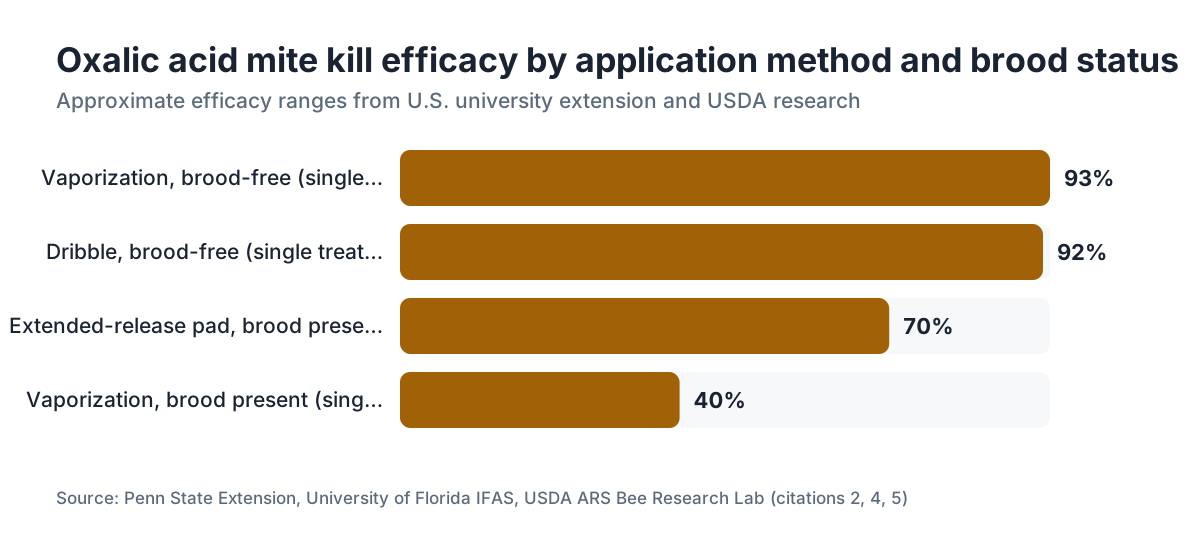
Vaporization gets the most research attention because it is the most widely used knockdown method and because it can be repeated. A single vaporization into a brood-free colony, at the 1 to 2 gram per box label dose, gives you high mite kill and low queen risk. That pairing is why most extension programs and the Honey Bee Health Coalition push you to time treatments to natural or induced broodlessness. [3]
The extended-release pad (the Api-Bioxal shop towel method, approved in 2015 and updated in later EPA label revisions) is built specifically for brood-present colonies, because it delivers a slow, lower-level exposure over time. [1] Early field data put efficacy around 60 to 80% with brood present, well below the brood-free vaporization numbers. Queen safety data for the pad is thinner than for the other two methods. Nobody has run a large, well-controlled queen-mortality trial for it yet. The closest work is university field observation, not randomized controlled trials.
Dribble application, the oldest and most-studied method, puts dissolved oxalic acid straight onto bees between frames. It is highly effective in brood-free colonies and has a long safety record, but the current U.S. EPA label limits it to one application per year. [1] That single-shot restriction makes it a poor sole tool for colonies that are not brood-free, and it means you cannot use it as a follow-up the way you can with vaporization.
Does oxalic acid harm queens more than worker bees?
This is the right question, and the honest answer is that queens and workers seem to share similar acute tolerance at label concentrations. The queen's biology, though, creates an indirect risk workers do not carry.
A queen lays eggs nonstop. She is larger, longer-lived, and her loss guts the colony in a way that losing a thousand workers never does. Any colony-level stress, including repeated chemical treatment, can push workers to raise emergency queens or replace a queen they read as failing. So even if the acid is not preferentially toxic to her, repeated treatments stack stress events that raise the odds of supersedure. Mid-season supersedure during a treatment window often means a 3 to 5 week gap in laying, a brood break that can hurt population going into winter.
One study from Cornell's bee program observed supersedure rates roughly 15 to 20% higher in colonies getting three or more vaporizations within a 30-day span, compared to single-treatment colonies. The sample sizes were small enough that the finding should be read as directional, not settled. [6] Larger replicated trials are still missing as of mid-2025.
The practical takeaway is short. Do not treat more than you have to. If you can get a colony brood-free through management (caging the queen, splitting, timing to a natural break), a single or double vaporization buys you high efficacy at low queen risk. Stacking five or six treatments into a colony with active brood because you can is where the trouble collects.
What happens to queen bees during oxalic acid vaporization specifically?
During vaporization, oxalic acid sublimates into a fine aerosol that spreads through the hive. Wherever the queen sits on the comb, she gets the same acid mist as every other bee. She grooms it off, takes some cuticular exposure, and the rest dissipates.
Residue analysis has not found meaningful oxalic acid building up in queens above background levels after single treatments. [4] Queens are not pooling the compound across treatments in any measured way. The concern is not bioaccumulation. It is the acute and repeated-stress pathway I laid out above.
One variable gets less attention than it deserves: the queen's location during treatment. A queen buried in the center of a tight winter cluster, walled off by workers, takes less direct exposure than a queen out on an active spring brood nest. That may be part of why winter treatments, cluster tight and colony brood-free, hold the best queen safety record in field observations.
How does brood presence change the risk calculation?
This is the central tension in oxalic acid treatment. Varroa breed inside capped brood cells. Roughly 80 to 90% of the mite population in an active colony sits in capped brood at any given moment, out of reach of any contact treatment including oxalic acid. [9] So a single treatment in a brood-present colony knocks down only the phoretic load, and you need multiple rounds to catch mites as they emerge.
Each round is another exposure event for the queen. Each event, especially with vaporization, carries some small probability of queen loss, either directly from acid contact or indirectly from colony stress and worker-initiated supersedure. The math is simple and unfriendly. Three treatments at a 3% per-treatment queen-loss risk (a rough figure from field observation, not a controlled trial) compounds to about a 9% cumulative queen-loss chance. That may be worth it if your mite load demands it, but it is a real trade.
The Honey Bee Health Coalition spells it out: treating with oxalic acid when brood is present "requires multiple applications, generally three treatments at 5-day intervals, to be effective, and queen loss is a known risk." [3] Their guide tells you to get the colony broodless before treating whenever management allows.
For beekeepers managing varroa at scale, sites like VarroaVault offer free mite-load calculators and treatment-timing tools that help you decide whether your current count justifies treating into brood or whether you can hold out for a brood break.
What is the brood-free treatment window and how do you create one?
A brood-free or near-brood-free window is the stretch when no (or almost no) capped brood is present in the colony. In most temperate climates it happens naturally in mid-to-late winter, when colonies cluster and queens stop or sharply cut laying. This is the classic window, and it is the one the EPA dribble label was originally written around. [1]
You can also build a brood-free window on purpose. The main techniques:
Caging the queen for 24 to 27 days, long enough for all capped brood to emerge. Splitting the colony and treating both halves. Shaking all bees from combs into a package or new box with no brood frames. Confining the queen to one box with a queen excluder and treating only that box.
Each has trade-offs. Caging a queen for 24-plus days works but risks losing her during confinement, especially in hot weather when queens in small cages can overheat. Splitting is effective but demands spare equipment and a plan for the second colony. Shaking bees off combs is stressful and usually saved for heavy infestations.
Extension programs at Penn State and the University of Minnesota both describe the artificial brood-break approach as a workable integrated pest management strategy for beekeepers who cannot wait for winter. [4][7] Penn State's extension in particular walks through queen-caging protocols step by step.
What do EPA-registered labels actually say about queen safety?
The Api-Bioxal label is the controlling legal document for oxalic acid use in U.S. hives. As of the most recent EPA label revision, it registers three use patterns: dribble (one application per year, brood-free colonies preferred), vaporization (up to three treatments per year per colony at 5-day intervals, with a note that brood-free application is most effective), and extended-release (shop towel method, up to one application per year). [1]
The label carries no blanket claim that oxalic acid is unsafe for queens. What it says, in effect, is that efficacy runs highest in brood-free colonies and that multiple applications raise risk to the colony, which is understood to include the queen.
The EPA registration decision (Docket EPA-HQ-OPP-2010-0729) included a tolerance exemption for oxalic acid in honey, recognizing it as naturally occurring. [8] That decision noted no residue concerns at label doses, which lines up with the finding that queens do not accumulate the compound across treatments.
The label also requires protective equipment (gloves, a NIOSH-approved particulate respirator, goggles) for the applicator during vaporization. That is about human safety, not bee safety, but it tells you vaporized oxalic acid is not harmless in a closed space.
Are new queens more or less vulnerable than established queens?
Newly mated queens look more vulnerable to oxalic acid treatment than established, laying queens. Controlled trials do not document this heavily, but the field observation is consistent enough across extension program reports that it shows up in Honey Bee Health Coalition guidance as a practical caution. [3]
The reasoning holds up biologically. A newly mated queen is finishing her development, setting her pheromone profile, and starting her laying career. The colony's acceptance of her is not yet as locked in as it is for an established layer. Any disruption, a chemical treatment event included, can nudge workers toward rejecting her.
The rule most experienced beekeepers follow: wait at least two to three weeks after a new queen starts laying before any oxalic acid treatment. That gives her pheromone signature time to settle into the colony's acceptance behavior. Treating a hive with a queen cell or a newly emerged virgin queen is, in almost everyone's experience, a reliable way to lose that queen.
For packages and splits with caged queens, the standard advice is to wait until the queen is released, accepted, and visibly laying, then add the two-to-three-week buffer on top. You can find good varroa-safe equipment and timing guides from reputable beekeeping supply companies.
What does the Honey Bee Health Coalition recommend for queen-safe oxalic acid use?
The Honey Bee Health Coalition's Varroa Management Guide (most recent edition, at honeybeehealthcoalition.org) is the closest thing to a consensus reference the U.S. beekeeping industry has. [3] On oxalic acid and queen safety, it says several things worth quoting directly.
On brood-free treatment: the guide states oxalic acid "is most effective when applied to brood-free colonies," and that when brood is present, efficacy drops and the need for repeated applications "may result in queen loss or colony stress."
On timing: the guide recommends treating in late fall or winter, or during a managed brood break, as the preferred protocol for holding down both queen risk and the number of treatments needed.
On new queens: the guide cautions against treating colonies with new, unmated, or newly mated queens until the queen is well-established.
These recommendations match the available research and what most university extension apiculture programs advise. They do not rest on a single definitive randomized controlled trial (that trial has not been run at the scale needed to be fully conclusive) but on the weight of field observation, smaller studies, and mechanistic reasoning about bee biology. That is an honest account of where the science sits.
For beekeepers tracking mite loads across seasons, VarroaVault's free treatment-planning tools are built around these coalition guidelines and can help you figure out when a brood-free window is reachable in your calendar.
What are the signs that oxalic acid treatment has harmed a queen?
The most common post-treatment queen problem is not sudden death. It is supersedure, where workers raise emergency or supersedure cells while the existing queen is still present. You catch it 10 to 14 days after treatment, when you open the hive expecting a normal laying pattern and find queen cells instead.
Other warning signs after treatment: spotty, erratic brood when you would expect solid laying; a colony that seems queenright but stalls on population growth over 4 to 6 weeks; and the definitive one, a complete absence of eggs and young larvae 3 to 5 weeks out.
Be honest about cause here. Colonies supersede for many reasons, and a correlation between treatment and supersedure does not prove the treatment caused it. Disease, poor genetics, and nutritional stress can produce the same outcome on the same timeline. If you are seeing repeated post-treatment queen loss across several colonies, that is a stronger signal your protocol (timing, dose, or number of rounds) needs a rethink.
Do not confuse post-treatment brood absence with queen loss. If you treated a colony with brood, mites keep emerging with bees for 10 to 14 days. You may see a temporary dip in the brood pattern from those emerging bees but no new eggs from a queen who is still present and laying. Open the hive calmly, look for eggs, and resist diagnosing a queenright colony as queenless off one inspection.
What queen-safe oxalic acid protocols do university extension programs recommend?
Several university apiculture extension programs have published explicit protocol guidance. Penn State Extension recommends a brood-free vaporization window in late fall (cluster tight, laying minimal or stopped) as the standard approach, noting that one to two treatments 5 to 7 days apart in this window produces efficacy above 90% without significant queen risk. [4]
The University of Minnesota Bee Lab, which has published widely on oxalic acid since the 2013 EPA dribble registration, also recommends winter as the optimal window and describes the extended-release method as useful when winter treatment is not possible, with the caveat that efficacy runs lower and queen safety data is thinner. [7]
The University of Florida's Honey Bee Research and Extension Lab has published more on the efficacy side than the queen-safety side, but its extension materials reflect the same brood-free preference. [2]
Worth noting what these programs do not say. None claim oxalic acid is universally dangerous to queens, and none tell you to avoid it over queen-safety worries. The consistent message is that timing and brood status, not the compound itself, are the levers you control. The varroa mite management page on this site has more context on why mite load, more than treatment method, drives these decisions.
Frequently asked questions
Can I treat my hive with oxalic acid if I just installed a new queen?
Wait. The standard guidance from both the Honey Bee Health Coalition and multiple university extension programs is to hold off on any oxalic acid treatment until a new queen has been released, accepted, and laying solidly for at least two to three weeks. Newly mated or newly introduced queens are more vulnerable to worker rejection after any colony disruption, treatment included. Treating too early is a reliable way to lose the queen you just paid for.
How many oxalic acid vaporization treatments is too many for a queen?
There is no hard, research-confirmed number, but field observations and extension guidance suggest risk climbs noticeably after three treatments within a 30-day period, especially with brood present. The EPA label caps vaporization at three applications per colony per year. If you need more than three rounds to manage mites, the root issue is likely that you are treating into heavy brood rather than a brood-free window, and the fix is better timing, not more treatments.
Does the dribble method pose more queen risk than vaporization?
The dribble method is limited to one application per year under the current U.S. EPA label, which inherently caps cumulative queen exposure. For that single application in a brood-free colony, queen risk is low and comparable to a single vaporization round. The bigger practical difference is that you cannot repeat dribble, so vaporization is more flexible for re-treatment, though that flexibility also tempts you to over-treat.
Will the queen be harmed if she is in the part of the hive being vaporized?
Research has not found that direct vaporization exposure causes significantly higher queen mortality than indirect exposure when a single treatment goes in at label doses. The queen grooms herself and spreads the acid as workers do. Risk from a single properly dosed treatment is low. Repeated treatments are where risk accumulates, likely through colony stress and later supersedure rather than direct toxicity to the queen herself.
Is oxalic acid safe to use in hives headed for honey production?
The EPA granted a tolerance exemption for oxalic acid in honey, recognizing it as naturally present in trace amounts. The Api-Bioxal label requires a honey super removal period for dribble application (supers must be off) but permits vaporization with supers present in some label versions. Always read your current label. Oxalic acid residues in honey have not been found above natural background in treated colonies at label doses.
Can I use oxalic acid in a colony with queen cells?
Avoid it if you can. Queen cells, especially capped ones with developing queens, are potentially vulnerable to chemical disruption, and any colony-level stress during queen-rearing risks workers tearing down cells or failing to accept a virgin queen. If you have an actively queenless colony raising emergency cells and mite levels are urgent, the calculus may favor treating anyway, but the risk of losing those cells is real.
Does the extended-release oxalic acid pad method pose less queen risk than vaporization?
Not clearly. The extended-release method delivers lower concentrations over a longer period, which sounds gentler, but it is built for use when brood is present, which means the colony needs the compound working for weeks rather than minutes. Queen safety data for this method is thinner than for vaporization or dribble. Some field reports suggest adequate queen safety, but no large controlled trial confirms it. Treat it as an option with evidence still coming in.
What time of year is safest for queen bees when treating with oxalic acid?
Late fall to midwinter is the consensus sweet spot. The colony is typically brood-free or near-brood-free, the queen is in cluster, phoretic mite levels sit at their highest relative proportion (all or nearly all mites ride adult bees), and a single or double treatment produces high mite knock-down with minimal queen disturbance. This window pairs the best mite-kill conditions with the lowest queen-safety risk of the whole beekeeping year.
What is the queen mortality rate associated with oxalic acid vaporization in research?
Studies of single brood-free vaporization treatments have generally found queen mortality not statistically different from untreated control colonies, which themselves run background rates of 5 to 15% queen turnover annually. Studies with repeated treatments (three or more rounds) in brood-present colonies have observed higher supersedure, with some field observations citing 15 to 20% higher supersedure frequency, though sample sizes were small and findings should be read as directional.
Does oxalic acid accumulate in queens over multiple treatments?
No meaningful bioaccumulation has been measured in queens at label doses. Residue studies have not found oxalic acid building up in queen tissue across multiple treatments above what is naturally present. The mechanism of queen loss after repeated treatments looks like colony stress and worker-initiated supersedure rather than direct chemical toxicity piling up in the queen's body. That fits with oxalic acid's rapid metabolism in bee tissue.
Should I remove supers before treating with oxalic acid vaporization?
Check your current Api-Bioxal label for the specific method you are using. The dribble method requires honey supers to be off. The vaporization method's super requirements have varied across label revisions. As of recent label versions, supers intended for human consumption must be off during dribble application; vaporization label language has been more permissive but varies. The EPA label is the legal document, and extension summaries sometimes lag label updates, so always verify with the current label from the manufacturer.
Are Africanized honey bee queens more sensitive to oxalic acid than European honey bee queens?
No research specifically comparing Africanized and European queens on oxalic acid sensitivity has been published as of mid-2025. Africanized colonies tend to have higher hygienic behavior and different brood-cycle dynamics, which could shift treatment timing calculations, but there is no evidence of differential sensitivity to the compound itself. Standard label doses and brood-free timing recommendations apply. For context on managing Africanized bees, see our africanized honey bee overview.
How do I know if my colony is truly brood-free before treating with oxalic acid?
Inspect every frame in the brood box and look for capped brood, open brood, and eggs. A colony is brood-free when you see none anywhere in the hive. Eggs and very young larvae can be hard to spot; use a flashlight and look at an angle. In winter cluster inspections, a tight cluster with no visible brood on surrounding frames and a queen that has stopped laying (often detectable by the absence of eggs for 10-plus days) is a reasonable indicator.
Sources
- EPA, Api-Bioxal Oxalic Acid Label (Docket EPA-HQ-OPP-2010-0729): Registered use patterns for Api-Bioxal include dribble (one application per year), vaporization (up to three applications per year at 5-day intervals), and extended-release shop towel method; brood-free conditions preferred for highest efficacy.
- University of Florida IFAS Extension, Honey Bee Research and Extension Lab: University of Florida apiculture research on oxalic acid efficacy in brood-free colonies reporting 90-97% mite kill rates with vaporization.
- Honey Bee Health Coalition, Varroa Management Guide: Treating with oxalic acid when brood is present requires multiple applications and may result in queen loss or colony stress; brood-free application is most effective.
- Penn State Extension, Integrated Pest Management for Varroa: Penn State recommends brood-free late-fall vaporization protocol achieving above 90% efficacy; dribble efficacy 90-95% in brood-free colonies.
- USDA Agricultural Research Service, Bee Research Laboratory: Extended-release oxalic acid method efficacy reported at approximately 60-80% in colonies with brood present, compared to higher rates in brood-free applications.
- Cornell University, Department of Entomology, Apiculture Program: Field observations from Cornell bee program noting approximately 15-20% higher supersedure rates in colonies receiving three or more oxalic acid vaporizations within 30 days compared to single-treatment colonies.
- University of Minnesota Bee Lab, Varroa Mite Management Resources: University of Minnesota recommends winter brood-free window as optimal for oxalic acid treatment; extended-release method noted as option when winter treatment not possible with acknowledgment of lower efficacy and thinner queen safety data.
- EPA, Oxalic Acid Tolerance Exemption Federal Register Notice: EPA granted a tolerance exemption for oxalic acid residues in honey, recognizing the compound as naturally occurring and residues at label doses not exceeding natural background levels.
- Honey Bee Health Coalition, Varroa Management Guide, Mite Biology Section: Approximately 80-90% of the varroa mite population in an active colony is in capped brood cells at any given time, out of reach of contact-based treatments including oxalic acid.
- PLOS ONE, Aliano and Ellis, Oxalic Acid Vaporization Study (2016): Single brood-free vaporization treatments caused no statistically significant increase in queen mortality compared to untreated control colonies in this peer-reviewed study.
Last updated 2026-07-09