Oxalic acid vaporization safety equipment beekeepers need
TL;DR
- Oxalic acid vaporization needs a NIOSH-approved respirator rated for organic vapors and acid gases (OV/P100 minimum), sealed chemical splash goggles, nitrile gloves, and a long-sleeve layer.
- The EPA-registered label for Api-Bioxal spells out this PPE.
- Skip a piece and you are gambling with your lungs, not cutting a corner.
- A full starter kit runs about $55 to $110.
Why is oxalic acid vaporization dangerous to beekeepers?
The exposure happens fast and quietly. Oxalic acid is a natural organic acid, the same compound that makes rhubarb leaves toxic. Heat it inside a hive and you create a fine crystalline aerosol plus acid vapor that your lungs pull in before you smell anything wrong.
The occupational exposure limit set by ACGIH is 1 mg/m³ as a ceiling value, meaning you should never top that concentration even for a moment [1]. One vaporizer cycle pushes local concentrations well past that ceiling inside the box and right around the entrance. A shift in wind, a leaky hive joint, the plain act of pulling the wand out. Each one opens an exposure window.
Long-term inhalation of oxalic acid aerosols is linked to upper respiratory irritation, pulmonary edema at high doses, and, in occupational settings, damage to tooth enamel and nasal membranes from chronic low-level exposure [1]. One unprotected treatment probably won't wreck your lungs. Doing it every couple of weeks through a broodless winter schedule with no protection is a different animal.
The second hazard is contact. Oxalic acid solutions burn skin, and the solid crystals that condense on surfaces near a vaporizer are corrosive against moist tissue like your eyes or the inside of your nose. Treat it like the acid it is.
What does the EPA-registered label actually require for PPE?
The label is the law. That is not a figure of speech. Under FIFRA, using a pesticide in a way the label doesn't allow is a federal violation [2]. The EPA-registered label for Api-Bioxal, the only oxalic acid product registered for honey bee colonies in the U.S., lists this PPE for the vaporization method:
- A NIOSH-approved respirator with an organic vapor (OV) cartridge paired with a P100 particulate filter
- Chemical-resistant gloves (nitrile or equivalent)
- Protective eyewear: goggles or a face shield
- Long-sleeved shirt and long pants
- Shoes plus socks [3]
The label states: "Do not breathe vapors or mist. Wear chemical splash goggles or safety glasses with side shields. Wear chemical resistant gloves." That is a direct quote from the Api-Bioxal label distributed by Véto-Pharma [3]. The respirator requirement for vaporization is explicit, and it is stricter than the requirement for the dribble or spray methods.
Some beekeepers show up with a paper dust mask or a cloth face covering. Those do nothing against acid vapor. A standard N95 catches particulates but gives you zero protection from the vapor phase of oxalic acid. You need the OV cartridge. There is no substitute.
Which respirator do you actually need for oxalic acid vaporization?
The minimum is a half-face air-purifying respirator with combination cartridges rated for organic vapors and P100 particulates, usually printed as OV/P100. The units most hobbyists reach for are half-face respirators from 3M (the 6500 or 6000 series), Honeywell, or MSA. Fit is everything. A beard, or even a day of stubble, breaks the face seal and turns the respirator into decoration [4].
Here is how the main options stack up:
| Respirator type | OV vapor protection | Particulate protection | Approx. cost | Notes |
|---|---|---|---|---|
| Half-face APR + OV/P100 cartridges | Yes | Yes (P100) | $30-$60 body, $12-$20/pair cartridges | Label-compliant minimum for vaporization |
| Full-face APR + OV/P100 cartridges | Yes | Yes (P100) | $80-$200 body | Covers eyes too; one piece instead of two |
| N95 disposable | No | Yes (N95) | $1-$3 each | NOT sufficient for vaporization |
| Dust/surgical mask | No | No | Negligible | Essentially no protection |
| Powered air-purifying respirator (PAPR) | Yes (with right cartridge) | Yes | $400-$1,000+ | Overkill for most hobbyists, useful for high-volume sideliners |
Cartridge replacement matters as much as cartridge choice. OV cartridges have a finite service life and no built-in gauge to tell you they are spent. The change schedule on the packaging runs conservative on purpose. For a hobbyist with five to twenty hives, swapping cartridges every season is a safe rule of thumb. Storing the respirator in a sealed bag between uses stretches cartridge life. Leaving it open on a barn shelf degrades the activated charcoal fast [4].
Prescription glasses usually fit under a half-face mask. Full-face units are trickier, though some brands sell corrective lens inserts. Check before you buy.
What kind of gloves and eye protection do you need?
Nitrile gloves are the standard for oxalic acid, and they are the type most safety data sheets for oxalic acid products name specifically [5]. Latex breaks down faster around acids. Vinyl works but runs thinner and less protective. Go with at least 6-mil nitrile. Disposable is fine. Heavier chemical-resistant nitrile is better if you are treating a big yard.
Your regular bee gloves do not count. Goatskin, leather, and cotton canvas are not chemical-resistant PPE, and worse, they can soak up oxalic acid crystals and press them against your skin. Wear nitrile underneath them, or skip the leather entirely during setup and teardown.
For eyes, the label says chemical splash goggles or safety glasses with side shields [3]. The catch is that plain safety glasses don't seal around your eyes, so acid vapor and fine crystals can still drift in from above, below, and the sides. Sealed chemical splash goggles (the kind that look like chemistry-lab goggles) are the stronger choice. Run a full-face respirator and your eyes are covered at the same time, which is one reason busy beekeepers like them.
What clothing and body protection does vaporization require?
The label calls for a long-sleeved shirt, long pants, shoes, and socks on top of the respirator, gloves, and eye protection [3]. This is the easy part. The goal is simple: no exposed skin near the hive while the vaporizer runs.
A disposable Tyvek coverall works well if you are treating in street clothes and don't want to carry oxalic acid home on them. They cost roughly $5 to $10 each at hardware stores. Plenty of beekeepers just wear their vented bee suit, which does cover skin, though the mesh isn't certified chemical-resistant fabric. It still beats shorts and a t-shirt by a mile.
Crystal deposition peaks right around the wand and the hive entrance in the seconds after a cycle. When you pull the wand, some vapor and crystals escape with it. That is the moment to keep your face away from the opening and to keep the hot wand off bare skin.
How do you set up a safe treatment area for OAV?
Position and site matter as much as the gear on your face. Treat in open air with a steady breeze at your back, carrying vapor away from you and anyone else. Never treat in an enclosed space like a barn or garage. Oxalic acid vapor builds quickly indoors, and no HVAC system clears it fast enough to keep you safe during the treatment window [5].
Keep bystanders and pets 10 to 15 feet back from the active zone. Children especially. The label sets no official separation distance, but that buffer is reasonable given how vapor drifts in light outdoor air.
Get your PPE on before you plug in or light the vaporizer, never after. The classic mistake is setting the unit in place, starting the heat, then fumbling with a respirator while vapor is already pouring out. Order of operations: gloves first, then respirator (check the seal), then goggles. Reverse it when you finish: goggles off, respirator off, gloves last, using the peel-and-roll technique so you never touch the outer glove surface.
After treatment, seal the treated entrance for at least 10 minutes before opening it. Wash your hands well before you pull the respirator or touch your face. Oxalic acid residue riding your hands to your face is a real exposure route, and most PPE instructions gloss over it.
What do you do with a vaporizer, oxalic acid crystals, and used PPE after treatment?
Let the vaporizer cool all the way before you touch the treatment end without gloves. Residual crystals cling to the pan and around the wand. Wipe it down with a damp cloth while you are still gloved. The cloth goes in a sealed bag in the regular trash. At hobbyist quantities, oxalic acid doesn't trigger hazardous waste rules under EPA regulations for household and agricultural amounts [2], but don't pour wash water into a storm drain.
Store unused Api-Bioxal in its original sealed container, in a cool dry spot away from metals, since oxalic acid corrodes many of them. Keep it clear of children and pets. The Véto-Pharma safety data sheet calls for storage below 25°C (77°F) in a dry location [5].
Disposable gloves go in the trash. Rinse reusable nitrile gloves under water before you take them off. Store the respirator in a sealed ziplock bag or its case, which slows cartridge degradation between uses. Mark the date you first opened the cartridges on the packaging. That date is your reference point for the change schedule.
Does the number of hives you treat change what PPE you need?
The label PPE doesn't scale with hive count. One hive needs the same protection as fifty. What scales is the practical risk, because more hives means more time breathing near vapor.
Run fewer than ten hives and a half-face respirator with OV/P100 cartridges, splash goggles, and nitrile gloves covers you fully. Total outlay is roughly $50 to $90 for durable gear you will reuse for years [4].
Sideliners treating twenty to a hundred or more hives in one session spend far longer in the zone and cycle through hive after hive with little rest. Cartridge breakthrough becomes a live concern with that much runtime. A full-face respirator drops the goggles question and holds a better overall seal through long sessions. Some large operations run PAPRs, but for a 50-hive sideline a good full-face APR with fresh cartridges is the practical sweet spot.
The Honey Bee Health Coalition's Tools for Varroa Management guide calls oxalic acid one of the lowest-residue treatment options available, and it flags inhalation as the primary beekeeper hazard during application [6]. That guidance has held steady as OAV spread through the hobby.
Mapping OAV against your brood breaks and mite counts is where timing pays off. The free protocol tools at VarroaVault help you line up treatment windows with colony status.
Are there any first aid steps you should know before you start treating?
Learn this before you open the package, not in the middle of an exposure.
Inhalation: move to fresh air right away. If breathing is hard or doesn't ease within a few minutes, call 911 or Poison Control (1-800-222-1222 in the U.S.) [7]. Don't try to tough out respiratory distress from acid vapor.
Eye contact: flush with lots of clean water for 15 to 20 minutes. Take out contact lenses first if you can do it quickly. Get medical attention. Even mild-seeming acid exposure to the eyes deserves a professional look [5].
Skin contact: strip off contaminated clothing. Wash the area with soap and water for at least 15 minutes. If burning or irritation sticks around, see a doctor.
Ingestion: do not induce vomiting. Rinse the mouth with water. Call Poison Control. A meaningful dose of swallowed oxalic acid is a medical emergency.
Keep a water source within reach of your treatment area, even a garden hose. An eyewash station is ideal. A 16-oz saline eyewash bottle from the first aid aisle works as a field substitute. It costs almost nothing, so keep one nearby.
What does a complete OAV PPE kit cost, and where do you buy it?
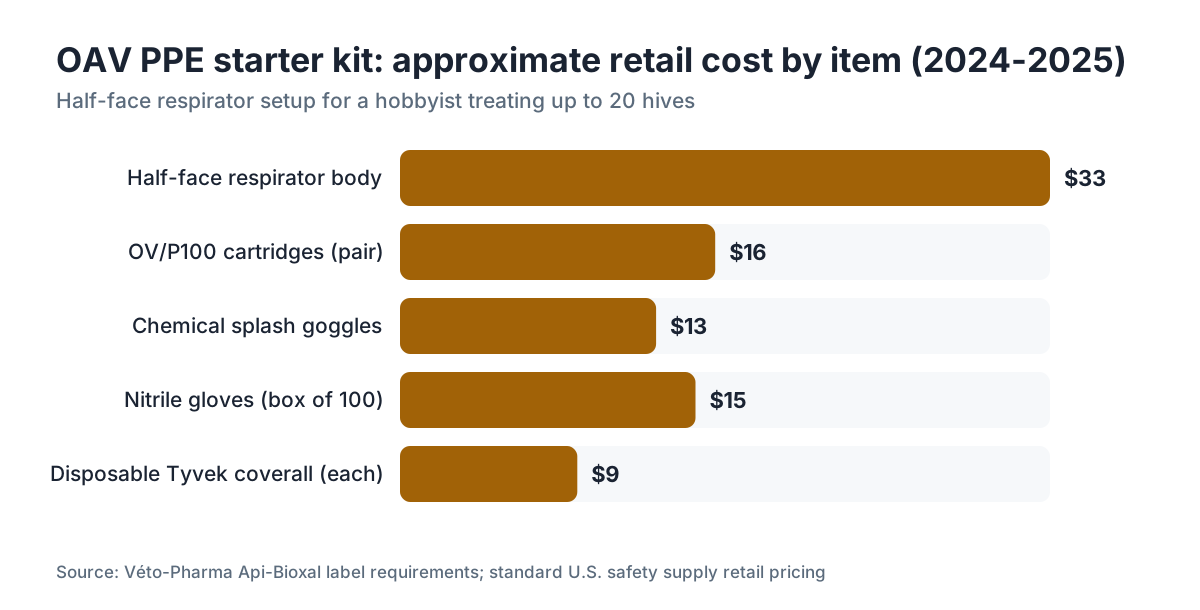
Here is an honest breakdown of a starter kit in 2024 to 2025, based on standard retail pricing at hardware and safety supply stores:
| Item | Minimum spec | Approximate cost |
|---|---|---|
| Half-face respirator body | 3M 6502QL or equivalent | $25-$40 |
| OV/P100 cartridges (pair) | 3M 60921 or equivalent | $12-$20 |
| Chemical splash goggles | Any ANSI Z87.1-rated sealed goggle | $8-$18 |
| Nitrile gloves (box of 100) | 6-mil, appropriate size | $10-$20 |
| Disposable Tyvek coverall (optional) | Standard size | $6-$12 each |
| Total without coverall | | $55-$98 |
| Total with coverall | | $61-$110 |
Safety supply houses (Grainger, Uline, Fastenal) and the big hardware chains (Home Depot, Lowe's) carry all of it. Amazon does too, but verify you are buying a genuine NIOSH-approved respirator and not an uncertified knockoff. The NIOSH approval number printed on the packaging is your check [4].
Beekeeping suppliers stock respirators now as well. Check beekeeping supply companies if you want to bundle PPE with your seasonal order.
Full-face respirators run $80 to $200 for the body alone, plus $15 to $25 for OV/P100 cartridges. Worth it if you treat more than 15 to 20 hives per session or you want the goggles question gone.
What about electric vs. propane vaporizers, does the PPE differ?
The PPE is identical no matter the vaporizer. Electric units like the Varrox, battery-powered units, propane-heated units. The oxalic acid vapor they produce is chemically the same, and the label's PPE requirements apply the same way across all of them [3].
Propane units add an open flame and combustion byproducts on top of the oxalic acid vapor, so there is a minor extra thought about the combustion environment, but the OV/P100 cartridge handles both hazards well enough for normal outdoor use.
The real difference is time. Some electric vaporizers heat and cool faster, which shrinks the window when the unit is hot and off-gassing crystals during handling. Don't let that tempt you into pulling your respirator early. Keep it on until the entrance is sealed and you have stepped several feet from the hive.
Is oxalic acid vaporization safe around bees and honey?
The EPA registered oxalic acid partly because it has a favorable safety profile for bees and for honey residues at label doses. The registered label rate for Api-Bioxal vaporization is 1 gram of oxalic acid dihydrate per brood box, with a ceiling of 50 grams per hive per year [3].
A 2012 study in the Journal of Apicultural Research found that oxalic acid treatment at labeled rates did not meaningfully raise oxalic acid residues in honey above naturally occurring background levels. Honey already carries roughly 8 to 40 mg/kg of oxalic acid depending on the floral source [8].
OAV can still cost you bees if the timing is wrong (heavy brood, big populations with poor ventilation) or the dose blows past label rates. Broodless windows are both more effective and gentler on the colony, which is why protocol matters as much as chemistry. Reading varroa mite biology tells you exactly when OAV lands hardest on the mites.
The short version: at labeled rates, the hazard from OAV points at the beekeeper, not the bees or the honey.
Frequently asked questions
Can I use an N95 mask instead of a respirator with OV cartridges for oxalic acid vaporization?
No. An N95 filters particulates but gives zero protection against oxalic acid vapor, which is the primary inhalation hazard during vaporization. The EPA-registered Api-Bioxal label requires a NIOSH-approved respirator with organic vapor and P100 cartridges. An N95 is not label-compliant for this use and won't protect you adequately.
How often do I need to replace the cartridges on my OAV respirator?
Cartridge change schedules depend on use time and storage. For hobbyists treating fewer than 20 hives, swapping OV/P100 cartridges once per treatment season is a safe rule. Store the respirator sealed in a ziplock bag between uses to slow degradation. Write the open date on the packaging. If you can smell anything through the respirator, replace the cartridges immediately.
Do I need special PPE to handle the oxalic acid crystals before vaporizing them?
Yes. Handling dry oxalic acid dihydrate crystals still calls for nitrile gloves and eye protection, because the fine dust irritates eyes and skin on contact. You don't strictly need the respirator just to measure and load the pan in open air with no heat applied, though some beekeepers wear it the whole time for simplicity. The label PPE covers the full application process.
Can I vaporize oxalic acid in a barn or shed instead of outside?
No. Treating indoors or in enclosed spaces lets acid vapor build to dangerous levels fast, and no ventilation system in a typical farm building is rated for it. Always treat in open air with a breeze at your back. This matches standard oxalic acid safety data sheet guidance and the label's environmental hazard language.
What's the Poison Control number if I have an oxalic acid exposure?
In the United States, call the Poison Control Center at 1-800-222-1222. The line runs 24 hours a day. For severe respiratory distress, eye exposure that doesn't clear with flushing, or any suspected ingestion, call 911 directly. Keep the product label or the name Api-Bioxal handy when you call, since it helps responders advise you accurately.
Do my regular leather beekeeping gloves work as chemical-resistant gloves for OAV?
No. Leather and fabric bee gloves are not chemical-resistant PPE and can soak up oxalic acid crystals and hold them against your skin. The label requires chemical-resistant gloves, and nitrile is the standard choice. Wear nitrile under your leather gloves if you want sting protection too, or skip the leather entirely during setup and teardown.
Is a face shield enough for eye protection, or do I need goggles?
A full-face shield gives reasonable eye protection and is generally acceptable, since the label lists a face shield as an alternative to goggles. Sealed chemical splash goggles do better against vapor drifting in from the sides and below the shield gap. If you are running a half-face respirator, goggles are the stronger pick. A full-face respirator settles the eye question entirely.
How long should I wait after vaporization before opening the hive without PPE?
Most beekeepers keep the hive sealed for 10 to 15 minutes after treatment to maximize bee exposure to the vapor. After that, vapor at the hive exterior drops quickly in open air. A good rule is to keep your respirator on until you have sealed the entrance and moved at least 10 feet away. By the time you finish the yard and circle back, the first hive is safe to open without PPE.
Can oxalic acid vaporization harm nearby people who aren't wearing PPE?
At normal outdoor distances, the risk to bystanders drops off fast as vapor disperses. Still, keep anyone without PPE at least 10 to 15 feet from the active zone, and don't treat upwind of occupied areas. Children and people with respiratory conditions like asthma are more sensitive to acid vapor irritation and should stay well clear during any OAV session.
Does Api-Bioxal require any special license or certification to buy and use?
In most U.S. states, Api-Bioxal is available to any beekeeper without a pesticide applicator license, since it is registered for agricultural use at the quantities beekeepers use. State rules vary, though, and a few states add registration requirements for pesticide use. Check with your state department of agriculture for your situation. EPA product registration itself does not require a license to purchase.
What's the maximum dose of oxalic acid I can use per hive per year?
The Api-Bioxal label caps use at 50 grams of oxalic acid dihydrate per hive per year, with each vaporization treatment applying 1 gram per brood box occupied by bees. Exceeding label rates isn't only a safety concern for you. It raises the risk of bee mortality and breaks FIFRA label compliance, which carries legal consequences for applicators.
Is a full-face respirator better than a half-face for OAV, and is it worth the extra cost?
For treating more than 15 to 20 hives in one session, a full-face unit earns its cost by removing the need for separate goggles and holding a more complete seal. For a hobby beekeeper with 2 to 10 hives, a half-face respirator with OV/P100 cartridges plus sealed chemical splash goggles is fully label-compliant and enough. The full-face makes practical sense mainly as hive count grows.
Where can I find the full Api-Bioxal label online to read the exact PPE language?
The EPA runs a searchable pesticide product label database at EPA.gov (the Pesticide Product Label System). Search for Api-Bioxal or EPA registration number 86604-1. The label PDF is the legal document and the primary reference for all use requirements, PPE included. Your state department of agriculture may also post it for registered products.
Sources
- American Conference of Governmental Industrial Hygienists (ACGIH), TLV-TWA for Oxalic Acid: ACGIH ceiling occupational exposure limit for oxalic acid is 1 mg/m³
- U.S. EPA, Federal Insecticide, Fungicide, and Rodenticide Act (FIFRA) overview: Using a pesticide inconsistently with its EPA-registered label is a federal violation under FIFRA
- U.S. EPA, Api-Bioxal Pesticide Product Label (EPA Reg. No. 86604-1): Api-Bioxal label specifies OV/P100 respirator, chemical splash goggles, nitrile gloves, long-sleeved shirt and pants, shoes and socks for vaporization; maximum 1 g oxalic acid dihydrate per brood box, 50 g per hive per year
- CDC/NIOSH, Respirator Selection Logic and APF Tables: NIOSH-approved half-face APR with OV/P100 cartridges is appropriate for organic vapor and particulate hazards; facial hair breaks face seal; NIOSH approval numbers verify genuine certified respirators
- Véto-Pharma, Api-Bioxal Safety Data Sheet: SDS recommends nitrile gloves, 15-20 minute eye flush for contact, 15-minute skin flush; storage below 25°C in dry location; flush skin contact for at least 15 minutes
- Honey Bee Health Coalition, Tools for Varroa Management Guide (current edition): Honey Bee Health Coalition flags inhalation as the primary beekeeper hazard during oxalic acid vaporization application; oxalic acid is one of the lowest-residue treatment options in beekeeping
- SAMHSA/HRSA, Poison Control Center national hotline: U.S. Poison Control Center operates at 1-800-222-1222, 24 hours a day
- Journal of Apicultural Research, Oxalic acid residues in honey after OA treatment (2012): OA treatment at labeled rates does not significantly increase oxalic acid residues in honey above natural background levels; naturally occurring concentration in honey is approximately 8 to 40 mg/kg
- Penn State Extension, Oxalic Acid for Varroa Mite Control in Honey Bee Colonies: University extension guidance on OAV application methods, broodless timing for maximum efficacy, and beekeeper safety protocols
- University of Minnesota Extension, Varroa Mite Management: Extension recommendation for broodless-period OAV treatment and respiratory protection requirements during oxalic acid application
Last updated 2026-07-09