Is oxalic acid FDA approved for honey bees? What beekeepers need to know
TL;DR
- Yes.
- The EPA registered oxalic acid dihydrate in 2013, and the FDA Center for Veterinary Medicine cleared it for honey bee colonies in 2015.
- Api-Bioxal is the only FDA-approved oxalic acid product in the U.S.
- Its current label allows three methods: dribble, vaporization, and extended-release sponge.
- Vaporization carries no honey super restriction under that label.
What does FDA approval for honey bees actually mean?
FDA approval and EPA registration are two different sign-offs, and beekeepers who confuse them get themselves in trouble. Any substance used on a food-producing animal in the U.S. needs clearance from two agencies. The EPA registers pesticides, miticides included, under the Federal Insecticide, Fungicide, and Rodenticide Act (FIFRA). The FDA's Center for Veterinary Medicine (CVM) separately checks whether residues in the food, in this case honey, are safe for people to eat and whether the treatment is appropriate for the animal.
Oxalic acid got its EPA registration in 2013 [1]. The FDA CVM cleared the human food safety side in 2015, and that 2015 date is what most researchers and extension educators mean when they call oxalic acid "FDA approved" [2]. Both had to be in place before Api-Bioxal could be sold legally as a varroa treatment.
Use Api-Bioxal by its label and you satisfy both agencies at once. The label is the law under FIFRA. Buy oxalic acid from a hardware store or a pool-supply shop and dose your bees with it, and you have committed a federal violation, no matter how identical the chemistry looks.
When was oxalic acid approved and what changed in the label over time?
The timeline has a few turns worth knowing. The EPA first registered oxalic acid dihydrate (Api-Bioxal, made by Chemicals Laif S.p.A. and distributed by Véto-pharma) in December 2013 [1]. Back then only the dribble method was approved, and only for broodless colonies.
The FDA CVM issued its clearance in 2015, which let the product go on sale across every state [2]. That's when hobbyists started seeing Api-Bioxal on supply company shelves.
The big regulatory jump came in 2021. The EPA approved a much wider label that added vaporization (with an oxalic acid vaporizer wand) and the extended-release sponge method [3]. The 2021 label also dropped the broodless requirement for vaporization. That one change matters enormously in practice. You can now treat straight through a brood cycle with repeated vaporizations and stay legal. The dribble method still calls for a broodless colony, and the label wording ties dribble application to conditions "when no sealed brood is present."
Under the current label, there is no restriction on treating hives with honey supers in place when you vaporize, as long as you follow the rest of the directions [3]. That was not true under the old label, and it still trips up experienced beekeepers. Pull the most recent copy from the EPA's pesticide registration database before you treat, because the registered label at the time of treatment is the one that counts.
What is Api-Bioxal and is it the only legal oxalic acid product for bees in the U.S.?
Api-Bioxal is the only EPA-registered and FDA-cleared oxalic acid product approved for honey bee colonies in the United States as of this writing [1][2]. It's 97.5% oxalic acid dihydrate. The active ingredient is the same compound in some wood bleaches and cleaners, but those products aren't registered for bees, and using them on a food animal is a federal pesticide misuse violation.
This stings for beekeepers who used generic oxalic acid for years, especially anyone who started before 2015 when no legal option existed. The chemistry is identical. The registration still matters legally, and it matters even more for liability if you sell honey or take part in a state inspection program.
Api-Bioxal comes in 35-gram and 175-gram packages. Prices move with supply and demand, but the 35g size usually runs $15 to $25 and the 175g size $50 to $80 [4]. If you're shopping beekeeping supply companies, check that the listing says "Api-Bioxal" and shows an EPA registration number on the label.
Beekeepers keep asking whether a cheaper generic registered product will ever arrive. As of mid-2026, none has received EPA registration for honey bee use in the U.S.
How does oxalic acid kill varroa mites?
Oxalic acid kills on contact. When a mite touches it, the acid tears up the mite's cellular membranes and kills the cell fast. Mites riding adult bees get hit directly whether you deliver the acid by dribble (a sugar-water solution), by vapor, or by extended-release sponge [5].
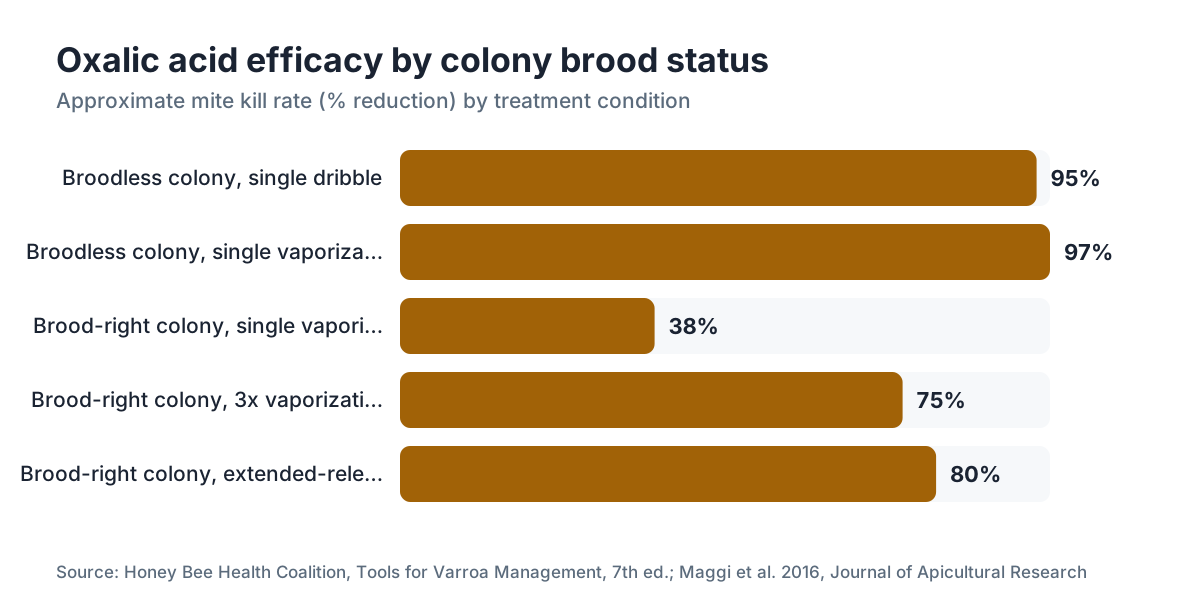
Here's the catch that governs everything: oxalic acid does essentially nothing to mites inside capped brood cells. It can't get through the wax cappings. That's why timing rules this treatment. A single dribble or vaporization during a broodless stretch can wipe out 90 to 99% of the mites in a colony, because every mite is on an adult bee and exposed [5][6]. The same treatment during a heavy brood cycle might reach only 30 to 40% of the mites, since most are sealed away in cells.
The extended-release sponge, the 2021 addition, works around this by slowly off-gassing oxalic acid vapor for weeks, catching mites as they emerge from cells. The studies behind the method showed efficacy across a 4 to 6 week window [3]. It's a genuinely different tool than a one-shot vaporization.
For the mite biology behind why the brood cycle matters this much, the varroa mite reference page walks through the life cycle.
What are the three legal application methods and which one should you use?
The current Api-Bioxal label authorizes three methods. Each one costs you something different.
Dribble (trickle) method: Dissolve Api-Bioxal in a 1:1 sugar syrup at the label's exact concentration (grams per liter), then dribble it onto the bees between frames. The colony has to be broodless. It's the cheapest method because all you need is a syringe or squeeze bottle. The downside: getting a colony reliably broodless in warm climates is hard without caging the queen, and you're pouring sugar syrup into the hive at a time you might not want to.
Vaporization: Put a measured dose of Api-Bioxal crystals in an electric or battery wand, slide it in at the hive entrance, and heat it until the acid sublimes into a fine vapor that spreads through the colony. The label allows repeats, usually three applications 5 to 7 days apart for brood-right colonies, or a single treatment when broodless. Vaporization is quick per hive (2 to 3 minutes once you're set up) and works with or without brood when you repeat it. The vaporizer runs $80 to $250 depending on the model [4].
Extended-release sponge: The newest method. Place a glycerin-soaked sponge strip (bought pre-made or made per label) in the hive. It releases oxalic acid vapor slowly over roughly 4 to 6 weeks. Most hands-off once it's in, but it takes the most prep, and the efficacy data is the youngest of the three [3].
For hobbyists and sideliners under 50 colonies, vaporization is the practical pick for treating colonies that have brood. Dribble shines for fall and winter treatments in cold climates where colonies go broodless on their own. Keep an eye on the sponge method as more field data lands.
VarroaVault has a free protocol builder that maps these methods to your local seasonal calendar. Bookmark it next to your Api-Bioxal label.
Is oxalic acid safe to use when honey supers are on the hive?
Under the current 2021 label, vaporization carries no restriction against treating with honey supers in place [3]. That reversed the old label, which did restrict treatment when honey supers meant for people were present.
Some state apiarists and extension programs still tell you to pull supers during vaporization anyway. Part of that is habit, since the old restriction ran deep in beekeeping culture. Part of it is that honey residue studies, while reassuring, don't cover every climate and condition.
The honest residue picture: oxalic acid occurs naturally in honey. Untreated honey typically holds 8 to 56 mg/kg depending on the floral source [6]. Treated colonies don't show a statistically significant jump above those natural levels in most studies. The Honey Bee Health Coalition's varroa guide, one of the best free references going, covers the residue data in its treatment comparison sections [7].
The dribble label still specifies application when no honey supers are on, which fits with the method being used during broodless periods when supers usually aren't on the hive anyway.
So: vaporizing with supers on is legal under the current label. Whether you're comfortable with it is your call. I'd pull supers before treating any honey I planned to sell at a premium, just to leave buyers zero doubt.
What does the Honey Bee Health Coalition say about oxalic acid?
The Honey Bee Health Coalition (HBHC) is a group of beekeeping organizations, researchers, and agricultural agencies that publishes "Tools for Varroa Management," one of the most cited varroa references anywhere. It's free and updated periodically [7].
In its treatment comparison, the HBHC rates oxalic acid as highly effective against mites on adult bees, with efficacy of 90% or greater in broodless colonies. The guide states that oxalic acid "has no known negative effects on bees or queens when used as directed" and that honey residues stay within naturally occurring ranges [7].
The guide also flags the nuance that governs brood-right colonies: method and timing decide the outcome. A single vaporization on a colony full of capped brood will underperform. For brood-right colonies, the HBHC points to multiple vaporizations spaced to catch mites as they emerge.
One line from the guide belongs on every beekeeper's wall during fall planning: "Oxalic acid treatments are most effective when applied to colonies that are broodless or have very little capped brood."
Is oxalic acid safe for the bees, the queen, and the beekeeper?
Bee safety: at label doses, Api-Bioxal has low toxicity to adult bees. Studies show mild short-term hits to bee lifespan at very high doses, but label-compliant doses don't cause meaningful colony-level harm [5][6]. The sponge method's long exposure has raised questions about sublethal effects over the treatment window, but current data show no alarming signals.
Queen safety is the question I hear most, and the answer has edges. Dribble treatments applied correctly are generally queen-safe. Vaporization is also considered safe at label doses, though beekeepers report the occasional lost queen after aggressive treatment. Nobody has clean controlled-trial data pinning vaporization as the cause in those cases. The closest published work suggests properly dosed vaporization doesn't significantly raise queen loss over untreated controls [6].
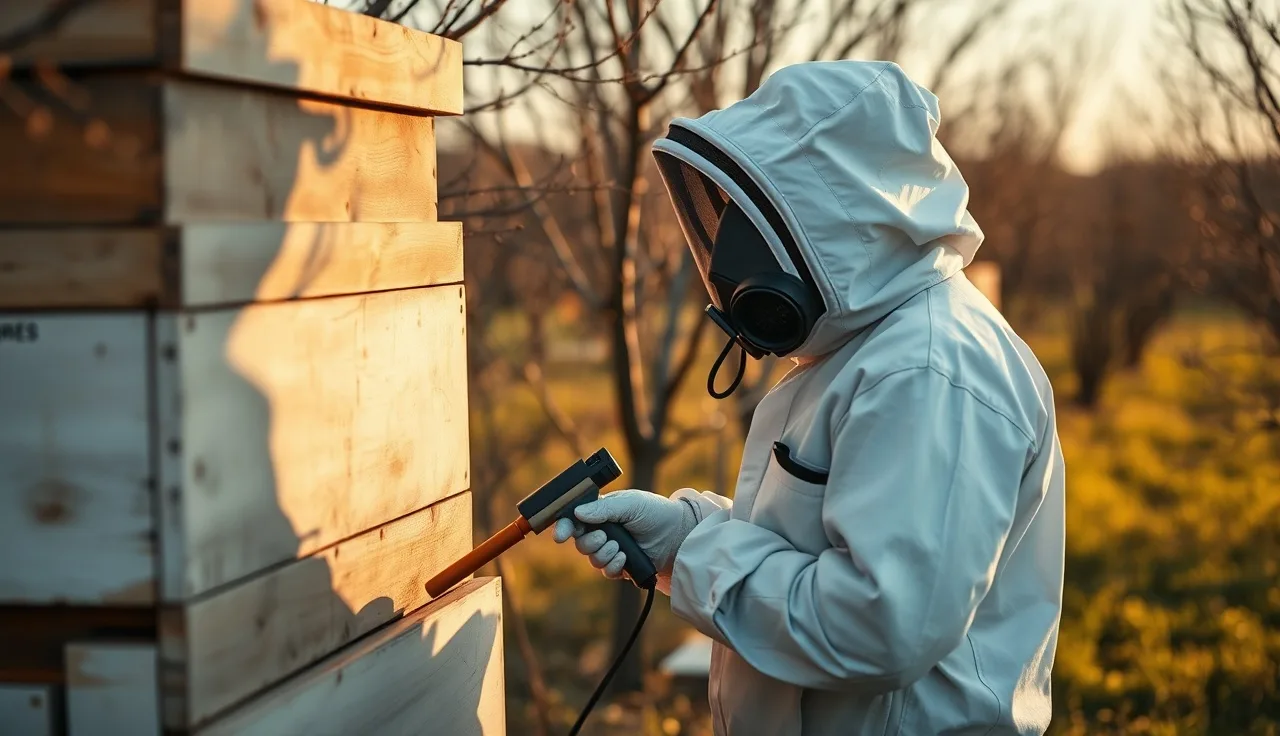
Beekeeper safety is where you cannot get casual. Oxalic acid vapor is a serious respiratory and mucous membrane irritant. The label requires a NIOSH-approved respirator, chemical-resistant gloves, and eye protection during vaporization [3]. Most extension programs recommend a half-face respirator with organic vapor and P100 cartridges, not a bare N95. Do not vaporize without a respirator. The vapor settles and clears fast, but during application the concentration near the entrance is high enough to hurt you.
For dribble, gloves and eye protection are enough, since nothing goes airborne.
Store Api-Bioxal cool, dry, and away from kids and pets. The oral LD50 for oxalic acid in rats is around 375 mg/kg, which puts it in the moderately toxic range. Not a handle-carelessly product.
Does oxalic acid require a prescription or veterinary authorization?
No prescription, no vet sign-off. This is where beekeepers get caught flat-footed. In 2022, the FDA's Guidance for Industry (GFI) #263 pulled several over-the-counter veterinary antibiotics under prescription control. Oxalic acid isn't a drug. It's a pesticide registered under FIFRA, so it sits outside that prescription requirement entirely [2][8].
You can buy Api-Bioxal over the counter with no veterinarian's prescription, in all U.S. states as of this writing. A few states layer on their own pesticide rules, so it's worth a look at your state department of agriculture's site, but no state has added a prescription requirement for oxalic acid as a standalone rule.
Compare that to oxytetracycline (for American foulbrood) or tylosin, which now need a Veterinary Feed Directive. Oxalic acid stays freely purchasable, which is one of its real practical edges over some other options.
How does oxalic acid compare to other varroa treatments?
The table below sets the four main registered varroa treatment categories side by side on the dimensions that decide how you use them.
| Treatment | Active ingredient | Brood penetration | Honey super restriction | Temp. limits | Resistance documented |
|---|---|---|---|---|---|
| Oxalic acid (Api-Bioxal) | Oxalic acid dihydrate | None | No (vaporization, current label) | Below 50°F reduces efficacy | No |
| Formic acid (Mite-Away Quick Strips, Formic Pro) | Formic acid | Partial (penetrates some capped cells) | No (per label) | Above 85°F increases bee toxicity | No |
| Amitraz (Apivar) | Amitraz | None (strip contact) | Yes, remove supers | Works across wider temp range | Yes, documented in some regions [9] |
| Thymol (ApiLife VAR, Apiguard) | Thymol | None | Yes, remove supers | Below 60°F reduces efficacy | No |
Oxalic acid's edges: no documented resistance, no honey super restriction under the current vaporization label, and low cost per treatment. Its weakness is the brood-cell gap, which makes timing and method selection matter more than with some other treatments.
Amitraz (Apivar) is the workhorse for heavy mite loads during the brood season, because the strips work passively over 6 to 8 weeks and don't demand precise timing. But resistance is real. A 2020 USDA study confirmed reduced susceptibility to amitraz in varroa populations from several U.S. states [9]. Rotating treatment classes, oxalic acid included, is the best way to slow resistance.
For a full-season plan, the free tools at VarroaVault map treatment windows to your local brood cycles and match methods to mite thresholds from your alcohol wash counts.
Can you use oxalic acid in organic or treatment-free management?
Yes, oxalic acid is allowed in certified organic beekeeping in the United States. The USDA National Organic Program (NOP) lists oxalic acid as a synthetic substance allowed in organic livestock production when used per its registered label [10]. If you hold organic certification or sell organic honey, that's a big deal. You can treat with Api-Bioxal and keep your organic status, which you can't do with amitraz or most synthetic acaricides.
Treatment-free is a different animal. It's a management philosophy, not a regulatory category. Some treatment-free beekeepers still use oxalic acid in narrow windows (during splits or on packages before brood is established) and consider that consistent with their approach because the acid is naturally occurring. Others count any miticide as a break from treatment-free principles. That's a philosophical line, not a legal one.
If you're producing certified organic honey, log every treatment with date, method, dose, and colony ID. Most certifiers want records going back at least a year.
What do state extension programs say about oxalic acid use?
University extension programs are probably the most useful oxalic acid guides you'll find, because they turn the label into regional timing advice. The Penn State Extension apiculture program and the University of Minnesota Bee Lab both publish oxalic acid guidance worth reading alongside the label [11][12].
A message you'll hear across programs: timing a dribble or single vaporization to hit a natural broodless period, usually late fall in most of the U.S., is the single best use of oxalic acid. Mite load before the winter cluster forms is one of the strongest predictors of whether a colony survives. Treating in October or November in northern states, when queens have stopped or nearly stopped laying, can hit the 90%-plus efficacy numbers that decide winter survival.
Extension programs also keep hammering one point: no treatment replaces monitoring. Treating without pre- and post-treatment mite counts is flying blind. Alcohol wash or sugar roll before treatment, alcohol wash 48 to 72 hours after. That's the floor for knowing whether what you did actually worked.
Frequently asked questions
Is oxalic acid safe to use in a hive with honey supers on?
Under the current Api-Bioxal label (updated in 2021), the vaporization method does not restrict treatment when honey supers are present. Oxalic acid occurs naturally in honey, so treated hives don't show significant residue elevation above baseline. The dribble method label still specifies no honey supers should be present, but that method is used during broodless periods when supers usually aren't on anyway.
Do I need a prescription to buy Api-Bioxal?
No. Api-Bioxal is registered as a pesticide under FIFRA, not as a veterinary drug, so it falls outside the FDA prescription framework that now covers antibiotics like oxytetracycline. You can buy it over the counter at beekeeping supply stores without veterinary authorization in all U.S. states as of mid-2026. Check your state's department of agriculture for any additional local rules.
Can oxalic acid kill varroa mites in capped brood cells?
No. Oxalic acid cannot penetrate wax cappings, so mites inside capped brood cells are fully protected from any oxalic acid treatment. This is the treatment's central limitation. The extended-release sponge method and repeated vaporizations get around it indirectly by keeping vapor present over several weeks to catch mites as they emerge from cells onto adult bees.
How many times can I treat a hive with oxalic acid per year?
The current Api-Bioxal label doesn't set an annual treatment limit the way some older formulations did. For vaporization in a brood-right colony, the label supports a course of multiple treatments, typically three applications 5 to 7 days apart. For a broodless colony, one treatment is generally enough. Re-read the current label each time, since EPA-registered labels get updated and the label in force at treatment is the controlling one.
What PPE do I need when vaporizing oxalic acid?
At minimum: a NIOSH-approved respirator rated for organic vapors and particulates (a plain N95 alone is insufficient for vapor), chemical-resistant gloves, and safety glasses or a face shield. The vapor escaping around the hive entrance during treatment is a serious respiratory and mucous membrane irritant. Most extension programs recommend a half-face respirator with OV/P100 combination cartridges. Treat outdoors and stand upwind.
Is oxalic acid approved for organic beekeeping in the U.S.?
Yes. The USDA National Organic Program lists oxalic acid as a synthetic substance allowed in organic livestock production, which includes honey bees, when used per its registered label. That makes Api-Bioxal one of very few varroa miticides compatible with certified organic honey production. Keep written treatment records with dates, doses, and colony IDs, since organic certifiers typically require at least a year of documentation.
What is the efficacy of oxalic acid against varroa mites?
In broodless colonies, efficacy of 90 to 99% mite kill has been documented in controlled studies and is cited by the Honey Bee Health Coalition. In brood-right colonies with a single vaporization, efficacy drops sharply because mites in capped cells go untouched. Repeated vaporizations over 3 to 4 weeks in a brood-right colony can reach higher cumulative efficacy, though published numbers vary with study design and timing.
Can varroa mites develop resistance to oxalic acid?
No documented resistance to oxalic acid in varroa mites has been reported as of mid-2026. That sets it apart from amitraz, where reduced susceptibility has been confirmed in several U.S. varroa populations. The physical mode of action (direct cellular membrane disruption) is thought to make resistance less likely than with synthetic acaricides that target specific receptor pathways. That's one reason resistance guidelines recommend keeping oxalic acid in rotation.
What temperature is needed for oxalic acid vaporization to work?
Oxalic acid vaporizes above roughly 157°C (315°F), which any working registered vaporizer reaches. The real temperature concern is ambient: treatments below about 50°F (10°C) can be less effective because bees cluster tightly and vapor spreads poorly through the cluster. Most practitioners aim for late fall treatments before temperatures drop consistently below 40°F.
How long does oxalic acid treatment take per hive?
For vaporization, active treatment runs about 2 to 3 minutes per hive once the wand is up to temperature, plus a few minutes for it to cool between hives. Gear and setup add time. Experienced beekeepers working established apiaries can process 15 to 25 colonies per hour. Dribble is faster per application but needs the solution mixed ahead. The extended-release sponge takes the most prep, then no return visit for 4 to 6 weeks.
Is generic oxalic acid from hardware stores legal to use on bees?
No. Using any pesticide on a food-producing animal outside its registered label is a federal violation under FIFRA. Hardware store and pool-supply oxalic acid isn't registered for honey bee use. The active ingredient is chemically identical to Api-Bioxal, but legal use requires the registered product. Using unregistered material also voids liability protection and can create problems for state inspection programs or honey sales.
When is the best time of year to treat bees with oxalic acid?
Late fall, when the queen has slowed or stopped laying and capped brood is minimal or absent, is the best window for a single high-efficacy treatment in most U.S. climates. That usually falls between October and December depending on latitude. Vaporization can be used year-round in brood-right colonies with multiple applications. Spring treatment of packages or splits before brood is established is also highly effective.
Which EPA registration number does Api-Bioxal carry?
Api-Bioxal's EPA registration number is 86973-1. You'll find it printed on the product label and can verify it in the EPA's pesticide registration database at EPA.gov. Confirm you're looking at the current registered label, since revisions (like the 2021 update that added vaporization and sponge methods) supersede earlier versions, and the current label is the legally controlling document.
Can I treat a nucleus colony or package with oxalic acid?
Yes, and it's one of the best uses of oxalic acid. A newly installed package or a nuc in its first week, before significant brood is capped, lets a single dribble or vaporization reach nearly the whole mite population. Treating packages shortly after installation is a common, effective way to start new colonies with the lowest possible mite load. The label covers nucleus colonies without special restrictions.
Sources
- EPA, Pesticide Registration for Api-Bioxal (EPA Reg. No. 86973-1): EPA registered oxalic acid dihydrate (Api-Bioxal) for honey bee use in December 2013
- FDA Center for Veterinary Medicine, NADA 141-427 Approval (Api-Bioxal): FDA CVM issued clearance for Api-Bioxal for use in honey bee colonies in 2015
- EPA, Api-Bioxal Registered Label (current version including 2021 amendments, EPA Reg. No. 86973-1): 2021 label expansion added vaporization and extended-release sponge methods and removed honey super restriction for vaporization
- Mann Lake Ltd., Api-Bioxal product page: Api-Bioxal retail pricing range for 35g and 175g packages in the U.S. hobbyist market
- Gregorc A. & Planinc I. (2012), Acaricidal effect of oxalic acid, Apidologie: Oxalic acid works by contact on mites feeding on adult bees; no efficacy on mites in capped cells
- Maggi M. et al. (2016), Oxalic acid efficacy and bee safety, Journal of Apicultural Research: Broodless colony efficacy of 90% or greater; no significant elevation in honey oxalic acid residues at label doses; queen loss not significantly elevated by properly dosed vaporization
- Honey Bee Health Coalition, Tools for Varroa Management Guide (7th edition): HBHC rates oxalic acid efficacy at 90%+ in broodless colonies; states no known negative effects on bees or queens when used as directed; notes honey residues within naturally occurring ranges
- FDA, Guidance for Industry #263, Deemed New Animal Drug Applications: GFI 263 applies to antibiotics and drugs under prescription control; oxalic acid as a FIFRA-registered pesticide is not subject to veterinary prescription requirements
- USDA ARS, Amitraz resistance in Varroa destructor in the United States (2020): USDA confirmed reduced susceptibility to amitraz in varroa populations from several U.S. states by 2020
- USDA Agricultural Marketing Service, National Organic Program: USDA National Organic Program lists oxalic acid as a synthetic substance allowed in organic livestock production when used per its registered label
- Penn State Extension, Varroa Mite Management in Honey Bee Colonies: Penn State Extension guidance on oxalic acid timing and regional application protocols for northeastern U.S. beekeepers
- University of Minnesota Bee Lab, Varroa Management Resources: UMN Bee Lab recommendations for oxalic acid vaporization timing aligned to northern U.S. brood cycles
Last updated 2026-07-09