Oxalic acid tablets for bees: how they work and when to use them
TL;DR
- Oxalic acid tablets (sold as Api-Bioxal) are EPA-registered varroa treatments that release oxalic acid vapor when heated on a vaporizer.
- They kill phoretic mites riding adult bees, with roughly 90-99% efficacy in broodless colonies.
- Expect only 60-70% with brood present.
- At label doses they leave no residue in honey.
- Each hive takes about 2-3 minutes.
What are oxalic acid tablets for bees?
Oxalic acid tablets are pre-measured doses of oxalic acid dihydrate pressed into a solid pellet that sits on a heated vaporizer plate inside the hive. As the plate heats, the tablet sublimates into a fine vapor that coats every surface, including the mites clinging to adult bees. The mites absorb it and die. The bees, for reasons researchers still cannot fully explain, tolerate the exposure far better than varroa does.
The only EPA-registered oxalic acid product cleared for use in United States beehives is Api-Bioxal, made by Chemicals Laif S.p.A. and sold through several suppliers [1]. It comes in two forms: a powder you mix into syrup for the dribble method, and the pre-formed tablets (sometimes called "Api-Bioxal tablets" or just OA tabs) meant for vaporization. This article covers the tablet and vapor form.
The active ingredient is oxalic acid dihydrate at 99.2% purity in the registered product. The label sets 1 gram per brood box as the standard vaporization dose, though the exact tablet weight varies slightly by vaporizer tool [1]. Check the current Api-Bioxal label from your supplier every season. The EPA has revised the application language more than once since the original 2015 registration.
Just starting with varroa mite management? Oxalic acid vaporization is one of the most practical low-residue options a hobbyist or sideliner can reach for.
How do oxalic acid tablets actually kill varroa mites?
Oxalic acid is a dicarboxylic acid that occurs naturally in plants like rhubarb and sorrel. It damages the varroa mite's cuticle and probably disrupts its metabolism, though nobody has nailed down the exact mechanism yet. The practical result is what matters: phoretic mites, the ones riding adult bees instead of hiding in capped brood, die on contact with the vapor [11].
That word "phoretic" is the whole game. Oxalic acid vapor cannot get inside capped brood cells. Mites sealed in there survive treatment completely. This single fact explains why efficacy numbers swing so wildly with the colony's brood state.
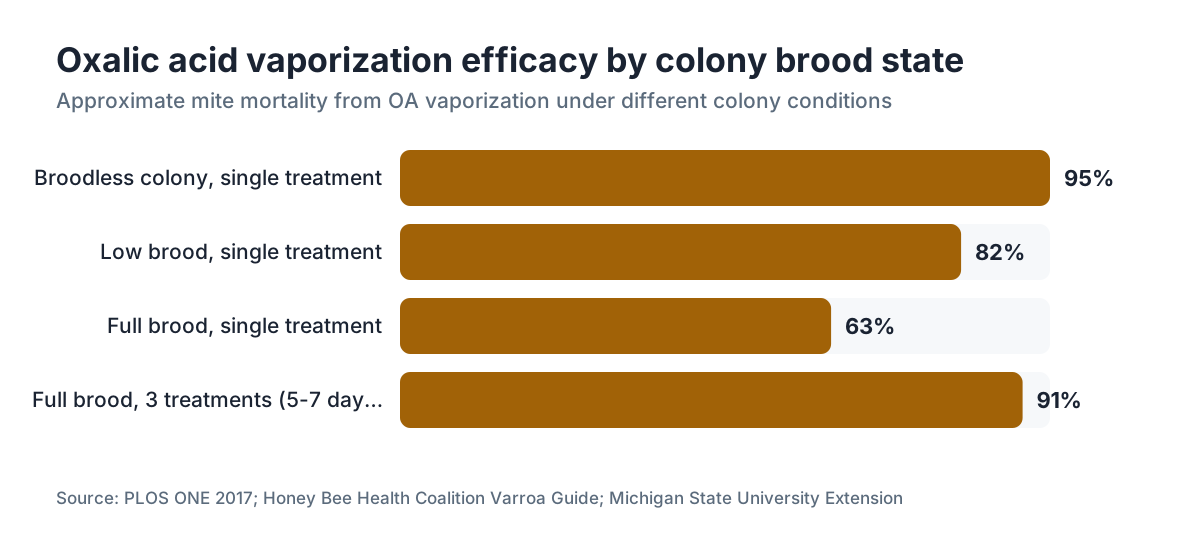
A 2017 study in PLOS ONE found oxalic acid vaporization killed more than 90% of mites in broodless colonies treated once [2]. Add capped brood and a single treatment falls to somewhere around 60-70%, because the surviving in-cell mites re-infest the colony as their host pupae hatch. The Honey Bee Health Coalition's Varroa Management Guide puts it plainly: "Oxalic acid is most effective when applied during a broodless period, such as winter or when a colony is in a forced or natural broodless condition" [3].
Multiple treatments spaced 5 to 7 days apart close most of that gap when brood is present, because each round catches a fresh cohort of mites as they emerge from cells [12]. The Api-Bioxal label currently allows up to three vaporization treatments in a 7-day interval series. Read your current label. This is one case where "read the label" is more than filler advice.
What efficacy can you realistically expect from OA vaporization?
Honest answer: it hinges on three things. Brood status, mite load, and how well you seal the hive during treatment.
Here are the numbers straight from the literature and extension guidance:
| Colony condition | Single treatment efficacy | Source |
|---|---|---|
| Fully broodless (winter/induced) | 90-99% mite drop | PLOS ONE, 2017 [2] |
| Low brood (late fall, early spring) | 75-90% | Honey Bee Health Coalition [3] |
| Full brood present, single treatment | 55-70% | Michigan State Extension [12] |
| Full brood, 3 treatments 5-7 days apart | 85-95% | Michigan State Extension [12] |
Those ranges reflect real differences in operator technique, hive setup, and outside temperature. Cold slows vaporization. Wind leaking through a poorly sealed hive scatters the vapor before mites take up a lethal dose.
The 90-99% figure for broodless colonies is about as good as any approved treatment gets, and it comes without the temperature window of amitraz strips or the multi-week commitment of formic acid pads. That is why so many experienced beekeepers build their calendar around creating at least one broodless period a year, purely to catch this window.
Run the math. A colony with a 3% mite load (3 mites per 100 bees, a common treatment threshold) [3] and 10,000 adult bees carries roughly 300 phoretic mites. A 95% kill leaves 15 mites alive. A 60% kill leaves 120. Those survivors breed fast. That gap is why timing beats brute force.
When is the best time to use oxalic acid tablets?
The broodless window is the whole opportunity. In most of the continental U.S. it opens naturally in mid-winter, when the queen pauses laying under cold and short days. In Minnesota or Maine that broodless stretch often runs from late November into January. Along the Gulf Coast or in California's valleys, you may never get a truly broodless colony without forcing it.
For hobbyists in four-season country, the practical protocol goes like this. Monitor mite loads all season with alcohol washes or sticky boards. Treat with a summer miticide (repeated oxalic acid, formic acid, or amitraz depending on temperature and your comfort) if mites cross threshold. Then plan a single vaporization treatment during the December-January broodless window as a final knockdown before spring buildup.
If your mite load spikes in August, do not wait for winter. Treat with whatever fits the conditions and the brood state you have. Waiting costs you bees.
The Api-Bioxal label also permits vaporization during the honey production season when no supers intended for human consumption are on the hive [1]. If supers are on, pull them first. A residue review cited by the EPA found oxalic acid does not build up above natural background levels in honey at label doses [1][7], but the label still requires super removal as a precaution during the flow.
Some beekeepers run a "split and treat" move in summer. Make a walk-away split from a high-mite colony, let the queenless half go broodless naturally over about 24 days while the queen cells develop, then treat that queenless unit at peak broodlessness before recombining. It works. It just takes timing discipline.
How do you use oxalic acid tablets step by step?
Gear you need: a registered vaporizer (Varomorus, ProVap, Sublimox, or similar), a power source (battery or extension cord), Api-Bioxal tablets, nitrile or latex gloves, a properly rated respirator (NIOSH-approved for organic acid vapors, at minimum P100 with OV cartridges), and foam or cloth to seal entrances and gaps.
Step one: gear up before you open anything. Gloves on, respirator fitted and sealed to your face. Oxalic acid vapor irritates the airways and damages eyes and mucous membranes. The Api-Bioxal label requires a respirator. This is not optional [1].
Step two: reduce and temporarily seal the entrance. A foam strip, folded cloth, or entrance reducer does the job. You want vapor trapped inside for at least 10 minutes after treatment ends. Plug any obvious gaps in the bottom board or hive body joints.
Step three: load one Api-Bioxal tablet (1 gram per brood chamber) onto the vaporizer plate. Two brood boxes? Check your label. Some vaporizer instructions call for two tablets on a two-box colony, and the Api-Bioxal label allows up to 2 grams for multiple-brood-chamber colonies. Read both documents.
Step four: insert the vaporizer through the reduced entrance or a dedicated bottom board slot, keeping the plate below the bottom bars of the frames. Do not stand in front of or above the entrance while the vapor generates.
Step five: apply power per your vaporizer's instructions. Most electric vaporizers sublimate a 1-gram tablet in 2 to 4 minutes. Gas models like the Sublimox move faster. Keep the entrance sealed for at least 10 minutes after the tablet fully vaporizes.
Step six: pull the vaporizer, open the entrance, and step away. Do not linger at the front of the hive.
Record the date, colony ID, and the mite count that triggered treatment. Running a series? Set reminders for the follow-up applications at 5 to 7 day intervals.
One honest caveat. Treating through a screened bottom board with the sticky board removed is common and generally works, but some vapor escapes downward. A solid bottom board, or sealing the screen with the monitoring board in place, holds vapor better. The data on how much this changes efficacy is not conclusive, though better retention logically means more contact time.
How should you wrap your bee hive when using oxalic acid in winter?
Wrapping and treatment are two separate jobs that happen to overlap in late fall and winter. A winter wrap helps the cluster hold heat and cut condensation. It does nothing to trap treatment vapor by design, though a snug wrap can reduce air leaks as a side effect. The entrance still needs its own temporary seal during treatment, wrap or no wrap.
This question comes up most from beekeepers treating in cold weather, when entrances are already reduced for winter prep.
If your hive is already wrapped, the wrap may help hold vapor inside by cutting air infiltration through gaps in the woodenware. Treat that as a bonus, not a plan. The entrance seal does the real work.
In cold conditions (below 40 degrees F), your bigger worry is the vaporizer itself. Some electric models struggle to reach sublimation temperature in frigid air. The Api-Bioxal label sets no minimum ambient temperature for vaporization, unlike formic acid, which needs above 50 degrees F. Practically speaking, if the plate is fighting to heat in a cold wind, vapor quality drops. A calm, mild winter day beats a blustery cold one. Even 35 to 40 degrees F is fine with no wind.
If you use wraps, keep your entrance access clear of insulation. You need a clean path to insert and remove the vaporizer and to place and pull the temporary seal. Some beekeepers cut a small notch or flap into the wrap just for this.
On winter hive gear more broadly, our beekeeping supplies overview covers the tools experienced beekeepers keep on hand year-round.
Is oxalic acid vaporization safe for bees and honey?
For bees: yes at label doses, with some nuance. Adult bees handle OA vapor well. Studies have not found real brood damage from vaporization at 1 gram per box, though very high or repeated doses can stress a colony. University of Minnesota Extension notes that some studies saw temporary drops in adult bee longevity at above-label doses, so stick to the label [4].
For queens: the evidence reassures but does not close the book. A common worry is that repeated treatments raise queen loss. A 2021 review in Apidologie found no statistically significant queen loss from OA vaporization at label rates versus untreated controls across the studies analyzed [6]. Colony-to-colony variation is real, and some beekeepers report more queen loss after repeated in-season treatments. Watch your queens after any series.
For honey: oxalic acid already exists in honey at background levels of roughly 8 to 40 mg/kg depending on floral source [7]. The EPA registration review found residues in honey from treated hives stay within that natural range at label doses, which is why supers can stay on under certain label conditions. The label language on this has changed over time, so verify against the current registered label from the EPA's pesticide product label database [1].
For the beekeeper: this is where the real risk lives. Oxalic acid vapor irritates the airways, damages the eyes, and harms mucous membranes. The Api-Bioxal label requires a NIOSH-approved respirator with P100 and organic vapor cartridges, chemical splash goggles, and chemical-resistant gloves. People skip this. Do not be that person. A single poorly protected treatment can leave you with symptoms for days.
What equipment do you need for OA tablet vaporization?
The gear list is short and none of it is negotiable.
Vaporizer: a device that heats a metal plate to roughly 356 degrees F (180 degrees C), the sublimation point of oxalic acid. Battery models like the Varomorus and ProVap 110 run off a 12V battery and cost about $60 to $120 depending on the model and supplier. Propane units like the Sublimox run $250 to $400 but treat faster and hold up in cold weather. Neither fuel type is safer or more effective when used right; the choice is about throughput and whether you want to lug a battery.
Respirator: a half-face model with P100 particulate filters plus organic vapor cartridges. The 3M 6200 series with 60923 combination cartridges is a common pick, around $40 to $60 for the mask plus a pair of cartridges. Replace cartridges on the manufacturer's schedule, not when you finally smell vapor through them.
Eye protection: chemical splash goggles, not safety glasses. Goggles seal around the eyes. Safety glasses leave gaps vapor slips through.
Gloves: nitrile or latex at minimum. Dissolved oxalic acid irritates skin, and the residue left on the plate after treatment is concentrated.
Api-Bioxal tablets: roughly $40 to $60 for a 35-gram package (about 35 treatments at 1 gram each) as of 2024, varying by supplier. Find them through beekeeping supply companies and some farm supply retailers.
Optional but handy: a phone timer, a dedicated entrance foam plug cut to your hive's width, and a clipboard for treatment dates and mite counts. Records are not busywork. They are the only way to know whether the treatment worked.
How does oxalic acid compare to other varroa treatments?
| Treatment | Active ingredient | Brood penetration | Temperature limits | Honey super restrictions | Cost per treatment (approx.) |
|---|---|---|---|---|---|
| Oxalic acid vapor (Api-Bioxal) | Oxalic acid | None | None specified, practical min ~35 degrees F | Remove supers during application | $1-2 |
| Amitraz strips (Apivar) | Amitraz | Partial (via contact) | 50-105 degrees F | No supers during treatment | $6-9 |
| Formic acid pads (Mite Away Quick Strips) | Formic acid | Yes, penetrates brood | 50-85 degrees F (strict) | Remove supers | $8-12 |
| Formic acid gel (Formic Pro) | Formic acid | Yes | 50-92 degrees F | Remove supers | $7-10 |
| Thymol (Apiguard) | Thymol | Partial | 59-105 degrees F | Remove supers | $6-10 |
Oxalic acid vapor has the lowest per-treatment cost, the fewest temperature restrictions, and zero brood penetration. That last trait is a limitation with brood present but an asset for colony safety: there is no known way for oxalic acid vapor to harm bee larvae the way high-dose formic acid can.
Amitraz (Apivar) is often the right call mid-season, when brood is heavy and one long-duration treatment beats repeated OA rounds. Plenty of experienced beekeepers run both. Apivar or MAQS during the summer spike, then a winter broodless OA vaporization to close out the season.
Formic acid's brood penetration is genuinely useful during a summer spike, but the tight temperature window (MAQS needs 50 to 85 degrees F across the full application) makes it risky to lean on alone. Guaranteeing that range over a 7-day stretch is hard.
The Honey Bee Health Coalition's Varroa Management Guide has a full decision matrix for treatment selection by brood state, temperature, and honey flow [3]. It is the best free reference out there, and the VarroaVault treatment tools follow the same logic.
What does the EPA label actually say about using oxalic acid on bees?
The Api-Bioxal label, registered by the EPA under Registration Number 86203-1, sets the rules for vaporization [1]. On honey supers, the label states: "Do not apply when supers are in place and nectar/honey intended for human consumption is being stored."
The label allows vaporization three times in a 7-day interval when brood is present. For broodless colonies, a single treatment is specified. The 1-gram dose per brood chamber applies to each application.
PPE requirements from the label: chemical-resistant gloves, protective eyewear, a NIOSH-approved respirator with an organic vapor cartridge and particulate pre-filter, a long-sleeved shirt, and long pants. The label also requires keeping bystanders out of the treatment area.
One detail beekeepers miss: the label requires the vaporizer to be fully inserted before power is applied and fully powered down before removal. That keeps you from carrying a hot, vapor-emitting wand toward your face or a bystander.
Labels get revised. The version someone posted in a forum two years ago may not match the current legal requirements. Download the current label from the EPA's pesticide product label database or from a registered supplier before treatment season.
Using oxalic acid in ways the label does not specify (higher doses, unapproved formulations, unapproved vaporizer equipment) is a federal violation under FIFRA, the Federal Insecticide, Fungicide, and Rodenticide Act [10]. That matters beyond legality: if something goes wrong with a colony after an off-label treatment, you have no recourse.
Can you treat colonies with honey supers on using OA tablets?
Short answer: mostly no, with a narrow exception.
The Api-Bioxal label prohibits vaporization when supers holding honey intended for human consumption are on the hive [1]. That default covers the vast majority of situations during the honey flow.
The exception lives in the label language for late-season or winter treatment, when supers may technically still be on but there is no active flow. In practice most beekeepers pull supers before winter treatment anyway, and extension guidance recommends doing so to skip any ambiguity [4].
The residue science actually favors you here. As noted above, OA does not build up above natural background levels in honey at label doses [7]. But the label says what it says, and following it is a legal requirement. If a honey crop were tested and found to carry elevated OA from an off-label application, the beekeeper carries the liability.
So treat in winter or early spring before supers go on, or treat after you pull supers at the end of the flow. Build your calendar so supers come off right as you start watching for the late-summer mite spike. Once that rhythm sticks, the schedule runs itself.
How do you know if the OA tablet treatment actually worked?
Treat, then test. There is no shortcut around it.
Plan a follow-up mite wash 10 to 14 days after your last treatment in a series. That gives any surviving mites time to become phoretic and show up in an alcohol wash. The Honey Bee Health Coalition recommends a post-treatment wash as standard protocol [3]. Sample at least 300 adult bees (about a half cup) from brood frames, not from the outer shell of the cluster.
If your post-treatment count still sits above 2% (2 mites per 100 bees) in fall, or above 1% heading into winter, the treatment did not do enough [9]. Your options then depend on season and temperature: another OA series, a switch to amitraz, or a combination.
A natural mite drop on a sticky board after vaporization gives a rough qualitative read. A heavy drop of dead mites in the 48 hours after treatment is reassuring. But sticky board counts are notoriously imprecise for pinning down actual infestation rates. Use them as a sanity check, not your main efficacy metric.
VarroaVault has free mite monitoring worksheets and threshold calculators to track colony-by-colony data across the season. Knowing each colony's history is the difference between chasing fires and running real mite management.
For the biology behind why the mite's reproductive cycle makes timing so important, the varroa mite reference page covers the science in depth.
Frequently asked questions
How many oxalic acid tablets do I need per hive?
The Api-Bioxal label specifies 1 gram per brood chamber for vaporization. A standard single-brood-box colony gets one 1-gram tablet per treatment. A two-box colony can use up to 2 grams. Most beekeepers treat 1 to 3 hives per session, so a single 35-gram Api-Bioxal package covers roughly 35 single-box treatments, plenty for a hobbyist apiary for a full season.
Can I use oxalic acid tablets if there is brood in the hive?
Yes, but efficacy drops hard. A single treatment with brood present typically kills 55-70% of mites, because vapor cannot penetrate capped cells. The Api-Bioxal label allows up to three vaporization treatments at 5-7 day intervals when brood is present, which can push cumulative efficacy to 85-95% by catching mites as they emerge from cells across successive treatments.
How long do I leave the hive sealed after OA vaporization?
At least 10 minutes after the tablet has fully sublimated. Most beekeepers seal the entrance for the whole treatment (2 to 4 minutes of active vaporization) plus 10 minutes after the vaporizer shuts off. Some keep it sealed 20 to 30 minutes for extra contact time. Beyond 30 minutes there is little added benefit; vapor disperses and concentration drops.
What temperature do I need to use oxalic acid tablets safely?
The Api-Bioxal label sets no minimum temperature for vaporization, unlike formic acid labels. In practice most electric vaporizers work fine down to about 35-40 degrees F. Very cold air can slow tablet sublimation and cut vapor quality. Treat on a calm day rather than in wind, which pushes vapor out through hive gaps regardless of temperature.
Is oxalic acid vaporization safe for the queen?
At label doses, the evidence points to acceptable queen safety. A 2021 Apidologie review found no statistically significant queen loss from OA vaporization at label rates versus untreated controls. Anecdotal reports of queen loss after repeated summer treatments exist but are not consistent across studies. Monitor your queens after any series, and know that rapid repeated treatments carry more risk than a single winter broodless treatment.
Can I use a homemade vaporizer with Api-Bioxal tablets?
Technically no. FIFRA requires pesticides to be used with application devices consistent with the label's intent. Practically, homemade vaporizers may not reach a consistent sublimation temperature, which creates both safety risks (acid vapor leaking without full sublimation) and efficacy problems. Registered vaporizers from established makers cost $60 to $150 and are worth it over the liability and inconsistency of DIY gear.
How often can I treat with oxalic acid tablets in one year?
The Api-Bioxal label allows up to three treatments per colony per year for vaporization, though many beekeepers apply one winter broodless treatment plus a series of three summer treatments when mites spike, which puts them at the labeled maximum. Always confirm against the current registered label, since application frequency language has changed since the original 2015 registration.
Do I need to remove honey supers before using OA tablets?
Yes, in nearly every practical scenario. The Api-Bioxal label prohibits vaporization when supers holding honey intended for human consumption are on the hive. Remove supers before treatment. This is the most common label compliance slip among hobbyists. Build your calendar so summer and fall treatments happen after super removal, and winter treatments happen before spring honey flows.
What respirator do I need for oxalic acid vaporization?
The Api-Bioxal label requires a NIOSH-approved respirator with a P100 particulate pre-filter and an organic vapor cartridge. A dust mask or surgical mask gives zero protection from oxalic acid vapor. The 3M 6200 half-face respirator with 60923 combination cartridges is a widely used option. Replace cartridges on the manufacturer's schedule, not when you can smell vapor through them.
Does oxalic acid vaporization leave residue in honey?
Not at meaningful levels above natural background. Oxalic acid occurs naturally in honey at 8-40 mg/kg depending on floral source. The EPA residue review found Api-Bioxal vaporization at label doses does not push honey residues above that natural range. The label still prohibits treatment with supers on because of the legal precautionary requirement, separate from the residue science.
What is the difference between oxalic acid dribble and oxalic acid vaporization?
The dribble method dissolves oxalic acid in sugar syrup and applies it onto bees between frames. It works well for broodless winter clusters and needs no vaporizer hardware. Vaporization fills the whole hive with gas, reaching bees in every position. Vaporization generally hits higher efficacy, repeats more easily, and disturbs bees less, but it demands more PPE and equipment than the dribble method.
Can I use oxalic acid on a nucleus colony or a new package?
Yes, and nucleus colonies often make excellent candidates because they carry less brood than full colonies, which improves efficacy. For a newly installed package that is fully broodless in its first week, a single OA vaporization can knock mite loads to near zero before brood production starts. Wait until the bees have settled and are off the package screen before treating.
How do I dispose of used vaporizer plates and OA residue safely?
Let the vaporizer cool fully before handling. Residue on the plate is concentrated oxalic acid crystals, so wear gloves when cleaning. Rinse residue with water and send the washwater down a household drain (oxalic acid at these concentrations is not hazardous waste under typical household disposal rules, but check your local regulations). Do not scrub hot plates bare-handed or blow residue into the air.
Where can I buy Api-Bioxal tablets and what do they cost?
Api-Bioxal tablets are sold by most major beekeeping supply retailers and some farm supply stores. As of 2024, a 35-gram package (roughly 35 single-box treatments) runs about $40 to $60 depending on the supplier. Prices vary; buying from established suppliers ensures you get the registered product. The beekeeping supply companies page lists reputable sources.
Sources
- U.S. EPA, Api-Bioxal Registration and Label (Reg. No. 86203-1): Api-Bioxal is the only EPA-registered oxalic acid product for use in beehives in the U.S.; label specifies 1 gram per brood chamber for vaporization, requires respirator and eye protection, prohibits use with honey supers in place
- Coffey MF et al., PLOS ONE, 2017, 'Efficacy of oxalic acid vaporization against Varroa destructor': Oxalic acid vaporization achieved greater than 90% mite mortality in broodless colonies treated once
- Honey Bee Health Coalition, Varroa Management Guide (edition 5): Oxalic acid is most effective during a broodless period; 2% mite load threshold in fall triggers treatment recommendation; post-treatment mite wash recommended 10-14 days after last treatment
- University of Minnesota Extension, honey bee and varroa management: Some studies observed temporary reductions in adult bee longevity at higher-than-label OA doses; extension recommends removing supers before treatment to avoid label ambiguity
- Maggi M et al., Apidologie, 2021, review of oxalic acid queen safety: No statistically significant queen loss attributable to OA vaporization at label rates compared to untreated controls in analyzed studies
- USDA Agricultural Research Service, Carl Hayden Bee Research Center: Oxalic acid occurs naturally in honey at 8-40 mg/kg depending on floral source; residue studies found no accumulation above natural background at label doses
- Ohio State University Extension, Managing Varroa Mites in Honey Bee Colonies: Mite populations at or above 2-3% in summer and 1-2% in fall warrant immediate treatment to prevent colony collapse before winter
- EPA, Federal Insecticide Fungicide and Rodenticide Act (FIFRA), 7 U.S.C. 136: FIFRA requires pesticides including Api-Bioxal to be used only in accordance with their registered labels; off-label use is a federal violation
- USDA Agricultural Research Service, honey bee research: Phoretic varroa mites (those on adult bees rather than in capped cells) are the only mites accessible to oxalic acid vapor treatment
- Michigan State University Extension, Varroa Mite Control Options: Multiple OA vaporization treatments 5-7 days apart when brood is present can achieve 85-95% cumulative efficacy by treating successive cohorts of emerging mites
Last updated 2026-07-09