Oxalic acid treatment and brood viability: what actually happens
TL;DR
- Oxalic acid (OA) hammers phoretic varroa mites but skips right over capped brood, so mites under cappings survive.
- Treat during a broodless window and you get 90-plus percent efficacy from one application.
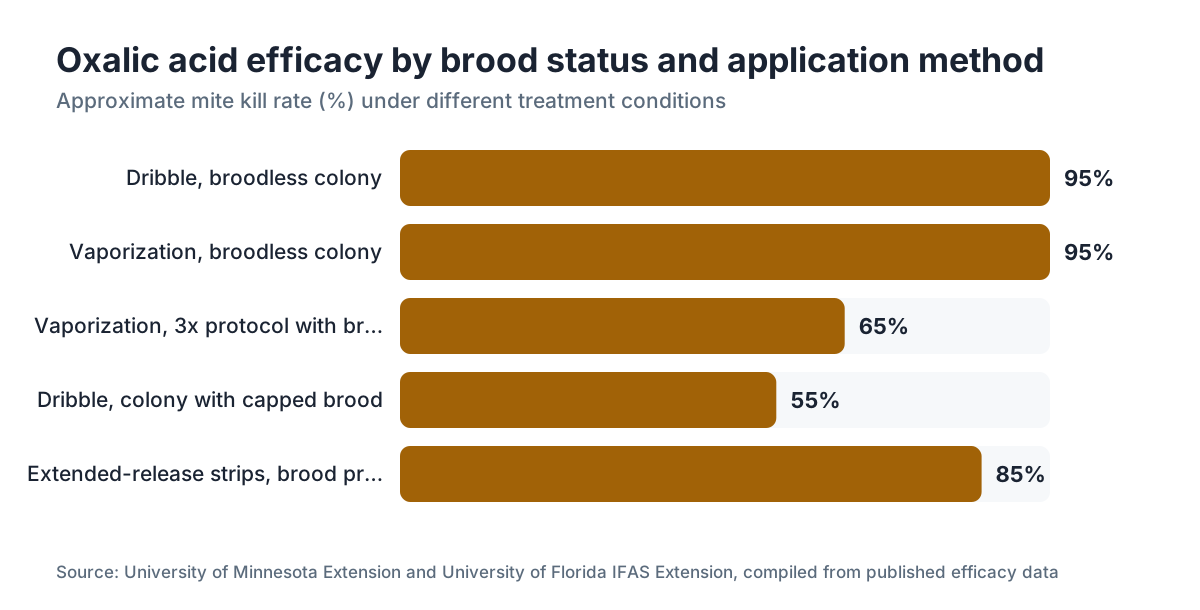
- Treat with brood present and efficacy falls to 50-60 percent.
- Overdosing or vaporizing too often kills larvae and pupae and can hurt the queen.
What is oxalic acid and why do beekeepers use it for varroa?
Oxalic acid is an organic acid that shows up naturally in plants like rhubarb and spinach. In beekeeping, the EPA registers it as the active ingredient in products like Api-Bioxal for killing Varroa destructor on adult bees [1]. It works by direct contact, breaking down the mite's cuticle and wrecking its physiology. Against a mite sealed inside a capped cell, it does nothing.
The appeal is real. OA leaves no synthetic residue in wax or honey at the doses beekeepers use, it's cheap, and under the right conditions it works better than almost anything else. The Honey Bee Health Coalition's Varroa management guide lists oxalic acid as one of the primary soft treatments and flags it as especially useful in winter or other broodless windows [2].
Beekeepers apply OA three ways: dribble (also called trickle), vaporization (sublimation), and extended-release strips soaked in glycerin. Each method interacts with brood differently. That difference drives everything about how you time a treatment.
For background on the mite itself, including the life cycle stages OA can and can't reach, see our varroa mite overview.
Does oxalic acid kill mites inside capped brood cells?
No. This is the one thing you have to understand about OA. The acid does not penetrate wax cappings at any practical concentration or method, so every mite reproducing inside a sealed cell is safe [3]. University extension studies put efficacy against phoretic (bee-riding) mites at 90 to 97 percent in broodless colonies, dropping to 50 to 60 percent or lower once significant capped brood is present [4].
The math is sobering. Say a colony has 10,000 mites and 40 percent are phoretic. OA at 95 percent efficacy kills about 3,800 of them. The roughly 6,000 hiding in brood cells emerge unharmed over the next two to three weeks, ready to breed again. That's why a single dribble during peak brood season rarely dents a heavy infestation.
Vaporizing every 5 days across 3 applications (the 3-times protocol) tries to catch newly emerged mites before they crawl back into cells. The timing has to be nearly perfect, and even then some mites slip through each cycle. Nobody has clean data on the ideal interval for vaporization with brood present. Most extension guidance and the Api-Bioxal label land on 5 days as a workable compromise [1][4].
So OA and brood are an awkward pairing. The treatment isn't useless with brood in the hive, but you need honest expectations and usually a longer-lasting partner treatment.
How does oxalic acid affect brood viability and larval development?
Here's where the data gets murkier and beekeepers argue. At label doses, OA by dribble or vaporization doesn't meaningfully harm open brood or eggs in most published work. The acid reaches open larvae through contact with nurse bees and hive surfaces, but the concentration that kills mites sits below the threshold that reliably kills larvae in a healthy colony [3][5].
The trouble starts with overdose and repeated vaporization. High-concentration vapor or too-frequent rounds have been tied to higher larval mortality, spotty brood, and in bad cases queen loss [5]. A study in the Journal of Apicultural Research found that vaporizing oxalic acid more than three times in close succession produced measurable brood damage against controls, though colonies recovered within several weeks [5].
Extension apiarists report the same pattern in the field. A single dribble during a period of light brood leaves almost no visible mark on the brood pattern. Colonies hit with six or more vapor treatments in a month sometimes show ragged, sunken cappings over young pupae. It looks a lot like European foulbrood. It clears up once you stop treating.
The queen is a separate worry. She lays thousands of eggs a day, and heavy OA exposure has been linked anecdotally to queens turning into drone-layers or vanishing after aggressive vaporization campaigns. The mechanism isn't nailed down, but suspects include sperm viability and disrupted laying [5]. Run a queen-right colony through a vaporization series and you should watch her laying pattern for the next two weeks.
The honest answer: at label rates, OA is generally safe for brood. Push past the label dose or frequency and brood and queen losses become a real risk.
What does the EPA label actually say about treating colonies with brood?
The Api-Bioxal label (the only EPA-registered OA product for varroa as of this writing) draws a clear line between application methods and brood status [1].
For the dribble method, the label calls for use when little or no capped brood is present. It doesn't ban use with brood outright, but the wording is a plain admission that efficacy suffers and brood contact rises.
For vaporization, the label allows use with brood present, capped at three treatments per episode, each spaced at least 5 days apart. The label instruction is direct: three treatments per episode, five days apart, and no more than one treatment per week. That's a ceiling, not a suggestion.
For the extended-release glycerin strips (the newer formulation), the label permits application with brood present. The strips release OA over a longer window, which gives them an edge over a single dribble or a short vaporization course during brood-rearing season.
Breaking the label limits isn't only a regulatory problem. It's a brood safety problem. The limits exist because the registrant's efficacy and safety data came from those doses and frequencies. Go past them and you're in uncharted ground for brood outcomes.
You can pull the current Api-Bioxal label from the EPA's pesticide site [1].
When is the best time to treat with oxalic acid to protect brood?
Almost every extension apiculturist says the same thing: late fall or winter, when the colony is broodless or close to it [2][4]. Across most of the northern US and Canada, that window runs from roughly mid-November through late January, shifting with your local climate.
Treat a broodless colony with a single dribble of 3.2 percent OA solution (the label concentration) or one vaporization dose and you can clear 90 percent-plus of mites, because every mite is riding exposed on adult bees. One treatment usually does it. There's no brood to hide in, so the three-treatment protocol is overkill.
Can't wait for a natural broodless period? You can force one by caging the queen for about 25 days, long enough for all capped brood to emerge. It's labor-heavy but it works, and some beekeepers use it as a management tool in early fall before the colony raises its winter bees.
For summer, the real question is how much brood you're willing to treat through and how many vapor rounds you can run. Three rounds five days apart covers about 15 days. Varroa in sealed worker cells stay capped for roughly 12 to 14 days [9]. So a tight 3-treatment vaporization course theoretically catches most mites emerging during that window, but some re-enter fresh cells between rounds.
The Honey Bee Health Coalition tells beekeepers to check mite loads with an alcohol wash or sugar roll before and after treatment, regardless of timing [2]. If post-treatment counts stay above 2 mites per 100 bees in late summer, retreat or switch chemistry.
How do dribble, vaporization, and extended-release strips compare for brood safety?
| Method | Brood penetration | Efficacy (broodless) | Efficacy (brood present) | Brood safety concern |
|---|---|---|---|---|
| Dribble (3.2% solution) | None | 90-97% [4] | 50-60% [4] | Low at label dose; can chill brood if over-applied in cold |
| Vaporization (sublimation) | None | 90-97% [4] | 60-70% with 3x protocol [4] | Moderate if repeated; high if you exceed label limits |
| Extended-release strips (glycerin) | None | ~80-90% over 8 weeks [6] | Better than single dose; sustained contact | Low; some residue in wax at high dose |
Dribble is the cheapest and easiest to start with. A 35g packet of Api-Bioxal runs about $10 to $15 and treats several colonies once diluted right. The catch: you have to open the hive, even in winter, and in cold climates that stresses the cluster. The acid also has to touch bees directly, so coverage gets uneven in a tight winter cluster.
Vaporization keeps the hive closed and pushes a gas through the whole box without pulling frames, and it's faster per colony at scale. The equipment cost is real. A decent OA vaporizer runs $80 to $200-plus, and you need proper respiratory protection (an N95 is the bare floor; a half-face respirator with an organic vapor cartridge is smarter) [1]. Check your beekeeping supplies checklist before you commit to this method.
Extended-release strips are the newest option and frankly the most forgiving if you can't line up a broodless window. They release OA slowly over four to eight weeks, holding lethal concentrations for phoretic mites the whole time. The efficacy data are solid, though strips cost more than bulk OA and the glycerin carrier deposits small amounts of OA into wax over time [6].
My honest take: for a hobbyist with a handful of hives, a good vaporizer pays for itself fast if you treat every fall, and the broodless-window single-dose protocol is as close to a sure thing as varroa control gets. If your season never hands you a reliable broodless window, strips earn their higher price.
Can oxalic acid harm the queen bee?
It can, under certain conditions. This is an area where the published data are thin and beekeeper observation fills the gap. The queen takes the same OA exposure as workers during a dribble or vapor treatment, and her reproductive system works differently from theirs.
A 2020 study in PLOS ONE looked at queen health after repeated OA vaporization and found some evidence of reduced sperm viability in the spermatheca of queens from treated colonies versus controls. The effect sizes were modest, and colony-level outcomes weren't dramatically different at the label treatment frequency [7]. The concern climbs with overdose or repeated treatments past label limits.
In practice, one or two OA treatments at label rates, especially during a broodless stretch, rarely causes an observable queen problem. Beekeepers reporting queen losses after OA are usually running multiple vapor rounds in a short span, often with homemade rigs at uncontrolled doses. Stick to the label, watch her laying pattern for two weeks after treatment, and you're unlikely to see trouble.
What mite load threshold should trigger oxalic acid treatment?
The Honey Bee Health Coalition and most university extension programs use 2 mites per 100 bees (2 percent) as the action threshold during brood-rearing season [2][4]. Some drop it to 1 percent in late summer when winter bees are forming, because mite damage to winter bees hits colony survival harder than damage at any other time.
In winter, when the colony is broodless or nearly so and you're planning a preventive OA treatment, the threshold question almost disappears. Most beekeepers treat once in late fall no matter the exact count, because OA in a broodless hive is low-risk and high-payoff.
The University of Minnesota Extension recommends an alcohol wash of 300 bees (half a cup) taken from the brood nest area for an accurate count [4]. Sugar rolls are gentler on the bees but slightly less accurate. Sticky boards give a rough directional read, not a reliable per-100-bee count.
One line worth quoting: the Honey Bee Health Coalition warns that an untreated mite infestation running through summer will usually collapse the colony before or during winter [2]. That's the stakes. Threshold-based treatment isn't fussiness. It's the gap between a live hive in March and a dead one.
How many oxalic acid treatments are safe in one season without damaging brood?
The Api-Bioxal label caps vaporization at three treatments per episode [1]. The label doesn't define "episode" perfectly, but registrant and extension guidance generally reads it as one episode per season, with some programs discussing a broodless-window fall treatment plus a spring treatment if counts rebound.
Dribble gets one treatment during a broodless period. That's it. A single application.
Extended-release strips carry their own label language, generally one application per season per hive (the strips stay in for four to eight weeks and release continuously).
On brood safety: one vaporization treatment, or three closely spaced vapor treatments in a colony with brood, causes less documented harm than, say, six treatments over six weeks. The cumulative acid load in the hive climbs with each dose, and while bees detox modest OA exposure, there's a point where brood mortality rises and comb starts holding residue [6].
If counts stay high after a full vaporization episode, the right move is usually to switch chemistry (Apivar, Apiguard, or Formic Pro depending on temperature and season) rather than pile on more OA. VarroaVault has a treatment protocol builder that helps you sequence chemistries across a season when pressure won't quit.
What safety precautions do beekeepers need when applying oxalic acid?
OA is corrosive. It burns mucous membranes, eyes, and skin on contact, and the vapor is nasty to breathe. The EPA label requires the following [1]:
- Wear a NIOSH-approved respirator during vaporization. An N95 is the absolute minimum; a half-face respirator with OV/P100 cartridges is the right call if you're doing several hives.
- Chemical splash goggles (not safety glasses) when mixing or applying the dribble solution.
- Chemical-resistant gloves.
- Treat from behind or to the side of the hive. Never lean over an active vaporizer.
- Keep the entrance sealed for at least 10 minutes after vapor application. OA concentration inside is acutely harmful to people and falls off within minutes outdoors.
For the dribble method, the main risk is splashing solution onto skin or into eyes while mixing. Pre-mixed Api-Bioxal is the safest starting point for hobbyists who'd rather not handle raw oxalic acid dihydrate crystals.
Don't treat in wind. Vapor drifts unpredictably, and any breeze pushing it back at you gets around your respiratory protection. Pick a calm day, especially for vaporization.
Keep children and pets well clear of any OA treatment area. The compound is toxic to mammals at high enough dose, and the vapor hangs near ground level for several minutes after treatment.
What does the research say about brood viability recovery after oxalic acid treatment?
Healthy colonies with a laying queen bounce back from OA-related brood disruption fairly fast. Studies that show brood effects from overdose or repeated treatment note that colony populations return to near-normal within three to six weeks, as the queen resumes normal laying and the new brood cohort grows up without further acid exposure [5][7].
For colonies treated at label rates during the broodless window, there's essentially no brood to recover, because there's no brood present when you treat. The first eggs after the cluster breaks in late winter face a much lower mite load, which improves brood viability across the board. Fewer mites means less deformed wing virus and sacbrood moving through the hive.
The real threat to brood viability isn't OA at proper doses. It's what happens when you skip or delay treatment and let varroa explode. A colony at a 10 percent mite rate (10 mites per 100 bees) has mites in most of its brood cells. The viral load from that level causes far more brood deformity, mortality, and adult behavioral change than a correctly applied OA treatment ever could [2][3].
The framing matters. OA at label rates doesn't threaten brood viability in any meaningful way. Untreated varroa absolutely does.
Are there any differences in brood impact between OA dribble and vaporization?
Yes, and the differences change how you decide.
Dribble puts OA solution directly onto bees between frames. It reaches bees physically but doesn't fill the hive atmosphere. Brood cells that nurse bees aren't covering get minimal exposure. That's part of why dribble is considered safe for open brood, but it also means coverage runs uneven in a colony packed with frames of bees.
Vaporization makes OA crystals that circulate through the whole box, reaching bees in every corner and seam. Coverage is more uniform, which is why it does better in big colonies spread across multiple boxes. The tradeoff is that the entire hive atmosphere turns temporarily acidic, and open larvae bathed in that air take a higher OA dose than during a dribble.
In practice, at label concentrations, neither method causes consistent brood mortality in a healthy colony. The difference only surfaces at high dose or high frequency. One spot where dribble has a clear brood-safety edge: treating a nucleus colony or a small package with young larvae, where the total hive volume is tiny and vapor concentration can build higher than in a full hive.
For most hobbyists running Langstroth gear with 8 or 10 frames, vaporization at label dose sits well inside safe parameters for brood. The key is a calibrated vaporizer that delivers the specified 2.17 grams of Api-Bioxal per dose, not more [1].
How do I know if oxalic acid treatment is working, and when should I test?
Test mite loads before treatment to set a baseline, then test again 3 to 7 days after the final treatment in your episode. Treated a broodless colony with one dribble? Test 3 to 5 days out. Ran a 3-treatment vaporization course over 10 days? Test about a week after the last round.
A successful OA treatment in a broodless colony should drop counts from your baseline down to near zero, usually below 0.5 mites per 100 bees. If post-treatment counts still sit at 2 percent or above, something went wrong: the colony had more brood than you figured, the dose was off, or the treatment didn't reach enough bees.
With brood present, post-treatment counts are harder to read, because mites keep emerging from cells. Wait three weeks after your last treatment before a definitive count, once the brood that was capped during treatment has all emerged. That count tells the real story.
Alcohol wash is the gold standard for counting. The University of Minnesota Extension protocol calls for at least 300 bees per sample for reliable numbers [4]. Sample from a brood nest frame (nurse bees, not foragers) for the highest mite concentration and the most meaningful result.
If your count stays above threshold three to four weeks after OA treatment, don't run another OA episode right away. Switch to a product that works differently, like Apivar (amitraz) or Apiguard (thymol, temperature permitting). Rotating chemistries also slows resistance.
Frequently asked questions
Can I treat a colony with eggs and open larvae using oxalic acid vaporization?
Yes. The Api-Bioxal label allows vaporization with brood present, up to three treatments spaced 5 days apart. Open larvae get some OA exposure, but at label doses mortality isn't consistently elevated in healthy colonies. Capped brood stays untouched because OA vapor doesn't penetrate wax. Efficacy runs about 60 to 70 percent with capped brood present, versus 90-plus percent in a broodless colony.
Why does oxalic acid not work on mites in capped brood cells?
Oxalic acid works only by direct contact with the mite's body surface. Beeswax cappings are physically impermeable to the acid, whether it's applied as liquid dribble or as vapor. Mites inside sealed cells simply aren't reached. That's the core limitation of OA as a standalone summer treatment, and the reason broodless-window timing gets recommended so strongly.
How long after oxalic acid treatment can I harvest honey?
The Api-Bioxal label lists no preharvest interval, because OA occurs naturally in honey and residues from label-rate treatment don't measurably raise OA content above background levels. You can harvest anytime, but common sense says don't treat with supers on. Remove supers before treating and replace them after, which is standard practice regardless of OA's honey-safety profile.
Does oxalic acid cause brood to die if you treat too often?
Yes, at excessive frequency or dose. Research found measurable brood mortality when vaporization was repeated far past label limits. At label-compliant rates (three treatments per episode, 5 days apart), brood mortality generally isn't significant in healthy colonies. The safest path is one treatment during a broodless window instead of repeated summer episodes.
What is the best oxalic acid treatment for winter bees?
A single dribble or vaporization treatment in the broodless window, typically mid-November through January depending on location, is the most effective and safest approach for winter bees. Counts crash with no brood to shield mites, and the winter bees raised afterward carry far less viral load from mite feeding. Efficacy regularly tops 90 percent in true broodless conditions.
Can oxalic acid damage queen bee fertility?
There's limited evidence that very high or repeated OA exposure can reduce sperm viability in the queen's spermatheca. A 2020 PLOS ONE study found modest effects at high treatment frequency. At label rates and frequency, queen fertility problems are rarely observed and aren't consistently reproduced in the literature. If your queen fails after OA treatment, overdose or a preexisting weakness is a likelier cause than label-rate treatment.
Is extended-release oxalic acid (glycerin strips) safer for brood than vaporization?
Extended-release strips deliver OA at a low continuous dose over four to eight weeks instead of a single acute hit, which is arguably gentler on brood and adult bees at any given moment. Efficacy runs a bit lower than optimal vaporization in a broodless colony, but it's more sustained through brood-rearing season. Small amounts of OA do accumulate in wax with strips, though current data suggest that stays within acceptable ranges at label rates.
What happens if I accidentally overdose my hive with oxalic acid?
Adult bee mortality climbs sharply. Brood mortality, spotty capping, and queen failure become real risks. If you suspect an overdose (vaporizer malfunction or a bad dose calculation), monitor the colony daily for two weeks. Watch for crawling bees at the entrance, a fast-dropping population, or a failed queen. Increase ventilation, do not retreat, and let the colony stabilize. Switch to a different varroa treatment if mite levels demand action.
How often should I test mite levels when using oxalic acid treatment?
At minimum, test before each treatment episode and 3 to 4 weeks after the final treatment in that episode. During heavy mite season (July through September), monthly alcohol wash counts give enough data to catch a rebound before it turns critical. The Honey Bee Health Coalition treats testing as the foundation of any varroa program, not treating on a calendar without data.
Can I use oxalic acid in a nucleus colony or split that has brood?
You can, but be careful with vaporization in small enclosures. A nuc box has far less air volume than a full hive, so the same dose creates a higher vapor concentration. Some beekeepers reduce the dose for nucs, though the label doesn't specify a reduced nuc dose. For nucs with brood, the dribble method at label rate is lower-risk because you apply it straight to the bees instead of filling the box with vapor.
Does oxalic acid vaporization require a respirator?
Yes, without exception. The EPA label for Api-Bioxal requires a NIOSH-approved respirator during vaporization. An N95 filters particles but not vapor; a half-face respirator with OV/P100 combination cartridges is the correct gear. OA vapor is acutely irritating to the airways and can cause chronic lung damage with repeated unprotected exposure. No single treatment is worth skipping respiratory protection.
What's the difference between Api-Bioxal and generic oxalic acid from a hardware store?
Api-Bioxal is the only EPA-registered OA product for use in beehives in the United States. Using hardware-store oxalic acid (sold as wood bleach) in a hive is illegal under federal pesticide law and violates FIFRA. Beyond legality, hardware-store OA isn't formulated for consistent dosing or bee safety, and using it could create liability if honey enters commerce. Use only registered Api-Bioxal and follow its label exactly.
Will one round of oxalic acid treatment in fall protect my colony all winter?
In most cases, yes, if the colony is truly broodless when you treat. A single broodless-window treatment that cuts mites to near zero in November gives your winter cluster a strong chance of reaching spring with low loads. By the time brood-rearing picks up in February or March, mite populations start from a very low base. Test in early spring to confirm counts are still below threshold before buildup accelerates mite reproduction.
Sources
- EPA, Api-Bioxal product registration and label: Api-Bioxal is the EPA-registered oxalic acid product for varroa treatment; label specifies 2.17g dose, max 3 vaporization treatments per episode 5 days apart, no preharvest interval, and required PPE including respirator
- Honey Bee Health Coalition, Varroa Management Guide: 2% mites per 100 bees is the action threshold during brood season; broodless window OA treatment recommended; untreated summer infestations typically cause colony collapse before or during winter
- University of Florida IFAS Extension, Oxalic Acid for Varroa Control: OA does not penetrate wax cappings; efficacy is high against phoretic mites but protected mites in sealed cells survive treatment
- University of Minnesota Extension, Varroa Mite Management: Efficacy 90-97% in broodless colonies, drops to 50-60% with capped brood; alcohol wash of 300 bees from brood nest recommended for accurate mite count
- Journal of Apicultural Research, Oxalic acid vaporization and brood effects study: Repeated OA vaporization beyond label frequency produced measurable brood mortality; colony-level recovery occurred within several weeks of cessation; queen reproductive disruption suspected at high doses
- USDA Agricultural Research Service, Oxalic Acid Extended Release Efficacy: Extended-release glycerin OA strips provide 80-90% efficacy over 8 weeks; small accumulation of OA in wax observed at label application rates
- PLOS ONE, Queen bee sperm viability after repeated oxalic acid vaporization (2020): Some reduction in spermatheca sperm viability found in queens from frequently vaporized colonies; effects were modest at label frequency; colony-level outcomes not dramatically different
- Pennsylvania State University Extension, Varroa Mite Treatment Options: OA dribble method specified for use when little or no capped brood is present; broodless window timing strongly recommended for single-treatment efficacy
- Cornell University College of Agriculture and Life Sciences, Honey Bee Health: Varroa mite reproduction cycle inside capped worker cells lasts approximately 12-14 days; OA treatment timing for maximum phoretic mite exposure discussed
- North Carolina State University Apiculture, Varroa and OA Treatment Protocols: 5-day interval for repeated vaporization attempts to intercept mites between cell entries; seasonal treatment sequencing guidance for managing OA with other chemistries
Last updated 2026-07-09