Counterfeit oxalic acid bee treatments from China: what beekeepers need to know
TL;DR
- Counterfeit and unregistered oxalic acid products, most traced to Chinese manufacturers, have reached US beekeeping supply channels.
- They may carry the wrong active-ingredient concentration, unlabeled additives, or no oxalic acid at all.
- Using them breaks federal pesticide law, can hurt colonies, and wrecks treatment efficacy.
- Verify the EPA registration number (92967-1 for Api-Bioxal) on the label before you buy or apply.
Why are counterfeit oxalic acid products showing up in beekeeping?
Oxalic acid is the most widely used varroa miticide on the planet, and demand jumped after the EPA registered Api-Bioxal in 2015 as the first oxalic acid product approved for honey bee colonies in the United States [1]. High demand plus simple chemistry makes it an easy target for cut-rate manufacturing. Oxalic acid is a commodity industrial chemical. It's cheap to produce and easy to bag up and label as a bee treatment.
Legitimate Api-Bioxal is more than oxalic acid dihydrate poured into a foil pouch. The EPA registration sets the concentration (2.85 grams of oxalic acid dihydrate per gram of total formulation, applied by vaporization or the other approved methods), the inert ingredients, and the labeling, including a US EPA registration number (EPA Reg. No. 92967-1) that has to appear on every retail package [1]. Products arriving through informal channels, especially direct-from-China listings on Amazon, eBay, and Alibaba, often carry none of that.
Beekeepers reach for these products for one reason: price. Real Api-Bioxal runs roughly $25 to $35 for 35 grams at most US suppliers, which treats around 50 to 70 colonies by vaporization depending on your dose rate [2]. Counterfeit and unregistered products get listed at a fraction of that. That price gap is the red flag, not the bargain.
What exactly makes a product "counterfeit" versus just unregistered?
The two categories overlap, but they're not the same, and the difference shapes your risk.
An unregistered product is any oxalic acid formulation that never got an EPA registration number for use in bee colonies. Think "food grade oxalic acid" or "99% pure oxalic acid" sold with vague language like "for wood bleaching" or "cleaning purposes," alongside photos of beehives. The seller markets it for non-bee uses on paper, but everyone knows why beekeepers are clicking buy. Using it in a hive violates the Federal Insecticide, Fungicide, and Rodenticide Act (FIFRA), whether the chemistry is right or not [3].
A counterfeit product goes a step further. It mimics a registered product, sometimes copying the Api-Bioxal trade dress, logo, or label text, while holding a different or inconsistent concentration of oxalic acid. Lab testing commissioned by US bee industry stakeholders found some Chinese-sourced bags labeled as oxalic acid dihydrate at the standard 35-gram weight held far less active ingredient than the label claimed, and some held extra unidentified compounds [4]. Neither belongs in a honey-producing colony.
There's a third bucket worth naming. Beekeepers who bought raw oxalic acid dihydrate from a US chemical supplier and mixed their own solutions before Api-Bioxal existed. That was common pre-2015. It's now clearly illegal under FIFRA for hive use [3]. Good intentions don't move the legal line.
What does US law actually say about using unregistered oxalic acid in hives?
FIFRA section 12(a)(1) makes it unlawful "for any person in any State to distribute or sell to any person any pesticide that is not registered" under the Act [3]. Applying an unregistered pesticide, or using a registered one in a way its label doesn't allow, is also a FIFRA violation. The EPA treats any oxalic acid applied to a bee colony as a pesticide application, so the only legal product is the one carrying EPA Reg. No. 92967-1: Api-Bioxal.
States can pile their own rules on top of federal law. Several require beekeepers to keep treatment records and can inspect hives. If a state inspector finds you've been using a product with no valid EPA registration number, civil penalties are on the table. For a hobbyist with two or three hives, enforcement is rare in practice. For a sideliner selling honey or queens, the exposure is real.
The Honey Bee Health Coalition's Varroa Management Guide tells beekeepers to use only products with a valid EPA registration number, and warns that unregistered products put the beekeeper at legal risk and may leave residues not covered by established tolerances [4]. That tolerance point matters if you sell honey. The EPA sets maximum residue limits assuming registered label rates. An unregistered product of unknown concentration has no tolerance backstop.
Keep it simple and legal. Save your Api-Bioxal bag, note the lot number, and record the treatment date. That paper trail protects you.
How do you identify a fake or unregistered oxalic acid product?
The most reliable check is the EPA registration number. Real Api-Bioxal carries EPA Reg. No. 92967-1 on the label [1]. You can verify any EPA registration number through the EPA's Pesticide Product Label System [5]. If the number is missing, different, or returns nothing for an oxalic acid bee product, stop.
Beyond the number, watch for these signs:
- The label is entirely in Chinese, or the English has translation errors in the active-ingredient concentration statement.
- The price sits more than 40 to 50 percent below what US suppliers charge for 35-gram Api-Bioxal.
- The seller is based outside the US with no US distributor listed.
- The listing uses search terms like "oxalic acid varroa 99%" with no mention of EPA approval.
- The foil bag has no lot number or expiration date.
- The pack weight isn't 35 grams (the standard Api-Bioxal size) but some odd amount like 500 grams or 1 kilogram, which usually signals industrial-grade material.
Here's the trap. Bags of 500 grams and 1 kilogram of oxalic acid sell legitimately for wood bleaching, stone cleaning, and other industrial uses. Buying those and putting them in hives is exactly the FIFRA violation described above. The chemistry might be perfect. The law still says no.
Unsure about something you already own? Contact your state department of agriculture. Some states have tested suspect products circulating in their bee communities.
Are there real risks to bee colonies from fake oxalic acid?
Yes, and they cut both ways. Too little active ingredient means weak varroa knockdown. The treatment feels like it worked, your mite wash dips a little, then mites rebound faster than you expected because a big share survived. That's a slow killer. You think you treated, the colony drifts toward winter with a rising mite load, and by October or November you're staring at deformed wing virus and collapse [4].
Too much oxalic acid, or an unexpected additive, can burn bees and brood directly. Oxalic acid kills mites because it's caustic at the right dose. It's caustic to bee tissue at higher doses too. A product with twice the labeled concentration, vaporized at the normal dose rate, doses your bees at roughly double the intended exposure. There's no solid published study I can point to on colony mortality from counterfeit oxalic acid specifically (nobody has good data, because these products aren't standardized enough to test systematically), but the toxicology is plain. Concentration matters, and you have no idea what you got.
Additives are the other blind spot. Some Chinese oxalic acid products have reportedly contained glycolic acid or other organic acids as impurities or adulterants. None of that shows up on a label, because there is no label in any regulatory sense. What those compounds do to bees at vaporization temperatures isn't characterized in the peer-reviewed literature.
Reliable varroa mite control needs known chemistry at a known concentration. An unlabeled product is a bet with your colonies on the table.
What are the legitimate oxalic acid treatment options available in the US?
As of mid-2026, Api-Bioxal (EPA Reg. No. 92967-1) is still the only oxalic acid product registered for US honey bee colonies [1]. The label approves three application methods.
- Vaporization (sublimation). The go-to for beekeepers running more than a handful of hives. A vaporizer heats a measured dose of oxalic acid crystals, and the vapor coats adult bees and mites. It hits phoretic mites on adult bees but doesn't reach mites under capped brood [6].
- Trickle (dribble). A 3.5% oxalic acid syrup dribbled straight onto bees in the cluster. Approved only when no brood is present. It shines as a single winter treatment on a broodless colony.
- Extended-release sponge strips. Approved in 2021, these foam strips soaked in oxalic acid solution sit between frames for up to 42 days, killing mites as they emerge from capped cells [7]. That method closed the old gap where vaporization and trickle couldn't touch mites in capped brood.
Each method fits a different moment in the season, depending on brood status and colony size. The Honey Bee Health Coalition's Varroa Management Guide compares efficacy in detail and is a free download [4]. To schedule treatments around your local brood cycle and build a full-season plan, the free tools at VarroaVault help you map treatment windows against your mite wash data.
Reputable US beekeeping supply companies carry only registered Api-Bioxal. A supplier pushing something else should make you pause. You can compare prices across free shipping honey bee supply companies if cost matters, but the product has to be legitimate no matter where you buy.
How effective is legitimate oxalic acid at killing varroa mites?
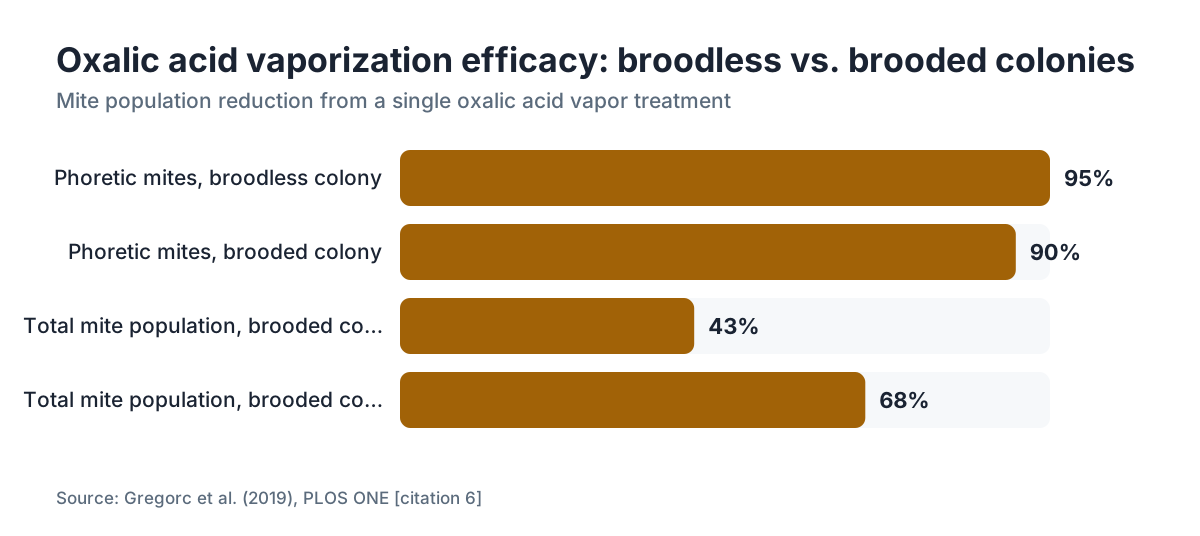
Vaporized oxalic acid at the Api-Bioxal label rate hits 90 to 99 percent mite kill in broodless colonies in published studies [6]. That number falls hard when brood is present, because mites tucked under capped cells are shielded from the vapor. A 2019 study in PLOS ONE found that a single oxalic acid vapor treatment in a colony with sealed brood cut the phoretic mite population by around 90 percent but reduced the total mite population (phoretic plus reproductive) by only 43 to 68 percent, depending on how much capped brood was present [6].
Timing matters as much as the chemistry. The strongest oxalic acid treatment pairs the right application method with the right colony conditions. Winter vaporization or trickle on a broodless cluster is the gold standard for total knockdown. The extended-release strips stretch efficacy into brooded periods by keeping oxalic acid exposure going across multiple brood cycles.
None of this holds if the concentration is unknown. A product delivering, say, 1.5 grams of oxalic acid instead of the labeled 2.85 grams per dose shows proportionally weaker results. You might see a 50 to 60 percent drop on your mite wash and blame your technique or your vaporizer, when the real problem is what's in the bag.
The Honey Bee Health Coalition reports no known resistance to oxalic acid in varroa populations as of its most recent guide [4]. That's one of the best reasons to keep this tool legal and effective. Resistance builds when a mite population meets sub-lethal doses over and over, exactly what counterfeit products with drifting concentrations can create.
Has the EPA or USDA taken action on counterfeit oxalic acid imports?
Public information here is thin. The EPA's Office of Pesticide Programs can interdict unregistered pesticides at the border by working with US Customs and Border Protection, and FIFRA covers imported products [3]. I'm not aware of any publicly announced enforcement action aimed specifically at counterfeit oxalic acid bee products from China as of mid-2026. The USDA's Animal and Plant Health Inspection Service focuses on live bee and queen imports more than on pesticide products [8].
The American Beekeeping Federation and Project Apis m. have both raised the counterfeit issue in member communications, and several state apiarists have warned their beekeepers directly. The California Department of Pesticide Regulation, one of the more active state regulators, periodically posts enforcement actions involving unregistered pesticides, though specific oxalic acid cases aimed at the bee market haven't shown up prominently in its public database as of this writing [9].
Found a product you suspect is counterfeit or unregistered for bee use? Report it to the EPA through the agency's pesticide reporting channels or to your state department of agriculture. The more reports that reach regulators, the more likely targeted enforcement gets. Beekeepers trading warnings in forums and local clubs have long been the fastest alert system for bad products moving through the market.
Where should you buy oxalic acid bee treatments to be sure they're legitimate?
Buy from established US beekeeping suppliers that carry Api-Bioxal by name and show the EPA registration number in the listing. Big distributors like Mann Lake and Dadant, in the market for decades, aren't going to stock unregistered products. They understand the law, and their liability exposure would be enormous.
Skip Amazon and eBay listings where the seller is a generic account with little history, the photo doesn't show a visible EPA Reg. No. 92967-1, or the product comes in bulk quantities that make no sense for a treatment product. That 1-kilogram bag of 99.5% oxalic acid dihydrate from a Chinese seller with two reviews is not Api-Bioxal.
Price-sensitive, like most hobbyists? Buying through a co-op that carries registered beekeeping supply companies product, or a state beekeeping association's bulk program, gets you legitimate treatment at better prices. A 10-pack of 35-gram Api-Bioxal pouches from a bulk distributor often runs $18 to $22 per pouch, meaningfully cheaper than single-pouch retail.
The Honey Bee Health Coalition's vendor guidance is worth bookmarking for supply sourcing [4]. For a wider look at beekeeping supplies beyond treatments, sticking with established US distributors is the safest path. Two hives or two hundred, counterfeit chemistry is a false economy.
What should you do if you've already used a potentially counterfeit product?
Don't panic. Take stock. If you treated a colony and you're not sure the product was legitimate, check your mite wash first. Run an alcohol wash or sugar roll now and compare it against your pre-treatment baseline [10]. If counts land where you'd expect (ideally under 2 mites per 100 bees, or whatever your regional threshold is), the product may have worked even if it wasn't legal. If counts run higher than expected, do a follow-up with verified Api-Bioxal as soon as you can.
On honey residue: oxalic acid is naturally present in honey, and the EPA tolerance for oxalic acid residues assumes Api-Bioxal used at label rates on top of natural background levels [11]. Use an unregistered product at an unknown concentration and plan to sell honey, and you're in a gray zone. An unregistered product has no established tolerance, so technically any detectable residue above natural background could be a violation. In practice, honey testing for oxalic acid isn't routine in most US markets, but selling at a farmers market or through a local distributor carries real legal exposure. Weigh that as you decide whether to tell a buyer.
Go forward with registered product. Record the EPA reg number, lot number, treatment date, and application method. That documentation is your protection.
VarroaVault's free treatment tracking tools help you build that habit, so you keep a clean paper trail every season.
How does oxalic acid compare to other varroa treatments in efficacy and safety?
The table below sums up the main registered varroa treatments in the US, their efficacy ranges, and practical notes. Figures come from the Honey Bee Health Coalition's Varroa Management Guide and EPA registration data [1][4].
| Treatment | Active Ingredient | Broodless Efficacy | With Brood Efficacy | Honey Supers On? |
|---|---|---|---|---|
| Api-Bioxal (vaporized) | Oxalic acid | 90-99% | 43-68% phoretic only | No |
| Api-Bioxal (extended-release strips) | Oxalic acid | N/A | Up to 90% over 42 days | No |
| Apivar | Amitraz | 85-95% | 85-95% | No |
| Apiguard / ApiLife Var | Thymol | 75-95% | 75-95% | No (temp dependent) |
| Mite Away Quick Strips | Formic acid | 80-95% | 80-95% (some brood kill risk) | Yes (short term) |
| CheckMite+ | Coumaphos | 90-95% | Lower, resistance concerns | No |
Oxalic acid's edge over synthetic acaricides comes down to three things: no documented mite resistance, no chemical residue risk in wax above background levels at label rates, and low toxicity to adult bees when used right. Its main limit is weaker efficacy during brooded periods, which the extended-release strip method partly fixes [7].
Formic acid (Mite Away Quick Strips) is the only registered treatment that penetrates capped cells and can be used with honey supers on, but it demands careful temperature management and risks brood mortality above 85 degrees Fahrenheit [4]. Plenty of beekeepers rotate oxalic acid in late fall and winter with formic or amitraz in the brooded season.
None of this nuance survives a counterfeit product. You can't make an informed treatment decision without knowing what's in what you're applying.
Frequently asked questions
Is it illegal to use food-grade oxalic acid in bee hives in the US?
Yes. Under FIFRA, using any pesticide in a way inconsistent with its label is illegal, and any oxalic acid applied to a bee colony counts as a pesticide application. Only Api-Bioxal (EPA Reg. No. 92967-1) is registered for this use. Food-grade or industrial oxalic acid has no EPA registration for hive use, regardless of purity, and using it exposes you to civil penalties under federal law.
What is the EPA registration number for Api-Bioxal and why does it matter?
Api-Bioxal's EPA registration number is 92967-1. It appears on every legitimate package and can be verified in the EPA's Pesticide Product Label System. The number confirms the product was evaluated for efficacy, safety, and residue tolerances in honey bee colonies. Any product without this specific number is not legally authorized for varroa treatment in US hives, no matter what its label claims.
How can I tell if oxalic acid I bought online from China is safe to use?
You generally can't, which is the core problem. Without independent lab testing, you don't know the true active-ingredient concentration, what impurities are present, or whether the product performs at the dose rate you're applying. Beyond safety, using it violates FIFRA. The only safe and legal move is to not use it. Buy Api-Bioxal from a US beekeeping supplier, where you can verify the EPA registration number on the package.
Can I buy oxalic acid in bulk and mix my own varroa treatment?
Not legally for hive use. Mixing your own oxalic acid solution and applying it to a colony counts as using an unregistered pesticide under FIFRA, even when the chemistry is correct and pure. This was common before Api-Bioxal's 2015 EPA registration but has been illegal for hive use since. The extended-release strips approved in 2021 made brood-period treatment feasible with registered product, removing the main practical argument for DIY formulations.
What concentration of oxalic acid is in Api-Bioxal?
Api-Bioxal contains 2.85 grams of oxalic acid dihydrate per gram of total formulation, as stated on the EPA-registered label. For vaporization, the label specifies 1 gram of product per hive body. The extended-release sponge strips deliver oxalic acid across a 42-day period at a different dose rate, also specified on the registered label. Counterfeit products can hold substantially more or less than this concentration.
Does oxalic acid leave residues in honey?
Oxalic acid is naturally present in honey at background levels. The EPA has set a tolerance for residues from Api-Bioxal used at label rates, based on the finding that residues don't significantly exceed natural background concentrations. Unregistered products of unknown concentration have no established tolerance. If you sell honey and used an unregistered product, any oxalic acid residue above natural background technically lacks regulatory cover, which is a commercial and legal risk.
Are counterfeit oxalic acid products a problem anywhere besides the US?
The issue exists in Europe and other markets too. The EU authorizes oxalic acid for varroa treatment under a different regulatory framework, and counterfeit or substandard products move through informal channels there as well. The British Beekeepers Association and several European apicultural research institutions have flagged the problem. The dynamic is the same everywhere: cheap commodity chemistry sold without regulatory oversight into a high-demand treatment market.
What mite count level means I need to treat with oxalic acid?
The Honey Bee Health Coalition recommends an action threshold of 2 mites per 100 bees (a 2% infestation rate) during the summer brood-rearing season, using an alcohol wash as the most accurate count. In late summer and fall, some beekeepers drop to a 1% threshold to protect the winter bee population. Always run an alcohol wash before and after treatment to confirm the product worked.
Can I report a suspected counterfeit oxalic acid product to the government?
Yes. Report to the EPA's Office of Pesticide Programs through the agency's website, or to your state department of agriculture's pesticide regulatory division. Keep the original packaging and receipt if you can. State apiarists can also take reports of suspect products. More reports build a documented pattern that supports enforcement, and getting information to regulators is genuinely useful even when you don't hear back.
Does the extended-release oxalic acid strip method actually work with brood present?
Yes. In studies supporting the 2021 EPA registration, extended-release oxalic acid strips kept a continuous low-level oxalic acid exposure in the hive for up to 42 days, letting the treatment contact mites as they emerge from capped cells across multiple brood cycles. Efficacy in brooded colonies reached up to around 90 percent in supporting data, far above the low efficacy of a single vaporization treatment when brood is present.
Is thymol-based treatment a safer alternative to oxalic acid if I'm worried about counterfeits?
Registered thymol products like Apiguard are a real alternative, widely available through US suppliers, so counterfeiting isn't a known problem in that category. But thymol needs temperatures roughly between 59 and 105 degrees Fahrenheit to vaporize effectively, making it seasonal in many climates. It also doesn't work as cleanly on a winter broodless cluster the way oxalic acid does. They're complementary tools, not direct substitutes.
What's the shelf life of Api-Bioxal and does it degrade?
Api-Bioxal carries a shelf life and lot number on each package. Oxalic acid dihydrate is fairly stable in dry storage. Degradation comes mostly from moisture exposure, which causes clumping and uneven vaporization. Store it cool and dry in the original sealed package. Using degraded product doesn't carry the legal risk of counterfeit product, but a clumped dose may not vaporize completely or evenly, which cuts efficacy.
Do varroa mites show any resistance to oxalic acid?
No documented resistance to oxalic acid in varroa mites has been published as of the Honey Bee Health Coalition's most recent guidance. The mechanism of action, direct contact caustic toxicity, makes resistance harder to develop than for neurotoxic synthetic acaricides. This is one of oxalic acid's most valuable long-term properties. Repeatedly exposing mites to sub-lethal doses from low-concentration counterfeit products could in theory apply selection pressure, though no study has shown it yet.
How many treatments per year should I do with oxalic acid?
The Api-Bioxal label allows up to three vaporization applications per year, at least seven days apart, and one trickle application per year. The extended-release strip method counts as one treatment. Most protocols pair a summer and fall treatment for brood-period management with a definitive winter broodless treatment. Your real schedule follows your mite wash results, not the calendar. Treat when counts cross the threshold, and verify it worked.
Sources
- US EPA, Api-Bioxal Registration and Label (EPA Reg. No. 92967-1): Api-Bioxal is the only EPA-registered oxalic acid product for use in honey bee colonies in the US, bearing EPA Reg. No. 92967-1, with approved application methods and concentration specified on the label.
- University of Minnesota Extension, Varroa Mite Management: Oxalic acid vaporization treats approximately 50 to 70 colonies per 35-gram Api-Bioxal pouch depending on dose rate applied.
- US EPA, Federal Insecticide Fungicide and Rodenticide Act (FIFRA) Full Text: FIFRA section 12(a)(1) makes it unlawful for any person in any State to distribute or sell any pesticide that is not registered with the EPA.
- Honey Bee Health Coalition, Varroa Management Guide (most recent edition): The Honey Bee Health Coalition states beekeepers should only use products with a valid EPA registration number, that oxalic acid has no known resistance in varroa mite populations, and recommends action thresholds of 2 mites per 100 bees during the brood-rearing season.
- US EPA, Pesticide Product Label System (PPLS): Any EPA pesticide registration number can be verified in the EPA's Pesticide Product Label System database.
- Gregorc A et al. (2019), Efficacy of oxalic acid vaporization in honey bee colonies with and without brood, PLOS ONE: A single oxalic acid vapor treatment reduced the phoretic mite population by around 90 percent in broodless colonies, but reduced total mite population (phoretic plus reproductive) by only 43 to 68 percent when capped brood was present.
- US EPA, Supplemental Label for Api-Bioxal Extended-Release Sponge Strips (2021 amendment): The EPA approved extended-release oxalic acid sponge strips for Api-Bioxal in 2021, allowing up to 42 days of continuous treatment including during brooded periods.
- California Department of Pesticide Regulation, Enforcement Actions Database: The California Department of Pesticide Regulation periodically posts enforcement actions for unregistered pesticide products under California and federal law.
- Penn State Extension, Varroa Mite Management in Honey Bee Colonies: Alcohol wash (sugar roll) is the most accurate method for establishing pre- and post-treatment mite infestation rates in honey bee colonies.
- USDA Agricultural Research Service: Oxalic acid is naturally present in honey at background levels, and residues from Api-Bioxal applied at label rates do not significantly exceed natural background concentrations.
Last updated 2026-07-09